Canada’s inflation rate has risen at its slowest pace in over three and a half years.
The country’s annual inflation rate fell to 1.6% in September, marking the lowest increase in the Consumer Price Index since Feb. 2021, according to data released by Statistics Canada on Tuesday.
The decrease comes after the country reached the Bank of Canada’s 2% inflation target in Aug., raising hopes for further interest rate cuts later this month. The Bank of Canada has already cut rates three times this year.
Lower inflation means that prices are still rising, just at a lesser rate.
The decline was largely driven by a sharp decrease in gasoline prices, which plummeted by 10.7% compared to September last year, a notable further decline from August’s 5.1% decrease.
Excluding gasoline, the all-items inflation rate remained steady at 2.2%, unchanged from the previous month.
The report highlighted that though price increases have slowed, they have risen 12.7% since Sept. 2021.
“Canadians continue to feel the impact of higher price levels for day-to-day basics such as rent (+21.0%) and food purchased from stores (+20.7%), which increased during that same 3-year period,” reads the report.
The cost of some goods fell, like clothing and footwear, which saw a 4.4% price decrease, and transportation, which saw a 1.5% price decrease. This suggests that the inflationary decrease is not due to government policies but because consumers are purchasing fewer household furnishings, clothing, and are travelling less.
Rent prices rose by 8.2% compared to last Sept., down slightly from an 8.9% increase in Aug.
Meanwhile, food prices continue to rise faster than overall inflation, with grocery prices increasing by 2.4% in September, matching the rate in August.
Provinces saw differing inflation changes, with Saskatchewan and Newfoundland and Labrador tied with the lowest inflation, at 0.7%. The province which saw inflation rise the most was British Columbia at 2%, flanked by Alberta at 1.9%. Every province’s inflation was at or below the Bank of Canada’s 2% target.
“Year over year, prices rose at a slower pace in September compared with August in all provinces,” reads the report.
The report also highlighted that tuition prices rose more slowly, 1.8% in 2024 compared to 2.5% in 2023. Alberta saw an increase of 2.3%, compared to 4.8%, a drastic decrease attributed to the province’s cap on domestic tuition fee increases.
The Bank of Canada will make its next decision regarding rate cuts on Oct. 23, with many economists predicting a 50 basis points rate cut following the inflationary decrease.
“If inflation continues to ease broadly in line with our July forecast, it is reasonable to expect further cuts in our policy rate,” said Bank of Canada’s governor Tiff Macklem in his Sept. update.
The Consumer Price Index data for October will be released on Nov. 19.
Canada has officially added Samidoun to its list of recognized terrorist entities after facing calls from Jewish organizations and conservative politicians across Canada.
The charity has been linked to the Popular Front for the Liberation of Palestine.
Dominic LeBlanc, the Public Safety Minister, announced Tuesday that Samidoun, the so-called Palestinian Prisoner Solidarity Network, is now a designated terrorist entity under the Criminal Code.
The group has most recently been in the news following protests it organized in Vancouver, B.C. on Oct. 7 where protesters glorified the Oct. 7 terror attack on Israel. The protest was also the site of Canadian flag burnings, “Death to Canada” chants and Hamas-inspired calls to disrupt the Canadian economy and everyday life since the terror attack.
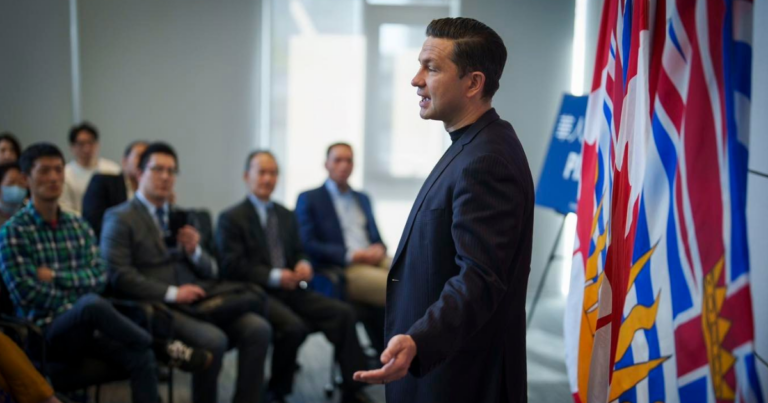
BC Conservative leader John Rustad called for the group and its supporters to be banned and deported last week, followed by Conservative Leader Pierre Poilievre calling for the group to be listed as a terror group as well.
The group had already been banned in Germany in November 2023 for its antisemitic rhetoric and open support of terrorism. They are also banned in the Netherlands and were designated as a terror group that works as a subsidiary of the PFLP in Israel.
Several anti-terrorism laws under the Canadian Code will now impact the organization, including banning anyone from knowingly dealing with property owned by Samidoun or directly or indirectly providing property, knowing that it will benefit the terrorist entity.
The announcement also notes that the designation will assist Canadian security, intelligence and law enforcement agencies in its fight against terrorism, as the listing will play a “key role in countering terrorist financing.”
“The listing of Samidoun as a terrorist entity under the Criminal Code sends a strong message that Canada will not tolerate this type of activity and will do everything in its power to counter the ongoing threat to Canada’s national security and all people in Canada,” LeBlanc said in the announcement.
The move was made in a joint action with the US Department of the Treasury’s Office of Foreign Assets Control to designate the organization as a specially designated global terrorist group.
The OFAC press release called the organization a “sham charity” that serves as an international fundraiser for the PFLP, a listed terror entity in both the US and Canada.
The report said the founder of Samidoun, Khaled Barakat, a Canadian citizen, is a member of the PFLP leadership and that Barakat and the organization play “critical roles” in fundraising for the PFLP. Barakat is now a designated terrorist in the US.
“Organizations like Samidoun masquerade as charitable actors that claim to provide humanitarian support to those in need, yet in reality divert funds for much-needed assistance to support terrorist groups,” Bradley Smith, the acting under-secretary of the US Treasury for Terrorism and Financial Intelligence, said in the statement.
On April 6 Barakat continued the organization’s repeated praise for listed terrorist entities at an “Al-Quds day event” by saluting and pledging unconditional support for terror groups in Toronto. The Islamic regime in Iran established “Al-Quds Day” as an international day of support for listed terror groups working to destroy the Jewish state of Israel.
The US report said Canada, the US and its allies would continue to disrupt those who seek to finance the PFLP, Hamas and other terrorist organizations.
“Today’s joint action with the U.S. sends a strong message that our two nations will not tolerate this type of activity and will do everything in our power to ensure robust measures are in place to address terrorist financing,” LeBlanc said.
Jewish community groups celebrated the group now being banned in the US and Canada.
“This is a decisive blow against the forces of hate and extremism. Canada must remain a safe place for all, and today’s decision is a bold step in protecting Canadian values and security. We will never back down,” B’nai Brith Canada said on X.
The Centre for Israel and Jewish Affairs released a statement welcoming the designation as well.
“Listing the group as a terrorist entity means they will no longer be able to use our streets as a platform to incite hate and division against the Jewish community; this is a significant step toward ensuring the safety and security of Canada’s Jews,” Shimon Koffler Fogel, the president and CEO of CIJA said.
CIJA is calling for swift legal action to be taken against Barakat and his wife Charlotte Kates, who serves as the listed terror group’s international coordinator. The group also calls for the government to re-examine whether Kates and Barakat obtained Canadian citizenship fraudulently by failing to disclose affiliations with the PFLP.
Conservative Leader Pierre Poilievre said he wants to see kids and inmates who suffer from out-of-control addiction issues be required to undergo involuntary treatment.
While he initially said he was open to the idea but needed more time to inform himself earlier this summer, the Conservative leader confirmed to reporters in Ottawa last Thursday that he now fully supports involuntary treatment programs.
“I believe for children and for prisoners who are behind bars, there should be mandatory drug treatment when they are found to be incapable of making decisions for themselves,” said Poilievre.
“For adults, again, I’m still doing a lot of research on how that would work.”
Several provinces have begun implementing similar programs in the midst of a national toxic drug crisis.
While the number of drug overdoses is increasing, critics of involuntary treatment question effectiveness and whether such a measure violates civil liberties and patient rights.
However, Poilievre made up his mind after hearing the testimony of 13-year-old Brianna Macdonald’s parents during a parliamentary committee.
After a year-long struggle, the young girl faced an untimely death in a homeless encampment in Abbotsford, B.C.
The two parents told the committee last Tuesday that Brianna’s mental health struggles began after she started experimenting with several types of prescription and illicit drugs at the age of 12.
“Brianna’s father and I would beg doctors to keep her in hospitals,” mother Sarah MacDonald told the committee. “The doctors would overlook what we said and release her, sending us home with Narcan kits.”
They asked police to take her to the hospital by invoking the Mental Health Act after she threatened to harm herself, said Brianna’s father Charles, but the police refused to take her against her will.
“There’s no question in my mind that she should have been in mandatory, involuntary psychiatric and substance abuse treatment, rather than in a homeless encampment in a tent,” said Poilievre on Thursday.
New Brunswick’s Progressive Conservative Leader Blaine Higgs has also pledged to introduce legislation allowing someone with a severe addiction to be forced into treatment as part of his election platform.
Alberta Premier Danielle Smith requested her mental health minister create “compassionate intervention legislation” which would allow for involuntary treatment when people using drugs become a danger to themselves or others.
Poilievre has long said that if elected his government would cut funding to supervised injection sites, also known as safe supply sites and place that money into federal support programs that provide treatment options.
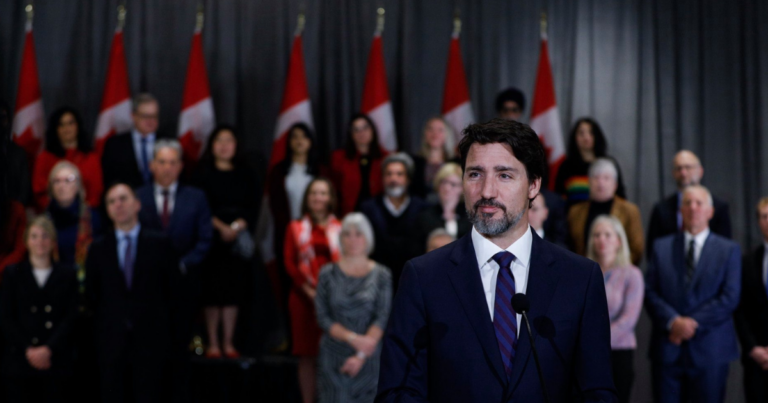
There’s a growing movement within the Liberal party caucus to oust Prime Minister Justin Trudeau. Internal sources have said Liberal MPs are adding their names to an internal petition being passed around that calls for a leadership change.
In the aftermath of the Toronto-St. Paul’s byelection loss this summer, several frustrated MPs hosted a string of meetings to discuss the party’s path forward without Trudeau at the helm.
Multiple sources told CBC News on anonymity that more talks flared up following the Montreal byelection defeat and then again this week as Trudeau’s chief of staff Katie Telford is away in Asia for a summit.
In her absence, a pledge calling for the prime minister to resign is being passed around for MPs to sign.
According to multiple sources, the document is being used as a means to secure support for leadership change in the face of Trudeau and his supporters refusing to step down.
While the document is being kept tightly away from the public eye, sources said that it has already been signed by as many as 20 MPs, as well as others and will be brought forth once it has enough signatures.
Those responsible for organizing the pledge fear that if it’s released too early, the Prime Minister’s Office will be able to push back and divide support among those trying to have him ousted as leader, something that happened once already following the Toronto byelection loss.
Frustrations over Trudeau’s continued leadership arose during the Liberals’ national caucus meeting last week, with some MPs expressing anger over Trudeau being in Laos for an international summit at the time.
Additionally, questions over who will replace former Liberal campaign director Jeremy Broadhurst continue to swirl within the party. Broadhurst left the role last month and the role remains vacant despite the looming possibility of a federal election being called at any time.
Sources said that MPs are losing patience with how the PMO has so far ignored their concerns on the matter and expressed that they had hoped the two major byelection defeats and dismal polling numbers would have been enough for Trudeau to step down on his own.
However, the prime minister has remained adamant that he intends to stay on as leader of the Liberal party heading into the next election, despite the Conservatives commanding a 20-point lead in the latest polls.
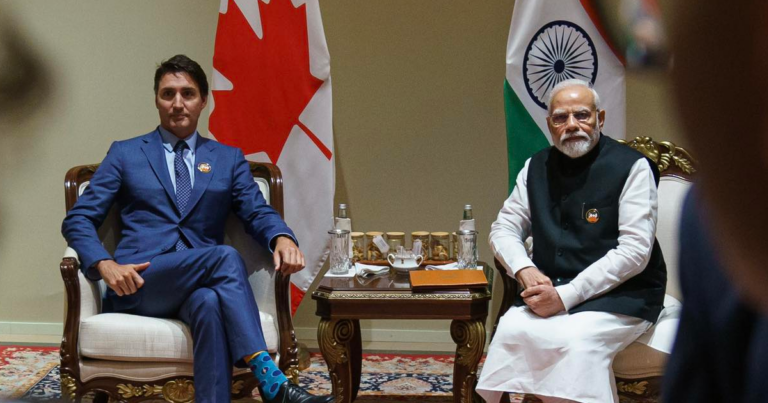
Canada has expelled six Indian diplomats from Canada after the RCMP accused the officials of being directly involved in homicides, extortions and other criminal acts of violence on Canadian soil.
The RCMP hosted a press conference Monday morning after India refused to drop diplomatic immunity, which prevented the officials from being interviewed by Canadian police.
“As India did not agree, and given the ongoing public safety concerns for Canadians, Canada served notices of expulsions to six diplomats and consular officials early this morning,” Foreign Affairs Minister Melanie Joly said in Ottawa Monday.
She said that, in response, India announced that it would withdraw those diplomats from Canada.
“To be clear, we’re not seeking diplomatic confrontation with India, but we will not sit quietly as agents of any country are linked to efforts to threaten, harass or even kill Canadians,” Joly said.
The RCMP said the acts of violence are directed primarily at members and supporters of the Khalistan separatist movement. Groups such as Sikhs for Justice are considered terrorist entities by the government of India.
“Investigations have revealed that Indian diplomats and consular officials based in Canada leveraged their official positions to engage in clandestine activities, such as collecting information for the Government of India, either directly or through their proxies; and other individuals who acted voluntarily or through coercion,” the RCMP said in a report.
The RCMP alleged that evidence shows a “wide variety of entities in Canada and abroad” have been used by agents of the Indian government to collect information.
“Some of these individuals and businesses were coerced and threatened into working for the Government of India,” the report said. “The information collected for the Government of India is then used to target members of the South Asian community.”
The RCMP further alleged that Government of India officials engaged in foreign interference by intimidating the Indian diaspora in Canada, utilizing Indian gangs such as the Lawrence Bishnoi gang in Canada to carry out homicides and other violent acts.
Police said since September of last year, they had a duty to warn at least a dozen individuals from the South Asian community that they were being targeted, some of whom were targeted multiple times.
At the press conference, RCMP said that approximately eight individuals have been arrested and charged in relation to homicides, and 22 individuals have been arrested and charged. However, police wouldn’t say how many were connected to the Indian government.
RCMP Commissioner Michael Duheme said police had tried to contact their Indian counterparts without success. He said police gave evidence to Indian officials “urging their cooperation” in stemming the violence but were denied.
Prime Minister Justin Trudeau said the alleged actions of those officials and the Indian government were “deeply unacceptable.”
“The actions that are alleged to have taken place on Canadian soil are indeed a grave violation of our sovereignty and of Canada’s rule of law,” Trudeau said.“While attempts have been made by the RCMP and national security officials to work with the government of India and Indian law enforcement counterparts on this matter, they have been repeatedly refused.”
RCMP Assistant Commissioner Brigitte Gauvin said there is a “multidisciplinary” team comprised of “a number” of federal agencies with a focus on investigating and prosecuting both Khalistani violent extremism and alleged foreign interference by agents of the Indian government.
Gauvin said the issue requires a “whole-of-government approach ” to disrupt and mitigate the threat posed by foreign state actors.
Police said identities would not be publicly revealed as cases remain in the courts.
Gauvin said the alleged actions of the Indian government “without a doubt” violate both the Vienna Convention on Diplomatic Relations, as well as “Canada’s values as a society.”
“Indian diplomats and consular officials are here to protect the interests of their nationals that are based in Canada and their country’s national interests as well,” she said. “Not to be part of criminal activity or intimidation or coercion of these individuals. So we take that very seriously.”
Police ask any potential victims of the Indian government’s alleged foreign interference and intimidation to report the incident to local police. Individuals can also report to the RCMP National Security Information Network by phone at 1-800-420-5805 or online at rcmp.ca/report-it.
“We want to assure all Canadians that their safety and security is at the forefront of everything we do,” the RCMP said. “We urge the public and South Asian communities to remain calm and give law enforcement and Canadian officials time to continue discussions.”
The federal government expelled India’s high commissioner and five other diplomats after an RCMP report revealed that Indian government agents were linked to homicides, extortions and other violent criminal activities in Canada.
Plus, the House of Commons Ethics committee grilled CTV News’ vice president over the media outlet manipulating an interview of Pierre Poilievre.
And a Jewish girls’ elementary school was shot at for a second time this year during the solemn Jewish high holiday of Yom Kippur.
Tune into The Daily Brief with Cosmin Dzsurdzsa and Noah Jarvis!
The education ministry review announced more than a year ago into the circumstances leading to the death of beloved Toronto principal Richard Bilkszto was a complete and utter sham, documents obtained by True North show.
While those in the education community, who mourned and commiserated with the much-loved principal, were led to believe that the ministry would do something about the destructive impact of DEI ideology, ministry bureaucrats did nothing more than keep the charade of a review going for months and months.
A 120-page FOI response indicates that ministry bureaucrats spent considerable time over a year covering their butts in response to media requests, sending many e-mails back and forth that accomplished nothing, accepting and subsequently ignoring input from interested parties and kowtowing to the ministry’s DEI bureaucrats from the Kathleen Wynne era.
In the end, they produced nothing.
The same goes for the alleged Toronto District School Board review of the circumstances leading to the tragedy.
Bilkszto took his own life last July.
Both his lawyer and his family said the 24-year principal was dealing with tremendous stress after being humiliated at two DEI training sessions by “race expert” Kike Ojo-Thompson—hired by retiring education director Colleen Russell-Rawlins (who beat it out the door for vacation on Sept. 18, six weeks before her official retirement date).
His suicide came just weeks after he’d filed a $750,000 lawsuit against the TDSB – a lawsuit that has been on hold since his death.
Preaching her anti-black racism dogma, the DEI consultant singled out Bilkzsto repeatedly at two sessions in the spring of 2021 for daring to challenge her.
She called him a “white supremacist” and berated Bilkszto in front of 200 colleagues, claiming that he, in his “whiteness,” thought he could tell her what’s going on for black people.
Even though a 2021 WSIB report called Ojo-Thompson’s conduct “abusive, egregious and vexatious,” the TDSB’s anti-racism brass continued to ostracize and silence him.
Two weeks after his death, former education minister Stephen Lecce announced — to great fanfare —a review into “options to reform professional DEI training to make it free of harassment and intimidation.”
Torontonian Michael Teper, an FOI expert, put in his request this past summer asking for all education ministry records relating to the investigation/inquiry/ review of the death of Bilkzsto as ordered by Minister Lecce on or about July 25 of last year.
He said he provided the results to True North in the interest of “full disclosure and transparency.”
It was shocking to review what came back.
When Bilkszto first passed away and the ministry was asked for comment by several members of the media, it took two days and five bureaucrats to craft a four-line response.
One of those bureaucrats, the ministry’s communications advisor Ingrid Anderson — whose name is all over these FOI documents — did not respond to repeated True North requests for comment over nearly two weeks.
Ditto for Edyta McKay in Minister Jill Dunlop’s office.
On July 25 of last year, the FOI documents show that in response to those media inquiries, Anderson crafted a response for Lecce, offering his “heartfelt condolences” to Bilkszto’s family and friends.
”This tragic incident only underscores the need for greater accountability of school boards and the necessity to ensure professional training is free from harassment and intimidation,” Lecce’s statement said.
”I have tasked my officials to review what happened in this instance in the TDSB …and to bring me options … to strengthen accountability on school boards so this never happens again.”
Evidently it was all smoke and mirrors.
On page 46 of the FOI response, an issue note says the ministry was “exploring” options to review anti-racism training in Ontario’s publicly-funded school system to ensure ”consistency” across all boards.
There are several meetings and e-mails back and forth about potential reviewers — always including the very bureaucrats who would have an agenda to keep the education equity units alive.
There are actually two: The Education Equity and Governance Branch and the Education Equity and Board Governance Branch.
For example, Rachel Osborne, director of education equity whose salary jumped from $137,103 to $172,511 in five years, was consulted repeatedly.
Anusha Tikaram, Manager, Equity, Leadership and Accountability (the latter is a joke) and Amanda Dimilta, Senior Policy Advisor in the same Secretariat, were also involved in the alleged review.
Patrick Case, hired under Wynne’s reign as assistant deputy minister of the equity secretariat, had a huge hand in the review/non-review.
Case, who made $200,000 in 2023, had close ties with Russell-Rawlins and weighed in on the report introducing the director’s vanity project — a Centre for Black Student Achievement.
Under Russell-Rawlins, that centre absorbed millions and millions of dollars and offered black students – only– select opportunities for mentoring and coaching.
Case appears to have left the ministry in the spring of this year.
But a three-page August 2023 briefing note from Case, which may well have likely swayed the higher-ups from doing anything, said that they “remain firm” that professional anti-racism and anti-discrimination training will continue.
“Since day one, we have taken decisive action to counter all forms of discrimination and hate in Ontario schools,” the briefing note says. “We will continue this important work to remove barriers that prevent too many children from reaching their full potential.”
The next point makes it abundantly clear that “comprehensive changes” to the education system – specifically DEI and critical race theory – were aimed at black and other racialized students only.
The briefing note also indicates that Bilkszto sued the school board, alleging his reputation was “systematically demolished” during two anti-black racism training sessions in 2021. It adds that the consultant in question (Ojo-Thompson) said the accusations were false and “mischaracterized” what occurred at the two training sessions.
I heard the tapes of those sessions, as did many others in the media.
I’m not sure there was any mischaracterization whatsoever.
The ministry’s bureaucrats also appeared to work overtime to fend off repeated inquiries from the Ontario Ombudsman and the Office of the Auditor General – which is conducting a review of TDSB finances and should be reporting within a month.
I am not privy to the responses to their inquiries, as that paperwork was removed from the FOI response.
Meanwhile – thinking the minister meant what he said about the review – carefully crafted input came from the Toronto School Administrators Association, TDSB trustee Weidong Pei, the Ontario Principals Council and various administrators and educators urging Lecce to pursue the long overdue review of anti-racism training and the dangerous culture created by DEI ideology.
Several letters were from the heart.
One correspondent – whose name was blacked out for privacy reasons – said he or she was a former TDSB employee also “targeted and harassed” by a principal during anti-black racism training and on subsequent occasions.
“I finally had to quit because I could no longer take the constant harassment and bullying,” the writer said.
“I know many teachers who were bullied and were all too afraid to speak out for fear of repercussions.”
Another teacher, who was harassed for suspending four racialized students after they severely beat another student, said his or her “life has been destroyed.”
Then there’s Ojo-Thompson herself.
Her four-page letter to Lecce – dated August of 2023 – reinforces the need for her work, claiming there are “persistent impacts of anti-Black racism” in Ontario organizations and institutions.
There was no acknowledgement of the pain and suffering she may have caused Bilkszto.
Instead she called the exchanges with him a “teachable moment about the importance of listening to the experience of Black people to understand how systemic racism is experienced by them.”
She also insisted his allegations in his lawsuit were “false” and that the WSIB ruling on her included “damaging language” and “defamatory claims.”
She even alluded to the fact that a review and the WSIB claims could potentially renew the “cycle of systemic racism.”
Ojo-Thomson recently became a partner at Deloitte in its Human Capital Practice.
Russell-Rawlins has left the building and is accountable to no one.
Ditto for Patrick Case.
Stephen Lecce has moved to the ministry of energy.
The education ministry’s overpaid equity bureaucrats have succeeded with their efforts at self-preservation.
The media – which was all over the story a year ago – have moved on to other shiny objects.
And it seems no one will ever be accountable for Bilkszto’s tragic death.
Advertising income for CBC/Radio-Canada has continued to drop and the state broadcaster’s management told Parliament in a recent report that it doesn’t expect things to improve any time soon.
“We expect TV advertising income to continue to decline as TV audiences decrease,” said the CBC’s latest Annual Report. “Sustaining overall advertising revenue in the long term is dependent on digital advertising revenue.”
According to the report, ad revenue dropped to $270,031 this year, compared to $288,640 in 2023.
True North contacted the Crown corporation for more information as to why this might be happening.
Media relations senior specialist Eric Wright told True North that “as CBC/Radio-Canada and others in the Canadian media industry have been saying for some time, the commercial revenue that sustains our industry is declining.”
“Television revenue from advertising and subscribers is shrinking as audiences spend more of their time on digital platforms. And digital revenue can’t make up the difference because 80% of all digital advertising revenue in Canada is going to Meta and Google,” said Wright.
The CBC was also told by a senior government official last week that on the condition of anonymity that the heritage minister would announce a new CEO and mandate next month.
“I am looking forward to soon announcing important steps that will help modernize CBC/Radio-Canada. This is what we committed to Canadians and what Canadians expect,” it said.
“Like the rest of the news and information sector, the public broadcaster is facing a significant drop in commercial revenue due to the dominant role of foreign tech giants in the ad market. As a government, we are working toward strengthening our independent public broadcaster.”
A new mandate may require additional funding, which currently costs the taxpayers $1.4 billion per year.
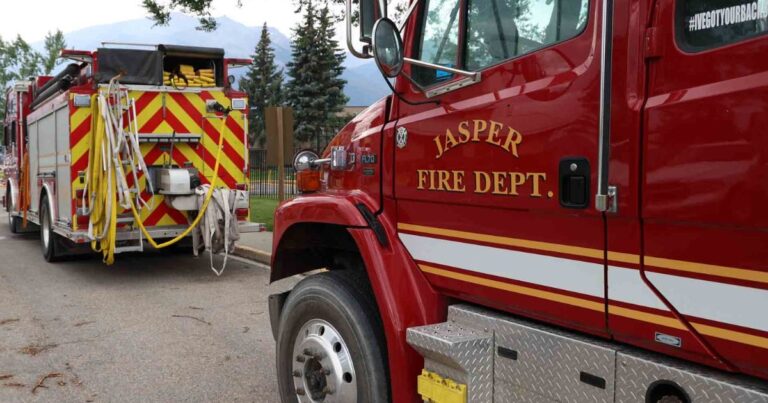
Earlier this week, a Parliamentary committee hearing revealed that Parks Canada refused help from contract firefighters during the fire that ravaged the historic village of Jasper. Alberta Forestry and Parks Minister Todd Loewen joined True North’s Rachel Parker to discuss what happened, and what steps the Alberta government plans to take to avoid similar missteps in the future.
While the Trudeau government prepares to respond to recommendations it received from a standing committee on “black justice,” Conservatives are raising alarms on the recommendation’s potential to worsen crime in Canada.
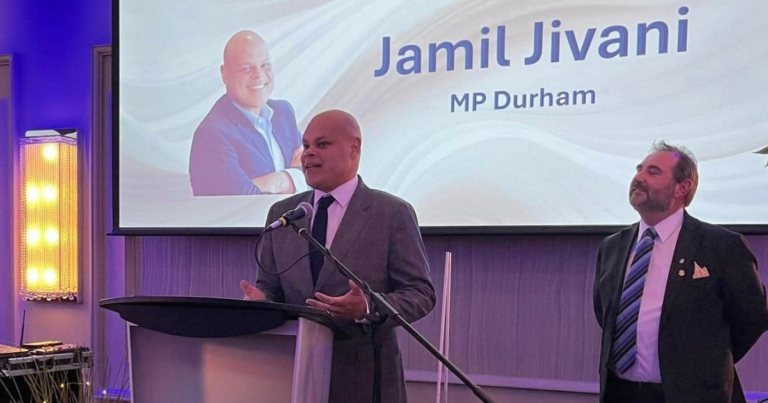
Jivani called the group’s recommendations “radical.”
“(The recommendations) include mass decarceration, reducing the number of incarcerated people by 30% over the next 10 years, decriminalizing a supply of 30 days worth of hard drugs, including cocaine, heroin and meth, and also defunding police departments by removing 25% of federal grants from eligibility to police organizations.”
When Jivani asked Khera if she as the “DEI minister” supports those particular “radical criminal justice policies” suggested in the road map, she accused Jivani of making a joke out of the issue.
“It would only be a Conservative that would be making a joke out of systemic racism (which as a result) have seen an over incarceration of black and Indigenous people in our criminal justice system,” Khera said. “To be making a joke about that is disgraceful.”
In December 2021, the Minister of Justice and Attorney General Arif Virani was given a mandate to “address anti-black racism and systemic discrimination that has led to the overrepresentation of black people in the criminal justice system.”
Jivani denied making a joke out of it and accused the Liberals of “flooding our streets with drugs,” an accusation which Khera denied.
Trudeau's DEI Minister tried to defend their "anti-racism" strategy today
According to a Justice Canada report, in 2020/ 2021, 9% of offenders in federal corrections were black, though only 4% of the population was black.
The “road map” report published in June was collectively written in consultation with 12 “black-led community-based organizations,” guided by a steering group’s proposed framework.
It calls for easier to access bail than what is currently available via controversial bail reform bills such as Bill C-75 and C-5, which repealed mandatory minimum sentences and gave courts a mandate to rule on the side of leniency when deciding if an alleged offender should be granted bail.
As Jivani noted it also advocates for the removal of criminal penalties for possession offenses of up to a 30-day supply of controlled substances, including heroin, meth and cocaine. And it also advocates for an expansion of a tax-payer funded “safe supply of drugs.”
The community groups suggested the volume of black and Indigenous individuals who are incarcerated be reduced by 50% by 2034.
“We take a broad view of decarceration to mean not only the release of people who are currently in custody, but also to reduce the number of people entering custodial facilities in the first place,” the report said.
In terms of defunding the police, the collective asked that 25% of Public Safety Canada’s federal transfer payments and Solicitor General and Attorney General grants go to non-police organizations.
Virani called the report “an important milestone in developing Canada’s Black Justice Strategy” in June.
“They have given us a history-making report that lays the groundwork for policies, programs and legislation that will help build a fairer, more effective justice system, confront systemic anti-black racism and address the disparities that limit opportunities and increase marginalization and overrepresentation for black people in our justice system,” Virani said in the government release.
Virani did not respond to True North’s request to comment.
When asked for further comment from Jivani, True North was directed to a post on X he made in July, where he called the strategy “appalling.”
“The Trudeau Liberals must reject these troubling recommendations,” Jivani said. “If the policies contained in the so-called “Black Justice Strategy” report are adopted, there will surely be more crime, drugs and disorder in our communities. There will also be more victims of crime, and black Canadians will be affected along with the rest of the country.”