Newcomers considering relocating provinces, leaving Canada due to housing costs: survey

Housing costs are forcing recent immigrants to Canada to consider relocating to another province or leaving the country altogether.

A survey by the Angus Reid Institute found that three in ten Canadians, 28%, say they are seriously considering leaving their province due to the current cost of housing.

The survey found that newcomers to Canada were more likely than Canadian-born citizens and those who’ve been in the country for more than 11 years to want to leave the province they live in due to housing. 39% of Canadians who have been here for less than ten years are seriously thinking about it.

Of those who considered moving because of housing costs, 42% said they would leave Canada. 15% have the U.S. in mind, and 27% said they would choose another country to live in.

Almost half, 45%, of those who were considering moving, said they would remain in Canada. Alberta was the most common destination, with 18% saying that would be where they moved if they went through with it.

Other reasons for wanting to leave included cost of living, healthcare, and pursuit of a better quality of life.

Ontario has the most people who might leave, with 39% agreeing that they are seriously considering the move because of housing and 18% of those reported that they “strongly agreed” and were seriously considering it.

British Columbia was the second most popular province for people wanting to escape an expensive housing market. 15% reported strongly agreeing that they are seriously thinking about emigrating from the province, and 36% said they agreed in total.

A quarter of Nova Scotians reported that they are thinking about leaving, too, as the province’s population continues to grow and housing vacancy rates remain low.

Torontonians in the 416 area code were the most likely to want to leave a Canadian city, with 44% saying they would move because housing prices were too high. Of those, 22% reported that they strongly agreed with this sentiment.

For those in the GTA with the 905 area code, the result was barely different. 44% of those living in the GTA said the same, with slightly fewer people and 18% of those in the area said they strongly agreed.

One-third of Vancouverites said they might move, and about a quarter of people in Halifax and Calgary said they want to leave because homes have become too expensive. 

Renters were the most likely to want to move, and homeowners without mortgages were the least likely to.

At least one in three people under the age of 55 agreed that they were thinking about it, while one in seven strongly agreed.

Young people aged 18-24 were the most likely age group to want to hit the road, with 42% saying they were actively considering escaping the housing market by leaving their province.
Kingston police search for random assault suspect who struck woman with a hammer

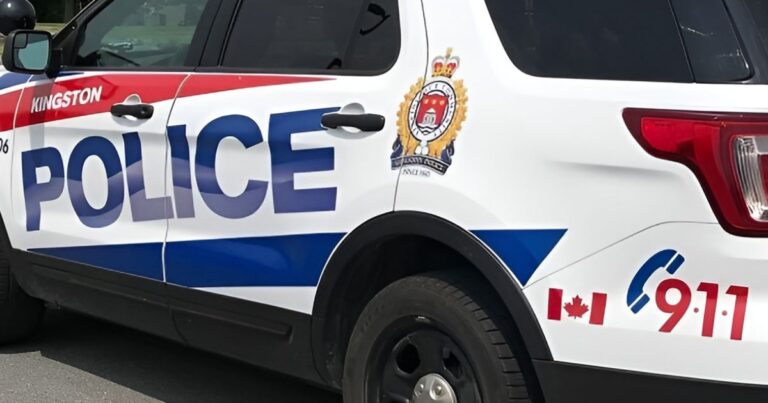
Kingston, Ont. police are asking the public for help after a shocking random hammer assault on a woman in the Kingscourt area. 

On June 23 at approximately 2:15 p.m., a 49-year-old visitor to Kingston was attacked with a hammer while walking near Kingston Secondary School.

The victim and her friend were taking a stroll along the park trail adjacent to the school, close to Kirkpatrick St. and Kingscourt Ave., when they were confronted by a man exhibiting erratic behaviour. 

As the two women attempted to distance themselves, the man suddenly struck the woman from behind, hitting the base of her neck with a hammer.

The attack caused minor injuries. 

The assailant then fled north toward Elliott Ave.

Police describe the suspect as a Caucasian male in his late 20s, standing around 5’10” with a thinner build, approximately 180 pounds. He has brown hair and a scruffy beard. 

At the time of the attack, he was wearing a dark blue t-shirt with white lettering on the chest, light grey pants, and white shoes, and was carrying a backpack.

Investigators have obtained nearby video surveillance footage capturing the suspect, which they hope will assist in his identification.

Kingston police are urging anyone with information about the suspect or his whereabouts to come forward. 

Those with information can contact Detective Bryan McMillan via email at [email protected] or by phone at 613-549-4660 ext. 6343.

Canada’s household debt surpasses 100% of GDP, third highest globally: report

Canada has the third-highest household debt in the world, trailing only Switzerland and Australia and far exceeding any other G7 country, according to a Desjardins report. 

Canada’s household debt as a percentage of GDP exceeded 100% by the end of 2023, with Australia near 110% and Switzerland around 125%. On the lower end of the spectrum, France had just under 65% of its GDP as household debt, with the United States at nearly 75%.

Household debt to GDP compares the total debt held by households to the country’s GDP. A high ratio means that a large portion of a country’s residents’ income is tied up in debt repayments, limiting consumer spending and economic growth. 

High levels also suggest that consumers are vulnerable to financial instability if economic conditions worsen.

“Since households don’t rely on a single year’s income to pay off their debt, the debt-to-income ratio isn’t the most important factor in determining households’ financial vulnerability. What matters is that households have enough money to cover the cost of servicing their debt,” reads the report.

Canada’s high interest rates have led to a larger portion of families’ incomes being dedicated to interest payments. 

All Canadians are spending more of their income on interest payments than they did before the pandemic. In 2023, the lowest 20% of income earners spent 18% of their income on interest payments.

While Canadians’ cost of living has increased, only the top 20% of Canadian earners have seen their disposable income rise since 2021. 

Income inequality reached its highest level in Canada since 2015, seeing the biggest gap between the richest and poorest households in April.

“One of the reasons behind this growing disparity is that higher interest rates affect income distribution, benefitting the rich,” reads the report. 

The richest Canadians have been able to save more, while the poorest Canadians have seen a decrease in savings.

The 10-year average saving rate decreased by 27.1% for the lowest 60% of income earners, while it increased by 23.5% for the top 40% of income earners in Canada. 

“Soaring interest rates and cost of living have crimped Canadian households’ ability to save,” reads the report. 

The Bank of Canada’s interest rate was 0.25% in March 2022, rising to 5% by July 2023. Since then, it has only seen one cut, falling to 4.75% in June 2024. 

Between 2019 and 2023, Canada’s three lowest income quintiles increased their share of mortgage debt. Rising interest rates have made this debt more expensive to service.

While generations have argued since the dinosaurs that their lives were harder than their parents, Desjardins proved this was true for the current generation of young adults in a previous report.

“Housing is much less affordable for today’s younger adults than it was for previous generations,” reads the report.

True North previously reported that housing affordability in Canada reached an all-time low in April.

The report warns that many Canadians have yet to face the shock, as they have been putting off renewing their mortgages. However, many Canadians will be renewing their mortgages within the next 18 months and will experience the effect of high interest rates. 

LAWTON: Feds spend $1.7 million promoting carbon tax abroad

The federal government has invested $1.7 million in promoting global carbon taxes, but the effort has largely failed, with only 12 countries and the EU participating. Canadian Taxpayers Federation Alberta director Kris Sims joins to explain why this latest instance of government spending has little to show for.

LAWTON: London police turn blind eye to “safer supply” diversion crisis

A new report reveals that London Police Service was aware for months that significant amounts of “safer supply” hydromorphone were being diverted to the black market but did not inform the public, with data showing a 3,000% increase in hydromorphone seizures since 2019. Centre for Responsible Drug Policy founder Adam Zivo joined True North’s Andrew Lawton to discuss.

LAWTON: Police crack down on U of T’s pro-Palestine encampment

Earlier this week, the Toronto Police Service announced it would enforce a court order requiring pro-Palestinian protesters at the University of Toronto to dismantle their encampment, after the Ontario Superior Court stated the demonstration disrupts the university’s control over King’s College Circle. Canadian Constitution Foundation lawyer Josh Dehaas joined True North’s Andrew Lawton to discuss.

LAWTON: Will Trudeau’s EV mandate kill Canada’s auto sector?

In a recent column, economist Ross McKitrick argues that government subsidies and mandates are driving EV production and adoption, but high costs will lead to losses for automakers, with Canada’s 2035 mandate for all new light-duty vehicles to be electric or hybrid potentially causing long-term economic harm unless EV production costs decrease significantly. McKitrick joined True North’s Andrew Lawton to discuss.

The Alberta Roundup | Trudeau Won’t Show His Face in Alberta

Today on the Alberta Roundup with Rachel Parker, Rachel explains why Prime Minister Justin Trudeau not attending the Calgary Stampede this year is a win for Albertans. Also on the show, Rachel has some interesting polling numbers which spell bad news for Naheed Nenshi’s Alberta NDP.

Later in the show, Rachel has news about another disaster unfolding in Calgary.

Tune into the Alberta Roundup now!

No cellphones, no gender ideology, no tuition: New independent school proposed in B.C.

A group of British Columbia youth advocates are aiming to open a tuition-free independent school by September 2025 – a school that would exclude the province’s controversial SOGI 123 (sexual orientation and gender identity) program and keep classrooms free of distractions.

Instead, Vernon Oak Elementary, in the Okanagan city of Vernon, B.C., would develop a homegrown anti-bullying curriculum. 

“We’re going to have a whole policy around how we are going to deal with bullying. One of the things that we’re going to focus on is how we are all the same, as opposed to pointing out differences between people. Because we think that creates more division between people,” Vernon Oak Learning Society director Amber Stamm’ler told True North.

The school, which would begin serving Kindergarten-Grade 2 and grow from there, would also be a cellphone-free environment.

“Cellphone-free does not mean we’re against technology or teaching children technology, we just don’t want the distraction that it causes. And we would like to encourage face-to-face socialization, as opposed to doing all this online with social media,” Stamm’ler said.

“And of course, there’s also the added danger of cellphones and bullying, it’s much easier to bully online.”

The school would run year-round so that families with two working parents won’t have to struggle to find care for their children in the summer, and there would be no enrollment charge.

“We want it to be for all children of the community, and not just be for people that are well-off and have money,” Amber explained.

Vernon Oak Elementary would not have a religious affiliation. 

“Although our school is non-sectarian, we will be teaching children about various religions from an educational perspective as well as exposing children to the concept of the existence of a greater power,” its website states.

Students of Vernon Oak would also visit farms and retirement homes, run small businesses within the school, practice healthy eating, learn critical thinking and public speaking, and study first aid and financial management. 

Independent schools in B.C. can receive 35 to 50% of the funding that a public school receives per student. The schools must deliver the B.C. education ministry’s curriculum, but they have the freedom to approach the curriculum from their own perspective and employ teachers who reflect these perspectives. 

“Our school will satisfy the requirements set out by the ministry, however, we will only be accountable to the parents and the children who attend our school and share our values. We will have an open-door policy for those parents,” the school group states.

They hope to receive some public funding, but they will still have to raise what they anticipate to be millions of dollars to get off the ground.

“We’re going to acquire land and build modulars or acquire existing infrastructure for the school. And then the expenses after that for insurance, set-up, maintenance, staffing. And then the ongoing costs of maintaining teachers and teachers aides,” director Lee Warzecha said.

They’ve set up an online fundraiser to help with their start-up costs, and an adjoining fee-based preschool would also help with costs. They’re also seeking a donor with land.

According to the directors, if they do not raise enough funds or if the school is not approved, all donations will be returned.

British Columbia has no charter school system – the only province in Canada with such a system is Alberta. 

“We are laying the foundations so that the community can have a new school for their kids,” Stamm’ler said.

“So this is why we’re really counting on the community to support themselves really, to start this new school, because we know people want it, they just really have to recognize that this is their opportunity that we have created for them.”

“I believe that the children are really, really the foundation for humanity,” director Sibille Beyer added.

 “And so our children really deserve the best education.” 

University of Waterloo alleges habitual aggressive behaviour from encampment activists

The University of Waterloo told a court there’s been a pattern of aggressive behaviour from pro-Palestinian encampment protesters, and that its campus has been vandalized with anti-Israel graffiti.

As previously reported by True North, the university is suing encampment organizers for $1.5 million worth of damages from encampment organizers, including for trespassing, damaging property, intimidation and enactment.

The university is also asking the Ontario Superior Court of Justice to order encampment protesters to “immediately dismantle and remove any encampment or obstructions erected, built, created, or imposed by them.”

Waterloo is in the process of mediation with protesters. 

In a statement of claim, the university made several allegations against encampment protesters. The allegations have not been proven in court.

The University of Waterloo is accusing pro-Palestinian protesters of having disrupted several university functions. 

Among the functions disrupted was a Jun. 18 board of governors meeting. The university says protesters formed a human chain, which “trapped individuals attending the (meeting)” and “made it challenging or impossible for them to enter or exit the board meeting.”

The university says protesters also interfered with its “UWaterloo Day,” a day aimed at giving incoming freshman students “an opportunity to learn more about the university and the services and amenities (available) to them.” 

It alleges that a faculty of engineering alumni dinner was disrupted, with protesters yelling into megaphones, chanting and scattering flyers onto attendees from an upper floor.

The statement of claim says encampment activists also disrupted a university Pride Month event.

“Armed with signs and air horns, they began chanting aggressively, making accusations that the president and vice-chancellor had blood on his hands and was responsible for 40,000 deaths, among other things,” the lawsuit claims.

According to the lawsuit, university leadership have been targeted multiple times by pro-Palestinian activists.

Waterloo says protesters put up posters on campus with the faces of university  president Vivek Goel and vice-president Charmaine Dean, with the words “Genocide Goel” and “Inhumane Charmaine” and stated they were “wanted for Complicity in Genocide.”

A pro-Palestinian activist also penned a letter titled “Genocide Goel,” where they called the president a “f***ing racist”. 

“[Y]ou will have no peace until you contribute your fair share of justice to the people of Palestine,” the letter warned. “Not yours truly, for your hands are red with blood.” 

The statement of claim says protesters also desecrated the door of the president’s office, vice-president’s office and provost’s office with threatening stickers that said, “our protest will continue until you DIVEST, BOYCOTT.” and “DIVEST. BOYCOTT. CONDEMN GENOCIDE. STOP BEING RACIST BASTARDS” 

The university also says it found graffiti that read “free Palestine” and “UW is complicit free Palestine” and that protesters hung a banner that read “Sufyan Taya Hall – honour our martyrs”.

True North reached out to encampment organizers for comment, but they did not respond. 

When the university announced its legal action in late Jun., organizers with Occupy UW blasted the university for its “shameful” decision.

“Incredibly shameful that (the University of Waterloo) is choosing to sue their own student body protesting their universities’ complicity in a genocide,” organizers said. “We are students who have risked everything we have to protest our universities complicity in this genocide and we refuse to allow those who fund death and destruction to break our resolve.”