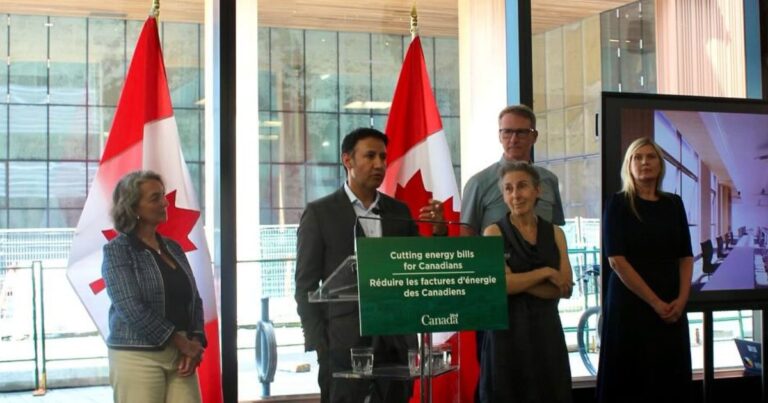
Justice minister deletes capital gains tax video after being accused of falsehoods

Justice Minister Arif Virani has come under fire for a misleading video he posted to social media to “explain” to Canadians how they would be affected by the Liberals’ increase to the capital gains tax. 

“People in Parkdale–High Park have talked to me about the fact that they might have a second property, like a cottage,” said Virani. “First of all if you pass on the cottage to someone in your family, there is no capital gain that is incurred.”

However, Virani’s claim was swiftly debunked by Conservative MPs Michelle Rempel Garner and Philip Lawrence, who called the video “extremely misleading.”

“There is no special definition for ‘family cottage’ within federal tax provisions. The fact is that if someone owns a second property that they use for recreation unless they pass on that property to their spouse or common-law partner, capital gain is usually incurred,” said Lawrence, who is also a tax lawyer.

“Said differently, if that property is gifted or sold to anyone other than a spouse or common-law partner, someone will likely have to pay capital gain taxes on its increased value, so the Liberal’s new tax increase could apply to them.”

Another claim that Virani made was that capital gains of less than $500,000 won’t be affected by the new tax increase.

“If you do sell the cottage outside of your family, and you purchased the cottage for $300,000, and sell it for $800,000, there’s absolutely no change that affects you,” Virani said.

Canadians are each given a $250,000 exemption from the increased inclusion rate under the Liberals’ new capital gains tax changes, but Lawrence called Virani’s cottage sale analogy an exercise in “fudging the truth.” 

That scenario would only apply if a property was equally owned by two spouses who were able to combine their $250,000 exemptions together at the time of the sale.

That is often not the case, however, as properties are often owned by a single person. Also, if a spouse dies, there would be no opportunity to combine exemptions. 

“So, in Mr. Virani’s example, $250,000 could be taxable at the Liberal’s increased rate of 66.67%,” said Lawrence.

Furthermore, Lawrence said that Virani was conflating the inclusion rate, meaning the amount of the gain that is taxable, with the income tax rate, the rate at which the gain is taxed. 

“This discussion is complicated enough without the federal minister of justice spreading misinformation,” said Lawrence. 

In Virani’s now deleted video, he also went on to compare the new capital gains tax increase to that of ones in New York and California, claiming it was still lower than in those places.

Lawrence said this was like comparing “apples and oranges.”

“The U.S. rates Mr. Virani referenced are state taxes only, which are significantly less than both U.S. federal tax and Canadian federal tax rates,” said Lawrence. “For instance, the total capital gain tax on an asset sale in California (the state with the highest tax) is less than 14%. In Ontario, that rate will increase from 27% to around 31-32%.”

A spokesperson for Virani said the video was deleted to “minimize confusion.”

“There was some nuance in the video posted by MP Virani that would benefit from additional context, so we decided to take it down to minimize confusion,” the spokesperson said in a statement. “This is the right thing to do. I wish that the Conservatives who peddle disinformation daily, like claiming that 50% of people impacted by the capital gains tax changes make under $100,000 a year, would do the same.”

Virani’s office reiterated the government’s position that the capital gains changes are about “fairness for every generation,” claiming just 0.13% of Canadians will pay more in tax on capital gains in a given year because of the change.

“We’re asking the wealthiest Canadians to help pay their fair share.”
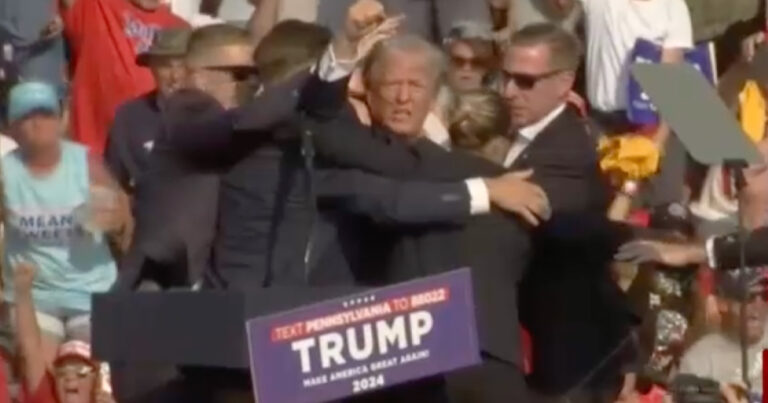
The Faulkner Show | “The shooter had inside help”: Former JTF 2 sniper Dallas Alexander analyzes failed Trump assassination attempt

On the latest episode of the Faulkner Show, former JTF 2 sniper and record holder for the longest confirmed kill in history, Dallas Alexander, breaks down the security failure that preceded the assassination attempt on Former US President Donald Trump and the fatal shooting of a Trump supporter in Pennsylvania. Dallas believes that the shooter had inside help to get to the position he was able to get to and to get several shots off toward Donald Trump.

As a former special forces sniper, Alexander worked as sniper detail for Canadian VIPs including the Canadian prime minister on overseas trips. Dallas also speaks about his forced departure from the Canadian Armed Froces during the Covid pandemic and the military’s failed attempts to recruit young Canadians into the force.

Watch the latest episode of The Faulkner Show now!

Severe storm leaves 165,000 without power in Toronto, vehicles abandoned

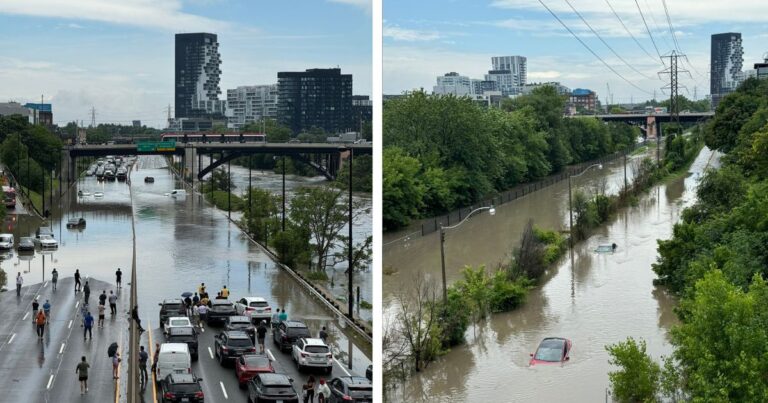
A severe rainstorm in Toronto led to mass flooding, vehicles abandoned on busy roads, and over 165,000 people without power.

“Extremely heavy rain is expected,” warned Environment Canada on Tuesday. “The ground, already near saturation, has little ability to absorb further rainfall. Rapidly rising rivers and creeks can sweep away bridges, culverts, buildings, and people,” said the weather agency.

The agency warned people to abandon stalled cars if the water level is rising and keep children and pets away from creeks and river banks.

Environment Canada said that as much as 125 millimetres of rain fell at rates of 40 millimeters per hour in the Greater Toronto Area. 

Toronto Hydro confirmed that it has been working with Hydro One, the provincial energy supplier, to restore power for the 165,000 people without it but could not offer an estimated timeframe of restoration. 

Many roads have been shut down as a result of the flooding including lanes of the Don Valley Parkway from Bayview Avenue to the Gardiner Expressway. River Street to Queen Street is also shut down.

Additionally, Lakeshore Boulevard, sections of Highways 400 and 401 as well as some Toronto subway stations have also been closed.

Toronto Fire deputy chief Jim Jessop said his department has received triple the call volumes it normally would in response to the flooding, which has been pooling up at Union Station. 

Toronto City Hall employees also had to deal with flooding coming in from the ceiling of their offices by using recycling bins.

Peel Regional Police received reports of manhole covers being lifted by the heavy volume of rain and urged residents to take caution on the roads.

Additional flood warnings were given to areas along shorelines, rivers and streams throughout the GTA by the Toronto and Region Conservation Authority.

One Peel paramedic called the rain levels an “unbelievable amount of water” in a social media post made from Mississauga Road and Dundas Street.

“Please please please stay away from any area that water flows,” reads the post.

Environment Canada’s severe storm warning for the GTA has since been lifted. 

B.C. library banned book challenging residential school narrative without reading it

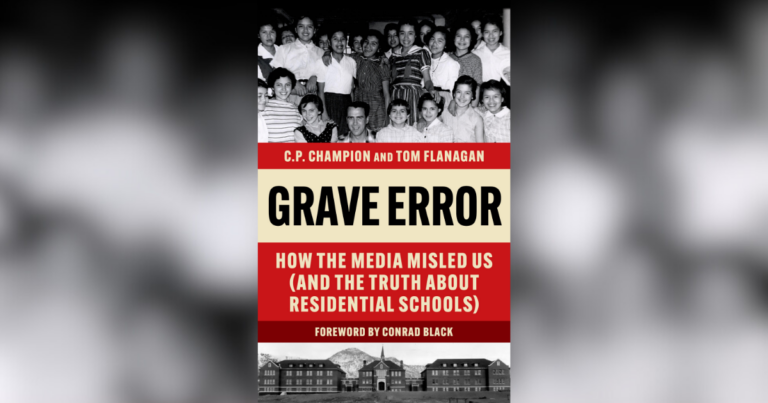
Executives at a British Columbia library decided to ban a book debunking the political narrative that hundreds of graves were supposedly discovered at former residential schools even before conducting a review of its contents. 

According to internal emails obtained via an access to information request, Fraser Valley Regional Library’s management scrambled to respond to Canadians after they were flooded with requests to put “Grave Error: How the Media Misled Us (and the Truth about Residential Schools)” in circulation.

“Grave Error” Was published by True North in collaboration with Dorchester Books, edited by C.P. Champion and Tom Flanagan. 

True North previously reported that at least two B.C. libraries, including Fraser Valley, had prohibited the bestselling book from its inventory.

One day after True North’s story, Fraser Valley Regional Library CEO Scott Hargrove emailed top library brass demanding strict media discipline, urging all communication requests on the controversy to be directed to him. 

“If I’m unavailable, please wait until I am available – do not issue a statement until you talk to me,” said Hargrove. 

“This is NOT a book ban,” Hargrove stressed. “Not choosing to purchase a book is not banning it, it is simply deciding it does not have a place in our collection at this time.” 

In another email dated Mar. 4, the library’s manager of collections, Dean Kelly, indicated that he had yet to even read the book himself and that the decision to ban the book from the library’s inventory happened before a review took place. 

“There’s been some customer complaint that we declined to purchase an independently published book that discusses recent findings of evidence of graves around former residential schools,” said Kelly.

“It’s a bit of a sensitive subject and I’m foreseeing increasing customer demand for this title – and pushback from staff. I’ve ordered a copy for myself to review. It looks like it will arrive on Wednesday. When it does, please send my way – at this point not for the collection.” 

Citing a past response to requests for the book, Hargrove argued that the book was rejected because the title was “self-published or independently published.”

Among the reasons cited by the library for the decision to ban the book from the catalogue was that independent titles had binding that “does not stand up to library circulation,” were “more difficult” to obtain, and tend to be “more expensive” than books published traditionally. 

“This same logic has been applied to several hundred other similar requests, so we are consistent with our past practice, Board policy and procedures,” wrote Hargrove. 

A cursory glance at the Fraser Valley library catalogue suggests otherwise. Libraries across the region have an abundant number of independently published titles in their inventories, including physical copies. 

One example is the novel “Skin” by Donna Jo Napoli, available at the Clearbrook branch in Abbotsford, B.C. According to the library catalogue, the novel’s publisher is listed as Amazon Publishing. 

On the book’s Amazon page, the publisher listed is Skyscape, an independent publisher established on Amazon’s self-publishing platform. 

True North asked the library to ask why the same standards were not applied to other independently published titles as they were to “Grave Error,” but the library did not respond to requests for comment. 

As for the argument that the book was too expensive, social media comments show that members of the community had offered to generously donate their own copies of “Grave Error” to the library at no charge. 

“I would be happy to purchase several copies and donate to your library, so you need not struggle to locate. Please respond if you wish me to order and ship to you directly,” one user wrote on Instagram. 

The library similarly did not respond to requests about why it did not accept these donations of “Grave Error” if cost was the concern.

Throughout March and April, Canadians continued to request “Grave Error” to no avail. 

“Wow well worth a read. This book is not about the horrors of residential schools but about the media misinterpretation of the ‘mass graves’ of dead children. How language has changed from died to killed (or murdered). How ground penetrating radar just picks up anomalies rather than dead children,” one request reads.

“And why no children’s graves have been found because it is in the best interests of some to never confirm that these anomalies are actually roots, drainage tiles, or changes in soil density, or possibly graves. The money that the Federal Gov has given to explore these graves is shocking and Trudeau broadcasting these “findings” without proof. Maddening but worth the read.” 

Discussion around the book’s ban comes at a time when even the Tk’emlups te Secwépemc First Nation where the former Kamloops residential school site claims originate are scaling back their language around the discovery to “anomalies” rather than graves.

Trump’s VP pick J.D. Vance is a Freedom Convoy supporter and Trudeau critic

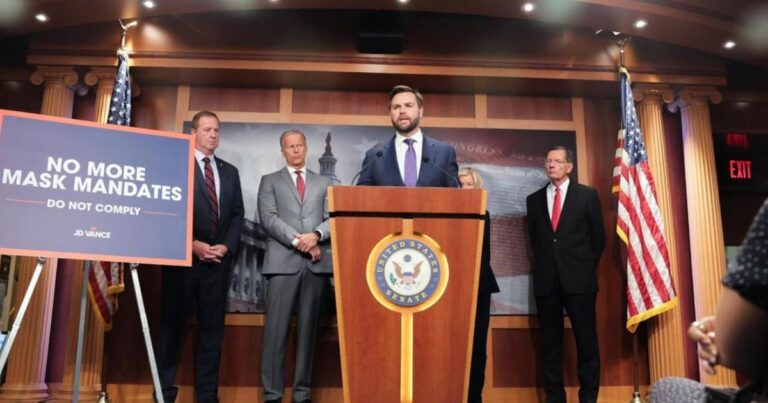
Between his friendship with a Conservative MP and criticism of the Liberal government, the Senator Republican presidential candidate Donald Trump picked to be his running mate is no stranger to Canadian politics.

At the Republican National Convention, the former President announced that Ohio Senator and former US Marine J.D. Vance would be his VP pick in his 2024 presidential bid. Although a prominent voice in American conservative politics, Vance hasn’t shied away from chiming in on Canadian issues over the last couple of years.

During the 2022  Freedom Convoy protests in Ottawa, Vance was outspoken against the Liberal government’s heavy-handed response to the Canadian truckers’ protest against COVID-19 mandates.

“The Canadian truckers have killed zero people and are being treated like terrorists in their own country,” Vance said on X in February 2022. 

In reference to the freezing of Freedom Convoy funds, Vance pointed to Vice President Kamala Harris’s financial support for a Black Lives Matter fund, which bailed out individuals arrested at violent riots. Some of those released had previously been charged with violent offences, including murder, sexual assault and kidnapping.

“18 months ago, BLM rioters killed 20 people and were bailed out of prison by the future vice president of the United States.  It’s time for conservatives to get serious,” he said.

When Finance Minister Chrystia Freeland announced that the Liberals would freeze the bank accounts of Freedom Convoy participants, Vance spoke out about what he believed to be government overreach.

“This is why crypto is taking off. The regime will cut off your access to banking if you have the wrong politics,” he said.

In response to the Ottawa police’s Feb. 18 announcement that they would arrest journalists remaining at the protest after it was declared illegal, Vance said Canada was a cautionary tale of democracy under attack.

“What’s happening in Canada is a far greater assault on democracy than anything the Left has whined about the last few years. It could happen here if we don’t elect people who defend our voters,” he said.

“What the hell is happening in Canada?” Vance said another time, remarking on the rise of anti-Christian violence in Canada after another Catholic church burnt down in rural Saskatchewan.

The church burning was suspected to be arson in the wake of media and government announcements that unmarked graves of genocide victims were found at residential schools. However, no bodies have been found at the alleged sites.

According to True North’s incident map, over 100 churches have been vandalized or burned since the announcement of the supposed finding of unmarked graves.

Vance also has connections to the riding of Durham’s recently elected Conservative MP Jamil Jivani. The two were “best friends” in law school at Yale University, according to an article written by Jivani when he was a columnist for the National Post.

Jivani said the two met at a cheese and wine-tasting event at their law school’s orientation, which they both felt out of place because of their humble background.

Notably, former Republican nomination candidate Vivek Ramaswamy attended law school at Yale simultaneously and had good things to say about the Ohio senator from their time together.

“So proud of my friend, classmate, and fellow southwest Ohioan today. We used to watch Bengals games at the bar in law school. It’s awesome we’re now here a decade later with JD joining the strongest presidential ticket in our lifetime,” Vivek said on X.

As the junior U.S. senator for Ohio, Vance has dealt with Canada as a trading partner since he took office in 2023. Ohio, the state with the third largest share of exports into Canada, makes up nearly 20% of America’s exports.

Canada’s ambassador to the U.S., Kirsten Hillman, said in a CBC interview that her team is “very happy” that Vance was Trump’s VP pick. She has worked with him in the past and knows that he values the trading relationship between the two neighbouring countries.

“We’re very happy to have someone on the ticket who understands Canada and the value of the Canada-US relationship. That’s a good thing for us that he has this high level of knowledge.”

The U.S. vice-presidential debates have yet to be scheduled, but election day is Nov. 5, 2024.

CBC journalist deletes post saying Trump assassination attempt “could have been better”

The CBC said it doesn’t endorse the views expressed by one of its journalists who mocked the assassination attempt on former U.S. president Donald Trump.

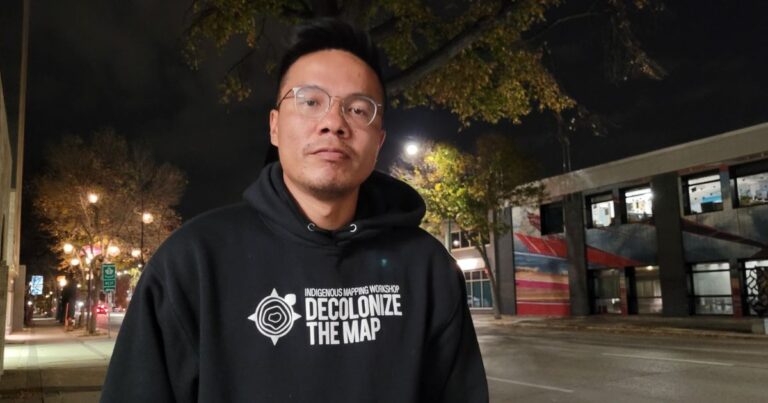
CBC Indigenous issues reporter Lenard Monkman referenced the attack on Trump’s life in a Facebook post on Saturday, soon after the shooting claimed the life of a Trump supporter seated near the former president.  

“It was a good day. Could have been better, but still a good day,” wrote Monkman.

Monkman also shared a meme to Facebook of someone shrugging in disappointment with the caption, “The entire world at one guy on 13 July 2024.” 

A shooter opened fire on the presidential candidate during a rally in Butler, Penn. The incident resulted in two fatalities, including the shooter and the audience member. Trump survived the attack but a bullet grazed his ear. 

While Monkman removed the posts soon after, social media users circulated screenshots of the comments on X. Replies to Monkman’s Facebook post by his mutuals were filled with similar ill will targeting the former president.

CBC’s head of public affairs Chuck Thompson told True North that Monkman does not speak for the public broadcaster, and the network strongly condemns the content of these posts.

True North asked the CBC whether the posts violated the CBC’s journalistic standards and practices and whether any disciplinary measures would be taken against Monkman.

“Any HR matters involving our employees are kept private,” said Thompson.

CBC’s journalistic standards and practices are available online. The “Use of Social Media” section says that CBC’s editorial standards on its published content extend to its employees’ social media accounts.

“We maintain professional decorum and strive to do nothing that could bring the CBC into disrepute,” reads the guide.

“We consider perceptions created when we share, republish, link, or interact with other people’s content. We strive to avoid having such actions appear to be endorsements. When appropriate and possible, we provide context.”

Monkman did not reply to a request for comment from True North.

Various Canadian university professors published similar posts on social media showing disappointment in the failed assassination. 

Trump formally received the Republican party’s nomination on Monday, winning an overwhelming majority. He announced Ohio Senator J.D. Vance as his vice-presidential running mate.

The Republican nominee walked out with a bandaged ear to a live performance by Lee Greenwood of “God Bless the USA.”

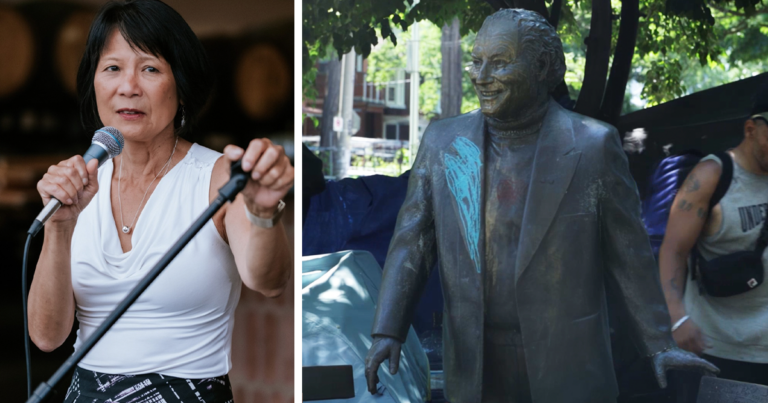
LEVY: Chow’s encampments ruining city’s communities and heritage

Adam Waxman has had quite enough of seeing the graffiti and other vandalism which has repeatedly defaced the statue paying tribute to his late father, Al.

The King of Kensington was tagged with anti-Semitic comments back in February. 

Now it sits right in front of the encampment that has taken over Bellevue Square Park, most especially a tent smeared with the slogan, Free Gaza.

The encampment, housed by several drug addicts, has essentially taken over the park, including the children’s playground. Port-a-potties – chock full of graffiti – perched at the edge of the Tent City.

Despite law enforcement’s attempts to clear out the park, Toronto Mayor Olivia Chow continues to side with the squatters. 

Sue-Ann Levy reports. 

The Daily Brief | CAF members investigated for lamenting Trump attempted assassination

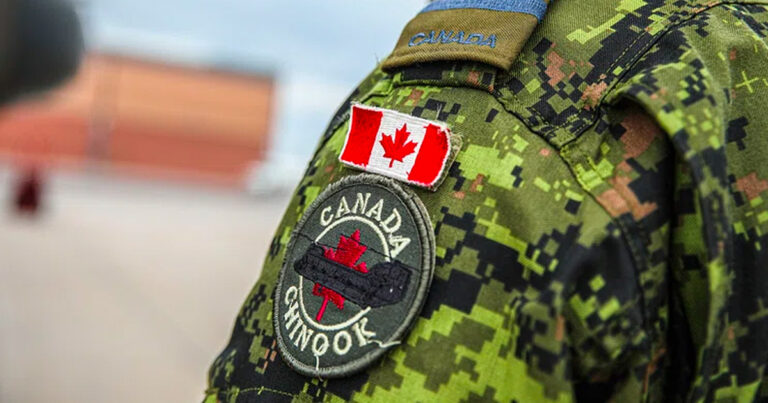
A True North exclusive revealed that the Canadian Armed Forces are investigating two of its members over social media posts lamenting that the attempted assassination of former U.S. President Donald Trump was unsuccessful.

Plus, several Canadian university professors are also in hot water over statements about the attempt on the former president’s life.

And as the cost of living crisis continues in Canada, Costco is expected to increase its membership fees this fall.

Tune into The Daily Brief with Cosmin Dzsurdzsa and Noah Jarvis!

Only 7% of Canadians recognize Mark Carney: poll

Despite murmurs that former Bank of Canada governor Mark Carney might be the guy to turn around the Liberal party’s fortunes, a new poll suggests he’ll have an uphill battle.

Just 7% of Canadians polled in an Abacus Data survey could identify Carney from a photo.

Carney, currently the chair of Brookfield Asset Management and a United Nations climate envoy, has generated immense speculation amongst Canada’s political class as to whether he will pursue the Liberal leadership. Justin Trudeau said recently he’s been trying to recruit Carney into federal politics for years.

However, a new poll from Abacus Data gauging the identifiability of several leading Liberals rumoured to desire their party’s top spot found that Carney is not well-known to a vast majority of Canadians.

Survey respondents were shown pictures of several top Liberals and were asked if they could name them. The poll found that only 7% of Canadians can name Mark Carney from his picture, with a whopping 93% of Canadians unaware of who he is.

Carney lags behind several prominent Trudeau government cabinet ministers, including Deputy Prime Minister Chrystia Freeland who 39% of respondents recognized , Foreign Affairs Minister Melanie Joly was recognized by 20% of Canadians, while 19% could identify Treasury Board Presidenta Anita Anand. 

Even among  Liberal party voters, Carney was only recognized by 10% of those polled.

The poll’s findings raises questions around Carney’s ability to successfully take over the Liberal leadership, even as the Conservatives ramp up their attacks against him as Trudeau’s likely successor.

Earlier this year, Conservative MPs unsuccessfully attempted to summon Carney to testify before the House of Commons finance committee, arguing that his testimony was important as a potential future Liberal leader. 

Before becoming the Conservative leader, Pierre Poilievre grilled Carney, calling him a “Davos elite,” in a parliamentary committee.

When Trudeau admitted last week he’d been trying to recruit Carney into government, he attempted to calm speculation that he would shuffle Freeland out of her role as finance minister by telling reporters that she remains a close ally and partner. 

Canadians think Quebec disproportionately benefitting from Confederation while Alberta pays

Quebec takes more than it gives and Alberta is punching above its weight. These are the takeaways from a new Angus Reid poll on “confederational fairness.”

More Canadians believe that Quebec receives a disproportionate benefit from the nation, while Alberta is the province considered by most Canadians to get a “raw deal,” meaning it gives more to the federation than it receives. 

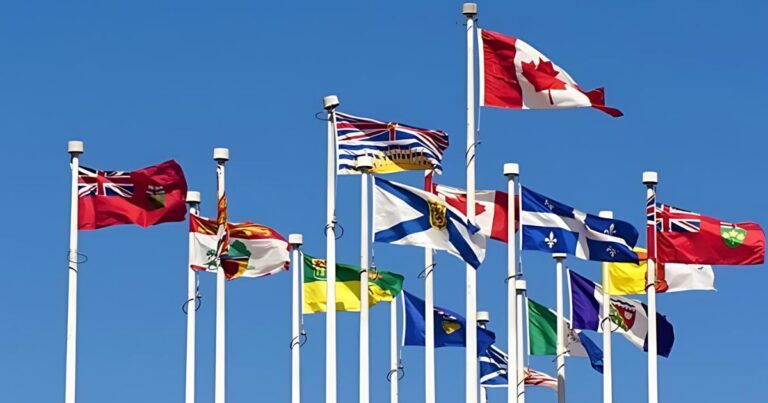
The polling comes as provincial and territorial leaders meet in Halifax for the 2024 Council of the Federation, a biannual meeting to promote cooperation.

42% of Canadians said Quebec benefits disproportionately from its place in the nation. Conversely, 23% said Alberta gives more than it receives, ten points higher than any other province. 

Alberta Institute Peter McCaffrey says this isn’t just a perception, but a fact.

“The net difference between total federal tax collected and total federal expenditures in Alberta is approximately $20 billion per year,” said McCaffrey. 

While Alberta and Quebec sit on the two poles of the spectrum, residents in Saskatchewan “are most likely to feel little benefit and high levels of angst,” reads the study.

“The figures are closer in Saskatchewan, but it’s important to remember that the unfairness extends not only to direct financial transfers, but also to differences in how people, businesses, and industries are treated in different parts of the country,” said McCaffrey. 

A mere 2% of Saskatchewan’s residents said they felt they got an extra advantage from being in Confederation. Conversely, 58% said they got a “raw deal,” resulting in a net alienation score of -55%, followed by Alberta at -41%. The lowest alienation score came from Quebec, where 19% felt they got an extra advantage, and 31% said they had a raw deal, resulting in a net score of -12%.

A similar poll was conducted by the Angus Reid Institute in 2019. Respondents were asked whether policies from the federal government had “hurt” their provincial economy in recent years.

In 2019, 51% of Canadians felt that the Liberals had damaged their provincial economy. In 2024, that number rose to 57%. The province where residents felt that the Liberals hurt them most was Saskatchewan, with 72% reflecting that sentiment in 2024, a slight rise from 71% in 2019.

While Alberta led the way in 2019, with 82% of its residents saying that Liberal policies hurt its economy, that number fell to 65% in 2024. 

Despite the decrease, McCaffrey said that the financial transfers from west to east are larger than they’ve ever been.

“And, the federal government is seen as working against the west’s interests — actively trying to shut down the very industries that generate the taxes that pay for the subsidies that the west provides to the rest of the country,” said McCaffrey. 

He added that Canadians outside of the west generally assume that the amounts are small, however they work out almost $5,000 per Albertan per year.

The degree to which Canadians felt respected by those in other provinces differed greatly. British Columbians felt they were the most respected by the rest of the country, with 64% of residents sharing that sentiment. The next closest province was Ontario, at 44%, followed by Alberta at 30%. Saskatchewan residents felt the least respected by the rest of the country, at 22%.

The report also noted general satisfaction with the direction provinces were headed. 

Between 2019 and 2024, the percentage of people who were “satisfied” with how things were going in their province declined in every single province except Alberta. 

“When this question was asked in January 2019, the Alberta NDP majority government under Premier Rachel Notley were nearing the end of its term, and there was significant discontent with a struggling provincial economy, especially when it came to the oil and gas industry and the lack of movement on new pipelines,” reads the study.

While residents of every province except Alberta grew less satisfied with their provinces, this dissatisfaction intensified for the nation. 

In 2019, 59% of Canadians said they were “dissatisfied” with how things were going in Canada. In 2024, this number grew to 72%. The province with the least satisfied residents was Saskatchewan, at 82%.

Saskatchewan’s most recent battle with the federal government resulted in the province being granted an injunction, blocking the CRA from attempting to garnish the province’s bank accounts.

Western Canada feels alienated from the federal government, which the study deems a “long-held opinion.”

“At least four-in-five residents in B.C., Alberta, Saskatchewan, and Manitoba say that ‘Ottawa always favours Ontario and Quebec.’”

McCaffrey said that provinces are tired of the federal government interfering in their provincial jurisdiction. However, he said that the solution is simple.

“The federal government needs to stay in its lane and focus on governing in the areas of jurisdiction that are granted to them by the constitution.