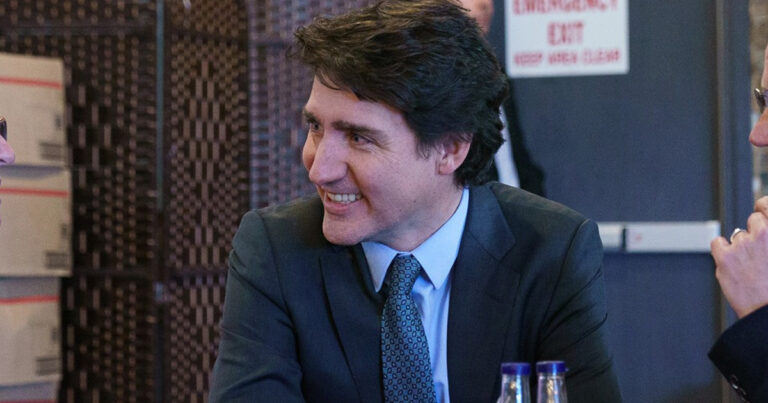
Justin Trudeau’s six-day Indo-Pacific trip last fall came with a catering bill of $223,234, with the total trip costing nearly $2 million, with the potential for further increases as some expenses are still being processed. Canadian Taxpayers Federation Alberta director Kris Sims joined True North’s Andrew Lawton to discuss whether the luxury meals, which included beef brisket, tenderloin, and lamb shanks, were justified.
LAWTON: New report disproves Gaza genocide claims

In March, an IPC report suggesting an imminent famine in Gaza, based on inaccurate assumptions, was retracted in a June follow-up study that has been largely ignored, despite evidence showing that the regions food supply is sufficient due to local production and humanitarian aid. Honest Reporting Canada assistant director Robert Walker joined True North’s Andrew Lawton to discuss.
Edmonton’s reusable bag fees will double on Canada Day
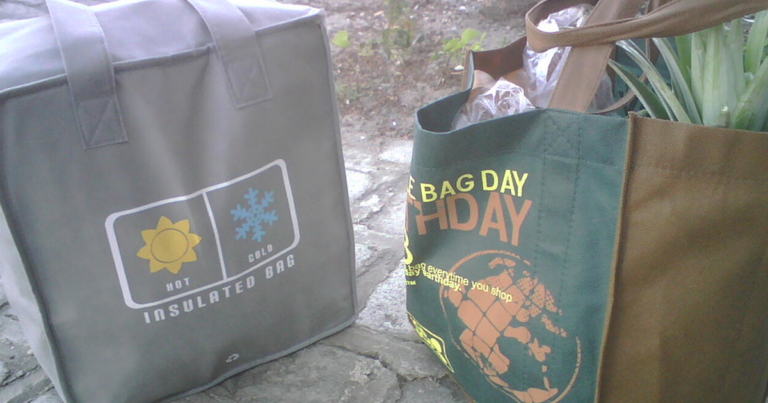
Beginning on Canada Day, Edmontonians can expect to pay higher prices for paper and reusable bags while shopping.
On Monday, the price for paper bags in Edmonton will rise from 15 cents to 25 cents. The price for reusable bags will double, from $1 to $2. The previous prices were implemented last Canada Day and lasted the year before this planned change.
In a YouTube video, the City of Edmonton outlined the changes, stating that around 75% of shoppers now bring their own bags.
“If you forget your bags, the best choice for the environment and your wallet is to purchase a paper bag instead of a new reusable bag if you can,” said the city.
The city said that bags can be multi-functional.
“When you’re done with the bag, you can use it to hold garbage or food scraps or recycle it. So make a plan to remember your bags when you’re out shopping or picking up takeout,” the city’s video added.
The city claimed that over the last few years, Edmonton has discarded nearly 250,000 bags daily. Producing, shipping, and disposing of each bag creates emissions equivalent to driving 25 kilometres, according to the city of Edmonton, justifying its price increase.
While Edmonton has remained committed to its single-use bylaw, other cities have had to scrap the idea amid backlash from residents. Calgary repealed the bylaw in May after paying the price in a public approval downfall.
Alberta Premier Danielle Smith had previously said she did not support the single-use items bylaw.
She tasked her Minister of Municipal Affairs with investigating whether either city had violated the Municipal Government Act, after saying that she disagreed with both of their decisions.
“I think there’s a little bit of ideology getting ahead of common sense here,” said Smith.
Calgary Mayor Jyoti Gondek was recently revealed to be one of the few political leaders in Canada less popular than Prime Minister Justin Trudeau.
Her plummeting public approval rating, which reached 26% in June, was attributed to negative public reactions to the single-use bag bylaw, blanket rezoning, and her handling of the water crisis.
According to a Leger poll conducted in May, Edmonton Mayor Amarjeet Sohi may be faring no better.
Over two-thirds, 67%, of Edmontonians said that Edmonton is heading in the wrong direction.
When asked about levels of satisfaction with Sohi’s quality of work, only 10% of Edmontonians gave him a “good” review, a score between 8-10. He had 32% who gave him a “poor” review, a score of 0-2.
Although the poll did not discuss the single-use plastics bylaw, it did ask Edmontonians who they planned to vote for.
Only 16% chose Sohi. Forty-three percent said that they would vote for “someone else.”
CRA to take legal action against ineligible CERB recipients
The Canada Revenue Agency has promised to ratchet up its efforts in retrieving money the agency overpaid to Canadians who were ineligible for emergency benefits during the COVID-19 lockdown.
Canadians who were overpaid by any of the COVID-19 relief benefits handed out under the Trudeau government during the pandemic may soon face legal action.
“Starting in July 2024, for individuals who have not responded or co-operated, and who have been determined to have the financial capacity to pay, legal warnings will be issued and legal measures could be taken to recover monies owed,” wrote the CRA in a statement released on Thursday.
According to the agency, only people who have already been contacted about repaying their debt are the ones who should be worried.
“Legal measures are only taken when there is no cooperation from an individual with ability to repay the debt,” reads the release.
However, all those deemed to be ineligible recipients of the Canada Emergency Response Benefit, the Canada Recovery Benefit and the Canada Worker Lockdown Benefit who have not yet repaid are now in the agency’s legal crosshairs.
Garnished wages and even removing money directly from bank accounts are now on the table.
Canadians who were overpaid but are unable to repay their debt are encouraged to contact the CRA to create a plan of repayment, the agency urged.
“The CRA remains committed to supporting Canadians who, for different reasons, are not able to repay their debts,” it said.
“If you cannot pay the total amount owing immediately, we encourage you to contact the CRA to develop suitable payment arrangements based on your ability to pay. Not contacting the CRA when receiving a legal warning will result in legal measures that could be avoided.”
Over $200 billion was doled out to businesses and individuals during the duration of these relief payment programs with little oversight, resulting in the CRA later deciding that some recipients were ineligible.
The agency is now demanding the repayment of $9.53 billion from certain individuals, $5.41 billion of which is from CERB alone.
Another $2.67 billion is from CRB and the remaining $1.25 billion is from the Canada Recovery Caregiving Benefit.
The CRA first began its recovery efforts in May 2022 via letters sent out to ineligible recipients, requesting a voluntary repayment.
However, the agency changed its tone last year when it sent out collection letters and began reaching individuals by phone.
Furthermore, the CRA began the practice of “offsetting,” meaning that it would automatically deduct money from tax refunds and certain benefits and apply it toward the person’s debt owed.
The Trudeau government’s efforts to retrieve the funds have led to over 1,000 Federal Court disputes between claimants and the CRA, as many have contested their charges.
The CRA has even had to fire 185 of its employees, due to staff members abusing the system. Another 600 staff members were under investigation as of last December.
National Revenue Minister Marie-Claude Bibeau praised the CRA for its “zero tolerance” approach to dealing with employees who took advantage of CERB when the agency first began firing employees last fall.
In one high-profile fraudulent case, a Toronto Uber driver received $4.5 million in pandemic funds, before having his bank account frozen.
Ontario Superior Court Justice Michael Penny ruled that Rabih George Barake accessed the funds under false pretences, ordering him to repay the bank with interest and costs, and imposing punitive damages totaling $1.5 million.
It’s worth noting, however, that the majority of pandemic funds that the CRA deemed to be unwarranted went to businesses, not individuals.
Majority of Canadians believe the country is “broken” ahead of Canada Day
As Canadians are preparing for Canada Day, national pride isn’t what it used to be.
An Ipsos survey, conducted online with over a thousand participants, indicates that a significant 70% of Canadians perceive their country as “broken,” a sentiment that resonates most strongly with the Canadian youth and Conservative voters.
This stark outlook comes at a time when national pride appears to be waning; only a mere 16% of Canadians report feeling more proud of their nationality than they did five years ago.
The poll, which presents a snapshot of national sentiment just ahead of Canada Day, suggests that the festivities may be subdued this year.
Approximately 30% of Canadians are less inclined to partake in Canada Day events or to display the national flag, a symbol of unity and pride.
This reluctance to celebrate is mirrored in the way Canadians converse about their country with outsiders, with an equal 27% more or less likely to speak positively about Canada, though the scale is tipping towards a rise in negative sentiment.
Indigenous issues show a mixed bag of engagement.
While a third of Canadians express a heightened interest in learning about Indigenous history compared to five years ago, this interest has seen a decline over the past year.
The poll also highlights a downward trend in the expression of national pride. The concept of a “broken” Canada, as endorsed by Conservative leader Pierre Poilievre, finds agreement among 70% of the surveyed population.
Notably, there was a higher concurrence from younger individuals aged 18 to 34 and those who identify as Conservative voters.
On the flip side, 30% disagree with the idea that the country was broken, with older Canadians, Quebec residents, and Liberal voters showing more resistance.
24-year-old Indian man attempted to enter Canada with senior citizen’s passport

A master of disguise, he wasn’t.
Indian police have arrested a 24-year-old man who tried to board a flight to Canada posing as a 67-year-old.
The young man was stopped by airport security in India before he could board an Air Canada flight after they noticed his appearance didn’t match that of the passport he was attempting to travel with.
India’s Central Industrial Security Force identified the man as Guru Sewak Singh while he was still detained at Delhi’s Indira Gandhi International Airport.
Singh has allegedly been involved in human trafficking and impersonation.
“Vigilant CISF personnel intercepted a passenger bound for Canada involved in human trafficking & impersonation,” wrote the security agency in a social media post.
“The pax attempted to travel by impersonating an aged person and using false documents. The passenger was handed over to Delhi Police.”
Officials became suspicious after quickly noticing his odd appearance, which included glasses and hair dyed white to look older.
Security also took issue with the discrepancy between the texture of his skin and his youthful sounding voice, when compared to the photo of the passport he was using, that of sexagenerian Rashvindar Singh Sahota.
Upon further investigation by CISF, Singh confessed his real identity and offered up his actual passport.
He was subsequently taken into custody by Delhi police.
The Alberta Roundup | UCP sets sights on Nenshi
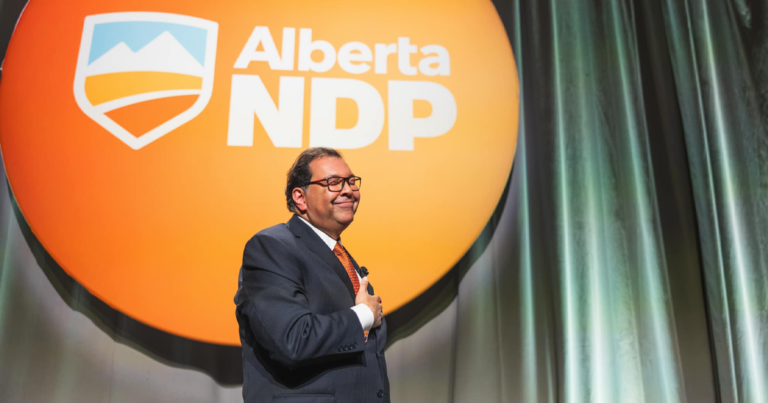
Today on the Alberta Roundup with Rachel Emmanuel, Rachel reports on the Alberta NDP’s plans to divorce from the federal party. And, Rachel has an update about Alberta Premier Danielle Smith’s approval ratings.
Rachel has a story about new attack ads the UCP released about Naheed Nenshi, who won the Alberta NDP leadership contest last week.
Also on the show, do you know who the least popular politicians in Canada is? You might be surprised to learn that she’s in Alberta.
And finally, listen to the end to hear Rachel’s exciting announcement.
Tune into the Alberta Roundup!
LAWTON: Will Justin Trudeau resign?
Earlier this week, Conservative candidate Don Stewart won the federal byelection for Liberal stronghold Toronto—St. Paul’s, in a surprising victory over Liberal candidate Leslie Church. Political commentator Paul Wells joined True North’s Andrew Lawton to discuss what this means for the future of Justin Trudeau and his party.
LAWTON: Liberals defend “plastics ban” in federal court

This week, the federal government was in court appealing a ruling that declared its decision to list all plastics as toxic unreasonable and unconstitutional. A constitutional group is intervening in this case, arguing that using criminal law to regulate plastics is an overreach of federal authority. Canadian Constitution Foundation litigation director Christine Van Geyn joined True North’s Andrew Lawton to discuss.
Getting rid of Trudeau wouldn’t change much for the Liberals: survey
Three in ten uncommitted voters who might consider voting for the Liberals view Justin Trudeau as a barrier to their support. However, changing leadership is unlikely to impact the outcome of the next election beyond a few seats.
According to a survey by the Angus Reid Institute, a non-profit research organization, a change in leadership would not be enough to close the 21-point gap between the Liberals and the Conservatives if the election was held today.
The survey found that out of the 37% who said they were still considering what party they would vote for—out of the 3,082 random Canadians who were asked—31% who would consider voting Liberal said Trudeau was stopping them from supporting the party.
When the same sample was polled, none of the 12 candidates listed as potential replacements garnered much support from anyone who said they would “maybe consider” voting Liberal.
In most cases, a leadership change would result in a net loss of votes for the Liberal party.
Mark Carney, the former Bank of Canada governor, was the only potential replacement to garner support from all potential Liberal voters: Those who were decided and those who said they would “definitely” and “maybe” consider voting for the party.
Of those Canadians who said they would “definitely consider” voting Liberal, 14% said they would be more likely to vote Liberal if Carney was in charge. Only 5% of those who would “maybe consider” voting for the party said they would be more likely to if he was the leader. While 10% of those already committed to the party indicated support for the former bank governor.
Every other potential candidate made voters who might consider voting Liberal less likely to support the party except the current Finance Minister Chrystia Freeland, who, according to the survey, would convince no one who might consider it to support the party.
Among those who would definitely consider it, Freeland had about the same amount of support as Carney. However, for those who were already committed to voting Liberal, she got the most support, with 37% saying they were “more likely” to support the party.
The most common issue preventing undecided voters from supporting the Liberals was a lack of progress on important issues, such as inflation, healthcare and housing affordability, with 47% of those uncommitted voters citing it as an issue.
29% said the government’s deficit spending was to blame, and 11% said they were simply tired of Liberals being in charge.
The Liberal’s position, or lack thereof, on the Israel-Hamas conflict in Gaza, was also listed as an issue among prospective Liberal voters, with 15% citing the government’s stance as a barrier to counting on their support.
When looking at data from Conservative voters in the same survey, two-thirds, 65%, of the two in five, 42%, of Canadians who said they would support the Conservative party in the next election said they were “very committed.”
Only 38% of current Liberals voters said they were very committed, and 30% of the NDP said the same thing.
Regarding who was absolutely decided, 24% of participants said they supported the Conservatives. Liberals had a “support floor” of 7%, and 5% of those asked said they were committed to supporting the NDP.
When adding up the “very committed” and the undecided who would consider voting for each party, the NDP and Liberals were tied for a support ceiling of 44%. The Conservatives had the highest “support ceiling” of any party, with 55% potential voters.