The federal government announced a 30-day consultation period to review the ethics of China’s electric vehicle industry, coming on the heels of mounting pressure from critics to apply tariffs on Chinese EV imports. Both the United States and Europe have already implemented trade controls on the sector.
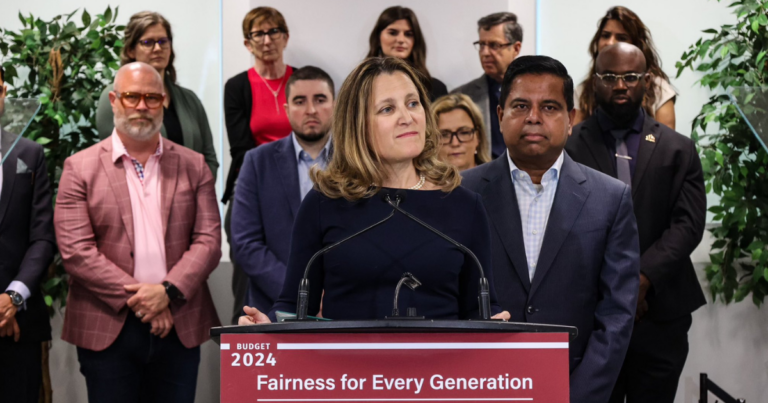
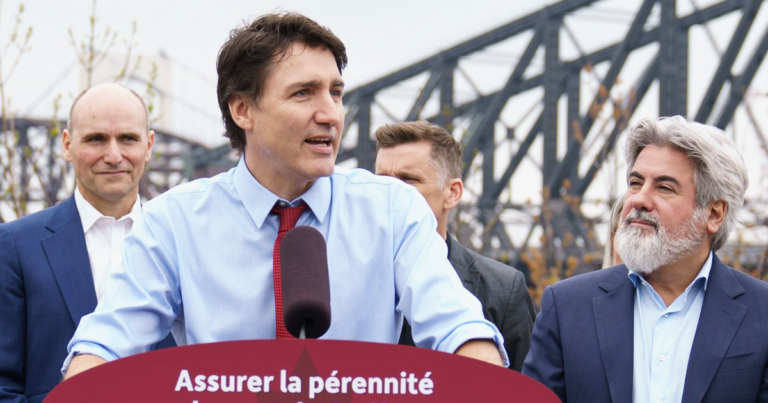
“Canadian auto workers, and the auto sector … are facing unfair competition from China’s intentional, state-directed policy of overcapacity that is undermining Canada’s EV sector’s ability to compete in domestic and global markets,” Deputy Prime Minister Freeland told reporters in Vaughan, Ont. on Monday.
Freeland went on to say that the import of Chinese EVs “undermines EV producers around the world.”
“We are living in a world right now where China is taking advantage of the global economic system,” she added. “We know we need to defend our national interest and we will.”
While Freeland did not specify how the results of the consultation will affect Chinese imports exactly, she did say that “nothing is ruled out.”
“That includes the use of Section 53 … It grants very strong and very broad powers to the finance minister to act,” said Freeland.
Under Section 53 of the Customs tariff law, the government could potentially charge a surtax in addition to tariffs.
Ontario Premier Doug Ford called on the Trudeau government to impose import tariffs on Beijing similar to those already in place in the U.S. last week.
The U.S. announced tariffs on $18 billion in imported goods from China, including a quadrupling of taxes on EVs, bringing the duties that China would have to pay to do business up to over 100%.
China is also a major battery supplier for EVs, as well as battery components globally, accounting for 80% of all lithium-ion EV batteries worldwide in 2021.
“I’m calling on the federal government to immediately match or exceed U.S. tariffs on Chinese imports, including at least a 100% tariff on Chinese electric vehicles,” wrote Ford on X.
“Taking every advantage of low labour standards and dirty energy, China is flooding the market with artificially cheap electric vehicles. Unless we act fast, we risk Ontario and Canadian jobs.”
Conservative international trade critic Kyle Seeback released a statement on Monday, echoing his support for domestic manufacturing jobs.
“Our priority is to protect the jobs of Canadian workers. Canada should not allow the dumping of cheap Chinese products into our country that threaten Canadian manufacturing jobs,” reads the statement from Seeback.
Between the federal and provincial governments, over $52 billion in taxpayer dollars has already been spent on ensuring that EVs are manufactured domestically, according to the most recent Parliamentary Budget Officer’s report.
“Trudeau has failed to protect Canadian auto workers as evidenced by the fact that he has spent tens of billions of dollars subsidizing jobs for foreign replacement workers at EV battery plants, while securing no guarantees for Canadian union workers. He has also increased the cost of manufacturing and made Canada less competitive with his inflationary carbon tax,” continued Seeback.
“Common Sense Conservatives believe we should work with our close trading partners like the United States, so we can protect Canadian jobs and stand up for the working people of our country.”
Another concern that the consultations will aim to address are the possible threats to cyber and data security that may come with imported EVs from Beijing.
They will also look into potential restrictions on foreign investment.
The federal government ignored the pleas for tax relief from Canadians in its own focus groups ahead of the 2024 federal budget.
Canadians in the focus groups, commissioned by Finance Canada, called on the government to reduce foreign spending and cut taxes in the budget. Instead, Canadians received tax hikes and more spending.
Finance Canada paid nearly $130,000 to Environics Research, which formed focus groups made up of 74 Canadians from various backgrounds, provinces, and socioeconomic levels to hear about their experiences with the economy and what they think needs to change.
“Most participants felt the Canadian economy is in a bad state and used words such as ‘unaffordable,’ ‘declining,’ ‘expensive,’ “rough,’ ‘strained,’ ‘terrible,’ ‘unstable’ and ‘unpredictable’ to describe it,” a report from the research group said.
The report said the focus group participants felt this way due to the rise in the prices of groceries, housing, gas, utilities, fuel, insurance, and mortgage payments.
According to the report, people in the prairies cited an increase in crime and homelessness as an indicator of the declining economy as well, while those from Atlantic provinces said they were concerned about potential layoffs.
The report also addressed retirement. Younger participants in the groups said they would like to retire but cannot begin to being able to do so while grappling with the “immediate challenges of making ends meet.”
When asked what the government could do to help the working class in Canada, a few mentioned the government’s $10-a-day childcare and climate action incentive payment, but the report said there was “little sense of what the government could do to support the middle class apart from cutting taxes.”
Among some of the recommendations Canadians had for the next federal budget were to cut taxes, particularly the carbon tax, lower interest rates, and reduce foreign spending.
“Canadians are struggling, but instead of listening to Canadians and making our lives more affordable, the government is making life more expensive with its tax hikes and crazy spending,” Franco Terrazzano, the federal director of the Canadian Taxpayers Federation, said.
“Budget 2024 was a disaster. The government is hiking taxes, adding more debt onto the backs of Canadians’ kids and grandkids and wasting more than $1 billion a week on interest charges.”
In addition to the requests to lower taxes and cut spending, the focus group identified some measures to improve the economy, including requests for the government to control the prices of food, rent, and other products, give interest-free student loans, and invest in mental health, homeless shelters, and “smaller-scale affordable housing” projects.
“We don’t need more government; we need less government. That means the government should cut spending, cut taxes, and balance the budget,” Terrazzano said. “If the government wants Canadians to get ahead, the first thing it should do is stop taking so much money from us.”
According to the report, most of the participants did not feel that the federal government had “played much of a role” in causing inflation. A few of the participants, particularly in the prairies, mentioned the impact of the carbon tax and the government printing money as the cause of inflation.
Terrazzano said the government, in fact, bears quite a bit of responsibility.
“The Government of Canada deserves the large part of the blame for this high inflation because its central bank printing hundreds of billions of dollars out of thin air, and the government hiked taxes, spent money like crazy and ran massive deficits,” Terrazzano said.
“This government has no plan to balance the budget or save money. This government’s only plan is to take as much money from taxpayers as it can.”
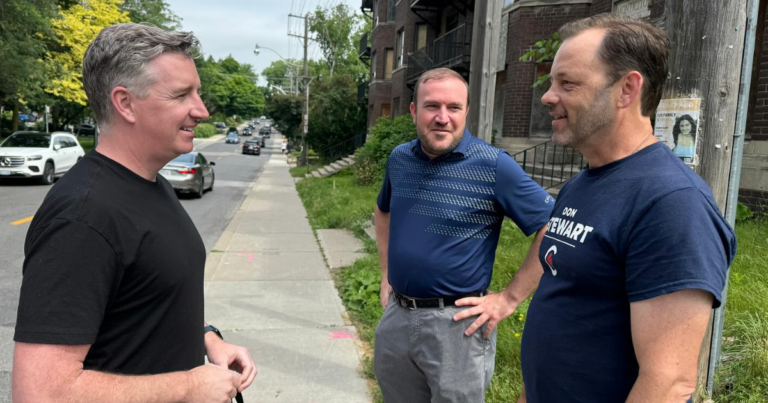
In a remarkable upset for a traditionally Liberal stronghold, Conservative candidate Don Stewart has won the federal byelection for Toronto–St. Paul’s.
Stewart was elected with 42.1% of the vote, narrowly edging out Liberal candidate Leslie Church. Stewart had a 590-vote lead over Church by the time all ballots were counted in the early hours of Tuesday morning. NDP candidate Amrit Parhar finished in a distant third with 10.9% of the vote.
Stewart’s election victory marks a huge shift in support in what was once considered a safe riding for the Liberals, who’ve won the seat in every election since 1993. In the 2021 general election, Liberal MP Carolyn Bennett was re-elected with 49.2% of the vote, compared to only 25.6% for the Conservative candidate.
Polls closed Monday at 8:30 p.m. Church was leading for most of the evening as ballots were slow to be counted and reported by Elections Canada. The last numbers did not come until 4:44 a.m. Tuesday morning, by which point Stewart had managed to overtake Church.
The last time a non-Liberal was elected in the riding was in 1988, when Progressive Conservative Prime Minister Brian Mulroney won his second majority government.
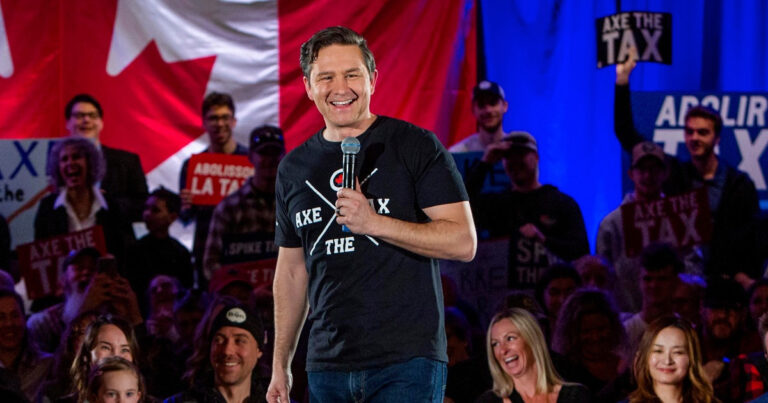
Conservative Leader Pierre Poilievre congratulated Stewart Tuesday morning and called the result proof that Justin Trudeau has to go.
“Congratulations to Common Sense Conservative candidate Don Stewart on a shocking upset in Toronto–St. Paul’s, where people voted to axe the tax, build the homes, fix the budget and stop the crime,” Poilievre wrote on social media. “Here’s the verdict: Trudeau can’t go on like this. He must call a carbon tax election now.”
Both Liberal and Conservative insiders worked to lower expectations for their respective chances in the lead up to Monday’s vote. While the Conservatives are enjoying a massive lead in national polls, that was not expected to hold in the midtown Toronto riding that the Liberals managed to hold onto during their blowout in 2011.
This marks the first byelection in which the Conservatives had gained a seat from the Liberals since the 2021 general election.
Church congratulated Stewart Tuesday morning and said she looked forward to “the rematch.”
Thank you, Toronto-St. Paul's!
I am beyond humbled for the trust you have put in me and I will never take it for granted. I promise to be YOUR voice on Parliament Hill. pic.twitter.com/S5uxYk7JwP
“This morning’s close result is disappointing, but it is a beginning, not an end,” Church wrote. “Yesterday voters in Toronto–St. Paul’s sent us a clear message, that they want us to re-earn their trust. I hear that message loud and clear, and that’s exactly what we plan to do.”
MP-elected Stewart is an engineer and businessman with years of Bay St. experience. He previously worked as the managing director for Jenni Byrne and Associates, a firm founded by Conservative Leader Pierre Poilievre’s chief adviser, Jenni Byrne.
In his most recent role, Stewart served as a director for the Canadian Investment Regulatory Organization.
Church was a longtime Liberal staffer who previously served as Deputy Prime Minister Chrystia Freeland’s chief of staff. She had received significant campaign support from Liberal cabinet ministers and endorsements from a range of local politicians, including Toronto city councillor Josh Matlow, deputy mayor Jennifer McKelvie, and former deputy mayor Ana Bailão.
There are now more unemployed people living in Toronto than in the entirely of Quebec. Over 317,000 people living in the Greater Toronto Area are now unemployed. At the same time, Ontario is taking in millions of new immigrants. There simply aren’t enough jobs for the number of people who now live in Southern Ontario, but does anybody in the political class actually care?
The effects of Justin Trudeau’s mass immigration agenda aren’t only affecting our economic numbers. Homelessness, food insecurity and crime are also on the rise.
True North’s Harrison Faulkner says Canadians are being sold out by politicians who are putting the needs of Canadians last in a pursuit to arbitrarily raise the country’s GDP.
Fewer than a third of all current MPs in the House of Commons were willing to go on record and say they were not involved in foreign interference.
Prompted by allegations from the National Security and Intelligence Committee of Parliamentarians that certain MPs wittingly collaborated with foreign governments, True North emailed all 334 MPs and 105 senators asking if they could deny involvement in foreign interference.
MPs and senators were presented with two questions:
Have they ever knowingly assisted a foreign government in foreign interference activities?
Can they confidently confirm to Canadians that they were not one of the MPs referenced in the NSICOP report?
A total of 107 MPs and 10 senators replied. The vast majority were Conservatives. All who replied answered “No” to the first question and “Yes” to the second, denying involvement in foreign interference.
Most Conservative MPs, 99 out of 118, responded to True North’s requests and all of them denied involvement in foreign interference. Some of them, such as Conservative MP and foreign affairs critic Michael Chong, were targets of foreign interference themselves.
“I am mentioned in the redacted version of the NSICOP report, but as a target of foreign interference threat activities. I can confidently confirm that I am not one of the witting MPs referred to in the report who engaged in foreign reference activities with a foreign state,” said Chong.
Just one New Democrat MP, Alistair MacGregor, replied. Five Liberal MPs, including former House speaker Anthony Rota, answered the questions. No Bloc Quebecois or Green party MPs responded. Of the three independent members of Parliament, only Kevin Vuong responded.
A lack of response by individuals does not indicate admission to nefarious activities, but parliamentarians were told that non-responses would be reported on. Additionally, members of NSICOP were bound by their commitments and therefore could not reply to inquiries.
They included MPs David McGuinty (Lib.), Darren Fisher (Lib.), Patricia Lattanzio (Lib.), Rob Morrison (Con.), Alex Ruff (Con.), Stephane Bergeron (BQ), Don Davies (NDP) and senators Frances Lankin, Patricia Duncan, Marty Klyne.
Liberal MP Leah Taylor Roy was one of six Liberal MPs who responded to True North’s inquiry. However, she replied with a statement and did not respond to the specific questions posed about foreign interference.
“I am responding to your email but I think it is inappropriate to list those who do not respond as it could be taken by the public as some kind of acknowledgement of involvement – however many MPs would not feel comfortable answering or perhaps might overlook the email,” Taylor Roy wrote.
Senate Speaker Raymonde Gagné’s office responded to the request by saying Gagné had no comment on the report.
Conservative MP and immigration critic Tom Kmiec was also cited in the report as a target.
“The (Inter-Parliamentary Alliance on China) group I belong to and its Canadian MPs and Senators who were targeted by the PRC for foreign interference are given as an example of attempted interference. I was targeted by the PRC,” explained Kmiec.
The full list of parliamentarians contacted and their responses – or non-responses – can be found below.
The majority of young Canadians feel that immigrants and permanent residents coming to Canada should share common Canadian values, according to a recent Leger poll.
Leger’s poll surveyed 938 Canadians between the ages of 18 and 39 from coast to coast.
Seventy percent of respondents said Canada should ensure that immigrants and permanent residents coming to the country should share common Canadian values, such as respect for different minority groups.
While 70% agreed that immigrants to Canada should share the country’s values, only 14% disagreed, 5% strongly and 9% somewhat. Fifteen percent of Canadians said they didn’t know, while 33% strongly agreed and 37% somewhat agreed.
Canadians were also asked whether they thought Canada’s immigration levels were good or bad. Unfortunately, the polling prefaced the immigration questions with flawed statistics, claiming Canada welcomes 500,000 new immigrants a year.
As previously reported by True North, the actual number of immigrants coming to Canada is almost five times larger. When accounting for permanent residents, temporary foreign workers, international students, and illegal immigrants, Canada takes in about 2.2 million people every year.
Even with Leger’s misleading figure, 45% of Canadians said current immigration levels were a net good for Canada, while 39% said they were a net bad.
Only 11% of respondents said that immigration levels were overall good for Canada, while 34% said that the levels were generally good but have created some problems. Twenty percent said that immigration levels have generally created more problems than benefits, while 19% said they were overall bad for Canada.
Leger’s poll separated groups of respondents into Gen Z and Millennials, who had differing views on immigration.
Canadians aged 18 to 27, Gen Z, had more favourable views of immigration. Fifty-three percent of them said that current levels were a net good, compared to 34% who said current levels were a net bad.
Those aged 28 to 39, Millennials, had a net-negative view of current immigration levels, with 43% of them saying they were a net bad while 41% said they were a net good. Only 9% of this age group said that current immigration levels were an overall good for Canada, while 22% said they were an overall bad.
Canada recently surpassed a population of 41 million less than a year after reaching 40 million, driven almost exclusively by international migration. This followed an annual population increase at a rate not seen in 66 years.
Immigration has become increasingly more important to Canadians, recently eclipsing climate change as one of the most important issues at the polls.
Even recent immigrants to Canada disapprove of the country’s record-setting immigration levels. Canadian immigrants voiced their disapproval in another poll despite it also citing flawed immigration values.
Next Monday’s Canada Day will feature nationwide peaceful protests against mass immigration to the country.
While Conservative Leader Pierre Poilievre has generally avoided specific figures for his immigration policy in the past, he recently said that immigration numbers will be “much lower” if he becomes prime minister.
“It’s impossible to invite 1.2 million new people to Canada every year. When you’re building 200,000 housing units, it’s impossible. There’s no room. Quebec is at its breaking point,” said Poilievre.
Is there anything more Canadian than saying sorry?
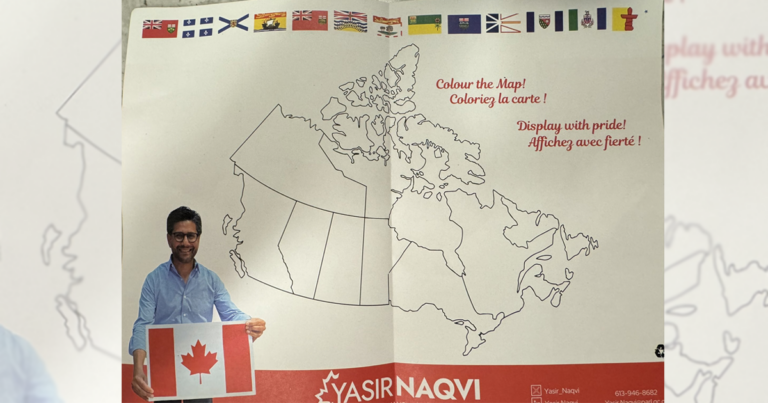
Ottawa Centre Liberal MP Yasir Naqvi is apologizing after his office mailed a colouring map of Canada riddled with geographical errors to thousands of constituents.
The map was sent ahead of Canada Day. “Colour the map! Display with pride!” reads the mailer.
People were quick to notice the map’s multiple errors.
Yukon and Prince Edward Island were missing, while Quebec, New Brunswick, and Nova Scotia were depicted as one province. Baffin Island was depicted as a peninsula, while the Avalon Peninsula was depicted as an island.
Pre Canada Day fun time!
Can you spot the error that whoever was supposed to proof this mailer didn't catch? pic.twitter.com/qinv99kS55
— Michelle Rempel Garner (@MichelleRempel) June 21, 2024
Naqvi addressed the errors in an X post, which has far more negative replies than positive engagement
Canada Day is coming! To mark this moment, we sent a Canadian flag to you to display with pride,” said Naqvi. “But, we made a mistake. The map is missing PEI and Yukon. My team and I apologize.”
Naqvi added that he hopes constituents will think of the mistake riddled mail-out as “an interactive map to teach kids our geography, or to start to learn more about these amazing places.”
Naqvi received considerable criticism online.
The tidal wave of incompetence is even washing parts of the country clean off the map. https://t.co/d65dkbbTxj
Someone asked, “Is this a troll? An MP would not make such a mistake, right??”
“No need to apologize. Really. After watching nine years of this government, I think you’ve exceeded expectations,” wrote one user.
“Seriously, not at all surprised that no Liberal caught this before it was approved. Seems typical nowadays,” wrote another.
“Happy Canada day. And may PEI not sink beneath the waves anytime soon, although Quebec should wake up and realize it is a maritime province, plus we need to keep an eye on those Yukon folks,” another user wrote.
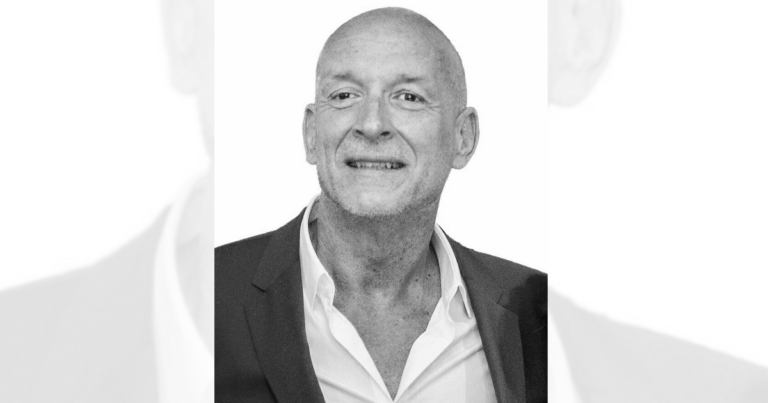
A beloved Toronto principal who took his own life last year has been honoured for his commitment to free expression and academic excellence.
In memory of the departed educator Richard Bilkszto, a ceremony was held in Toronto to celebrate educators embodying the values he embraced in his life and career.
Bilkszto was a prominent Toronto school principal for multiple decades. He took his own life last July.
During a series of “equity sessions” led by the KOJO Institute’s Kike Ojo-Thompson, Bilkszto was singled out and harassed for daring to suggest that Canada might be a less racist country than the United States. Blitzko claimed the incident caused him severe mental distress before his death.
An organization called Friends of Richard Bilkszto organized an award ceremony and scholarship program to help celebrate current and future educators who embody many of the values that Bilkszto stood for in his life.
The crowd of roughly 60 people heard speeches from prominent speakers and award winners about the importance of academic freedom and merit-based education while acknowledging the legacy Bilkszto left behind.
Former Toronto mayoral candidate Anthony Furey spoke about the time he had spent with Bilkszto while on the campaign trail. Furey recalled a time when he and Bilkszto had been walking down the street in the middle of the mayoral campaign when they were approached by two women, extremely appreciative of what Bilkszto had helped them to achieve.
“I was just floored to know that there were regular folks walking down the streets of Toronto who felt so inspired by what Richard stood for,” said Furey. “And what he stood for was academic excellence for all, he stood for a belief that all students regardless of their walk of life, their background that they mattered and can achieve great things.”
Toronto District School Board trustee Weidong Pei described Bilkszto as his “best friend,” as he was the person who encouraged Pei to run for trustee in the first place.
Pei talked about the values Bilkszto had embodied – practice, persistence, and perseverance – and all the students who had grown to adopt those principles to their own lives.
Waterloo school trustee Mike Ramsay recalled the time when he had been kicked off of the Waterloo school board and Bilkszto reached out to him through email to offer his support.
Among those who were recognized with awards were Carolyn Burjoski, a retired school teacher who was labelled “transphobic” for attempting to address concerns she had with inappropriate books in school libraries with the Waterloo school board.
Burjoski had her delegation to the board cut short by the meeting chair, and when attempting to defend Burjoski’s right to express her concerns, trustee Ramsey was kicked off of the board by his fellow trustees in a six to three vote.
“I think that we’re living in a time where the outrage is just so stirred up in our culture that I think when the chair heard that he thought ‘anyone who questions the narrative about transitioning children need to be shut down immediately,’” Burjoski told to True North.
Burjoski said that Bilkszto reached out to her a few days after she had been shut down at the Waterloo school board meeting, emailing and calling her to offer his support.
She says that Bilkszto had gone through a similar experience of being cancelled and defamed as she had and that he helped her improve her public speaking skills as they got to know each other.
“What I know about him is he did that with lots of people. He’d saddle up beside somebody who had had a hard time, we heard that story a couple of times. He’d connect with people, he’d encourage them,” said Burjoski.
Elizabeth Haas-Barota was the other winner of the Richard Bilkszto Award, recognized for her focus on merit-based education and student achievement in a difficult environment,
Haas-Barota teaches at Tomken Road Middle School in Mississauga — a school notorious for gross student misbehaviours and being a risky place for teachers to work.
She says there is a complete lack of respect for research-based teaching methods, and that students are struggling as a result.
While Haas-Barota did not meet Bilkszto before his passing, she said hearing his story and his unifying vision for education was “inspiring, though horribly tragic.”
A $1000 scholarship was given to Thomas Corken, an incoming student at Western University seeking a bachelor of education.
The long-awaited Toronto—St. Paul’s byelection is today, and Liberal cabinet ministers have descended on the Liberal stronghold to try to get the vote out at a time when Justin Trudeau is twenty points behind Pierre Poilievre in national polls. While the Liberals may still win the riding, they have spent the last two weeks trying to lower expectations to soften the embarrassment that may be coming to them, True North’s Andrew Lawton says.
Also, Naheed Nenshi is now the Alberta NDP leader. We’ll talk about what that means with Lindsay Wilson from Alberta Proud.
Canadian Taxpayers Federation Alberta director Kris Sims returns for her Monday checkin talking about the high-flying catering bill Trudeau racked up on one of his foreign trips.
Plus, despite claims from anti-Israel activists that Israel is “starving” Gazans, the facts show a different story. Andrew discusses with Honest Reporting Canada assistant director Robert Walker.