Quebec health system in crisis as patients walk out of emergency rooms untreated

Quebec’s healthcare system has deteriorated to the point where patients seeking urgent care are simply abandoning emergency rooms due to excessive wait times. 

Quebec residents are leaving hospital emergency rooms before seeing a health professional at an alarmingly rising rate amid unbearable wait times. The patients leaving before being attended to often have serious health concerns, according to the Montreal Economic Institute.

Between Apr. 1, 2023, and Feb. 24, 2024, 3,265,349 patients visited emergency rooms in Quebec. Of these patients, 376,460, or 11.5%, left before seeing a physician.

“That amounts to 1,140 Quebecers a day who were thus abandoned by the system,” reads the Montreal Economic Institute’s publication.

The over 375,000 Quebecers who left emergency rooms before being attended to were separated into five categories.

The smallest, but most alarming category, was Quebecers who fell into the “resuscitation” category. Only 101, or 0.03% of Quebecers who left the emergency room before being treated fell into this category. 

The Montreal Economic Institute told True North that they don’t know whether this means patients were resuscitated before leaving the hospital or afterwards. The data were provided to them by the Quebec Department of Health and Social Services through an access to information request and did not elaborate on specifics.

Following the “resuscitation” category were Quebecers who left the emergency room with a “very urgent” health concern. 8,279, or 2.2% of Quebecers fell into this category, followed by 95,335, or 25.3% of Quebecers who left the emergency room with “urgent” health concerns.

The author of the Montreal Economic Institute’s publication, Emmanuelle B. Faubert, said that the biggest failure facing Quebec’s healthcare system is that patients in the first three categories fell through the cracks.

“In these life-threatening conditions, these patients need to be treated rapidly,” said Faubert.

The number of patients in the first three categories rose from 21.9% in 2018-2019 to 27.5% in 2023-24.

“Therefore, not only are more patients leaving an ER without being treated today, but more of them are leaving with urgent health problems,” said Faubert.

The largest group is the fourth category of 179,547, or 47.7%, of Quebecers who left the emergency room with a “semi-urgent” health condition.

Only 22.6%, 84,966, Quebecers who left the emergency room before being seen by a healthcare professional between Apr. 1, 2023, and Feb. 24, 2024, were deemed to have “non-urgent” health concerns.

8,232, or 2.2%, of Quebecers left the emergency room before triage.

The  second systemic failure highlighted by the publication is the lack of access to primary care. Those with semi-urgent and non-urgent health conditions comprised 70% of Quebecers who left the emergency room before being seen by a doctor.

“Part of the problem stems from the fact that hundreds of thousands of Quebecers do not have access to a family doctor and have no other choice but to visit an emergency room, even for a minor health problem,” said Faubert.

While Quebec’s healthcare system faces pressing issues, there are solutions available.

Faubert suggested that Quebec implement more nurse practitioner clinics, accelerate activity-based funding, expand emergency room capacity, and increase competition.

In 2023, Canada faced the longest healthcare wait times ever recorded.

Quebec offers live updates on wait times and other relevant data in emergency rooms across the province. 

As of Thursday afternoon, the longest wait time for “non-priority cases” to see a doctor was almost 15 hours at the Hôpital de Granby. This was not an anomaly, as numerous of the 115 hospitals followed closely behind. However, a few hospitals had wait times closer to an hour.

On Wednesday, the average wait time across Quebec in emergency waiting rooms was just under five hours. The average wait time on a stretcher was 16 hours and 11 minutes. 

“In order to have fewer patients leaving emergency rooms before being treated, it is essential that we change tack and open up to more entrepreneurship and innovation in the healthcare sector,” concluded Faubert.

However, experts and leaders have warned that the Liberals’ capital gain tax will stifle entrepreneurship, driving healthcare, tech, and other professionals out of the country.

University of Waterloo issues trespass notice to pro-Hamas encampment 

Another Canadian university is acting to evict illegal pro-Hamas encampments from campus grounds.

The University of Waterloo issued a legal Trespass Notice against pro-Hamas encampment supporters on Friday, citing “untenable” behaviour.

The encampment has been in place since May 13 in front of the Graduate House on the University of Waterloo’s main campus.

“This notice means that members of the encampment must leave the Grad House Green immediately and must not return the encampment to University property. If they fail to comply, they risk facing consequences consistent with the Trespass to Property Act,” said the University in a press release.

People who continue to engage in encampments and other prohibited activities will be subject to fines of up to $10,000.

The University said that the encampment and several disruptive protest actions violate numerous of the University’s policies and items on its list of prohibited activities.

In the University’s initial formal notice issued to end the encampment on May 20, it cited six policies that were being violated by the encampment’s presence. 

“Because you continue to violate our policies, we require you to end the encampment immediately and to dismantle all structures,” said the University.

The pro-Hamas encampment didn’t listen. The encampment is run by Occupy University of Waterloo, comprised of mostly of anonymous protesters wearing keffiyehs or N95s who have threatened campus administration in the past. 

Over a month later, the university issued its Notice of Trespass, barring anyone from remaining in the encampment, setting up tents, shelters, equipment, or other structures anywhere else on University of Waterloo property. People are also prohibited from gathering at the University’s property anywhere between 10:00 pm and 8:00 am unless specifically authorized, or gathering for any instance that would violate the policies.

“If you do not comply and remain in the encampment and/or continue to participate in prohibited activities at the University of Waterloo, the University will pursue consequences under University policies, and/or agreements, and the law,” the University warned on Friday. 

The University of Waterloo claimed that it has protected the right to free speech and freedom of expression throughout the protest activity.

“This has included myriad disruptive protest actions on campus since November 2023. The University took no action to interfere with any of these expressions,” said the University.

These rights do not extend to the endless occupation of a shared university space, argued the university.

“The University has acted with restraint in enforcing its policies, and the law,” reads the news release. “The University cannot tolerate disruptive behaviour that creates concern for the safety of people on campus. We cannot tolerate behaviour that crosses the line to harassment. The behaviour of encampment members is becoming untenable and causing greater disruption to the normal business of the University.”

Despite forcing the encampment to dismantle, the university said that it will continue to uphold the right of freedom of expression.

“We have a long road ahead of us to resolve the divisions that have emerged at our institution since the start of the Israel-Hamas conflict,” said the University.

University encampments have been popping up from coast to coast. 

Some Jewish students have spoken out against open support for terrorism at the camps.

Affidavits were filed against another university in Ontario, the University of Toronto, that alleged antisemitic hate, vandalism, harassment, and violation becoming the norm at the encampment.

Occupy University of Waterloo said that the trespass notice isn’t legally binding because the land belongs to the First Nations.

Protestors at the University of Calgary who refused to leave were eventually dispersed with rubber bullets, riot shields, bicycles, and flashbangs.

Official bilingualism not valued by Canadians outside of Quebec: poll 

Canadians outside of Quebec are largely indifferent about official bilingualism. 

A new Leger poll found that Canadians’ views on federal bilingualism differ greatly based on region.

While 70% of Quebecers view bilingualism positively, that number drops to only 43% for the rest of the country. 

Canada officially recognized both English and French as its official languages in 1969, when it was enshrined into law under Prime Minister Pierre Elliot Trudeau.

However, little French is spoken outside of Quebec and New Brunswick except for small pockets of communities throughout the country. 

New Brunswick is the only province that is officially bilingual in Canada, as French is the singular official language in Quebec, and English is everywhere else.  

The poll conducted from June 14 to 16,  found that 18% of Canadians outside of Quebec held a negative opinion of bilingualism, as well as 11% within the province. 

Only 35% of respondents outside of Quebec held a positive opinion of Canada’s official bilingualism, with even less feeling that way in the Prairies, at 23%. 

When asked whether or not it was important for Canada to remain an officially bilingual country, 84% of Quebec respondents said yes, while only 43% agreed outside of the province. 

“It’s the two solitudes expressed in a poll,” Sébastien Poitras, vice president of public affairs at Léger told the Canadian Press, who requested the poll. 

“This value put forward by the Canadian government, that we’re a country with two official languages, and therefore have ‘coast-to-coast’ bilingualism, is a myth that doesn’t hold true in the rest of Canada.”

Over half of the respondents in Quebec felt that the other provinces should be bilingual like New Brunswick, at 60%, whereas only 26% agreed with that sentiment in the rest of the country. 

Additionally, 55% of Quebec respondents thought their province should officially recognize both English and French as its official languages, while only 22% thought that across Canada. 

“We’ve seen that, for the rest of Canada, people don’t see Canada’s official bilingualism as something positive,” said Poitras.

Only 41% of total respondents agreed that official bilingualism is at the heart of Canada’s identity, with the bulk of those being Quebecers, while 49% said that it only exists to satisfy a small minority of the population.  

According to Poitras, Canadians’ view of federal bilingualism outside of Quebec is “indifferent at best.” 

“When asked about the importance of Canada’s official bilingualism, just over half of anglophones say it’s not important,” he added. 

Respondents were asked if the survival of French was under threat in Canada, to which 70% of Quebecers agreed, whereas only 19% did outside of the province. 

When asked if French was under threat within the province of Quebec, 63% said yes, compared to only 11% elsewhere. 

Focusing on English, 38% of respondents outside of Quebec said it was under threat, while only 17% felt that way in Quebec. 

Studies conducted by the Fraser Institute in 2009 and 2012 found that the government spent a total of $2.4 billion annually at the federal, provincial and municipal levels combined on official bilingualism, based on data gathered from the 2006-07 fiscal year. 

“In our previous study, Official Language Policies at the Federal Level in Canada: Costs and Benefits in 2006, we estimated that the total cost of federal bilingualism at $1.8 billion,” reads the study.

“Since these expenditures include transfers to provinces that are spent by them on official language programs aggregating federal, provincial, and local spending must net out these transfers to avoid double counting. Once transfers are netted out, we have $1.5 billion at the federal level and $868 million at the local and provincial level for a total rounded of $2.4 billion or $85 per capita for 2006/07.”

The Léger survey was conducted online with 1,536 respondents but cannot be assigned a margin of error. 

LAWTON: Canadian parents reject biased teaching in K-12 classrooms

A new poll reveals that parents of K-12 students in Canada prioritize balanced, unbiased education, with 86% of parents advocating for factual teaching free from personal opinion or interpretation. Education policy analyst Paige MacPherson joined True North’s Andrew Lawton to break down the numbers and discuss the need for curriculum reforms that uphold academic integrity and neutrality.

OECD report calls Trudeau’s “ineffective” growth strategy

The Liberal government’s economic strategy is “ineffective” at spurring growth according to the Organisation for Economic Co-operation and Development.

The international body composed of high-GDP nations released a report saying that the current path continues to put Canada further behind.

In its 2024 Economic Outlook for Canada, the intergovernmental agency said that Canada hasn’t been seeing the GDP benefits it should from its record-breaking population growth.

Despite Canada seeing the highest population spike since 1957, economic growth has remained low and unemployment continues to rise. 

The OECD’s report suggests that the federal government should reduce its fiscal spending to create more productive investment and do more to facilitate a tax-friendly business environment. 

“Tax reforms should include reconsideration of preferential rates of tax for small businesses, which may affect small firms’ productivity growth and distort the allocation of resources across different types of firms,” suggests the report. 

However, the Trudeau government continues to enforce policies which push the country’s economy in the opposite direction, exacerbating its existing problems.

“Canada’s absence of sustained labor productivity growth in recent years underscores a need to ensure a policy environment that enables the business sector to become more efficient and to move up value-added chains through increasingly productive activities,” reads the report.

Normally, more people would mean more consumption, leading to a stronger economy, however, that hasn’t been the case for Canada in recent years. 

This oddity has perplexed the OECD, which noted that despite its significant population growth, Canada only saw 1.1% real GDP growth in 2023.  

“The economy barely grew in the second half of 2023 (real GDP shrank by 0.1% in the third quarter and increased by only 0.2% in the fourth). Business was particularly weak, shrinking by 7.7% in the final quarter of 2023.” reads the report. 

The OECD said that “employment continues to grow more slowly than the population,” with Canada’s unemployment rate increasing to 6.1% in March and then again to 6.2% in May.

The report attributes this issue to “large temporary and permanent inflows” of immigration.

While those inflows have aided certain skill shortages, they’ve als0 contributed to the housing shortage, which continues to persist.

RBC’s chief economist Richard Hogue published a report in April saying that Canada would need to double its housing construction to meet the demand of newcomers. 

According to Hogue’s calculations, Canada must build a minimum of 320,00 housing units annually from now until 2030 to keep up with the demand. 

“Higher deliveries would need to happen in the near term given our expectation for peak population growth in 2023-2024,” wrote Hogue.

The OECD’s report arrived at a similar conclusion.

“Meanwhile, high levels of immigration are helping relieve skill shortages and bring upside risks for private consumption, while also increasing strains on housing markets,” reads the report. 

The report recommended that increasing housing debts and related financial stress be “monitored carefully.”

“Fiscal sustainability requires implementing credible medium-term plans for lowering federal government debt, aided by ongoing measures to improve spending efficiency,” warned the OECD.

One measure that the Trudeau government could take to improve employment would be to remove interprovincial trade barriers, suggested the report.

Liberal stronghold under threat in upcoming Toronto—St. Paul’s byelection

A seat the Liberals once considered secure is now up for grabs in a hotly contested byelection.

The upcoming byelection in Toronto—St. Paul’s is set to be a closer affair if recent polls are to be believed.

Prime Minister Justin Trudeau called the byelection after longtime Liberal MP Carolyn Bennett announced she would be resigning the seat she had held for 26 years straight. 

In the past 30 years, winning Toronto—St. Paul’s has become a foregone conclusion for the Liberal Party, as the party has won the riding every single time since the Progressive Conservatives lost the seat in a landslide defeat in 1993.

However, the byelection is now a tight race between the Liberal candidate Leslie Church and the Conservative candidate Don Stewart. 

Church is a long-time Liberal operative, serving as the communications director for Michael Ignatiff’s ill-fated run for the Liberal leadership in 2006. 

After a stint in the private sector working at Google, Church returned to working for the Liberals after they had formed government in 2015, serving as the chief of staff for several cabinet ministers.

Most recently, Church had been Deputy Prime Minister Chrystia Freeland’s chief of staff, serving in the role for two years.

Church claims to have roots in the Toronto—St. Paul’s riding, saying she attended the University of Toronto and worked in the city.

Church has received notable endorsements from local city councillor Josh Matlow, deputy mayor Jennifer McKelvie and former deputy mayor Ana Bailão,  

Church is expected to win the riding for the Liberals as her predecessor had, as the party had won Toronto St. Paul’s with 49.2% of the vote, far ahead of the Conservative candidate who garnered 25.6% and the NDP’s 16.8%.

However, Conservative candidate Don Stewart is seeking to flip the seat for the first time since the Progressive Conservatives won the riding in 1988. 

Before getting into politics, Stewart worked as a financial analyst on Bay. St, working for the Bank of Montreal before joining the investment bank Morgan Stanley. 

Notably, Stewart had worked as a managing director for Jenni Bryne + Associates, the self-titled consulting company of Pierre Poilievre’s campaign manager.

In his most recent role, Stewart served as a director for the Canadian Investment Regulatory Organization.

While the Conservatives had lost by a large margin in the previous election, polls show that the party has made significant progress in attracting support in the downtown Toronto riding.

Observers have noted that the area’s sizeable Jewish community have expressed disappointment with Prime Minister Justin Trudeau’s stance on the Israel-Hamas war while the Conservatives have staked out a strong pro-Israel position. 

Ahead of the byelection, the Trudeau government listed the Iranian Revolutionary Guard Corps as a terrorist entity in Canada, after several years of demands for them to do so.

According to the polling aggregation site 338Canada, the Conservatives are polling within five points of the Liberals, with the NDP’s Amrit Parhar projected to finish a distant third. 

While Toronto—St. Paul’s has gone for the Liberals in the past 30 years, prior to the 1993 election, the riding had been won by the governing party in every election since 1935. 

Right now, the Conservatives are the most popular party in the country, projected to win 42% of the vote to the Liberals’ 21% according to a recent Angus Reid poll. 

LAWTON: Why Toronto is wrong about Henry Dundas

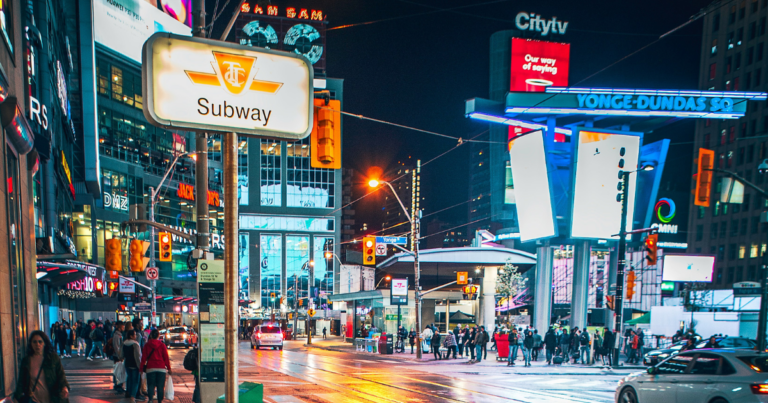
The City of Toronto is moving forward with its decision to rename Yonge-Dundas Square to “Sankofa Square,” in an effort to distance the city from maligned historical figure Henry Dundas, who has been accused of delaying the abolition of slavery. Former NDP MP Lynn McDonald joined True North’s Andrew Lawton to explain why the historical criticisms of Dundas are misguided, and why she believes the renaming to be unjustified and unnecessary.

7 in 10 Canadians want names of MP foreign interference collaborators released 

A majority of Canadians want the Trudeau government to release the names of MPs who had allegedly wittingly collaborated to interfere in Canada’s democracy on behalf of foreign nations. 

A bombshell report by the National Security and Intelligence Committee of Parliamentarians found that some unidentified Parliamentarians, past and present, had been collaborating with foreign governments wittingly or semi-wittingly. Much of the relevant portion of the report has been made classified by Prime Minister Justin Trudeau.

Only a handful of MPs and party leaders have read the largely unredacted version of the report and are unable to publicly release details, lest they face potential prosecution for divulging confidential information.

A poll from Angus Reid found that 69% of Canadians believed that the government should release the list of MPs who are under suspicion of working with foreign actors, with only 12% of Canadians believing the government should not release the names.

Canadians of all party stripes generally agree that the names of the suspected MPs and senators should be made public.

Conservative voters were the most supportive of releasing the names of parliamentarians in the NSICOP report, with 89% of Conservatives wanting to see the names compared to only 5% who didn’t.

The great majority of Bloc Québécois and NDP voters also agree with this sentiment, as 71% and 60% respectively are in support of releasing the names of suspected MPs, with only scant opposition within each party. 

Among the other parties, Liberal voters are the most divided on this issue, as 51% of them want the Parliamentarians’ names released, while 27% do not and 22% remain unsure.

While a large chunk of Liberals support the Trudeau government releasing the names of MPs and senators who are under suspicion of collaborating with foreign actors, the prime minister has prevented this from happening.

In the House of Commons, Public Safety Minister Dominic LeBlanc argued that his government is doing what is necessary to protect Canadians, and that it would be irresponsible for the government to release details of an intelligence investigation.

“No government…is going to discuss the particularities of intelligence information publicly,” said LeBlanc.

At this year’s G7 conference in Italy, Prime Minister Trudeau refused to answer whether or not any Liberal MPs were named in the NSICOP report and instead suggested that the committee had jumped to conclusions.

However, many Canadians feel like Trudeau is not taking the issue of foreign interference seriously enough, with the same poll showing that 66% of Canadians want the prime minister to take it more seriously.

Conservative Party Leader Pierre Poilievre criticized the Trudeau government for not releasing the list of parliamentarians named in the NSICOP report, saying the Canadians have a right to know which MPs have collaborated with foreign actors.

On the other hand, NDP Leader Jagmeet Singh criticized the government for being aware of foreign interference and taking no action to clamp down on it.

LAWTON: Study finds no link between ESG scores and financial returns

A new study finds there is no link between ESG ratings and financial performance, despite widespread belief to the contrary. Fraser Institute senior fellow Steven Globerman joined True North’s Andrew Lawton to break down his findings, and underscore the need for a more nuanced understanding of how environmental, social, and governance factors interact with financial outcomes.