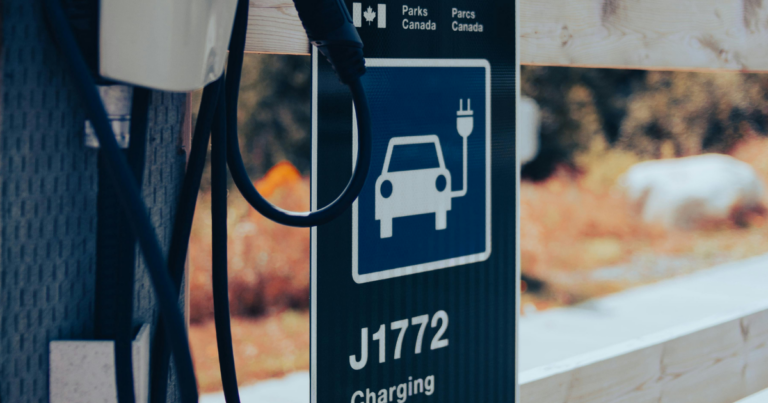
Automakers call Liberal EV targets unrealistic 

Automakers in Canada are doubtful that Canadian consumers are on track to meet the Trudeau government’s electric vehicle targets by 2035.

Executives from Toyota Motor Corp. and Honda Motor Co. said that they only expect consumers will take the leap from gas-powered vehicles once it proves more affordable to do so, and only after a charging infrastructure is in place to meet the needs of commuters sufficiently.  

“We need to make sure that we’re revisiting targets to align targets with reality,” Frank Voss, president of Toyota Motor Manufacturing Canada, told Bloomberg in an interview. 

“The government can only do so much to entice consumers to purchase vehicles that they would like to see implemented. Consumers will choose what they need.”

EVs only accounted for 11% of registered vehicles in Canada last year and while some project that they may account for 70% by 2035, sales have dropped in recent years. 

EVs were harder to sell than gas-powered vehicles in 2023 for the second year in a row, with fewer than half of Canadians now saying they plan to make their next car purchase an electric vehicle.

The average price of a new vehicle is $66,000, while the average price of a new EV is $73,000, according to Canadian Black Book. 

On top of their additional expense, EVs are known to perform poorly in below-freezing temperatures, as their lithium-ion batteries lose at least 20% of their range.

Toyota executives say that range is an issue they are trying to fix, but that they also have to balance that against concerns of weight and size.

Range is a primary concern for consumers in a country as vast as Canada, with many hundreds of kilometres between major cities. 

The federal government plans to install 84,500 chargers and 45 hydrogen chargers across the country by 2029 as part of its Zero Emission Vehicle Infrastructure Program.

The Department of Natural Resources projects that Canada will need around 200,000 public chargers by 2035. The department is also hopeful that the private sector will contribute charges as well 

According to the department, the only region to meet 100% of its charger infrastructure target so far is Canada’s Arctic, where 34 chargers were installed across three territories to service the seven EVs located there.  

The current targets have been seen as unrealistic by members of the auto industry, who have urged Ottawa to align its targets more closely to those of the U.S. government, which aims to have 50% or more EVs on the road by 2032. 

Whereas, the Trudeau government has a mandate to require all new passenger vehicles and light trucks sold in Canada to be zero-emission by 2035.

Despite recommendations from industry experts, Trudeau remains vigilant in his environmental goals. 

“There’s a lot of things that need to fall into place to give people the confidence to make the transition,” said Jean Marc Leclerc, chief executive officer of Honda Canada in an interview with Bloomberg. 

“It may not be fully there today to support the rate of adoption that we’re asked to deliver, but we know it’s going to be there.”

One compromise is offering consumers hybrid vehicles, which have already been proven easier to sell to consumers when compared to EVs. 

However, if the hybrids don’t plug in, they are recognized under the government’s zero-emission vehicle targets because they still use internal combustion engines.

According to Leclerc, Honda plans to reduce battery costs by 20% and manufacturing costs by 35% for cars manufactured in Ontario through local supply chains for raw materials, which will lower transportation costs. 

Toyota on the other hand has decided to hold off from building EVs in Canada until consumer demand and infrastructure increase.

“Even with my plug-in hybrid, last week I was in Toronto, I went to two different locations, all five chargers didn’t work,”  said Voss. “Infrastructure, as it becomes more capable and catches up, it’ll be a great support to that.”


Video shows man spitting on former justice minister Liberal MP Marco Mendicino

A video circulating on Reddit appears to show a man spitting on Liberal MP and former Justice Minister Marco Mendicino as the MP reached over to shake the man’s hand.

The interaction occurred on Sparks Street in Ottawa this Wednesday and shows the man in the red hat leaning toward Mendicino and seemingly spitting at him. 

“That doesn’t seem very nice,” Mendicino said after wincing from the attack.

A police officer then approached the man and asked, “Why are you spitting on our MPs?”

The man immediately began to apologize.

“I didn’t mean to,” he said. “I’m sorry I didn’t mean to.”

The police officer then told the man to apologize to Mendicino for the act.

“I’m frustrated because I’m just very upset,” he told the MP.

“I get it,” Mendicino said. 

The man acknowledged that Mendicino had extended his hand for a handshake before the man spat at him.

“Yeah, I apologize…I’m sorry,” he said before hastily walking away.

According to a CityNews report on the incident, Mendicino’s office said it is being investigated and would not comment. However, the Ottawa police said they had not received any calls to service from the area this week.

LAWTON: McGill anti-Israel encampment promotes “revolutionary” youth camp

Anti-Israel activists at McGill University are facing backlash for organizing a youth summer camp with promotional images of participants wearing keffiyahs, and one holding a rifle. National Post columnist Barbara Kay joined True North’s Andrew Lawton to discuss the concerning displays of antisemitism on university campuses, and address the silence from Jewish studies programs.

Liberal MP John McKay announces retirement after 27 years in office

Veteran Liberal MP John McKay announced he will be stepping down after finishing his term as MP for the riding of Scarborough-Guildwood, after 27 years in office. 

He was first elected when Jean Chretien was prime minister in 1997. While McKay never served in cabinet, he has won his seat in the past nine federal elections.

He also served as Parliamentary secretary for Paul Martin’s administration, and then later to Justin Trudeau’s.

McKay introduced three private member’s bills in the House of Commons that became law during his tenure.

First in 2004, when he introduced an amendment to the Hazardous Products Act, prohibiting cigarettes that don’t meet flammability standards.

Then later in 2008 with the Official Development Assistance Accountability Act, which ensured that Canadian development aid would be focused on poverty reduction.

Most recently, he introduced the Forced Labour in Canadian Supply Chains bill, which was implemented on May 31 of this year, with 3,000 companies required to file their compliance with the legislation. 

At the age of 76, McKay wants to spend more time with his wife and family.

“I have traded on the goodwill of my wife for 27 years,” Mckay told CTV News in an interview Friday.  

“She has described herself as a political widow and I don’t think that’s a good thing, certainly at our age and stage.”

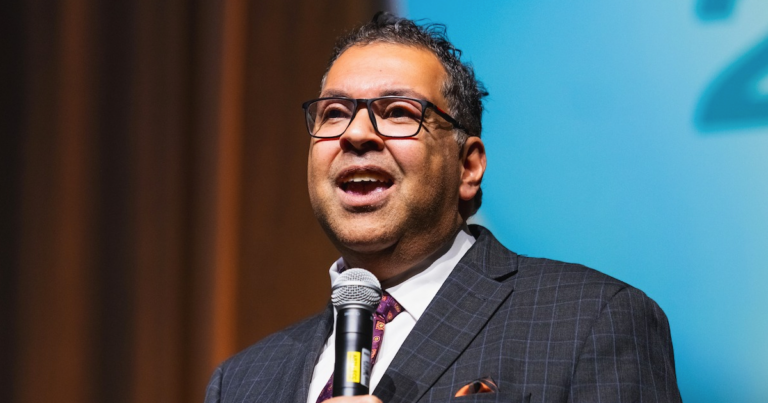
Former Calgary mayor Naheed Nenshi wins Alberta NDP leadership contest

A new political opponent is setting his eyes on Alberta Premier Danielle Smith’s throne. 

The Alberta NDP membership elected former Calgary Mayor Naheed Nenshi to lead their party and Alberta’s Official Opposition in a resounding victory on Saturday.

Nenshi won the leadership contest on the first ballot with 86% of the vote.

He opened his victory speech by calling the United Conservative Party government small-minded.

“This extraordinary movement that we created together is an example of what is possible when we stop thinking small and start thinking big,” he told supporters on Saturday.

In December, the Alberta NDP had 16,224 members. That grew to 85,000 during the leadership campaign. 

Edmonton MLA Rakhi Pancholi previously dropped out of the leadership race, citing Nenshi’s success at selling party memberships. 

Nenshi’s opponents included former Notely-era cabinet minister Kathleen Ganley and Sarah Hoffman, as well as rookie MLA Jodi Calahoo Stonehouse. 

He was the only leadership contender without a seat in the Alberta legislature. 

In January, former leader Rachel Notley said announced her departure after the party lost its second election to the UCP.

Nenshi served as the mayor of Calgary from 2010 to 2021, and was the first Muslim mayor of a large North American city.

He was elected in the 2010 municipal election with 39% and was re-elected in 2013 with 74% of the vote. Finally, in 2017 he won a third term with 51% of the vote. 

He did not seek re-election in the 2021 election, and was succeeded by Jyoti Gondek.

Earlier this month, Alberta NDP MLA Shannon Phillips announced her intention to resign on Canada Day, opening a potential seat for Nenshi.

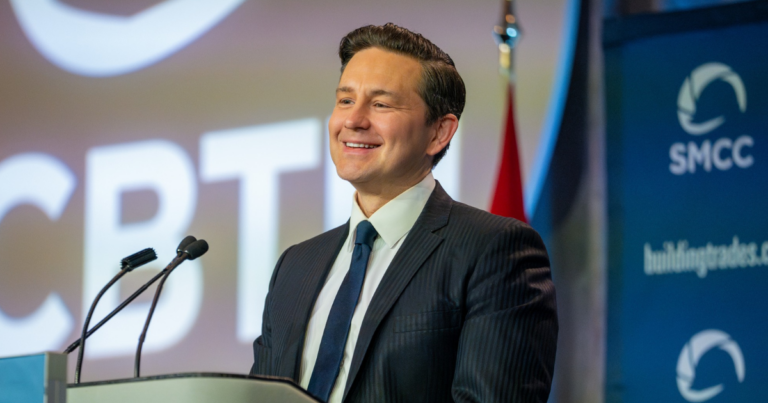
Poilievre says immigration will be “much lower” if he’s elected 

Conservative Leader Pierre Poilievre says that immigration numbers will be “much lower” if he becomes prime minister.

“It’s impossible to invite 1.2 million new people to Canada every year. When you’re building 200,000 housing units, it’s impossible. There’s no room. Quebec is at its breaking point,” said Poilievre in an interview in French.

The comments came during an interview with TVA Nouvelles after a reporter asked Poilievre whether he would commit to a 50% reduction in the number of asylum seekers and temporary immigrants arriving in Quebec, which Premier François Legault requested in his most recent meeting with Prime Minister Justin Trudeau.

“It’s going to be much lower, especially for temporary immigration,” said Poilievre.

Poilievre has previously been hesitant to give specifics about what he’d do to Canada’s immigration targets, speaking more generally about his plan to tie immigration to housing and job availability.

The Conservative leader’s brief interview took place as he campaigns through Quebec in an RV with his wife and two children. He has continued to talk about the cost of living crisis, government spending, and rising crime rates.

The Quebec government has been very outspoken against immigration, with Legault previously threatening to hold a referendum on the issue if the federal government didn’t help reduce the number of temporary immigrants flooding to the province.

Poilievre says his formula will be mathematically driven – linked to home-building and job numbers – and not influenced by arbitrary targets.

Housing affordability reached an all-time low in Canada at the beginning of April.

Near the end of 2023, 75% of Canadians believed that high immigration levels were fuelling the housing crisis, according to a Leger poll.

While Poilievre has previously avoided specifics, Conservative immigration critic Tom Kmiec acknowledged the formula could result in fewer immigrants coming into Canada.

While Canada welcomes 500,000 permanent residents per year, True North previously reported that the number of immigrants entering Canada annually is 2.2 million after adding temporary foreign workers, international students, and illegal immigrants.

Housing starts in Canada have failed to meet demand, resulting in soaring costs.

To combat the housing crisis, Trudeau promised to build 3.87 million homes by 2031. To fulfill his promise, Canada would have to build 576,786 homes per year. However, Canada built just over 240,000 homes in 2023, a decrease from 2022, which decreased from 2021.

Poilievre’s housing plan, titled the Building Homes Not Bureaucracy Act, encourages big cities to speed up the process of building homes. Cities are to build 15% more homes annually, compounding yearly. If they fail to do so, federal funding will be withheld by an equal percentage of how much the target was missed by.

Conversely, municipalities that surpass their targets will receive a bonus.  

The Conservatives lead the federal voting intention polls in every province in the country except Quebec, where they trail both the Bloc Québécois and Liberals.

The Alberta Roundup | Liberal legislation spells bad news for Alberta businesses

Today on the Alberta Roundup with Rachel Emmanuel, Rachel explains how the Liberal government’s “anti-greenwashing” legislation is bad news for Canadian businesses, particularly Alberta’s oil and gas sector. As a last minute amendment to the government’s fall economic statement bill, C-59, the government will now require businesses to back up their environmental claims or otherwise be accused of “greenwashing.”

Also on the show. Rachel has an update about a new cellphone policy in Alberta schools.

Later, Rachel has an update about the Alberta NDP leadership race and she explains why she doesn’t like the Alberta is Calling campaign.

Tune into the Alberta Roundup now!

SUBSCRIBE TO THE ALBERTA ROUNDUP

LAWTON: Data shows “overwhelming majority” of poor Canadians are white

A new report reveals that the majority of Canadians living in poverty are white, resulting in many being ineligible for race-based government support. Aristotle Foundation research director David Hunt joined True North’s Andrew Lawton to explain why this new data challenges the assumption that race, racial discrimination, and poverty are inextricably linked. 

Parliament passes “environmental racism” law limiting where factories, landfills are built

The far-left concept of “environmental racism” will soon become written into law in Canada and companies that open factories or establish landfills near “racialized communities” could be accused of racism. 

A bill championed by the Green Party which labels environmental hazards near Indigenous or other marginalized communities as  “environmental racism” received royal assent Thursday, passing the final step a bill takes before becoming law.

Bill C-226, “an act respecting the development of a national strategy to assess, prevent and address environmental racism and to advance environmental justice,” was first read in the House of Commons more than two years ago and will now become law.

Environmental racism is what policymakers believe happens when polluting industries operate in communities of predominately “racialized” or marginalized people. The argument follows that pollution disproportionally affects these groups.

“Today marks a historic victory in our journey towards environmental justice,” Green Party Leader Elizabeth May said. “The passage of Bill C-226 represents a commitment to addressing the long-standing and deeply entrenched issue of environmental racism in Canada.”

The law, which started as May’s private member’s bill, states that establishing environmentally hazardous sites such as landfills or factories in areas inhabited “primarily by members of those communities” could be considered racial discrimination.

In June 2023, the government passed Bill S-5, Strengthening Environmental Protection for a Healthier Canada Act, which made it a right of every Canadian to have a healthy environment.

Exclusion of any marginalized communities and racial discrimination in the development of environmental policy will now also be classified as environmental racism according to the law.

The new law will cost Canadians an unknown amount in taxes, requiring administrative oversight and research teams to analyze the effect of what the government calls environmental racism.

It will force the Environment Minister Steven Guilbeault, to collaborate with “interested persons, bodies, organizations or communities” to develop a national strategy that will address the “harm caused by environmental racism” in Canada.

The strategy will require Guilbeault to publish a study analyzing the link between race, socio-economic status, and environmental risk within two years of the law coming into force. 

The study will also include statistics about the demographics and health outcomes of people who live near “environmental hazards,” such as factories and other industrial buildings.

It will include a plan to address and prevent industrial buildings from being established in neighbourhoods where Caucasians are a minority.


The plan “must” include reparations for affected individuals or communities and any possible amendments to federal laws, policies, and programs to further protect marginalized groups from pollution.

“This a huge step forward for Canada to correct the wrongs of the past by saying that no matter where you live in Canada, you will not be vulnerable to conditions that put your health at risk,” Liberal MP Lenore Zann said.

The environment minister must prepare a report on the effectiveness of the national strategy every five years, which sets out the minister’s conclusions and recommendations.

Getting a home next to an industrial site has historically been cheaper in Canada. 

The law implies that the race of Canadians’ is intrinsically linked to their socio-economic class, making them more susceptible to pollution from industrial sites. A study by the Aristotle Foundation found that in 2021, the majority of Canadians living in relative poverty were white.

Those who advocate against “environmental racism” often point to examples of industrial and chemical factories that are located next to First Nations and other Indigenous communities, such as a case in Grassy Narrows First Nation in Ontario that has allegedly been exposed to mercury for decades.

Critics worry that this law will be used to hinder economic development across several potential industries including oil and gas.

Saskatchewan Chamber of Commerce advocates for lowering working age to 13 

Young teens in Saskatchewan may soon be able to land their first legal job sooner. 

The Saskatchewan Chamber of Commerce has proposed allowing 13-year-olds to work as part of its policy recommendations issued in a news release on June 13.

The Saskatchewan Chamber of Commerce released its policy platform for the 2024 provincial election, Fueling Momentum 2024. The platform is intended to provide Saskatchewan political parties with information on the priorities of businesses in the province.

“This is a pivotal time for the province. We are positioned to become a critically important partner in addressing global food insecurity and energy transition. Over the coming four years, the Saskatchewan government needs to continue to capitalize on the province’s vast potential to fuel growth and new investment,” said Prabha Ramaswamy, the CEO of the Saskatchewan Chamber of Commerce.

The Chamber told True North that the platform was developed through consultation with industry leaders and its members.

“Ultimately, the Chamber believes that the decision for a youth to enter the workforce resides with the youth and their family/guardian,” said the Chamber in an email.

Currently, the minimum age of employment in Saskatchewan is 16 years old. However, 14 and 15-year-old workers can work after completing the Young Workers Readiness Certificate Course, with parental consent.

Even after completing the course, 14 and 15-year-olds cannot work after 10:00 pm on nights before a school day, before classes begin on a school day, or more than 16 hours in a school week.

Minimum age requirement rules in Saskatchewan do not apply to family businesses employing only immediate family, self-employed individuals, traditional farming operations, babysitters, and newspaper carriers.

Workers under 18 years old cannot work in underground mining, in an open pit at a mine, as a radiation worker, in an asbestos process, in a silica process, or in any activity that requires the use of an atmosphere-supplying respirator.

The restrictions for workers under 16 years old are stricter, barring them from working in various trades and chemical industries. 

“Currently youth are permitted to enter the workforce, with substantial restrictions in the Saskatchewan Employment Act on when and where youth are allowed to work. The Chamber supports these standards,” The Chamber told True North.

Saskatchewan’s 2024 election will be held on or before Oct. 28, 2024.

Saskatchewan NDP MLA Aleana Young said that her party does not support lowering the working age to 13 years old.

“There are 58,000 Saskatchewan people looking for jobs — today,” she said, alluding to whether there truly is a labour shortage.

Kent Peterson, the President of the Canadian Union of Public Employees’ Saskatchewan division, joined the voice of opposition.

“The @SaskChamber wants to Make Child Labour Great Again so employers can take advantage of young people. They know it’s morally wrong, which is why they’ve stonewalled media requests; they just don’t care,” he said.

While the age requirement change to 13 has garnered much media attention, the platform calls for an array of other changes.

Other proposals include lowering the provincial sales tax from 6% to 5%, reducing corporate income tax by 10%, and increasing the province’s red tape reduction savings target from $20 million to $40 million annually.