Confusion around best-before dates leads to “Look-Smell-Taste” label

An app that connects consumers to unsold discounted food has launched a new labelling scheme to instruct Canadians on how to test out food past its best-before date. 

The best-before date printed on the packaging of foods and beverages is not tied to whether or not the product can be safely consumed, despite the popular misconception that they signify expiry. 

Many products may still be consumed past the best-before date, just don’t expect them to be as good as they once were 

Those dates are determined by the product’s manufacturer and are instead representative of the product’s peak quality. 

The Too Good to Go app saw an opportunity in this confusion, launching a new labelling design to help Canadians reduce their waste. 

The “Look-Smell-Taste” label will be on the packaging of 15 different food brands found at the grocery stores to remind consumers they may still be able to enjoy their products past the best-before date.

Cracker Barrel, Epic Tofu, Greenhouse, Kopi Thyme and Ristorante are among the  brands slated to begin brandishing the “Look-Smell-Taste” label on June 18.

The label was launched in Europe in 2019, with more than 500 brands circulating it on over six billion products last year. 

“We always say our competition is the bin,” said Too Good To Go’s Canadian director Andrea Li. “When we look, we smell, we taste, we’re making a good judgement. And we know that things are still edible and that best-before dates are very much an indicator of freshness versus food safety.”

The company was created in Denmark in 2016 and has since expanded to 18 countries worldwide, saving an estimated five million meals from going to waste. 

“Food waste is at every stage of the value chain, so the technology we’ve built is just one step. And I think this part is really exciting because education goes so much further when we’re able to empower folks to make the decisions themselves in a very informed and educated way. Hence, together with the partners that we’re bringing on, I believe that our reach can be so much stronger and go so much further,” said Li. 

The UN Food Waste Index Report 2024 revealed that at least one billion meals are wasted by households globally, every single day. 

Almost 60% of all food produced in Canada is wasted or lost, according to research from Second Harvest, and it’s predominantly households that make up the 35.5 million tonnes of wasted food. 

Research from Too Good To Go found that 92% of Canadians rely on best-before dates when consuming foods.

Almost half of Canadians, 40%, throw out at least one item per week due to being a past-dated item, despite 50% of Canadians admitting they didn’t know that the best-before date wasn’t the product’s expiration date. 

“For generations, people trusted their senses to tell if food was good to eat or not. “Best Before” dates, though well intentioned, are a source of confusion across the supply chain as people misunderstand them as food safety dates when in actual fact, these dates only refer to peak freshness,” said Craig Hodge, chair of the National Zero Waste Council.

“These Best Before date labels contribute to perfectly good food being thrown away in processing, at restaurants, in supermarkets, and at home.”

This is certainly not the time to waste food as grocery prices are expected to rise between 2.5% and 4.5% this year, according to the 2023 Canada Food Price Report, adding an additional $700 to Canadian families’ annual grocery bill. 

A family with two parents and two children can expect an average bill of $16,297.20 for groceries in 2024.
LAWTON: Liberals cover up $25 billion cost of carbon tax

According to newly released government data, the carbon tax will cost the economy approximately $25 billion by 2030, a fact which the Liberals have been quick to try and cover up. Canadian Taxpayers Federation Alberta director Kris Sims joined True North’s Andrew Lawton to discuss the potential implications for Canadian businesses and consumers.

Off the Record | Are we witnessing the end of the Trudeau Liberals?

It’s Friday – grab a drink, kick back and enjoy the latest episode of Off the Record with Andrew Lawton, William McBeath and Noah Jarvis!

Things couldn’t get any worse for the Trudeau Liberals. They’re polling at an all-time low, a Liberal stronghold in downtown Toronto is leaning blue in an upcoming byelection and they’re resorting to weird and desperate antics to stay relevant. Are we witnessing the end of the Trudeau Liberals? It certainly seems like it.

Plus, a woke television show says racism causes tumours.

And AI spy robots are all the rage right now in the public service. Will True North implement our own productivity AI robots?

These stories and more on Off the Record! Tune in now!

SUBSCRIBE TO OFF THE RECORD

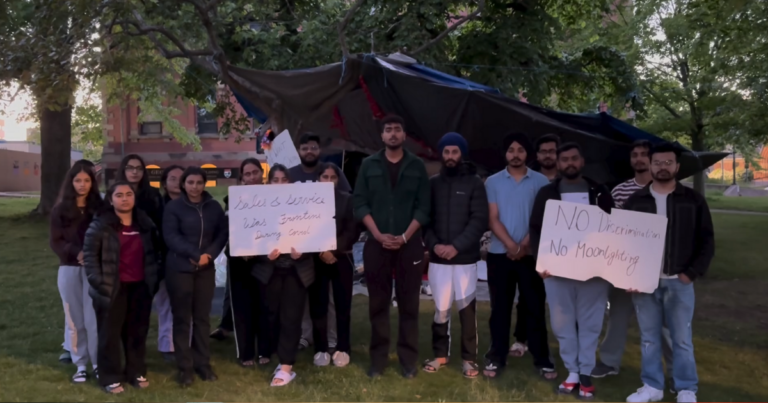
P.E.I. foreign workers mount second hunger strike to protest work permit expiration

Foreign workers in Prince Edward Island have mounted another hunger strike as they protest the looming expiration of their work permits.

The protesters are demanding that the P.E.I. government extend their work permits, offering them an eventual pathway to permanent residency. 

The protests began last month and have been on and off ever since, with demonstrators angry about recent changes to the province’s immigration policy. So far, the calls have fallen on deaf ears, they say.

“It’s not leading us anywhere solid,” protest organizer Rupinder Pal Singh told CBC News. “We haven’t heard something solid back from government except excuses and nos.”

According to Singh, six members of the group planned to start another hunger strike this week.

“This is how serious it is,” said Singh, who also spoke before the P.E.I. legislature last month, claiming that it was unfair that he had to pay three times as much as a Canadian citizen for his education.

Singh said that the “extra” money spent on his education in Ontario and his taxes during his stay in Canada, should grant him “equal rights” as a Canadian citizen.

“Altogether, I paid around $30,000 for my tuition. For the same schooling fee, a person born and raised in Canada paid around $10,000,” Singh said. “An extra $20,000 for the same thing, and still suffering. How unfair is that?” Singh told the legislature in May. 

The group also informed P.E.I. Minister of Workforce Jenn Redmond about the return to a hunger strike almost three weeks after the first one ended. 

The group decided to “pause” their no-liquid strike after being given a meeting with P.E.I.’s top immigration official. 

Redmond responded to Singh in an email that she also forwarded to CBC News. 

“We strongly advise against resuming a hunger strike, as it will not lead to a change in the government’s decision and may endanger the health of those participating,” it reads, while also saying she respects their right to protest. 

However, Redmond says that the province won’t be backing down on the policy changes any time soon. 

“Prince Edward Island has often been seen as an easy place to obtain permanent residency,” it continued. “This is a reputation that we are changing to ensure our province is not seen as a place to get expedited permanent residency for those seeking to immigrate.”

Redmond went on to say that her office met with over 50 people who will be affected by the policy changes made in February and offered them “alternative pathways” to proceed with in their pursuit to becoming permanent residents.  

The policy changes make it more difficult for people working in sales and service to be nominated for permanent residency by the province, including those who are already presently working there.

The province did offer to extend some work visas but only for the construction and healthcare industries, as those are the most in-demand jobs on the island.

However, Singh called the offer unfair as not everyone can work in those jobs that are in demand such as construction, arguing that the decision would disproportionately affect women who would be less likely to work in the industry.

True North’s Harrison Faulkner travelled to the island to interview Charlottetown locals to get their opinions on the protests. 

He was later confronted by Singh after the video went viral online, who asked him why he would report on the matter without contacting him first. 

“Why did you post that video,” asked Singh. “You don’t even know what’s going on here? Do you know how much hate you spread with that video?”

Faulkner responded by asking Singh if he thought it was right to get people to try to censor Canadians’ opinions on the protest.

Singh told him he should first know what the protest was about before reporting on it.

“What did I say about the protest that was not accurate?” asked Faulkner.

“You said that ‘you should deport them,’ who are you to make that decision?” asked Singh.

“If there is no space in Prince Edward Island for more service workers – ” 

“Who are you to decide that brother,” interrupted Singh. “How would you know? Are you from here?”

Capital gains tax hike will affect more than half of Canadian small businesses: CFIB

More than half of Canadian small business owners say that the capital gains inclusion tax hike will affect them, according to the Canadian Federation of Independent Businesses.

The polling, released Thursday, challenges the Liberal government’s claims that only the highest earners in Canada will be affected. 

Fifty-five percent of small business owners surveyed said it would eventually affect the sale of their business. Forty-five percent% said it would affect their private investments, and 41% said it would affect investments held within their corporations.

Effective June 25, the capital gains tax hike will force Canadians earning over $250,000 in capital gains annually to pay tax on two-thirds of their gains instead of half. All capital gains for businesses and trusts, regardless of the amount, will be subject to the increase.

Prime Minister Justin Trudeau said the capital gains tax increase would generate an additional $20 billion in revenue, to help offset the $111.2 billion in new spending his government’s budget calls for.

CFIB president Dan Kelly said it’s important for people to know this isn’t just a tax on the super-rich. 

“Even the federal budget admits that 307,000 Canadian corporations had net capital gains in 2022 alone. Like individual Canadians, companies often record capital gains as a one-time or occasional event, not every year. The impact of the hike in the inclusion rate needs to be measured over the long term, not just in any one given year,” said Kelly.

The details of the increase weren’t made public until June 10, which Kelly also took issue with.

“With details of the changes in the inclusion rate only coming out in last week’s Ways and Means Motion, business owners were only given two weeks to make informed decisions, leaving virtually no time to change gears,” said Kelly.

The Canadian Federation for Independent Business has called on the Liberals to scrap the increase, or at the very least, grandfather in existing capital gains.

Kelly said he’d also like to see businesses given the same $250,000 threshold that individual investors have.

Many of the concerns were initially stated in a letter the Canadian Federation of Independent Businesses sent to Freeland on May 29.

Small businesses publicly opposing the upcoming capital gains hike join the growing chorus of large businesses, healthcare and tech leaders, farmers, policy experts, and everyday Canadians.

Conservative Lleader Pierre Poilievre warned that the tax increase would result in businesses, jobs, doctors, and food production leaving Canada.

“Running out of money, and worried about a debt downgrade from rating agencies, Finance Minister Freeland has announced a job-killing tax on healthcare, homebuilding, small businesses, and farmers,” said Poilievre.

The CFIB survey comes just a day after different polling showed that almost a quarter of Canadians expect to be hit by the tax hike. 

While 23% of Canadians believe they will pay more due to the capital gains inclusion rate over the next five years, the Liberals claim the change would only affect one in 769 Canadians.

Iconic actor Donald Sutherland dies at 88

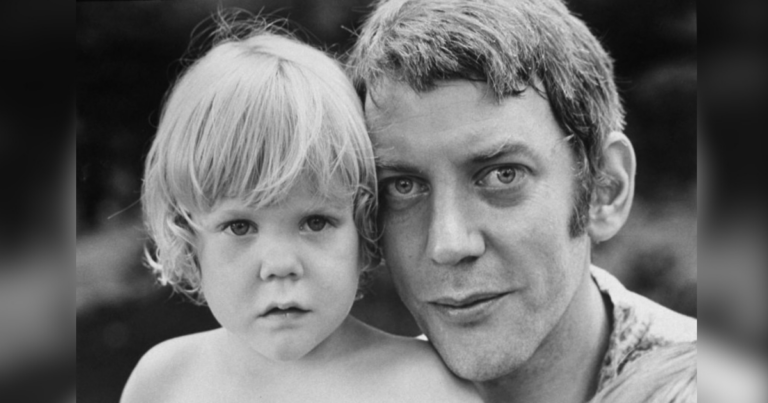
Canadian actor Donald Sutherland, best known for his roles in M*A*S*H, The Hunger Games, Animal House, and The Dirty Dozen died Thursday at the age of 88. 

Sutherland was known for his versatility on screen, offering serious deliveries in dramas, while also being able to take on hilarious roles in some legendary comedies. 

Over his six-decade career, he won numerous awards from Emmys and Academy Awards to Critics Choice and Golden Globes, as well as being the Honorary Oscar recipient in 2017. 

Sutherland’s body of work includes some 200 film and TV credits, as well as a short stint on Broadway. 

He also is the father of Emmy-winning Kiefer Sutherland, best known for his leading role on the television series 24.

“With a heavy heart, I tell you that my father, Donald Sutherland, has passed away. I personally think one of the most important actors in the history of film. Never daunted by a role, good, bad or ugly. He loved what he did and did what he loved, and one can never ask for more than that. A life well lived,” wrote Kiefer in a social media post. 

Born in 1935, in Saint John, N.B., Sutherland’s first big break in acting came with a role in 1967 star-packed World War II drama The Dirty Dozen, directed by Robert Aldric.

Sutherland played a felon named Vernon Pinkley, alongside Lee Marvin, Charles Bronson, Ernest Borgnine, George Kennedy, Telly Savalas and others. 

The film was both a critical and commercial success and is still hailed as a seminal American war movie today.

He would go on to star in another prominent war movie three years later with Kelly’s Heroes, which also had an outstanding cast that included Clint Eastwood and Don Rickles. 

When he wasn’t doing dramas, he played in comedies like The Kentucky Fried Movie, written by the creators of Airplane! 

To give an example of Sutherland’s range and tenacious work ethic, in 1978 he starred in three movies that would have to be shelved in different sections at the local video store: Invasion of the Body Snatchers, a horror-thriller, the iconic comedy Animal House and The Great Train Robbery with Sean Connery.

Sutherland had a string of comedies in the late seventies before putting on his dramatic hat again to star in Robert Redford’s Ordinary People, which won four Oscars in 1980, including Best Picture. 

Sutherland appeared in Oliver Stone’s 1991 drama JFK. While he only makes a cameo in the otherwise three-hour film, it’s arguably the most memorable scene. 

He also played the villain in The Hunger Games franchise, starring in all three films. 

Sutherland’s legacy in tinsel town was cemented in 2011, after receiving a star on the Hollywood Walk of Fame in 2011.

“Retirement for an actor is death,” Sutherland told the Hollywood Reporter at the time. “My work will continue until I die.”

He continued to act up until last year. 

He died in Miami after suffering from a long illness. He is survived by his wife Francine, his five children and four grandchildren.

The Daily Brief | “Tree Equity?”

Should the federal government maintain its pace of international student visa approvals following the recent cut, it might surpass its goal to reduce the number of permits significantly.

Plus, in the latest push to make everything woke, the City of Ottawa wants to implement race-based tree planting to achieve what it calls “Tree Equity.”

And despite being championed by activists as good for business, high ESG scores have no bearing on companies’ stock market returns, a new study finds.

Tune into The Daily Brief with Cosmin Dzsurdzsa and Isaac Lamoureux!

SUBSCRIBE TO THE DAILY BRIEF

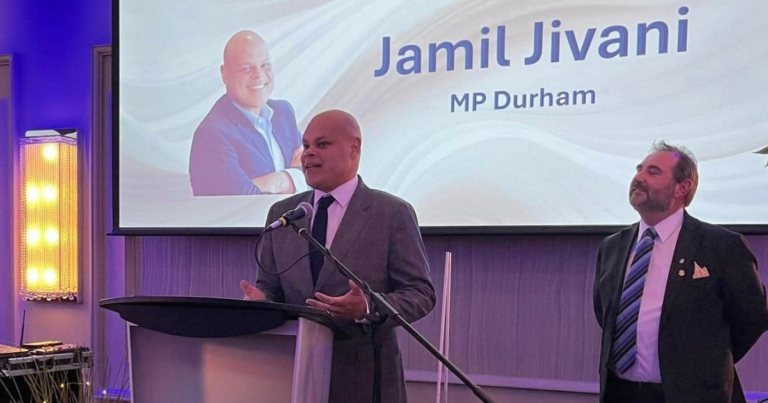
MP Jamil Jivani sponsors petition to halt gender-affirming procedures for minors

A rookie Conservative MP has sponsored a petition calling on the government to halt all gender reassignment surgery for minors and any gender-affirming care for those under 16 years old.

Petition e-5010, initiated by a Whitby, Ont. woman, has amassed over 1,100 signatures since it was posted June 12, sponsored by Durham MP Jamil Jivani.

“We are deeply troubled by the largely unrestricted social and medical options being presented to children struggling with gender ideation in Canada,” reads the petition. 

Jivani has yet to discuss his sponsorship of the petition publicly, but a post to X from a supporter of the petition Tuesday received positive feedback.

Jivani has publicly backed petitions on parental rights, stopping DEI, affordability, and stopping car thefts in his Ontario riding.

The petition says that given the “discredited nature” of the World Professional Association for Transgender Health and the recent findings of the Cass Review in the United Kingdom, the House of Commons should “prioritize evidence-based practices and take decisive action to ensure the safety and well-being of all children and adolescents in Canada.”

True North previously reported that a Canadian paediatrician called for an end to gender-affirming treatments for children following the Cass Review’s release.

Alberta Premier Danielle Smith called the Cass Review “the most comprehensive review of the medical literature and the science behind this.” She cited the review’s findings in support of her proposed restrictions on gender reassignment surgeries for minors.

The petition sponsored by Jivani calls on the federal government to cease all gender reassignment medical procedures for minors and gender-affirming care for those under 16 years old.

A CBC investigation found that Quebec teens were being rushed into gender transitions, able to get prescriptions in minutes without parents present or referrals from a medical professional.

The petition also calls on the government to “adopt evidence-based guidelines that prioritize non-invasive, reversible forms of intervention until individuals reach an age where they can provide informed consent” and “disengage from any association or endorsement of WPATH and its recommendations, as they have been largely discredited and are not conducive to safeguarding the well-being of children and adolescents,” the third and final demand reads.

True North reached out to Jivani for comment but received no reply.

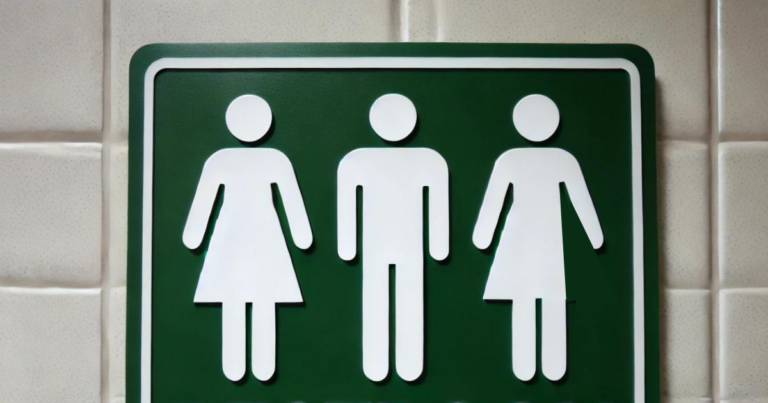
Trudeau government to make all Parliament Hill washrooms “gender-neutral”

As the House of Commons rises for the summer, the Trudeau government is scrapping all male and female washrooms on Parliament Hill and will replace them with “gender-neutral” washrooms. 

Under Minister of Public Services Jean-Yves Duclos’ direction, Parliament Hill will renovate the approximately 200 washrooms in Centre Block and the new welcome-centre to be more “accessible” and “inclusive.”

This initiative is part of the multi-billion dollar Centre Block rehabilitation project to restore and modernize Canada’s historic Parliament building.

Duclos says that the purpose of eliminating sex-separated washrooms was to meet the expectations of Canadians and adapt to the needs of the future.

“It’s a very broad message of inclusion,” said Duclos.

In a comment to the CBC, Public Service Pride – a group representing LGBTQ public servants – praised the renovations by the government, saying that this is “exactly how it should be.”

While the government is bringing radical reforms to washrooms on Parliament Hill, some feel that the government should do more in pushing gender-neutral washrooms.

NDP MP for Vancouver Kingsway Don Davies presented a petition to the House of Commons calling the government to ban male-female washrooms in all federally regulated workplaces.

“Exclusionary washroom policies cause significant barriers for trans, non-binary and gender non-conforming people,” said Davies.

“Therefore they [the petitioners] call on the government to, among other things, amend the Canada Labour Code to require gender-inclusive washrooms in all federally regulated workplaces and to ensure that there is access to public washrooms for everyone in this country.”

However, not everyone is happy with the modernization plans being pursued by the government.

Esme Vee of Canadian Women’s Sex-Based Rights told True North that they are entirely opposed to gender-neutral washrooms, citing women’s right to privacy, safety, and dignity.

“This is a clear message that Parliament is anti-woman,” said Vee. “Our message back to Parliament is that women’s sex-based protections are guaranteed under Section 15 of the Canadian Charter of Rights and Freedoms.”

Vee went on to suggest that the government was foregoing its feminist credentials, and that a real “gender analysis” of the policy would have shown the harms women face in the abolition of male-female washrooms.

“In this case, the unintended consequence of “inclusive”, “gender-neutral” facilities is that females self-exclude for a variety of reasons,” said Vee. “For example, we’re seeing this with schools that have adopted unisex washrooms. There’s been an increase in urinary tract infections reported among girls due to holding their bladders for fear of encountering boys in the washroom.”

Vee said that the policy is opposed by the vast majority of women and is regressive.

“Inviting males into women’s washrooms is regressive, throwing us back 100 years to a time when women were excluded from fully participating in public life due to the “urinary leash”. This is a term which describes how women in their daily lives were only able to travel as far as their ability to use their toilet at home.”

Nearly a quarter of Canadians expect capital gains tax impact 

While the Liberals say that the capital gains tax increase will only affect 1 in 769 Canadians, recent polling shows Canadians feel it will affect nearly a quarter of the population.

The capital gains tax hike, effective June 25, will force Canadians making over $250,000 in capital gains annually to pay tax on two-thirds of their profit instead of half. Primary residences are exempt from capital gains tax.

Finance Minister Chrystia Freeland has claimed that the capital gains tax hike will only affect 0.13% of Canadians. However, results of a poll released by the Angus Reid Institute on Wednesday show that 23% of Canadians believe they will pay more over the next five years on their personal after-tax income due to the increased capital gains inclusion rate. The figure is over 17,500% more than the figure the Liberals originally reported.

12% of Canadians said they would pay a little more, while 11% said they would pay a lot more.

Prime Minister Justin Trudeau said the tax increase would generate $20 billion in new revenue.

“At a time when the richest are only getting richer, I think it’s fair to ask those people to pay a little more,” he said.

Freeland said the revenue is required for the Liberals to pay for the four million new homes Trudeau promised to build by 2031, to fund dental care, the National School Food Program, early learning and childcare, $5 billion to research investments into universities, handouts for the AI industry, $200 billion into healthcare, and more.

“We know we need to make these investments in a fiscally responsible way based on fiscally responsible foundation. And so the fair way to finance them is with tax fairness,” said Freeland.

The Liberals’ 2024 budget announced $111.2 billion in new spending and a $40 billion deficit with no plan to balance the budget.

Despite so many Canadians saying they would pay more, 32% still said they support the increase. Conversely, 49% of Canadians opposed the increase, 29% of whom strongly opposed it. 

The most support came from Liberal voters, while 84% of Conservative supporters opposed the increase.

Freeland claimed the capital gains tax increase will only affect Canada’s top earners.

Despite the Liberals framing the capital gains tax increase as only affecting the country’s top earners, even 13% of Canadians who make less than $25,000 per year said they would pay more thanks to the increase. 17% of those who made between $25,000 and $50,000 said the same, increasing with every income bracket. 47% of Canadians who made $200,000 or more yearly said they would pay more.

Canadians who make less than $25,000 per year were the most uncertain, with 35% saying they weren’t sure whether they supported or opposed the increase.

“If this capital gains inclusion change is, indeed, to generate billions for fairness, geared towards those with the lowest income levels, it is not an encouraging sign for the government that the most uncertainty about the policy exists among those with the lowest household incomes,” reads the report.

Considering that nearly a quarter of Canadians feel the capital gains tax increase will cause them to pay more than the Liberals claim, a policy expert gave the Liberals’ tax increase a failing grade.

“Unfortunately, it’s a cheap political gambit that isn’t even going to pay off political dividends and will do a lot of economic damage in the process. So basically a zero out of ten, pretty bad policy,” said Aaron Wudrick, director of the Macdonald-Laurier Institute’s domestic policy program.