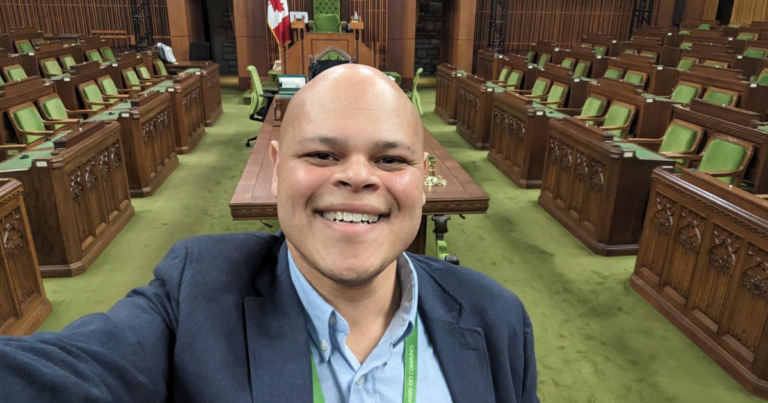
A day after a historic church in Toronto burnt down, Conservative MP Jamil Jivani lambasted the NDP and Liberals for being unable to condemn church burnings unanimously in February.
Plus, Vancouver’s equity committee wants Mayor Ken Sim, who is a second-generation immigrant born to parents from Hong Kong, to account for his colonial and settler roots.
And western premiers are not happy with Ottawa’s abrupt decision to give Quebec $750 million so it can deal with a spike in asylum seekers.
Tune into The Daily Brief with Cosmin Dzsurdzsa and Lindsay Shepherd!
An Ontario pro-life group hopes to bring attention to what it says are the harms of euthanasia and abortion – and why pro-life groups have so much resistance when they talk about them.
The Alliance for Life Ontario is hosting its 34th annual conference this weekend in Mississauga, Ont., with the goal of sharing information it believes is under attack not just by Canada’s government but also around the world.
The group’s mandate is to educate other pro-life groups in Canada and all who will listen about the science behind abortion and euthanasia.
AFLO executive director Jakki Jeffs told True North in an interview that the conference is a conduit for the organization to bring speakers and scientists together to keep pro-life organizations and thinkers well-informed about the issues they advocate against.
Jeffs said that this year’s conference will bring doctors and speakers from around Canada and other parts of the world to speak at the conference.
“What we try to do every year is bring speakers that have not, for the most part, presented in our province before, so that our groups, and we have about 50 of them across the province, can then see these speakers and take advantage and maybe bring them in,” she said.
This year, Dr. David Reardon, the founder of the pro-life think tank the Elliot Institute, is among the speakers.
Reardon recently conducted a survey among women and girls, which found nearly two-thirds of women respondents who received abortions did so against their own wishes and values, having been forced or coerced into it. This, Jeffs said, counters the prevailing narrative that abortion is a woman’s choice.
Jeffs said the conference will delve into the Charter of Rights and Freedoms violations she said pro-life organizations face in Canada.
She said municipalities have violated religious freedom rights by blocking pro-life from advertising.
“We know that’s a very difficult pro-life message to send when you look at victim photography.
But we’re in a democracy, and we’ve got municipalities that are going against the Charter because those in their municipality just don’t like the message,” Jeffs said. “The Charter says our freedom of expression is just that, it’s not there for everything we agree with, It’s there for what we don’t agree. That’s what makes us a democracy.”
Jeffs said in certain municipalities across the province and other parts of the country, pro-life groups have been barred from advertising, or putting up flags because the municipalities consider those groups to be religious entities and will not publicize anything related to religion, events, messaging, or celebrations.
She said there have also been restrictions on the use of photographs of fetuses and getting permits to protest.
“In Kelowna B.C., there was a sign that said ‘respect life from beginning to natural death.’ And one of the city councillors said ‘Oh my gosh, I can’t walk down this street I’m so afraid,’” she said. “It’s a story that’s not being told. And it’s getting worse. It’s like they prevent us from really sharing the truth with Canadians.”
The group will also host Canadian military veteran Kelsi Sheren to delve into euthanasia, or medical assistance in dying (MAID).
“There’s just a lot that needs saying and we’re just in our little way trying to say it,” Jeffs said. “It’s a grave injustice for a country that says, you know, we are all for choice except for one that helps you save your baby.”
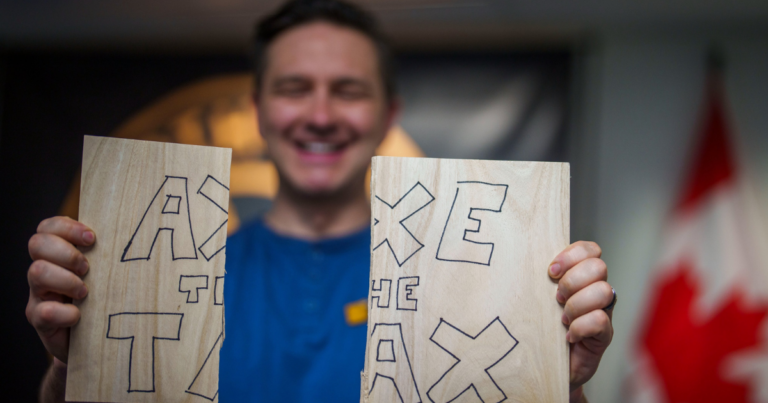
After weeks of speculation, Conservative Leader Pierre Poilievre laid down his opposition to the Liberals’ capital gains tax hike.
Poilievre narrated a detailed video pledging within 60 days of becoming prime minister to strike a “tax reform task force” composed of entrepreneurs, inventors, farmers and workers while excluding lobbyists.
In the 15-minute video, Poilievre explained how Canada’s poor economic growth in the past, present, and future was caused by declining labour productivity relative to the United States as capital investment flees from the Canadian economy.
Poilievre said that an increase to the capital gains inclusion rate from 55% to 66.6% for gains above $250,000 will exacerbate the problem of businesses being hesitant to invest in Canada and instead move to countries with a friendlier business climate like the United States.
“Running out of money, and worried about a debt-downgrade from rating agencies, Finance Minister (Chrystia) Freeland has announced a job-killing tax on healthcare, homebuilding, small business, and farmers,” said Poilievre.
“Businesses, jobs, doctors, and food production will leave Canada.”
The Conservative leader also criticized Freeland for announcing the tax hike months before the government planned on implementing the change, allowing rich Canadians to sell their gains at a lower rate while giving the government a revenue stimulus from collecting taxes on those gains.
“Freeland gave billionaires an escape hatch,” said Poilievre.
“She waited two months after she announced the tax hike before it took effect, giving billionaires plenty of time to sell their holdings without paying the higher rate, and move their money to lower tax foreign countries where it will build businesses, factories, mines, railroads and other job creating investments over there.”
Poilievre said his proposed tax reform task force would help develop a plan to lower taxes on work, hiring and production, reduce the share of taxes paid by the poor and middle class while cutting corporate welfare, and simplify the tax code to produce 20% less paperwork.
At a press conference on Monday, Freeland insisted that the capital gains tax hike is a multi-partisan measure and that more Canadians will benefit from the tax hike than will be affected.
“Three percent of Canadians with an average annual income of $1.4 million will be affected by this change in any given year,” said Freeland. “But millions more, especially younger Canadians will benefit from it.”
Federal director of the Canadian Taxpayers Federation Franco Terrazzano applauded Poilievre’s announcement but said that the key to tax reform is slashing tax rates and cutting government spending.
“Poilievre and the Conservatives deserve credit for standing up for taxpayers and fighting Trudeau’s capital gains tax hike. If Poilievre becomes prime minister he must reverse Trudeau’s capital gains tax hike,” said Terrazzano.
“It’s fine to study tax reform, but the key is to actually cut taxes and wasteful spending ASAP. For example, we want to see the carbon tax scrapped by lunch time on his first day.”
The Conservatives were the sole party to vote against a Liberal government motion to introduce the capital gains tax change legislation onto the floor of the House of Commons, with the NDP, Bloc Québécois, and Green Party voting in favour.
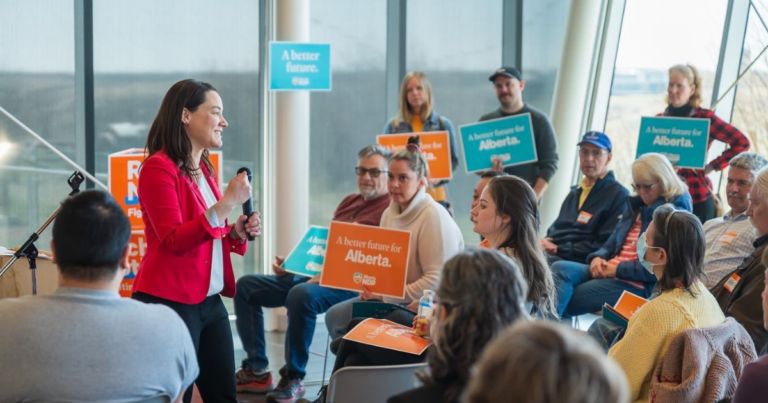
An Alberta NDP MLA and former Notley-era cabinet minister has announced her intention to resign next month while pointing fingers at what she calls “bonkers” conservatives.
Lethbridge-West MLA Shannon Phillips told the Globe and Mail she will step down on Canada Day.
Phillips said she’s been worn down by her opponents and claimed that the “crazy” right will make it increasingly difficult to find people willing to serve in office.
“Jesus Christ himself couldn’t have kept me,” she said.
“These conditions are not improving. The right is only getting more crazy and more bonkers, and disinformation is just getting worse. And that is going to have an effect on people’s desire to do this work.”
Phillips was elected in 2015 and served as the minister of environment and parks until 2019. In that role, she was responsible for accelerating Alberta’s phase-out of coal-fired power plants.
She was re-elected in 2019 and 2023.
While she was a minister, two members of the Lethbridge Police Service who opposed her politics surveilled her. Those officers were found guilty of violating the Police Act, but Phillips was informed in May that the provincial prosecution service declined to pursue criminal charges.
“I’m the next in a line of woman politicians who are taking a pass,” she said.
Her resignation opens a seat for former Calgary Mayor Naheed Nenshi, should he win the NDP’s leadership contest as expected on June 22. Also in the running is Alberta NDP MLA and former cabinet minister Kathleen Ganley, whom Phillips supported.
Phillips said Nenshi’s likely victory is not why she is resigning.
Prime Minister Justin Trudeau will be spending $110 million in taxpayer funding on anti-racism and DEI consultants to fight what the Liberals consider the endemic problem of racism at the heart of Canadian society.
The Trudeau government announced the spending as part of its renewed anti-racism and discrimination strategy, with money being doled out to “hundreds” of projects across Canada.
The minister of diversity, inclusion and persons with disabilities, Kamal Khera, revealed details during a press conference on Saturday.
“The strategy incorporates the voices and lived experiences of thousands of Canadians, and enhances our whole government approach to combating racism and discrimination in all its forms,” said Khera.
The program entitled Changing Systems, Transforming Lives: Canada’s Anti-Racism Strategy will begin implementation this year and run through to 2028, with $70 million in funds going into local initiatives.
“Our goal with this strategy is to combat all forms of racism and drive positive change in the lives of Canadians,” Khera added.
According to a government release, “Indigenous, Black, racialized and religious minority communities continue to face barriers to inclusion due to racism and discrimination.”
However, critics like the founder of the Aristotle Foundation Mark Milke say that other factors are at play when it comes to barriers between ethnicities.
“The anti-racism promoted by the federal government is not actually anti-racism, it’s reverse discrimination in most cases,” Milke told True North. “It’s nothing like what Martin Luther King envisioned, which was to judge people by their character, by their merit and not by the colour of their skin.”
Milke said that what’s happening presently with anti-racism is just an inversion of what was racism historically, much of which has been popularized by the American author Ibram X Kendi.
Kendi has published several books on the subject of racism, which Milke said he’s redefined as being the root cause of any differences between outcomes. Whether they be differences economically, in education or success in life between groups based on skin colour, they must be due to racism.
“That’s silly, it’s monocausal and it’s simply not accurate,” said Milke. “For example, Indigenous Canadians have lower incomes than Taiwanese Canadians, is that because Canadian society discriminates against Indigenous Canadians but not Taiwanese Canadians?”
Milke argues that the results have to do with far more basic things, like education and geography.
“Taiwanese Canadians are among the most educated in the country and Indigenous Canadians on average are lower than other Canadians,” said Milke. “Or geography, many First Nations people of course live on first nations in the middle of nowhere, with no property rights, no ability to build wealth and far from education and career opportunities.”
The Trudeau government already invested $95 million into an anti-racism strategy between 2019 and 2022.
However, the government argued that the world has since “experienced several tragically impactful events, resulting in devastating consequences, including right here in Canada.”
For example, the government claims that the COVID-19 pandemic exacerbated “preexisting racial inequalities” due to the financial stress it placed on minorities.
“The federal government’s anti-racism strategy is based on a fraud assumption that everything is due to racism or most things are due to racism,” said Milke. “Not education, not geography, not cultural dynamics, not family dynamics such as two parents or one.”
“All these things factor into outcomes,” he added.
Among the Liberal’s priorities for its new strategy include promoting economic and cultural empowerment, advancing racial equity, driving reforms on law enforcement and public safety.
“The federal government’s strategy is divisive and it’s simply illiberal, and it’s not anti-racist,” said Milke. “It is in fact promoting a form of racism, of reverse-racism.”
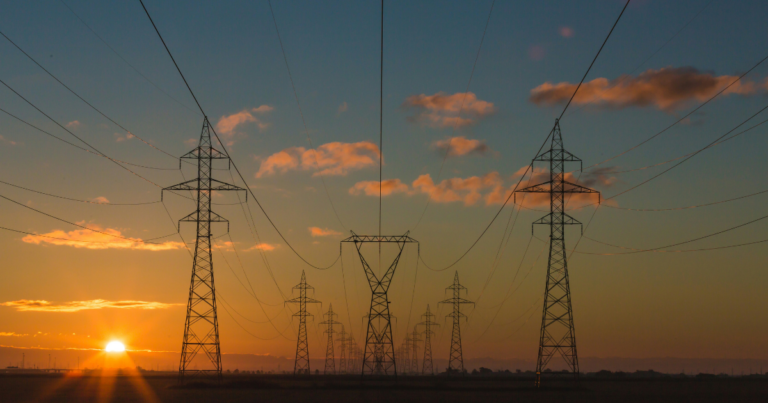
The Alberta government is applauding an electricity industry advisory report that it says vindicates its frustrations with the federal government.
The Canada Electricity Advisory Council’s final report, released Monday, concludes that the Liberals’ 2035 deadline for a net-zero grid is “unrealistic and unattainable,” Alberta Premier Danielle Smith and Environment Minister Rebecca Schulz said in a statement Tuesday.
The report recommends developing provincial and territorial roadmaps to achieve a carbon-neutral energy system by 2050.
“The Canada Electricity Advisory Council’s latest report echoes Alberta’s long-standing warning: Ottawa’s one-size-fits-all electricity regulations are a dangerous, costly, and unrealistic path to failure,” reads the statement from Smith and Schulz.
The council began in May 2023 and intended to advise on policies to assist the electricity sector in reaching net zero across the nation.
The council comprises 19 electricity sector leaders from across Canada. Over the last year, the council held 87 meetings, heard from 117 stakeholders through 66 private briefings and 72 written submissions, and offered 28 recommendations to the federal government.
Various recommendations in the report suggest that the federal government shift its focus from a net-zero electricity grid by 2035 to achieving carbon neutrality by 2050.
The recommendations focus on implementing a pragmatic approach and focusing on collaboration between the federal government and provinces.
“The council recommends that the federal government support provinces, territories, and Indigenous Nations and communities in their development and regular updating of economy-wide pathway assessments that explore available and credible pathways for achieving a net-zero or carbon-neutral economy by 2050,” reads the report.
The council’s chair, Philippe Dunsky, admitted that the report is imperfect and will not solve every challenge, but he said that the recommendations reflect an achievable path forward.
“In the end, while Council members’ respective provinces and territories may face different challenges, we are all members of the same Team Canada,” said Dunsky.
While the report said that four in five Canadians live in provinces where electricity is largely decarbonized (more than 90% non-emitting), it added that regions which rely on fossil fuels for the bulk of their power generation — Alberta, Saskatchewan, Nova Scotia, and remote Northern communities — have struggled.
“For over two years, provinces, utilities, businesses, and Canadians have demanded federal electricity regulations that reduce emissions without sacrificing affordability and reliability. Yet the federal government has stubbornly stuck to its plans to implement unrealistic targets for a net-zero grid by 2035, regardless of the costs and risks to Albertans,” reads the joint statement.
To achieve the country’s goals, the report said that provinces will need to decarbonize existing electrical systems, but also rapidly grow capacity.
“Electricity’s market share will need to grow roughly threefold within a single generation. At that point, it would be the country’s primary form of energy supply,” reads the report.
The report showed that the energy transition could cost between $1.1 and $2 trillion. One key recommendation for keeping the cost down was to show flexibility for jurisdictions across Canada and the different challenges that come with regional disparities.
Federal Energy Minister Jonathan Wilkinson thanked the council for its report, saying the recommendations will support the federal government in its next steps forward to achieving net zero.
Alberta has remained steadfast in its commitment to achieving carbon neutrality by 2050, urging the federal government to abandon its 2035 goal at every chance possible.
“Alberta already has a plan to reach carbon neutrality by 2050 — the federal government should work with us to achieve this goal,” concluded the joint statement between Smith and Schulz.
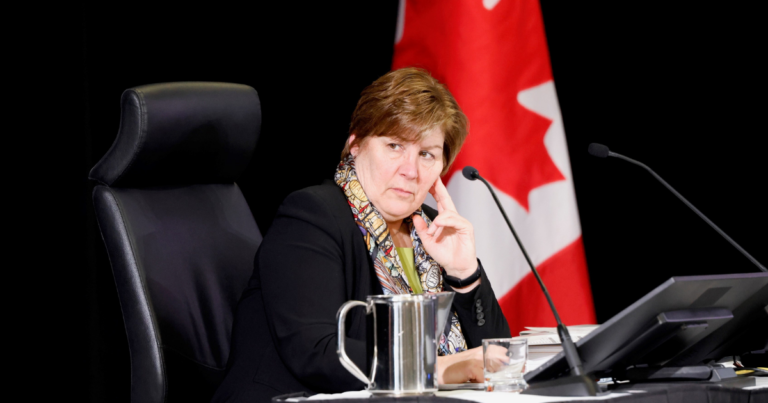
MPs across party lines voted unanimously on a motion to call on Justice Marie-Josée Hogue to investigate allegations that current and former parliamentarians have collaborated with hostile foreign governments.
The motion, which is non-binding, passed the House of Commons in a 322 to 0 vote Tuesday.
The Bloc Quebecois joined the Conservatives in calling on the existing commission probing foreign interference to be expanded to “allow it to investigate Canada’s federal democratic institutions,” including former and current MPs and senators.
“The Liberal government must understand that its duty is to protect us, not to protect itself. It must stop its strategy of avoiding answering serious questions and take off its pink-coloured glasses. Why? Because it’s not 2015 anymore,” said Bloc MP René Villemure.
Conservative House leader Andrew Scheer sent Hogue and Public Safety Minister Dominic LeBlanc a letter this week expressing “shock” about the allegations contained in the National Security and Intelligence Committee of Parliamentarians report on certain politicians’ involvement with foreign states.
The NSICOP report said the federal government has undermined the integrity of Canada’s parliamentary and democratic processes and eroded public trust.
According to the report, there are MPs and senators who are, “in the words of the intelligence services, ‘semi-witting or witting’ participants in the efforts of foreign states to interfere in our politics,” with a former MP even meeting with an intelligence official in another country.
In his letter, Scheer wrote that the report’s “findings of the Special Report cannot be ignored.
“Canadians deserve to know if federal parliamentarians have knowingly engaged in activities on behalf of foreign governments that have undermined Canada’s national interest,” reads the letter. “These findings have not been weighed and assessed by an independent body. This must be done immediately.”
Scheer requested that the Hogue Commission “issue a finding of fact” for each case involving an MP who “knowingly”engaged in foreign interference activities and report any such evidence to Parliament before Oct. 1.
Scheer said that while these findings “would not constitute findings of criminal guilt,” it could serve as an “aid” to the House of Commons, the Senate, political parties whose members were found to be implicated, and most importantly to the Canadians public.
“If Canadians are to continue to have faith in their federal democratic institutions, they need to know who has broken their oath and betrayed their trust,” wrote Scheer.
Hogue leads the commission charged with examining allegations of foreign interference into the 2019 and 2021 federal elections, primarily by China, India, and Russia.
She released her interim report last month, in which she stated she did not believe that whatever election interference occurred was enough to undermine the integrity of the elections overall, but did conclude that it likely affected the result of a specific riding.
However, Hogue did not have access to all records pertaining to the alleged interference as the Trudeau government chose to withhold some.
Of the documents it decided to hand over, many were redacted.
The Liberals cited cabinet confidentiality as the rationale behind their decision to withhold and redact documents.
Initially, the Commission into Foreign Interference was promised that it would have complete access to all secret documents and “all relevant cabinet documents,” regardless of their sensitive nature.
“Justice Hogue will have full access to all relevant cabinet documents, as well as all other information she deems relevant for the purposes of her inquiry,” said LeBlanc last September at the time of the inquiry’s announcement.
The Liberals have since refused to release the list of names that were redacted in the report.
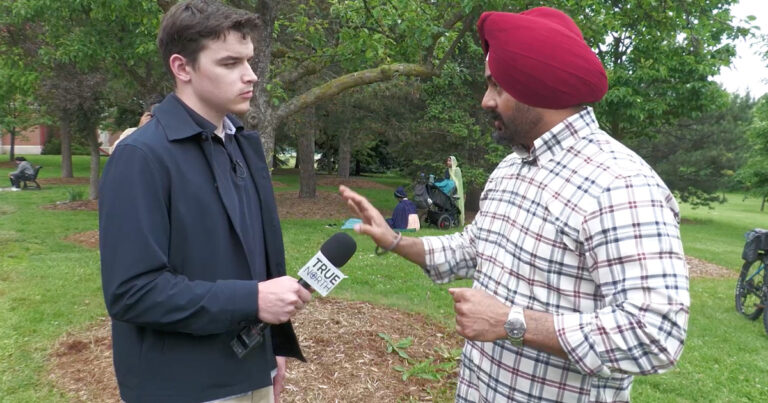
On this episode of The Faulkner Show, Harrison Faulkner speaks with Brampton-based immigration consultant Kanwar Sierah at an international student protest in Brampton.
When asked what his response is to Canadians who feel like international students are taking jobs away from young Canadians, Sierah replied that Canadian kids should start businesses and invest in Bitcoin.
Watch the full conversation between Faulknet and Sierah on the latest episode of The Faulkner Show.
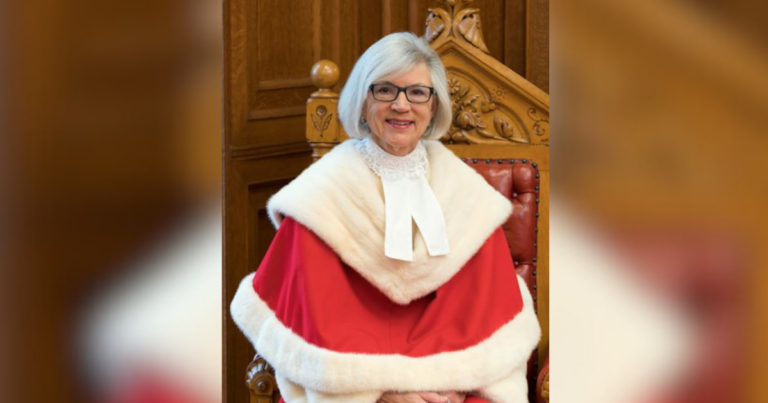
The former Chief Justice of the Supreme Court of Canada Beverley McLachlin announced that she will be retiring from the Hong Kong Court of Final Appeal upon reaching the legal age limit for a judge.
McLachlin said that she will retire once her second three-year term ends on July 29th 2024 and looks back on the court confident that it will be independent and uphold the rule of law.
“It has been a privilege serving the people of Hong Kong. I continue to have confidence in the members of the Court, their independence, and their determination to uphold the rule of law,” said McLachlin.
McLachlin’s tenure on Hong Kong’s Court of Final Appeal had been scrutinized for years for lending Canada’s reputation and credibility to China, which had undertaken an authoritarian takeover of Hong Kong just a couple of years after McLachlin’s appointment.
The Hong Kong Court of Final Appeal, which allows retired judges from foreign jurisdictions to sit on the bench as non-permanent judges, saw the former chief justice of New South Wales, Australia, James Spigelman, resign in 2020 after China enshrined their national security law.
Two years later, the president and the deputy president of the United Kingdom’s Supreme Court resigned from the court, saying that they could not appear to endorse an administration that was clamping down on freedoms and liberties.
However, McLachlin had told the Globe and Mail that she was happy with the Hong Kong top court’s judicial independence and her work in preserving the human rights of Hong Kong’s people.
“The court is doing a terrific job of helping maintain rights for people, insofar as the law permits it, in Hong Kong. Which is as much as our courts do,” McLachlin told the Globe last December.
Appearing before Parliament’s international human rights subcommittee, Chung Ching Kwong, a former resident of Hong Kong, told parliamentarians that no foreign judge should be serving on the Hong Kong Court of Final Appeal.
“I’d say any foreign judges who are serving on the Court of Final Appeal in Hong Kong should have left by now. The reason is that their presence on the Court of Final Appeal is giving the so-called rule of law a false legitimization that there is a rule of law,” said Kwong.
“They’re simply maintaining the façade that there might be rule of law in the system, be it in the criminal side of things or the commercial side of things.
At the same committee meeting, lawyer Jonathan Price said that McLachlin’s presence in the Hong Kong court gives China ammunition to claim that the rule of law still exists in Hong Kong when it does not.
“She’s become part of the appearance of the rule of law, but she is not significantly contributing to its substance, as much as she’d like to think that she is. She’s probably doing more harm than good,” said Price.
“There is nothing there anymore, but it is a dressing, like the foreign judges. They still have, of course, the courtrooms. They still wear the robes. I’m afraid, with no disrespect to her personally, Beverley McLachlin has become part of that dressing.”
McLachlin is Canada’s longest-serving Chief Justice of Canada, serving for 17 years and ruling on several landmark cases.
A day after a historic church in Toronto burnt down, Conservative MP Jamil Jivani lambasted the NDP and Liberals for being unable to condemn church burnings unanimously in February.
During the standing committee on Justice and Human Rights on Islamophobia Monday, Jivani voiced his confusion about what he viewed as a lack of coverage and outrage from the political establishment over recent attacks on religious communities, particularly Christians in Canada.
“Since 2021, we’ve had over 100 Christian churches burned, vandalized or desecrated in Canada,” Jivani said. “When I see that, I see the lack of media coverage of those attacks on religious freedom, when I see that we cannot even in the House of Commons get every party to agree on condemning those attacks on religious freedom. I think to myself, ‘Yo, dawg, are we like in The Truman Show or something right now?’”
The Truman Show, a 1998 movie starring Jim Carrey, is about a man who lives his entire life unaware that he is actually in a TV show.
“It just seems so frustrating and puzzling how you get to this point,” he said. “Often, I will hear from constituents who are concerned about it, and they’ll express a sense of hopelessness like ‘Well how do you get people to care about this?’ Then I see other communities go through their own ordeals when it comes to attacks on their religious freedom.”
True North’s church arson map has been exclusively tracking incidents across Canada since the announcement of the apparent discovery of graves near residential schools in 2021.
He mentioned schools and synagogues being shot up over the last few weeks, and a potentially hate-motivated attack at a Muslim family’s home in London, Ont.
Jivani hopes that there is a silver lining in all of this. He thinks there might be some common ground between faith groups that are increasingly divided in Canada. He wondered if these attacks on “religious freedom” could be an opportunity to build bridges between those religious communities.
“Perhaps by working together, we actually wind up being able to protect believers of all different types,” he said.
Conservative MP Jamil Jivani criticizes the government’s lack of response to the over 100 church burnings in Canada. pic.twitter.com/eigRX3ToKf
Jivani asked one of the witnesses at the hearing, Husein Panju, chair of the Muslim Lawyers Association and self-proclaimed Islamophobia expert if he saw any possibility of faith communities working together to “support each other better.”
“There is a sincere division right now in our society, amongst various cultures and faiths and we are optimistic that we can get to a point eventually, where the unity is developed,” Panju said.
He said there were many ways to achieve cohesion between faith groups, and the government ought to take a top-down approach to help coordinate that unity.
“There needs to be a tangible action and engagement, not just money that’s invested in different programs, but a meaningful appetite to hear the perspective of those who are impacted the most,” he said.
Jivani noted that he thought the parental rights movement which started the country-wide “One Million March for Children,” was the closest Canada has been in his lifetime to that unity in purpose between religious communities.
“The particular issue of concern for many believers was the matter of parental rights and the fact that at different levels of government, we had politicians who were actively campaigning against the rights of mothers and fathers to play a leading role in their children’s education,” he said.
He asked Panju if he agreed that the parental rights issue was potentially grounds to bring the Muslim community, of which Panju is a part, and other religious communities together.
But Panju affirmed that Muslims are not a monolith.
“There are different perspectives even within our community and so questions like these are important. And to understand how communities feel about these, there needs to be meaningful discussions within our community to get these answers.” Jivani has a petition currently up on his website “calling on all levels of government to respect the rights of parents to raise their own children and play a leading role in their child’s education.”