OP-ED: Alberta’s Sovereignty Act a sensible step in a chronically dysfunctional federation

Canada is habitually described as a federation (or sometimes “confederation”). Legally of course, it is one. But has Canada been a functional federation – and is it one today? Some history is required. In 1867, under the perceived threat of American ambitions directed at British North America, the de facto federation of Canada East (Quebec) and Canada West (Ontario) was expanded to the Maritimes and transformed into a self-governing Dominion. The result found legal expression in the British North America Act (later renamed the Constitution Act, 1867).

A year later, Great Britain’s Imperial Parliament passed the Rupert’s Land Act specifying that the Hudson’s Bay Company would surrender its rights and privileges over the enormous lands stretching north and west from the (much smaller than today) Ontario and Quebec, under terms and conditions to be negotiated by the Company, Britain’s Colonial Office and Canada. The new Dominion obtained these lands via an Imperial Order-in-Council: territorial expansion was a gift from the Imperial Crown.

This inspired Canada’s incipient empire-builders in their nascent capital, Ottawa, to extend their new political entity from its historical “Laurentian” core out to the Pacific Ocean, incorporating British Columbia in 1871, and tying all of that together with the Canadian Pacific Railway.

Many inhabitants of the enormous “missing link” in-between did not welcome the Canadians. They had not been consulted about any of this, which helped spark the political resistance by the Red River Settlement in 1870 and the much more serious and violent North West Rebellion 15 years later. At that point, the territory was occupied by a paramilitary frontier regiment – the North West Mounted Police (later the RCMP).

The various numbered treaties with Indigenous peoples followed and, in turn, agricultural settlement and its subordination to the commercial interests of Laurentian Canada by means of Prime Minister John A. Macdonald’s grotesquely named “National Policy.” It imposed heavy tariffs on imported manufactured goods, greatly inflating prices for critically needed farm implements and thereby needlessly complicating and slowing the Prairies’ economic development while enriching Laurentian Canada.

In 1905 the two new provinces of Alberta and Saskatchewan were created and in 1912 an expanded Manitoba joined them. James Mallory, a distinguished political scientist at McGill University, referred to these three as “provinces in the Roman sense.” Huh? An ancient Roman provincia was an outlying locale where administrative rule was exercised by Rome or its agent and, unlike the inhabitants of Italy, was required to pay tribute to the capital.

That should make Mallory’s analogy clear. Ottawa had created three second-class Prairie provinces – with little representation in Parliament, without control over their lands and natural resources as other provinces had, and subject to economic policies virtually guaranteed to perpetuate their poverty.

In 1930, the Prairie West’s subordinate legal status vis-à-vis Laurentian Canada was lifted – but the Great Depression immediately followed, and then the Second World War, and thus more years of poverty and political obscurity. With the great oil discovery at Leduc, Alberta in 1947, Canada’s economic fate changed dramatically, but it took a generation or so for the national implications to penetrate Laurentian consciousness. Meanwhile the rapid secularization of Quebec – its so-called Quiet Revolution – threw up a new problem, soon expressed as separatism.

The 1982 Constitution Act was Laurentian Canada’s response. It created a new legal configuration of the country including a “distinct society” with special status that was also a political unit, Quebec. When matters again got out of hand in the mid-90s and many Canadians thought Quebec was seriously seeking independence, Parliament passed the Clarity Act demanding that any provincial referendum on separation deliver a “clear majority on a clear question” before any break-up negotiations could begin.

The 1982 Constitution Act and the 2000 Clarity Act thus constitute the legal response of Canada’s national establishment to underlying societal changes that in turn drove the politics of Quebec – and much of Canada. The latter act, in particular, attempts to impose federal supremacy overtop of the provinces.

This is the historical context within which the Alberta Sovereignty within a United Canada Act, often referred to by the shorthand Sovereignty Act, should be understood.

Everyone agrees that social, economic and political realities change. Formerly wealthy jurisdictions grow poor; formerly poor jurisdictions become big and prosperous; religious societies become secular. Such changes are reflected in a nation’s politics and, in the case of constitutional states, eventually in changes to their constitution. Legal fundamentalists who say Canada’s Constitution is set in stone are wrong. One of the strategic purposes of Alberta’s Sovereignty Act, passed in late 2022, is precisely to drive changes to Canada’s Constitution.

One of the Sovereignty Act’s central provisions enables Alberta to refuse to enforce federal laws that are unconstitutional, that intrude on constitutionally specified areas of provincial jurisdiction or that plain do not serve Alberta’s interests. This is what Premier Danielle Smith meant when she said on third reading of Bill 1 that, “It’s not like Ottawa is a national government.” What she meant was that Ottawa, like each province, is a constituent of a federation. Provinces are not subordinate to the federal government; each constitutionally recognized and protected level is co-determinate with the other.

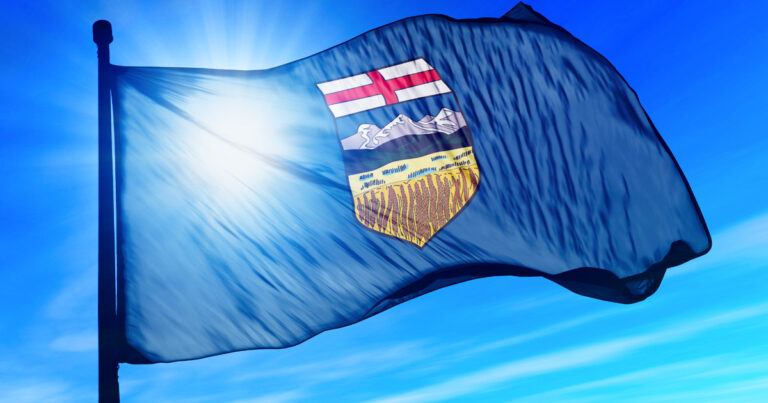
The political distance dividing Alberta’s Sovereignty Act from Ottawa’s Clarity Act is huge. The one contemplates a restoration of federalism, the other an end to it. If Alberta is to remain strong and free – fortis et liber, as indicated on its coat of arms – Laurentians will have to change their attitude and change their political culture. That is the condition – and the challenge – for making Canada a genuine functional federation.

The original, full-length version of this article was recently published in the C2C Journal.

Barry Cooper is a professor of political science at the University of Calgary. His latest books are Paleolithic Politics (2020) and, with Marco Navarro-Génie, COVID-19: The Story of a Pandemic Moral Panic (2020).
Half of Quebec’s municipalities want to ban fossil fuel heating for some buildings 

Around half of Quebec’s municipalities are on track to ban the use of fossil fuels for heating in newly constructed buildings under three storeys by 2025. Larger buildings will remain permitted to use renewable natural gas. 

The council of the Metropolitan Community of Montreal announced that it passed a resolution to prohibit the installation of space and water heating powered by fossil fuels in residential, commercial and institutional buildings last month.

Representing 82 municipalities, the council sent the draft regulations to Quebec’s environment ministry for approval, hoping to have it effective by January.

President of the council and Montreal Mayor Valérie Plante said that behind transport, “it is the building sector which tops the list.”

Fossil fuel-based heating systems account for 13% of Canada’s total greenhouse gas emissions; that figure increases to 18% when including electricity used for appliances, lighting and cooking.  

Montreal announced a ban on natural gas in new buildings of up to three storeys as of October 2024, and plans to ban it in larger new builds as well.

The council projects the ban will lead to a reduction of 500,000 tonnes of greenhouse gas emission by 2035.  

However, Heather Exner-Pirot with the MacDonald-Laurier Institute thinks that Quebec is in for a big surprise when it comes to maintaining the province’s power supply.

“Quebec is on track to face major shortfalls in power supply in the coming years,” Exner-Pirota, MLI’s senior fellow and director of natural resources, energy and environment told True North. 

“Hydro-Québec’s most recent strategic plan determined “unequivocally” that its current capacity is not enough to meet growing demand. Forcing homeowners to rely only on electricity for heating in such a cold climate is dangerous.”

Nanaimo, B.C. announced similar plans last summer, barring new buildings from using natural gas as a primary heating source as of this July. 

Vancouver was on track to do the same with a proposed ban on natural gas stoves and fireplaces until its city council rejected the motion to ban natural gas hookups in new buildings last May.

Statistics Canada reported about two-thirds of the households in Quebec use either electric baseboard heaters or electric radiant heating last year, whereas only half of the homes in B.C. rely on natural gas for heat.

However, the brutally cold winters of Montreal when compared to Vancoucer present a different set of hurdles.

“One of the major advantages of heating fuels is they can be stored and then discharged to meet surges in demand on very cold days,” said Exner-Pirota. 

“Electricity by contrast must be produced and used as soon as it is produced. There is no reason to think the grid can absorb much higher levels of demand. There is no reason to think this will end well.”

LAWTON: On C2C – What does the Sovereignty Act mean for Alberta’s future?

In a new essay for C2C Journal, political scientist Barry Cooper explores Alberta’s Sovereignty Act through the lens of the historical struggle of Prairie provinces for constitutional recognition and political equality, noting that Canada’s western territories were initially treated as exploitable possessions by Laurentian Canada, serving the interests of the heartland.

He joined True North’s Andrew Lawton to discuss. You can read the full essay here.

Immigration lawyer warns taking in Gazan refugees presents “serious security risks”

Sergio Karas, a Canadian citizenship and immigration lawyer, warns of the potentially disastrous consequences of the federal government’s plan to take in refugees from Gaza.

In an Op-Ed published by the Macdonald Laurier Institute, Karas raised the alarm about welcoming a population which could have ties to terrorist organizations and, more generally, harbour antisemitic views.

He warned of a need for strict security measures due to an increase in illegal anti-Israel encampment protests and antisemitism in Canada.

“We are dealing with a population that needs to be vetted in a very stringent way,” Karas told True North in an interview. “We don’t want to end up with somebody slipping through the cracks and then finding out that they have connections to Hamas or to any of the other terrorist organizations that are operating in Gaza.”


Karas highlighted a survey from March 2024, which found 71% of people in Gaza and the West Bank endorsed Hamas’ Oct. 7 terror attack, 59% had a preference for Hamas governing Gaza, while only 5% of Palestinians viewed Hamas’ actions on Oct. 7 as a war crime.

“We have to ensure not only that (refugees) are not outright terrorists, but also that they are not connected to any type of militant group because that can spell another trouble for Canada,” he said.

In the article, he said school teachers in the West Bank and Gaza have repeatedly been implicated in endorsing violence against Jews, propagating anti-semitism and military-style training camps for children.

He also noted that Canada’s intelligence agency warned of a rise in violent extremism in the wake of the Oct. 7 attack and that its terrorist threat agency warned of future domestic attacks motivated by the Israel-Hamas conflict.

“When you start importing people who have antisemitic views in particular, it fuels antisemitism in the country,” Karas said.

Karas thinks Canada should follow Australia’s lead and “put on the breaks” for accepting visas from the “troublesome region.”


Australia cancelled the visa program, which would have brought at least 600 refugees from the region, just as they’ve done with Ukrainian refugees, but changed their minds after discovering how complicated the vetting process would be.

Concerns over illegal border crossing methods muddled the immigration process, which led to visa cancellations by Australia.

“It’s not like letting somebody in from a country with a proper infrastructure, where things can be checked. This is very haphazard,” he said. “The last thing you want to find out is that people have gotten in who have terrorist ties.”

He said once terrorists are in the country it is a complex and drawn-out process to kick them out.

He gave examples. Helmut Oberlander, a German Nazi, was only deported 35 years after living in Canada. Léon Mugesera, who incited genocide against Tutsis in Rwanda, took over a decade to be deported from Canada. And Mahmoud Mohammad Issa Mohammad, a Popular Front for the Liberation of Palestine member who was convicted for his role in a terrorist attack in Athens in the 1960s, was deported after 26 years of legal battles.

“Alarmingly (Mohammad) not only managed to mislead Canadian officials about his identity and terrorist background, but he also took advantage of Canada’s slow legal process to prolong his stay significantly even after being ordered to be deported,” Karas said in the article.

“One of the biggest problems is that Canada has a history of not being able to get rid of bad apples quickly,” Karas told True North. “We need to be super careful and attentive, with security screenings to ensure that nobody who has questionable ties gets into Canada and uses Canada as a base or just to hide or, worse, come in and engage in kind of nefarious acts.”


In March, Immigration Minister Marc Miller said the government would allow more than the originally stated 1000 refugees from Gaza into the country, though none have made it to Canada yet.

Karas thinks it’s absurd that the Liberals would raise the immigration cap on a program that failed to bring anyone over the first time.

“I have a funny feeling that this has to do with Mr. Trudeau’s, coveting the Muslim vote for the election,” he said. “Because I don’t understand why they would spend money and resources on a program’s failure.”

Canadian workers rank second globally when it comes to expecting a tip

Canadians are feeling the pressure to tip everywhere – even if the service is minimal. 

A new global tipping map by Hellosafe shows that Canadian workers are second in the world when it comes to expecting a hefty tip. 

Canada came just behind the United States, where tipping expectations average 20%.

Canadian workers expect customers to tip anywhere between 15% to 20% in restaurants. Third place was Mexico, where a 15% tip is expected. 

“Whether it’s to express satisfaction with a tasty meal in a restaurant, a pleasant night in a hotel or exceptional service in a taxi, tipping is common practice in many countries around the world,” said HelloSafe spokesperson Nolwenn Abolivier.

These findings are based on a comprehensive review incorporating data from tip guides on TripAdvisor and other travel websites.

Tipping culture often reflects societal norms and economic factors, with gratuities frequently serving as a significant supplement to workers’ incomes. 

In the United States, for instance, where wages for service workers can be comparatively low, tips often constitute a substantial portion of their earnings, especially for waiters.

“Tipping is also required in countries such as Qatar and the United Arab Emirates: around 10 to 15% of the bill,” wrote Abolivier. 

On the other hand, tipping is considered to be rude in Asian countries, especially China, where wealth displays like tipping are frowned upon by locals. 

As for Japan, waiters could consider it rude when somebody tips because they expect the service to be a part of the bill.  

Meanwhile, in Europe, some restaurants include a gratuity fee or service charges on the final bill. 

TikTok is a “trojan horse,” says report calling for US-inspired ban

A new report recommends that the Canadian government force TikTok to divest from its Chinese parent company ByteDance or announce a national ban to secure Canadians from surveillance, propaganda, and predatory data collection from the communist regime.

The Macdonald-Laurier Institute’s report titled ‘China’s Glaring Trojan Horse’ recommends that the federal government mimic the United States’ TikTok ban legislation by giving ByteDance the option to either sell TikTok to a suitable buyer or face a ban of the app in the country.

Lee claims that the Prime Minister and his cabinet could enforce this measure without needing to pass any legislation through Parliament, and could instead invoke the Investment Canada Act to bar an investment “injurious to National Security.”

“In other words, Ottawa could initiate the enforcement of ByteDance’s divestiture from TikTok or a ban (if it refuses or fails to divest), without bringing in new legislation,” reads the report. 

In extensive detail, the report demonstrates numerous ways in which the People’s Republic of China can leverage their influence over TikTok’s parent company ByteDance to serve the interests of their regime at the expense of Canada’s citizens and democratic institutions.

While the report acknowledges that Western social media apps like Facebook, Instagram, and X collect a great deal of data from their users, Lee says that China collects data that is far more sensitive and not typically collected by Western social media platforms.

For example, TikTok was discovered to be collecting their user’s MAC address – a 12 digit number unique to every device that cannot be altered, enabling ByteDance to collect information from the device even after TikTok is deleted. 

TikTok was also discovered to collect their users’ SIM card information, allowing ByteDance to collect the information from the card and precisely track their users’ geographic location. 

ByteDance is legally required to give the PRC their data upon request and the PRC also has backdoor access to TikTok through the companion app CapCut, which collects a user’s biometric data. 

The report also points to TikTok’s censorship of stories that do not bode well for the PRC’s narrative, including the censoring of stories relating to Hong Kong’s protests and China’s ruthless treatment of their Uyghur Muslim population.

“A report from the Network Contagion Research Institute at Rutgers University last year showed that topics often suppressed by the PRC in the Chinese information space like Hong Kong protests and the oppression of China’s Uyghur population “appear to be unusually underrepresented on TikTok” compared with Instagram.”

Canada is highlighted as being the target of a PRC influence operation, pushing videos accusing Michael Kovrig and Michael Spavor – the two Canadians detained by the PRC for over 1,000 days – of being spies and thus justifying their arrest. 

Beyond the report’s recommendation to force TikTok’s divestment or have it banned, Lee also recommends that Canada pass legislation to regulate the cross-border transfer of data to foreign adversaries and data brokers and create penalties for companies who violate the regulations. 

The report also recommends that governments work with social media platforms to create “universal transparency practices” that would require them to label state-affiliated entities, report on influence operations, and cyberattacks. 

In the wake of the report’s release, the Canadian Security Intelligence Service’s director David Vigneault had some strong words about TikTok and the lack of safety that comes with using the app.

In an interview with the CBC, Vigneault said that it is “very clear” that the PRC are using TikTok to acquire data on people worldwide.

“As an individual, I would say that I would absolutely not recommend someone have TikTok,” said Vigneault. 

“If you are, for whatever reason, getting in the crosshairs of the [People’s Republic of China], they will have a lot of information about you.”

Patients who undergo sex changes over 12x more likely to attempt suicide: study

A comprehensive study by researchers at the University of Texas has debunked claims made by transgender activists who say that undergoing a sex change prevents suicide. 

The frequently touted claim was put to the test by researchers who analyzed the cases of millions of patients, both those who had undergone sex changes and those who had not. 

Findings showed that those who changed their gender had a 12 times higher suicide attempt risk than those admitted for emergency care with no history of sex change surgery.

The peer-reviewed study was published in April 2024 and is the largest of its kind. 

Researchers observed that following gender-affirmation surgery, 3.47% of individuals attempted suicide. For the 15,608,363 individuals analyzed who had an emergency visit but no history of gender-affirmation surgery, the suicide attempts fell to 0.3%. A total of 1,501 adult patients who visited the emergency department with a history of gender-affirmation surgery were included in the measure.

The study called for a greater need for comprehensive psychiatric care in the years following sex change surgery. 

“With suicide being one of the most common causes of death for adolescent and middle-aged individuals, it is clear that we must work to prevent these unfortunate outcomes,” wrote the study’s authors.

Researchers relied on patient data from the TriNetX database, which stores information from 56 United States healthcare organizations and over 90 million patients between February 4, 2003, and February 4, 2023. Suicide attempts, deaths, self-harm, and PTSD were tallied within five years of the index event.

Researchers also noted that patients with a history of sex change surgery were 3.35 times more likely to have died. Patients who had undergone a sex change had a risk 9.88 times greater for self-harm or suicide compared to individuals who had not undergone surgery. The study differentiated the risk of suicide and self-harm from suicide attempts.

Patients with a history of sex change surgery also had a 7.76 higher risk of PTSD.

While this study focused on the United States, a similar study conducted in part by Canadian researchers with more of a focus on Canada showed similar data. 

“Data indicate that 82% of transgender individuals have considered killing themselves and 40% have attempted suicide, with suicidality highest among transgender youth,” said the previous study that analyzed Canada and the United States.

Propensity matching is a statistical method used to conduct comparisons by matching individuals with similar characteristics. The University of Texas research study created a propensity-matched group based on age at index, race, ethnicity, and sex. 

Propensity matching was only conducted for individuals who underwent sex change surgery and the control group of adults with emergency visits who had tubal litigation or vasectomy but no sex change surgery. Propensity matching was unavailable for the standard group without tubal litigation or vasectomies as the sample size of more than 15 million was too large.

Before propensity matching, those who underwent a sex change surgery had five times as many suicide attempts, a 2.37 higher chance of being deceased, a 5.44 times higher risk for suicide or self-harm, and a 3.74 times higher chance of PTSD, compared to individuals who had a vasectomy or tubal litigation.

After propensity matching, 1,489 patients of similar age at index, race, and ethnicity were compared. The values were similar, indicating a connection between sex changes and suicide or self-harm.

After propensity matching, individuals who underwent a sex change surgery had 4.71 times more suicide attempts, a 4.26 times higher chance of being deceased, a 5.10 times higher risk for suicide or self-harm, and a 3.23 times higher chance of PTSD.

“The results of this study show that gender-affirmation surgery is associated with a significantly higher risk of suicide, death, suicide/self-harm, and PTSD compared to control groups in this real-world database,” concluded the study.

Radio-Canada previously reported that young teens in Quebec were being rushed into irreversible gender transitions. 

This rush for transition comes despite a recent study concluding that most feelings of gender non-contentedness in youth dissipate over time.

“Gender non-contentedness, while being relatively common during early adolescence, in general, decreases with age and appears to be associated with a poorer self-concept and mental health throughout development,” concluded that study.

OP-ED: Taxi industry class action victory a win for the rule of law

“Uber was a bandit taxi company.”

The idea that Superior Court Justice Marc Smith made this very plain statement in his May 13 judgment is good news for Canada.

The class action lawsuit, Metro Taxi v City of Ottawa, was filed by members of Ottawa’s taxi industry in 2016, when the City rewrote its taxi bylaw to accommodate Uber.

From 2014 to 2016, “It (Uber) provided transportation services to customers for compensation, and for two years, it refused to comply with the City’s regulations,” Smith notes.

Smith’s decision, and his very plain language, is like a sharp needle popping a balloon filled with a decade of political hot air. His pointed, emphatic words are a victory for truth, common sense, and the rule of law.

Then-mayor Jim Watson in Ottawa, as with his counterparts elsewhere, was adamant that everything about Uber was so new, it wasn’t even a transportation provider: it was a technology company. Therefore, they reasoned, it was not subject to any of the laws which had developed over a century to keep passengers and consumers safe in a vehicle for hire.

Smith’s common-sense observations come as a tremendous relief, because the gaslighting and the language manipulation that accompanied Uber’s arrival has been outrageous. Laws were re-written and words re-defined to meet the new needs of government.

Before 2014, if you paid the driver of a car to transport you somewhere, it was called a “taxicab.” Post-2014, with the advent of Uber, you weren’t paying for a ride, you were “accessing an app.” Uber was absolved of all the pesky rules which regulated the taxicab industry.

Inventing two completely different sets of rules for people doing the exact same work was “creating a level playing field.”

 “Lobbying” no longer meant persuading with evidence, but buying, bullying and bamboozling.

By 2016, “transportation for compensation” was out and “ride sharing” was in, despite the fact that no one was sharing anything. After 2016, the word “share” meant “sell.” Everyone seemed to accept this: government, media, insurers, linguists. Only Luddites and troglodytes resisted the change.

While the last decade has been rough on everyone, almost no group lost more ground, more money, more time, more faith or hope in Canada more quickly than the thousands of families who invested years and millions of dollars in Canada’s taxi industry. As I noted in 2022, it was egregiously cruel and unfair of Canada to encourage new immigrants to invest their time and money into this highly-regulated industry, only to pull the economic rug out from underneath them at the seductive whisper of an Uber lobbyist.

One taxi driver I knew owned a house before Uber arrived. When business plummeted, he lost that home but was able to rent a room from family. Two years later, he was homeless and couch-surfing with friends.

Looking back, this poor driver seems to foreshadow the plight of many Canadians now: broke, over-regulated, helplessly outraged at government corruption and incompetence, and struggling to keep up with the Orwellian “newspeak” that changes daily and means the opposite of what it used to mean.

In 2024, hard-working people who cannot afford to renew their mortgages risk being made homeless. Well-paying jobs in the oil fields have evaporated as we strive for a mythical “net zero;” the investments self-employed Canadians thought would fund their retirements are being re-defined as the “capital gains tax advantage for the richest few.”  

Suddenly, taxpayers faced with unemployment and an insolent, arrogant government have a lot more in common with the beleaguered taxi drivers who, it turns out, were just the canaries in a gas-lit coal mine.

Smith didn’t mince words in describing the City of Ottawa’s response to Uber as “negligent.”

“Uber was illegally saturating the Ottawa market with discounted or free rides to gain a significant market share,” Smith wrote, essentially saying the quiet part out loud: allowing Uber to ignore the law for two years provided it the distinct competitive advantage it needed to get launched.

But now, we have a judicial opinion: even technology companies have to obey the law.

May 13 wasn’t just a win for taxi operators who lost their life’s savings and possibly their faith in Canada. It was a victory for everyone who believes in common sense, truth and the rule of law.

UCP MLAs to attend town hall highlighting COVID vaccine harms

A town hall discussing the harm and even deaths attributed to COVID-19 vaccines will double as an opportunity for Albertans to mingle with UCP MLAs, organizers say. 

The event, titled “An Injection of Truth Town Hall,” will host vaccine researchers and critics in Calgary-Lougheed next month, according to a listing on the UCP’s official event website. Attendees who purchase tickets will also receive access to the after party Politics and Popcorn, where they can mingle with speakers and MLAs, including the rookie MLA for the riding, Eric Bouchard.

“Was your child killed or injured by a COVID shot? Do you have a story to tell? You should be heard,” reads the event page.

“Are you one of the remarkable doctors, scientists or researchers who know the answers? Now is the time to say the quiet part out loud; let’s target the elephant in the room.”

The page cites recent statistics that show excessive deaths for children are up 350% since 2021. 

“Why are an excessive number of Alberta’s children dying?” the page reads. “What’s scientifically different today than 2020?”

Calgary-Lougheed MLA Eric Bouchard is expected to attend the town hall. He told City News the event is just one of many being hosted.

“We have had several successful town halls about issues my constituents care about and they have all been incredibly well attended and well received,” he said in an emailed statement. “We always welcome diverse viewpoints and open dialogue because it’s important for people to listen to different ideas and perspectives, even if they disagree.”

Confirmed event speakers so far include David Speicher, a Canadian scientist who proved the presence of excessive plasma DNA in the injection vials, William Makis, an Edmonton ER doctor who is studying the impacts of mRNA injections in children, and Calgary based pediatrician Eric Payne. 

Payne was one of four Alberta doctors who launched a lawsuit against Alberta Health Services’ mandatory workplace COVID-19 vaccination policy in October 2021. 

Also in attendance is Jessica Rose, who recently testified to the US Congress about the plasma DNA in the injections, Bryam Bridle, a virology professor from the University of Guelph, David Wiseman, a co-author of recent studies identifying excessive plasma DNA in injection vials, and Ontario doctor Chris Shoemaker. 

The Ontario medical college suspended Shoemaker’s licence over his COVID-19 vaccine comments, and he continues to call for protecting children by ending the vaccine. 

The town hall will also include families “who have felt the pain of COVID mRNA injections.”

Eventbrite has deplatformed the June 17 event and tickets are now being sold on the UCP website

The event comes as UCP board president Rob Smith urges Alberta Premier Danielle Smith to change the province’s COVID-19 vaccine policy over concerns about the safety of mRNA vaccines for kids.

In an interview with True North, Smith said he wants doctors to be more forthcoming with parents about potential repercussions of the Covid-19 vaccine. Smith said the board has already shared its concerns with the premier. 

He also said the UCP Calgary-Lougheed Constituency associated began organizing the town hall and the party has a responsibility to support it. 

Jewish community rallies around young student too unsafe to walk to school

The safety of a young Jewish student was at risk walking to school, prompting the community to gather around him and act as protection.

Calls for a community support walk were posted Friday morning, about an hour before a student was set to walk to school.

The young Jewish elementary school student was repeatedly attacked by his schoolmates. He allegedly received death threats that included threats “to do to him what Hamas did to Israel.” The boy had experienced having rocks thrown at him on his way to school, according to the post calling for the community’s help.

“Our community must act… If the school can’t keep our kids safe, we will,” read the post.

The post to X confirmed that the young boy’s parents had asked for help.

The walk was set to take place about an hour after the post was published. Despite this, approximately 150 people showed up to walk the student to school and act as protection.

“Simply being a Jewish child is now a safety risk in Canada,” read the post.

The community walk was focused on ensuring the child’s safety and tried to avoid making a scene.

“Please NO megaphones, NO flags. This is about our children’s safety,” read the post.

Among the approximately 150 people who showed up was Solicitor General of Ontario Michael Kirzner, who addressed the crowd outside the school.

“I’m not going to be afraid of being a Jew. And I will never tolerate anybody harming our children in schools. This is completely unacceptable,” said Kirzner.

Kirzner promised to call Ontario’s Minister of Education, Stephen Lecce as soon as he left the school. He also said he would reach out to the Toronto District School Board chair, who he said had some explaining to do. 

“I will stand with everybody in my riding in the entire Jewish community. I will stand up against antisemitism every single day,” said Kirzner.

He added that looking around, he saw a community of Jews and non-Jews that had banded together.

“This is a community of people that understand decency. Understand that it’s our children that are our future, and we’re not going to abandon them,” concluded Kirzner. 

Before departing, the community members who walked the student to school gathered in front and sang “O Canada.”

University of Ottawa law professor Michael Geist said that this school was a six-minute walk from where he lived as a young child in Toronto.

“Unimaginable to think that Jewish kids are no longer safe in the neighbourhood and at the local school,” said Geist.

The community walk comes just weeks after a 14-year-old Israeli student was brutally attacked near her high school in Fredericton. 

While Kirzner appeared for the march, so too did Independent MP Kevin Vuong, who criticized the riding’s Liberal and Jewish MP, Ya’ara Saks, for being absent.

“There are Toronto MPs who do stand with you. And while yours may not, I do,” said Vuong.

Saks has been criticized previously for holding hands with holocaust denier and Palestinian Authority president Mahmoud Abbas. “In the middle of a pandemic (Prime Minister Justin Trudeau) emerged to take a knee with (Black Lives Matter) protesters. Where is he now? Why won’t he stand with Jewish parents?” asked retired CTV journalist Alan Fryer.