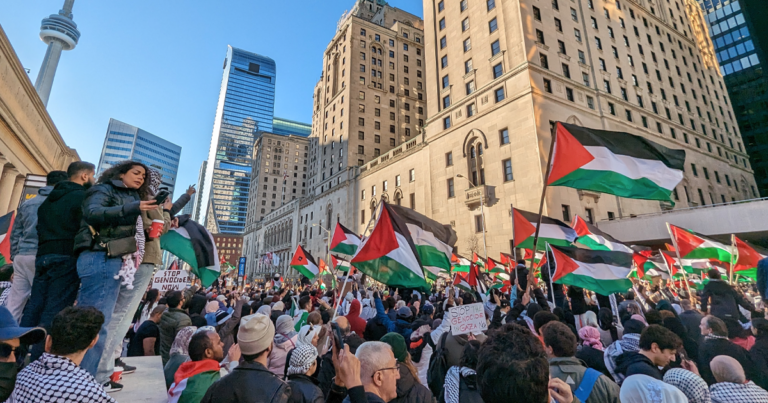
NDP MPPs walked out in solidarity with Independent MPP Sarah Jama on Monday as they defied the ban on a Palestinian headscarf in the Ontario legislative chamber.
Plus, newly built schools in Quebec will be required to have gender-specific bathrooms and change rooms.
And the Ontario Provincial Police will force all GTA drivers to take a breathalyzer test.
Tune into The Daily Brief with Cosmin Dzurdzsa and Noah Jarvis!
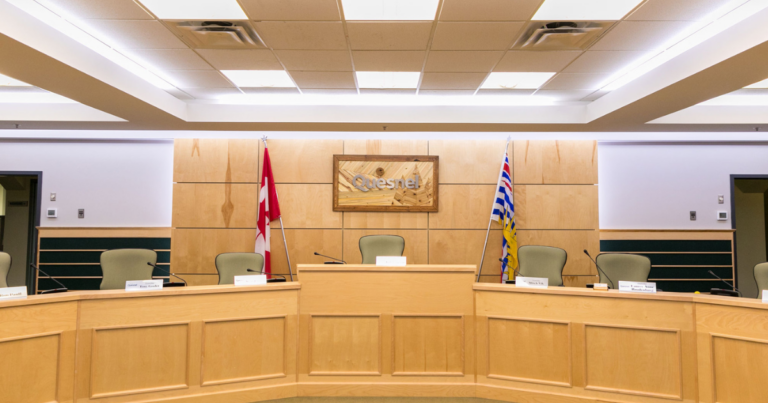
The latest developments in the Quesnel, B.C. debacle are based on accusations Mayor Ron Paull promoted Grave Error at a Cariboo Regional District board meeting where he was representing the city around the same time his wife, Pat Morton, was distributing free copies in Quesnel, an act of distributing “hate literature,” according to her critics.
At the Apr. 30 city council meeting, the mayor was formally censured, his travel and lobbying budget cancelled, his membership in organizations that require council approval stripped, and his membership on all city council committees revoked.
In short, council members, only one of whom admitted he had read Grave Error, punished him as much as they legally could, hoping this would lead to his resignation as mayor, something they have been calling for since early April.
Blaming Paull from the beginning for the actions of his wife, Pat Morton, is an appalling example of sexism. The mayor did not control his wife’s behaviour, so this city council, acting solely out of politically correct self-righteousness, discarded the standard conventions of a liberal democracy, including respect for free speech, in a fruitless effort to achieve chimerical reconciliation based on hurt Indigenous feelings.
Grave Error, the name given to the collection edited by C.P. Champion and Tom Flanagan, was written to debunk the outrageously false claims of a clandestine mass grave of murdered Indigenous children at the former Indian Residential School in Kamloops, B.C.
That canard led to a rush of other “copycat” claims of unmarked graves, consisting of subsoil disturbances at former residential schools revealed by the inconclusive technique called ground penetrating radar.
Given that the unmarked graves have often been said to contain the remains of murder victims, this rush to search for missing children no family members had reported as missing omitted a critical feature: no official police agency, such as the RCMP, was brought in to investigate. Instead, the “investigation” was handed over to those who would, if the claims were verified, be exploring crimes perpetrated against their very own people, a repudiation of the elementary canons of impartial Western justice.
Our ancestors who built this country and constructed and ran the residential schools were surely as flawed as any previous or subsequent generation, Indigenous or otherwise. But they were also incredibly courageous, decent, innovative, adventurous, and hard-working. This is evident in the country and society they built and left to us. It is not just the roads, schools, power stations, factories, museums, and hospitals they built, but the laws, customs, and conventions that we took up and enhanced after they passed on. These features show that Canada has been a model civilization since its inception.
And no other country in the world – not America, not Mexico, not China, not Australia – has treated its Indigenous people with more benevolence. Not one.
Still the Quesnel shenanigans show the downside of such benevolence. What was long a peaceful and fruitful encounter between very different cultures has seen reconciliation efforts killed by the milk of human kindness in recent decades.
What this revealed, once again, is that a quest for reconciliation with Indigenous people is always a one-way, dead-end street where traditional standards of truth-telling and tolerance for different opinions are withheld from those who would dare question unverified indigenous “knowings” promulgated by anonymous and infallible indigenous “knowledge keepers.”
To be sure, it would be equally false to claim that no abuse occurred at the Indian Residential Schools or defend the proven abuses that did take place.
None of this is done by the authors of Grave Error.
Instead, research into these issues suggests the tragic failure of Indigenous integration into modern civilization has three contradictory levels. The first level is historical circumstances. The pre-industrial, pre-literate, mainly hunting-and-gathering lifeways and associated beliefs and values of Canada’s indigenous people were the most significant challenge and remain the biggest roadblock preventing the flourishing of contemporary Indigenous communities.
The second level deals with personal responsibility. Too many Indigenous Canadians continue to be convinced that they have little personal agency because they are the everlasting victims of settler colonialism, hence not responsible for their present condition or the bad choices perpetuating their differential adversities and pathologies.
The third level, and the one with the least salience, is the sphere where Canada’s white Christian ancestors can be blamed for errors they made or wrongs they committed. Where there is plausible evidence, not myth, hearsay, or junk social science, blame for Indigenous adversity in the past and present must be acknowledged and remedied.
Still, our ancestors must be remembered for both their virtues and vices. So should their living descendants. After all, the living and dead share a common feature: the imperfection of the human condition.
It should be apparent that an obsession with hurt Indigenous feelings will never achieve the truth about anything. If this view keeps being rejected, it means that reconciliation with Indigenous people will always require condemning books no one has read and accepting assertions that are known to be false, something freedom-loving people must not tolerate.
James Pew is an independent writer and researcher, and the editor ofWoke Watch Canada.
Hymie Rubenstein is editor of REAL Indigenous Report and a retired professor of anthropology, the University of Manitoba.
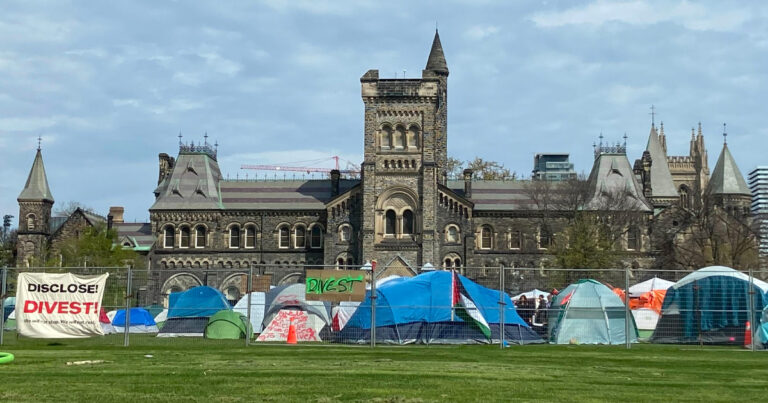
A 24-year-old Jewish man was attacked for waving an Israeli flag outside of the University of Toronto’s pro-Palestine protest encampment Saturday evening.
After seeing a rise of anti-Israel hate in Canada and the US on university campuses, Ukrainian-Israeli immigrant Moshe Zelig decided to stand up for Israel and Jewish students on campus outside of the protest.
In an interview with True North, Zelig shared his experience of what it was like as a supporter of Israel in what he says was a hostile protest.
Zelig said he has female friends at the campus who have told him they would like to take a stand against the protesters but are afraid of potential repercussions to their academic life and physical safety.
Zelig took it upon himself to show Jewish students that they were not alone at U of T and to have discussions with protesters.
🚨 Attack on Students at UofT: Pro-Hamas Violence Escalates
⚠️ URGENT: Jihadists with faces covered, in black hoodies, violently assault students at the University of Toronto.
📰 The Assault: Moshe Zelig, who was assaulted during the incident, pressed charges against multiple… pic.twitter.com/CLkneFczli
When Zelig arrived at the protest around 4 p.m., he hid his Israeli flag in his bag, not knowing what would happen if he took it out.
“I saw this one girl surrounded by a lot of people. And then, you know, I realized that she was holding an Israeli flag. She was a Chinese student there. She is not Jewish, and the mob just surrounded her. And she was only saying, ‘Guys, please don’t scream. I want to talk to you,’” Zelig told True North. “No one wanted to have a dialogue with her, And eventually, she had to escape.”
After catching up with her and talking to the student about her experience, Zelig was inspired.
“If a girl who is about five feet tall and maybe 100 pounds does it and she is not afraid, why should I be afraid? So I pulled out my big Israeli flag and started circling around Kings College Circle at U of T,” Zelig said.
Zelig is six foot seven, which he believes is why he wasn’t seriously hurt, as he feels his attackers were intimidated by his size.
He said leading up to the attack, he had been called anti-Jewish slurs, called a “dirty Jew” in both Arabic and English, and told to “go back to Poland.”
He said he learned Arabic from living in Israel, where over 1.7 million Muslims live with equal rights to Israeli citizens.”
In the footage of his attack, a man whose face is covered by a keffiyeh, a Palestinian headscarf that is a symbol of solidarity with anti-Israel militias, attempted to steal Zelig’s Israeli flag out of his hands.
A female protester can be heard screaming at the attacker out of fear the attack would lead to their protest being shut down.
Zelig reported the incident to the police and has hope that despite their identities being concealed, his attackers will be identified.
Campus police told Zelig that it was too dangerous to arrest his attacker on the spot due to a lack of backup.
Zelig said he would understand the protesters more if they called to end the violence. Instead, many called for Intifada, violent resistance against Israelis, or the dismantling of the state of Israel, which would necessitate violence.
“I don’t want Palestinian kids to die. if one Palestinian is dead, it’s one too many for me, Honestly,” he said.“there were zero calls for the release of the hostages, Imagine.”
He said one poster he found particularly offensive said, “We don’t want two states we want one Arab state,” referring to Israel and Palestine.
According to Zelig, he was shocked at how many students inside the encampment were wearing “communist merch.”
He said a booth inside the camp advocates for a communist revolution in Canada, something he finds egregious as an immigrant from Ukraine as his grandparents, who survived the holocaust, were killed by the communist regime there.
“I was really proud of what I did because while I was walking there…people came up to me, whispering, “Am Yisrael C’hai” or “Thank you for what you are doing,” he said.
“Am Yisrael C’hai” means “the people of Israel live” and is a commonly used phrase to affirm the continuity of the Jewish people.
He thinks the police should shut the protest down, non-students should be kicked out of the campus, there should be consequences for those students participating, and the international students participating should be deported.
“You have the right to practice free speech 100%. That’s what I was doing that day,” Zelig said. “But if you’re calling for the death of all the Jewish people, if you’re calling for terrorist attacks around the world, if you’re not tolerating the free speech around you and not behaving according to Canadian law (you should be deported.)”
The head of one of Ontario’s largest farming groups said that a recent Auditor General report proves that Ottawa is asking farmers to do the impossible when it comes to emission reduction targets.
Jeff Harrison, the chairman of Grain Farmers of Ontario, minced no words in his critique, stating that Ottawa’ is unfair targeting farmers.
Harrison vehemently criticized the government’s approach, labelling it a “vilification strategy” aimed at blaming farmers for climate-related challenges. He emphasized that farmers are being unfairly burdened with the responsibility of solving a problem they did not solely create.
“Painting this climate picture as the fault of agriculture, it vilifies farmers,” Harrison remarked.
“It’s part of the added stress on farmers that they are expected to do the unachievable. They’re expected to solve a problem that they didn’t necessarily create.”
Harrison further expressed his frustration with what he perceived as “unachievable targets and unrealistic goals” imposed on farmers by the government. “It kind of pisses me off, to be honest,” he added.
Harrison’s remarks come in the wake of a scathing report by the Auditor General, which castigated the federal government for its mishandling of emission reduction efforts within the agriculture sector.
The report, titled “Agriculture and Climate Change Mitigation,” scrutinized programs overseen by Agri-Food Canada, with a particular focus on the government’s voluntary 2030 target for farmers to reduce fertilizer emissions by 30%.
The Auditor General highlighted several issues, including widespread mismanagement and a lack of transparency.
One of the primary concerns raised in the report was the absence of consultation with stakeholders, such as farmers and industry associations, before establishing the arbitrary fertilizer emission reduction target.
This oversight led to confusion within the sector, with some interpreting the target as a mandate to reduce fertilizer usage by 30%, rather than focusing on emission reduction through improved application techniques.
The Grain Farmers of Ontario chairman’s remarks underscore the growing discontent within the agricultural community over Ottawa’s emission reduction policies.
A Chinese oil and gas company is seeking a stake in a major Canadian LNG project.
Sinopec, a major player in China’s energy landscape and one of the largest exporters in Asia, is reportedly in talks with Pembina Pipeline Corp regarding a potential deal that could see it gain equity in the Cedar LNG project.
Sinopec was incorporated by the Chinese government in 1998 and is a state-owned enterprise.
The motivations behind Sinopec’s interest appear to be multifaceted. On one hand, the company is facing internal pressures from Beijing to optimize its assets and enhance profitability. This push comes amid broader economic strategies orchestrated by Beijing to bolster China’s position in the global market.
As one source told Reuters, Sinopec’s move to explore opportunities in Cedar LNG aligns with its overarching goal to maximize returns on its gas assets, particularly in light of subdued local Canadian gas prices.
This isn’t Sinopec’s first foray into Canada’s energy sector. Back in 2014, the company acquired projects from Petronas, including valuable British Columbian gas fields.
Initially eyeing exports through the Pacific Northwest LNG project, plans were disrupted when Petronas withdrew from the venture in 2017. Left with assets in Canada’s domestic market, Sinopec’s interest in Cedar LNG could represent a strategic pivot aimed at unlocking new avenues for profitability.
However, amidst these business manoeuvres lie deeper geopolitical currents. Concerns have been raised regarding the extent of the Chinese government’s influence over Sinopec, compounded by the presence of Communist Party members on the company’s board.
Such connections have fueled apprehensions about China’s intentions in Canada’s resource sector, particularly with regard to critical minerals.
The recent comments by Chinese Ambassador to Canada, Cong Peiwu, further underscore these concerns. Asserting China’s commitment to acquiring majority stakes in Canadian mineral companies, Ambassador Cong dismissed allegations of political interference, emphasizing China’s intent to continue business as usual.
“Politicizing normal commercial cooperation and using national security as a pretext for political interference is wrong. China has expressed firm opposition to this. We will continue to do business on the basis of mutual respect and mutual benefit,” said Cong.
Yet, his statements come at a time when geopolitical tensions and security considerations loom large over China’s international investment.
With these minerals playing a pivotal role in various high-tech industries, including electronics and digital technology, their strategic significance cannot be overstated.
Against this backdrop, the Canadian Security Intelligence Service’s warnings about foreign investment in Canadian resources provide a layer of added urgency.
“While the vast majority of the foreign investment in Canada is carried out in an open and transparent manner, a number of state-owned enterprises (SOEs) and private firms with close ties to their government and or intelligence services can pursue corporate acquisition bids in Canada or other economic activities,” claims CSIS.
Unknown individuals trespassed Northvolt’s construction site at their future battery plant in Quebec, placing Molotov cocktails under some of the construction equipment.
“Fortunately, the devices didn’t go off. There is no damage,” said Northvolt CEO Paolo Cerruti.
The Swedish battery manufacturing giant previously began clearing land and destroying wetlands to build its new EV battery plant, sparking public outcry and raising questions about the environmental cost of green technologies.
“What these people want to achieve is to scare us, is to dissuade us from going forward. Well, they are obtaining exactly the opposite results,” said Cerruti.
He said Northvolt is more determined than ever to move forward and succeed.
“This is a project for Quebec. This is a project to accelerate the transition to a decarbonized world,” he added.
Cerruti said this act is not representative of the majority of Québecois people.
Several posts have been uploaded to a Montreal anarchist website, Montreal Counter-Information, over the past several months calling for separate incidents of sabotage and vandalism at the Northvolt construction site.
One of the first posts calling for sabotage in January called to “sabotage the equipment, block the construction sites and harass the industry’s elected representatives.”
“If this project goes ahead, 1.4 square kilometres of wetlands and woodlands will be razed to the ground, serving the greenwashing strategy of our governments, and doing so with public funds,” read the anonymous submission.
Another post was anonymously uploaded at the end of February. The post celebrated previous attacks on the site, such as steel spikes placed on paths used by the machinery, nails placed in trees to destroy machines, and others.
“There are still two years left to fight, and the enemy is vulnerable. We can still enter the property like a sieve: they cannot protect over a square kilometer with some rusty fences and a stationary security guard playing 2048 and sleeping in his car,” read the post.
The most recent post calling for sabotage of Northvolt on the anarchist website was in March, which called for new sabotage against Northvolt.
Quebec’s Minister of Economy Pierre Fitzgibbon denounced the most recent attacks in a post to X.
“These tactics are totally unacceptable. We are fortunate to live in one of the finest democratic and pacifist societies in the world. We must defend it. Debate always, violence never,” said Fitzgibbon.
Le Centre de valorisation du bois urbain, a non-profit organization partnering with Northvolt to cut and harvest the wood for future use, was vandalized on Friday.
The organization shared pictures of its “completely ransacked” offices on Facebook.
“Since some people obviously seem to confuse the decision to cut down trees with the decision to prevent them from going to waste, we thought it might be appropriate to use this moment to remind people of our mission and our raison d’être,” said the CVBU.
To date, the not-for-profit said it has salvaged enough trees to cover nine soccer pitches with wooden planks.
“Attacking an environmental organization under the guise of protecting the environment is counterproductive. It overshadows the work of many companies like ours, who make a real difference every day. But don’t worry, we’ll renovate, we’ll repair, and we’ll continue to add value with even greater conviction.”
The Canadian Security and Intelligence Service issued a warning to the federal Public Safety Department addressing what the agency called a spike in “violent rhetoric” from “extremist actors” since the Oct. 7 Hamas attack on Israel. Agency officials expressed fears that the rhetoric could escalate to violence.
The spy agency first consulted with the federal Public Safety Department and Muslim and Jewish leaders last fall about the rise in reported hate crimes which have been fueled by the conflict.
“While the long-term impacts of the current crisis cannot be easily predicted, it is clear that this conflict has raised tensions within our society,” wrote CSIS spokesman Eric Balsam, according to the Canadian Press.
“Violent rhetoric from extremist actors has increased since the attack by Hamas and, as the conflict continues to unfold, it is possible that these events could impact certain individuals’ intent to mobilize to violence.”
CSIS monitors potentially dangerous behaviour and identifies threats to be relayed to the government and law enforcement.
Balsam noted that their surveillance does not include government dissent or lawful protests, which are protected under the Charter of Rights and Freedoms.
The Canadian Press received the CSIS documents via the Access to Information Act which revealed summaries of the discussions between federal officials and leaders from both the Jewish and Muslim communities regarding mounting tensions domestically.
Among those documents, a CSIS representative “assured all participants that they will continue to monitor threats and to look for evidence of attacks being planned.”
The conversations also involved concerns around the issue of free speech.
“Activists are receiving backlash, being labelled as antisemitic, and facing various consequences for shouting chants such as, ‘From the river to the sea, Palestine will be free,’ as well as calling for ‘intifada,’” read the documents.
The word in Arabic has several meanings, one of which is to fight against oppression. However, in English, it’s most commonly associated with a series of attacks by Palestinian terrorist groups against Israel at different points throughout the conflict’s history.
According to the documents, community leaders told officials that “heavily surveilled” activists were having their right to free speech “stifled” by authorities.
Law officers have been recording activists as they chanted slogans at a pro-Palestinian protest in Toronto last October, according to internal emails received by RCMP Commissioner Mike Duheme.
“Still legal and not looking like moving to violence,” wrote deputy commissioner Mark Flynn.
Jewish leaders have decried examples of protestors praising the Oct. 7 Hamas’ attack in various cities throughout Canada, with one incident currently under investigation by Ottawa police.
An annual report on nationwide incidents of antisemitism compiled by B’nai Brith Canada was released on Monday, which revealed a spike in incidents since Oct. 7.
B’nai Brith’s director of research and advocacy Richard Robertson said that the report recorded more incidents than ever before, occurring on an almost daily basis online and in public.
“The 2023 statistics make it abundantly clear when there is unrest in Israel, Jewish Canadians suffer unduly,” said Robertson during a news conference Monday. “The levels of antisemitism were already on the rise prior to the onset of the Israel-Hamas conflict.”
According to the documents, federal officials routinely heard from Jewish leaders about the need for police to intervene in “the hateful rhetoric expressed at rallies.”
The documents specifically address the term “Zionist,” saying, “as an overwhelming majority of Jews identify as Zionists and believe in the need for a Jewish state … calls for attacks against Zionists should be seen as calls for attacks against Jews.”
RCMP encouraged its front-line members to monitor Jewish-owned businesses and schools, not just community centres and synagogues, for targeted attacks according to one summary dated Noc. 29, 2023.
The documents also indicate that Public Safety Canada was instructed to contact universities “to discuss the dampening of rising tensions and antisemitism on campuses.”
Since these discussions took place, pro-Palestinian protestors have set up encampents on a number of Canadian campuses to protest Israeli retaliation for the Oct. 7 attack.
Nanos Research has been monitoring Canadians’ confidence in their finances since 2008 and it’s at an all-time low.
Only 10% of Canadians reported that their finances are better than a year ago, the lowest reported score since the company began keeping track. Conversely, over 50% of Canadians say their personal finances are worse off than the prior year, according to Nanos.
Regarding the upcoming year, 14.2% of Canadians think the economy will become stronger. 45.2% of Canadians feel it will weaken, while 32.8% said there will be no change.
Despite most Canadians admitting that they are in a worse financial position than last year, many still feel secure in their jobs.
46% of Canadians said that they feel secure in their job. 14.8% said they feel somewhat secure, while 4.8% said they feel somewhat not secure. 9.5% of Canadians said they feel not at all secure in their jobs.
Despite this, the majority of Canadians, 50.2%, feel that in the next six months, real estate in their neighbourhood will continue to increase in price. In the next six months, 35.6% of Canadians feel that real estate pricing in their neighbourhood will stay the same, while 9.1% said that prices will decrease.
Nanos’ pocketbook index takes personal finances and job security into account. A score of 50 on this index signifies an equal distribution between net positive and net negative views. The pocketbook index fell to 50 last week, mirroring its April 2020 low.
This week, among Canadians aged 18 to 29, the economic mood fell to 46.34. The 12-month average for this age demographic is 54.11. The pocketbook index for Canadians aged 18 to 29 fell to 40, reaching an all-time low, according to BNN Bloomberg.
Canadians aged 15 to 24 have an unemployment rate of 12.6% in March 2024. Those aged 25 to 54 had an unemployment rate of 5.2%, and those aged 55 and over had an unemployment rate of only 4.5%
The economic mood improved for Canadians with higher incomes. Renters also have a negative economic mood, while homeowners have a positive economic mood.
Harrison Faulkner investigated the UofT campus anti-Israel occupation last week to see what exactly was going on. Despite the tent encampment obviously breaking several laws, campus police have permitted the occupation to remain in tact. The reasons as to why this has been allowed to go on for so long are unknown.
The occupiers are strictly enforcing border measures of their territory and have set in place strict messaging control, only allowing media liaisons to speak to the press. When True North was finally let into the encampment, we were under the close supervision of a “media escort” who followed us everywhere we went and told us not to film any faces.
That was easy because everyone inside the encampment was masked as if it was 2021.
Watch the latest episode of Ratio’d with Harrison Faulkner
A new omnibus bill introduced by the Ontario government on Monday will mandate that menstrual products be provided on all large construction sites throughout the province.
According to Labour Minister David Piccini, the requirement will apply to construction sites of 20 or more workers where the job is expected to last a minimum of three months.
Titled the Working for Workers bill, it marks the fifth instalment of government labour legislation introduced by Premier Doug Ford’s administration.
The bill also includes a requirement that all construction site washrooms be kept clean by employees, with documentation of routine cleaning and sanitary check-ups.
The legislation aims to make the skilled trades more accessible to women and support those already in the labour force.
According to a press release from the Government of Ontario, this legislation is “the first of its kind in Canada.”
“Under Premier Ford, our government is tackling the generational labour shortage previous governments left in their wake. That means we need all hands on deck – but when women represent only one in ten workers in the skilled trades, we have one hand tied behind our back,” said David Piccini, Minister of Labour, Immigration, Training and Skills Development. “That’s why our government is introducing first-in-Canada changes to encourage women to start a career in the skilled trades and reach their full potential. Because an economy that doesn’t work for women, doesn’t work at all.”
An Ontario Building and Construction Tradeswomen survey from 2022 found that women only accounted for one in 10 construction workers and half of the respondents cited higher sanitary standards as an incentive to attract more women into the trades.
The Ontario government will also be making regulatory changes to the province’s Occupational Health and Safety Act for the first time to propose amendments would add “virtual harassment to the definitions of workplace harassment and workplace sexual harassment” in the act “ensuring that workplace policies to address harassment in the workplace also cover online harassment.”
The Ontario government said it will also work with survivors of harassment, legal experts and others to create the most effective legislation and or regulatory means to enact a “duty to act for employers where investigations have identified workplace harassment has occurred.”
Additional measures have been added to address construction safety, including a comprehensive review of critical injuries and fatalities that have occurred in the sector and investing in life-saving equipment like defibrillators to be accessible on-site.
“Today’s announcement is another example of action our government is taking to make careers in construction and the skilled trades more inclusive and welcoming for women,” said Charmaine Williams, Associate Minister of Women’s Social and Economic Opportunity. “By further protecting their health and safety at work, the Working for Workers bill will increase women’s access to rewarding careers that both pay well and help create the stronger, more diverse workforce we need to build a better Ontario.”