NDP MPPs walk out of Queen’s Park in defiance of keffiyeh ban

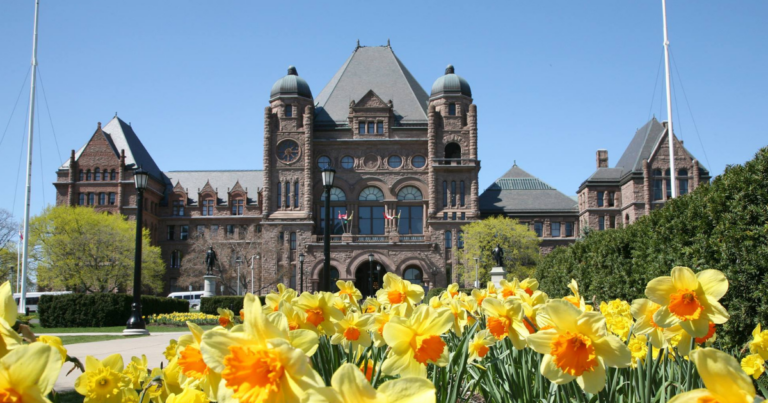
NDP MPPs walked out in solidarity with Independent MPP Sarah Jama on Monday as they defied the ban on a Palestinian headscarf in the Ontario legislative chamber.

Despite being named and asked to leave the chamber for refusing to remove her banned keffiyeh, Jama was told to leave once again by Speaker Ted Arnott. This time, she was not alone. NDP MPPs Joel Harden and Kristyn Wong-Tam, also wearing their keffiyehs, left in solidarity.

The interaction can be seen in City News reporter Richard Southern’s video on X.

Harden explained why he had defied the ban and stood by Jama wearing a headscarf.

“Today, I defied the keffiyeh ban at Queen’s Park at the request of Palestinian, Muslim, and Arab neighbours,” he said. “We’ll continue to oppose this unjust ban until it is completely lifted.”

Later, Ontario NDP leader Marit Stiles left the chamber protesting the ban.

Arnott lifted the ban on keffiyehs for guests and members in the legislative building while maintaining its prohibition in the legislative chamber.

Arnott banned the use of the keffiyeh after “extensive research” and finding that the headscarf has a long history of being used as a symbol of resistance by anti-Israel movements.

He declared the keffiyeh a political symbol and that it was being used as a political prop in the legislature, which goes against long-standing parliamentary conventions.

Arnott said the unfolding events since the ban prove that the keffiyeh is a political symbol and that he was right to ban it as such.

NDP MPP Monique Taylor also put forward a petition for members to vote to lift the ban on Monday.

“This is not a political piece of clothing. This is a cultural and heritage piece of clothing that identifies Palestinian people,” she said. “They want to be able to visit this house and be in the galleries, and members who work here with Palestinian heritage should be allowed to wear the keffiyeh.”

Jama, the member who has consistently worn the keffiyeh, is a Somali Canadian Muslim. Her husband, Amr Abdel-Latif, originally came to Canada as a refugee from Jordan.

Ontario NDP Leader Marit Stiles has vowed to force another vote to lift the keffiyeh ban on Monday.

“All party leaders agree – it’s time to end the keffiyeh ban at Queen’s Park.  Now it’s up to the Premier to follow through when the Legislature returns this week,” she said on X. “If he won’t, we will – by forcing a full vote of MPPs. With votes from just 22 PC MPPs, we can make this right.”

Stiles demanded that Premier Doug Ford force his government to vote to overturn the ban.

The keffiyeh has been a symbol of Palestinian resistance to Israel since the Arab Revolt in Palestine in 1936. The two main demands of the armed uprising were an end to Jewish immigration and an end to the British occupation of the region.

The rebellion’s leadership ordered every man to wear the keffiyeh to show solidarity and give cover to the fighters who wore them so the British wouldn’t be able to distinguish combatants from civilians.

Business insolvencies in Canada surge at fastest level in 37 years, consumer debt soars

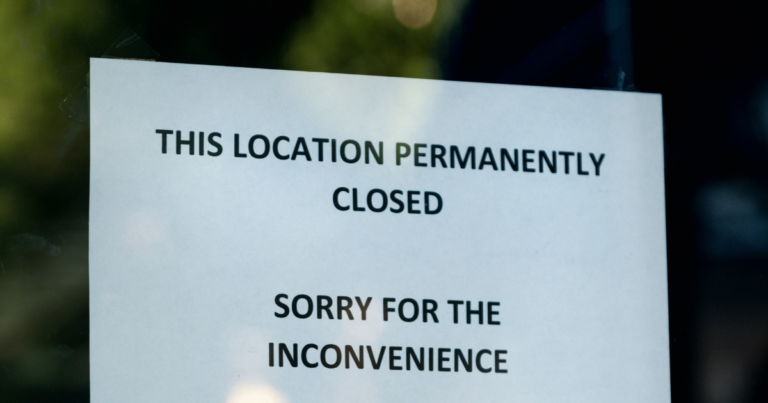
A greater number of businesses continue to close in Canada, with business insolvencies spiking at a rate not seen in 37 years.

Data released by the Office of the Superintendent of Bankruptcy on Friday shows that business insolvencies in Canada increased 87.2% between the first quarter of 2023 and 2024. 

The number of insolvencies between the two years increased from 1,070 to 2,003. Between the fourth quarter of 2023 and the first quarter of 2024, insolvencies increased from 1,521 to 2,003, a 31.7% increase.

Consumers weren’t immune from insolvencies, with consumer insolvencies increasing for the eighth consecutive quarter when measuring year-over-year increases, reaching the highest level since the fourth quarter of 2019.

Insolvencies among consumers in Canada increased by 14% between the first quarter of 2023 and 2024. Consumer insolvencies increased from 29,725 to 33,885 between the two years. Between the fourth quarter of 2023 and the first quarter of 2024, insolvencies increased from 31,813 to 33,885, a 6.5% increase.

On average, 372 Canadians filed for consumer insolvency daily in the first quarter of 2024.

“A perfect storm of economic challenges is brewing, with high mortgage renewal rates, soaring rental prices, and elevated costs of everyday necessities. The high cost of servicing debts is also compounding the financial strain for many Canadians and leaving them grappling with insurmountable debt burdens,” said André Bolduc, Chair of the Canadian Association of Insolvency and Restructuring Professionals. 

The province with the highest annual increase in consumer insolvencies was Ontario, where they rose 19.4% year-over-year, followed by British Columbia at 17.7% and Quebec at 15.5%. 

Conversely, Alberta saw the smallest increase among the provinces in business insolvencies, at only 1.9%. 

Nunavut and Yukon experienced significant decreases in insolvencies, dropping by -80% and -6.7%, respectively. 

Business insolvencies surging 87.2% was the largest annual increase in 37 years of records from the Office of the Superintendent of Bankruptcy, according to the CAIRP.

“We are seeing signs of a significant rise in distress among Canadian businesses. Many are still shouldering the burden of the pandemic, on top of high input and labour costs, declining consumer spending, and higher debt-carrying costs,” said Bolduc.

The actual number of business closures is even higher, considering many business owners decide to cease operations without pursuing formal insolvency proceedings.

Based on members surveyed by the Canadian Federation of Independent Business, only 10% of their members who considered closing their business would officially file for bankruptcy.

The increase in business insolvencies was 41.4% from 2022 to 2023.

Bolduc said that with the CEBA loan deadline passing, many businesses have taken on the additional burden of monthly loan repayments and accompanying interest. 

CEBA loans initially offered interest-free loans up to $40,000 for small businesses and not-for-profits. The amount was increased to $60,000 on December 4, 2020.

Approximately 25% of the 898,271 CEBA loan recipients missed the deadline. The total funds provided for CEBA loans and expansions was $49.2 billion.

The government’s decision not to extend the CEBA deadline was “the straw that broke the camel’s back,” said Simon Gaudreault, chief economist and vice president of research at the CFIB. 

Gaudreault said that other factors contributing to businesses filing for bankruptcy included lost revenue from public health closures, supply chain challenges, inflation, increased costs, rising interest rates, and labour shortages.

Statistics Canada’s most recent data shows that 43,121 businesses closed in January 2024.

Canada’s largest rail lines may strike over worker’s rest provisions 

Over 9,000 Canadian rail workers may go on strike if their union’s latest demands are not met by their companies. Two of Canada’s major railways, Canadian National and Canadian Pacific Kansas City may be shut down as of May 22. 

The strike would include train conductors, engineers, yard workers and traffic controllers, all of whom are represented by the Teamster Canada Rail Conference, which voted in favour of a strike mandate if negotiations are not reached on Wednesday.

“The simultaneous work stoppage at both CN and CPKC would disrupt supply chains on a scale Canada has likely never experienced. This has not been and never will be the Teamster strategy, though we can’t be sure the same is true for the companies,” TCRC President Paul Boucher told reporters at a press conference in Ottawa, following the vote. 

The negotiations are primarily about employee rest times. 

CN said that the union will not comply with a “more modern agreement” predicated on an hourly schedule. The company said that this will help to “protect the Canadian supply chain, North American economy” and provide workers with a fair deal.

The parties are currently far from reaching an agreement, according to CPKC, who said their demands are in line with Canadian regulations and that their proposals for rest are not in conflict with work safety.  

However, the TCRC claims that modifications to their rest provisions will create workplace safety issues.

“The accumulative effect of sleep disruptions, inadequate sleep facilities and varying duty periods can lead to significant safety risks. Claims that the companies are proposing predictable work schedules are inaccurate,” said Boucher.

“Instead, CPKC have proposed 12-hour calling windows, during which workers could be phoned up at any time and expected to go operate a train for another 12 hours. This could easily become dangerous if a person who woke up at 7 a.m. is called for a 12-hour shift at 5 p.m.”

Both railways argue that the union’s position is in line with regulations already in place under the Railway Safety Act, which states that an employee’s minimum rest period while operating at their home terminal is 12 hours and 10 hours when travelling or at a remote site. 

The act also stated that an employee must have at least eight hours without being called by the rail company. Other fatigue self-assessment requirements for rail workers include ensuring that they’ve had at least five hours sleep in a 24-hour period for overnight shifts. 

According to Boucher, such regulations are minimum requirements designed to work in tandem with collective bargaining agreement provisions, which were terminated on May 1. 

Now the union and rail companies are in the 21-day cooling off period that is legally required before and further actions or agreements can take place. 

“I have to admit, we’re extremely worried right now,” Grain Growers of Canada president Andre Harpe told Global News.

“We rely on the rail to bring a lot of the fertilizers that we use closer to the farm. So this could have a devastating effect on our bottom line. It gets back to at the end of the day, we have to get our seed in the ground with the right nutrients to get a crop. So, this sets up the year for us. So, we were extremely worried.”

Canada’s agricultural community is heavily dependent on rail to transport the majority of its products, from receiving fertilizers to their crops being exported for market. 

The Port of Vancouver held a strike last year, which saw the halt of 52 grain ships being stuck at the port for some time over the labour dispute. 

“Close to 95% of our grain is exported. To me, we are the breadbasket of the world. And it gets back to a lot of these countries that are dependent on timely flows of grain,” said Harpe.

The Daily Brief | More Canadians leaving country due to affordability crisis

A new study finds more Canadians are choosing to live abroad due to the country’s ongoing affordability crisis.

Plus, the Canadian Armed Forces left many Canadians scratching their heads after unveiling what appeared to be a new emblem for the Canadian Army.

And a BC drug recovery program is raising concerns about the funding gap between his site and facilities that permit drug use.

Tune into The Daily Brief with Lindsay Shepherd and Isaac Lamoureux!

SUBSCRIBE TO THE DAILY BRIEF

Conservatives say China interference findings “starkly” contradict gov claims

Michael Chong, the Conservative critic for foreign affairs said the Foreign Interference Commission’s first report contradicts Justin Trudeau’s claims that the results of elections on a riding level were unaffected, at a press conference Friday.

Justice Marie-Josée Hogue’s first report, released Friday, determined there was evidence of foreign interference in the last two general elections, though not enough to shift which party formed government.

“Hogue’s first report comes to conclusions and findings that are starkly different from what the government told us over the last 18 months and from Mr. Johnston’s report over a year ago,” Chong said.

The report concluded that foreign interference impacted Canada’s “electoral ecosystem” in 2019 and 2021, decreased public confidence in Canadian democracy, and negatively affected diaspora communities, particularly the Chinese community.

Hogue found evidence of the People’s Republic of China’s involvement in the last general election, which could have affected the results of at least two federal ridings, winning a seat for Liberal MP Han Dong for Don Valley North riding and losing Conservative MP Kenny Chiu a seat in Steveston—Richmond East.

While testifying at the Foreign Interference Commission, Trudeau indicated that claims that interference could have swayed electoral processes were “sensationalized.”

“It’s clear in her conclusions in this first report, the intelligence that Beijing interfered, coercively and corruptly in assisting Mr. Dong in winning his nomination was well founded,” Chong said. “This is significant because it could have determined the candidate who was elected to Parliament,”

The report found that there was evidence of buses purchased by the PRC being used to bring in students to vote in the nomination contest. That and the use of intimidation tactics on the Chinese diaspora likely swayed the nomination results.

The report suggests the PRC was coercing international students into voting under threat of revoking their visas and targeting their families back home.

“(Hogue) also concluded that Mr. Trudeau told her that he did not veto Mr. Dongs’ nomination because it would have direct electoral consequences,” Chong said.

The Liberal party was expected to win Don Valley North. In public testimony, Trudeau said that after he won the election, he would revisit the issue of PRC involvement in the Don Valley North riding.

According to the report, Hogue asked Trudeau if he revisited the issue after the election.

He testified that an investigation occurred immediately after receiving the information, though Hogue said, “The specifics of any follow-up are at this point unclear, and I am not certain what steps were taken.”

In Steveston—Richmond East riding, Chiu was targeted by a misinformation campaign after he proposed Canada start a foreign influence registry. The disinformation campaign suggested to Chinese speakers, in the riding, that the registry would force anyone with ties to China to register.

Chinese-speaking media in Canada refused to speak to Chiu to allow him to fight against the PRC narrative.

Though there is evidence that other nations also interfered in those elections, the report found that the PRC is the main foreign nation interfering in Canada’s elections.

“This report is a damning set of conclusions and findings in the first phase of this inquiry about what the Trudeau Government has indicated over the last 18 months and contradicts much of what the government has told us over that period of time,” Chong said.

Chong stated the Liberals should adopt a similar structure as the Conservatives for party membership and nomination.

“I think the Liberal Party needs to tighten up its rules. I think it’s clear through this first report that there are major problems with the way in which Liberals have structured their party and their nomination rules,” Chong said.

To be a member of the Conservative party, you must be a Canadian citizen or permanent resident of Canada, people have to purchase a membership with a credit card or a personal check which is tied to the individual applying.

Chong said that their process makes it much more difficult for people to bypass the system fraudulently.

Hogue indicated that her next report will examine the “rules, or lack of rules,” governing nomination contests. She said the inquiry found those contests “particularly vulnerable” to foreign interference.

OPP will force all GTA drivers to take a breathalyzer test

Anyone pulled over on OPP-patrolled highways in the Greater Toronto Area will now be forced to pass a breathalyzer test, regardless of the reason they were pulled over. 

The Ontario Provincial Police Highway Safety Division announced on Thursday, in a post to X, that they will be issuing automatic and mandatory breathalyzers for all traffic stops. 

Drivers will be required by law to provide a breath sample. Refusal will result in an automatic 90-day license suspension, a seven-day vehicle impound, and a criminal charge.

“In 2018, legislation provided authority to officers to demand a breath sample through an approved screening device, even when the officers did not have suspicion that the driver had been drinking,” said OPP Sergeant Kerry Schmidt in his post to X announcing the enforcement measure.

Canada’s Mandatory Alcohol Screening was amended in 2018 to allow police to demand a breath test of any driver, regardless of suspicion.

“So, if you’re stopped for speeding, a cell phone, a seatbelt offence, or any time you’re stopped by the OPP Highway Safety Division, you can expect you will also be required to provide a sample of your breath,” he added.

The new enforcement measure comes into effect aiming to combat impaired driving as the leading criminal cause of death on Ontario’s highways.

The OPP said it has seen an increase of 30% more impaired driving crashes and charges in the province this year. Compared to the previous five-year average in the Greater Toronto Area, the OPP has noted a 50% increase in impaired driving crashes this year.  

“Officers will tell you why you’ve been stopped, ask for your documents, and read a demand which will go something like: ‘I demand that you provide a suitable sample of your breath into an approved screening device for a proper analysis to be made and that you accompany me for that purpose,’” said Schmidt.

He said that the test takes no longer than a few seconds. After completing the breathalyzer, officers will resume with the initial purpose of the traffic stop.

“If you register any alcohol and you are a young novice or graduated driver, or you register a warn range or a fail, there will be other consequences,” said Schmidt. 

The new policy is among the strongest measures ever implemented to detect impaired drivers on roadways.

The City of Toronto reported that impaired driving continues to be the leading cause of criminal death in Canada.

In 2022, there were a total of 4,829 alcohol screening tests administered in Toronto. 4,718 people passed, 92 were warned, and 19 failed. 

“Please, let’s all do our part. If you drink, don’t drive. If you drive, don’t drink. Let’s make sure we all get to our destinations safe,” concluded Schmidt. 

First Indigenous Peoples Court opens in Sudbury

An opening ceremony was held for the first Indigenous Peoples Court in Ontario’s northeastern region on Thursday, which will offer specialized legal, cultural and social services to Indigenous offenders. 

Taking place in a Sudbury Court of Justice courtroom, the event was attended by members of First Nations, judges, lawyers and the public.  

“Every day, I see the need for this court,” Keith Chapman, the Sudbury jail’s indigenous liaison officer told CBC News. Chapman has been an outspoken advocate for such an initiative for over ten years. 

“It was a mission to have these individuals represented properly,” he said.  

According to Chapman, Anishnaabe people do not practice incarceration as a punishment for carrying out justice, which he believes is the reason that Indigenous people are overrepresented in correctional facilities. 

While Indigenous people only represent 5% of Canada’s total population, they account for 32% of the total prison population, according to data from the Department of Justice Canada. 

The Indigenous Peoples Court emphasizes restorative justice principles, instead of relying on incarceration for punitive sentencing. Federal correctional facilities also already have restorative justice programs for minorities and Indigenous offenders. Additionally, Indigenous offenders can be admitted to low-security healing lodges instead of serving their sentences with the general population.

“Anything that can address systemic or culturally specific issues, with a team of well versed experts, to keep indigenous Canadians from returning to custody while simultaneously keeping the public safe is always a good thing,” lawyer Ari Goldkind told True North. 

Additionally, these courts offer sentencing circles which involve all parties in the case, including other community members, sitting down together to discuss their experiences and perspectives ahead of sentencing. 

“The people that come before these courts often feel they have an opportunity to be heard more than they are heard in the traditional court process,” said Sharon Nicklas, chief judge of the Ontario Court of Justice, according to CBC News. 

While Goldkind supports the idea of giving more time and thought to restorative justice principles, he stressed the point that public safety must remain the top priority throughout all communities. 

“So long as public safety is not sacrificed, including those from the very communities that these courts emanate from, (which continues to be a debate that is not waged nearly enough), having a dedicated court that is devoted to spending more time listening to and addressing the restorative and culturally specific needs of the Indigenous community is a good thing,” said Goldkind.

The new Indigenous Peoples Court in Sudbury will primarily focus on sentencing but will also provide some trial management services.  Its opening marks the 20th court of its kind in the province. 

Newly built schools in Quebec required to have gender-specific bathrooms and change rooms

Quebec is bucking the trend when it comes to gender-neutral washrooms in schools.

Newly built schools in Quebec will now be required to provide sex-based washrooms and change rooms instead of gender neutral options, as part of a new provincial government directive.

“I believe that our boys and girls in schools have the right to have a private space,” Education Minister Bernard Drainville said on Wednesday.

The debate began after a petition was launched last year to oppose a plan to make bathrooms gender neutral at D’Iberville high school in Rouyn-Noranda, Que.

“We don’t think it’s a good idea,” said Drainville at the time. “The school needs to rectify the situation.”

Drainville cited privacy as the basis for his decision, and worried about the possibility of boys teasing girls who were going through puberty. 

“A young girl 12, 13, 14 years old who is starting to have her period, for example, and who leaves a stall, and there are 13-, 14-year-old boys looking at her. Insults, sarcasm, humiliation. A scenario we don’t want, so I think we have to draw a line and the line, we’re drawing it now.”

Premier François Legault charged Family Minister Suzanne Roy with creating an advisory committee to study the issue and the committee’s recommendations are likely to be made public next year.

However, Drainville decided to make a decision in the interim period, instead of waiting.

“I announced last fall that we would move forward with this directive,” he said, adding that he expects the committee will arrive at the same conclusion.

The province’s new directive is effective immediately and stipulates that school service centres must “implement the means at their disposal so that all bathrooms and changing rooms that will be built or renovated in the future are gendered (boys/girls).”

According to the directive, schools which already have gender neutral bathrooms in place may keep them as well as schools which are 30% or more complete in their construction. 

“We are pragmatic people. We do not want to delay the progress of work on new schools,” said Drainville. 

The construction of individual bathrooms is also encouraged under the new directive and it’s advised that they be always accessible and strategically located to allow for proper supervision. 

“These provisions respect everyone’s rights,” said Drainville. “It’s a very respectful and balanced solution.”

However, LGBT advocacy group Family Coalition voiced their opposition to the minister’s stance.

“It’s not well balanced because it stigmatizes kids that are a bit different,” Mona Greenbaum, the group’s co-director told CBC News. “We know that from all sorts of research that it’s very harmful for young people to not have their gender identity affirmed.”

OP-ED: Climate activists target plastics industry with ‘recycling’ theory

A new battlefront has formed in the war on plastics, and it’s a doozy. An activist group called the Center for Climate Integrity (CCI) has issued a report that essentially declares plastic recycling a scam, and more than that, one ginned up with malice aforethought by the plastics industry and its petroleum industry material suppliers.

The report is already being used as a pretext to engage in lawfare against the plastics industry by groups who see large dollar signs and industrialist scalps to claim if they can convince jurors of such malfeasance.

Of course, the war on plastics is not a just war; there is no casus belli. Plastics are not a significant risk to human health or environmental sustainability. In fact, plastics contribute to human flourishing in uncountable ways. We literally would have only a tiny fraction of modern health-care technologies, medicines or other life-enhancing technologies without plastics.

To the extent that plastics pose an environmental hazard, that comes down to how plastic wastes are managed, and that failure is largely a government failure as waste management is a highly regulated activity. While the people who pick up trash may be private sector workers, governments say where the trash goes.

The CCI report actually reveals this truth—in the 1960s and 1970s when it became clear plastic waste was being dumped into the open environment, the plastics industry offered its ideal solution, which was incineration and landfilling. But according to the CCI report, “Neither landfilling nor incineration sufficiently assuaged public concerns or regulatory pressure, and the industry again found itself facing proposed bans on single-use plastics in the mid-1980s.”

Indeed, it wasn’t until the 1980s, after being refused its preferred solution pathway, the plastics industry suggested recycling as an alternative. But eventually, the industry wished a return to incineration but was again rebuffed, by “the public”—that is, environmental groups like CCI and government regulators.

These groups still oppose more advanced forms of plastic incineration or processing into fuels that can be used for energy production, and insist only non-profitable recycling or bans of plastic products are acceptable solutions to the plastic waste problem.

Did the executives, chemists and engineers in the plastics industry know recycling would work when they proposed it as a solution? Probably not. They would have known research does not produce solutions on demand. Were they insincere or fraudulent in suggesting the possibility? It seems unlikely. The petrochemical sector has an amazing history of developing revolutionary products and processes that have solved environmental impacts of their product’s creation. They were perhaps overly confident recycling could be made to work, but that’s hardly a crime.

Were industry execs acting immorally, with malice-aforethought? Again, it seems unlikely. The captains of industry are generally capitalists who likely believe (as capitalists generally do) that manufacturing and producing goods people want to buy is not only a moral act but a moral imperative.

Staying in business, bringing in wages and earnings for themselves, their workers, their shareholders, and selling people products that they think will improve their lives is also a moral act and imperative. And so, suggesting a recycling solution for plastic waste to regulators—who were poised to extinguish their industry—would also have likely been seen as a moral pursuit by the industry.

Does the world have a problem with plastic waste? Yes. Far too much plastic waste is released into the global environment. But the cause of the problem is not wild conspiracy theories of industry malfeasance and collusion, nor failures to advance recycling, it’s government mismanagement of waste disposal, primarily in less developed countries that choose “dump it in the rivers” over spending money to either incinerate or safely landfill plastic waste.

That practice is a rightful target for fury, not the people who tried to solve the problem within the constraints imposed by governments and environmental activists.k

LAWTON: Carbon tax fails to slow emissions in British Columbia

According to B.C. government data, emissions rose by more than 7% between 2009 and 2019, after the carbon tax was created and before the lockdowns. Canadian Taxpayers Federation Alberta director Kris Sims joined True North’s Andrew Lawton to discuss the effectiveness of carbon pricing policies and whether they justify the cost.