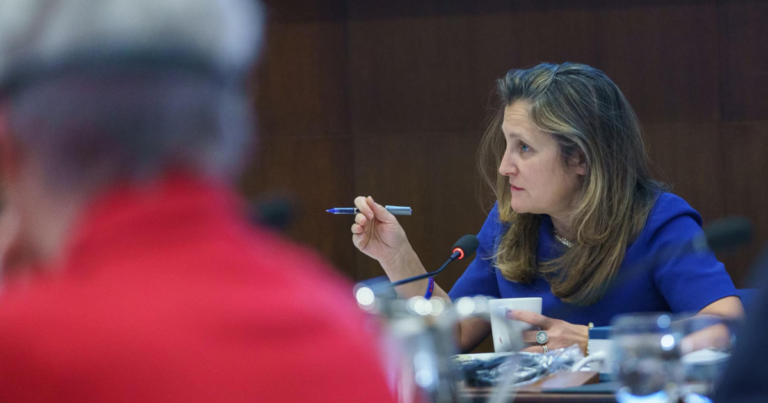
Last month, the federal government announced it would seek to increase capital gains inclusion rates for individuals earning over $250,000, and for all corporations and trusts, potentially dampening business investment in Canada, which has already been declining since 2014. Fraser Institute fiscal studies director Jake Fuss joined True North’s Andrew Lawton to discuss.
Auto dealer group warns EV quotas will drive up prices of new & used gas cars

Canadians can expect higher prices for new and used gasoline cars if Ottawa follows through in punishing auto traders who don’t abide by their arbitrary EV sales quotas.
In a recent statement, the New Car Dealers Association of BC has voiced significant concerns regarding the Canadian government’s ambitious electric vehicle sales quotas, suggesting these mandates could inadvertently cause dealers to shed inventory and drive up prices.
The statement comes in response to findings from an AutoTrader survey indicating a decrease in Canadian interest in EVs.
Blair Qualey, President and CEO of the association, has criticized the federal government’s strategy to enforce mandatory EV sales.
Qualey highlights the economic implications of these mandates, which include a substantial penalty of $20,000 per non-compliant vehicle, which he believes will compel manufacturers to decrease the availability of gasoline models.
“Consumers make decisions when it makes economic sense, not because of hard and arbitrary targets – so we need to continue to drive demand with incentives and providing needed charging infrastructure,” wrote Qualey.
“Furthermore, forcing a sales target that will penalize auto manufacturers, with a $20,000 charge per vehicle sold outside the arbitrary mandate, for not hitting a target means they will simply reduce availability of certain gas models to meet the quota and avoid penalties, which will restrict supply and drive up the price for both new and used.”
Recent data from AutoTrader showed a noticeable decline in Canadian interest in electric vehicle ownership. The survey revealed that while nearly half of non-EV owners are considering an EV for their next purchase, enthusiasm has waned from 68% in 2022 to 56% in 2023.
Tiffany Ding, director of insights and intelligence at AutoTrader, elaborated on the findings, indicating that barriers such as higher purchase costs, concerns over long-distance travel capabilities, and a lack of adequate charging facilities are deterring potential buyers.
With the Liberal government’s plan to mandate 100% EV sales by 2035, starting with a 26% quota for zero-emission light-duty vehicles by 2026, the industry faces significant challenges. The target will be phased in gradually over the years with a 26% goal by 2025 and 90% goal by 2030.
Other challenges recently highlighted by the Automotive Industries Association of Canada include a lack of specialized and standardized training for EV technicians. According to the group, there are simply not enough trained specialists available in Canada to repair and maintain a 100% EV target.
OP-ED: “You have no place here”: Chaos descends upon Quesnel, B.C.
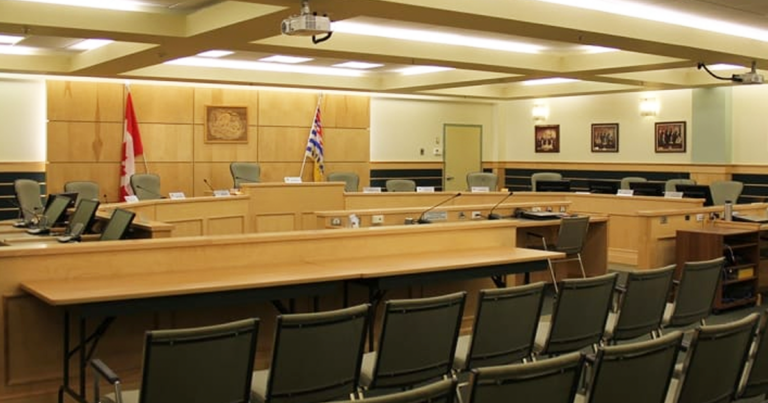
Startling events took place recently in the small city of Quesnel, B.C., where the city council voted to condemn a book that none of its council members had read, and asked for the mayor’s resignation because his wife had given a few copies of it to friends.
You would think a city council has better things to do than to tell citizens what not to read.
The book was Grave Error: How the Media Misled Us (and the Truth about Residential Schools), edited by Chris Champion and me, published by True North, and available only on Amazon, where it is a best-seller.
The book shows that not a single unmarked grave has been discovered at Kamloops or in connection with any other former Indian Residential School or Indian hospital; that there are no “missing children,” though some may have been forgotten by their relatives; that attendance at the residential schools was mainly voluntary and typically required written consent from parents or guardians; and that health conditions at the schools were probably better than on Indian reserves.
Pat Morton is the wife of the mayor of Quesnel, Ron Paull. She read and liked Grave Error, so she bought ten copies to give to people she thought would be interested. Fatefully, she gave a copy to Connie Goulet, the mother of Tony Goulet, a local Métis politician.
Morton’s efforts to promote Grave Error backfired badly, not just with Tony Goulet but with local First Nations. At the city council meeting of March 19, the Lhtako Dene Nation turned out in substantial numbers to condemn Grave Error and Morton’s efforts to distribute it, with some accusing the book or Morton of “hate” and “denialism.” All council members, including Paull himself, obediently voted to denounce the book, even though none had read it.
The performance of Paull’s fellow council member Goulet was particularly melodramatic. “It’s very, very, very traumatizing, it’s very, very, very disrespectful to an Indigenous community and especially (an individual) to receive this book,” he declared. “And especially with my dad going through residential school.”
There was an even more raucous council meeting on April 2.
“We can’t have a community that hands out hate literature and expect people to listen to us and to take it seriously…” said Lhtako Dene Chief Clifford Lebrun, who also warned that his organization would cease to work with Quesnel and its council.
Nazko First Nation Chief Leah Stump, for her part, was choking back tears when she declared, “We deserve better than having to come here to prove we went to residential school, to prove that we were hurt and broken.”
Frances Widdowson, a contributor to Grave Error, had driven out to attend the meeting and address council, but she was given only three minutes to do so. Instead, one councillor told her, “You really have no place here. We really don’t want to hear from you.” Morton was likewise given only three minutes to explain what she had done.
A new political agenda also appeared at this meeting, with calls for the mayor to resign. Paull and Morton think previous political opponents were behind this, hoping to get Paull to vacate the mayor’s chair for a new election. Paull, however, has insisted he is staying put.
Despite the controversy surrounding the book, the media made no attempt to find out what is actually in it, either by reading it or by contacting the editors and authors. Instead, articles misrepresented the book’s contents or accused it of circulating “disinformation.”
The legacy media’s studied indifference to the facts presented in Grave Error presents a grave issue (pun intended). The CBC’s document on Journalistic Standards and Practices contains this admirable statement about balance: “On issues of controversy, we ensure that divergent views are reflected respectfully, taking into account their relevance to the debate and how widely held these views are.”
Nice words. But the CBC and other legacy media are propounding an entirely one-sided view of the former Indian Residential Schools. Grave Error contains all sorts of documented evidence on these questions. Ignoring that evidence is a disservice to the Canadian public.
There is no conspiracy to ignore Grave Error or to report only criticism of the book. The phenomenon is more a matter of groupthink. Stories about the mistreatment of children fit perfectly into the left-progressive or woke ideology, according to which the world is dominated by straight white males who oppress racial and gender minorities.
So it is no mystery why journalists latch on so uncritically to the Kamloops narrative of unmarked graves and other fables about residential schools. It’s simple confirmation bias, because to the left-leaning media all these stories have an immediate ring of truth. But as even the CBC acknowledges – at least in theory – reporting only one side of a story is media malpractice. If only the media would live up to their own professed ideals.
The original, full-length version of this article was recently published in C2C Journal.
Tom Flanagan is professor emeritus of political science at the University of Calgary and co-editor of Grave Error: How the Media Misled Us (and the Truth about Residential Schools), published by True North.
Poll shows majority of Canadians say free speech is threatened in Canada
A Leger survey found 57% of Canadians feel that freedom of speech is under threat in Canada. Meanwhile, only 36% believe the opposite.
Conservatives are more likely to think freedom of speech is threatened. According to the survey, 76% of Conservative voters believe it is.
The poll also found that 70% of Conservative voters and Canadians 55 years or older believe it’s harder to express their opinions in public now.
According to the survey, six in ten Canadians are confident that the next election will be free and fair. Another 21% said they were not very confident, while 9% said they were not confident at all.
Overall, Americans are more likely than Canadians to think that their country’s freedom of speech is threatened.
Compared to the U.S., 41% of the 1008 Americans surveyed said they were not confident the next federal election would be free and fair, with 16% of those saying they were not confident at all.
The survey found that while most, 61% of Canadians, think their opinions are mostly socially acceptable, 19% believe their opinions are mostly unacceptable.
One in four Conservative voters felt their opinions were not socially accepted.
Liberal voters were more likely to support limitations on free speech. 64% of Liberals said, “There should be limits on freedom of speech to ensure that things such as hate speech, speeches preaching a form of intolerance, or speeches against democracy be prevented from reaching the public.”
At about the same rate, 60% of conservatives were more likely to say that free speech should never be limited and that all opinions should be debated publicly.
Compared with the U.S., 45% of Canadians said there should never be limits to free speech, while 57% of Americans said the same.
NDP voters were the most likely to support limits on free speech, with 66% saying it should be limited and 25% saying it should not be limited.
Of PPC voters, 74% said freedom of speech should never be limited.
The survey also found that 29% of Canadians feel that a growing lack of respect between people is to blame for an increase in hate speech and intolerance.
Others said politics were to blame. 11% said certain politicians are causing the increase in hate, 8% said it’s right-wing extremists who are to blame, 7% said left-wing wokism is the problem, and 13% of Canadians believe it can be chalked up to “a degradation of the moral fibre in the country.”
The web survey randomly selected 1,610 Canadians aged 18 or older online on April 26 to 28, 2024.
Canadians renters don’t trust Trudeau’s new housing plan or past efforts: poll
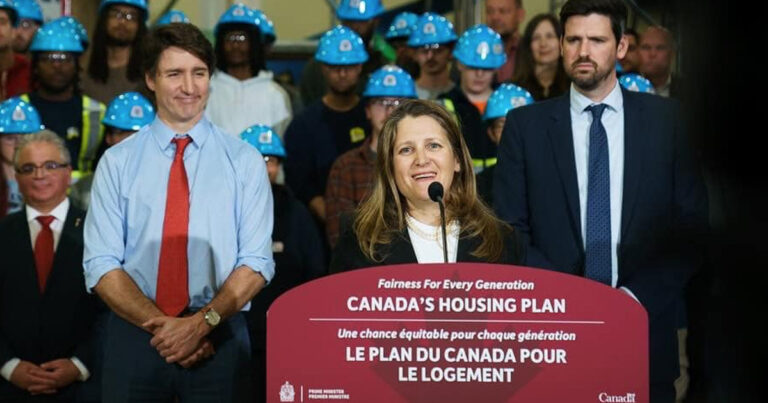
Most Canadians who are renting their homes are not convinced that the Liberals’ promises to solve the housing crisis and address housing affordability will work.
Only 10% of Canadian renters feel that the Liberals’ 2024 budget will help alleviate the country’s housing crisis, according to a new poll from Rentals.ca.
Conversely, 16% of Canadian renters feel the budget will worsen the housing crisis. 26% said it would not significantly impact housing, and the remaining respondents were unsure or needed more information
Most respondents, 66%, were aware of the recent budget, but only 55% knew of housing-related provisions outlined in it.
“While there is a clear recognition of the government’s efforts, the prevailing skepticism and concern among renters highlight the challenges ahead,” read the report.
The poll revealed that Canadian renters did not trust Prime Minister Justin Trudeau’s Liberal government to alleviate housing affordability.
75% of Canadian renters said that the government’s efforts to address housing affordability in recent years have been ineffective. Only 2% said the Liberals have been very effective over the recent years, while 10% said the party had been somewhat effective. The rest of the respondents were not sure.
It’s not surprising that so many Canadian renters found the Liberals’ housing strategy ineffective, given that most of them had difficulty finding affordable housing.
92% of Canadian renters said they had experienced difficulties finding affordable housing. Only 4% said that they hadn’t.
The prospect of leaving the renter’s market and entering homeownership is grim for most Canadians.
67% of Canadian renters are not likely to consider purchasing a property soon. Only 8% are very likely, while 14% are somewhat likely to consider homeownership in the near future.
Respondents were asked, “On a scale of 1 to 10, how concerned are you about the current state of the housing market in Canada?”
The average response showed a 9 out of 10 level of concern.
The Liberals’ 2024 budget has pledged to invest $8.524 billion over the next five years in various housing measures. The feds have pledged to build 3.87 million homes by 2031. The promise would require Canada to build 1.096 houses every minute from when the promise was made until 2031 without missing a beat.
Canada would have to build over twice as many homes annually every year until 2031 to fulfil this promise. Housing starts in Canada decreased every year between 2021 and 2023.
A previous report showed that housing affordability in Canada had reached an all-time low.
For example, in Vancouver, an average household has to spend 106.3% of its income to cover home ownership costs.
The poll analyzed themes from written responses. The biggest concerns raised by Canadian renters were rent, housing, and affordability.
“Immigration and foreign investment were also cited as significant factors impacting the availability of rental housing,” read the report.
Housing affordability aside, only 21% of Canadians support the federal budget.
The budget proposed $111.2 billion in new spending over the next five years and a $40 billion deficit, with no plan to balance the budget.
Study finds Canadians lost $3.5 billion due to medical wait times in 2023
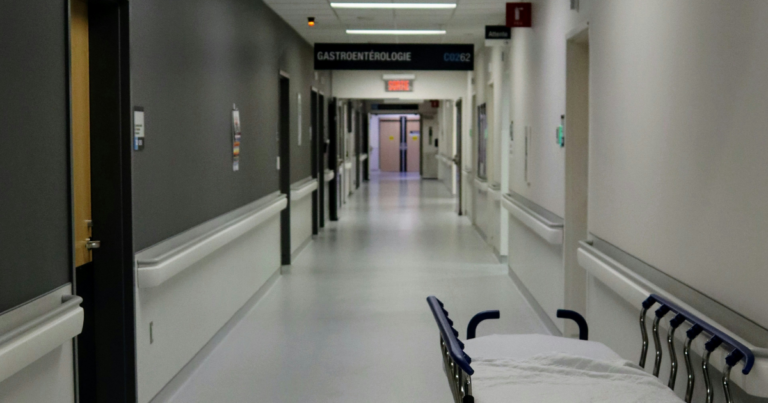
Canadians are dishing out billions in hidden costs due to growing wait times to access medical care.
A study by the Fraser Institute, an independent, nonpartisan Canadian public policy think tank, found that long wait times for surgery and medical treatment cost the 1.2 million Canadians who were waiting for medically necessary treatment an average of $2,871 worth of time they could have spent working.
According to the study, “The Private Cost of Public Queues for Medically Necessary Care, 2024,” Canadians lost a combined total of almost $3.5 billion in wages and lower productivity while waiting to access essential healthcare.
In 2023 Canadians waited 13.1 weeks on average while trying to access medically necessary treatment.
The study calculated the cost of waiting by estimating the amount of time patients could not use productively while waiting.
“That is a substantial cost to be imposed on Canadians by a failing health care system,” economist Nadeem Esmail told True North in an interview. Waiting for medically necessary treatment is a hallmark of the Canadian health care experience, and it’s not a benign process.”
Esmail is a senior fellow in health policy at Fraser Institute. He told True North the $3.5 billion estimate does not consider other cost factors associated with medical wait times.
“This is an underestimate or at least a conservative estimate of the actual privately borne cost of lost wages, productivity, and quality of life for Canadians,” Esmail said. “Due to the reality of data, (the study) counts only the time from the specialists’ decision to treat to treatment.”
He said the study doesn’t count the 14.6-week wait to see the specialist, other delays during the care process, including MRIs or CT scans, or the impact on friends and family who may be in mental anguish or concerned for the patient.
“It doesn’t count the non-medical costs of waiting, including increased risk of mortality or risk of poor outcomes, including permanent disability,” he said. “Even an underestimate shows $3.5 billion in lost wages to lengthy wait times that have come to define the Canadian health care system.”
In another report from the Fraser Institute, Canada ranked last, or close to last, on all four indicators of timeliness of care, despite having one of the most expensive universal healthcare systems in the OECD.
“We ranked dead last in international comparisons of wait times for specialist and non-emergency surgical care,” Esmail said.
He thinks Canada should follow the lead of the Scandinavian, Australian, Swiss, and German approaches to the universal healthcare system.
“The solution to this problem is reforming the healthcare system along pathways that we know work. We have proven track records in (those) other developed nations that maintain universal approaches to healthcare,” he said.
He said those nations have the same core policies the Canadian system should adopt.
“They have private competition in the delivery of universally accessible services, not just clinics at the fringe, but actual private competition and delivery, and a significant role for the private sector in the delivery of universally accessible care,” Esmail said.
The health care system he advocates for would still deliver care based on need, regardless of a patient’s ability to pay. However, he said the difference is “how the money flows through the health care system.”
Rather than paying hospitals a lump sum budget as Canada does, those nations pay hospitals based on the needs of individual patients. They also have cost-sharing, where the price is split with the patient or user fees for universal healthcare system access.
“(Budgets) result in real consequences regarding reduced efficiency and viewing each patient as a cost to the hospital,” he said. “In these other nations, hospitals are funded on the basis of the number of patients treated or money following patients to the hospital based on their individual needs and conditions.”
He said changing how hospitals are paid through universal healthcare “meaningfully” incentivizes hospitals to deliver more care, more efficiently, and with higher quality.
Last year, while fighting private options for healthcare, the BC NDP government sent patients in need of life-saving cancer treatment to the U.S., due to a lack of resources.
“This common set of policies of high-performing universal access health care systems could be implemented in Canada to the benefit of Canadian patients to help solve this $3.5 billion problem,” he said. “And yet, Canadian governments are stuck in the model that we have today with a real reluctance to move away from it.”
LAWTON: Liberals keep pushing for drug decriminalization, despite failure in B.C.

Earlier this week, Mental Health and Addictions Minister Ya’ara Saks told reporters the federal government was still reviewing B.C.’s request to recriminalize public drug consumption, adding that the overdose crisis is a “health crisis issue” and “not a criminal one.” Centre for Responsible Drug Policy founder Adam Zivo joined True North’s Andrew Lawton to discuss.
The Alberta Roundup | Calgary wants voting for non-citizens

Today on the Alberta Roundup with Rachel Emmanuel, Rachel explains Calgary city council’s desperate attempt to hold onto power by extending voting to non citizens. The council is also taking heat for plans for city wide rezoning.
Also on the show, Rachel has news about the Alberta government’s plans to study and likely build a rail network. The government is also under fire for controversial proposed Bill 20, which would allow cabinet to remove local councillors and bylaws.
Tune into the Alberta Roundup now!
SUBSCRIBE TO THE ALBERTA ROUNDUP
Recovery centre sounds alarm about higher funding for drug-permissive housing

The founder of a British Columbia drug recovery program is raising concerns about the funding gap between his site and facilities that permit drug use.
Richard Korkowski is the founder and co-executive director of Joshua House, an addictions program for men based in Chilliwack, B.C.
He’s also an addict in recovery himself.
Joshua House receives $35.90 per day per resident from the provincial government, which is used to cover accommodation, three dietician-approved meals, personal items, transportation, insurance, staffing, counselling, and the programming needed to help each resident with an addiction get and stay sober.
“That’s $1,112.90 per month. It costs us around $1,400 a month to house a resident… we have to fundraise approximately $288 for every resident that’s in the facility per month. It’s a huge amount of money. It works out to $376,000 and change every year, something like that. Huge amount of money,” Korkowski, 52, told True North.
According to Korkowski, supportive housing facilities such as single-room occupancy hotels (SROs) receive $100/day per resident. At these facilities, residents are allowed to use drugs, they are not enrolled in any recovery programming, and they receive fewer meals per day and less staff support.
“The supportive housing SROs don’t have any schedules, any programs, nothing going on. But yet they get this $100… We are giving (residents) more than they do, but we get less,” Korkowski told True North.
True North reached out to the Ministry of Social Development and Poverty Reduction, who did not respond with any information to dispute the $100 per day figure.
Korkowski has residents living at Joshua House that have previously resided in SROs.
“They would tell you exactly what goes on in there. Rats the size of cats, drug dealing, extortion. People being sold into sex slavery. It’s an abominable thing.”
According to BC Housing, supportive housing providers take a “harm reduction” approach, which includes naloxone access, “peer involvement,” and supervised injection rooms.
At Joshua House, residents are not permitted to consume drugs or alcohol.
“We do not allow any active using on our sites whatsoever,” Korkowski said.
“All of our staff are hair sampled. We hair sample every 90 days,” he said. ”And all of our residents who are in our facility are randomly drug screened, and/or if there’s a suspicion of use. If they leave on a weekend pass, they’re drug screened when they come back.”
Korkowski finds the “harm reduction” model dubious.
“If harm reduction is working, show me one thing that they reduced in harm. Overdoses are up, HIV and Hepatitis C among users is still increasing, it’s not decreasing. More homelessness than ever. So where is the reduction in harm? If there is a reduction in harm, show me where it is, because I haven’t seen it.”
“I’ve never had somebody from supportive housing call me up and say, hey, I want to do a referral for this guy to get into recovery,” he said.
Korkowski is also critical of the BC NDP’s “safe supply” initiatives.
“It’s not working. I’m an addict myself. And it’s like going up to a child and giving him a box of chocolates and saying ‘only eat one.’ They will never stop at one. They’ll always eat more.”
Korkowski also pointed out how differences in potency represent an inherent flaw in the so-called safe supply programs.
“Addicts on the street will not take a lesser drug of hydromorphone as opposed to fentanyl. It won’t satisfy their habit. Their habit is stronger than the drugs that they’re giving them. So they’ll need to go to get the fentanyl. They’ll just take the clean supply and sell it,” he said.
“They can say all they want that there’s no selling of the safe supply. But there is. I can bring you up to my facility, you can interview any one of our guys that were on safe supply. And I guarantee you they’ll tell you that they were selling it. It’s not going to work.”
The B.C. government has promised that the per diem rate for facilities like Joshua House will go up from $35.90/day to $60/day per resident starting in the summer, but Korkowski knows that strings will be attached.
“The last time they gave us a raise was $5 a day, which took us to the $35.90. But they added on a whole bunch of other legislation of training and stuff, so they gave it but they took it back away again. I’m curious to see what the strings are for the $60.”
He’ll find out in July. In the meantime, he has fundraising to do.
Nunavut leads Canada in GDP growth as change decelerates nationwide
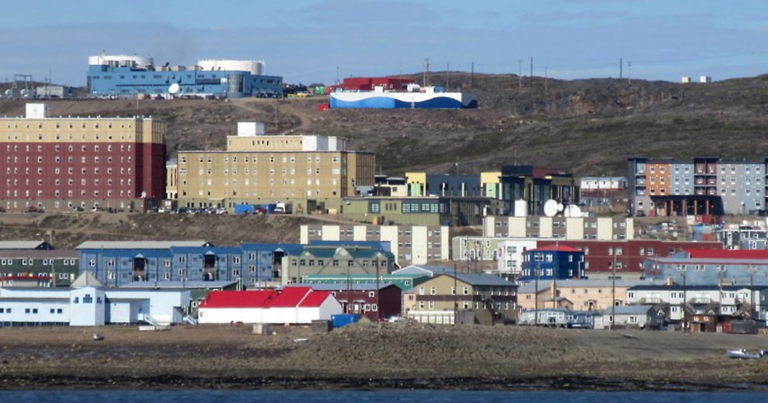
While GDP grew in every province in Canada except Newfoundland and Labrador, it slowed drastically compared to the year prior in most jurisdictions.
Across all industries, GDP grew by 1.2% in 2023 in Canada, according to data released by Statistics Canada on Wednesday. GDP grew by 3.9% in 2022 and 5.3% in 2021.
Of all provinces and territories, Nunavut saw the largest increase, where GDP increased by 3.4% in 2023.
“Although record population growth helped spur economic activity, tight monetary policy, persistent inflation, and several climate change-related events constrained output growth across Canada in 2023,” read the report.
No climate change-related events were highlighted in the report or its accompanying data.
Despite Nunavut recording the largest percentage increase in GDP, Ontario, with a growth rate of only 1.6%, remained the largest overall contributor to Canada’s economic growth, accounting for almost half of the total increase in national GDP in 2023.
British Columbia also saw an increase in GDP of 1.6%, making the province the second-largest contributor to national economic growth, followed by Alberta, Saskatchewan, and Quebec, which saw their province’s GDP increase by 1.5%, 1.6%, and 0.2%, respectively.
GDP decreased in Newfoundland and Labrador by almost 2.5% and in the Northwest Territories by less than 0.1%.
Newfoundland and Labrador had the largest negative effect on national economic output for the third time in six years.
Meanwhile, the construction sector was the most volatile industry in 2023.
Lower activity in the construction sector was the main detractor of growth in five provinces: Prince Edward Island, New Brunswick, Quebec, Ontario, and Alberta.
Conversely, construction was the largest contributor to growth in Nunavut, Saskatchewan, Newfoundland and Labrador, and the Northwest Territories.
In Nunavut, construction of a new gold mine helped engineering construction, which increased by 68%, more than offset the declines in residential and non-residential construction.
Residential construction decreased in every single province and territory in 2023. Six jurisdictions saw double-digit declines in output. Home building decreased in Prince Edward Island by 15.5%, in Quebec by 19.1%, and in British Columbia by 12.7%.
The Liberals have previously argued that high immigration levels are necessary to keep the economy supported and important labour to help the housing industry. Despite this, 75% of Canadians believe that high immigration levels are fuelling the housing crisis.
“We have to get away from this notion that immigrants are the major cause of housing pressures and the increase in home prices,” claimed Immigration Minister Marc Miller.
Canada’s largest housing markets also saw declines in the offices of real estate agents and brokers and activities related to real estate. Quebec, Ontario, and British Columbia saw decreases of 13.9%, 12.7%, and 10.5%, respectively.
“On an annual basis, activity was down in all areas as potential buyers contended with higher borrowing costs,” said Statistics Canada.
2023’s final GDP data is expected to be released in November. The data will include more comprehensive details, including income and expenditures. The future release will also offer revised estimates for 2021 and 2022.