More Canadians choosing to live abroad due to affordability crisis 

The cost of living is driving many Canadians to live abroad for better work, a new study finds.

Canada is also struggling to retain new citizens, as evidenced by onward migration – people who leave Canada after immigrating here – jumping up by 31% between 2017 and 2019, according to a new study. 

The study, released Monday by the McGill Institute for the Study of Canada, revealed that the primary reason so many newly naturalized Canadians decide to leave the country after “four to seven years of arrival” is an inability to take part in economic opportunities.

“Canada’s inflexible and unrealistic pathways towards recognizing foreign degrees … prevent immigrants from finding jobs in their chosen fields and building their careers in their new country,” reads the report.

About half of those who left acquired their citizenship through their Canadian parents, while a third were born in the country. The remaining 15% of Canadians living abroad were born as foreigners and later became naturalized citizens.

Other reasons that Canadian-born citizens cite for living abroad include job and study opportunities, as well as travel. 

The report suggested engaging with expat Canadians abroad has been a low priority for the government.

“Today, two features define the relationship between the Canadian government and the diaspora. The first is a lack of direction,” reads the report. 

“The Canadian government does not have an official strategy towards the growing number of its citizens residing abroad or the types of services they may need. Likewise, the diaspora question receives virtually no attention from the Canadian House of Commons or Senate committees, except in ad hoc cases.” 

The majority of Canadians living abroad reside in the United States, Hong Kong and the United Kingdom. 

The McGill study found that the amount of Canadians living abroad was five times higher than that of the U.S. and roughly equal to that of the U.K. 

A recurring theme in the study is how little media attention that the Canadian diaspora receives, and when it does, it’s often negative. 

“When they are mentioned, the discourse tends to lean towards two extremes. The diaspora is often portrayed negatively when in need of emergency consular services,” reads the report, referring to the crisis in Gaza, as well as the turmoil in Libya and Egypt in 2011.

“On the other side of the spectrum are famous Canadians, including entertainers, athletes, or business leaders, who are perceived as promoting Canada abroad. In these cases, individuals within the diaspora are considered to be indispensable assets in creating a positive image for the country,” it continues.

According to the report’s findings, Canada lags behind other nations in providing the necessary support for those living abroad, who currently cannot vote in provincial elections or access healthcare, despite paying taxes. 

“We still know very little about key things such as their motivations for moving abroad, their perceptions of Canada, and plans for returning home,” reads the report. 

“Better policies often start from better data, which is why more research is needed in this neglected, yet highly significant, area.”

A separate study from Statistics Canada estimates that roughly 4 million Canadian citizens were living abroad in 2016, which would amount to around 11% of the population or one Canadian citizen out of nine.  

The study found that the average age of Canadians living abroad is 46.2, which is a little higher than the national average. 

The largest cohort of those living abroad are between 45 and 54 years old. 
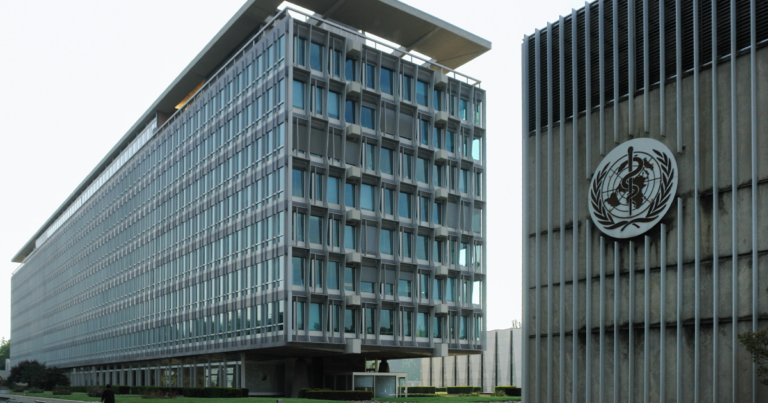
OP-ED: Taiwan needs a seat at the table in the post-pandemic world order

As we navigate the uncertain waters of a post-pandemic world, where new economic, social, and political landscapes are forming, World Health Organization (WHO) member states are negotiating a crucial pandemic agreement, slated for potential ratification at the 77th World Health Assembly in May.

This treaty is designed to bolster global defences against future pandemics by fostering solidarity and creating robust, actionable strategies. Alarmingly, Taiwan faces potential exclusion from these critical discussions despite its proven track record in global health security.

Taiwan, cognizant of the pivotal role it can play in bolstering global health resilience, has diligently sought participation in various WHO mechanisms, including the Global Influenza Surveillance and Response System (GISRS) and the Global Digital Health Certification Network (GDHCN). However, its efforts to secure WHO Listed Authority prequalification certification and establish a national focal point for noncommunicable diseases have been met with silence from the organization.

The repercussions of Taiwan’s exclusion are not merely theoretical but have tangible implications for global health. For instance, Taiwan’s inability to join the GDHCN impedes its capacity to verify and issue standardized digital certification documents, thereby complicating vaccination verification processes and access to healthcare for Taiwanese abroad and foreign nationals in Taiwan. This exclusion could potentially exacerbate the burden on other countries’ healthcare systems in the event of a new global pandemic, significantly affecting millions of travellers and expatriates annually.

Moreover, the WHO’s refusal to display contact point information for Taiwan’s Centers for Disease Control on the IHR intranet obstructs direct communication channels for pandemic-related information exchange, thereby impeding effective global pandemic prevention efforts. Despite Taiwan’s noteworthy contributions to global health security, particularly during the COVID-19 pandemic, its exclusion from critical initiatives such as the WHO Pathogen Access and Benefit-Sharing System (PABS) and the Global Pandemic Supply Chain and Logistics Network represents a significant loss of expertise and resources for the international community.

It is crucial, therefore, for countries like Canada to push for Taiwan’s inclusion in WHO mechanisms and activities. By advocating for Taiwan’s observer status at the WHA and promoting its integration into global health governance, Canada can enhance global health security and advance its strategic interests in the Indo-Pacific region. Such actions resonate with Canada’s commitment to inclusivity, fairness, and international cooperation, contributing to a more robust global health framework.

In a significant step forward, Taiwan and Canada recently ratified a memorandum of understanding last May, reinforcing their commitment to collaborative public health efforts. This bilateral agreement strengthens their partnership, streamlining responses to public health crises and enhancing resilience against future challenges. Canada’s support for Taiwan’s role in global health underscores the practical necessity of international solidarity in health governance.

We must remember that Taiwan was among the first to warn the WHO of the impending COVID-19 crisis in 2019. Regrettably, due to its non-member status, Taiwan’s early warnings and inquiries about human-to-human transmission were largely overlooked. This oversight must not be repeated; ignoring Taiwan’s capability and expertise in global health matters is not just a diplomatic misstep—it is a serious global vulnerability.

Jin-Ling Chen is the director-general of the Taipei Economic and Cultural Office in Toronto

Alberta and Saskatchewan forge nuclear alliance to reach carbon neutrality by 2050

The governments of Alberta and Saskatchewan will partner to develop nuclear technology to achieve carbon neutrality by 2050.

The provinces have agreed to collaborate on nuclear power projects, particularly focusing on small modular reactors. This partnership aims to put these provinces at the forefront of Canada’s efforts to achieve a carbon-neutral future.

The agreement aims to exchange information on crucial aspects of nuclear power generation. These include nuclear supply and workforce development, fuel supply security, and developing and regulating small modular reactors, which Saskatchewan’s government confirmed in a press release.

The two provinces have collaborated before during energy crises, such as when Saskatchewan saved its Western neighbour from rolling brownouts during extreme cold in January.

“Saskatchewan has a long-standing cooperative relationship with Alberta on energy development, and we share similar challenges and opportunities related to decarbonization,” said Saskatchewan’s Minister of Crown Investments, Dustin Duncan.

“I look forward to continued collaboration with the Government of Alberta on meeting the power needs of our provinces, while growing our economies and introducing new nuclear industries,” he added.

Alberta’s Minister of Affordability and Utilities, Nathan Neudorf, echoed a similar sentiment towards the collaboration.

“Our provinces are leading the world in responsible energy development, and we look forward to learning from Saskatchewan’s experience with nuclear generation,” he said.

The move comes at a time when the two provinces face pressure from the federal government to reach net zero. Both governments view nuclear technology, particularly small modular reactors, as essential to achieving these goals due to their lower greenhouse gas emissions compared to traditional nuclear reactors.

Saskatchewan, Ontario, and New Brunswick previously signed a memorandum of understanding to advance small modular reactors in Canada in 2019, with Alberta joining in 2021.

The Interprovincial Strategic Plan for the Development of Small Modular Reactors, developed by the four provinces, was released in March 2022.

The new bilateral agreement between Alberta and Saskatchewan adds additional research areas, such as industrial decarbonization and grid reliability.

Alberta’s provincial government has repeatedly asked the federal government to collaborate with the province to reach carbon neutrality by 2050. While those requests have gone largely unfulfilled, perhaps inter-provincial collaboration can make up for the missed opportunity by the feds.

LAWTON: Anti-Israel encampments take over Canadian universities

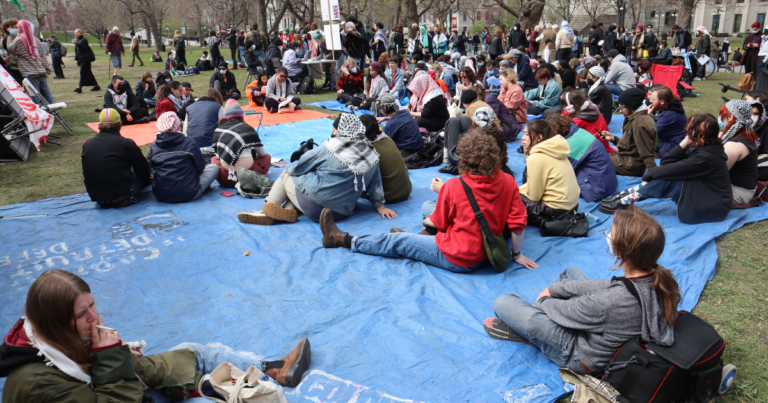
Earlier this week, anti-Israel protesters set up an encampment at McGill University in Montreal, demanding the university divest its endowment funds from Israel and sever ties with Israeli academic institutions. Columnist Barbara Kay joined True North’s Andrew Lawton to discuss the impact of these demonstrations on Canada’s Jewish community, and the response from post-secondary institutions.

Defence department clarifies rebrand after public outrage, bewilderment

The Canadian Armed Forces has clarified that its official emblem remains unchanged, following widespread confusion and public outcry over a recently introduced icon that sparked ridicule online.

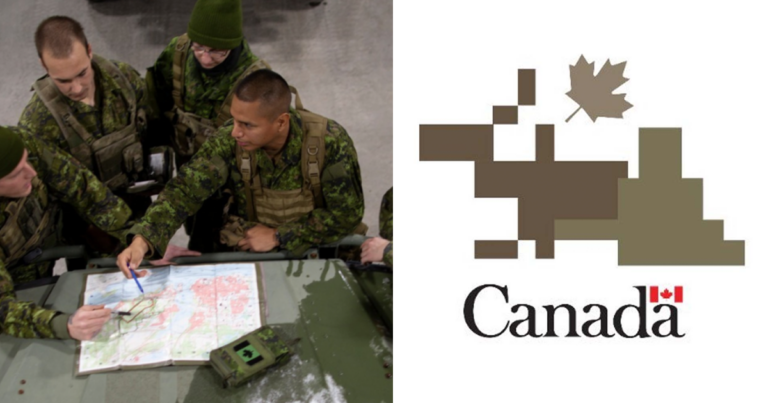
According to a spokesperson for the Department of National Defence, the new design launched and announced on X on Friday morning is not a replacement but a supplementary icon meant to promote a new camouflage pattern.

“The icon launched today is a supplementary design that will be used in the bottom left corner of certain communications products and in animations for videos,” said the spokesperson.

With the video and posts lacking an official explanation, Canadians took to social media to speculate what the icon could be. Some of the proposed ideas included a moose, a map of Canada or some sort of pixelated figure from the popular video game Minecraft. 

Nobody seemed to agree on what the abstract icon was until the Canadian Armed Forces replied in an exclusive email to True North.

The icon comes in addition to the army’s official logo, and is intended to coincide with the recent launch of the Canadian Disruptive Pattern Multi-Terrain.

“The icon is intended to highlight the colours used in that pattern. In particular, the icon resembles the pixels, in shades of brown, topped by a small maple leaf and was extracted from this pattern. The icon was developed without additional funds or involvement of external companies. It was developed by (the Department of National Defence’s) internal graphic design team, and this icon comes at zero expense to the taxpayer,” said the spokesperson. 

The Canadian Army released a “revitalized branding” of its logo to X on Friday morning that left many people scratching their heads.

The post was quickly ratioed, having more than triple the comments as it had likes on Friday.

Many of the post’s replies were from users on X trying to guess what the logo might be or noting their disbelief at the new design.

“I honestly don’t know what that is. And my son loves Minecraft,” said freelance journalist Andy Lee.

Another journalist, Spencer Fernando, highlighted the military and federal government’s misguided priorities while alluding to his best guess of what the logo might be.

“Canadian soldiers: ‘Can we have modern equipment?’ Canadian government: ‘Best we can do is pixelated moose engaged in dubious activities,’” said Fernando.

Another writer alluded to his best guess. 

“The Canadian Army has just rebranded themselves… as a rejected 1981 Atari game…?” said author Andrew King.

Of the nearly 1,000 replies, primarily negative, nobody seemed to be able to determine what the logo was.

All the Canadian Army said in its post was, “Introducing the revitalized branding for the Canadian Army! Tell us in the comments what you think about it.” 

Following the hundreds of negative replies, the official account issued a follow-up post three hours later but provided little clarification. 

“Introducing a new icon and refreshed tagline for the Canadian Army, featuring the new CADPAT MT (Multi-Terrain) pattern. It is designed to complement our official Canadian Army logo,” they wrote in a post to X.

The accompanying link shared by the Canadian Army in its follow-up post offered no details on the logo and spoke only about an updated uniform pattern.

Canada’s military facing public outcry for its decisions is not a new phenomenon.

True North previously reported that Canadian military bases mandated menstrual products, including tampons and pads, to be provided in men’s washrooms by Dec. 15, 2023.

Many respondents to the recent post highlighted this previous announcement in their replies.

“Where are the Pride flags and tampons for men?” asked one X user.

“Really excited about the new tampon dispensers in men’s rooms,” said another — Ezra Levant, founder of Rebel News.

True North previously reported that almost every article in an issue of the Canadian Military Journal was devoted to critical race theory and disparaging “whiteness” in the military. 

“It’s obvious that the person who designed this was hired for their lack of being a White male, not their design skills,” said one X user.

Recruitment issues in Canada’s military persist despite the government’s plan to boost recruitment by lowering standards and promoting diversity over merit. 

Only 5,242 Canadians joined the Armed Forces in 2022, a 35% decrease from 8,069 in 2021.

This decrease comes despite the Minister of National Defence announcing on Dec. 5, 2022, that permanent residents were welcome to apply and enroll in Canada’s military.

The Canadian Army told True North that it regrets any confusion caused by the post to X.

“We once again reiterate that the official Army icon remains unchanged. Canadian soldiers at home and around the world remain proud of our official emblem,” concluded the spokesperson.

CAMPUS WATCH: New anti-Israel encampments at U of T, U Vic, tensions rise at McGill

More radical anti-Israel encampments have been set up on Canadian university campuses, including at the University of Toronto and the University of Victoria.

Meanwhile, members of Montreal’s Jewish community and their allies held a counter-protest in defence of Israel and against antisemitism at McGill on Thursday.

There are also growing calls for McGill’s anti-Israel encampment to be shut down by police.

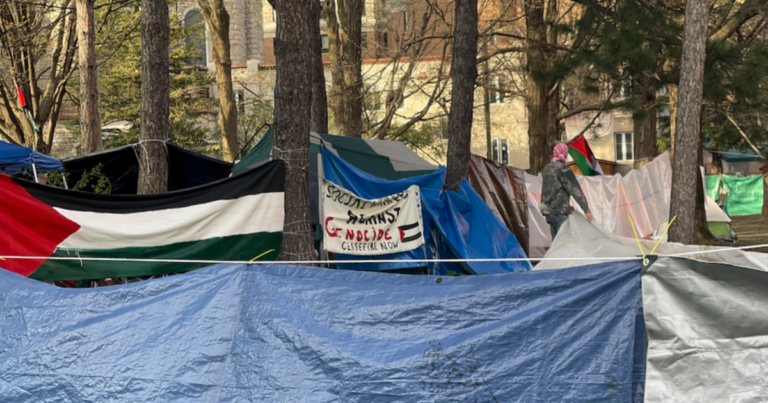
At U of T, student protesters breached a fence that closed off a large field and set up an encampment. Like at other encampments, protesters were seen wearing both masks and keffiyehs. Signs with genocidal slogans were also seen at the U of T encampment.

The encampment is inspired by the ones of other Canadian universities, as well as those seen at U.S. Ivy League colleges like Columbia. Students taking part in these encampments want their schools to “divest” from the Jewish state.

The U of T administration had previously warned students against setting up an encampment, noting that university grounds are private property.

However, there now appears to be a slight shift in tone now that students have defied orders. The university told students taking part in the encampment that, for now, they will not be removed. The university did, however, warn against joining the encampment or using hateful speech.

“Our preference is to start with dialogue and we’ve been in touch with the protesters since this morning,” said the university. They however added that “those who contravene university policy or the law risk the consequences set out in various laws and policies such as the Code of Student Conduct.”

Activists taking part in the encampment meanwhile blasted the U of T administration, claiming that the university is colonial and on stolen Indigenous land.

“U of T would rather threaten involving police than address our calls for divestment from companies funding a genocide, a stance that reveals the colonial core of its character,” wrote U of T Occupy for Palestine on X (formerly Twitter) “(The) administration says we are protesting on private property, a claim we reject entirely. We are protesting on stolen land.”

At the University of Victoria in B.C., students set up a similar encampment and are inviting non-students to join them.

“After months of our protests and advocacy work being ignored by U Vic administration, we will continue to stand our ground and the encampment will remain indefinitely until the university agrees to our demands and divests from genocide,” organizers said in a statement to the media.

One of the signs seen at the U Vic encampment read “from the river to the Salish sea,” suggesting that protesters want to see the destruction of Canada, in addition to the destruction of Israel.

The University of Victoria said in a statement that it expects “all activities on campus to stay within the parameters of university policies and the law” and that “erecting tents, temporary structures and overnight encampments are prohibited by university policy.”

At UBC, meanwhile, the encampment there has doubled in size. Student protesters have also earned an endorsement from the university’s Institute for Gender, Race, Sexuality and Social Justice.

In a statement, the gender studies institute said that fighting for Palestine was a “social justice” issue.

“War, genocide, and the funding networks supporting settler colonial violence are inherently social justice issues; they are core concerns in our classes and in our commitments to practice social justice and end settler colonialism,” the institute said.

The anti-Israel encampment at McGill University was subject to a counter-protest Thursday from members of Montreal’s Jewish community and their allies.

Counter-protesters flew Israeli, Canadian and Quebec flags.

“Right now there is a Jewish awakening happening all over the world, and McGill’s campus is no exception,” said a woman at the counter-protest. “The only genocidal acts that were committed were committed on Oct. 7 against Israeli civilians” another woman told Noovo Info.

Individuals in the anti-Israel encampment meanwhile referred to the pro-Israel counter-protesters as “pro-genocide.”

One man was also seen holding a sign that read, “On Oct. 7, Israel killed its own people & covered it up to justify genocide.”

Another sign on the pro-Palestinian side called for agitation and escalation.

Quebec Premier Francois Legault also said Thursday that it is time for the police to take down the McGill encampment, calling it illegal.

“Everybody in Quebec has to respect laws, and right now these encampments are illegal,” Leault said. “We have to respect the law. And I want to make sure that the police officers ensure the laws are respected.”

“We’re all worried about what’s happening in Gaza,” Legault added. “People can show their (position) in demonstrations, these are allowed. These are legal. But they cannot have encampments on a university site.”

Prime Minister Justin Trudeau meanwhile said Canadians “have to trust” universities and police when it comes to the encampments.

An anti-Israel encampment also remains at the University of Ottawa. True North visited the encampment on Thursday afternoon.

Anti-Israel students occupying University of Ottawa’s campus. Elie Cantin-Nantel, True North

According to The Fulcrum, Ottawa’s student paper, the encampment currently has 50 tents and organizers say approximately 120 students stayed overnight.

Quebec University fires professor over Covid-19 vaccine dissent

A professor and biochemist with 35 years of research experience in the areas of genomics, lipid nanoparticles, and RNA has been fired from Quebec City’s Université Laval over his criticisms of the Covid-19 vaccine.

On March 28, 2024, Dr. Patrick Provost received a letter from the Vice-Rector of Human Resources and Finance, André Darveau, informing him he had been sacked from his post.

Since 2021, Provost had been subject to 11 complaints over his internal and public comments about Covid-19 mRNA vaccines. These complaints came from citizens, doctors and other professors, two of which were anonymous. As a result, Provost received four suspensions without pay for a total of six months, one week and one day.

He has filed grievances regarding the suspensions with the provincial Labour Tribunal, and his union is representing him in contesting his dismissal.

Provost called ULaval’s treatment of him “illegal, unjust, unreasonable and abusive.”

“I am probably the first professor to be dismissed in the exercise of his academic freedom since (Quebec’s) ‘Act respecting academic freedom in the university environment,’ which is supposed to protect it, came into force on 7 June 2022,” Provost wrote in a translated April 23 letter to his colleagues.

On May 3, a group of professors penned an open letter calling on ULaval to reinstate and apologize to Dr. Provost.

“Patrick Provost drew a line at what amounted to medical experimentation on children,” the professors wrote in their letter, published by the Brownstone Institute.

“He was in a good position to grasp the potential harms of the Pfizer and Moderna modified mRNA injections. He came to the conclusion some time ago that the risks outweighed the rewards, at least where children were concerned.”

Provost wrote in his own published letter, “Pfizer’s and Moderna’s mRNA products are based on a completely new technology and are not ‘vaccines’ – the definition of which was changed in September 2021 – in the traditional sense of the term as understood by the general public.”

“Being aware of the potential risks, known and unknown, associated with these new ‘vaccines’, I could not remain silent on such important issues, where lives were at stake, particularly those of children. So I decided to go public with my deep and legitimate concerns, which have evolved over time and are based on recognised concepts, solid scientific evidence and reasoning.”

Provost notes that in his decades-long career, he has obtained nearly $6 million in government funding, trained 60 highly-qualified students and researchers, published approximately 100 articles in peer-reviewed scientific journals (cited in over 16,000 other articles), and won three Discovery of the Year awards.

“Why do they turn a deaf ear or refuse to hear my well-founded and reasonable arguments? Why are they trying to silence me, without discussion or debate, and destroy my career as a teacher-researcher? Why am I being prevented from using my expertise and knowledge to help protect the public who pay my salary? Why was I dismissed for wanting to protect the public?” Provost said in his letter.

“If teachers can no longer express themselves freely within their institution or in the public arena, who will be able to express themselves freely in society?”

Other professors, scientists, and researchers have found themselves in professional turmoil over Covid-19 dissent.

Dr. Matt Strauss, an Ontario-based critical care physician and Conservative candidate, has launched a lawsuit against his former employer, Queen’s University. Queen’s allegedly subjected Strauss to public condemnation and professional repercussions after he argued against Covid-19 lockdowns and mandates via his X account. 

The social media platform X, owned by tech billionaire Elon Musk, is funding Strauss’ lawsuit.

X is also paying the legal bills for anti-lockdown pediatrician Dr. Kulvinder Kaur Gill.

Elon Musk’s X pledges to fund Dr. Matt Strauss’ COVID-19 legal battle against Queens University

In a bold move underscoring its commitment to free speech, the social media platform X has declared its financial backing of a legal battle launched by Dr. Matt Strauss, an Ontario-based critical care physician and Conservative candidate, against his former employer. 

The lawsuit targets Queen’s University over allegations of censorship and professional reprisal over Strauss’ outspoken criticism of lockdowns and other overreaching measures during the Covid-19 pandemic.

Announcing their support on the official X News account, the platform stated, “X is proud to fund a lawsuit filed by Dr. Matthew Strauss, an Ontario critical care physician and professor, against his former employer, Queen’s University.”

According to the statement, Queen’s University purportedly subjected Strauss to public condemnation and professional repercussions after he expressed dissenting views on COVID-19 lockdowns and mandates via his X account (@strauss_matt).

“(Queen’s University) publicly ostracized him, retaliated against him, and ultimately forced him to resign because his opinions did not conform to the university’s political orthodoxy,” wrote X News. 

“(X) supports Dr. Strauss’s efforts to vindicate his free speech rights without fear of unfair retaliation!”

Strauss, a vocal critic of widespread lockdown measures and vaccine mandates during the pandemic, faced substantial backlash for his stance. Despite the controversy, he clinched the Conservative nomination for Kitchener–South Hespeler last November.

The Ontario physician also served as Haldimand-Norfolk’s acting medical officer of health.

His advocacy for an “individualized” approach to public health measures clashed with mainstream orthodoxy, triggering calls for his dismissal and igniting debates over the scope of governmental intervention.

Previously affiliated with Queen’s University’s medical faculty, Strauss alleges that the institution resorted to “malicious, aggressive, condescending, and defamatory statements” to oust him from his position. 

His lawsuit seeks redress for what he perceives as an infringement on his freedom of expression and professional integrity.
X’s announcement comes after the company’s owner, Elon Musk, pledged to pay the remainder of another Ontario doctor’s legal bills. Dr. Kulvinder Kaur Gill was also an outspoken critic of government mandates and faced a legal battle for expressing her views.

Off the Record | Is Jagmeet Singh delusional?

It’s Friday! Kick back, grab a drink and tune into the latest episode of Off the Record with Harrison Faulkner, William McBeath and Sue-Ann Levy!

Forget their terrible polling numbers, forget their constant need to appease pro-Hamas protesters and forget the fact that they’re propping up the Liberals, NDP Leader Jagmeet Singh says he’s going to win the next federal election. According to the latest polls, if an election were held today, Singh’s New Democrats would remain in fourth place. Is this guy serious?

Plus, Sue-Ann wants to know where are all the parents of the kids taking part in the anti-Israel encampments at Canada’s universities?

And the Liberals’ latest desperate attack to smear Pierre Poilievre by linking him to the fictitious group Diagolon falls flat as the Conservatives continue to rise in the polls.

These stories and more on Off the Record!

SUBSCRIBE TO OFF THE RECORD

Alberta will amend its local election reform bills following public outcry

Despite being tabled in the legislature last week, the Alberta government has already announced plans to amend certain aspects of Bill 20 after mayors and critics blasted parts of the bill. 

The provincial government will collaborate with municipalities to amend and clarify parts of the bill around the portions that grant Cabinet the ability to remove councillors and repeal local bylaws.

The Municipal Affairs Statutes Amendment Act, also known as Bill 20, introduced sweeping changes to the Local Authorities Election Act and Municipal Government Act.

One of the most notable changes in Bill 20 was the introduction of political parties at the municipal level, while one of the most contentious changes was granting the Cabinet the authority to remove a councillor if deemed in the public interest or to order a vote allowing residents to remove councillors.

Minister of Municipal Affairs Ric McIver had previously said that this policy would only be used as a last resort and in extremely rare situations. He said the provincial government hoped it would never be put in the position to use it.

He said that a councillor who betrayed public trust and if it’s in the public interest to remove them, action should be taken swiftly to do so.

“Alberta’s government remains committed to fairness and due process and will continue working with local authorities to ensure Albertans have the effective local representation they deserve,” said McIver in a press release announcing the amendments.

The provincial government already possesses the ability to remove councillors, but municipal leaders have contended that Bill 20 transforms this previously public procedure into a more secretive process, lacking sufficient oversight and accountability.

Edmonton’s Mayor Amarjeet Sohi said in a post to X that proposed changes in Bill 20 caused him to be “deeply concerned” and that the “legislation is an attack on local democracy.” 

Bill 20 also allows Cabinet to repeal or amend municipal bylaws.

“This is quite serious, and we would not do this lightly. We will also be working with municipalities to propose amendments for the legislation and clarify that this would only be used in very limited circumstances related to areas that are primarily overseen by the province, like health care, education, the provincial economy, or public safety,” said McIver. 

Currently, Cabinet has the power to require councils to modify or rescind land-use bylaws. Bill 20 would expand this authority to include all types of bylaws.

He added that Bill 20 aims to enhance the accountability of locally elected officials and councils while also maintaining support for local autonomy in areas managed by municipalities.

Bill 20 also bans all automated voting equipment, such as electronic tabulators, from municipal elections. Votes will be required to be tabulated by hand. 

Alberta Premier Danielle Smith previously promised to ban electronic vote tabulators in provincial elections.

The last provincial election saw 1,777,321 votes cast. 758,640 electors chose to vote during advanced voting days with electronic tabular. They delayed counting the election results by hours because volunteers had to spend hours manually inputting the data into a computer. 

However, the delay isn’t the reason for the ban. Trust is.

“I’ve never called their integrity into question,” said McIver. “But if you talk to Albertans, you will find a number of them don’t have faith in machines counting ballots.”