fbpx
Thursday, October 9, 2025

Creditors downgrade BC’s credit for the third time due to mounting NDP deficits 

Source: Instagram

British Columbia’s credit is falling thanks to the NDP government’s historic deficits. 

S&P Global Ratings has downgraded the province’s credit rating for the third time.

S&P Global Ratings changed the province’s credit rating from AA to AA- on Monday, putting it on par with countries like Slovenia and Estonia. Another credit hit would have B.C. join countries like Kuwait and Bermuda in the A+ rating

“The negative outlook reflects a one-in-three chance that we could lower the ratings in the next two years if, in our view, the province’s commitment to fiscal consolidation continues to waver, as reflected by persistent large after-capital deficits,” said the credit rating agency.

The agency added that B.C.’s credit rating could be lowered further if it maintains its current fiscal trajectory, consisting of sizable deficits and free cash flow less than 40% of the following year’s debt service. 

“Lack of a medium- and longer-term view and commitment to ensure fiscal sustainability could also affect the rating,” added S&P Global Ratings.

However, the rating agency said that in a best-case scenario, the economic outlook could improve to “stable.” This shift could come if the current fiscal trajectory was reversed, “bolstered by stronger economic growth and/or financial prudence, that positively affects budgetary performance.”

In reality, the credit agency expects the province to continue producing deficits larger than 5% of operating revenues and continue with record level after-capital deficits of about 20% of total revenues, not seen since the pandemic. S&P Global Ratings added that B.C.’s tax-supported debt will keep rising, reaching 182% of operating revenue, or $156 billion, by the end of the 2027 fiscal year. 

“We believe that the province’s commitment to fiscal discipline and stability has wavered in recent years as B.C. has materially increased its spending for both operations and capital investment to unparalleled levels, while economic growth is slowing.” 

The Canadian Taxpayers Federation has called on David Eby’s NDP government to rein in spending following the credit rating decrease. 

“Massive deficits and a steep increase in provincial debt is threatening the sustainability of our province. Premier David Eby needs to start making responsible financial choices for British Columbians,” said Carson Binda, CTF’s B.C. Director. 

British Columbia’s budget this year saw the biggest deficit in the province’s history, at $7.9 billion. The total provincial debt is set to reach $123.3 billion by the end of this year, according to the CTF. When the NDP formed government in 2017, the provincial debt was 69.8 billion.

Despite the negative outlook, the credit agency said that the province does have considerable economic strengths, bolstered by sectors such as forestry, mining and natural gas, financial and real estate services, and construction and manufacturing.

Looking at 2025 and beyond, the credit agency believes that B.C.’s economy will be bolstered by natural gas when LNG Canada’s facility is anticipated to come online.

S&P Global Ratings wasn’t the only credit agency to cast a negative outlook on British Columbia. Moody’s Ratings, a rating agency with more than 115 years of history and expertise, changed its outlook from stable to negative for the province on Tuesday.

Credit rating decreases aren’t just a warning sign. With every decrease, the province needs to pay more to borrow money. According to the CTF, interest charges on the provincial debt will cost the province $14.6 billion over the next three years.

“Eby and Finance Minister Katrine Conroy need to start being responsible with taxpayers’ money,” said Binda.

True North reached out to B.C.’s Ministry of Finance and Premier Eby for comment but received no response.

Vancouver wants to regulate magic mushroom retailers

Source: Unsplash

Vancouver, known for its lax drug enforcement and marijuana culture, is now contemplating regulating magic mushrooms and other psychedelic drugs.

Councillors Pete Fry and Adrian Carr have submitted a motion to city council to create a regulatory framework for the retail sales of psilocybin and similar substances in the city.

The motion highlights the rapid increase in unlicensed and unregulated shops selling magic mushrooms and other entheogens in recent years. Despite these drugs being classified as controlled substances, there has been little to no prosecution or conviction of their retailers. 

Additionally, there are currently no specific business license regulations governing their sale or display in Vancouver. 

Entheogens, psychoactive substances used for spiritual, therapeutic, and inspirational purposes, have a long history of use by Indigenous peoples worldwide, argued the councillors. 

Examples include cannabis, psilocybin (magic mushrooms), peyote, and kratom. These substances are gaining popularity among Vancouverites, with recreational use doubling in the last three years.

The councillors argued that because psychedelics like psilocybin are generally considered safer than opioids and are not known to cause physical dependencies or risk of overdose, the sale of the substances doesn’t pose a significant threat. 

Despite being designated as controlled substances under Canada’s Controlled Drugs and Substances Act, mushroom dispensaries have proliferated across Canada, including in Vancouver. 

Many retailers operate online and these days Canadians can simply order magic mushrooms and other hallucinogens with the click of a button. 

The pair said that the city should explore licensing, zoning, and development policies to ensure the safe and responsible sale of these substances.

City Council is also considering alternative approaches, including ignoring the issue altogether or actively prohibiting entheogenic retailers.

The consumption and possession of drugs in British Columbia was decriminalized in 2022 after the British Columbia government requested a Criminal Code exemption from Prime Minister Justin Trudeau. 

Medical college censorship could have “chilling effect” on speech, anti-lockdown doc argues

Source: Facebook

Dr. Kulvinder Kaur Gill and her lawyer Lisa Bildy challenged the College of Physicians and Surgeons of Ontario’s decision to place “cautions” on her record as a medical practitioner due to three online posts she made in 2020.

Gill is a physician practicing in Milton and Brampton, Ont., who specializes in pediatrics, allergies, clinical immunology, microbiology, virology, and vaccinology,  and has worked at the National Microbiology Laboratory, Canada’s highest security level-4 biosafety lab.

Gill has never had a complaint from her patients and, before the wave of complaints levied against her in the summer of 2020 from internet activists, had a spotless record.

Bildy argued that Gill’s posts required context as she had a “reasonable scientific basis” for her commentary, which the medical college ignored in its original assessment.

“The committee’s decisions were neither reasonable nor justified and they failed to engage with the central issues for which Dr. Gill was being cautioned,” Bildy said during a Wednesday court hearing.

She argued the comments were not verifiably false and they were only under scrutiny because they deviated from the college and government’s position at the time.

“The decision starts with the premise that doctors have to comply.”

She argued if doctors are unable to criticize government medical policies, it creates a “chilling effect” on those who would otherwise speak up about potentially crucial issues.

Counsel for the college, Sayran Sulevani, challenged this assertion.

“There is no evidence of a chilling effect on speech,” Sulevani said.

While a caution on a doctor’s record is a finding from the college that there is no cause for reprimand, Bildy argued there were lasting potential effects of the cautions remaining on Gill’s record, such as influencing potential future cases and tarnishing the doctor’s public reputation.

“The guidance at the time from the college was (that) physicians should comply with all existing public health measures, protect reputation and public trust by not posting what could be considered unprofessional,” Sulevani said. “It’s important (for) public health (to) have a unified front.”

Gill faced seven complaints in total and a high-level investigation from the CPSO’s registrar.

According to Libertas Law, the firm that represents Gill, most of the complaints involved the same few online posts.

In one of those, Gill said, “If you have not yet figured out that we don’t need a vaccine, you are not paying attention. #FactsNotFear.”


Bildy argued this comment was commentary on what Dr. Theresa Tam, Canada’s chief public health officer said the day it was made, that vaccines were not a “silver bullet” and the public health measures would likely persist for another two to three years.

Some complaints were submitted against Gill for her commentary on the effectiveness of hydroxychloroquine in treating COVID-19 at its early stages, and T-cell immunity in those who had already contracted the virus.

All but three complaints were resolved and dismissed by the regulatory body as it found the comments were “based on reasonable scientific and medical evidence available at the time.”

Sharing a former Harvard professor’s post which called contact tracing, testing, and isolation “ineffective and counterproductive,” was the source of another caution against Gill.

“Counterproductive means the opposite of the intended effect and there was no evidence for that,” Sulevani said.

“The previous decision doesn’t actually review any of her evidence,” Bildy said.

She said the college lacked an internally coherent standard of analysis applied to every complaint.

The CPSO cited the success of South Korea and China’s lockdowns as evidence Gill engaged in disinformation by claiming the lockdowns lacked medical and scientific justification.

“We know that the lockdowns didn’t affect mortality,“ Bildy said. “it didn’t stop transmission. It merely delayed it.”

Gill’s team also tried to prove the college did not give the level of care required by case law when stripping Gill of the right to free speech.

The previous decision by the court requires regulatory bodies to fully engage and consider the Charter of Rights and Freedoms when curtailing the free speech of professionals.

Sulevani’s argument linked Gill’s case to a recent decision by the Divisional Court involving the CPSO and Dr. Jordan Peterson.

The court decided in Peterson’s case those who join a regulated profession, can have their freedom of expression limited by their regulatory body.

“The committee has no interest in shutting down free speech or in preventing physicians from expressing criticism of public health policy,” said the CPSO’s committee in the complaints against Gill.

“A mere nod to free speech is not sufficient,” Bildy said.

Alberta tables new bill to ensure say in federal-municipal agreements

Source: Facebook

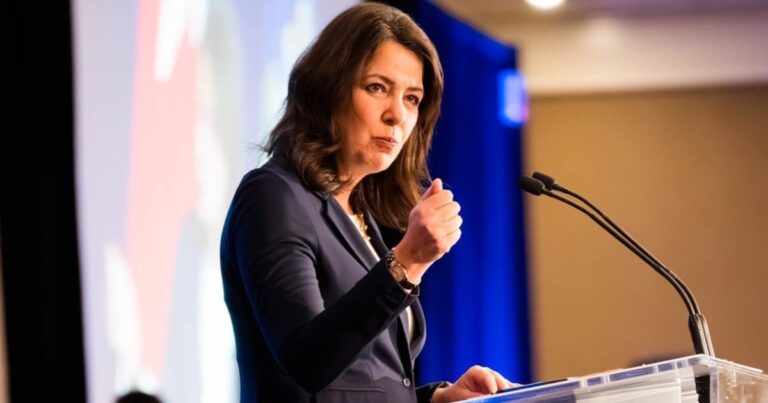
Alberta Premier Danielle Smith is following Quebec’s lead as her government tables legislation to force the federal government to obtain provincial approval on future deals with Alberta municipalities.

On Wednesday afternoon, the Alberta government tabled the Provincial Priorities Act to enforce Section 92 of the Constitution which states that municipalities fall within the exclusive jurisdiction of the provinces. 

Jurisdiction has never stopped Ottawa from seeking to grab more control from the provinces for a good news headline, which includes funding announcements that don’t align with provincial priorities, Smith said at a news conference Wednesday morning.

“Our government believes Albertans are entitled to their fair share of federal funding and to have that funding spent on priorities that matter to them,” she said.

“We won’t put up with any further manipulation or political interference from Ottawa.”  

At the Council of the Federation in Nova Scotia in November 2023, Smith said Canada’s premiers all indicated their opposition to Ottawa stepping over provincial governments to forge agreements directly with municipalities. 

“Many of us spoke about pursuing legislation similar to what is in Quebec, which prohibits the federal government from bypassing their provincial governments when making deals with municipalities,” she said. “In fact, the federal Quebec minister made sure that we all had a copy of that legislation before we left that day.” 

Smith said the Trudeau Liberals have had the “barest” representation in Alberta as evidenced by Liberal policies that would devastate the provincial economy. Ottawa also fails to provide Alberta with its fair share of per capita program funding. 

“And we see this when they actively work around us to find funding agreements with municipalities and provincially regulated and funded organizations that run counter to Alberta’s interests and priorities,” Smith said. 

Municipal Affairs Minister Ric McIver said Alberta and its municipalities are being shortchanged by the federal government. He said it’s difficult to achieve collaboration when one of the parties isn’t aware of what the other governments are doing. 

He pointed to recent federal funding agreements to help build housing in Calgary while excluding the rest of the province.

“And while it’s great to see our federal counterparts wake up to the need for affordable housing in our two largest cities, Alberta is much more than Edmonton and Calgary.” 

Speaking from Calgary on Friday, Prime Minister Justin Trudeau announced $600 million to fast-track the construction of homes across the country. That includes $500 million in low-cost loans to build homes using “innovative” techniques, such as modular construction, and another $50 million to kick-start an innovative technology fund.

Another $50 million will be invested in expediting home building through regional agencies such as municipalities.

Alberta Seniors, Community and Social Services Minister Jason Nixon said Ottawa is continuing to bypass the provincial government to work with municipalities, which are within the province’s jurisdiction. 

“It’s left us with a situation where if mayors have a good relationship with the federal government, they seem to be getting money from these announcements, and if mayors don’t know the federal government — particularly in smaller communities in our province — they continue to be left out from these conversations,” Nixon said Friday. 

He also said Alberta won’t be bribed by funding that comes with conditions such as “green building codes,” which he claimed will make construction projects more costly and make housing projects take longer to build.

“We won’t be taking money from the federal government that requires us to make housing more expensive, that will damage our housing industry — which by the way is working at a record pace.”

The Alberta Roundup | Will there be a federal election this fall?

Today on the Alberta Roundup with Rachel Emmanuel, Rachel interviews True North host Andrew Lawton, who’s live at the Canada Strong and Free Networking Conference. Lawton gives a look ahead to his fireside chat with Alberta Premier Danielle Smith on Friday, where he’ll be asking the premier about parental rights and the carbon tax.

Rachel also wonders whether Conservatives think there will be a federal election this fall, and whether the Axe the Tax protests ongoing in Alberta for over a week now, are making an impact across the country.

Tune into the Alberta Roundup now!

Quebec premier threatens Trudeau with immigration “referendum”

Source: Unsplash

Quebec Premier Francois Legault threatened to hold a “referendum” if the federal government did not take steps to reduce the number of temporary immigrants entering the province. 

During a press conference on Tuesday, Legault told reporters that while it wasn’t likely to happen in the short term, a referendum could be an option if the influx of temporary immigrants coming into Quebec wasn’t dealt with. 

“Do we hold a referendum on this eventually? Do we do it more broadly, on other subjects? It will depend on the results of the discussions,” Legault said at the legislature.

Legault had called for his province to attain full powers over who would be allowed to immigrate to the province last month, however, Prime Minister Justin Trudeau rejected the premier’s demands.  

The premier did confirm that during their last meeting in March Trudeau displayed a great deal of “openness” to the idea of Quebec gaining additional authority over other matters related to immigration.

Legault said that he’s representing the opinions of the majority of Quebecers who feel that taking in 560,000 temporary immigrants is too high of a number and it is straining Quebec’s social services and housing. 

“What I want to tell Mr. Trudeau is that the majority of Quebecers think that 560,000 temporary immigrants, it’s too much,” he said. “It’s hurting our healthcare system, we don’t have enough teachers, we don’t have enough housing. So we really need to have some results.” 

“Mr. Trudeau finally said, ‘yes, it was too much.’ It’s the first time he’s saying that, so we expect in the next meeting that he promised me for no later than June 30 that he would come with results,” added Legault. 

The two governments have been butting heads over the issue of immigration for some time now, with Legault writing to Trudeau earlier this year about how he felt it unfair that a disproportionate number of immigrants were coming to Quebec. 

The province took in 65,000 of the 144,000 would-be refugees who entered Canada last year and Quebec is now demanding that the federal government reimburse the province $1 billion in costs.

Quebec claims that’s how much it has spent on taking care of asylum seekers since 2021.

Quebec’s Immigration Minister Christine Fréchette called the situation “completely unreasonable” in February. “Our capacity to provide services to asylum seekers has limits.”

The Trudeau government agreed to create a group to examine the province’s demands. 

The province currently controls the number of economic immigrants who enter Quebec but it’s responsible for the refugees as well as temporary foreign workers and immigrants who arrive though family reunification, which is a federal program.  

Quebec has been receiving the lion’s share of asylum seekers over the past several years, taking in 55% of the total migrants living in Canada.

CSIS boss bothered that spy agency needs court approval for IP addresses

Source: House of Commons (Parlvu)

The director of Canada’s top spy agency says he was “very concerned” by a recent court decision that ruled IP addresses are protected from unreasonable search and seizure. 

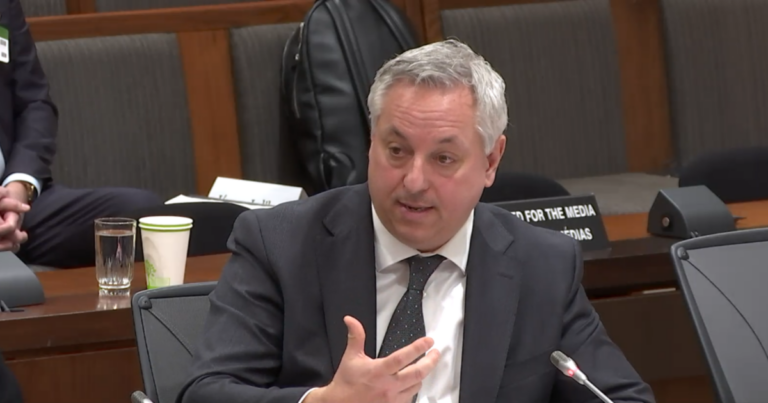
While speaking to the Public Safety Committee about extremism Mar. 21, CSIS director David Vigneault said the intelligence agency was concerned by the Supreme Court’s finding in its Bykovets decision earlier this year that IP addresses were protected under section 8 of the Charter.

“We need to have a national discussion on this, because, as I said, it is at more than just the federal level. From a CSIS point of view, it’s the ability to get access to data. The previous line of questioning regarding the Supreme Court decision on Bykovets is one that we are actively looking at,” Vigneault told MPs. 

“The concern we have is that the proper judicial authorization is required to be able to take those IP addresses so that we can get to the actors and apply the tools that we have. This is a very serious concern.”

True North reached out to CSIS for comment concerning Vigneault’s comments and to ask whether the agency has sought judicial authorization for IPs since the ruling but the agency refused to respond.

The Supreme Court of Canada made the landmark R v. Bykovets ruling on Mar. 1. The case centred around an online fraud scheme involving a liquor store where police contacted a third-party payment processor to obtain the IP address of the suspect, Andrei Bykovets. 

Initial judgments at lower courts found that section 8 of the Charter, which protects Canadians from unreasonable search or seizure and offers “a reasonable expectation of privacy,” did not apply to IP addresses. 

However, the majority Supreme Court judgment, supported by five and opposed by four justices, overturned the Court of Appeal’s decision. 

According to the Supreme Court, Canadians have a reasonable expectation that the privacy of their IP addresses would be respected since section 8 also protects informational privacy. 

“IP addresses play a crucial role in the inherent structure of the Internet. They are the means by which Internet-connected devices both send and receive data. As such, they are the key to unlocking an Internet user’s online activity — the first ‘digital breadcrumbs’ on the user’s cybernetic trail,” the Supreme Court ruled. 

The ruling has broad implications for how intelligence services like CSIS and law enforcement agencies operate, now that they require judicial warrants to obtain IP addresses from third parties.

Group tasked to help with retail gun “buyback” feels like a political “pawn”

Source: Unsplash

The federal government’s mandatory gun “buyback” program is now facing pushback from the association it contracted with for help retrieving firearms from Canadian retailers.

The Canadian Sporting Arms and Ammunition Association was tasked by the Trudeau government to help them in procuring these now prohibited firearms back from retailers, who’ve been saddled with unsellable inventory since the federal government’s order-in-council banning 1,500 types of guns in May 2020.

However, the CSAAA has found the Liberals’ knowledge of firearms limited in scope, adding further complexity to the already difficult task.

Banning “assault-style” guns doesn’t include any one particular model or even several, but instead refers to firearms often built by dealers and owners using any number of various components.

The Liberals initially granted amnesty to the owners of the firearms until spring 2022, but the period was later extended to October 2025 when the so-called buyback hadn’t yet materialized by the deadline.

As the end date of the government’s amnesty nears, pressure is mounting on the CSAAA to draft some kind of blueprint for retailers to meet the deadline. 

True North’s Andrew Lawton hosted CSAAA president Wes Winkel on The Andrew Lawton Show to discuss the situation he finds his organization in. 

The CSAAA is being pulled at both ends from both the Trudeau government and Canadian gun rights activists, he said.

“We’re in a real catch 22,” Winkel told Lawton on Tuesday. “These firearms are not saleable. They are very expensive to insure.”

Winkel said he’s opposed to the gun buyback but felt an obligation to help gun retailers make the best of a bad policy.

“We of course as an association and as business owners want nothing more for this law to be reversed and for us to just sell our inventory again but there is a reality that businesses have to deal with,” he added. “We tried to negotiate the best deal we could inside of a terrible situation.”

Lawton asked if the government has expressed any contrition for just how arbitrary this is and the continued problems it creates for firearms retailers in navigating the ever-moving goalposts regarding which models become prohibited.

“They have not,” replied Winkel, reiterating that much of the problem lies within the legislation. 

“You’re banning a style of firearm, so there’s no mechanical definition for what is prohibited. Therefore it’s an arbitrary decision by a panel of people, making it very difficult for us as an industry to know what is and what is not going to be prohibited.”

According to Winkel the problem of inconsistency is then kicked up the line to the manufacturers themselves who wind up abandoning the Canadian market as a result of its persistent uncertainty. 

“They give up on trying to design guns for the Canadian market,” he said. “It’s been extremely difficult, Canada has been a very frustrating thing for our manufacturers and a lot of them have just given up and turned their back on us as a country because they don’t know how to participate in our market anymore.”

Winkel said that the 2020 order-in-council brought in by then-Minister of Public Safety Bill Blair was a knee-jerk response and that both retailers and government bureaucrats are continuing to pay the price of having to clean up this messy legislation. 

“I actually feel for the bureaucrats in the system that are trying to navigate it afterwards because they get thrown a terrible file and they say, ‘clean this up.’ And it really isn’t that easy to clean up,” he said.

Lawton asked Winkel what political elements were at play in regards to the extended amnesty ending just after the next federal election date, scheduled for Oct. 25, 2025.

While Winkel expects the buyback program will have dealt with the retailers by that point, he thinks that the issue of private citizens who already own the now prohibited models will be an election issue. 

“That is a way more convoluted process in a country as rural as Canada. I don’t believe that process gets going in that time. I think that’s why you see the amnesty getting pushed out past the election,” said Winkel. “It doesn’t take a rocket scientist to figure out that this will probably be an election issue.”

“It’s all political posturing, that’s all it is, we know that as an industry. We’ve been a pawn in the politics game for a long time and it’s frustrating for those of us in business trying to keep people employed and trying to make a living,” said Winkel.The federal government confirmed that it had already spent nearly $42 million in taxpayer funds on the program since first introducing it in 2020, without yet acquiring a single firearm.

Alberta and Saskatchewan defend parental consent for pronoun changes at schools

Source: Unsplash

The Ministers of Justice and Attorneys General of Saskatchewan and Alberta have joined forces to protect parental consent when it comes to pronoun use by children at schools. 

The pair of ministers issued a joint statement on Tuesday, indicating Alberta’s intent to intervene in the Parents’ Bill of Rightscase before the Saskatchewan Court of Appeal.

“Saskatchewan and Alberta agree that the key figures in children’s lives are their parents, and our provinces are both committed to supporting families and children so that they can work through unique needs together,” said the Minister of Justice and Attorney General for Alberta, Mickey Amery, and his counterpart in Saskatchewan, Bronwyn Eyre in their statement.

“Notifying parents and requiring their consent before a child’s name or pronouns can be changed in schools, and before classroom discussions about gender identity and other sensitive subjects occur, ensures that the parent-child relationship is respected and paramount,” added the joint statement.

True North previously covered the enactment of Saskatchewan’s parental rights legislation, which requires that parents be notified when children under the age of 16 choose to go by a different pronoun at school. The bill invoked the notwithstanding clause in response to legal challenges from LGBTQ advocacy organizations, which contested the law’s compatibility with Charter rights.

The Government of Saskatchewan issued a press release after passing the Parent’s Bill of Rights.

“The notwithstanding clause is part of the Constitution of Canada and allows federal and provincial governments to enact legislation that operates notwithstanding certain provisions of the Charter,” read the release.

The University of Regina Pride Centre for Sexuality and Gender Diversity filed an action against the Government of Saskatchewan in August 2023 for the formerly known policy, “Use of Preferred First Name and Pronouns by Students.” 

UR Pride argued that Saskatchewan’s policy infringed on sections 7 and 15 of the Canadian Charter of Rights and Freedoms. 

Justice Michael Megaw of the Court of King’s Bench initially granted the UR Pride public interest standing and halted the policy’s implementation until a final judgment on the constitutional debate is reached.

The case between UR Pride Centre and the Saskatchewan government saw a major shift due to invocation of the notwithstanding clause, altering the original policy UR Pride was challenging. 

UR Pride sought to update its legal challenge to reflect these changes and introduce a claim under section 12 of the Charter. Despite the government’s argument that the court lacked jurisdiction and that the case was moot because of the new law and the notwithstanding clause, Megaw decided on February 16 that the court still had the authority to hear the case. 

Megaw allowed UR Pride’s amendments and postponed decisions on mootness and jurisdiction to a later stage.

“However, I do this without prejudice to the Government of Saskatchewan’s ability to raise this issue again should the circumstances so dictate,” wrote Megaw.

Alberta has written to the Saskatchewan Court of Appeal, indicating the province’s intent to intervene in Saskatchewan’s appeal of the UR Pride decision.

The ministers said that Alberta intends to argue that the application of section 33 of the Charter should have barred the Saskatchewan Court of King’s Bench from reviewing the constitutional validity of the Parent’s Bill of Rights.

“This case has the potential to impact not only parental rights across Canada, but also the application of the Parliamentary Supremacy Clause, which has been an integral piece of the Canadian Charter of Rights and Freedoms and the Constitution of Canada since 1982,” concluded the joint statement. True North previously reported that Danielle Smith banned gender reassignment surgery for minors. This announcement aligned with the trend set by provincial premiers Scott Moe and Blaine Higgs, who had already taken significant steps to confront gender ideology.

The Andrew Lawton Show | Canadian conservatives descend on Ottawa | CSFN Day 1

Source: Canada Strong and Free Network

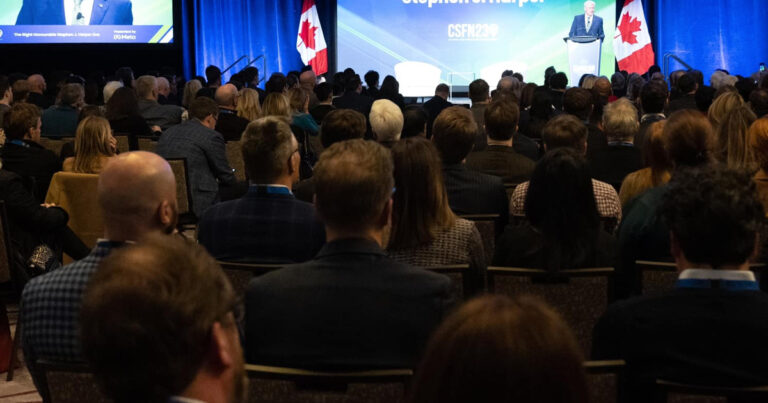
Canada’s flagship conservative conference, hosted by the Canada Strong and Free Network, kicks off today in Ottawa, with a roster of speakers including former British prime minister Boris Johnson, former Australian prime minister Tony Abbott, and Conservative Leader Pierre Poilievre. True North is broadcasting live from the convention all week.

In today’s kickoff episode, True North’s Andrew Lawton speaks to Canada Strong and Free Network president Adam Bolek about the conference theme, “leading with conviction.” Also on the show: Macdonald-Laurier Institute domestic policy director Aaron Wudrick, Durham member of Parliament Jamil Jivani, and filmmaker-turned-Conservative candidate Aaron Gunn.

SUBSCRIBE TO THE ANDREW LAWTON SHOW

Related stories