fbpx
Saturday, October 4, 2025

Alberta’s college of physicians backs out of forcing doctors to refer abortions and assisted suicide

Source: Pixaby

Alberta’s regulatory body for physicians and surgeons has withdrawn a proposal to have doctors refer patients for abortions or assisted suicide following backlash from a prolife political party. 

Last month, Prolife Alberta, a registered provincial political party, asked supporters to submit feedback to the College of Physicians and Surgeons of Alberta’s (CPSA) proposal to implement what’s called effective referral. 

The proposal would have ended the current system of allowing patients to seek an abortion or assisted suicide without an objecting physian’s involvement, said Prolife Alberta executive director Richard Dur.

“It forces (doctors) basically to participate in the evil of abortion or euthanasia,” Dur told True North. “And for many physicians, that’s contrary, of course, to the Hippocratic Oath that they swore and contrary to their beliefs.”

Prolife Alberta drew attention to the issue in a Jan. 5 email to supporters, saying, “if the CPSA has its way, doctors will be forced to violate their conscience or face disciplinary actions or even give up their practice.”

The party urged followers to leave feedback on the CPSA’s website as the regulatory body consulted with regulated members, partner organizations, other healthcare professionals and Albertan residents.

One week later, Prolife Alberta claimed victory as the CPSA announced that effective referral would be removed from the Conscientious Objection standard “based on initial feedback received.” 

“Well, you pushed back and they listened!” Prolife Alberta told supporters on Jan. 12.

Andrea Smith, press secretary for Health Minister Adriana Lagrange, said questions about the policy and its status would best be addressed by the CPSA. 

“Alberta’s government supports maintaining the policy currently in place,” Smith said in an email. 

The CPSA said its current standard on conscientious objection states that a physician is responsible for ensuring timely access to “a regulated member who is willing to provide the medical treatment, service or information, or a resource that will provide accurate information about all available medical options.” 

The college understood effective referral to have the same meaning as the existing standard while maintaining consistency with other jurisdictions in Canada, said CPSA communications advisor Melissa Campbell.

“We heard feedback from physicians, Albertans and other stakeholders very early on that this term was problematic and unclear,” Campbell said in an email to True North. 

“CPSA did not intend to impose any new requirements on physicians that would go against their conscience and we support physicians’ right to conscientious objections.”

The current CPSA standard differs from effective referral because it allows medical professionals to provide information, said Daniel Zekveld, a policy analyst at the Association for Reformed Political Action, which encourages Christians to political action. Left undefined, effective referral can mean much more than simply providing information,  he said. 

For instance, effective referral in Ontario means “taking positive action to ensure the patient is connected to a non-objecting, available, and accessible physician, other health-care professional, or agency,” Zekveld said. 

“So while doctors are not required to provide a procedure they object to, they are required to facilitate that procedure.”

Zekveld said doctors in Ontario have been retiring early or leaving the province due to effective referral requirements, adding, “with an already-strained healthcare system, we can’t afford to lose doctors due to poor policies.” 

Dur agreed that effective referral policies could result in increased doctor shortages. He said some professionals have sought registration in Alberta because of the province’s more reasonable conscience objection standard “which allows you not to have to participate in referring somebody for doctor assisted suicide or an abortion.” 

He also said he expects the issue of “effective referral” will come up again.

“Eternal vigilance — that’s what’s required, as seems always to be the case, on issues of life.” 
Alberta government faces class action for unlawful public health orders

Source: Facebook

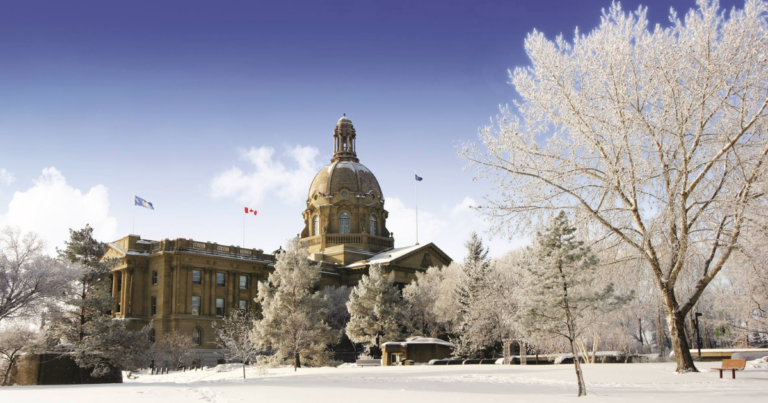
An Alberta law firm is putting the Alberta government on notice with a proposed class action lawsuit representing business owners affected by COVID-19 public health orders.

The proposed suit, filed by Rath & Company, follows the recent Ingram decision, where the Calgary Court of King’s Bench declared several of Alberta’s public health orders to have been unlawfully enacted, setting a precedent for potential financial redress for impacted businesses.

Lead counsel Jeffrey Rath said this proposal marks the first of many procedural and substantive steps. 

“This is an important case about government actions and overreach during a time when business owners were unlawfully mandated to close their businesses at a moment’s notice,” he said. “It will give Albertans the opportunity to hold the Alberta government accountable and seek fair compensation on behalf of the many businesses impacted by Deena Hinshaw’s many unlawful decisions.”

Hinshaw was Alberta’s chief medical officer through the pandemic until she was removed by Premier Danielle Smith in 2022.

The proposed class action lawsuit targets the financial losses for businesses in Alberta that were either fully or partially restricted due to the public health orders during the pandemic. Rebecca Ingram and Chris Scott are lead plaintiffs as business owners who suffered considerable financial losses as a result of these restrictions.

Owner of the Whistle Stop Cafe, Scott was previously accused of disobeying public health restrictions for refusing to close his restaurant at the height of the pandemic. He was acquitted following the Ingram decision, as the Crown no longer deemed Scott’s prosecution as sustainable given the precedent.

The proposed class action is still looking for representative plaintiffs to join. Business owners who were operational in Alberta from 2020 to 2022 and were impacted by the health directives are able to apply to join the class action. 

Rath explained that, if the class action proceeds, everybody affected by the claims at issue will be deemed to be in the lawsuit automatically unless they opt out to pursue legal action on their own.

“Our hope is that this lawsuit brings justice to the affected business owners who suffered significant hardship and losses without justification or consideration by the province’s harsh and unilateral actions,” said Rath. 

For a class action to move forward, court certification is required, a process that usually spans several years. A judge must determine that it is the appropriate legal avenue for the case and confirm that the plaintiff or plaintiffs are genuinely representative of a broader group.

The Alberta government’s lawyers are currently fighting the class certification, said Rath. He added that he didn’t know whether this was a knee-jerk reaction by Alberta government lawyers, or whether it comes from the premier’s office. 

“I think there’s a question of some nice nicety as to whether or not Danielle Smith wants to look all of the people that elected her in the eye and tell them that she does not stand for property rights in the province, and she thinks that people that lost their property and had their businesses destroyed by illegal COVID orders should suck it up and not look to the Alberta government for any relief with regard to actions taken by the Alberta government that were clearly illegal prior to Danielle Smith being elected premier,” said Rath.

Smith’s office did not respond to a request for comment from True North.

Constitutional lawyer John Carpay told True North that Rath’s lawsuit is worthwhile for holding the government to account for its misguided lockdown policies, which severely harmed small businesses in Alberta, some to the point of bankruptcy.

He added that many small business owners do not have the rich pension plans enjoyed by public sector workers, and that the bankruptcy filed by some business owners cost them their entire pension or retirement income. 

“Meanwhile, politicians, teachers, social workers, government employees, and others whose salaries are funded by taxpayers suffered little or no economic losses,” said Carpay, the president of the Justice Centre for Constitutional Freedoms.

The Ingram decision found that the public health orders implemented by Deena Hinshaw were ultra vires, or outside the law, regarding the Public Health Act. 

Carpay said that with public health orders having been declared invalid and illegal, this proposed class action appears to have merit.

“Presumably, the Alberta government will argue that governments should not be held financially liable for public policy decisions, even ones that are later declared to be illegal,” he said. 

During the first case conference on Wednesday, Alberta government lawyers expressed their intent to oppose the class action certification, according to lawyer Eva Chipiuk, who previously represented organizers of the Freedom Convoy before the Public Order Emergency Commission. 

If the plaintiffs win the class action and are awarded damages, the money will come from all taxpayers, perversely including the plaintiffs themselves, said Carpay. 

“How this will affect fiscal policy, in particular the amount paid for salaries of public sector workers, remains to be seen.” 

Off the Record | Make Canada Great Again?

It’s Friday – which means it’s time for another episode of Off the Record with Candice Malcolm, Andrew Lawton and Harrison Faulkner. Kick back, grab a drink and enjoy the show!

This week, Prime Minister Justin Trudeau accused Conservative Leader Pierre Poilievre of wanting to “Make Canada Great Again.” He said it like it was a bad thing – but with so many Canadians struggling right now, maybe that’s exactly what Poilievre is trying to do.

Plus, everybody seems to be upset with Loblaws this week in Ottawa as politicians accuse advisers and staff of being linked to the grocery chain. Forget the fact that taxes and inflation are driving up the cost of food production – it’s all “corporate greed” to the folks in Ottawa.

And NDP MP Charlie Angus wants to jail people who promote the oil and gas sector. Yes, you read that right.

Tune into Off the Record!

World’s largest 5K run erases women’s, men’s records for “trans inclusivity”

The world’s largest community-organized 5,000-metre run has quietly erased records from its website, citing the need to promote gender inclusivity. 

Parkrun’s decision has sparked a wave of backlash from runners online, who are accusing the organization of discriminating against women and erasing records to hide the fact that biological males are claiming top spots on womens’ rankings. 

“Parkrun decision (is) not going down well. CEO Jefferys says it is a health charity, not a race – so are health charities allowed to discriminate against females? I doubt it. Gender self-ID continues so how many males will be running in the (female category) tmrw?” said marathon runner and two-time Olympian Mara Yamauchi on X. 

Parkrun was founded in the U.K. but holds events across the world, including in Canada. There are Parkrun events in Victoria, Vancouver, Toronto, Montreal and other cities across the country. 

In a statement given to the Telegraph, Parkrun spokesperson said that the decision to eliminate records was made to open the organization to as many people as possible. 

“There was a disconnect between the performance data displayed so prominently on the site, and our mission to create opportunities for as many people as possible to take part in parkrun events,” said the spokesperson. 

In a radio interview with BBC, Parkrun CEO Russ Jefferys claimed that there was a misunderstanding behind people’s opposition to the erasure of records. 

“‘The criticism we faced from the Women’s Rights Network and others is down to a total misunderstanding of what Parkrun is. It is not a race. It is not a competitive event,” said Jefferys. 

The Women’s Rights Network argued that Jefferys’ views do not align with a majority of runners.

“For 20 years Parkrun has listed results, publicized fastest finishers, applauded age-group ‘winners.’ Thousands of parkrunners see it as a race and are bitterly disappointed that they will no longer be able to compare their results. If it’s not a race why are there world records?” wrote the Women’s Rights Network.  

“We understand unfairness when we see it. parkrun allows males to self-identify into the female category which has led to males taking female course records and pushing all women parkrunners down the rankings.” 

Parkrun’s stance on the issue does not align with other major running organizations. In 2023, World Athletics placed a ban on transgender athletes from competing in the women’s category. 

Population growth still outpaces employment, despite 37,000 new jobs in January

After three months of Canada’s employment rate remaining stagnant, 37,000 new people were hired last month, driven primarily by an increase in part-time work, according to Statistics Canada. 

The latest labour force survey found that employment went up in Ontario, Newfoundland and Labrador, Manitoba and Nova Scotia. It declined in Saskatchewan. 

The national employment rate dropped by 0.1 percentage points to 61.6%, while population growth rose by 0.4, outpacing employment growth by 0.2%. 

The labour force remained stable for Canadians aged 15 and older but the participation rate fell by 0.2%, bringing it to 65.3%.

The total hours worked last month increased by 1.1%, when compared to January 2023. 

Hourly wages among employees also increased by 5.3% on a year-over-year basis. 

Wage growth was seen highest among high-income earners, particularly with women. 

The average wages for women increased by 6.2% whereas the average wages for men only increased 4.4%.   

Those earning in the top 25% of the wage distribution saw an increase of 5.9%, compared to 4.6% for those earning in the bottom 25%. 

The employment rates for men and women aged 25 to 54 both declined in January due the rate staying consistent, while Canada’s population grew.

Certain sectors of the economy performed better than others, including finance, insurance, real estate, rental, leasing wholesale and retail trade. 

However, sectors like accommodation and food services were hit the hardest in lost employment.

Canada’s economy added 345,000 jobs compared to this time last year, the bulk of which was supported by temporary foreign workers and international students.

The Bank of Canada maintained its key interest rate at 5%, which some economists predict will lead to increased unemployment throughout 2024.   

“I would classify the labour market as tighter-than-expected, but not necessarily stronger-than-expected,” Andrew Grantham, CIBC’s executive director of economics told Yahoo Finance.

“That’s because, yes, employment continued to rise a little bit faster than the consensus expected. But it really paled in comparison with the big increase in population.”

Grantham doubts that CIBC will be changing its forecast on the Bank of Canada’s timeline for the next rate cut, predicting that the central bank won’t be lowering it before June. 

“Today’s data is certainly not going to speed up the timeline for the Bank of Canada,” said Grantham.

The Daily Brief | Bell to cut 9% of workforce, blaming CRTC regs

Bell Media’s parent company is slashing 9% of its workforce, placing much of the blame on a recent decision by the tribunal that regulates and supervises broadcasting and telecommunications in Canada.

Plus, Belleville, Ontario declares a state of emergency after nearly two dozen overdoses in less than 48 hours.

And the government’s housing target is off by 1.5 million houses due to outdated and inaccurate population projects.

Tune into The Daily Brief with Cosmin Dzsurdzsa and Isaac Lamoureux!

SUBSCRIBE TO THE DAILY BRIEF

Quebec City enacts ban on wood-burning stoves, fireplaces in middle of winter

Quebec City residents were barred from using wood-burning stoves and fireplaces for two days as the city implemented a temporary ban due to deteriorating air quality.

“The City of Quebec will prohibit the use of all solid-fuel-burning appliances throughout its territory from 12:00 p.m. on Wednesday, February 7, 2024, until the lifting of this notice,” the municipality said in a post on X.

The city lifted the ban on Friday at6 a.m.

Responding to the city’s post to X, one resident raised his concerns.

“A notice is not a law. The end. Do not comply! Don’t be an accomplice to abuse through ignorance,” wrote the user, in a mix of both official languages.

The city responded to the citizen on its X post.

“The notice stems from a bylaw adopted by Quebec City. Since September 2021, when a smog issue is issued for Quebec City, it is forbidden to use any solid-fuel heating appliance… including all types of fireplaces, even if certified. First-time offenders are liable to a fine of $300 to $1,000.” 

However, according to the Journal de Québec, city spokesperson Jean-Pascal Lavoie said that no fines are to be expected. He said that despite normally charging $300 to $1000 for a first-time offender, city officials are focusing only on raising awareness. 

“Atmospheric and meteorological conditions are conducive to a deterioration in air quality on the territory of Quebec City. As a result, the city has decreed a preventive ban on the use of any solid-fuel-burning appliance, even if certified, in order to limit the emission of fine particles and other pollutants into the air,” said Lavoie.  

People who rely solely on burning wood to heat their homes are exempt from the ban. 

The decision comes as Quebec City’s PM2.5 concentration is 1.9 times higher than the annual air quality guideline value recommended by the WHO. The PM2.5 concentration measurement scale quantifies the concentration of particulate matter less than 2.5 micrometres in diameter in the air, indicating the level of fine particles that can penetrate deep into the lungs and affect human health. 

IQAir measures air quality based on submissions from public contributors.

Canada measured as a whole has a PM2.5 concentration 1.5 times higher than WHO recommendations, as of Thursday. According to IQAir, the city with the worst air quality in the country is Whitehorse, with a PM2.5 concentration 6.1 times higher than WHO recommendations. 

In 2022, Schefferville, Quebec, had the lowest PM2.5 concentration in the country. The current city with the lowest is Campbell River, British Columbia.

Liberals pledge $28 million in CBSA funding to combat auto theft

Port of Montreal

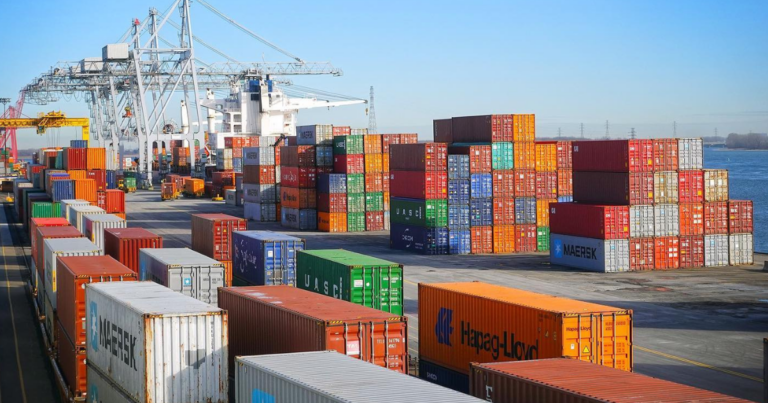
The federal government has committed $28 million to the Canada Border Security Agency to combat the export of stolen vehicles.

The money will allow agents to inspect shipping containers for stolen vehicles, the government said.

The spike in car thefts, an increase of as much as 50% in some provinces, has led to insurance companies raising rates across the board, particularly on models which are popular among thieves.  

The Trudeau government announced the new funding Wednesday on the eve of a national summit on auto theft.

The summit will include not just government officials but law enforcement agents and industry leaders from across Canada. The aim is to spur coast-to-coast collaboration and information sharing. 

The summit may be in response to criticism from opposition MPs, as it comes on the heels of Conservative Leader Pierre Poilievre’s press conference at the federal port in Montreal to discuss the growing crisis of auto thefts. 

“After eight years of Justin Trudeau, car thefts are up 300% in Toronto and 100% in Ottawa and Montreal. Nationally, car thefts are up by more than a third since his Liberal government took office,” said Poilievre on Monday. 

“Canadian cars are being stolen at historically high rates, many of which are being shipped overseas.”

According to estimates from the federal government, about 90,000 cars in Canada are stolen each year, adding a collective $1 billion in costs to Canadians’ insurance policies.  

The majority of these vehicles are then shipped overseas to countries in Africa or the Middle East via ports in Montreal, Vancouver, Prince Rupert and Halifax.  

The vehicles that remain in Canada are either stripped for parts or used to commit other crimes. 

The auto theft crisis in Canada “increasingly involves organized crime groups, and the proceeds of these thefts are used to fund other illegal activities,” announced the government on Wednesday, according to CP24. “There is no single solution to this complex problem.”

Poilievre said during his press conference on the issue that he would cut the Liberals’ use of consultants and put the money towards more “boots on the ground” CBSA officers to inspect port shipping containers. 

“The consultants are making off like bandits,” said Poilievre. “Trudeau is spending $15 million dollars a year just on CBSA management consultants alone.”

“If you want to drive a truck, you need to know how to drive. If you want to be a barber, you need to know how to cut hair. If you want to be a manager, you need to know how to manage. And if you don’t know how to manage, I’m going to fire you.”

Additionally, Poilievre said more money should be invested in purchasing X-ray scanners at the port which could expedite the search process.

Liberals say sexually explicit “deepfakes” will be included in Online Harms bill

“Deepfakes” will be targeted in the Liberal government’s planned online harms bill.

The government’s announcement comes in response to sexual images of pop singer Taylor Swift, created with artificial intelligence, being disseminated online.  

The bill, which was promised in 2021 but has been delayed for some time, would establish new regulations of what would be deemed permissible internet content. 

The Trudeau government announced that posting non-consensual intimate images would be prohibited under the proposed legislation, which could also tackle misinformation and so-called hate speech. 

It has yet to be determined if AI-created videos could be included under the existing definition of such images under Canada’s current Criminal Code. 

“Keeping our kids and young people safe online is a legislative priority for our government — especially given the evolving capabilities of AI,” said Justice Minister Arif Virani in a statement to the Montreal Gazette.

Virani said deepfakes can “exacerbate forms of online exploitation, harassment and cyberbullying.”

The term deepfake refers to incredibly realistic-looking video simulations that depict celebrities, politicians or any public figure using their likeness and voice. 

Sexual deepfakes include nude or pornographic content, which may mean they could fall under the Protection of Communities and Exploited Persons Act, which came into effect in 2014. 

The act “seeks to protect the dignity and equality of all Canadians by denouncing and prohibiting the purchase of sexual services, the exploitation of the prostitution of others, the development of economic interests in the sexual exploitation of others and the institutionalization of prostitution through commercial enterprises, such as strip clubs, massage parlours and escort agencies that offer sexual services for sale,” according to the Government of Canada website.

One Conservative MP said it’s important to protect not just celebrities from these sorts of depictions, but also ordinary people.

“The Taylor Swift example is a high-profile case, but there are examples in Canada of women facing this already — women that do not have the resources that Taylor Swift has,” Conservative MP Michelle Rempel Garner told the Montreal Gazette.

She pointed to a case of underage female students in Winnipeg who had AI-generated images of them circulating online last year. 

While Canada’s Criminal Code does have existing laws that deal with the distribution of intimate images currently, these do not specify altered or AI-generated images.

While provinces deal with these issues through civil resolution tribunals, where victims can apply to have the photos removed and can potentially be paid compensation, at the national level, there is no clear law stated on the matter as the laws predate the invention of deepfakes. 

According to former CRTC vice-chair Peter Menzies, passing an amendment to the existing criminal law would be an easier way to address the problem, as opposed to bringing in new legislation.

“I think you should always take the fastest, most efficient route to a solution if it’s available, and I see this one as readily available,” said Menzies in the Montreal Gazette article. “You probably only have to change about four or five words.”

“I would not like to see this become something that’s used for political purposes.”

OP-ED: Selina Robinson’s ousting shows the first casualty of war is truth

Toronto Holocaust Museum - Source: Facebook

“In war, the first casualty is truth.”

The famous aphorism attributed to the ancient Greek dramatist Aeschylus applies to British Columbia, where, obscured by political correctness, a war with truth has just been fought.

As usual these days, truth lost.

In a Jan. 30 Zoom panel discussion, NDP politician Selina Robinson, the highest ranking Jewish office holder in B.C., claimed 18- to 34-year-olds “have no idea about the Holocaust, they don’t even think it happened,” adding that Israel was offered to Jews who were misplaced and displaced from their homes:

“They don’t understand that it was a crappy piece of land with nothing on it. You know, there were several hundred thousand people but other than that, it didn’t produce an economy. It couldn’t grow things it didn’t have anything on it.”

Immediately, the long knives were unsheathed and pointed at Robinson by Middle East activists and her former leftist political allies.                                                                                                 

And so, B.C. Premier David Eby orchestrated the Feb. 5 resignation of Robinson from her post as minister of post-secondary education, proof that when cornered, politicians generally eat their young.

Robinson’s remarks have been called horrific, flippant, disrespectful, racist, and hurtful.

But none of these slurs prove her poorly articulated statement distorted the truth, let alone constituted blatant lies. Since Robinson repudiated the form rather than the content of her remarks, it’s worth reviewing whether they have any historical accuracy.

For centuries before Zionist-inspired immigration to what’s now Israel began in 1882, Palestine was a sparsely populated, poorly cultivated, and widely-neglected expanse of eroded hills, sandy deserts and malarial marshes.

When Mark Twain visited in 1867, for example, he described it as: a “desolate country whose soil is rich enough, but is given over wholly to weeds — a silent mournful expanse.”

“A desolation is here that not even imagination can grace with the pomp of life and action… We never saw a human being on the whole route… There was hardly a tree or a shrub anywhere. Even the olive and the cactus, those fast friends of the worthless soil, had almost deserted the country.”

This sounds very much like “a crappy piece of land with nothing on it.”

Around the same time, Lewis French, the British director of development, wrote of Palestine: “We found it inhabited by fellahin (agricultural workers and landless peasant farmers) who lived in mud hovels and suffered severely from the prevalent malaria.”

“Large areas … were uncultivated… The fellahin, if not themselves cattle thieves, were always ready to harbor these and other criminals. The individual plots … changed hands annually. There was little public security, and the fellahin’s lot was an alternation of pillage and blackmail by their neighbors, the Bedouin.”

This sounds like a region mired in crime and poverty.

The rise of antisemitism and Nazism in Germany saw a dramatic increase in aliyahs (return of Zionism-motivated Jews to their ancestral homeland) between 1932 and 1939 alone, Palestine absorbed 247,000 newcomers, nearly half of all Jewish emigration from Europe, a clue to the ability of the area to absorb this number of new people.

The Jewish population increased by 470,000 between the First World War and Second World War, while the non-Jewish population rose by 588,000. In fact, the permanent Arab population increased by 120% between 1922 and 1947 to more than 1.3 million, thanks largely to the effects of Jewish immigration.

The Arab population also grew because of the improved living conditions created by the Jews as they drained malarial swamps and brought improved sanitation and health care to the region. For example, the Muslim infant mortality rate fell from 201 per thousand in 1925 to 94 per thousand in 1945, and life expectancy rose from 37 years in 1926 to 49 in 1943.

Overall, on the eve of Israel’s statehood in 1948, the Arab residents of the West Bank and Gaza were better off than they had ever been in the millennia-long history of the region.

All this quickly changed. The violent rejection of Israeli independence by neighbouring Arab countries saw 10 wars against the Jewish state, including the one started on October 7.

Unfortunately, none of this history matters because, as Aeschylus said, truth is always the first casualty of war. 

What Robinson’s removal suggests, apart from the double standard always applied to Jewish issues, is when as far as the Palestine cause is concerned, only the disregard of factual evidence, blind social justice, and the callous disposal of colleagues can save politicians, especially so-called progressive ones, from the same unhappy fate.

Hymie Rubenstein, a retired professor of anthropology, the University of Manitoba, is editor of REAL Israel & Palestine Report and REAL Indigenous Report.

Related stories