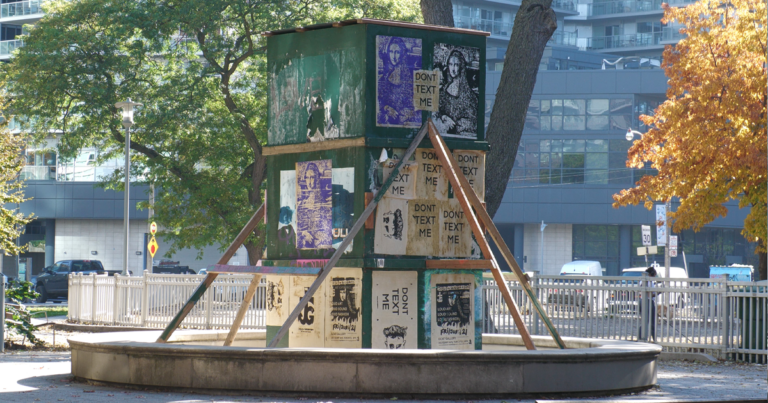
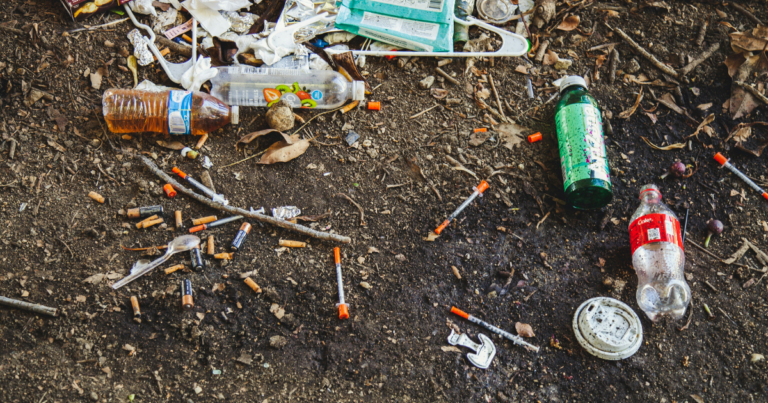
For two years an encampment has taken over what was once a beautiful family-friendly park in the Entertainment District of downtown Toronto.
Residents are absolutely fed up. At a media conference Tuesday, they begged to be heard by their tone-deaf councillor Ausma Malik and Toronto’s socialist mayor Olivia Chow, who so far have ignored their pleas to have it cleared.
Residents told True North that the squatters in this park — where fires, violent incidents, feces, fights and vandalism are rampant — have been permitted to remain. To make matters worse, under Toronto council’s Homeless Encampment Strategy — which has declared that enforcement is a last resort — the city has sent in a phalanx of social workers and security who hold court out in a shed built for them.
This is yet another example of a city that is deteriorating rapidly under the “leadership” of socialists and progressives.
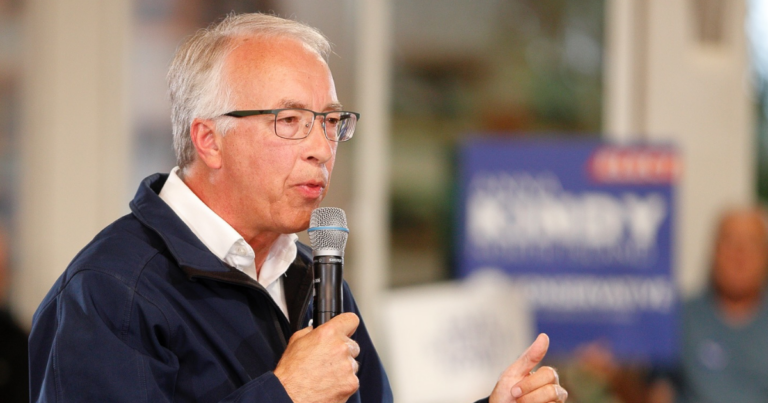
As British Columbians await the final provincial election vote count, BC Conservative Leader John Rustad challenged a CBC host for doubting the presence of pornography in schools as well as fears over rising crime.
Plus, the Liberal government announced a series of changes to the Temporary Foreign Workers program hoping to encourage businesses to hire more Canadian workers.
And Canada dropped in ranking when it comes to tax competitiveness among OECD nations.
Tune into The Daily Brief with Cosmin Dzsurdzsa and Clayton DeMaine!
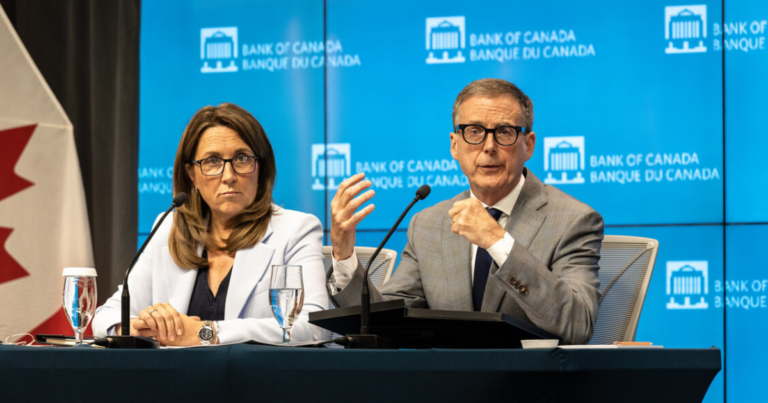
The Bank of Canada reduced its key interest rate to 3.75%, with the Bank Rate dropping to 4% and the deposit rate to 3.75%.
The Bank of Canada’s Governing Council decided to reduce its policy rate by 50 basis points in response to inflation now returning to near the 2% target to help aid economic growth and maintain inflation within the 1% to 3% range.
Consumer Price Index inflation saw a significant drop from 2.7% in June to 1.6% last month.
“We took a bigger step today because inflation is now back to the 2 per cent target and we want to keep it close to the target,” Governor of the Bank of Canada Tiff Macklem said in a statement.
Macklem indicated that the central bank’s focus is now “to maintain low, stable inflation.”
The central bank said it expects the global economy to expand at a rate of about 3% over the next two years.
“Growth in the United States is now expected to be stronger than previously forecast while the outlook for China remains subdued. Growth in the euro area has been soft but should recover modestly next year,” wrote the Bank of Canada in a statement released on Wednesday.
According to the central bank, Canada’s economy grew at around 2% in the first half of this year and it expects further growth of 1.75% in the second half.
While the interest cut is good news for many Canadians, the labour market remains weak, with the unemployment rate at 6.5% last month.
“Population growth has continued to expand the labour force while hiring has been modest. This has particularly affected young people and newcomers to Canada. Wage growth remains elevated relative to productivity growth. Overall, the economy continues to be in excess supply,” the central bank said.
The central bank forecasts an overall GDP growth of 1.2% this year and 2.1% in 2025, followed by an uptick of 2.3% in 2026..
The prices of many goods and services have started to drop in price as a result of excess supply elsewhere in the economy. However, , shelter costs remain elevated.
The Bank of Canada said that if the pressure of shelter and other services continue on their path of gradual decline, it expects “to reduce the policy rate further.”
The next scheduled date for announcing the overnight rate target is December 11, 2024 and the central bank will publish its next full outlook for the economy and inflation on January 29, 2025.
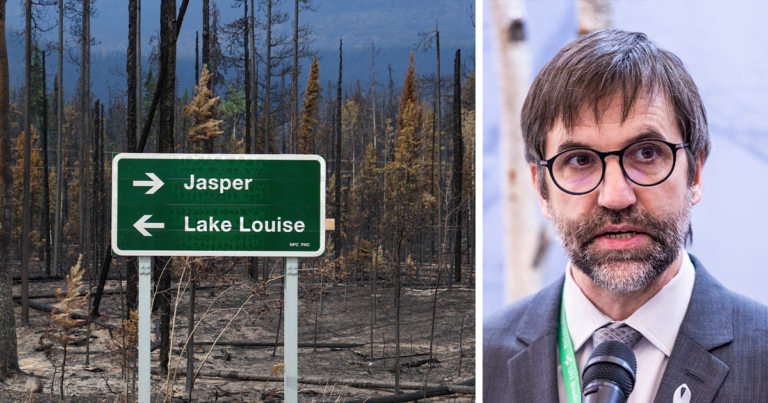
The Liberal government is rolling out a formal Indigenous apology tour at national parks across Canada beginning with the wildfire-ravaged Jasper National Park.
As part of its nationwide initiative to redress what the Liberals call Parks Canada’s history of “colonial policies,” a total of 27 national parks have been flagged for formal place-based apologies.
Jasper National Park was supposed to be the first heritage site to issue such an apology coinciding with the opening of the new Jasper Indigenous Exhibit, an outdoor interpretive display near the Jasper Information Centre on Sept. 7 and 8, 2024.
However, the exhibit’s grand opening event was delayed by the devastating 2024 Jasper wildfire which ravaged 30% of the town, causing $880 million in insurance damage and burning an estimated 32,722 hectares of land.
Although the exhibit was untouched by the fire, Parks Canada had shut down the site until further notice.
Documents obtained by True North via an access to information request show that Parks Canada is preparing “place-based apologies” for each site where its past actions have affected Indigenous peoples.
The documents show that the department under the direction of Environment and Parks Minister Steven Guilbeault remains committed to the apology campaign, with dozens of parks, including Banff National Park, Pacific Rim National Park Reserve, and Cape Breton Highlands National Park, identified as future sites for apologies.
True North contacted Parks Canada for clarification but did not receive a response by the deadline.
A February 7, 2024, document titled “Parks Canada Guidance: Place-based Apologies and Redress” underscores the Liberal government’s rationale behind the initiative.
“Parks Canada and its predecessor organizations have had a long history of employing colonial policies and practices to establish protected heritage places with varying consequences for Indigenous peoples,” the document states.
This apology initiative is part of the Liberal government’s broader action plan to implement the United Nations Declaration on the Rights of Indigenous Peoples, specifically Action Plan Measure 110.
This measure calls for coordinated acknowledgements, apologies and actions in response to the supposed historic harms caused by the establishment and operation of heritage sites administered by Parks Canada.
As part of the UNDRIP Act, Parks Canada is mandated to co-develop site-specific apologies with Indigenous nations, and the agency has even committed to further implementing redress-related actions.
Ottawa held a ceremony to honour the 10th anniversary of the terrorist attack on Parliament Hill on Tuesday as well as a moment of silence in the House of Commons.
MPs observed a moment of silence in the House in remembrance of the 10th anniversary of the attack on Parliament Hill. pic.twitter.com/EfsCLeamOe
The attack left a young reservist dead and happened only days after a warrant officer was killed in Quebec.
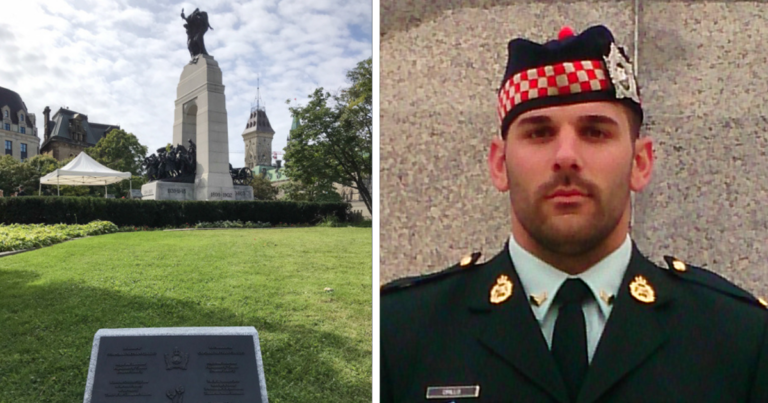
Cpl. Nathan Cirillo was shot to death on Oct. 22, 2014 at the age of 24 while guarding the Tomb of the Unknown Soldier on Parliament Hill. He was a member of the Argyll and Sutherland Highlanders.
He was murdered by Michael Zehaf-Bibeau, a terrorist who also shot at Cpl. Branden Stevenson, who was a long-time close friend who was also guarding the site with Cirillo that morning.
Zehaf-Bibeau injured several others before storming inside Parliament Hill’s Centre Block, firing off dozens of rounds before he was eventually gunned down by Sergeant-at-Arms Kevin Vickers and six other RCMP officers.
The attack happened in the Hall of Honour when MPs were in surrounding committee rooms holding their weekly caucus meetings.
Former prime minister Stephen Harper and MPs were forced into lockdown for hours and the attack saw Ottawa’s downtown core completely shut down.
“I can’t believe it’s been 10 years. It felt like it was yesterday,” said Ephraim Cirillo, Nathan’s cousin, following a private family ceremony at the National War Memorial.
“It was tough just knowing that my best friend was beside (Nathan) as well,” he said, adding that “it was nice to know that Nathan had Branden to comfort him in his final breaths.”
Prime Minister Justin Trudeau said in a statement saying that on the day, “Canadians saw terrifying pictures and videos of an attack on Parliament Hill. But there is one image from that day I remember clearly: people protecting one another as we took shelter wherever we were. I remember that, in the days that followed, political debate was subsumed by collegial support. And above all, we all remember the service and the sacrifice of those who stood guard, and those who rushed toward danger to save lives.”
Conservative Leader Pierre Poilievre also issued a statement on Tuesday to express his respect for the sacrifices made during the two attacks.
Ten years ago, vicious terrorists killed Corporal Nathan Cirillo at the National War Memorial, attacked Parliament Hill, and killed Warrant Officer Patrice Vincent in Saint-Jean-sur-Richelieu.
Both men were murdered for the uniform they wore and for standing on guard for our… pic.twitter.com/RHKitIuK8O
“Both men were murdered for the uniform they wore and for standing on guard for our nation. Today, as we did a decade ago, Canada mourns their loss, and we honour their memories and the sacrifice they paid defending our country.”
Ephraim Cirillo said he wants people to remember the bravery exhibited by his cousin and the love Nathan had for his family.
“He was brave, he was a leader, he was an amazing human being … I wish he could still be here today,” he said.
The Liberals have implemented changes to the Temporary Foreign Worker Program to further emphasize hiring domestic workers over prioritizing foreigners.
Employment Minister Randy Boissonnault announced new measures for the Temporary Foreign Worker Program on Monday, aiming to boost domestic hiring by raising the minimum wage threshold for high-wage positions.
The change requiring employers to pay at least 20% above the provincial median to qualify for the high-wage stream under the program will take effect on Nov. 8, 2024.
Boissonnault described the reform as a step toward protecting Canadian workers.
“This change to the Temporary Foreign Worker Program reinforces our commitment to protecting temporary foreign workers, while prioritizing the Canadian workers available to join the labour force,” he said. “By raising the threshold for high-wage stream positions, we are supporting wage growth for Canadians.”
The current program requires employers to pay at least the median hourly wage in their province to secure a Labour Market Impact Assessment to hire temporary foreign workers. The upcoming increase will range from $5 to $8 above existing provincial wage rates. In Ontario, for example, the threshold will rise from $28.39 to $34.07 per hour.
The Liberals said that the changes would result in up to 34,000 jobs moving from the high-wage to the stricter rules of the low-wage stream, which could result in around 20,000 fewer positions being approved through the program.
The low-wage stream includes additional employer requirements related to housing, transportation, and recruitment of workers already in Canada.
The changes also include ending the use of attestations from accountants or lawyers to verify business legitimacy, effective Oct. 28, 2024. Instead, the government will rely more on existing information-sharing agreements with provincial and territorial partners to verify employer claims.
“These measures will help to ensure that only genuine and legitimate job offers are approved, helping prevent misuse of the program and ensuring stronger worker protection,” reads the release.
The federal government’s reduction in targets for temporary foreign workers came following the UN warning that foreign workers were subject to “contemporary slavery” in Canada.
The Temporary Foreign Worker Program has faced criticism for its role in driving up housing costs and increasing the cost of living, as temporary workers contribute to Canada’s growing population.
According to government data from Immigration, Refugees, and Citizenship Canada, the country issued 692,760 work permits between Jan. 1, 2023, and Aug. 31, 2023, compared to about 274,690 over the same period in 2022, a 152% increase.
The federal government has recently imposed other restrictions, including capping the number of low-wage foreign workers at 10% of a company’s workforce, which can rise to 20% for “high-demand sectors,” and freezing LMIA applications in regions with an unemployment rate of 6% or higher.
The federal government said they hope to help under-represented groups in the country’s labour market, such as reducing the youth unemployment rate of 13.5% — more than double the national average of 6.5%.
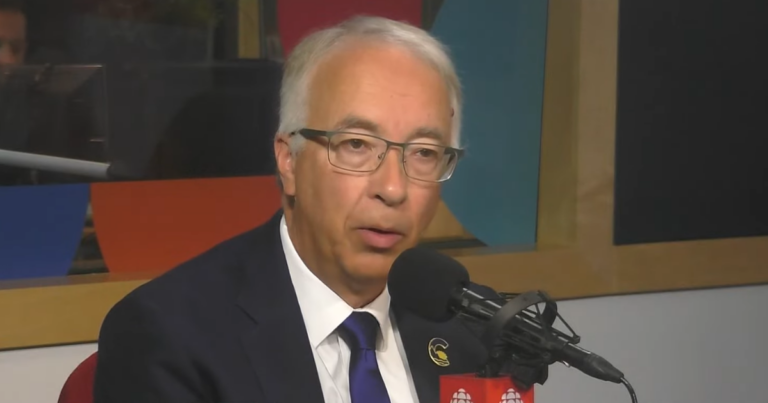
As British Columbians await the final provincial election vote count, BC Conservative Leader John Rustad challenged a CBC host for doubting the presence of pornography in schools as well as fears over rising crime.
During a post-election interview with CBC News’ The Early Edition host Stephen Quinn, Rustad attributed his party’s success to British Columbians’ desire for change.
“Whether it was the drugs and crime problems, whether it was SOGI in our schools, there’s a lot of things that were driving people that wanted to see change,” Rustad said.
SOGI refers to the Sexual Orientation and Gender Identity curriculum introduced in BC schools by the province’s NDP government.
Quinn pushed back against the BC Conservative leader, claiming that bringing up crime and SOGI were just ways to scare the public into voting for his party. Rustad said parents and British Columbians were already concerned about their kids and safety without him needing to highlight the issues.
“When you look at also, quite frankly, the pornography that is in our Schools, that’s a question, I think, that the electorate as looks at and says they don’t find that acceptable,” Rustad said.
In response, the CBC host asserted that there was “no pornography in the SOGI program.” Still, after pushback from Rustad who told Quinn to show the books that have raised concerns from the community on their program to let the viewers decide, Quinn admitted that the books were made available in the schools but not part of the curriculum.
“They came from the SOGI initiative, which is not a curriculum. It is a philosophy that has been brought in schools,” Rustad said.
Several books in BC schools have been flagged by activist groups such as Action 4 Canada as inappropriate for the ages that the books advertise due to sexually explicit content or pornographic materials.
One such book available in three elementary schools in Richmond B.C. titled, “It’s Perfectly Normal: changing bodies, growing up, sex, gender and sexual health” instructs readers on how to perform gay and straight sex masturbation and how such activities make people feel good and “sexy.” The book shows pornographic cartoons depicting different kinds of sex, including two males engaging in anal sex and males and females masturbating.
K.L.O Middle School in Kelowna, B.C. made the graphic novel book “Fun Home: A family Tragicicomedy” available to its students. The book features cartoon depictions of two females engaging in sex and clear depictions of same-sex oral sex between the females.
The book “Sex is a Funny Word” was also available in 38 B.C. elementary schools. The book describes genitalia getting erections and mentions erections being caused when readers “touch themselves to feel good.”
Other books flagged by AC4 in secondary schools included instructions of how two males could pleasure each other, descriptions of incestuous rape involving children, an author’s experiences with gay oral and anal sex, depictions of oral sex including with a strap-on, and a depiction of a man appearing to touch a male child’s genitals in an ancient greek style of artwork.
In October last year, BC Conservative MLA Bruce Banman was told by the Speaker of the Legislative Assembly of British Columbia to “not use that kind of language” after he read a vulgar excerpt from the book “Eleanor & Park,” which he said was made available to children as young as 11 in Abbotsford, BC schools.
If he can't read a passage from a sexually explicit book being made available by @AbbotsfordSD to sixth graders on the public record, why can it be accessed by kids? pic.twitter.com/EnTHxNxMX4
The Chilliwack RCMP were alerted to some of the books and determined that the books do not “constitute” child pornography or a criminal offence.
Rustad and Quinn also fought over the perception of rising crime in B.C. under the NDP government. Rustad noted the concerns of B.C. residents over rampant drug use, the proliferation of tent cities in Vancouver and people feeling unsafe in downtown areas.
Quinn noted a recent report from the Vancouver Police Department in September, which said that year-to-date overall crime statistics have dropped by 7.4%. However, Rustad rebuked by saying that due to the widespread prevalence of crime, police no longer pursue charges in many cases.
According to VPD stats available online, 5297 violent crimes were reported in the city in 2018. Compared to stats from 2023, 6256 violent crimes were reported in the city, a rise of 18.1% since the BC NDP took office in May 2017. 4910 assaults were reported in 2023, while that number was 4039 in 2018, An approximate 21.6% rise in assaults.
A VPD representative could not share stats on unprovoked stranger attacks with True North beyond the last three years when the VPD began manually reviewing samples of cases from each year.
Today on the Rachel Parker Show, Rachel Parker is joined by B.C. Conservative executive director Angelo Isidorou to discuss the B.C. election.
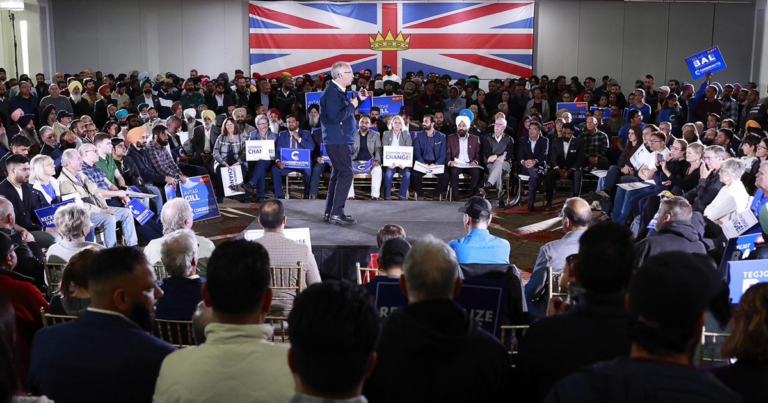
With the NDP currently pulling ahead by one seat, the final results won’t be known till Saturday — one week after the election. That’s because two ridings were decided by less than one hundred votes and will undergo an automatic recount. Elections B.C. must also verify 49,000 absentee and mail-in ballots.
Isidorou says the Conservatives are optimistic and will seek to work with the Greens – who currently hold two seats – to form government.
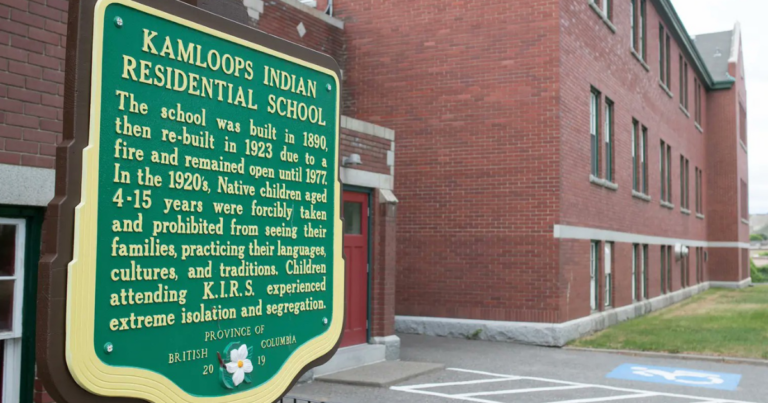
Two B.C. Lawyers were smeared as racists and genocide deniers by the BC First Nations Justice Council after they noticed that mandatory Indigenous sensitivity training material was false regarding the claims of unmarked graves at the sights of former Indian residential schools. Jim Heller and Mark Berry attempted to correct the material by passing a motion at the AGM of the BC Law Society but were shouted down and attacked for daring to speak up for the truth.
Jim Heller joins the Faulkner Show to discuss the reaction to his motion.
The narrative that criminalizing drugs is rooted in racism has been flipped on its head, according to a recent poll conducted in British Columbia with fewer minorities thinking that treating drug use as a crime was racist than their white counterparts.
Mainstreet Research conducted a survey in B.C. last month for the Centre For Responsible Drug Policy and the MacDonald-Laurier Institute asking residents three questions, one of which was “Do you agree or disagree that criminalizing drugs is racist?”
Of the more than 12,000 British Columbians who participated, Indigenous respondents were the most likely to disagree that such a policy was racist, according to the poll’s preliminary findings.
The Drugs and Racial Justice Report has thus far arrived at the opposite conclusion claimed by harm reduction activists and many public health officials as non-white British Columbians overwhelmingly don’t perceive the criminalization of drugs to be racially motivated.
Only 26% of non-white respondents agreed that drug criminalization is racist, compared to the 55% who disagreed.
Non-white respondents were more divided among those who somewhat agreed or disagreed, however, the number of respondents who strongly disagreed was nearly three times higher than those who strongly disagreed at 43% and 15%, respectively.
Such figures suggest that respondents who felt that criminalization is not racist were far more adamant in their beliefs than the other cohort.
On the other hand, South and East Asian respondents were more likely than any other minority groups to believe that drug criminalization is racist, however, a moderate majority still disagreed with this narrative.
Those conducting the poll acknowledged that the margins of error for this poll make the results somewhat inconclusive as it is not yet complete.
However, the insights which can be gleaned for now are that First Nations respondents have the most cohesive stance on the issue, with 68% saying they disagreed that drug criminalization is racist.
Furthermore, the overwhelming majority of First Nations residents in B.C. don’t think that legalizing drugs is essential to racial justice or reconciliation.
The findings directly contradict a recent report published by the province’s Health Officer Dr. Bonnie Henry which called for full drug legalization and cited reconciliation as a motivating factor.
The report also claimed that prohibition is “based on a history of racism, white supremacy, paternalism, colonialism, classism and human rights violations.”
The Health Canada Expert Task Force on Substance Use released a report in 2021 that made similar claims.
However, the preliminary Drugs and Racial Justice Report data reveals that B.C.’s minority communities generally speaking, and First Nations in particular, are being ignored by addiction policy-makers.