“It’s time to get loud:” Pro-life groups gear up for the battle of ideas

Armed with information, pro-life advocates in Ontario left an educational conference over the weekend with renewed determination and passion.

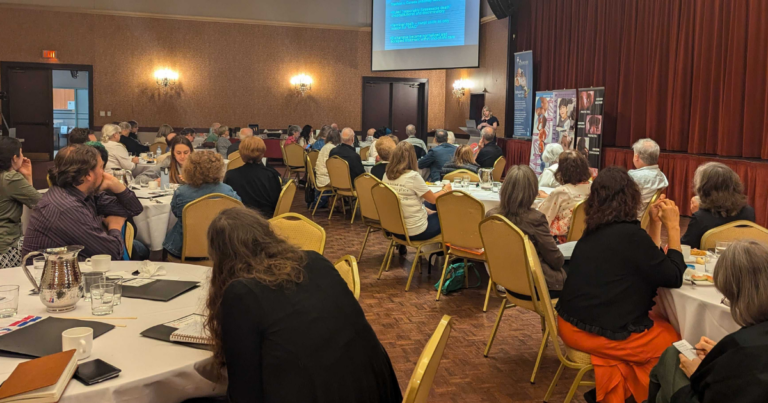
The Alliance for Life Ontario hosted its 34th annual conference Saturday in Mississauga, Ont. to rally local, provincial and national pro-life groups and equip them with new information for their fight against abortion and euthanasia.

“It’s time to get loud,” one pro-life activist told True North at the event.

AFLO featured author and researcher David Reardon, who discussed a recent study he conducted which found that 60% of Canadian women who have had abortions felt pressured into doing so. He said his findings challenge the narrative about abortions being a woman’s choice.

Another speaker informed attendees about censorship of their movement and how to use the Charter of Rights and Freedoms to fight back. Others focused on issues they had with euthanasia through Canada’s medical assistance in dying program.

Source: Clayton DeMaine

“I think it’s very important to continuously educate yourself. I think there are some people in the pro-life movement who think ‘abortion is bad. Euthanasia is bad. I already know that. I don’t need to come to these conferences.’ But new information comes out all the time. New horrors present themselves.” said Josie Luetke, the director of education and advocacy for Campaign Life Coalition. “It’s important to be able to learn about them so that you can respond.”

Campaign Life Coalition is a national organization which lobbies all levels of government to protect life in the womb and beyond.

Luetke, who’s been involved in the pro-life movement for over a decade, said conferences like this are critical to prepare pro-life activists for their mission of persuading the public.

“The more times you hear it, the more time it sinks in, and when people confront you with an argument. Hopefully, it comes to the surface quicker because you just heard about it a couple of weeks ago,” she said. 

“If you haven’t been involved in the pro-life movement, these are literally life and death issues. They affect so many people.”

Luetke stressed the importance of local pro-life groups for the movement.

Source: Clayton DeMaine

“Your local right-to-life group needs your help. Whatever time you can spare, whatever small donation,” she said. “We at Campaign Life Coalition are a national group, but we need local groups working, (local groups) can have those relationships, and you can pay attention to what your municipal council is doing in a way that a national group can’t.”

She said AFLO plays an invaluable role in supporting local pro-life groups through education and its annual conferences.

Gregory Tomchyshyn, a representative for CitizenGo, a “pro-life, pro-family, pro-freedom” online activist group, said he went to the event to keep himself up to date with the latest pro-life information.

He said it’s important for pro-life groups to seek common ground with people who are less likely to agree with their message.

“If you don’t have a common place to start it’s just people shouting at each other and no one’s gonna be receptive to either position or viewpoint,” he said.

Canadian veteran Kelsi Sheren, who spoke out against assisted suicide at the conference, said the event was all about education and helping people realize there’s a community that wants positive change and has the will to achieve it.

“I want Canadians to realize that you can 100% Make a change individually. But you have to actually take the risk and stand up and speak,” Sheren said. “There’s always going to be someone standing in your way, but you have to be willing to go outside of them and do the hard thing.”

Source: Clayton DeMaine

Her comments were echoed by one attendee, Carolynne O’Neil, who said she felt encouraged rather than dejected after listening to the speakers.

“We have to stand up every single minute. We don’t just do it on a Saturday afternoon. We don’t do it once a year. We do it every single day,” she said. “And if we don’t, there’s going to be worse things happening. Sometimes. It just takes one person and if you can be that one person to take a stand…you will see other people standing up too.”


Developers say they’ll have to sell homes at a loss if Ontario housing plan moves forward 

The Ontario government’s strategy to build more affordable housing is facing backlash from some developers who say they would have to sell houses at a loss to qualify for rebates. 

The Ford government released its definitions of what constitutes affordable housing earlier this month. Prices were set for every municipality across the province, broken down by location and housing type.

The prices outlined are what developers would be required to sell at to receive refunds on certain taxes and fees from the Ontario government.  

For example, a detached house in Toronto would have to be sold at $365,000 to qualify as an affordable home, in Ottawa that same house would have to sell at $438,300 and $434,800 in Mississauga. 

Selling higher than the government-set price would result in being excluded from rebates on certain development fees. 

However, some developers argue that the government’s approach is misguided and that the root of the problem is ignored by this strategy.  

“The fundamental error being committed by the province is in not understanding that housing is made affordable over time through depreciation and filtering,“ real estate developer Chris Spoke told True North.

“Just as we don’t expect new cars to be the most affordable, neither should expect new housing to be the most affordable.”

There is also the issue of asking developers to sell low at a time of high interest rates and ballooning inflation. 

The Building and Industry and Land Development Association released a report in March detailing the significant impact inflation has had on the construction industry in recent years.

“Since 2019, there has been significant inflation to the cost of construction due to increasing labour and material costs. Between Q1 2019 and Q1 2023 construction costs for a typical single family home have increased by 85% and by 64% for high rise apartments,” reads the report. 

For example, the government set the affordable price for a detached house in Vaughan at $531,000, however, the average price of land for a single-family home is $482,527.

The average construction costs are estimated at $495,000, with municipal fees around $168,375. 

On top of that, there are the federal and provincial taxes, which come to $139,823, and finally, the land transfer tax which is around $25,000.

According to BILD’s calculations, the average total cost would come to just over $1.3 million on a home that would have to be sold at $531,000 to receive rebates. 

Spoke said that now is not the time for any government directive that will disincentivize Ontario developers from constructing new builds. 

“We need to build much more new housing to increase the stock of second-hand, third-hand, fourth-hand, and so on, housing—that is, older stock that is relatively more affordable,” said Spoke.

“Any measure that leads to there being less new housing as opposed to more is contrary to the goal of affordability.”

LAWTON: On C2C: Is Canada too soft on espionage?

A two-part series chronicles a recent Canadian intelligence scandal involving two scientists who were caught acting on behalf of China when transferring deadly virus samples and intellectual property from Canada’s National Microbiology Laboratory to Chinese institutions. Series author Peter Shawn Taylor joined True North’s Andrew Lawton to discuss the leniency given to these scientists and whether Canada should adopt a tougher stance on espionage activities.

Part one of the series, “The Scientists Who Came in From the Cold: Canada’s National Microbiology Laboratory Scandal,” can be read in full here.

B.C.’s new minimum wage and protections for gig workers a country-first

British Columbia has become the first province in Canada to establish a minimum wage and additional protections for gig workers employed by app-based companies like Uber, DoorDash, Skip the Dishes, and Lyft. 

Starting September 3, these workers will be guaranteed a minimum wage of $20.88 per hour during “engaged time,” the period from accepting an assignment to its completion. This pay rate is 20% higher than B.C.’s general minimum wage of $17.40 per hour, which the province said is to account for the time spent waiting between assignments. Like the minimum wage, the rate will increase annually based on inflation. 

The new regulations, announced Wednesday, target ride-hailing and delivery workers who accept assignments through third-party apps. Other types of gig workers, such as freelance writers, musicians, or dog walkers, are not included in these new regulations. 

“Too many workers in this industry are putting in long hours and being paid less than the minimum wage,” said Parliamentary Secretary for Labour Janet Routledge. “At the end of a shift, after paying their vehicle expenses, these workers are barely ahead of where they started. The new protections are going to change that.”

British Columbia’s provincial government estimated that there are around 11,000 ride-hailing drivers and 35,000 delivery workers in the province.

The province cited statistics by Pollara Strategic Insights which found that in 2023, 38% of people used rideshare apps, and 46% used food-delivery apps in British Columbia.

A different poll from Pollara found that 55% of British Columbians opposed implementing a special minimum wage, while only 28% supported it. 

On top of the increased minimum wage, gig workers using their personal vehicles for work will be compensated. Ride-hailing assignments will provide an additional $0.45 per kilometre, while delivery assignments will provide an additional $0.35 per kilometre, which will also apply to e-bikes and scooters. 

Companies employing gig workers to which the rules apply will be prohibited from withholding or making deductions from tips.

Various other new rules and regulations will apply to platform companies, such as the requirement to inform workers why they are being suspended or terminated. 

Ride-hailing and delivery workers will be applicable for workers’ compensation, including vocational rehabilitation services for work-related injuries.

A full-time ride-hailing and delivery worker, Sandeep Singh Chhina, said that the security of a minimum wage will be a game changer for him.

“What also stands out is the peace of mind my family and I will have in knowing that if I’m ever injured on the job, I will have workers’ compensation coverage,” said Chhina. 

Platform companies will be responsible for registering for coverage with WorkSafeBC and paying the necessary premiums. They must also adhere to health and safety regulations to protect workers, report injuries or diseases, and investigate significant incidents.

Unifor, Canada’s largest union in the private sector, celebrated B.C.’s announcement.

“B.C. is leading the way to enshrine the basic rights of the gig workers,” said Unifor National President Lana Payne. “Today’s proposals will take gig workers one step closer to economic fairness.”

Some of the companies have already warned that the cost will be passed down to the consumer. 

Speaking at an unrelated news conference, British Columbia Premier David Eby said that he doesn’t want his food brought to him by someone who has to use a food bank, isn’t covered by WorkSafeBC, or is ending up further in debt because their employer doesn’t pay for their car.

“The people who deliver food for these app-based services are often right on the edge. They’re really struggling with costs and everything else,” said Eby.

“These companies can suck it up. They’ll be alright. They’ll be fine,” he added.

Alberta’s credit rating receives boost shortly after British Columbia’s falls

As British Columbia’s economic rating continues to slide off the deep end, Alberta’s takes a step in the other direction.

Alberta’s long-term credit rating has been upgraded from AA- to AA. The inverse occurred in British Columbia, where the province’s credit rating was downgraded from AA to AA- in April, marking the third time that S&P Global Ratings downgraded B.C.’s provincial credit rating.

The upgrade by Fitch Rating to Alberta’s long-term credit rating was similar to upgrades last year by Moody’s Investor Service, DBRS Morningstar, and S&P Global.

“This upgrade confirms that Alberta is on the right path, as one of only two Canadian provinces to balance their budget this year. Our economy is growing rapidly across a variety of sectors, and with new added pipeline capacity, we will only see that continue,” said Alberta’s Finance Minister Nate Horner in a press release.

Alberta’s most recent budget showed the province with a $367 million surplus. Conversely, British Columbia posted a record-setting $7.9 billion deficit. Alberta’s other provincial neighbour, Saskatchewan, had a deficit of $273 million.

While British Columbia is at risk of its credit rating falling further if it continues on its current fiscal trajectory, Fitch Rating’s outlook for Alberta is considered “stable.”

Alberta committed to growing the Alberta Heritage Savings Trust Fund to between $250 billion and $400 billion by 2050, ensuring that the province remains prosperous for future decades.

The Canadian Taxpayers Federation applauded Alberta for its fiscal discipline, resulting in a credit rating increase.

“Alberta is one of the only provinces in Canada with a balanced budget, and it shows with this credit upgrade,” said Kris Sims, Alberta Director of the Canadian Taxpayers Federation. “Paying down the debt, restraining spending, and saving for the future were very good moves by this government.”

Sims added that a province’s credit rating is important because it affects how expensive it is to pay down debt. Alberta expects to pay $3.2 billion in 2023-24 and $3.4 billion in 2024-25 in debt servicing costs, paying down interest.

Fitch Ratings upgraded Alberta’s long-term foreign and local currency issuer default ratings and the long-term ratings on senior unsecured bonds from AA- to AA. Fitch Ratings also affirmed Alberta’s short-term issuer default rating as F1+.

“The rapid decline in debt and adherence to spending restraint in recent budgets have been complement (sic) with last year’s introduction of a fiscal framework requiring balanced budgets, annual contingencies, and using surpluses for debt repayment, savings or one-time investment, is likely to bolster future-resilience, despite Alberta’s continuing vulnerability to oil price shocks and budgetary cyclicality,” said Fitch Ratings in the report.

Fitch Ratings applauded Alberta for using its economic rebound to accelerate fiscal improvements and lower debt to $57.5 billion in 2024 from $74.6 billion in 2022.

For the key rating drivers affecting Alberta’s credit rating, the province received above-average scores in most categories.

For example, Alberta’s score in expenditure adjustability was “stronger” thanks to a goal of lowering per-capita spending to the average of large Canadian provinces, emphasized by a fiscal framework that limits spending growth to population plus inflation.

Fitch Ratings suggested in its report that the province’s budgetary measures will likely bolster future resilience despite Alberta’s vulnerability to oil price shocks and budgetary cyclicality.

As Alberta’s fiscal discipline earns accolades, B.C. faces mounting pressure to address its financial woes and restore its credit rating.

SHEPHERD: British Columbia protesters try to shut down We Unify conference

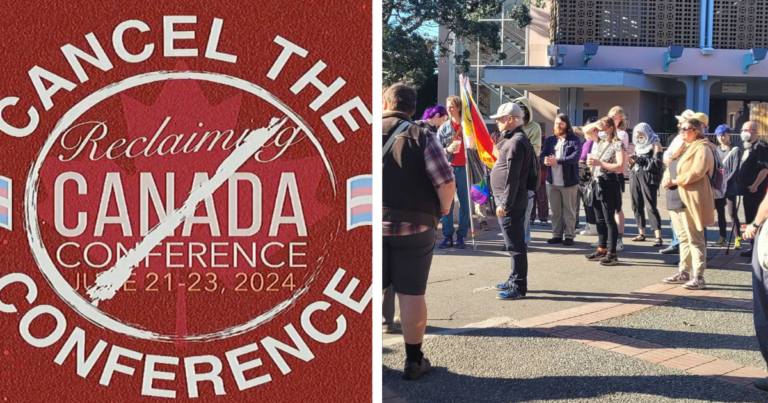
In a melange of pride flags, keffiyehs, and masks, a group of activists assembled in Victoria, B.C. last week to call for city council to kibosh an upcoming freedom-focused conference.

The activist contingent calling itself 1 Million Voices for Inclusion is trying to shut down the We Unify Reclaiming Canada conference, scheduled for June 21-23 at the Victoria Conference Centre.

The Victoria Conference Centre is a municipally-owned venue. 

We Unify’s featured speakers include Freedom Convoy organizer Tamara Lich, Rebel News reporter Drea Humphrey, and former Newfoundland premier Brian Peckford. 

We Unify describes itself as a volunteer-run grassroots movement to advance freedom and safeguard democracy, as well as champion fair elections, vibrant debate, accountable government, and a more inclusive society.

“We’re here to ask the City of Victoria to deny the Victoria Conference Centre to We Unify, who is having a lineup of flat-out, I mean, we’re talking about hate speech here,” protest organizer Martin Girard told True North, claiming that the speakers are going to violate the Criminal Code and the B.C. human rights code.

The protesters take particular umbrage with the appearance of conservative commentator Lauren Southern, Justice Centre for Constitutional Freedoms founder John Carpay, and United Arab Emirates-based rapper and social media influencer Zuby.

The Victoria Conference Centre has so far stood strong amidst the recent calls for cancellation. 

“The city’s actions are subject to the Charter of Rights and Freedoms and there is a right to freedom of expression in public places,” city spokesperson Colleen Mycroft told Chek News last week.

Both Girard and Monique May of 1 Million Voices for Inclusion spoke at the protest and subsequently gave a brief address to Victoria City Council

“We of 1 Million Voices for Inclusion demand the City of Victoria reconsider its decision to allow the upcoming We Unify conference at the Victoria Conference Centre,” Girard stated at the podium.

“Its speaker lineup is an affront to the LGBTQ+ community, with several flagged for hate speech, suspended from social media, even barred from entering countries,” Girard testified.

May claimed the conference would bring “disinformation” and “hate” to Victoria.

“Yes, I am a proponent of free speech,” May said. “But when free speech then targets people based on race, on sexuality, on ability, on age, and gender, we have an issue.”

Immediately following Girard’s and May’s appearance, Mayor Marianne Alto noted that there was no further business for the evening and moved to adjourn the 27-minute-long meeting.

Girard had called on the local community to “fill the room” at the city council chambers, but ultimately he was only able to pull a crowd of about 25.

True North asked Girard how many members are a part of 1 Million Voice For Inclusion, but Girard said he did not have that information.

When True North asked if the We Unify speakers should be jailed or fined for their speech, Girard said “it’s up to B.C. prosecution,” and May replied that she isn’t a lawyer.

We Unify successfully held conferences in 2022 and 2023, with some recurring speakers and no apparent criminal charges.

“The lineup didn’t look half as toxic last year, so we let it fly,” Girard said. 

We Unify said in a statement that the event is almost sold out and organizers thank the City of Victoria for accurately interpreting the Charter of Rights and Freedoms. 

“It is only through dialogue and civil engagement with one another that we can begin to understand, attain knowledge and heal our divided communities,” We Unify wrote.

LAWTON: Trudeau’s war on natural gas is bad for everyone

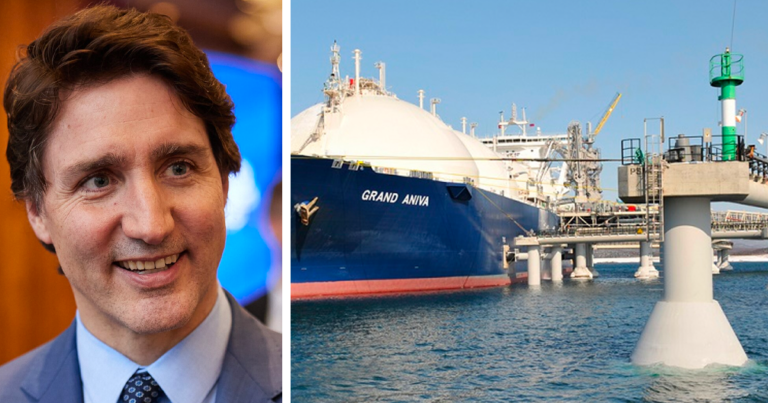
While the Trudeau government insists there is no business case for Canadian LNG, foreign interest persists, and LNG Canada’s export terminal in Kitimat, British Columbia, is nearing completion. Macdonald-Laurier Institute senior fellow Philip Cross joined True North’s Andrew Lawton to discuss the growing need for more LNG projects in the region.

Conservatives introduce mandatory minimum sentence bill for drug dealers

Building upon months of announcements, the Conservatives have tabled legislation in the House of Commons to strengthen penalties for drug production and trafficking offences.

Bill C-394, the Stronger Sentences for Safer Streets Act, would re-introduce mandatory minimum jail sentences that the Trudeau government had repealed after passing through Parliament in Nov. 2022.

The Liberals’ Bill C-5 removed mandatory minimum penalties for drug trafficking, drug importation/exportation, and drug production to address disproportionately high incarceration rates for black and Indigenous Canadians. 

However, Conservative MP and justice critic Rob Moore blames the prime minister’s “soft-on-crime” policies for exacerbating the opioid crisis and allowing drug dealers to prosper.

“Criminals who produce, import and export drugs like fentanyl are benefitting from Justin Trudeau’s soft-on-crime policies like Bill C-5, which eliminated mandatory jail time for criminals convicted of producing drugs like fentanyl and meth in our communities, and for those who are moving these dangerous drugs across the border,” said Moore.

Bill C-394 would impose a minimum sentence of one year for importing and/or exporting Schedule I drugs under one kilogram, and an 18-month minimum sentence if the amount is more than one kilogram.

In addition, the bill would introduce aggravating factors that would increase the mandatory minimum sentence to three years.

The factors are triggered if a perpetrator used property that did not belong to him in committing the offence, if the production constituted a security hazard to minors, if the production caused a public safety hazard, or if a trap or explosive device was rigged to protect the drugs. 

While the bill was successfully tabled, it is unlikely to succeed in a House, as the Liberals, NDP, and Bloc Québécois supported the original bill to repeal similar mandatory minimum penalties. 

In recent months, the Conservatives have tabled several bills targeting criminals and made several announcements progressively revealing their anti-crime agenda. 

In February, Conservative MP Randy Hoback tabled Bill C-379 to introduce mandatory minimum penalties for car thieves, while deputy Conservative Leader Tim Uppal tabled Bill C-381 to place mandatory minimum sentences on extortionists, with an assortment of aggravating factors.

While Bill C-379 remains at second reading in the House, Bill C-381 was defeated at the second reading, as despite receiving support from the Bloc Québécois, the Liberal and NDP voted it down.

OP-ED: Canada’s enduring D-Day legacy

Canadians recently commemorated the 80th anniversary of the D-Day landings at Normandy. And while it remains a momentous event in Canadian history, understanding what Canada did to earn its place on the battlefield is equally important.

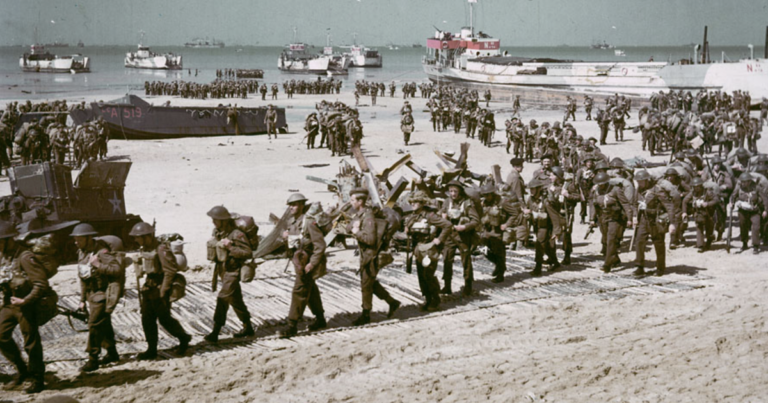
On June 6, 1944, the greatest military landing in history took place as the Allies launched a massive naval, air and land attack against Nazi Germany’s Atlantic Fortress. Comprising one-fifth of the entire force hitting the Normandy beaches that day were 30,000 Canadian soldiers, sailors and airmen. This was no token presence. The Canadians were there because their army, navy and air force were vital to achieving victory. And this was a truly remarkable achievement, considering the state of Canada’s military just five years earlier.

When Canada declared war on Germany on Sept. 10, 1939, it was a country of 11 million people with virtually no armed forces. There was one understrength army brigade and a tank regiment without real tanks. The Royal Canadian Air Force could boast just one modern fighter squadron. And the Royal Canadian Navy had a mere six destroyers. Prime Minister William Lyon Mackenzie King had deliberately neglected his country’s military preparedness because he was convinced another land war in Europe was impossible, given the horrors of the First World War.  

It wasn’t until Hitler conquered France in June 1940 that Canada came to realize the danger it was in. And then, with Britain on the verge of surrender, Ottawa finally responded. Huge increases in defence spending permitted the creation of a Canadian army, navy and air force capable of helping Britain fight back against Hitler. The National Resources Mobilization Act gave the federal government exclusive power to manage the wartime economy. And almost all Canadians – Canada was still a very pro-British country at this time – threw themselves into the fight with great vigour. They agreed to strict rationing of just about every civilian commodity from canned fruit to gasoline. They bought war bonds to lend the government money. And young men rallied to join the armed forces.

By the early 1940s, Canada had engaged in the war with enthusiasm and determination. Canadian shipyards turned out corvettes and frigates by the dozen to escort convoys across the Atlantic and hunt German submarines. Canada also filled the air with planes and pilots. Perhaps the most notable achievement was in hosting the British Commonwealth Air Training Plan, which trained 130,000 pilots and airmen from across Commonwealth countries at Canadian airports. And Canada’s land forces soon became large enough to be designated as the First Canadian Army, with I Canadian Corps fighting in Italy and II Canadian Army Corps stationed in the United Kingdom, ready to go ashore in Normandy.

This enormous expansion in Canadian military might was well-appreciated by the overall ground troop commander at Normandy, British General Bernard L. Montgomery. He had commanded Canadian troops in Italy and admired their fighting quality. And for this reason, “Monty” assigned the Canadian landing force its own beach in Normandy. Amid fierce fighting, the D-Day landing at Juno Beach cost 381 Canadian dead and another 715 wounded or taken prisoner. But they took the beach and soon began moving inland, marking the beginning of the end for Hitler’s hold on western Europe. Considering where Canada was in 1939, to play such a role by war’s end was a remarkable achievement.

Could Canada perform such a feat today? Could modern Canada, a polyglot society of 40 million people and climbing fast, rise to a challenge equivalent to that of the Second World War? There is no easy answer. Decades of neglect and mismanagement have left Canada’s military in the same basic condition it was in the 1930s. Today, the Canadian Armed Forces is marked by submarines that can’t submerge, ancient fighter jets that shouldn’t still be flying and a perpetual recruiting crisis. Plus, the federal government actively seeks to bury our country’s most glorious achievements while focusing exclusively on our mistakes. Then again, Canada has shaken off such lethargy before.

Near Juno Beach stands the Juno Beach Centre, a combined museum and memorial that marks the location where Canadians came ashore 80 years ago. In the small towns scattered across the former battlefields where the Canadian army once fought, sit numerous plaques, memorials and street signs marking the passage of the Canadian army eight decades ago. Standing in front of one of these markers, one can pause to reflect on the crucial role played in this blood-soaked drama by Canadian soldiers eight decades ago, and the country that made such a contribution possible. Normandy was one of Canada’s finest hours. We mustn’t forget its lessons.

David J. Bercuson teaches Canadian history at the University of Calgary; his forthcoming book Canada’s Air Force: The Royal Canadian Air Force at 100 will be published by University of Toronto Press in October. The original, longer version of this story first appeared in C2C Journal.

Toronto protesters stomp on Israeli flag defaced with swastikas at the Walk with Israel

New footage recorded by anti-Israel protesters shows them stomping on an Israeli flag defaced with Nazi swastikas during the Walk with Israel rally, which took place during the weekend.

A Jewish rights advocate posted the video to X, showing anti-Israel protesters at the rally recording themselves stomping on the desecrated Israeli flag while shouting the common Islamic refrain “Allahu Akbar” at Sheppard Avenue and Bathurst Street, a predominantly Jewish neighbourhood.

“Painting swastikas on an Israeli flag at a Jewish community event is a blatant hate crime,” David Jacobs said on X. “By not prosecuting these crimes, we are sending the wrong message.”

Toronto Police Services said it arrested 27-year-old, Syed Raza who allegedly had an Israeli flag, threw the flag on the ground and stomped on it before getting into an altercation with march participants and police.

Raza was charged with public incitement of hatred and resisting a police officer.

TPS was unable to confirm with True North whether the two incidents were connected.

“Using the symbols and images associated with classic antisemitism to characterize Israel or Israelis,” is one of the defining characteristics of antisemitism according to the International Holocaust Remembrance Alliance.

IHRA’s non-legally binding definition of antisemitism is accepted by the governments of Canada.

“Canadians need to stop pretending this isn’t about antisemitism. Bringing swastikas to the Walk for Israel in the Toronto Jewish Community is a clear message,” one user said in a post which documented various swastikas being used by the protesters.

The signs equate National Socialist Germany to the Jewish state of Israel.

IHRA also defines “drawing comparisons of contemporary Israeli policy to that of the Nazis” as antisemitism.

Anti-Israel protesters went into Toronto suburbs in the same Jewish neighbourhood and hurled insults at residents.

“You’re a baby killer, that’s all you f*cking are is a baby killer,” protesters can be heard shouting in the video. “That’s what you do. Thank you for coming and taking our homes! Thank you for coming into our homes and taking our homes!”

One might ask what Jewish people living in Toronto have to do with Israelis “taking their homes” in Palestine.

But holding Jews collectively responsible for the actions of the state of Israel isn’t new and it is another indicator of antisemitism according to IHRA.

World-renowned Canadian psychologist Jordan Peterson called the ideas displayed in the video “1933 Nazi Germany level pathology.”

At the end of last month, the Canadian Press reported that almost half of Toronto’s alleged hate crimes reported in the first five months of May have been antisemitic in nature.

Also in the final days of May, there was a shooting which targeted a Jewish school in Toronto, one of three attacks against Jewish educational or religious community centres in Canada in the same week.