Missed credit payments in Canada return to pre-pandemic levels: Equifax report

More Canadians are missing credit payments, with missed payments on non-mortgage debt returning to pre-pandemic levels, according to a new report from Equifax Canada.

The latest Market Pulse Consumer Credit Trends and Insights Report showed that consumer debt rose to $2.46 trillion at the end of the first quarter of 2024, increasing by 3.5% from last year.

“These are challenging economic conditions, and as financial stress increases, we are seeing consumers adapting their credit decisions to help manage through this period,” said Rebecca Oakes, vice president of advanced analytics at Equifax Canada.

She added that consumers are extending their mortgage lengths to pay less in the short term despite losing more money to interest over the long term. People are also switching lenders more frequently to find better deals and checking their credit scores more often, with Equifax Canada noting a 19% rise in credit checks compared to the same period last year.

In the first quarter of 2024, more than 1.26 million Canadians missed at least one payment on a credit commitment, the highest level since 2020 and a 12.2% increase compared to 2023’s first quarter, increasing by 137,358 consumers.

British Columbia, Ontario, and Quebec were hit harder than other provinces, seeing 13.4%, 14.6%, and 15.2% jumps in missed payments between 2023 and 2024.

Equifax’s report analyzed the average debt and delinquency rates by age groups, cities, and provinces.

While much of the data excluded mortgage payments, 34,000 Canadians missed a payment on their mortgage in the first quarter of 2024, an increase of 22.7% since 2023.

“It’s not just homeowners feeling the strain. Whether you own or rent, the high cost of living remains a heavy burden for many,” said Oakes.

The average Canadian had $21,276 in debt, excluding their mortgages, an increase of 1.77% since 2023. Canadians aged 46-55 had the most debt, an average of $33,391, increasing 3.33% since last year. Canadians aged 18-25 had the least amount of debt, averaging $8,085, an increase of 2.39% since 2023.

Debt increases outside of mortgage can be largely attributed to missed auto loans and credit payments.

In March, more Canadians said they would default on making payments on major loans or a mortgage, tying the highest level ever in Sept. 2023.

Alberta is the province where consumers have the highest average debt, with an average of $24,157 in debt excluding their mortgages, a decrease of 0.69% since 2023. 

The least indebted Canadians live in Manitoba, where they have an average of $17,527 in debt outside of their mortgages, increasing 4.29% since last year — the biggest increase among provinces, eclipsed only by Newfoundland, where average consumer debt increased by 4.75%.

While consumers have been hit hard, so too have businesses. Business insolvencies in Canada increased 87.2% between the first quarter of 2023 and 2024, reaching a rate not seen in 37 years.

In Ontario, mortgage balances reaching severe delinquency, where residents go 90 or more days without paying down their mortgage balance, have doubled since before the pandemic, exceeding $1 billion for the first time.

Mortgage debt in Canada represents 74.4% of total consumer debt. Originations of new mortgages hit an all-time low in the first quarter of 2024, refinancing levels fell 2.6%, and first-time home buyers dropped by 10% year-over-year.

Despite much of Canada’s housing market showing struggles, Alberta saw a 10.6% increase in new mortgage originations, largely driven by interprovincial migration due to housing affordability. Alberta continuously leads in interprovincial migration.

“More consumers are making the decision to relocate to more financially accessible regions,” said Oakes. “In the last 12 months, the number of individuals who moved from Ontario and British Columbia to other provinces exceeded those who moved to Ontario. Almost 71% of all interprovincial movement to Alberta came from those two provinces alone.”

The city with the most indebted citizens highlighted by Equifax Canada was in Alberta. Residents of Fort McMurray have an average debt of $36,970, excluding their mortgages, decreasing 0.47% since last year. The least indebted citizens in highlighted cities reside in Montreal, where the average debt excluding mortgage debt for residents was $16,548, an increase of 1.65% since last year.

While rising debt is an issue for many Canadians, more and more are struggling to even pay the minimum amount on credit bills.

LAWTON: Addiction specialist blames “safe supply” for spike in fentanyl use

A London addiction specialist is raising alarm bells over the city’s “safe supply” program, which they believe has led to an increased availability of diverted drugs like Dilaudid and contributed to a rise in fentanyl use and overdoses. Dr. Sharon Koivu joined True North’s Andrew Lawton to outline her concerns about the unintended consequences of the program.

The Alberta Roundup | Western Canada’s immigration woes

Today on the Alberta Roundup with Rachel Emmanuel, Rachel breaks down Alberta Premier Danielle Smith and BC Premier David Eby’s frustration with the federal government for giving Quebec $750 million to deal with immigration pressures with BC and Alberta get nothing. Rachel also explains why the two premiers’ criticism is misplaced.

Later on the show, Rachel has an update about the cost of the carbon tax. She also wonders whether rushing to get new homes built in Alberta is the best solution.

Finally, Rachel has news about the water crisis still unfolding in Calgary — and it turns out the conspiracy theorists were right again!

Tune into the Alberta Roundup now!

SUBSCRIBE TO THE ALBERTA ROUNDUP

LAWTON: Chrystia Freeland takes aim at Canadian doctors

Canadian doctors are expressing disappointment over Chrystia Freeland’s decision to go ahead with her controversial capital gains tax changes despite receiving numerous warnings that these measures would financially strain physicians and destabilize the healthcare system. Canadian Medical Association president Dr. Kathleen Ross joined True North’s Andrew Lawton to discuss.

OP-ED: The real hoax is perpetrated by rent-seeking activists

Niigaan Sinclair is an Anishinaabe Winnipeg Free Press columnist and an associate professor of native studies at the University of Manitoba.

He is also the son of retired Senator Murray Sinclair, the well-known former Chair of the Truth and Reconciliation Commission of Canada responsible for producing the six-volume report on the history, operation, and legacy of the country’s now notorious Indian residential schools.

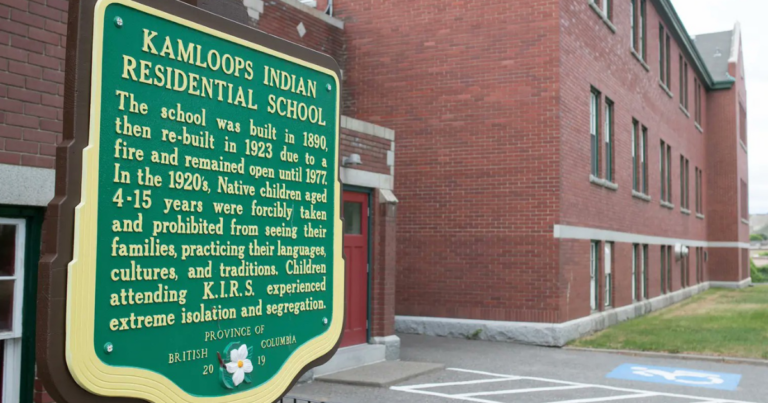
The younger Sinclair’s latest newspaper column, titled “The real hoax is perpetrated by denialists claiming to be ‘truth seekers,’” pays homage to the third anniversary of the shocking announcement heard around the world of the “confirmation of the remains of 215 children who were students of the Kamloops Indian Residential School.”

No such “stark truth” or “confirmation” has ever come to light because only physical excavation can reveal the actual contents of the soil disturbances ground penetrating radar merely suggests.

Though Sinclair purports that he is exposing a denialist hoax, he begins his diatribe with a hoax of his own, namely that the announcement “revealed that ground-penetrating radar had detected anomalies potentially representing the remains of 215 children,” an unexplained reinterpretation only recently made by Chief Rosanne Casimir.

Unfunded but meticulous historical research by dozens of objective scholars and other writers whose results have been published in two edited volumes and several hundred essays found here, here, here, here, and especially here reveals the Kamloops scandal and others like it are the largest hoax in Canadian history.

This research focused on what was going on in the schools during their actual operation between 1883 and 1996, not on the unsubstantiated and unquestioned oral testimonies of their self-selected former students, always called “survivors,” made decades later.

In particular, this careful research systematically debunks Sinclair’s assertions that residential school students died or disappeared, that “survivor” testimony should be accepted at face value, and that activists never made claims of “mass graves,” among other things.

For example, this meticulous scholarly work has found that no “missing children” went away to residential schools and were never heard from again; instead, their attendance was carefully recorded from registration to completion. This means any suggestion that missing children were murdered by school personnel after being subjected to physical and sexual abuse or even outright torture is an undocumented blood libel: no human remains have been located using ground-penetrating radar at any former Indian Residential School save for persons properly registered and buried in known and named cemeteries.

Niigaan Sinclair and many genocide peddlers like him need to answer a simple question: why is the Jewish Holocaust now the best documented mass murder event in human history, even though the Nazis did their best to cover it up while it was taking place. Its nearly 500-year alleged Canadian indigenous counterpart is still so carefully hidden that the name of even a single victim remains unknown. 

Even Kimberly Murray, the federal government’s special interlocutor on the missing children, unmarked graves, and burial sites, has dismissed the assertion that children are “missing” regardless of whether they were murdered and tossed in unmarked graves. Last year, she confirmed the absence of any missing children – as opposed to countless forgotten ones – in her testimony before the federal government Standing Senate Committee on Indigenous Peoples when she proclaimed: 

“The family doesn’t know where their loved one is buried,” she said. “They were taken to a sanatorium (or) an Indian residential school. They were just told that they died. The children aren’t missing; they’re buried in the cemeteries. They’re missing because the families were never told where they’re buried.”

Though there is no evidence that thousands of children’s deaths were not reported to their parents, and lots of evidence to the contrary, Murray’s statement repudiates the established narrative about missing children.

As for the Kamloops Indian Band, when asked about the nearly $8 million allocated to uncover the truth about the 215 graves beside the residential school, its representatives declined to comment, again highlighting the existence of either a successful hoax or mass moral panic employing fake historical grievances that have demonized all non-Indigenous Canadians, the extraction of blood money its transparent outcome.

As for the big picture, the rent-seeking farce at Kamloops must be seen for what it is: a silly but expensive battle in a larger cultural war against Western civilization. 

So far, the silly side is winning.

Hymie Rubenstein is editor of REAL Indigenous Report and a retired professor of anthropology, the University of Manitoba.

British Columbia considering joining Newfoundland’s equalization court challenge

British Columbia Premier David Eby says he’s seriously contemplating joining Newfoundland and Labrador’s legal challenge against the federal government’s equalization formula, seeking a fairer distribution of money. 

Eby voiced strong criticism of the current system, which he believes gives “special treatment” to provinces like Ontario and Quebec while leaving Western provinces to dry. 

“We don’t ask for special treatment, we don’t ask for anything other than (what) any other province is getting,” said Eby on Thursday. “All we want is fair treatment between us and Ottawa and all the other provinces.”

N.L. Premier Andrew Furey defended Eby’s stance, describing the existing equalization formula as “fundamentally broken.”

He insisted that a judicial review was necessary to ensure fairness in the scheme.

Relations B.C. and the Liberal government have become tense following a series of exchanges between Eby and federal Immigration Minister Marc Miller. 

It began during the Western Premiers’ Conference in Whitehorse, Yukon, earlier this month when Eby accused the federal government of showing preferential treatment towards Quebec and Ontario. 

The B.C. premier highlighted the $750 million allocated to Quebec to manage its immigration influx as an example of this bias.

Eby’s criticisms extend beyond the issue of asylum seekers, he argued, encompassing broader federal funding practices that he deems unfair to Western Canada. 

“I think it’s critically important to recognize that my concern is not about migrant funding for British Columbia,” said Eby.

“I mean, part of it is, but my concern is about fair treatment for British Columbia from the federal government.”

He pointedly criticized the billions invested in Ontario and Quebec’s automotive industry while infrastructure projects vital to British Columbia, such as the Massey Crossing, are overlooked. 

The George Massey Tunnel replacement project in Metro Vancouver, estimated at $4.15 billion, has yet to receive a specified federal contribution, further fueling the debate.

The collaboration between the two premiers is not limited to fiscal matters; they have also pledged to embark on a united front in advancing clean energy technology evidenced by a recent commitment signed in St. John’s, following Furey’s visit to British Columbia.

$100K infrastructure cost per housing start means $750B required to reach Trudeau’s target 

For Prime Minister Justin Trudeau to fulfil his ambitious promise to build nearly four million new homes by 2031, over $750 billion would need to be spent on developing infrastructure. 

To return to 2004 levels of housing affordability, over $100,000 would need to be spent per home on infrastructure alone, according to a new report from the Canadian Urban Institute.

Canada’s housing affordability reached an all-time low in April.

The Canada Mortgage and Housing Corporation concluded that Canada would require an additional 3.5 million houses built by 2030 to return to affordability seen in 2004. 

At the rate of construction seen in 2022, when the corporation issued its analysis, 2.3 million units would be built between 2021 and 2030. The amount of housing starts would have to increase to 5.8 million. However, between 2021 and 2023, housing starts decreased by over 11%.

“The level of increased annual housing construction — over 500,000 homes annually — is equivalent to building a new city the size of Calgary — each year, for seven years!” said the Canadian Urban Institute’s report. 

Prime Minister Justin Trudeau promised his government would build 3.87 million new homes by 2031. To accomplish this, he would have to build 1.096 houses per minute for 2,449 days straight, 3,526,560 minutes straight, without missing a beat.

Various types of infrastructure are required to support an increase in new housing builds. Local streets and utility connections require additional sidewalks, water and wastewater lines, and more. Community neighbourhoods require recreation facilities and other public services. Municipalities as a whole need additional public transit, roadways, and more. 

“More than 60% of all public infrastructure — from local roads and transit systems, through recreation and community facilities, to waterworks and fire halls — is the responsibility of Canada’s 3,500 municipal governments. The tax base and other revenue sources of municipalities do not come close to meeting the many demands on local governments, including for community infrastructure,” reads the report.

The report titled, A Jump Start: Providing Infrastructure for More Housing, said that Canada’s infrastructure deficit is hard to calculate but likely runs into the hundreds of billions of dollars. 

“While municipal approvals for new housing and greater construction capacity are both important, without enabling civic infrastructure, housing cannot be built,” reads the report.

The Federation of Canadian Municipalities estimates that infrastructure would cost $107,000 per new home.

“If applied to a housing-production target of 5.8 million homes over the next seven years, that yields a huge projected infrastructure cost. It certainly exceeds anything that could be produced using the conventional public funding and financing tools available to municipalities,” reads the report.

If building 5.8 million homes resulted in an infrastructure cost of $107,000 per home, it would cost $620.6 billion in infrastructure. 

However, the report analyzed other research from various organizations that estimated infrastructure would cost $130,000 per home, bringing the cost of infrastructure required to support building 5.8 million homes to $754 billion.

The report stated that the cost of infrastructure far exceeds what municipalities can support. It added that the majority of Canada’s municipalities are small, face infrastructure requirements, and have limited financial resources to tackle their needs.

To address the four primary risks facing municipalities, the Canadian Urban Institute offered four practical solutions.

The first solution mirrors buying a home. The report suggested that instead of pre-paying for infrastructure with capital upfront, municipalities should amortize the cost similar to a mortgage and pay it over its lifetime.

Secondly, the report suggested that a beneficiary-pay structure be adopted where developers and future users of infrastructure pay for infrastructure during its full life-cycle.

Various financial models were suggested to reduce municipalities’ financial risk, some of which include private capital.

Lastly, the report suggested more focus on small municipalities. 182 of Ontario’s 414 municipalities (44%) have populations of less than 10,000 people. The report suggested designing simple and easily accessible financing agreements for municipalities.

The report concluded that the infrastructure costs necessary for new housing cannot be met without a significant infusion of new revenues and private capital. The proposed measures aim to bridge this gap and accelerate housing-enabling infrastructure delivery.

Meeting the new infrastructure demands will “require a considerable long-term investment by both the public sector and the private sector. It is a daunting but necessary venture and like some Canadian winter journeys, it may require a ‘jump start,’” concluded the report. 

Nearly 20% of Canadians now know someone relying on food banks

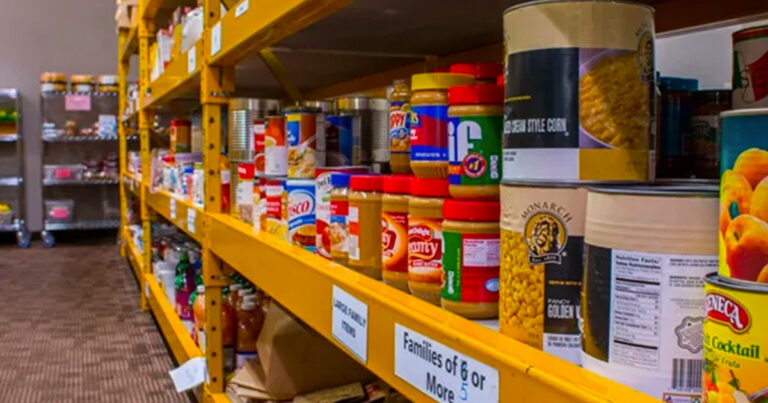
One in five Canadians have an acquaintance who had to resort to using food banks to meet their needs, according to a new national survey.  

Nanos Research conducted the survey between May 31 and June 2 and found that while only 2% of respondents said that they had used food banks themselves, nearly twice as many knew of a family member who had. 

Polling over 1,000 Canadians, the survey found that more than 10% of respondents knew of a friend or acquaintance who had received assistance from a food bank. 

The survey’s findings were consistent with those conducted a month prior, with a slight 2% increase in respondents who did not know of someone who had used a food bank and the remaining 1% said that they’d “prefer not to say.”

Around 12% of respondents said they were unsure across both surveys. 

Respondents aged 35 to 54 in both Atlantic Canada and B.C. were more likely to know someone who received assistance from a food bank.

About 78% of Quebec residents and those over the age of 55 nationwide, were the most likely to respond that they had not used a food bank, or known someone who had.

When asked if increasing food costs have affected their shopping habits, the majority of respondents said that they were now seeking out less expensive foods, with 29% saying that they had already stockpiled food as a means to stave off ever-rising prices. 

One in five respondents said that they were eating less food altogether, while another 28% said that the increased food costs were not affecting their household shopping habits. 

The majority of respondents also felt that not enough was being done to help those in need gain access to affordable food. 

Almost half of respondents, 40%, said that they had donated money or goods to food banks recently, while another 18% said that they had personally given food to a family member or friend. 

A small percentage of respondents, 3%, said that they had volunteered at a food bank, while another 14% said that they had recently loaned money to a loved one.

Food Banks Canada released its 2024 Poverty Report Card last month and the only provinces not to receive D-’s or D+’s were Quebec and Prince Edward Island, though they’re still only scraped by with a C+ and C-, respectively.

The Poverty Report Card accounts for four measures: experience of poverty, poverty measures, material deprivation, and legislative process. Each measure accounts for various indicators, which receive their own rating and grade, affecting the overall rating. When analyzing the tables, the most common grade among indicators is an F.

Between 2020 and 2022, poverty rates in Canada increased by 55%, from 6.4% to nearly 10% of people in Canada living below the poverty line. 

Almost a quarter of all Canadians experience food insecurity.

“We should expect that poverty rates will continue to rise as new data becomes available. This means more struggling seniors, more children experiencing food insecurity, and more people across Canada worrying about making ends meet,” said Food Banks Canada in a statement.

Food banks saw a 30% increase in demand last year. 

Specific jurisdictions saw differing changes, with British Columbia seeing an increase of almost 60%, which increased to over 100% in rural communities with populations of less than 10,000.

LAWTON: New documentary exposes dark side of MAiD

A new documentary from Rebel News, “MAID: The Dark Side of Canadian Compassion,” delves into the disturbing paradox of a nation offering the choice to end life while often denying essential healthcare services. Documentary producers Sheila Gunn Reid joined True North’s Andrew Lawton to explain the complexities and ethical dilemmas surrounding Canada’s Medical Assistance in Dying program.

Meloni scraps “legal abortion” from G7 declaration to dismay of Trudeau, others

This year’s G7 declaration will not reference the guarantee of “safe and legal abortion” thanks to the intervention of Italian Prime Minister Giorgia Meloni.

Despite pressure from France, the United States and Canada, the Italian government wouldn’t budge on the issue during negotiations over the declaration’s final wording. 

Instead, Meloni opted for the declaration to only reference “reproductive rights.” 

The G7 meeting this year is being hosted in Apulia, Italy and was the first summit to host a pontiff. Pope Francis held bilateral meetings with Prime Minister Justin Trudeau, among other world leaders, and chaired a session on the dangers of artificial intelligence. 

True North contacted the Prime Minister’s Office for comment on the G7 declaration but did not receive a response.

Tensions flared between Meloni and French President Emmanuel Macron over the issue, leading to the two leaders trading barbs on the sidelines of the international meeting.

While speaking to the media, Macron said that Italians and the French don’t share the same “sensibilities” and that abortion is a constitutional right in France. 

“You don’t have the same sensibilities in your country,” Macron told an Italian journalist. 

“France has a vision of equality between women and men, but it’s not a vision shared by all the political spectrum.” 

Meloni took issue with Macron’s comments, accusing him of politicizing the summit and campaigning for re-election. 

“I believe it is profoundly wrong, in difficult times like these, to campaign using a precious forum like the G7,” Meloni told the Italian press. 

The French president called a snap election earlier this month hoping to consolidate his rule after right-wing parties achieved a sweeping victory during the European elections. 

Videos of the two interacting at an official G7 event showed Meloni visibly uncomfortable while shaking Macron’s hand. 

Macron isn’t the only critic of Meloni. Prime Minister Trudeau has also habitually lectured the Italian leader on her country’s record on sexual minorities. During the G7 meeting in Hiroshima, Japan last year, Trudeau expressed “concerns” about her positions on gender ideology. 

“Obviously, Canada is concerned about some of the (positions) that Italy is taking in terms of LGBT rights,” said Trudeau. 

“But I look forward to talking with you about that.”