Poilievre abruptly shuts down NDP MP’s rant about incels and abortion

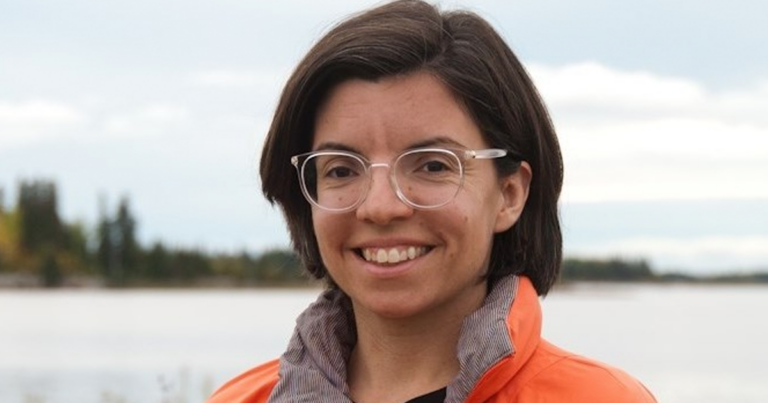
It took Conservative leader Pierre Poilievre one word to shut down a frantic rant by NDP MP Bonita Zarrillo falsely accusing him of “courting incels” and wanting to ban abortion. 

During an unrelated discussion of Bill C-69 In the House of Commons on Tuesday, Port Moody—Coquitlam’s NDP MP Bonita Zarrillo accused the Conservative leader of “courting incels for months and months.” 

The term incel, which used to be a niche internet phrase, is a pejorative meaning a person who is involuntarily celibate. Someone, usually a male who wants to have sex but experiences rejection. The term has commonly been used by left-wingers as an insult directed at their political opponents online.

Zarrillo also espoused concerns that once Prime Minister, Poilievre would head a Handmaid’s Tale-style tyranny in Canada by banning abortion.

The Handsmaid’s Tail is a dystopian novel written by Canadian author Margaret Atwood. It depicts a form of government ruled by a theocratic dictatorship that forces fertile women to give birth for the good of society.

“(Poilievre) and I went to the same high school and in Grade 10 the required reading was ‘The Handmaid’s Tale.’ It was hard to read,” Zarrillo said. “and I’ll tell you what else is difficult to read; what’s happening down in the United States and the fact that the United States is looking at taking away a woman’s right to choose.”

Zarrillo is likely referring to former president Donald Trump telling an abortion abolitionist group that he stands “side-by-side” with them in their fight to end abortion on Monday. He made the comments while on the campaign trail ahead of this year’s federal election.

“I think about the fact that (Poilievre) is courting incels for months and months and months at a time. And the last Conservative from Port Moody—Coquitlam was an anti-abortionist,” she said referring to Nelly Shin who lost the riding to Zarrillo in 2021.

“I want to know for sure today right now does (Poilievre) support a woman’s right to choose and is (he) going to take away a woman’s right to choose if (The Conservatives) ever, and I hope it never happens, become a government in this country?”

“No,” Poilievre said, which caused the Conservative caucus, including avowed pro-lifer Leslyn Lewis, to laugh and applaud.

Poilievre, much to the dismay of pro-life Conservatives, has on multiple occasions stated he would not pass any laws banning abortion.

His stance on the issue was one of the primary reasons Abraham Grant formed a new federal political party, the United Party of Canada.

During the Conservative party leadership race, Poilievre declared that he was “pro-choice” on the issue of abortion.

Despite his clear position from the onset of his leadership in the party, Poilievre won the leadership race with 68% of the Conservative vote.

McGill encampment running “revolutionary” youth camp with “Islamic resistance” lesson

Pro-Hamas McGill encampment organizers will be running a “revolutionary” summer camp for youth that will include a lesson on “Islamic resistance.” 

The “Youth Summer Program” will run from June 17 to July 12 at the McGill encampment, a place the organizers now refer to as “Tiohtià:ke Popular University.” 

The camp is being organized by Solidarity for Palestinian Human Rights McGill and Solidarity for Palestinian Human Rights Concordia.

McGill University is meanwhile currently seeking an injunction to clear the encampment that has been occupying its campus since Apr 27.

The two student groups promoted their summer camp on social media with a poster showcasing Palestinian militants with machine guns.

SCREENSHOT: SPHR poster promoting an anti-Israel “summer camp.” The description contains multiple typos. Instagram

 “In response to the transnational student callout to Revolt for Rafah, the Gaza Solidarity Encampment at McGill is launching the revolutionary youth summer program” said SPHR McGill in a social media post.

The post promoting the summer camp contained multiple spelling errors, with organizers writing “instutional” instead of “institutional,” and “transformining” instead of “transforming.” 

“We pledge to educate the youth of Montreal and redefine McGill’s ‘elite’ (institutional) legacy by (transforming) its space into one of revolutionary education,” organizers noted. 

Organizers say the summer camp will feature physical activity, Arabic language instruction, cultural crafts, political discussions as well as “historical and revolutionary lessons.”

Each camp week will focus on a different theme.

The first week, running from June 17 to 21 will be all about “the history of Palestinian resistance,” with programming running daily from 4 p.m. to 6 p.m. 

The first day of week one will touch on “the beginning of resistance.” The second day will touch on “pan-Arabism,” the third day will touch on “the PLO (Palestinian Liberation Organization): From Al Karameh to Oslo,” the fourth day will touch on “Islamic resistance,” and the fifth day will touch on the “axis of resistance.”

The second week’s theme is set to be “the ongoing Nakba,” the third week will be about the “different fronts of the movement” and the fourth week will touch on “media after Oct. 7.” 

True North reached out to SPHR McGill for clarification on what “Islamic resistance” entails, but they did not respond.

In a statement to True North, McGill University said the anti-Israel summer camp is “only the latest escalation in SPHR’s long-standing strategy of intimidation and fear.”

McGill added that “​​imagery evoking violence is not a tool of peaceful expression or assembly” and that the university has reached out to municipal, provincial, and federal public safety authorities to flag SPHR McGill’s post and other recent activities “as matters of national security.”

The university also said it will increase the presence of security staff near the encampment and elsewhere on campus, and continue to pursue legal action against SPHR and internal disciplinary measures.

The Centre for Israel and Jewish Affairs slammed the summer camp as hateful and toxic.

“We are calling on McGill to stop turning a blind eye to the hate & toxicity fuelling the illegal encampment & take action,” said CIJA in a statement. “This cannot be in our city. This cannot be at McGill. The tolerance for hate & antisemitism in our city is enough.”

“Authorities must act to dismantle the toxic encampment immediately, or the antisemitism, hate, intimidation & harassment will continue to metastasize,” they added.

The summer camp was also met with criticism online.

“This is the sickest, most disturbing thing I’ve ever seen in my life. I never imagined watching the world be so polluted and brainwashed… what a sick and twisted ‘program,’” wrote one Instagram user. “McGill, you’re really going to let this happen?? Terrifying for the city of Montreal,” wrote another.

This is not the first time that SPHR McGill has been in hot water.

As previously reported by True North, SPHR McGill openly praised the Oct. 7 attack against Israel as “heroic” and “monumental” while celebrating the launching of rockets and taking of hostages.

SCREENSHOT: SPHR McGill celebrates Hamas’ attack on Israel

SPHR also posted a graphic featuring a photo of a man smashing windows on the eve of the anniversary of Kristallnacht, a 1938 wave of violent riots against Jewish businesses, synagogues and homes in Nazi Germany and its recently incorporated territories.

In December, SPHR was ordered to stop using the McGill name. The group has, however, chosen not to comply and continues to use the university’s name to this day.

Off the Record | Singh continues to prop up Trudeau

It’s Friday – kick back, grab a drink and tune into Off the Record with Andrew Lawton, Rachel Emmanuel and Isaac Lamoureux!

NDP Leader Jagmeet Singh says he’s very concerned Justin Trudeau’s leadership and yet the NDP’s coalition agreement with the Liberals is the only reason Canadians aren’t heading the polls right now. This week, after reading the NSICOP foreign interference report, Singh was confronted by reporters and asked why he continues to prop up the government despite his concerns that democracy is at stake.

Plus, how do you do, fellow kids? The favourite to become the next Liberal leader, Mark Carney, wants Canadians to know he loves hockey and a cold one. So hip and with it!

And let’s review Joe Biden getting lost at the G7…

These stories and more on Off the Record! Tune in now!

SUBSCRIBE TO OFF THE RECORD

Feds admit that yes, user-generated content is regulated by streaming law

Federal lawyers have admitted what the heritage minister previously denied – that the Online Streaming Act will regulate content uploaded by ordinary users. 

For years, consecutive heritage ministers vowed that user-generated content would be off-limits from regulatory control. 

Yet in a recent legal battle with Google over revenue compensation, Justice Department lawyers employed admitted that “the Act does allow for regulation of user-uploaded programs on social media services.” 

For nearly two years MPs and other government ministers told Canadians that their fears regarding government regulation of their online content were unfounded. Former Canadian heritage minister Pablo Rodriguez mockingly said “no cat videos” would be regulated. 

“We made it very clear in the Online Streaming Act that this does not apply to what individual Canadians and creators post online,” said Rodriguez.

“No users, no online creators will be regulated. No digital-first creators, no influencers, no cat videos. Only the companies themselves will have new responsibilities.”

Canada Research Chair in Internet and E-Commerce Law at the University of Ottawa Michael Geist told True North that while he doesn’t think the admission will have an immediate impact on users, it does indicate that regulating user content is on the table in the long run. 

“That does not appear to be on the agenda at the moment, but will remain a source of concern for as long as it remains within the legislation,” said Geist. 

“Further, the fact that the government consistently denied this was the case even as its justice department confirms in court that those regulatory powers exist undermines public confidence in the legislation and will leave many feeling that they’ve been gaslit by the government on this law.”

The CRTC ruled last week that if advertising accompanies user content, then it must be subject to regulation, since ads are under the control of YouTube and not users. 

With Bill C-11 in effect, that means user content can be subject to the same regulations as licensed broadcasters are. 

“The Act does allow for the regulation of user-uploaded programs on social media services, so long as certain conditions are met,” reads the court filing, written by federal lawyers.

Canadians’ suspicions were first confirmed last fall when Heritage Minister Pascal St-Onge released her ministerial directive to the CRTC, telling the agency to treat “online undertakings,” in other words streaming services, in the same way as any other Canadian broadcasting company. 

Former CRTC chair Ian Scott testified that the Trudeau government’s legislation would crack down on user content, contrary to the government’s testimony before the Commons heritage committee in 2022. 

The directive effectively made platforms such as YouTube, Spotify and Apple Podcasts akin to Bell, Rogers, or Corus Entertainment, the three largest broadcasting companies in Canada.

The aforementioned streaming services are where the bulk of Canadians get their podcast content from and while St. Onge told the CRTC not to regulate individual podcasts, they will be regulating the companies that distribute a vast majority of them. 

By regulating content on Apple, Spotify and YouTube, the government is regulating all podcasts, and other content as well, critics of the legislation have said.

Jagmeet Singh says MPs knowingly participated in foreign interference

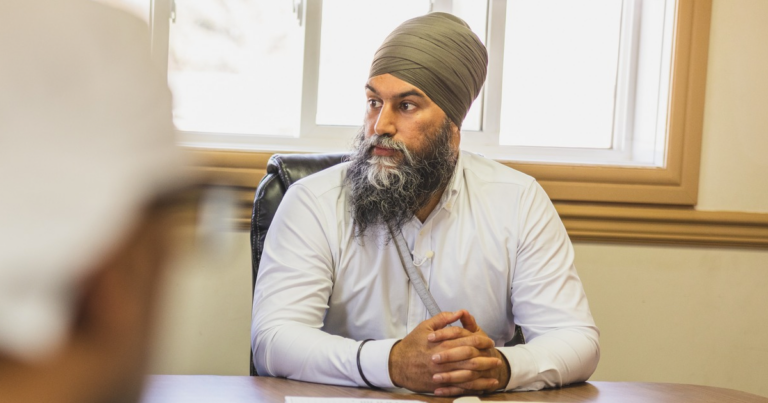
NDP Leader Jagmeet Singh says he’s even more concerned about foreign interference in Canada’s democracy after reading the unredacted report from Parliament’s national security committee.

Singh opted to read the unredacted version of the report released last week by NSICOP and said he was “alarmed” by its contents.

“There are a number of MPs that have knowingly provided help to foreign governments, some to the detriment of Canada and Canadians,” said Singh. “Some of this behavior absolutely appears to be criminal, and should be prosecuted.”

While Singh did read a version of the NSICOP report with more information than the publicly available report, Singh still did not get access to the full report given to members who are a part of NSICOP.

Singh said he blames Prime Minister Justin Trudeau for knowing there was extensive foreign interference and refusing to take action.

“The prime minister has had access to intelligence that raises concerns about MPs knowingly benefitting foreign interference,” said Singh. “He has sent the message that he is willing to accept some level of foreign interference.”

Singh also criticized Conservative Leader Pierre Poilievre for refusing to read the report, saying that Poilievre is putting his party over his country.

“What is clear to me is Justin Trudeau knew and didn’t act, and Pierre Poilievre doesn’t even want to know about serious allegations touching his party,” said Singh. “To me that disqualifies him as a leader, and I do not buy his phony excuses.”

Bloc Québécois leader Yves-Francois Blanchet announced that he is seeking a security clearance to be able to read the unredacted NSICOP report, which would make Pierre Poilievre the sole major party leader to go without reading the report.

Poilievre has said that reading the report would prohibit him from being able to talk about matters contained in it, limiting his ability to act as an effective opposition leader.

In an interview with CTV News, former NDP leader Tom Mulcair said that if he were still the NDP’s leader, he would not have read it either.

“I don’t want to be hamstrung as the leader of a party. I don’t want to be told that now that I’ve seen this I can’t say that. I agree completely with the call by Pierre Poilievre,” Mulcair said.

Singh told reporters that he would not be revealing the names of MPs implicated in the report, saying the it would compromise the ability of law enforcement and intelligence to do their jobs.

However, Singh said that there are a handful of MPs who wittingly collaborated with and helped foreign governments while receiving benefits in return.

Singh also says that the Conservative leadership contest, held in 2022, was subject to foreign interference by China and India.

Green Party leader Elizabeth May, having read the same NSICOP report as Singh had, said there was no list of treacherous MPs, and that the allegations had been overblown in the media.

The Daily Brief | Conservatives release scathing attack ad targeting Trudeau

Prime Minister Justin Trudeau arrived in Italy for meetings with G7 leaders, shadowed by declining approval ratings at home and a resurgent right wing across Europe.

Plus, if British Columbia and other Western provinces want a slice of the federal immigration funding pie, they need to take in even more asylum seekers.

And Canadians who tuned into the Edmonton Oiler’s Stanley Cup Finals game last night were treated to a scathing Conservative attack ad targeting Prime Minister Justin Trudeau’s record.

Tune into The Daily Brief with Cosmin Dzsurdzsa and Isaac Lamoureux!

SUBSCRIBE TO THE DAILY BRIEF

Digital rights group says porn age verification bill rushed without privacy protections 

A Canadian digital rights group is warning that a bill preventing children from accessing adult content online is being rushed through without the necessary scrutiny MPs need to vote on it.

Open Media, which bills itself as a grassroots digital-focused organization, raised the alarm about Bill S-210 being fast-tracked through the committee without MPs hearing from non-government witnesses or receiving any amendments.

The group said it has heard rumblings that a vote could come as early as Friday, although an MP, speaking on background, told True North that it likely won’t happen until September.

Even so, Open Media says the bill’s swift passage through committee – it passed committee without amendment last week – warns that the debate surrounding the bill was “cut short.”

The bill, originally tabled by Liberal-appointed Sen. Julie Miville-Dechêne in the Senate, would force websites to verify the age of their users to block minors from being exposed to sexually explicit content online. However, some have raised privacy concerns about it.

Conservative MPs Karen Vecchio and Garnett Genuis have been its leading advocates in the House of Commons.

“Our initial set of issues was that we had serious concerns about how the current version will work in practice. At this point, though, I think it’s equally concerning how it’s been treated and shoved through,” Open Media executive director Matt Hatfield told True North.

Hatfield said his group expected the bill to undergo the same lengthy review process he’s come to expect from other legislation.

“Normally, a bill would get a couple of readings out of the House, go to committee, and committee members would hear from witnesses. The witnesses would share things that are good or bad about the bill, and the committee would use that to pick up amendments and debates and potentially pass some of those amendments,” he said. “Unfortunately, that hasn’t happened.”

He said the committee was “cut short,” and lacked testimony from non-government witnesses.

Over the three days it was reviewed at hearings, 15 witnesses, all of whom worked for the government in some capacity, spoke at the Public Safety Committee.

At the same time, 45 briefings were given to the committee. Hatfield said that represents 45 potential individuals or organizations that could have been called to testify.

Sen. Julie Miville-Dechêne, who originally introduced the bill in the Senate, said at the Senate stage the bill had 24 witnesses and 28 briefings weigh in.

Some of those witnesses included experts in child protection online, representatives from the Canadian Bar Association, lawyers, civil liberties organizations, police, and health care professionals.

“I think (the bill starting in the Senate) leads to a different level of scrutiny and participation in proceedings…than what would be seen if it started in the House,” Hatfield said. “When this bill started to get studied in the Senate, most people, us included, did not expect it to move forward or thought it would get much more thorough study in the House.”

Hatfield thinks his organization should have been asked to speak at the hearing, as it had been on other matters of internet law, including Bill C-10 and Bill C-18.

He said that over 14,000 Canadians have petitioned their MPs to reassess the bill, through Open Media’s website.

“So there’s a lot of attention. We would expect to probably be called to testify at both the House and Senate. In this case, there have been no opportunities whatsoever for anyone from our community, frankly any representative of the public to weigh in,” Hatfield said.

During the last committee hearing on the bill at the end of May, Miville-Dechêne said the bill’s privacy concerns, which are the main objection to the bill, are already enshrined into law with The Personal Information Protection and Electronic Documents Act.

However, Hatfield warns that third parties, that would be used to verify the ages of users, would face “no penalties” under S-210 and “very weak” penalties under PIPEDA if they were found to have violated users’ privacy. 

NDP MP billed taxpayers $17k for family vacation after “meeting with stakeholders”

NDP MP Niki Ashton came under fire for $17,000 in travel expenses billed to Canadian taxpayers, despite primarily working remotely. 

According to parliamentary travel records, Ashton was only present in Ottawa for four days during the entire fall sitting in 2022. 

When she did fly into Ottawa from Thompson, Man. on Dec. 21 of that year, the House of Commons had already closed its doors for the Christmas holidays. 

Despite the closure, Ashton billed the House of Commons anyway, claiming the trip was for meeting “stakeholders.” 

She also brought her husband and kids along for the trip. 

The family then travelled from Ottawa to Quebec City on Christmas Day, again billing taxpayers for the trip as well as expenses made during their holiday sojourn. 

Social media posts made by Ashton’s husband show the family enjoying tourist attractions in Quebec’s capital city, including, skating, and snow tubing as well as attending a Christmas market.  

“This looks really bad,” Canadian Taxpayers Federation federal director Franco Terrazzano told True North. 

“If Ashton doesn’t want Canadians to think she billed taxpayers thousands of dollars so she could take a vacation to Quebec over the holidays, then she better have a very good explanation as to what value, if any, taxpayers actually got from this trip and why she couldn’t have done the meetings over zoom.”

According to Commons records, Ashton’s family vacation cost Canadians $17,641.12 in total, including $13,619.90 for airfare and other transportation, $2,508.39 for accommodations and another $1,512.83 for meals and other expenses. 

Ashton did not respond to True North for comment. 

A spokesperson for Ahshton’s office told CBC News that she was in Quebec City “to discuss language priorities” because she’s the NDP critic for official languages and the trip was necessary to “find out things she needs to prioritize.”

According to the spokesperson, while in Quebec City, Ashton also “met with a union person” before the family travelled to Montreal on Dec. 30, 2022 for more “meetings with stakeholders.” 

Ashton also travelled to Windsor, Ont. with her family in May of last year for a six-day trip. Her husband Bruce Moncur, a former NDP nomination candidate, is originally from the city and attended university there. 

Additionally, while on the Windsor trip, Ashton travelled to Detroit to meet Democrat Congresswoman Rashida Talib.

The NDP spokesperson claimed that the Windsor trip was to meet people involved with a “soccer recreation centre,” so that Ashton could learn about  “federal funding to create some soccer opportunities in northern Manitoba for Indigenous folks.”

That trip was also paid for by Canadian taxpayers to the tune of $9,748.03.

According to travel records, Ashton spent less than 30 days in Ottawa, including weekends, over the first half of last year, despite the House of Commons sitting for 70 weekdays over that same period. 

MPs have been allowed to participate in debate and committee meetings remotely since 2023 after pandemic-era rules were made permanent.

According to the House of Commons travel rules, MPs are permitted a certain number of travel points annually, however, each trip must include “a specific purpose of travel and be for the purpose of the fulfilment of the Member’s parliamentary functions.” 

“Activities related to the private interests of a member or a member’s immediate family” are not permitted. 

Member travel points are also to be used for travel between Ottawa and the MP’s constituency, or from their constituency to their provincial or territorial capital. 

“If she’s Zooming in for her parliamentary duties in the House of Commons, why couldn’t she Zoom in for these meetings instead of billing taxpayers thousands of dollars?” asked Terrazzano. 

Rustad says he won’t budge on core priorities but respects floor-crossing MLAs’ opinions

John Rustad says the BC Conservatives are open to newcomers from other parties as long as they are committed to his party platform’s priorities.

In an interview on The Andrew Lawton Show, Rustad addressed concerns that his party’s welcoming of MLAs and candidates who have voiced opposition to the BC Conservatives in the past will dilute the party’s values.

“It’s okay for candidates to have a varying opinion,” said Rustad.

“Obviously we have an agenda in terms of our platform…but I’ve said for many years now the first part of MLAs is to fight for their riding. To be able to speak on behalf of the riding and to be able to vote on behalf of the riding. And that means you’re going to have differences.”

The BC Conservatives have recently lured two MLAs from the BC United caucus to cross the floor and join their party. Rustad and MLA Bruce Banman were also former members of BC United. However, some have raised concerns that Surrey South MLA Elenore Sturko stands against some of the party’s priorities on parental rights and LGBTQ issues.

As a BC United MLA, Sturko had applauded NDP Premier David Eby for his approach to LGBTQ instruction in the education system and had condemned comments Banman had made about homosexuality.

The BC Conservatives are also running a former NDP MLA Gwen O’Mahony in Nanaimo—Lanzville, as she says the political left has abandoned her, and that the Conservatives are the real champions for the working class.

When pressed by Lawton on the issue, Rustad said his party was open about what it stands for and opens the door to anyone who decides to join, and asserted that Sturko supports the BC Conservatives’ parental rights plan.

“For example, both Elenore as well as some of our other candidates said ‘okay, I support parental rights and I support getting rid of the sexualization of children in our schools, but we need to make sure also that we have a good anti-bullying program in place and that we have good supports for students in place,’ and I say, ‘yeah I can accept that.’” 

The BC Conservatives have been funnelling massive levels of support away from BC United, as the official opposition’s traditional coalition between federal Liberals and Conservatives has broken down in recent years.

According to an Angus Reid poll published in late May, the NDP is projected to win the election with 41% of the vote, compared to the BC Conservatives’ 30%, BC United’s 16%, and the Green Party’s 11%.

British Columbia’s general election is scheduled for Oct. 19.

Liberals release secret carbon tax data following Conservative pressure

The Liberals released carbon tax data, previously kept secret, just moments before a motion compelling them to do so was to be debated in the House of Commons.

This disclosure follows intense pressure from the opposition Conservatives, who accused the government of withholding critical information about the tax and its effect on the Canadian economy. The Conservatives were set to introduce a motion Thursday morning, demanding that the House release a copy of the government’s economic analysis on the carbon tax no later than June 17. 

Environment and Climate Change Canada, however, released the data just before the motion was to be debated.

“Just moments ago, Canadians discovered that Trudeau has been hiding the fact that the carbon tax will cost Canadians $30.5 billion by 2030. This works out to $1,824 per family in extra annual costs,” said the Conservative Party in a news release.

The Conservatives claim that Prime Minister Justin Trudeau had been hiding this figure for years, deciding only to release it when Parliamentary Budget Officer Yves Giroux testified that the Liberals had him under a gag order.

“Now as a result of pressure from Common Sense Conservatives, the Liberal Government was finally forced to reveal the true damage their tax is causing the Canadian economy,” said the Conservatives.

The Deputy Minister of Environment and Climate Change Canada, Jean-François Tremblay, wrote a letter to Giroux on May 14, including the information and data released on Thursday.

“The data the Department is providing contains unpublished information. As such, I request you to ensure that this information is used for your office’s internal purposes only and is not published or further distributed,” reads the letter.

Pierre Poilievre’s party criticized the Liberals for revealing only a small portion of the information.

The complexity of the data led to varying interpretations of the numbers by the Conservatives and others.

While the Conservative Party’s release stated that the carbon tax would cost Canadians over $30 billion by 2030, Poilievre testified in the House of Commons that it would cost Canadians $20 billion annually, equating to $1,200 per family a year compared to the party’s estimate of over $1,800 annually. 

The Canadian Taxpayers Federation referenced that the data showed that Canada’s GDP would be $25 billion lower in 2030 due to carbon pricing.

“Once again, we see the government’s own data showing what hard-working Canadians already know: the carbon tax costs Canada big time,” said federal director of the Canadian Taxpayers Federation, Franco Terrazzano. “The carbon tax makes the necessities of life more expensive and will cost our economy billions of dollars.”

Speaking in the House again later, Poilievre updated his numbers to $30 billion, costing families $2,000 per year. 

The Liberals have been steadfast in their claims that eight out of ten families are better off financially from the carbon tax after receiving their carbon rebates. Poilievre said this did not factor in the $30 billion of economic costs.

The Conservative Party later called for Environment Minister Steven Guilbeault to be fired on Thursday.

“Steven Guilbeault lied to Canadians. He must resign, and if he won’t, then Justin Trudeau must fire him and start telling the Canadians the truth,” reads the release.

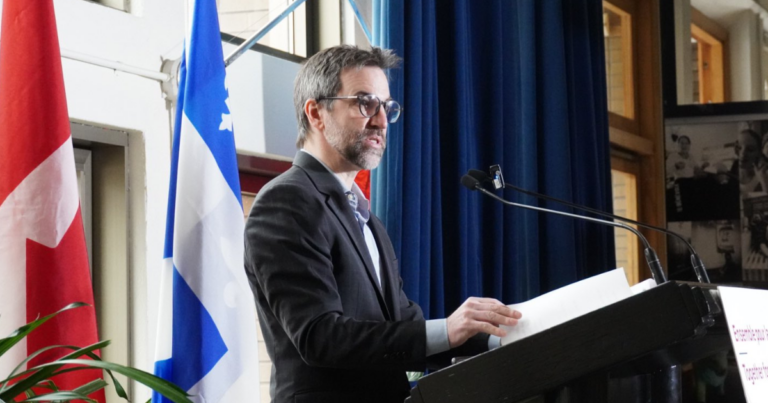
The Environment Minister was questioned by reporters about why he withheld the data from Canadians.

Guilbeault said that some of the data had never been published before, so he delayed releasing them to ensure that he did not violate privacy law.

“And we made those verification. And, as soon as we were able, we tabled those information in the House of Commons,” he said.