Calls for intifada on Canadian streets discussed in U.S. Congress

Calls for intifada on Canadian streets by radical pro-Hamas protesters have put the U.S. Congress on alert. 

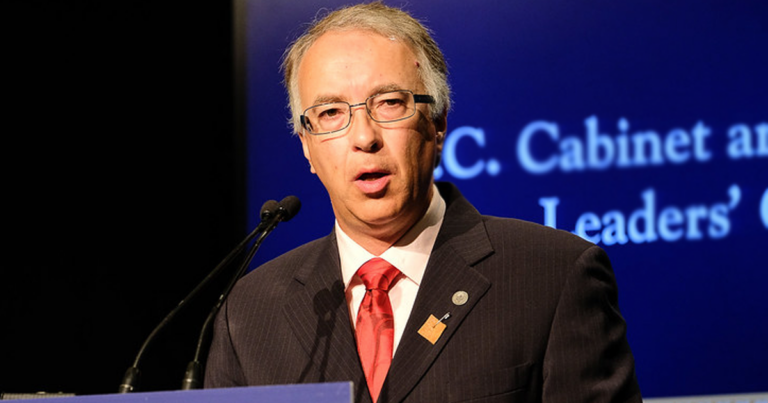
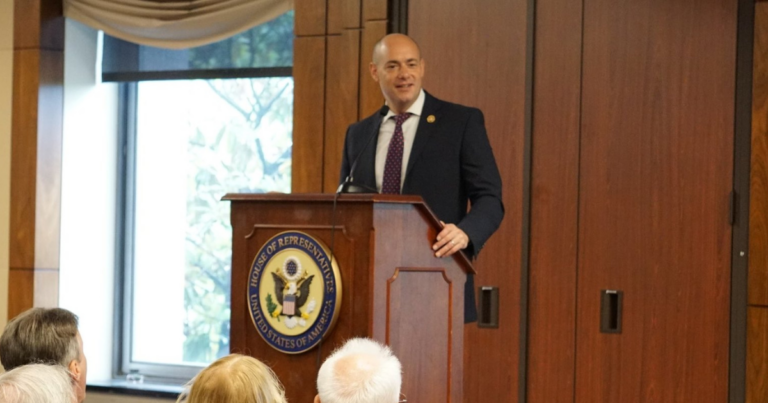
U.S. Democrat Congressman Greg Landsman pointed to anti-Israel protesters in Canada as an example of the success of the Islamic Regime in Iran’s plan to control the way that Westerners view the conflict in the Middle East.

“Recently, Canadian protesters gathered and declared, ‘What happened on Oct. 7 was the beginning of the great intifada. It has spread in the minds of people of the free world. When you scream with a loud voice, ‘long live Oct. 7,’ you will understand that these people decided to end their miseries and this nightmare called Israel,’” Landsman said to Congress.

After Iran launched hundreds of drones and missiles at Israel, open support for terrorism became increasingly common in Canada.

“In response to calls like these, the Iranian Ayatollah has said ‘it is working.’ That is right. He sees all of these protests against Israel, and the Ayatollah has said, ‘it is working,’” Landsman said.

His speech centered around the critical role Iran plays in the continuation of Hamas’ war against Israel.

“It has been said that there are four barriers to peace in the Middle East, but we are 

here tonight because there is only one barrier to peace, and that is the government of Iran,” Landsman said.

He mentioned that he was one of the few Jewish members of the House and noted the progress many countries in the Middle East have made toward peace and civility. 

Just decades ago every Arab nation in the region swore to wage war on Israel until it was no longer a state. Now many Arab countries not only acknowledge Israel’s statehood but co-operate with the Jewish state as well.

“Historically, Arab nations were united against Israel, launching frequent attacks with the intent of destroying the Jewish state, but things slowly changed one realignment at a time, achieved through American leadership and American partnership,” he said. “However, there is one glaring exception toward this progress, the totalitarian regime in Iran, which remains intent on Israel’s destruction and disrupting the path to peace. It creates chaos in the region.”

He said the media and activists have pushed a narrative that Israel is a vast country bullying a smaller region, like the biblical story of Goliath attacking the Israelites.

“If you looked at a map and you zoomed in, you may think that, too. There is Israel, and there is Gaza, very small. However, if you zoom out, you will see the reality of what is going on, and that the Goliath isn’t Israel, but it is Iran,” he said.

He noted that the totalitarian state has funded over 20 terrorist organizations surrounding Israel, has funded Houthi rebels in Yemen and is responsible for attacks against U.S. service members and more recently U.S. ships in the Red Sea.

Similar to the Ayatollah in Iran looking at Canada as an example of their success in controlling the narrative around the Israeli conflict, in December Hamas leadership thanked the Canadian government for their calls for a ceasefire in the region.
The Liberal government put out a statement distancing themselves from the terrorist group, saying that Canada’s call for a ceasefire was conditional on Hamas surrendering and releasing the Israeli hostages it took on Oct. 7.


Ratio’d | Exposing Canadian immigration consultants on TikTok

Canadian immigration agents are shamelessly exposing the loopholes and failures of Canada’s immigration system on TikTok. Whether it is securing work permits for illegals, converitng visitor visas into work permits or using loopholes to sponsor family members as “caregivers” into the country, Canada’s immigration system is clearly broken.  Just spend a few minutes watching these shameless immigration consultants on social media to see what’s wrong with the current system.

On the latest episode of Ratio’d, Harrison Faulkner exposes some of Canada’s immigration consultants and reacts to their TikTok videos

Tax Freedom Day is here: most Canadians earned enough to pay their annual tax share

The average Canadian family can now celebrate Tax Freedom Day.

If Canadians were made to pay all their yearly taxes before paying themselves, Thursday, Jun. 13, would mark the first day that the average family can keep the fruits of their labour.

According to a Fraser Institute report, the average Canadian family earns $147,570 this year and pays 44% of that, an estimated $65,766, in taxes.

If the average Canadian family had to pay all the taxes imposed on them by their federal, provincial, and municipal governments up front, it would take 164 days, ending on June 12.That would be over five months’ worth of income when represented on a calendar.

“Tax Freedom Day helps put the total tax burden in perspective and helps Canadians understand just how much of their money they pay in taxes every year,” Jake Fuss the director of Fiscal Studies at the Fraser Institute said in a news release.

“Canadians need to decide for themselves whether they are getting their money’s worth when it comes to how governments are spending their tax dollars.”

Tax Freedom Day is a day later than in 2023, and four days later than in 2019, before the COVID-19 Pandemic. If 2024 wasn’t a leap year, the day would have landed two days later than it did in 2023.

“This change is due to the expectation that the incomes of Canadians will increase slower than the total tax revenue forecasted by Canadian governments,” the report said.

The study found that the forecasts for Canadians’ personal income growth were lower than the government’s forecasts for payroll and health tax revenue.

Tax Freedom Day is determined by comparing personal growth in the private sector with the revenue forecasts from the provincial and federal governments’ budgets for that year.

The date varies according to the provincial tax burden in each province.Manitoba had the earliest Tax Freedom Day this year, on May 26, while Newfoundland and Labrador had the latest, on June 30. When the final income numbers are updated by Statistics Canada, the Fraser Institute updates its findings to include the actual data.

The latest Tax Freedom Day was June 27, 2000, two months later than it was when the calculation first began in 1961.

“Canadians should be worried about the nearly $70 billion in deficits the federal and provincial governments are forecasting this year because they will have substantial tax implications in future years,” the report said.

The authors calculated a “Balanced Budget Tax Freedom Day,” to determine what day Canadians would start working for themselves if the government forced them to pay for the current deficits.

For this year, Balanced Budget Tax Freedom Day will be June 23, 2024, a week’s worth of work for the average Canadian family.

Conservatives to air scathing ad of Trudeau during Oilers Stanley Cup Finals game

The Conservatives will put Prime Minister Justin Trudeau on blast during tonight’s Stanley Cup Finals game after securing air time for a political attack ad. 

Conservative leader Pierre Poilievre will launch his video premiere highlighting the deterioration of living standards in Canada under the Liberal government. 

The video plays on the “one promise” that the Conservatives claim Trudeau kept during his tenure. The ad will play during Thursday night’s Edmonton Oilers Stanley Cup Playoffs game against the Florida Panthers.

True North was provided a preview of the short video ahead of its broadcast on game night.

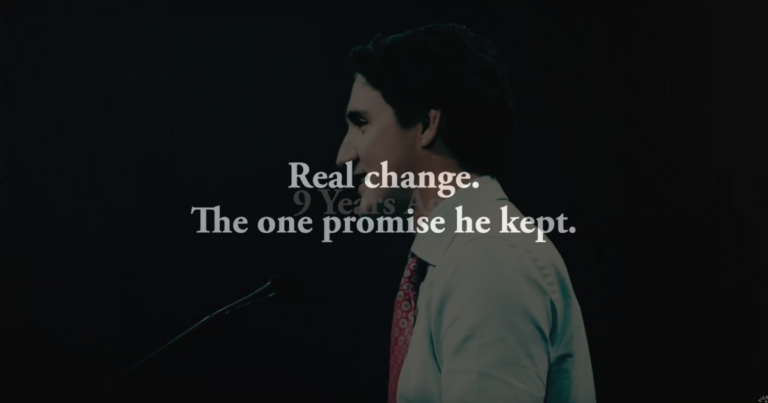
The video, entitled “Real change. The one promise he kept,” shows various Canadian street views from coast to coast. First, viewers are shown an image or video from 2015, before Prime Minister Justin Trudeau took office, followed by an image or video from 2023, after nine years of Trudeau’s leadership. 

The video begins with Trudeau’s pledge at a conference in 2015, where he said, “It’s time for a change in this country, my friends — a real change!” – a slogan repeated throughout the video’s scenes.

Videos and photos flash back and forth, showing the stark difference in the country’s streets between 2015 and 2023. Pristine streets turn into encampments filled with tents and garbage across the country during the time-lapse.

The final five seconds of the thirty-second video don’t include any images but display the text “Real change. The one promise he kept.”

The Oilers are currently down 2-0 in the series against the Florida Panthers. Tonight will be the first game of the series in Edmonton, the first game of the Stanley Cup Finals in Canada.

Canada has not won the Stanley Cup since 1993, the same year the Florida Panthers were founded.

The Oilers play the Panthers tonight, Thursday, at 6:00 pm Mountain Time. Fans of hockey or critics of Trudeau can tune into the game on Sportsnet. They can also watch on CBC, despite the Conservative motion compelling them to play the games failing, following fan outrage after the public broadcaster failed to air several previous Oilers playoff games.

John Rustad would implement Alberta-style mandatory recovery for drug addicts

BC Conservative leader John Rustad said that if elected he would trigger the notwithstanding clause to enforce mandatory recovery for drug addicts.

In an exclusive interview on The Andrew Lawton Show, Rustad laid out how his party would approach the opioid crisis that has ravaged his province, killing 2,511 people in 2023 alone. 

Rustad said that the so-called“safe supply” and decriminalization approach has failed and only exacerbated the crisis. Rustad said the province needs to move to a model of recovery, much like the approach Alberta is taking.

“We need to be able to move to that recovery model, and we need to have everything in place, from doctor-prescribed treatment, to short-term voluntary recovery, to longer-term voluntary recovery, to involuntary recovery, to even long-term care for people,” said Rustad.

Elaborating on his point, Rustad said that the province had a responsibility to order involuntary recovery for those who are at clear risk of harming themselves.

“If somebody has OD’d, and is being brought back to life, clearly they are at risk of harming themselves,” said Rustad.

“I just think that it’s compassionate to be able to do that. Yes, you are impacting on their rights, but at the same time in a society we need to be looking at this from a perspective of saying ‘they’re not capable of being able of making that decision’ and we need to be able to step up and be able to help them in those circumstances.”

Rustad said that if he were to go forward with these reforms to British Columbia’s addictions policies, his government would more than likely face a challenge under section 7 of the Charter of Rights and Freedoms on the grounds of violating the “life, liberty, and security of the person.”

In response, Rustad pledged to invoke Section 33 allowing provincial legislatures to enforce the policy.

“We will likely get a Charter challenge, because you’re actually taking away somebody’s rights when you have mandatory recovery that people may end up having to utilize,” said Rustad.

“We need to do what’s right for the province, what’s right for the people in the society, and if the courts aren’t going to allow us to do that, we might have to use something like the notwithstanding clause to be able to implement it.”

While Premier Danielle Smith’s government has just begun expanding the province’s capacity to deliver treatment to drug addicts, the province has witnessed a spike in opioid-related fatalities in the near term.

Disapproval looms over Trudeau, other leaders at high stakes G7 summit

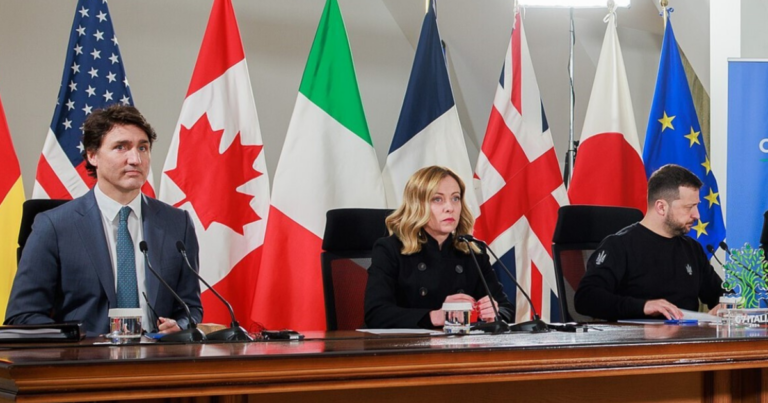
As G7 leaders gather in Apulia, Italy, many leave behind declining approval ratings in their home countries for the brief reprieve of what’s expected to be a busy itinerary of international decision-making.

Prime Minister Justin Trudeau is among the most unpopular G7 leaders, scraping by with a 28% approval rating

Meanwhile, French President Emmanuel Macron, who recently called a snap election due to the sweeping victory of right-wing parties during the European elections, has the lowest approval rating of all G7 leaders standing at a mere 24%. Macron is followed by U.K. Prime Minister Rishi Sunak with 25%. As for U.S. President Joe Biden, his approval ratings recently hit an all-time low of 37%. 

Throughout the duration of the summit, which is expected to last until Jun. 15, Trudeau will be flanked by his more popular and often adversarial colleagues. Italian Prime Minister and G7 host Giorgia Meloni enjoys a modest 42% approval rating, while Indian Prime Minister Narendra Modi has a 70% approval rating at home. 

The summit kicked off on Thursday with the announcement of a $5 billion deal to seize Russian assets abroad for the Ukrainian war effort. It was Canada’s idea to appropriate Russian property in the first place, with Prime Minister Trudeau pitching the idea to his colleagues in February. 

Yet things won’t likely be smooth sailing for Trudeau, who has to navigate tense relations with India over the arrests of four Indian nationals believed to be involved in the assassination of Khalistani activist Hardeep Singh Nijjar on Canadian soil.

Modi’s government has denied any involvement in the killings, leading to a tense diplomatic row between the two administrations. 

There’s also Trudeau’s habit of using the global summit to dig at Meloni and other Conservative politicians. During last year’s iteration of the G7 meeting in Japan, Trudeau took the opportunity to lecture the Italian prime minister on her country’s LGBTQ record. 

Differences between the two leaders could rear their head again as Meloni pushes to remove mention of “safe and legal abortion” from the final statement to be put out by the Group of Seven at the summit’s completion. 
With the meeting being hosted by Italy, G7 leaders can also expect the participation of Pope Francis who is expected to attend bilateral meetings with heads of state on Friday, including with Trudeau.

Economists warn housing pace can’t sustain “unchecked” immigration

Top economists warn that Canada’s housing shortage is being exacerbated by the influx of newcomers to the country. 

RBC’s chief economist Richard Hogue published a report in April saying that Canada would need to double its housing construction to meet the demand of newcomers. 

According to Hogue’s calculations, Canada must build a minimum of 320,00 housing units annually from now until 2030 to keep up with the demand. 

“Higher deliveries would need to happen in the near term given our expectation for peak population growth in 2023-2024,” writes Hogue.

The population grew by 411,000 people in the first quarter of this year, marking a 47% increase over that same period last year,at a time when Canada is facing a housing supply crisis. 

Toronto alone saw a 67% increase in immigration from the first quarter of 2024 compared to 2023. 

“The crest of the Millennial cohort is around 33 years old, or right in their household formation and family-building years,”  BMO chief economist Douglas Porter told STOREYS in an interview.

“So, with the construction industry already building at full speed to satisfy domestic demand, we clearly don’t have the infrastructure or ability to meet the additional demand created by historic immigration levels. That is reflected in a worsened affordability problem.”

Canada’s population burst is almost entirely the result of immigration, which accounted for 97.6% of growth last year. 

The last time Canada saw its population grow at this rate was in 1957. 

“The result is not only still-high resale prices, but surging rents across many markets, including smaller cities with universities,” said Porter. “The catch is that driving down prices will incent less supply; and at the same time, heightened immigration flows designed to ease labour supply pressure immediately add to the housing demand they are trying to meet.” 

“The infrastructure in place and the industry’s ability to build clearly can’t support unchecked levels of demand, so the affordability conundrum continues.”

While factors like interest rates and unemployment can sway the housing market in the short term, Porter said that over the long term,  “demographic trends have the biggest weight on home prices.”

Hogue’s analysis is similar, his findings suggest that if immigration, either temporary or permanent begins to somewhat neutralize, then housing pricing will ease as well. 

“In and of itself, lower immigration should ultimately help improve affordability but there are many other factors at play that will have a bigger impact,” Hogue told STOREYS, also citing interest rates as a major factor, but said that focusing on reducing demand should be a priority. 

“Managing the population inflow to match what can be reasonably supplied,” added Porter. “On that front, Ottawa’s recent steps to bring net new immigration back in line with historical norms (i.e., closer to 1% of the population) is at least a step in the right direction — assuming they are able to stick to the new plan.”

Dufferin-Peel Catholic school board votes against flying the Pride flag at its schools

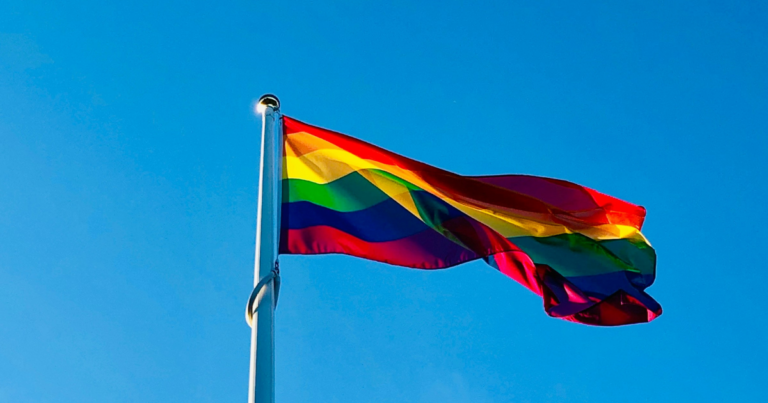
A Toronto area Catholic school board has voted against a motion to fly the Pride flag during “days of observance.”

A list of days that seem to grow each year.

The Dufferin-Peel Catholic school board voted six to three against the motion to amend the board’s flag policy, which stated that only Canada’s national, provincial, municipal, or papal flags could be flown at the school.

Two of the trustees were absent and did not have their votes counted.

The amendment would allow any flag to be flown during “periods of observance.”

The amendment would have allowed the Pride flag to be flown whenever there was a Pride-related holiday.

The motion was brought on by Mississauga Trustee Brea Corbet of Wards 9 and 10 and was seconded by Trustee Bruno Iannicca of Mississauga’s Ward 7.

In a video posted to X, community members celebrated the news that the motion had been shot down.

While debating the motion, Corbet brought up how she had become the victim of “targeted advocacy and aggressive campaigns” from a coordinated group of Catholics trying to get her to drop the motion which would celebrate Pride at the Catholic schools in the region.

The emails alleged that she had acted illegally and against procedure by trying to amend the board’s flag policy, which prevented non-government flags from being flown on a limited number of flag polls outside of schools in the district.

However, the in-house legal council during the board meeting determined that Corbet was procedurally correct in seeking the amendment.

“We must reflect on whether we as a Catholic school board are doing enough to combat discrimination, homophobia, intolerance, and hate. All are welcome in our Catholic schools

That does not mean only some,” Corbet said. “Jesus surrounded himself with the most marginalized in society. God loves everyone.”

For Corbet flying the Pride flag is about making sure students know the board stands against bullying.

“As Catholics, we are called to love everyone because Jesus loved us first. As system leaders, I feel an obligation to keep working to ensure our school communities are safe, accepting and welcoming for everyone,” she said.

Trustees Herman Viloria and Paula Dametto-Giovannozzi criticized Corbet’s position, saying there are other ways to make students feel safe besides flying a political flag, which they said would cause division among the Catholic school community.

Dametto-Giovannozzi said all who are “under the banner of the cross” are already included, and no other symbol is required.

“The LGBTQ+ community is not our enemy. We all fall short of God’s glory. We are not judging but we are also not promoting. We don’t want to outwardly promote because our faith doesn’t allow us to,” Dametto-Giovannozzi said. “There is only one symbol that should be promoted by a Christian, and that is the cross.”

Viloria stated that the flag is opposed to their mandate as a Catholic board which is to uphold the teachings of the Catholic faith.

“The Church teaches that marriage is a sacrament between one man and one woman and that sexual activity is reserved for this union. A pride flag, however, is often a stance or normalization of same-sex relationships and the broader acceptance of diverse sexual practices which conflict with these teachings,” he said. “By flying the pride flag a Catholic school may appear to endorse these positions, leading to confusion and potentially compromising its mission to uphold and teach Catholic values.”

Iannicca noted that Viloria had at one time flown the Pride flag at a school when he was the principal and the fact that he did contradicts his current position that it shouldn’t be flown.

But Viloria said he was bullied into flying the flag by members of the school board that he could not name.

Trustee Darryl Brian D’souza stated that he intends to put forward a motion that would require schools to fly the municipal or provincial flag on their second flag pole if they have one. 

Only one school in the district has three flag poles according to those representing the board at the hearing.

The Andrew Lawton Show | British Columbia Conservatives are surging in the polls

The British Columbia Conservatives – a party that elected no MLAS to the B.C. legislature last election – are surging in the polls, with the current official opposition, B.C United (formerly the B.C. Liberals) haemorrhaging support and even several caucus members to the Conservatives. Why is this change happening? In this edition of The Andrew Lawton Show, B.C. Conservative leader John Rustad joins for the entire episode to discuss his vision for British Columbia – including healthcare choice, parental right, energy development, and more – and why he thinks that message is resonating with voters in a way it hasn’t for his party in decades. 

SUBSCRIBE TO THE ANDREW LAWTON SHOW

The Daily Brief | Canadians continue to tune out CBC

Independent media outlets are capturing an increasing share of the Canadian news landscape while the legacy media falters as the primary news source for Canadians.

Plus, after weeks of speculation, Conservative Leader Pierre Poilievre laid down his opposition to the Liberals’ capital gains tax hike.

And the Trudeau government plans to invest $110 million into an “anti-racism strategy.”

Tune into The Daily Brief with Cosmin Dzsurdzsa and Noah Jarvis!

SUBSCRIBE TO THE DAILY BRIEF