Calgary MP George Chahal fights deportation of Humboldt Broncos crash driver

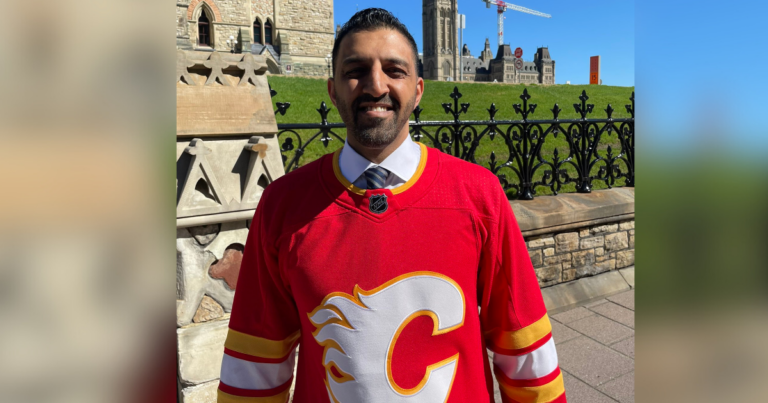
Calgary Liberal MP George Chahal is trying to thwart the deportation of Jaskirat Singh Sidhu, the truck driver convicted of dangerous driving causing death in the horrific Humboldt Broncos bus crash in 2018.

The crash resulted in Sidhu being sentenced to eight years for causing the collision, which resulted in 16 fatalities and 13 injuries. He was granted full parole last year.

Chahal said, during an interview with CBC, that he had been following the story for years, like many Canadians. 

“As a father of three girls, it’s just unbearable to think of what the families went through with their losses. And I know many of them are still grieving and will continue to do so,” said Chahal. 

Sidhu is one of Chahal’s constituents, and they recently met in person. 

Chahal explained that if Sidhu is deported, he will be separated from his family. His young child has a heart and lung condition that requires neonatal care and attention.

“I’m hoping that Canadians can provide forgiveness to him, and we can give the opportunity for him to remain here with his family, to be able to support and provide for them,” said Chahal.

Sidhu became a permanent resident of Canada in 2014. Permanent residents convicted of a crime that carries a sentence of more than six months are ineligible to remain in the country.

Chahal explained that Sidhu is eligible to apply to stay in Canada on humanitarian, compassionate grounds to remain with his wife and child. 

“I’m hoping that the families and Canadians will give this individual an opportunity to remain with his family and forgive him for what he’s done, as he will be living with this pain for the rest of his life,” said Chahal.

The Liberal MP referenced an email he sent to his caucus colleagues to tell them he’d advocate for Sidhu to remain in Canada. 

“Jaskirat served his prison sentence. Ever since that fateful day, we have witnessed the actions of a man who, having made a grave error, has shown true remorse and full accountability for what he did. Although the law may demand deportation for a permanent resident in his position, we must ask ourselves: What will deportation accomplish? Will it make a single Canadian safer? Will it make Canada a better place to live? The answer is no, it will not,” wrote Chahal in his email to his colleagues. 

A federal judge initially upheld Sidhu’s deportation in Dec. 2023. A logbook review found that Sidhu violated 51 federal and 19 Saskatchewan regulations between Mar. 26 and Apr. 6, 2018, the day of the crash. 

Adesh Deol Trucking Ltd., the employer of Jaspreet Singh Sidhu, was charged with multiple violations of federal and provincial trucking regulations, including failing to maintain proper logbooks. The company faced eight counts of non-compliance with various safety and logbook requirements.

A GoFundMe campaign to support the Humboldt Broncos and their families became the most successful campaign ever launched on the platform in Canada. It raised over $10 million in the week following the crash and surpassed $15 million by the time it concluded.

An Immigration and Refugee Board hearing for Sidhu announced that he would be deported to India on May 21. The board did not consider humanitarian or compassionate factors, just whether Sidhu was inadmissible for serious criminality. He was found to be inadmissible and was subsequently given a deportation order.

However, Sidhu may not be deported for months or years, as more legal and procedural steps are expected to follow.

Canadians wide open to cyberattacks due to gov’s lack of action says Auditor General 

As state and criminal actors increasingly resort to cyberattacks to confound Western allies, Canadians are wide open to malicious threats.

The Trudeau government needs more capacity and resources to prevent cybercrime as the increasing number of cyberattacks become more sophisticated, according to a report by the auditor general.

According to the report, the government has “breakdowns in response, coordination, enforcement, tracking, and analysis between and across the organizations responsible for protecting Canadians from cybercrime.”

Government agencies like the Royal Canadian Mounted Police, Communications Security Establishment Canada, and the Canadian Radio-television and Telecommunications Commission were found to be ill-equipped to effectively enforce laws intended to protect Canadians from cyberattacks

“In 2022, victims of fraud reported financial losses totalling $531 million to the Canadian Anti Fraud Centre. Three-quarters of these reports were cybercrime related,” reads the Auditor General’s report. 

“The centre estimates that only 5% to 10% of cybercrimes are reported. Without prompt action, financial and personal information losses will only grow as the volume of cybercrime and attacks continues to increase.”

The RCMP, CSEC and Public Safety Canada have all considered implementing a single place where Canadians could report cybercrime incidents, however, this has yet to happen.

Currently, Canadians are left to determine for themselves which agency or organization is most appropriate to report to based on the nature of their incident. 

One such incident involved a complaint regarding an offer to sell child sexual exploitation material that was reported to the CRTC, who in response did not refer the matter to law enforcement but instead told the complainant to contact law enforcement themselves directly.

Another incident involving the CRTC saw the agency deleting evidence and returning electronic devices to a person being investigated for violation of anti-spam legislation so that the CRTC could avoid being served with a search warrant by a law enforcement agency.

“Between 2021 and 2023, Communications Security Establishment Canada deemed that almost half of the 10,850 reports it received were out of its mandate because they related to individual Canadians and not to organizations,” reads the report. 

“However, it did not respond to many of these individuals to inform them to report their situation to another authority.”

The Auditor General is recommending that Canada strengthen its cybersecurity workforce across each of these organizations, including hiring more staff to work for the RCMP’s cybersecurity investigative teams. 

The report estimates that one-third of positions across all teams are presently vacant and those positions must be filled to update Canada’s National Cyber Security Strategy.

Furthermore, the RCMP has yet to deploy its National Cybercrime Solution, an information database which would make reporting cyber crimes easy for victims and would also be shared amongst law enforcement agencies. 

The database would also allow for the ability to cross-reference malware samples throughout Canada and internationally. 

Cybersecurity was also recently cited as a top vulnerability to the country’s financial stability by former Bank of Canada governor Stephen Poloz. 

China pressuring Canadian media execs, journalists to manipulate news: NSICOP report

China was paying select Canadian media executives and journalists to act as conduits for its foreign election interference operations.

The media manipulation scheme was alleged in a section of the National Security and Intelligence Committee of Parliamentarians report tabled in the House of Commons on Monday. 

According to the redacted section, China’s regime was “interfering with Canadian media content via direct engagement with Canadian media executives and journalists.” 

Specific examples included six sentences that were redacted. The report notes that the redacted portion described “examples of (China) paying to publish media articles without attribution, sponsoring media travel to the (People’s Republic of China), pressuring journalists to withdraw articles and creating false accounts on social media to spread disinformation.” 

Concerns about Beijing’s control over certain media outlets have a long history in Canada. In 2021, Canadian Security Intelligence Service Director David Vigneault warned Prime Minister Justin Trudeau in a briefing memo that media influence operations had “become normalized,” especially with ethnic media outlets.  

“In particular, PRC media influence activities in Canada have become normalized,” the memo stated. 

“Chinese-language media outlets operating in Canada and members of the Chinese-Canadian community are primary targets of PRC-directed foreign influenced activities.”

Legacy media outlets were also a target. Last year, declassified CSIS documents pointed to “key media entities” receiving substantial funding from China. 

China often targeted “key editors, producers and high-ranking managers” via Vancouver’s Chinese consulate, even going so far as threatening journalists to elect politicians who sympathize with Chinese interests. 

“Traditional and online media outlets play an important role during election periods, offering a curated communications channel between political campaigns and the general public,” wrote CSIS.

“(China works) to manipulate and influence key media entities, control narratives, and disseminate disinformation.”

Ratio’d | Justin Trudeau vs. Pierre Poilievre: Who will Toronto residents vote for?

Pierre Poilievre is reaching his second full year as leader of the Conservative Party and opposition leader. If an election were held today, Poilievre’s Conservatives would have a majority government however the Tories have never traditionally done well in downtown Toronto.

Harrison Faulkner went down to Yonge-Dundas Square – which is soon to be erased and given an African tribal name – to ask Torontonians if an election were held today, who they would choose to lead Canada.

Watch the latest episode of Ratio’d to find out what they had to say!

Feds shield names of MP foreign interference collaborators

The Liberal government refused to reveal the names of MPs who knowingly collaborated in foreign interference operations with nations like China and India. 

A national security committee found that a select group of parliamentarians “wittingly” assisted foreign state actors with interfering in Canadian democracy.

In one case, an unnamed MP was accused of giving classified information to a known foreign intelligence officer.

If the accusations are true, those involved could face serious charges.

The report was heavily redacted “to remove injurious or privileged information.”

The law that created the National Security and Intelligence Committee of Parliamentarians allowed Prime Minister Justin Trudeau to request that a “revised” and redacted version of the report be released to the public if he believed the information contained could be “injurious” to national security.

Conservative Leader Pierre Poilievre said Canadians have a right to know which MPs collaborated.

“We don’t need secrets and confidentiality. That’s what got us into this problem in the first place. What we need are the facts so that Canadians can judge,” he said before calling on the government to hand over the redacted information to the RCMP for a police investigation.

When asked about the issue, four Liberal ministers indicated their government would not tell Canadians the names of the MPs involved.

Public Safety Minister Dominic LeBlanc sidestepped the question of whether he thinks Canadians have a right to know who is implicated when reporters asked.

“I think Canadians need to know that the national security and intelligence agencies are doing the important work that they do,” LeBlanc said. “I think Canadians understand that this work is done with a certain requirement of confidentiality and secrecy to protect sources and to protect the methods in which the intelligence agencies operate.”

He said that some of the information was given to Canada by foreign national partners, and it came with caveats regarding how to use and release the information.

“No other western democracy announces the details of intelligence investigations publicly, and to pretend that that’s a reasonable solution is not consistent with international practice or with what’s necessary to protect the security of Canadians,” he said.

Housing Minister Sean Fraser indicated in a scrum with reporters that the Liberals felt the redacted information should be left to law enforcement and the courts.

“You don’t want to be openly discussing ways in which foreign interference could be conducted, where those who might have ulterior motives might be paying very close attention,” Fraser said. “The appropriate investigations ought to continue. Many of them, particularly if they involve criminal investigations, will be done independently by security officials and police agencies.”

Deputy Prime Minister Chrystia Freeland refused to answer whether the Liberals would expel any members involved in aiding foreign interference from their party if found to be among the conspirators.

“The guarantee I can give Canadians is that our government takes foreign interference very seriously. We have put tougher measures than existed under the previous Conservative government to fight foreign interference,” she said. “We take very seriously the role of law enforcement and the importance, in our rule of law society, of law enforcement making the decisions about law enforcement.”

Freeland did, however, promise that the Liberal party would conduct an internal follow-up.

Other federal parties didn’t find the question as difficult to answer directly.

Yves-François Blanchet, the leader of the Bloc Québécois, confirmed that if anyone in his caucus were discovered to be in cahoots with foreign governments interfering in Canadian democracy, they would be kicked out of his party.

Jagmeet Singh, the leader of the NDP, took it one step further.

“If there’s any evidence that someone knowingly worked with a foreign government to influence our democracy, they should no longer be a member of parliament,” Singh said when reporters asked.

The Conservative foreign affairs critic, Michael Chong, indicated that if individuals are found to be from the Conservatives, the party will take “appropriate action.”

A representative from the party told True North in an email that the party doesn’t believe any of its members are implicated.

“The Conservative Party does not have access to the classified information and therefore does not have any information with which to conduct a review,” the representative added.

During the question period Wednesday, LeBlanc said Poilievre could have access to the confidential NSICOP report if he wanted to.

Poilievre has previously declined to be briefed similarly to avoid being “sworn to secrecy,” which he has said would result in his inability to tell Canadians the truth.

Australia opens military recruitment to foreign citizens, Canadians included

Canadians who’ve lived in Australia for at least one year can now apply to serve in the Australian military as part of a pilot project to expand the country’s armed forces.

The Australian Defence Force announced on Tuesday that it was opening its ranks to foreigners. 

Starting in July 2024, eligible New Zealanders can apply to join the Australian Defence Force. By January 2025, applications will open to permanent residents of the United Kingdom, the United States, and Canada. The pilot program is currently restricted to these select Commonwealth nations. 

For applicants from abroad to be accepted, they need to meet the entry standards and security requirements of the Australian Defence Force, have lived in Australia for a minimum of one year immediately before applying, have not served in a foreign military in the last two years, and be applicable to receive Australian citizenship.

Australia’s Minister of Defence Personnel Matt Keogh said that the country was being bold in its recruitment strategy. 

“Recruiting from a wider pool of people will help ensure our Australian Defence Force reflects the full diversity of Australia and is able to draw on the talents of the entirety of Australian society,” he said.

The Australian Defence Force includes the country’s navy, army, and air force. 

Australia’s Deputy Prime Minister Richard Marles emphasized that opening recruitment to New Zealanders would help strengthen the Australian and New Zealand Army Corps’ bond, which formed in the First World War. 

“The Australian government has chosen to grow the Australian Defence Force because it is essential to meet the nation’s security challenges through the next decade and beyond,” said Marles.

Keogh told the Australian Broadcasting Corporation that Australia plans to recruit 350 people annually through the international route. He hopes this route will help bring the number of permanent Australian Defence Force members to 80,000 by 2040, which had 57,000 members last year.

Marles said that the goal cannot be met without international recruits. 

Canada has had recruitment shortfalls of its own, despite the Liberals’ plan to boost recruitment by lowering standards and promoting diversity over merit.

In 2022, only 5,242 Canadians enlisted in the Armed Forces, a decrease of 35% from 8,069 in 2021. 

The staggering decrease comes despite the announcement in late 2022 by the Minister of National Defence that permanent residents were welcome to apply and enroll in Canada’s military.

Between Nov. 1, 2022, and Nov. 24, 2023, 21,472 permanent residents applied to the Canadian Armed Forces. Only 77 were accepted. 

The Alberta Roundup | Ottawa already seeking to ‘derail’ an Alberta pension

Today on the Alberta Roundup with Rachel Emmanuel, Rachel interviews UCP Bonnyville chair and lead for the Alberta First Pension, Mitch Sylvestre. He says an Alberta based pension plan is a “no brainer,” adding that seniors would be given a raise if the pension plan was brought home —contrary to claims from the Alberta NDP that pulling out of the Canada Pension Plan would cause seniors to lose their pension.

Sylvestre also warns that the federal government would make the process of pulling out of the CPP as difficult as possible, and explains how the Ottawa is already seeking to “derail” the province’s efforts.

Tune into the Alberta Roundup now!

SUBSCRIBE TO THE ALBERTA ROUNDUP

Liberal minister’s dealings with lobbyists trigger ethics investigation 

The Liberal government faces yet another ethics investigation for potential conflicts of interest.

This time, the subject of the investigation is Employment Minister Randy Boissonnault. The Office of the Ethics Commissioner has decided to investigate Boissonnault’s business dealings with a lobbying firm and medical supply business. 

Ethics Commissioner Konrad W. von Finckenstein announced that he would be investigating Boissonnault during a parliamentary ethics committee meeting on Tuesday, reversing a previous decision not to. 

“Clearly we will look into this,” said von Finckenstein. “If our looking into it shows there is substance to it, that there may be contravention of the (Conflict of Interest Act), then of course, we have the capacity to self-initiate an inquiry.”

The commissioner had previously told the committee that Boissonault had complied with the federal Conflict of Interest Act and told his office that he would not investigate last month. 

However, text messages obtained by Global News between Boissonnault and Global Health Imports co-founder Stephen Anderson from 2020 that surfaced during Tuesday’s meeting changed von Finklestein’s mind. 

“It’s complete news to me, never knew anything about it. It obviously raises some serious implications if the story is true,” von Finckenstein said. “The ruling that we made was based on the information (Boissonnault) disclosed to us.” 

Von Finkenstein said that Boissonnault only disclosed the 50% stake his numbered company had in the business of concern, Global Health Imports. 

Other text messages obtained between Boissonnault and Malvina Ghaoui, principal of the California-based personal protective equipment procurement company the Ghaoui Group were also brought into question before the committee.

According to the texts obtained by Global News, Stephen Anderson allegedly forwarded a text message on Sept. 8, 2022, to a buyer purportedly named “Randy.”

“Anderson, it’s 13:14 MST and 15:14 EST it literally takes 10 seconds to complete a (wire) transfer,” reads the text allegedly written by “Randy” to Anderson, who then forwarded it to Ghaoui.

 “I am telling you we are NOT ALLOCATING like this, please reach out and see what the reason is now, you assured me this morning this was done first thing…Be available in 15 for a partner call.”

Anderson and Ghaoui were allegedly discussing a deposit that was to be sent by the Ghaoui Group to GHI, which Boissonault co-founded with Anderson in 2020.

Boissonault was not in the office at this time and told the committee that he has not had any dealings with GHI since his election in 2021, stating, “I am not that “Randy.’” 

“We have had no direct communication with Mr. Boissonnault at any point in our dealings with Stephen and the companies,” wrote Ghaoui Group representative in response to the allegations, claiming that Anderson had informed them that Boissinault was a public official. 

Cabinet ministers are prohibited from operating or managing business while in office under federal law. 

Committee member Anthony Housefather defended Boissonnault, saying that Randy is a very common name in Canada, with 28,000 Randys born in 1956, “A lot of Randys,” said Housefather.

A spokesperson for Boissonault stated that at the time of the text, he was at a cabinet retreat and that “all electronic devices (were) prohibited from entering the meeting room and ministers were in lock-up throughout the day.” 

However, opposition committee members grilled Boissonnault’s “outstanding” or delayed payments he’d received while in office, to which he responded by saying all work had been done while he was a private citizen.

“I am not a lobbyist,” said Boissonault. “I have never been a lobbyist. And I have never had any interest in being a lobbyist.”

Canadian Cancer Society apologizes for not calling cervix “front hole” in non-binary disclaimer

On a web page dedicated to cervical cancer, the Canadian Cancer Society is apologizing for referring to the cervix by its technical name rather than euphemisms such as “front hole.”

The agency also conceded that “men can have these body parts too.”

“Trans, non-binary and gender-diverse people face significant barriers to accessing healthcare and are less likely than cisgender people to be screened for cancer,” wrote the Canadian Cancer Society in a page on cervical cancer screening for LGBTQ people.

In a “words matter” section on the organization’s official website, the Canadian Cancer Society atoned for the fact that some non-binary and transgender people might find the term “cervix” offensive and preferred to use the term “front hole” to refer to female genitalia. 

“We recognize that many trans men and non-binary people may have mixed feelings about or feel distanced from words like ‘cervix.’ You may prefer other words, such as ‘front hole.’ We recognize the limitations of the words we’ve used while also acknowledging the need for simplicity,” the Canadian Cancer Society wrote.

Source: cancer.ca

True North reached out to the Canadian Cancer Society for comment but did not receive a response.

Women’s rights activists argue that the terminology is both objectifying and derogatory. British gender-critical writer Julie Burchill accused LGBT activists of erasing women by adopting the terms. 

“Both ‘bonus hole’ and ‘front hole’ are recommended as trans-friendly alternatives to vagina. Trans ideologues have long tried to erase or appropriate any word that is specific to females – from woman to mother and now vagina. And they have gained a foothold in our schools and in our media. Now gynaecological-health providers are swallowing the stupid pills, too,” argued Burchill in a 2023 essay published to Spiked. 

The term “front hole” and “bonus hole” have been popularized by LGBTQ activists as a replacement for the biologically correct term “vagina.” 

In 2022, controversy erupted after the Boston Children’s Hospital used the term. Other organizations dedicated to women’s health have also adopted the offensive term. 

“A transgender male teen may still have a vagina. He won’t call it a vagina. He may use the term ‘front hole’ or a different term,” said Dr. Elizabeth Boskey in a video by the hospital.

The Andrew Lawton Show | Has the media irreparably squandered its trust?

Trust in the legacy media is in continued decline, and doesn’t show any immediate signs of reversing. In a recent column, writer Peter Menzies pointed to the media’s mishandling of the residential school unmarked grave story over the past three years as a crucial example of this, but there are others. Can the media regain this lost trust, and should government be subsidizing newsrooms that Canadians aren’t interested in supporting? Menzies joins The Andrew Lawton Show to discuss.

Also, has wokeness in education gone too far? The Heterdox Academy at Wilfrid Laurier University is bringing in two education researchers later this month for a discussion about what the Ministry of Education is promoting in your kids’ schools. Prof. Geoff Horsman joins to weigh in on this and the broader state of academic freedom.

SUBSCRIBE TO THE ANDREW LAWTON SHOW