CBC Kids asks if commemorating D-Day is a “celebration of violence”

In the lead-up to the 80th anniversary of D-Day, CBC Kids asked viewers whether or not it’s important to commemorate such battles due to the violent nature of war.

“Is it important to commemorate battles like D-Day? Why or why not?” asked the CBC Kids website.

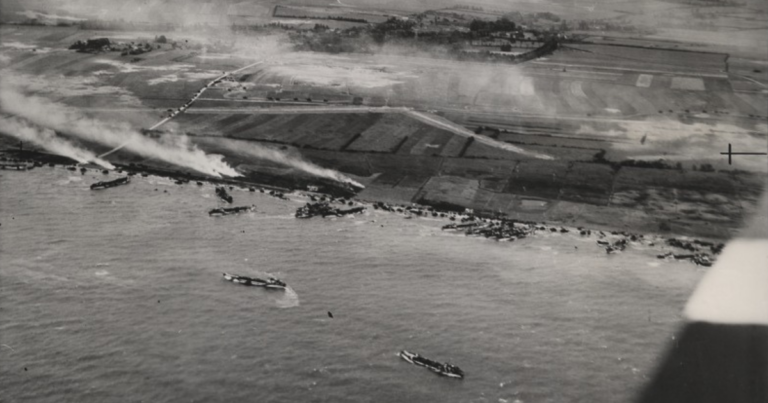
D-Day was the largest seaborne invasion in history and marked the turning point in the Allied forces defeating the Nazis in the Second World War. It took place June 6, 1944. 

“It can be argued that commemorating military battles is celebrating and glorifying war,” reads CBC Kids’ website. “But it can also be seen as a moment of reflection on the importance of peace.”

“So what do you think? Is it important to remember and honour our military past? Or is it celebrating violence?”

The page then offers a text box for people to fill out their opinions on the subject. 

The debate posed by the state-funded broadcaster was not well received, with many Canadians taking offence to the CBC’s framing of one of Canada’s greatest contributions on the world stage.

“This shouldn’t have to be said because it’s an elementary point, but such is the intelligence level of CBC staffers: commemorating D-Day is the opposite of glorifying violence,” reads a user post from X in response to the story.  “It’s about recognizing the contributions of our soldiers in ending violence at great personal expense.”

“To paraphrase a famous author, ‘evil flourishes when good men stay silent’.  Children must learn the difference between good and evil and to speak/act against evil recognizing that action comes at a cost,” wrote another X user. 

“We’re not celebrating violence, we’re celebrating freedom and the sacrifices that real heroes made for their country and its citizens,” wrote another. 

“While the intention of our question was rooted in engaging kids about D-Day, we fully recognize the words we used to approach that topic were inappropriate,” CBC spokesperson Chuck Thompson told True North. 

“We have since acknowledged as much on the site and revised the headline and copy accordingly.”

The title has since been changed to, “Do you commemorate D-Day and what does it mean to you?”

Of the almost 150,000 Allied troops who landed on or parachuted onto the beaches of Normandy, France, 14,000 were Canadian. 

The invasion area that the Canadians assaulted was a beachfront code-named “Juno,” with Canadian paratroopers landing elsewhere along the area.

While 359 Canadians were killed, D-Day ultimately achieved its goal.

It was a brutal battle as the Allied forces had to run into heavy German artillery, machine guns and an area littered with landmines. 

The Royal Canadian Navy was also present on D-Day, contributing 110 ships and 10,000 sailors to support infantry soldiers in the landing, while the Royal Canadian Air Force bombed specific targets inland and protected the sky above from enemy aircraft. 

A ceremony at Juno Beach to commemorate the 80th anniversary took place Thursday, with Prime Minister Justin Trudeau and 13 Canadian veterans in attendance.

One of the veterans in attendance, aged 104, was present on Juno Beach during the invasion.
NDP MPs want to frame Canadian oil and gas like the fight against tobacco

Nothing is off the table for the NDP as it prepares for a full-out crusade against the Canadian oil and gas industry in ongoing committee hearings.

NDP MPs told the media they are concocting a plan to hold not just “Big Oil and Gas” accountable for allegedly “burning the planet” but also the Conservative and Liberal parties for allowing it.

As they grill oil and gas executives in a House of Commons environment committee hearing, the NDP wants the world to compare oil and gas producers to the tobacco industry so they can ban them from advertising.

Laurel Collins, the NDP critic for the environment and climate change, and Charlie Angus the party’s natural resources critic said during a press conference that the hearing would be an opportunity to show Canadians how producing energy was “making people sick.”

“This is the Big Tobacco moment for oil and gas. We have to hold these companies accountable. They are not good corporate citizens. They are not attempting to reduce emissions, and they’re saying we will continue to make profits we will continue to burn your children’s future,” Angus said before entering the committee hearing.

Citing United Nations recommendations, Angus and Collins want to introduce windfall taxes against the fossil fuel industry and place similar advertising restrictions as “Big Tobacco” has.

“Big Oil CEOs like Rich Kruger know damn well what they’re doing, and they don’t give a damn… They’re asking to increase production in the tar sands which has the highest greenhouse gas emissions levels on the planet,” Angus said. “This has got to be dealt with. This is why we support the UN call to end oil and gas advertising, that is a threat to human health.”The NDP’s Bill C-372 could fine and give jail time to anyone who promotes fossil fuels without government approval.

Conservatives want to “kill Bill C-372.”

“The world needs more Canadian energy, not less, and Canada should be a world leader in developing and exporting clean energy,” the Conservative statement said.

Another way Angus and Collins want to impose restrictions on the oil and gas industry is through Bill C-59.

The restrictions would force oil and gas to prove any claims that their products have environmental, social and ecological benefits in accordance with “internationally recognized methodology” to a national court.

Angus echoed recent comments by UN Secretary-General António Guterres who called oil and gas producers “the godfathers of climate chaos.”

“When the United Nations is saying enough is enough, we have to hold (industry leaders) accountable for the fact that they have actively impeded climate change action.” Angus said. “They falsely claim that if we massively increase Canada’s oil and gas industry, we will benefit the world. These are false claims. They’re making people sick, and they need to be held accountable.”

Collins derided the success energy companies enjoyed in Canada at a time when consumers were being “gouged” at the pump and Canadians struggled to put food on the table.

Her solution? More taxes for oil and gas producers.

“(Canadians) are also facing evacuations from their homes as they worry that their homes are going to be burned to the ground,” she said. “Every summer now they are choking on smoke. Their kids can’t go outside to play because the air is not clean enough to breathe. We are facing a climate emergency.”

Based on the UN’s extreme weather event data, however, there has not been a rise in extreme weather events such as wildfires. 

A Fraser Institute study using the UN’s data found that the rate and intensity of wildfires has shown “no clear trend of increasing,” and in the case of Canada has decreased over the last few decades.

Collins criticized the Liberals for their complicity in the “climate catastrophe, by “backing down” from a considered “excess profits” tax on “Big Oil and Gas.”

“We want to hold the Big Oil and Gas CEOs accountable, but also the liberals and conservatives who continue to give handouts,” Collins said. “The Liberals invited an oil and gas executive to help them craft their climate plan. That is like inviting the fox to help you build your henhouse. These oil and gas CEOs have a vested interest in undermining Canadian climate policy.”

Feds admit they were never certain COVID-19 vaccines prevented transmission

Federal public health authorities didn’t know if COVID-19 vaccines would prevent transmission but they foisted sweeping vaccine mandates on Canadians anyway.

Despite repeated claims from the Liberals that unvaccinated Canadians were transmitting COVID-19 to vaccinated people, Canada’s health agency admitted it was never sure the shots would prevent the spread of the virus.

In response to an order paper question from Conservative MP Colin Carrie, the Public Health Agency of Canada wrote that suspected vaccines prevented transmission but wasn’t sure.

“In Dec. 2020, COVID-19 vaccine guidance from the National Advisory Committee on Immunization to PHAC and stakeholders emphasized uncertainty surrounding the ability of COVID-19 vaccines to prevent transmission and the need for ongoing monitoring,” said the reply, signed by Yasir Naqvi, the parliamentary secretary to the health minister.

“Emerging evidence suggested preventing infections and some degree of prevention of transmission was achievable…However, the emergence of highly transmissible variants like Omicron at the end of 2021 made the efficacy of prevention measures, including booster doses, less certain.”

During the 2021 election campaign, Prime Minister Justin Trudeau said unvaccinated Canadians were putting “vaccinated people at risk.”

By the end of 2021, the omicron variant of the virus had spread through Canada despite all the measures that segregated the vaccinated from the unvaccinated, causing the Public Health Agency to become “less certain,” that the vaccines affected transmissibility.

The health agency reaffirmed that despite being informed of a lack of evidence suggesting that vaccine mandates would reduce transmissibility, the government nonetheless implemented its segregation policies, contributing to the Freedom Convoy protest against vaccine mandates in 2022.

Omicron arrived in Canada from international travel at the end of Nov. 2021. Trudeau’s government banned unvaccinated Canadians from boarding trains and planes in October 2021 and imposed a sweeping mandate on federal public servants.

Trudeau continued to blame unvaccinated people for putting other Canadians at risk in 2022.

Carrie also asked if the government and Public Health Agency of Canada worked with the World Health Organization’s Strategic Group of Experts on Vaccination and Immunization, Vaccines Together and the International Vaccine Institute when informing the governments’ implementation of vaccine passports and mandates, but the agency said it did not.

Liberal MP under fire for flippant “boo hoo” comment on foreign interference

A Liberal MP’s flippant remarks during a committee meeting on foreign interference matters have caught the attention of media and critics alike.

Liberal MP Jennifer O’Connell justified her heckling during a committee hearing and subsequent dialogue where she said, “boo hoo, get over it.” The remarks came in response to a Conservative MP raising his concerns about the Liberal MP heckling her Conservative counterpart during his line of questioning when he asked the Liberals to release the names of elected members engaging in foreign interference.

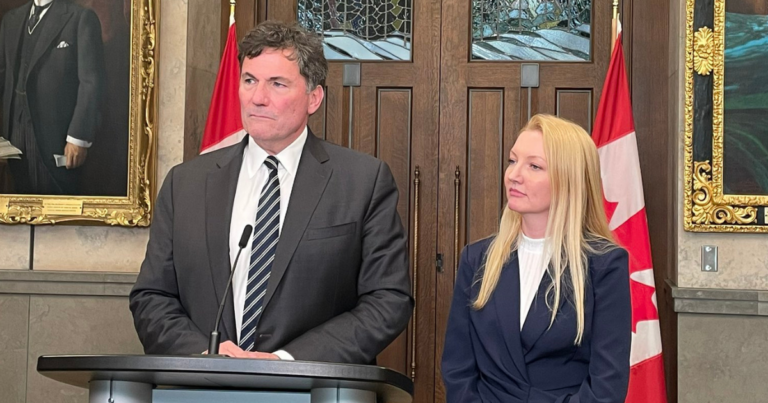
Early Thursday morning, Conservative MP Frank Caputo asked Liberal MP Dominic Leblanc whether he would release the names of elected officials engaging in foreign interference. The report from the National Security and Intelligence Committee of Parliamentarians was tabled in the House of Commons on Monday and accused many elected officials of collaboration with foreign governments, but the government redacted their names.

During Caputo’s line of questioning at the Committee of Public Safety and National Security, he asked the Liberal MP many different ways whether he would release the names, considering knowing so would benefit the public interest. 

Leblanc said he would not, arguing that releasing that information would be “irresponsible” without proper verification and context. While the room was completely silent throughout most of Caputo’s questioning, one unknown person could be heard interrupting in the background.

Conservative MP Garnett Genuis later revealed this disruptive MP to be O’Connell.

“During Mr. Caputo’s round at the end, Mrs. O’Connell was literally shouting at him across the floor,” Genuis said later to the chair while raising a point of order.

“Boo hoo, get over it,” O’Connell said, once more speaking out of turn.

A flurry of outrage on social media ensued after the public learned of O’Connell’s behaviour at the committee. 

Mercedes Stephenson, a journalist with Global News, posted to X that O’Connell said, “boo hoo, get over it,” in response to the Conservatives demanding the release of the names.

“Mercedes, this is a mischaracterization. I was responding to frustrated CPC MPs complaining with points of order because their juvenile, theatric attempts to generate dishonest social media clips failed spectacularly. Anyone can watch the interaction to see your claims are false,” responded O’Connell.

Stephenson was not fooled. She told O’Connell that she would happily post the full video.

The report said that while some parliamentarians were unaware they were targets of foreign interference, others “wittingly” assisted foreign state actors. 

The Liberals have refused to release the list of names that were redacted from the report.

“Let’s face it, if there were six Conservatives on that list and no other Liberals, we would have had the names,” said Caputo.

“Members of this house have knowingly worked for foreign hostile governments. Canadians have a right to know… Who are they?” Conservative Leader Pierre Poilievre asked.

Employers association files landmark UN complaint against feds for labour breaches

The Liberal government has found itself the subject of an international labour complaint for violating the rights of employers.

An employers’ association representing around half a million Canadian workers, mostly in unionized organizations and all regulated under the Canada Labour Code, lodged a formal complaint against the Liberals, claiming they are failing to uphold key labour conventions. 

In a historic first, the Federally Regulated Employers – Transportation and Communication, or FETCO, has filed a formal complaint against the federal government with the International Labour Organization, a United Nations labour agency. 

“After trying to bring the government to a more balanced approach in the labour space for these last few years, we just felt like we were left with no other choice,” said FETCO president and CEO Derrick Hynes. “The government could have avoided this if it went back to developing labour policy via a meaningful tripartite consultation, as it has done in the past.”

FETCO currently has 38 federally regulated member employers with over 500,000 employees across Canada. Some of the employers include Air Canada, WestJet, Rogers, Telus, and CBC.

FETCO emerged in the late 1970s after labour relations executives in federally regulated companies recognized the need for a unified employer voice in shaping federal labour policy. Over its history, FETCO has become the employer-side voice in federal labour relations. 

The labour association filed a complaint, under Article 24, against the federal government with the International Labour Organization on Wednesday. Hynes said this is an unprecedented move that was not taken lightly.

The complaint argues that the Liberals are in violation of three conventions, including freedom of association and collective bargaining.

“The Government of Canada has for years failed to meaningfully consult FETCO concerning international and domestic labour standards and policy including, but not limited to, during the development of legislation and regulations that impact employer interests,” reads the complaint.

The complaint accuses the federal government of a pattern of engaging with stakeholders only as a formality. 

However, the Liberals’ “most flagrant and ongoing failures to meaningfully consult with FETCO,” according to the complaint, involve the implementation of Bill C-3 (paid medical leave) and Bill C-58 (prohibition on replacement workers).

“Both of these initiatives have a massive impact on the interests of federally regulated employers, and yet both were announced without any consultation whatsoever with FETCO. Furthermore, the proposed Prohibition on Replacement Workers will result in major, permanent changes to the collective bargaining framework for all federal employers,” reads the complaint. 

Hynes said that 96% of collective bargaining ends without any form of work stoppage, but C-58 would destabilize that. 

While Bill C-58 is a big concern for FETCO, Hynes said it is just one of several issues.

“It’s death by a thousand cuts. There have been many files over the past number of years in which we have tried to engage meaningfully with the government and do not feel as though they’ve come to the table in a genuine way to hear us,” said Hynes.

However, Hynes said that Bill C-58 does serve as a perfect example of when the government does not meaningfully consult with other parties.

“The decision to ban replacement workers is clearly a purely political decision. In order to keep the government afloat, the current government has agreed to this with the NDP,” said Hynes.

While the Liberals held some meetings with stakeholders, Hynes said that employer concerns were “completely disregarded.”

He added that the Liberals’ own research proves that banning replacement workers leads to more strikes and longer strikes, adding instability to the labour market.

FETCO requests that the Committee on Freedom of Association of the International Labour Organization declare that the Liberals breached their obligations and mandate meaningful consultation on Bill C-58 and all future labour or employment legislation.

The International Labour Organization can declare the government in breach of its obligations, recommend measures for compliance, and monitor the government’s adherence to these recommendations. 

True North reached out to the Ministry of Labour for comment but received no response.

Support for LGBTQ causes on the decline in Canada, poll finds

Support for a variety of LGBTQ causes is on the decline in Canada. 

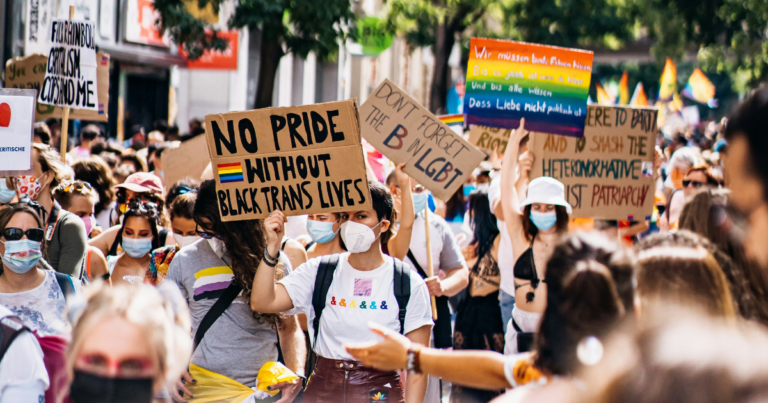
An Ipsos poll surveying the attitudes of adults in 26 countries found that support for LGBTQ causes, including the inclusion of LGBTQ characters in TV shows and movies, trans-identifying biological males’ participation in women’s sports, and healthcare coverage for gender transition procedures, has plummeted in Canada.

While the poll says 13% of Canadian adults identify as LGBTQ, Canada ranks in the bottom half in approval measures of LGBTQ causes.

Canada ranked 17th out of 23 in support of transgender people using the restroom of the gender that they identify with, with 46% of Canadians in approval and 37% against.

Canada also ranks 22nd out 23 in support for government-issued documents allowing for an option other than “male” and “female,” with an approval-disapproval split of 40-41%.

While the figures have been presented as a sign of growing intolerance by some, one parental rights advocate said the poll might show Canadians are more in tune with science.

“Both Canada and the U.S. rank among the most conservative of the 26 countries surveyed, along with Sweden and Great Britain, which may reflect greater awareness of the lack of medical studies proving the safety and effectiveness of hormonal therapies due to cultural wars in those countries over medical restrictions on hormone therapies and gender ideology in schools,” said Parents as First Educators founder Teresa Pierre. 

Despite the divided opinion on allowing gender-neutral options on government-issued ID, the Trudeau government began allowing Canadians to identify as a male, female, or ‘x’ on their passports and other government documents in 2017. 

A plurality of Canadians believe that gender transition procedures should not be covered by the taxpayers, with only 38% in approval to the 48% of Canadians who disapprove. This ranks Canada 20th out of the 23 countries evaluated. 

Canada has seen a ten point decline in support for more LGBTQ characters on TV, in movies, and in advertising, with 34% of Canadians in support and 22% in opposition.

Pierre also indicated approval for a finding that around 48% of Canadians oppose and only 21% approve of allowing trans people to compete in athletic competitions based on the gender they identify with, down from previous Ipsos and Angus Reid polling.

“This is down globally from 27% in 2021 according to the study. The previously referenced 2023 Angus Reid poll showed 31% of people approving the inclusion of trans athletes in female sports. PAFE welcomes the attitudinal shift as a step forward in protecting women athletes from sporting injury.”

Among the poll’s other finding include declining support for same-sex marriage, decling support for the right of same-sex couples to adopt children, and a decline in those who say they spoken out in support of an LGBTQ person who has been discriminated against. 

In correspondence with polling data showing an increasing skepticism of LGBTQ activism, commentators have begun to speculate whether “woke” activism has passed its cultural peak.

On a recent episode of The Andrew Lawton Show, University of Buckingham professor Eric Kaufmann said that a backlash at the political level has begun against radical gender activism.

“On the gender issue, some of the politicians are now willing to challenge claims around truth, around gender for example,” said Kaufmann. 

“So we’ve seen Blaine Higgs in New Brunswick and Scott Moe in Saskatchewan, Danielle Smith in Alberta, although we haven’t seen Premier (Doug) Ford in Ontario.”

Quebec “vigorously rejects” notion of being a bilingual province

Quebec’s national assembly voted unanimously in favour of rejecting the notion that the province would be stronger if it were officially bilingual. 

Quebec French Language Minister Language Jean-François Roberge tabled a motion in response to comments made by federal Liberal MP Angelo Iacono that an officially bilingual Quebec would be a stronger province.

The motion, which “vigorously rejects” Angelo’s comments was adopted unanimously on Tuesday, with 106 members of the national assembly voting in favour. 

Quebec has a “rich history, punctuated by bold gestures to defend and ensure the vitality of its only official language, French,” the motion said.

It stressed “without nuance” that “the strength of the Quebec nation certainly does not lie in bilingualism, but in its distinct character, with its unique culture and in its resolutely French-speaking specificity.”

Éric Caire, the CAQ government’s deputy leader, requested a copy of the motion be delivered to the House of Commons and to Iacono. 

Iacono, who represents the riding of Alfred-Pellan made the contested comments last week.

“I believe that Quebec, and I believe that Canada, should be a bilingual country, to be stronger and not just be a unilingual French-speaking province, because there you will exclude others who want to learn French.” 

However, his comments were denounced as disrespectful by members of the Bloc Québécois, the Conservative Party of Canada and Quebec Minister Simon Jolin-Barrette.

The only province to be recognized as officially bilingual is New Brunswick.

Quebec will continue to keep French as its official and singular language. 

Iacono did not respond to a request for comment.

The Andrew Lawton Show | Liberals mock those who care about foreign interference

The Liberal campaign to downplay foreign interference in Canadian democracy continues with one MP, Jennifer O’Connell, telling Conservatives today to “get over it.” The revelations from the NSICOP report this week show the problem is far worse than most Canadians realized. Journalist Sam Cooper of The Bureau joins The Andrew Lawton Show to discuss.

Plus, political reaction from Conservative MP Adam Chambers and a look at the uncertainty the Liberals have created on their capital gains tax hike plans.

Also, are media bailouts working? Professor Lydia Miljan joins the show to talk about her new report showing they really aren’t.

SUBSCRIBE TO THE ANDREW LAWTON SHOW

The Daily Brief | Cancer Society succumbs to trans ideology

A True North exclusive reveals how on a web page dedicated to cervical cancer, the Canadian Cancer Society apologized for referring to the cervix by its technical name rather than euphemisms such as “front hole.”

Plus, the Bank of Canada cuts interest rates for first time since 2020.

And the CRTC’s new streaming tax sparks backlash from taxpayers and streaming giants.

Tune into The Daily Brief with Cosmin Dzsurdzsa and Noah Jarvis!

SUBSCRIBE TO THE DAILY BRIEF

“Our biggest fear was to be raped”: October 7 survivors speak out

Ester Borochov and Shira Zohar have been best friends since high school.

But never had their friendship been put more to the test than last October 7 when they narrowly escaped with their lives from the Nova Music Festival.

In a moving speech to an Ezer Mizion Women of Valour event in Toronto last week, Borochov and Zohar told the sold-out crowd – at times fighting back tears — that they wanted to relay their story to pay tribute to the hero, Ori Arad, who saved their lives.

Source: Sue-Ann Levy

Arad, 22, who’d been bartending at the event, came along in his gray Jeep and picked them up after they’d abandoned their car to terrorists dressed in IDF uniforms. (The car was stolen and taken to Gaza).

Sadly Arad fell prey to terrorist gunfire. But miraculously, the two girls survived.

Ezer Mizion, Israel’s largest health support organization, is dedicated to offering a comprehensive range of medical, emotional and social services to patients and their families.

Its crown jewel is its bone marrow registry, the largest Jewish bone marrow registry in the world.

Borochov, 20, said they got to the Nova Music Festival  about 4 a.m. on Oct. 7 — encountering so much “peace and love” from many different nationalities.

At about 6 a.m., they went back to their car to change their clothes, take some cigarettes and grab a picture of the sunrise “to remember this special moment.”

As they headed back to the party, Borochov said they saw “tons of missiles in the sky.”

Her mom called, warning her to return home immediately.

But after 10 minutes of driving, they saw five terrorists dressed in IDF uniforms with green headbands. She put her foot on the gas and “raced right through them.”

”Many bullets got in the car but didn’t hurt us…that was one of our miracles,” Borochov said.

After another car drove into them and they couldn’t see a thing out of their windshield, they abandoned their car and started walking along the highway.

When they saw Arad’s Jeep, they asked if they could go with him.

Arad told them not to worry, “I’m going to get you out of here, that’s my promise.”

But as the terrorists started shooting at the Jeep “non-stop,” Arad lost control of the car and it  flipped over three times, ending up in a ditch at the side of the road.

Zohar said she saw her friend flip and could only see her legs — that the rest of her body was in the back of the Jeep.

”I right away pulled Ester’s body close to me,” she said. “I pinched Ester to see if she was awake because I saw she was bleeding.”

At 8 a.m., the terrorists came back to make sure they’d killed Arad.

Arad’s brother Shay told NBC News in an Oct. 13 interview that the terrorists came back to “finish him off,” shooting him with a full magazine in his face to ensure they’d killed him.

Borochov just prayed that no one would see them.

”Our biggest fear was to be raped and to be taken by Hamas terrorists,” said Zohar, who had heard on the radio that the terrorists had kidnapped people.

She said she couldn’t feel her legs after flipping over but that she “talked to G-d… I just knew he would get us home safely.”

Around 11 a.m., they heard voices and saw the field next to the ditch where the car had landed “catch on fire.”

Zohar said she spent the next 20 minutes trying to convince Borochov to get out of the car to get help. Zohar was stuck there because she couldn’t feel her body at all.

“She (Ester)  told me if she didn’t come back in the next 20 minutes she would be dead,” Zohar said.

Borochov said she started running until she saw soldiers, who took her to a safe place.

She kept shouting until she was able to convince them they needed to return to get Zohar, who was still alive.

Meanwhile Zohar said the minutes her friend was gone “felt like hours” and, realizing she couldn’t stay where she was, her only option was to roll out of the car towards the fire.

“I said if I’m not dead already, G-d  is with me and I would not get burned in the fire,” she said. “I found a strength I never knew (I had).”

It was when Borochov returned to rescue that the soldiers told her Arad was already dead.

At a hospital in Sderot, Zohar said she was told everything was okay, to go home. But she wasn’t okay.

Three days later her mother insisted on taking her to hospital where an x-ray showed a broken vertebrae in her tailbone. Doctors said it was a “miracle” she was still walking.

“I needed surgery immediately or I would be paralyzed from the waist down,” she said. 

I asked both young ladies about the rise in antisemitism on the streets and college campuses of Canada and the U.S. and the denial that the rapes occurred.

Zohar said she just doesn’t think about it. She knows who she is and what the IDF and Israel are all about.

She said being Jewish is the “biggest gift” she can have in life.

“You need to go and be proud of it… don’t be afraid of it,” she said. “You need to understand it is the best thing you can have in life.”

Borochov and Zohar said they’re now trying to live their lives appreciating “every day is a gift” and that they were saved.

“We discovered strength we never knew we had in a drive to stay alive,” Zohar said.

“I thank god that I’m still alive,” added Borochov. “We are grateful to have each other.”