Elections BC tells students not to call Emergencies Act “unprecedented” in disinfo guide

Elections BC denies its new media and disinformation literacy guide for future voters in grades 9 to 12 violates the office’s nonpartisan mandate. 

The provincial election office recently published a 51-page lesson plan authored by MediaSmarts, a non-profit charity that has received a significant amount of funding from the federal Liberals. 

“Media Literacy for the 2024 Provincial General Election in British Columbia” has six different modules that touch on a variety of media literacy areas. Among them are identifying sources of information, election disinformation, digital political advertising and polarizing content. 

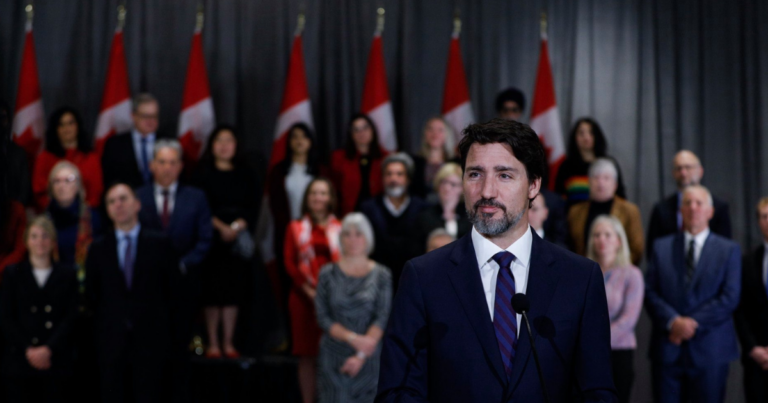
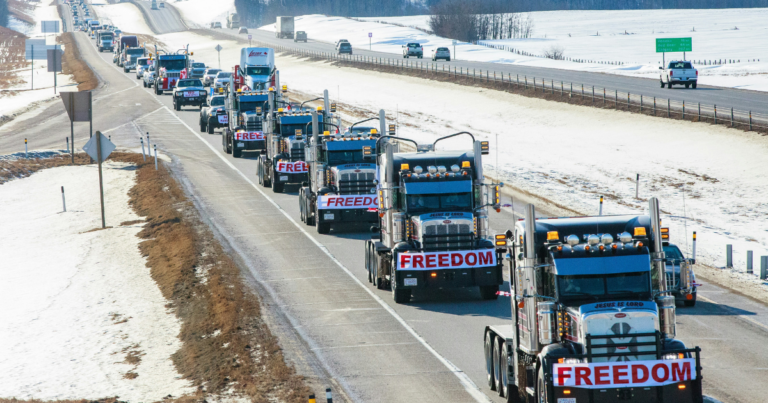
Of concern was the guide’s reference to polarizing issues such as Prime Minister Justin Trudeau’s use of the Emergencies Act to clamp down on Freedom Convoy protesters in Feb. 2022. 

In the “Methods of Polarization” module, students are asked to analyze the Politico headline “Canada invokes unprecedented emergency measures – and triggers a political firestorm” for polarization. 

The Elections BC lesson plan instructs educators to explain to students “that it offends the value of freedom by describing the emergency measures as ‘unprecedented’” and to label the term as an example of hyperbole or extreme exaggeration.

Trudeau was the first prime minister to invoke the Emergencies Act since it was passed in 1988 to replace the War Measures Act, making its use literally unprecedented.

Support for the use of the Emergencies Act was contentious and often delineated along political lines. Provincially, Conservative Party of British Columbia leader John Rustad was the only MLA in the B.C. legislature to vote against condemning the Freedom Convoy, which was the target of the emergency powers. In Ottawa, the federal Conservatives also voted against the act’s invocation.

In response to an inquiry from True North, an Elections BC spokesperson said the guide doesn’t violate the agency’s obligation to remain non-partisan on political matters. 

“As a non-partisan office of the legislature, we do not take a position on political issues like whether or not it was unprecedented to invoke the Emergencies Act,” Elections BC senior director of communications Andrew Watson told True North. “We do believe that voters and future voters should have resources to help them navigate their information environment during elections so that they can think critically and make informed choices for themselves.”

MediaSmarts’ director of communications, Tricia Grant, also stood by the lesson plan and its characterization of the Emergencies Act as not undermining “the non-partisan nature of the educational material.” 

The lesson plan also goes on to make certain value judgements about specific media outlets, specifically targeting the Toronto Sun as polarizing.

In a module titled “Your Information Ecosystem” the BC Elections guide asserts that “professional news” like “CBC or Global News” works to “make sure that what they publish is accurate before they publish it.” The guide does not elaborate that both media outlets often spread disinformation or fabricate the truth.

In keeping with the Emergencies Act, CBC anchor Nil Köksal suggested on air without any evidence that the Freedom Convoy could have been funded by Russia, a speculative question the CBC’s ombudsman later said shouldn’t have been asked.

Similarly, former Global News reporter Rachel Gilmore also spread the false story that protesters attempted to burn down a building with people inside. This was later debunked by the Ottawa Police Service. 

Despite these and other examples, the guide singles out conservative-leaning outlets like the Toronto Sun, which it accuses of polarization. However, according to Watson, the intent was not to imply certain news sources were trustworthy while others were not. 

“The lesson plan does not take a position on political issues or imply that only mainstream media sources are trustworthy. It does use examples from media articles to illustrate concepts, such as hyperbole, that help students think critically about the media they consume,” said Watson. 

MediaSmarts told True North that it did not call Toronto Sun as a whole unreliable, instead claiming a specific front page caricaturing Toronto Mayor Olivia Chow as the devil turning Toronto into “hell” was polarizing. 

“At MediaSmarts we teach news literacy as part of our programming, and we explain how to assess whether a news outlet is reputable and trustworthy based on the following: whether they have a commitment to accurate reporting, a documented track record of accuracy, and a process for publicly correcting mistakes, criteria that are met by both CBC and Global News,” said Grant. 

According to federal charity data, MediaSmarts has relied on a significant amount of federal funding. In 2022, 39% of the organization’s revenue came from the government, in 2021 the government supplied 70% of MediaSmarts’ revenue and in 2020 the share was 72%. 

According to Elections BC, the lesson plan cost $14,500 to develop.

Off the Record | Do the Liberals care about treason?

It’s Friday – kick back, grab a drink and enjoy the latest episode of Off the Record with Andrew Lawton, Rachel Emmanuel and Noah Jarvis!

Select MPs are suspected of aiding foreign states to interfere in Canadian affairs. The Liberal government’s response? “Boo-hoo!” After the government refused to release the list of MPs who are suspected of committing “wittingly” collaborating with hostile foreign actors, Liberal MP Jennifer O’Connell mocked the Conservatives’ concerns. Shouldn’t Canadians have a right to know which MPs are working against Canada?

Plus, it’s Pride month, which means it’s time for the CBC to shine! With its $1.4 billion annual handout courtesy of taxpayers, the state broadcaster is promoting “the horniest newsletter” in Canada and wondering whether D-Day commemorations glorify war. Quality journalism right here.

And comedian Rob Schneider is apparently in hot water for being a comedian and making jokes. Welcome to Canada, Rob!

These stories and more on Off the Record!

SUBSCRIBE TO OFF THE RECORD

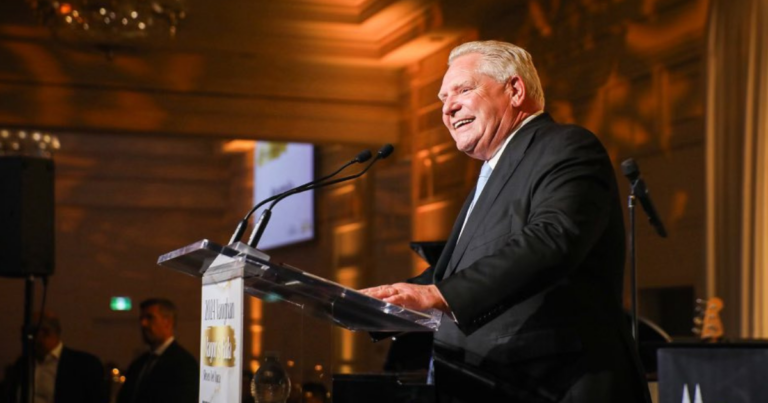
Premier Doug Ford shuffles cabinet, moves Stephen Lecce out of education ministry

Ontario Progressive Conservative Premier Doug Ford has rejigged his cabinet as the provincial legislature rises for its summer recess. Most notably, Ford swapped education minister Stephen Lecce’s and energy minister Todd Smith’s roles, renaming the latter portfolio to the minister of energy and electrification.

“It has been an honour of a lifetime to serve in the Ministry of Education because we did the hard things that will have generational impacts for kids,” said Lecce after being sworn-in.

Lecce’s time as the PC government’s education minister has been fraught with controversy, taking heat from both the left and conservatives for his policy choices.

During Lecce’s time as education minister, Ontario schools were closed longer than in any other province in the country. He also oversaw the expansion of anti-racism and DEI in the curriculum. He has been praised by many advocates for more recently instituting a ban on phones in classrooms.

Conservative MP Jamil Jivani celebrated Lecce’s departure from the education ministry, hoping that the personnel change will bring policy change.

“Ontario has desperately needed a new education minister for years,” said Jivani.

“I hope real policy changes are coming, so this will be remembered as a great day for all students, parents and teachers.”

The Durham MP and the Progressive Conservatives had butted heads a few months ago, as Jivani took aim at the “liberal elites” running Ontario’s ministry of education, prompting a response from Ford claiming credit for Jivani’s success.

Lecce says that he will stand against the federal government’s carbon tax in his role as energy and electrification minister, doubling down on a Ford government position.

Todd Smith, the MPP for Bay of Quinte, takes the reins of the education file after serving as the minister of energy for nearly three years.

“I am honoured to be taking on the role of Minister of Education,” said Smith on X.

“As Premier @fordnation and our new cabinet continue to rebuild Ontario’s economy I’m looking forward to ensuring our students are prepared for the careers of the future.”

Ford also made MPP Steve Clark his house government leader, who had resigned as the minister of municipal affairs and housing in September 2023 after breaking ethics legislation in his role in the Greenbelt scandal. The move comes as a surprise, as Clark’s reputation had been greatly damaged by the Greenbelt scandal and his time as housing minister.

Conservative MP says capital gains confusion will generate windfall for Liberal government

The details of the Liberal’s capital gains tax have yet to be made public and many Canadians are confused and concerned with how it may affect them going forward.  

Announced on April 16 as part of the Trudeau government’s 2024 federal budget, the capital gains tax increase is slated to take effect on June 25, 2024, but there is still no legislation spelling out the details. 

At the same time the Trudeau government announced the capital gains tax, they also announced an excise sales tax on tobacco that took effect immediately, which is typical of any tax change announcements.

However, with the capital gains tax, the government said it wanted to give Canadians “time to plan,” and scheduled an implementation date of June 25.

“They’re being a little too cute by half,” Conservative MP Adam Chambers told True North in an interview on The Andrew Lawton Show.

“The reason the government is giving people time to plan is because it will force a lot of transactions to occur between the budget and June 25, which will trigger a lot of revenues because people will pay taxes after they dispose (of) assets.”

While there is much confusion regarding who will be affected by this, the tax change will take effect on June 25, regardless of the law, Chambers said.

“The CRA will still execute or implement this tax change on June 25 even without legislation,” said Chambers. 

“This is just patently unfair for individuals to expect to arrange their affairs or sell assets with no legislation or no rules in place. It’s only a matter of proper process that they have legislation before they may choose to decide to sell assets.”

One of the reasons legislation is necessary before implementation is that it may include tax carve outs for certain individuals, something the Liberal government has hinted at, but not confirmed. 

Some Canadians may sell off assets preemptively only to find out that they wouldn’t have been affected by the new capital gains tax after the legislation is brought forth. In any case, the government is poised to collect the financial windfall.  

Chamber cited the “bare trusts scandal” as a previous example of this, when the CRA required a number of filings from those who had bare trusts, only to reverse the decision the day before the fillings were due.

“We found out that over 40,000 people, 43,000 individuals, filed the paperwork for the bare trusts at an average, most people paid an average of anywhere between $500 and a $1000 per filling,” recalled Chambers.

“A complete boondoggle by the government that created a tonne of additional complexity and compliance cost for taxpayers to then realize that they didn’t have to do it in the first place.”

Finance Minister Chrystia Freeland indicated that the capital gains tax legislation likely won’t be finalized or tabled before June 25, leaving Candians in the dark about what to do with their assets. 

Lawton asked Chambers if his issue with the capital gains tax was primarily to do with procedure, or if he took issue with the concept of the tax increase itself. 

“Will you and the Conservatives vote against that when it comes?” asked Lawton.

“It’s hard to say you’re going to vote for or against a bill you haven’t seen yet,” responded Chambers. “If they table a ways and means motion within a couple weeks before we go I think we’ll have an opportunity to go through it, but let’s think about why they are bringing in the tax increase in the first place.  The reason the government needs this revenue is because the spending has just continued to grow and grow out of control.”

Lawton pressed Chambers on whether or not he would support the legislation if it were tabled without carve outs, the way it initially was in the budget.

“It’s a piece of financial legislation which is a confidence measure for the government and we’ve voted against every single confidence measure that this government has brought forward and every single piece of financial legislation that this government has brought forward,” said Chambers. 

“That will give you a little indication as to where my personal leanings are.”

Colleen Klein, widow of former Alberta premier Ralph Klein, dead at 83

Colleen Klein, the beloved widow of former Alberta premier Ralph Klein, died peacefully on Tuesday. She was 83 years old.

The news was shared by the late couple’s daughter, Teresa Klein, on social media. 

“Today we said goodbye and will now celebrate the 83 years of life (of) my mother Colleen Klein. She passed away peacefully in the early morning after months of failing health.”

Klein was a dedicated advocate for numerous charitable causes throughout her life. In recognition of her contributions, she received an honourary doctor of laws degree from the University of Calgary in 2002.

“Colleen’s presence in our lives was a source of endless love and warmth. Her compassionate spirit and dedication to helping others were hallmarks of her character,” said Teresa Klein in an official family statement. “Though she is no longer with us, Colleen’s essence will continue to live on in the hearts of all who knew her, leaving behind a legacy of love and cherished memories. She will be dearly missed but never forgotten” 

Colleen’s other daughter, Lisa Pinder, said her mom was “forever the angel on my shoulder.” She said that her mother and father “can rest easy together in eternity.” 

Klein worked at a racetrack, a gas station, and then a grocery store as a single mother of two. She then met Ralph Klein, then a Calgary television reporter, in 1971. They married in 1972, and the couple remained devoted to each other until he died in 2013. Klein played a significant role in her husband’s political career, providing unwavering support as he served as Alberta’s 12th premier from 1992 to 2006.

Charlene Love’s late husband Rod served as Ralph Klein’s long-time Chief of Staff. Love said that she had been friends with Colleen Klein for 44 years. When she saw her on Friday, Love said that she was the same person she’d always been.

“She was the most loving person from the day I met her in 1980 until I saw her last Friday; she was the same person. Nothing ever changed with her. She was very warm, compassionate, and gave me a big hug — happy to see me and we had a great chat,” said Love.

According to Love, Colleen Klein was Ralph Klein’s biggest supporter, and he relied greatly on her opinion, which Love said was “very astute (because) she had a wonderful political sense of what was going on.”. She said that Klein stood beside her husband his whole political life, and the two worked together campaigning and the like. 

Alberta Premier Danielle Smith expressed her condolences and sadness in a post to X

“Colleen’s unwavering support and dedication to her family and community left an indelible mark on Alberta,” said Smith.

Despite facing personal challenges, including rumours of domestic abuse in the late 1970s and a controversy over a stock purchase in the mid-1990s, Klein remained a popular figure in Alberta politics and her community.

“She was not just my dad’s wife; she was his right hand; he didn’t function without her,” said Teresa Klein.

While many leaders offered their condolences and wishes to the Klein family, Environment Minister Steven Guilbeault was not among them.

In 2002, Guilbeault and other Greenpeace activists climbed onto the Kleins’  roof in Calgary while wearing orange jumpsuits and installed solar panels, terrifying Colleen. 

The Daily Brief | Legacy media outlets were on China’s payroll

Select Canadian media executives and journalists were accused of being on China’s payroll by a shocking new report on foreign interference.

Plus, federal public health authorities didn’t know if COVID-19 vaccines would prevent transmission despite imposing sweeping vaccine mandates on Canadians regardless.

And Calgary Liberal MP George Chahal is trying to thwart the deportation of Jaskirat Singh Sidhu, the truck driver convicted of dangerous driving causing death in the horrific Humboldt Broncos bus crash in 2018.

Tune into The Daily Brief with Cosmin Dzsurdzsa and William MacBeath!

SUBSCRIBE TO THE DAILY BRIEF

Canada experiences fastest population growth in over 65 years 

Canada’s population is growing at an annual rate unseen since the baby boomer era. 

This year the annual population growth hit a record high of 40.77 million largely due to immigration. The last time Canada saw its population grow at this rate was in 1957. 

Canada gained 1.27 million people in 2023, up by 3.2% from 2022, marking the largest single-year increase in nearly 70 years, according to data from Statistics Canada.

Despite this the massive influx of immigrants has driven down gross domestic product per capita leading to a decline in productivity levels. 

“In 2023, the vast majority (97.6%) of Canada’s population growth came from international migration (both permanent and temporary immigration) and the remaining portion (2.4%) came from natural increase,” StatCan said in a statement.

“This was the second straight year that temporary immigration drove population growth and the third year in a row with a net increase of NPRs (non-permanent residents),” it said.

Nearly a quarter of Canada’s population has been born outside of the country since 2021, with Canada hosting the largest cohort of non-native residents of any G7 nation. 

However, Canadians’ attitudes towards mass immigration have started to change in recent months, with polls revealing that many think that the Trudeau government’s current immigration targets are too high.

Prime Minister Justin Trudeau’s popularity amongst Canadians has steadily been in decline for some time, with his administration’s immigration targets often being cited as a reason by those dissatisfied with his performance. 

Additionally, Canada is facing a major housing shortage, which many link to the mass influx of newcomers, especially temporary foreign workers and international students.

A recent Leger poll conducted last fall found that 75% of Canadians believed that high immigration levels were contributing to the housing shortage. Statistics Canada estimates that 2,661,784 non-permanent residents were living in Canada as of January 1, 2024. Within that cohort, 2,332,886 were permit holders that lived with family members and 328,998 were asylum claimants, with or without study or work permits. 

The top five cities in Alberta where auto theft is on the rise 

Drivers who live in these five cities in Alberta should be extra cautious when securing their vehicles. 

New data by the Insurance Bureau of Canada revealed that the costs of auto theft claims rose 55% in Alberta between 2021 and 2023.

While claims rose 55% across the province, Medicine Hat topped the list with the largest percentage increase in auto theft claims at 72%. Edmonton followed with a 66% increase, then Fort McMurray at 60%. Calgary came fourth at 59%, and auto theft claims rose 30% in Lethbridge between 2021 and 2023.

Although the auto theft rate in Calgary didn’t top the charts, the city had the largest increase from a dollar perspective. In 2021, Calgary accounted for $20,856,769 in auto theft claim costs. In 2023, the price tag climbed to $33,076,848 – an increase of over $12 million.

Similarly, Edmonton saw an increase of over $10 million. As for Fort McMurray, the town saw an increase of about $1.3 million. Meanwhile, Medicine Hat saw an increase of over $280,000, and Lethbridge saw an increase of over $222,000 between 2021 and 2023. 

Between 2018 and 2023, auto theft claims increased 254% across Canada, reaching an unprecedented $1.5 billion. Between 2021 and 2023, auto theft claims increased 99.89% nationwide, rising from around $774 million to $1.55 billion.

“The auto theft crisis continues to persist across Alberta, and it’s adding pressure to the cost of auto insurance for all drivers,” said Aaron Sutherland, Vice President for the Insurance Bureau of Canada’s Western region. “Auto theft disrupts lives and creates fear in communities across the province. Urgent action must be taken to address this growing trend.”

Ontario took the biggest blow between 2018 and 2023, where auto theft claims increased by 524%, surpassing $1 billion.

Despite this, Albertans pay some of the highest insurance costs in Canada. Litigation and legal fees in Alberta are twice as high as in Ontario and more than three times higher than in some Atlantic provinces.

For auto insurance claims, Alberta has the highest legal costs in the country and the second highest vehicle theft frequency and vehicle replacement or repair costs.

The Insurance Bureau of Canada warned that insurance rates in Alberta will rise if these pressures are not urgently addressed. 

“Unfortunately, the action taken to date—including Alberta’s rate cap for good drivers—does not address the costs underlying drivers’ coverage and will do little to improve the price drivers are paying moving forward,” said Sutherland. 

He added that insurers were forced to scale back their offerings to remain viable due to the cap.

“Claims costs now exceed the amount of money insurers are collecting in premiums because of the auto insurance rate cap in Alberta,” he said.

The Liberals released their National Action Plan on Combatting Auto Theft on May 20. The bureau said that the plan includes many good aspects, but that “it is time for the rubber to hit the road on the plan.”

The Insurance Bureau of Canada added that insurers across the province are urging all levels of government to implement the plan’s recommendations. For Alberta, implementing these recommendations would include providing more resources for law enforcement to tackle auto crime, creating a provincial auto theft team, and strengthening police support through this team. 

Sutherland called for collaborative efforts to address the underlying issues driving auto theft in Alberta.

“Reform is needed urgently, and as the government considers various solutions to reduce premiums for drivers, it’s critical that it addresses these cost pressures,” he said.

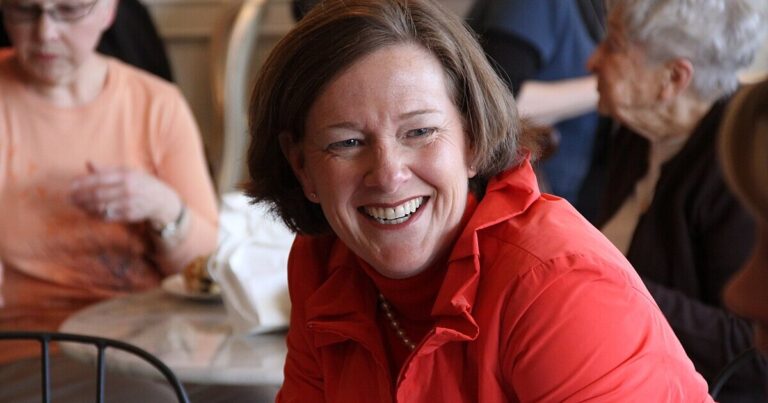
Smith appoints scandal-plagued former Alberta premier to Invest Alberta board

Alberta Premier Danielle Smith has appointed Alison Redford to the board of the provincial investment attraction agency.

Redford was known for her short lived and scandal-ridden tenure as Alberta’s premier in the early 2010s.

Redford has been appointed to the board of directors of the Invest Alberta Corporation, which expedites business operations, fosters collaboration, and “goes the extra mile to ensure long-term success for businesses,” according to its website.

Redford resigned in March 2014 after three years as Alberta premier following a series of controversies.

The most infamous incident, now dubbed the “sky palace,” saw the former premier spend millions of taxpayer dollars to renovate the top suite of the Queen Elizabeth Building to use as her own private quarters.

She would also book every seat on the government’s planes but travel with just one or two close staff members, leaving the remaining seats empty. Redford was eventually forced to reimburse a $45,000 bill for a trip to South Africa to attend Nelson Mandela’s funeral.

She also acknowledged that she used the government planes to fly her daughter’s friends around, and repaid the equivalent airfare of $3,100.The former premier is replacing Laura Daniels.

She will be compensated for her role on the board. Remuneration for board members ranges from over $30,000 to as low as $4,000 according to 2021 information, which is the last publicly available data.

Ratio’d | 80th Anniversary of D-Day – Lest we forget

Today marks the 80th anniversary of the most important days in Canadian history and world history, the D-Day invasion of Normandy. Over 14,000 Canadian soldiers took part in the invasion and Canadian troops were ordered to take Juno Beach.

The Canadian victory on D-Day was paid for with sacrifice of over 300 Canadian troops. The successful mission marked the beginning of the end of the Nazi regime.

For likely the last time, Canadian D-Day veterans gathered on Juno Beach today, standing shoulder to shoulder, to mark this special anniversary.

On this episode of Ratio’d, Harrison Faulkner plays prerecorded footage of two Canadian D-Day veterans to explain what that day was really like.

Watch the latest episode of Ratio’d with Harrison Faulkner.