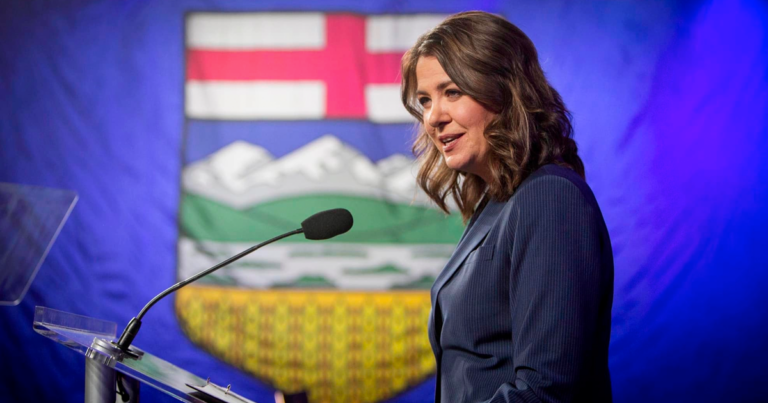
Today on the Alberta Roundup with Rachel Emmanuel, Rachel explains how the Alberta government is responding to Ottawa’s proposed legislation to censor oil and gas companies from speaking about their environmental achievements.
Also on the show, a water line has been punctured in Calgary and is wreaking havoc on the city.
Rachel also has news about a prominent board position that’s been given to an unpopular and controversial former Alberta premier.
Summer in Ottawa is expected to be especially tense this year due to public sector unions opposing a government directive requiring civil servants to work in the office three days a week. Macdonald-Laurier Institute domestic policy director Aaron Wudrick joined True North’s Andrew Lawton to explain how this tension may impact the workforce, and the potential effect on public services.
Controversial podcaster Jeremy Mackenzie is free and clear after the final outstanding charges against him were stayed.
Charges against Mackenzie, a 14-year military veteran who served in Afghanistan, and his girlfriend Morgan Guptill, were stayed by a Nova Scotia judge who found that the 19 months between being charged and the end of the trial was an unreasonable length of time.
These were the last remaining criminal charges against Mackenzie after charges in Quebec and Saskatchewan and others in Nova Scotia were similarly stayed or dropped.
In the latest one, Mackenzie and Gultipp were charged with criminal harassment of Nova Scotia chief medical officer Dr. Robert Strang. They were arrested on the third day of protesting on a public street near his residence.
Each of the 23 charges thrown at Mackenzie across three separate provinces has been dropped, stayed, or resolved, including a series of firearms charges in Saskatchewan.
Mackenzie created an online community called Diagolon, which he describes as a fictitious meme country represented by a black flag with a diagonal white line. In an interview, he told True North that although he is “relieved” the criminal cases are behind him, he was disappointed that he didn’t get a chance to defend himself in front of the public and a jury.
“In a way we’re relieved and just thankful to have that real estate in our heads back. This is just another problem we don’t have to deal with anymore. But this never should have happened in the first place. And it’s just a travesty of justice and our resources,” Mackenzie said.
Mackenzie, who testified before the Public Order Emergency Commission remotely from jail in 2022, said the way that he and his girlfriend have been treated by the justice system has been disproportionate to what “real criminals” face.
Mackenzie said that on top of having his bail denied, he was placed in solitary confinement multiple times. He also said he faced physical attacks because of the media’s and the Liberal government’s characterization of him.
Mackenzie and Diagolon were singled out by the Liberal government during the Freedom Convoy as a national security risk, a position partially relied on to justify the use of the Emergencies Act.
An investigative report by lawyer Caryma Sa’d, who has represented Mackenzie, alleged that the government knew that Diagolon was not violent or even a traditionally definable group.
“We have criminals running around this country doing whatever they want,” he said. “In the time that it took to have this case in Nova Scotia finally thrown out, four cases of pedophiles and people luring children were tossed out because they ran out of time to prosecute.”
Despite being free of criminal charges, Mackenzie still maintains that he was targeted for his political views.
“It lends more weight, not less, to the idea that people in this country who are political dissidents and unhappy with the way our rulers are conducting business are targeted by the state and punished for dissenting,” he said, “It doesn’t paint a good picture of our legal system and doesn’t do anything to dispel that.”
Mackenzie also took aim at the relative media silence about his charges being stayed. “A lot of things were said. Media had printed a lot of out of context things and headlines. They really went to town to slander my reputation,” Mackenzie said. “Now that it’s all over, they have nothing to say. And there’s no one here to apologize and say ‘We jumped to conclusions and painted you as this person without getting the facts.’ None of them showed up.”
The RCMP launched an investigation into Mackenzie at the request of Conservative Leader Pierre Poilievre over comments Mackenzie made on a podcast threatening to rape Poilievre’s wife, Anaida. Mackenzie said the distasteful comments were made as a joke. The RCMP never laid charges.
Google has determined which Canadian media companies will receive a portion of the $100 million bailout it is being forced to distribute in compliance with the federal Online News Act.
The technology company agreed with the Canadian Radio-Television and Telecommunications Commission to pay $100 million to Canadian news publishers annually to comply with the Liberal Government’s Online News Act, which requires tech giants to enter into financial agreements with news publishers to be exempt from additional regulations.
The act required Google to run an open-call process for news organizations to apply and receive contributions, should they be deemed eligible. Google started the process on Feb. 28, 2024, and concluded it Apr. 30, 2024. Thousands of organizations submitted their names to receive funding.
In a landmark deal, Google announced that the Canadian Journalism Collective would manage the distribution of $100 million annually to Canadian news companies.
The Canadian Journalism Collective is a federally incorporated non-profit founded in May by a coalition of independent publishers and broadcasters that will oversee the allocation of funds.
The collective includes 12 media outlets representing the French language, Indigenous news, and publications serving black and minority Canadians. The participating organizations are Pivot, The Resolve, IndigiNews, Village Media, and the Canadian Association of Community Television Users and Stations.
University of Ottawa law professor Michael Geist highlighted that the Canadian Journalism Collective had been battling against a consortium of large media companies, including News Media Canada, the Canadian Association of Broadcasters, and the CBC. This big media collective proposed a governance structure that heavily favoured legacy media and broadcasters, raising concerns about transparency and equitable fund distribution.
The payment schedule remains uncertain as it hinges on Google receiving a formal exemption from the Canadian Radio-television and Telecommunications Commission.
“We hope these next steps will be completed as quickly as possible, so Canadian publishers and journalists can soon begin to receive the proceeds of this new contribution model,” said Google in a blog post.
The collective will evaluate applications from news organizations that submitted their names and distribute funds to eligible publishers. To qualify, news organizations must be designated as qualified Canadian journalism organizations under the Income Tax Act, which includes requirements such as producing public interest original news content, operating in Canada, and employing at least two journalists.
CBC has said that it will receive no more than $7 million of the $100 million annual share. $30 million will be reserved for other broadcasters while other qualifying news outlets will share the remaining $63 million.
The Online News Act, known as Bill C-18, was introduced in the House of Commons in April 2022 and became law in June 2024. Google initially opposed the bill, warning that a “link tax” could disrupt its services.
“The Government of Canada acknowledged our concerns with the bill and, after engaging in a series of productive meetings, agreed to address these issues and create a viable path to an exemption at a clear and commercially acceptable commitment level,” said Google.
Despite Google’s newfound excitement for cooperation with Bill C-18, the CEO of a digital content firm said that Bill C-18 was a disaster for smaller companies. Some smaller companies reported losing over 40% of their revenue and risked closing their doors. Other critics argued that the bill gives the government excessive control over online news dissemination.
On top of that, Meta stopped sharing Canadian news due to Bill C-18, which was a generator of much traffic for the majority of news organizations, specifically smaller publications.
The annual $100 million is part of a five-year deal worth $500 million.
Toronto will be partaking in the World Naked Bike Ride this Saturday as the event celebrates its 20th anniversary, leaving some bike rental companies worried about sanitation.
According to the World Naked Bike Ride website, the event is “a global protest against the over usage of oil and urban pollution, promoting greater cycling safety on our roads, and encouraging body freedom for everyone.”
The event originated in Vancouver in 2002 and now takes place in 80 cities across the world.
Organizers of the event recommend that those who are renting a bike for the event use a seat cover.
The organizers said that riding naked may even be more enjoyable for riders than doing so clothed.
“When riding with clothes on you’re often rubbing against the seams, so in some ways naked riding is comfier! Ride routes will often be chosen with less experienced cyclists in mind, so will avoid hills and be more leisurely in pace, increasing comfort,” said the organizers.
This has already been a subject of concern for Toronto bike rental company Bike Share Toronto, whose director asked CityNews Toronto to make the recommendation clear.
“Though we don’t encourage it, we understand that some riders will use the system in this manner on June 8,” wrote Bike Share Toronto’s director Justin Hanna.
He stressed the importance of renters exercising some common courtesy regarding their hygiene, encouraging them to “wipe down the seats and handlebars after their ride so that they are sanitized for the next rider.”
World Naked Bike Ride organizers also issued some advice to participants about being nude post-ride.
“Please get dressed after the ride. We don’t want issues with the police,” states their website.
The event is free and requires no registration. It runs from 1 p.m. to 5 p.m. on Saturday, commencing at Coronation Park, 711 Lake Shore Blvd. W.
The route will pass through Kensington Market, Yorkville, Yonge-Dundas Square and the CN Tower.
Canadian business magnate Frank Stronach, 91, has been charged with multiple sexual assault-related offences following an investigation by the Special Victims Unit of the Region of Peel.
The alleged incidents span from the 1980s to as recently as 2023, according to a press release by law enforcement.
Stronach, the founder and former chief executive of auto parts manufacturing giant Magna International, was arrested on June 7, 2024, and charged with five criminal offences.
The charges include one count of rape, one count of indecent assault on a female, one count of forcible confinement, and two counts of sexual assault.
The Peel Regional Police have released a statement urging anyone with information to come forward, as they believe there may be more victims.
In a statement shared with multiple media outlets, Stronach’s lawyer, Brian Greenspan, said Stronach “categorically denies the allegations of impropriety which have been brought against him.”
“He looks forward to the opportunity to fully respond to the charges and to maintain his legacy both as a philanthropist and as an icon of the Canadian business community,” Greenspan said.
Stronach has been released with conditions and is scheduled to appear at the Ontario Court of Justice in Brampton Saturday.
In response to the charges, Magna International stated it was unaware of the investigation or the allegations against Stronach.
The company emphasized that Stronach is no longer involved in the day-to-day operations of the business.
The case has attracted significant attention due to Stronach’s high-profile status in the business world and his previous political involvement. His daughter, Belinda, served as a member of the Canadian House of Commons.
Stronach also published a regular column with the National Post, which the outlet has since suspended pending investigation.
The last piece published by Stronach in the newspaper was on Jun. 4.
It turns out that there are more white Canadians in poverty than all other ethnicities combined, and yet considerable government “anti-poverty” resources exclude those Canadians on the basis of…skin colour. This comes from a new study released last week by the Aristotle Foundation.
Fifty years ago, the goal of progressive policymakers was to be colour-blind. Today, “Thou shalt not be colour blind!” is the new “anti-racism,” at least according to progressives.
The lack of logic is eerily cultish and begs the questions: How did we get to the point where not judging someone by their skin colour is considered racist?
Blame bad ideas and politicians.
For example, in 2018, the federal government developed its new “anti-racism strategy,” and focused on those presumed to have “lived experiences of racism and discrimination,” with a particular focus on Indigenous Canadians.
Those leading the charge may be well-meaning but an ideology that defines “anti-racist” as colour-conscious in 2024 and forces everyone into one of two corners—the oppressor or the oppressed—is not merely simplistic but dangerous. Case in point: the tragic suicide of Toronto school principal Richard Bilkszto last year, blamed in part on his denouncement and humiliation by an ‘anti-racist’ training consultant, Kike Ojo-Thompson.
So where did this come from? The popularity of “anti-racism” can be traced back to the rise in prominence of Ibram X. Kendi, a best-selling author and scholar of American race relations. In 2016, Kendi published Stamped From the Beginning.
It was an earnest attempt to look at the history of racist ideas in America—but full of simplistic thinking and wrong cause-and-effect links. At least Kendi got part of his anti-racism assumptions correct, writing that “no racial group has ever had a monopoly on any type of human trait or gene—not now, not ever.”
However, Kendi then did a 180-degree turn, accusing Martin Luther King, Jr.’s ideas of containing the seeds of hidden racism. In his 2019 book, How to Be An Anti-Racist, he asserted that “The language of color blindness…is a mask to hide racism.”
As a work of scholarship, How to Be an Antiracist did not meet the standard of academic rigour. But as a work of propaganda, it exceeded anyone’s wildest imaginations. ‘Antiracism’ became the buzzword in American and Canadian political discourse after the killing of George Floyd in June 2020. The social unrest sparked by this act of injustice boosted the sales of Kendi’s book, all the while making its author the most sought-after authority on America’s ‘racial reckoning.’
Kendi’s name is becoming synonymous with ‘anti-racism’. But the thinking public will take him less and less seriously, once they take the time to examine what ‘anti-racism’ truly means.
For one, Kendi’s work is simplistic. For example, core to his thinking and analysis is that all differences in outcomes between cohorts (defined by colour) are the result of racism. He omits education levels, cultural differences, family dynamics, geography (Indigenous, like all Canadians, earn more in cities than in rural areas), and much more that matters to financial success or failure.
The good news is that Kendi is at least clear about his true intentions: “What’s the problem with being ‘not racist’? It is a claim that signifies neutrality… (T)here is no neutrality in the racism struggle.’”
But the bad news is that Kendi’s ‘anti-racism’ is not that—precisely because he wrongly assumes all differences in outcomes are a result of racism, which is mono-causal. This leads him to state “The only remedy for past discrimination is present discrimination.” This is how modern ‘anti-racism’ can advocate discrimination and claim to be anti-discrimination at the same time.
It’s also why Columbia linguist John McWhorter remarked that “Third Wave Antiracism is not a philosophy but a religion,” and why it’s only a matter of time before the public realizes that Kendi-ism is nonsensical or racially divisive, or both.
However, before the public wakes up to Kendi’s ‘anti-racism’ bathed in racism, the tragedy of living by lies is that the most vulnerable suffer while those who promote the lie pat themselves on the back.
Consider when race and not financial need is the criterion for anti-poverty funding. Few in poverty benefit, as Matthew Lau and David Hunt find in their new study for the Aristotle Foundation for Public Policy. For instance, well over 80 per cent of each Statistics Canada cohort—including black and Indigenous Canadians—are not in poverty. Thus, race-based funding under the guise of “anti-poverty” overwhelmingly benefits those who are not in poverty, while excluding the truly poor. Specifically, the government’s black-only and Indigenous-only anti-poverty programs each exclude around 95 per cent of poor Canadians. How is such policy fair—or sensible?
In Canada, poverty is not linked to race, yet ‘anti-racism’ is what drives the poverty-reduction agenda.
For the sake of the actually disadvantaged, it is time we reject ‘anti-racism’ and its pseudo-scholarship and racial-identity politics. Thankfully, the High Priest of Antiracism has successfully painted himself into a corner. It’s only a matter of time before more people see Kendi’s contradictions.
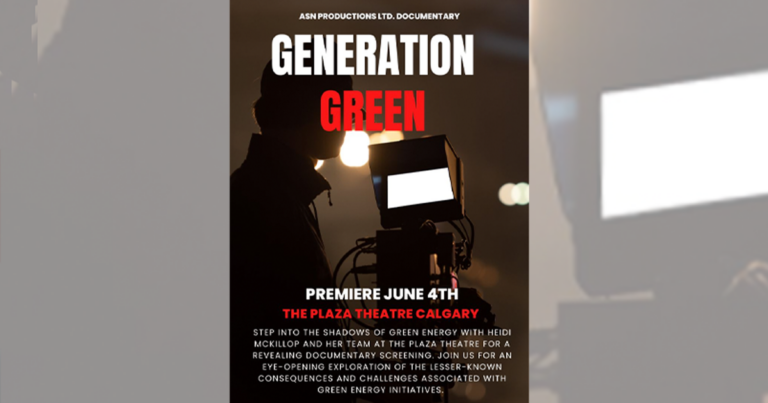
A new documentary sheds light on the lesser-known side effects of green energy projects, revealing the complex environmental and social challenges that accompany the transition to renewable energy sources. Filmmaker Heidi McKillop joined True North’s Andrew Lawton to discuss ‘Generation Green’, which premiered in Calgary earlier this week.
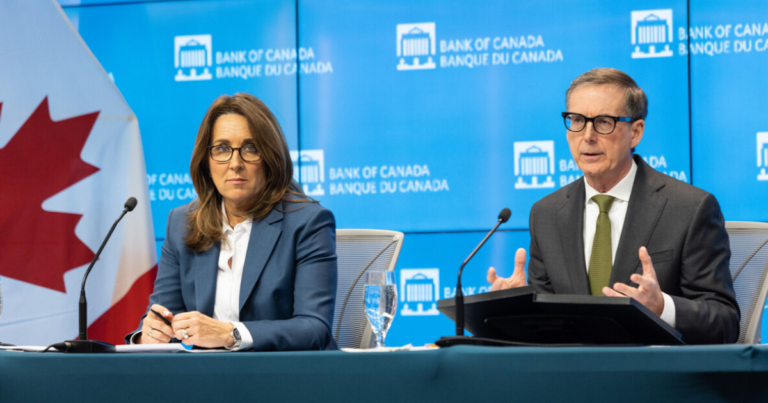
Newly released documents reveal the Bank of Canada handed out $23 million in bonus cheques last year, pushing total bonuses since 2020 to $78 million. Canadian Taxpayers Federation Alberta Director Kris Sims joined True North’s Andrew Lawton to discuss the implications of these bonuses, especially during a time when many Canadians are facing financial challenges.
The Liberal government says its widely contested Online Harms Act will not infringe on Canadians’ charter rights, and when it does limit freedoms, it will be justified in doing so.
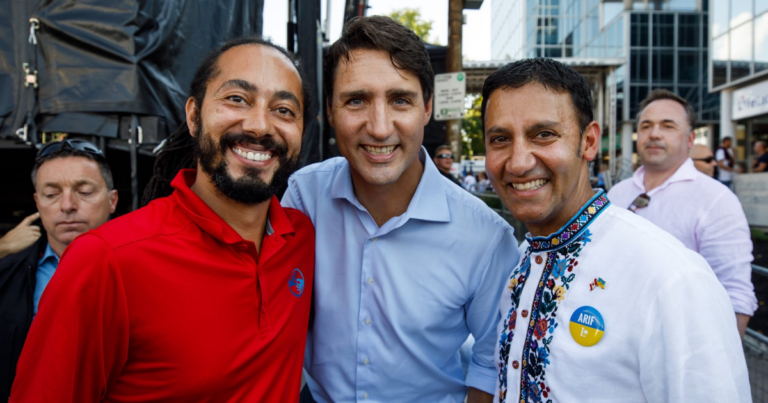
As required by law, Justice Minister Arif Virani tabled a “Charter statement” on the Liberal government’s proposed Bill C-63. The statement is supposed to show that the government has fully considered the Canadian Charter of Rights and Freedoms when introducing a new law.
“The Bill would amend the Canadian Human Rights Act to provide that it is a discriminatory practice to communicate, or cause to be communicated, hate speech by means of the internet or other telecommunications in a context in which the hate speech is likely to foment detestation or vilification of an individual or a group of individuals on the basis of a prohibited ground of discrimination,” Virani said.
The bill will allow the courts to apply peace bonds on people who are “likely” to commit a hate crime, give out life sentences for those who commit any crime deemed to be hate-motivated, and re-introduce a section of the Canadian Human Rights Act prohibiting online “hate speech.”
People found to have engaged in online hate speech could be fined up to $70,000, up to $20,000 of which would go to the person who filed the complaint, if they were the target of the speech.
The statement acknowledged that the bill could limit Canadians’ rights to freedom of religion, freedom of expression, liberty, equality, and security against unreasonable search or seizure, cruel and unusual treatment and punishment, and other offence-related rights.
“The proposed definition of ‘hatred’ has the potential to engage freedom of expression in section 2(b) of the Charter,” Virani said.
Section 1 of the Charter permits violations of Charter rights provided they are found to be “reasonable.”
Virani said the government concluded the bill would be constitutional because it would only codify the Supreme Court’s definition of hatred which characterizes hate speech as “connoting extreme manifestations of detestation or vilification, which go beyond mere dislike or causing humiliation or offence.”
Critics of the bill point out that this definition of hatred is ill-defined.
Virani also found that handing out peace bonds for “hateful speech” online complies with the Charter and it would only be given to those who are feared to commit a future crime on “reasonable grounds.”
Peace bonds would be subject to the same checks and balances that they are in current criminal cases.
The Charter statement said the provisions also serve to protect future victims, as future hate speech could limit their rights.
“The Bill would advance the objective of the CHRA that all individuals should have an equal opportunity to make a life for themselves without being hindered by discrimination based on the prohibited grounds,” it said. “(It) would seek to protect the social standing of members of groups identified by these prohibited grounds of discrimination from the discriminatory effects of hate speech.”
The statement justified the infringements on Canadians’ rights and freedoms as the hate speech defined in the bill could “lay the groundwork for later attacks on group members, including discrimination, ostracism, segregation and violence.”
“By marginalizing the group and forcing its members to argue for their basic humanity or social standing, hate speech creates barriers to their full participation in our democracy,” it said. “The effects of the Bill on freedom of expression are outweighed by the benefits of protecting members of vulnerable groups identified by a protected ground of discrimination.”
The Liberal government also said its use of the Emergencies Act wouldn’t violate the Charter, although the Federal Court ruled that it did.
The House of Commons debated the bill for the first time on Friday morning.