Via Rail Canada is facing criticism over its decision to give out over $11 million in bonuses despite delays and losses.
Figures from an order paper question by Conservative MP Andrew Scheer show that the Crown corporation in charge of Canada’s intercity trains handed out $11.4 million in bonuses during the 2023-2024 fiscal year.
The bonuses include $1.1 million to eleven Via Rail executives, averaging out at over $100,000 per person, as well as $10.2 million to 748 Via Rail employees who are “below the executive level (or equivalent.)”
In a statement to True North, Canadian Taxpayers Federation director Franco Terrazzano criticized Via Rail’s decision to hand out the bonuses.
“VIA Rail shouldn’t be handing out millions in taxpayer-funded bonuses while it loses hundreds of millions of dollars,” he said. “The federal government must stop rewarding failure with taxpayer-funded bonuses.”
While Via Rail’s revenues increased by 29% in 2023, totalling $430.7 million, operating losses also grew and totalled $381.8 million. The crown corporation also received $773 million in taxpayer subsidies in 2023, a 15% increase from 2022.
Via Rail continued to struggle with on-time performance. According to the company’s annual report, just 59% of its trains arrived “on time” in 2023.
In a statement to True North, Via Rail defended its record saying that financial performance “increased significantly” in 2023.
“In 2023 bonuses were paid to 759 employees. 2023 bonuses were based on several elements linked to financial performance, including VIA Rail’s revenues, which increased significantly last year reflecting our increase in ridership,” said the company’s spokesperson.
Canada’s intercity rail infrastructure is also lagging behind other Western countries.
Canada remains the only G7 country without a high-speed rail network, with rail trips between Canada’s two largest cities, Toronto and Montreal, taking an average of five hours and eight minutes. Flights between the two cities take on average just over an hour.
Via Rail is also dealing with an ageing and unreliable fleet, amidst several of Via Rail’s cars being built between 1946 and 1955.
While Via Rail began introducing new Siemens trains in 2022, these trains will only be running on the Quebec City-Windsor. Other routes, including the trans-Canadian rail line between Toronto and Vancouver, will continue to be operated by ageing trains for the near future as Via Rail has not yet secured funding for more new rolling stock.
More school boards and private schools have decided to sue the tech giants behind social media platforms Facebook, Instagram, TikTok and Snapchat over accusations these apps were designed to be addictive and have unsafe effects on students’ mental health.
The plaintiffs include five Ontario public schools: Dufferin-Peel Catholic District School Board, York Catholic District School Board, Trillium Lakelands District School Board, Ottawa Catholic School Board, District School Board of Niagara. An all-girls school in Mississauga, Holy Name of Mary College School, and Eitz Chaim, a Jewish day school in Toronto, are part of the lawsuit as well.
The statements of claim were filed on Tuesday in Ontario’s Superior Court of Justice.
They are following in the footsteps of a lawsuit already filed by four of Canada’s largest school boards in March; Toronto District School Board, Toronto Catholic District School Board, Ottawa-Carleton District School Board, and Peel District School Board.These four school boards became the first in Canada to file lawsuits against social media companies for allegedly designing products that deterred the learning abilities and rewired the behaviour of students.
The allegations have not been tested in court.
“The defendants chose to maximize profits at the expense of student well-being and without due regard to the foreseeable harm and damage caused,” read the statement of claims from March.
The lawsuits argue that educators have been left to manage the fallout of these effects on students on their own.
Tech giant Meta is responsible for Facebook and Instagram, while Snap Inc. owns Snapchat. Bytedance Ltd. owns TikTok.
The school boards and private schools are seeking $2.6-billion in damages.
Meta has responded to the lawsuits by releasing a statement that it was investing in technology to find and remove any content related to suicide, self-injury and eating disorders.
In an email to the Globe and Mail, Meta wrote that it was working to “provide teens with safe, supportive experiences online.
”TikTok has argued that it designed safeguards like parental controls and an automatic one hour screen-time limit for users under the age of 18. Snapchat said it will defend the claims made against it, stating, “we feel good about the role Snapchat plays in helping close friends feel connected, happy and prepared as they face the many challenges of adolescence.
”The Ontario government announced a new policy requiring phones to be silenced and out of sight for the entirety of the school day, starting next year for students from kindergarten through to Grade 6 last month.
Students Grade 7 and up will have more access to their phones throughout the day, with their use only being prohibited during class hours. If students are caught using their phones, they will have to hand them over to staff and their parents will be notified.
“We have heard loud and clear from parents and teachers alike that cellphones in classrooms are distracting kids from learning,” said Ontario Education Minister Stephen Lecce in an April statement.
Justin Trudeau coasted to victory in 2015 with a promise of “sunny ways.” Now, almost a decade letter, defeat looks inevitable after three terms rocked by scandals, ethics violations, and a cost-of-living crisis pushing Canadians to seek change. A new book by journalist Stephen Maher chronicles Trudeau’s “turbulent reign.” Maher joins Andrew Lawton to discuss Trudeau’s cult of personality, contempt for his critics, his relationship with the media, and other themes explored in Maher’s book, “The Prince.”
Following the summer takeover of several downtown Toronto parks with homeless encampments in 2020, our weak-willed politicians ended up in court to fight the activists who didn’t want the campers evicted.
Their court submission documented “frequent” violent incidents, human trafficking, fires, unsanitary conditions and rampant drug dealing.
The city referred to significant health and sanitation problems in the encampments including thousands of used needles, garbage, rats and human excrement.
Both park users and city staff became afraid to use the public parks after being subjected to violence and threats from the drug-addicted squatters.
After considerable political foot-dragging, the parks were cleared and pretty much stayed fit for regular use by tax-paying city dwellers until Mayor Olivia Chow was elected last summer.
That’s when downtown Allan Gardens became the camping ground for out-of-control addicts and the Indigenous (who were permitted to have a sacred fire in the park).
While down there last summer I was chased by a screaming drunk woman who tried to steal my iPhone.
But it’s set to get a whole lot worse this summer.
A new lax protocol for Toronto encampments — which will be before committee on Wednesday — will no doubt return the city to 2020, if not worse.
Led by socialist Alejandra Bravo and sanctioned by the incompetent Chow, it will substitute a “human rights approach” for the enforcement of the bylaw that forbids camping in public parks.
The no-camping bylaw at least permitted those politicians with a shred of gumption and courage to clear the parks.
Now it seems squatters’ rights will take precedence over those of working Toronto residents and their children who were no doubt looking forward to using the parks for fresh air and exercise this summer.
These are the kids who have been cooped up in apartments all summer and whose parents can’t afford to get out of the city.
It is clearly an irony considering socialists like Bravo purport to be champions for the working poor.
The protocol’s human rights approach calls for “meaningful engagement” with those living in encampments to “understand their needs” and treat them with the “same dignity, respect, kindness and compassion” as is done with normal residents.
Let me get this straight.
City officials are being directed to “understand the needs” of the largely drug-addicted who feel they’re entitled to squat and destroy a public park — and who scream obscenities at anyone who dares come near them.
This is one huge example of a false equivalency.
In allowing encampments to fester by hugging and stroking the squatters, City Hall is not showing compassion, respect or kindness in the slightest towards lawful city residents.
The world has gone mad.
Still it seems odd that a City Hall that can’t manage the grass or weeds on city medians or in parks has an Encampment Office to “tailor” a response to each “unique״ encampment.
The new policy makes it quite clear that Sacred Fires in parks at designated sacred fire sites (Allan Gardens in downtown Toronto being one) are not encampments.
So I’m guessing the people who set up tents around these sacred fires are not squatters either.
The protocol sounds like a bureaucratic nightmare, no doubt done deliberately to ensure they never get cleared.
And the numbers say it all. According to city statistics, there were 256 encampments at 131 (!) city-owned properties including Allan Gardens as of May. 5.
Don’t be surprised if that doubles.
The encampment office, in addition to reviewing encampments as they are reported, will “lead a coordinated process” if there are safety issues — not for the surrounding community, mind you but for the squatters — that will involve a number of city departments and Toronto Fire to “assess the risks.”
The degree of risk will be determined depending on how big the encampment is, the presence of propane tanks or other heating devices, violent incidents, the presence of weapons and criminal activity and incidents of injury or death.
The protocol says the city will support the health and safety needs of the squatters by providing sanitation and hygiene facilities (toilets and sinks); garbage disposal, safety checks, fire safety education, crisis prevention supports and safe disposal of harm reduction supplies.
My goodness, why didn’t they mention delivering them UberEats?
The protocol also states that while they will “take the time to develop trusting relationships” with the squatters and to identify indoor space “that meets their needs”, city officials recognize that they can’t force campers to accept services or supports.
”The city is committed to exhausting reasonable tools and options to support people living in encampments,” the protocol says.
The new policy makes it clear that enforcement will be the last resort and city officials will need to jump through hoops to carry it out.
The protocol says enforcement will only be executed when the encampments pose a public safety or health safety risk to other squatters or the surrounding communities or the squatters continue to decline indoor space.
It is interesting to note that it is only on the last page of the protocol does the city provide information on how business improvement areas, residents associations and the public can notify the city — by contacting 311 — of problems like noise, waste, fire hazards and safety issues at encampments.
I’m guessing they’ll do nothing about complaints just as 311 takes its sweet time to address far less important issues.
But this was to be expected under the stewardship of Chow and her ideological, out-of- touch-with-reality colleagues.
Just as Chow and her late hubby Jack Layton left squatters on Home Depot lands in Cherry Beach way back in 2002, she will sacrifice Toronto’s parks this summer (some 20 years later) to make yet another ridiculous statement about the need for affordable housing.
That’s what Toronto gets for electing a politician and a group of socialists who don’t have the first clue about governing, only care about special interest groups and have no idea what it takes to make a city great.
After a hotly contested and controversial nomination race, former MP Costas Menegakis has won the Conservative nomination.
Menegakis will carry the Conservative banner in Aurora—Oak Ridges—Richmond Hill when Canadians go to the polls.
“I am honoured that my fellow Conservatives have elected me to be their Conservative candidate heading into the next federal election,” he told True North in an email.
By the end of the race, two nomination contestants, Aurora town councillor Rachel Gilliland and former columnist Sabrina Maddeaux had accused the party and “another candidate,” in one case directly naming Menegakis, of rulebreaking.
Gilliland was disqualified by the party last week. Maddeaux suspended her campaign earlier this month.
“I thank everyone who participated in the nomination process,” Menegakis said. “Now is the time for all of us to work together with a focus on defeating this disastrous Liberal government.”
As the winner, Menegakis will face the current Liberal MP, Leah Taylor Roy, in the riding which has swung back and forth from Conservative to Liberal over the last four elections.
In 2021, Roy beat the Conservative incumbent Leona Alleslev by less than 3% of the vote.
“If elected, my first priority will be to work collaboratively with my colleagues to make life more affordable for Canadians as soon as possible,” Menegakis said when asked about the next federal election.
Menegakis won the riding in 2011 with Stephen Harper’s government against a longtime Liberal MP.
He lost in 2015 to Leona Alleslev who, elected as a Liberal, crossed the floor and joined the Conservative caucus in 2018. She won again as a Conservative in 2019 before losing it to Roy in 2021.
The boundaries of the Aurora—Oak Ridges—Richmond Hill riding have changed since Menegakis was its MP.
He ran and lost in the neighbouring Richmond Hill riding in 2019 and 2021.
Menegakis, in a previous interview, told True North that he attributed his losses in the previous elections to federal issues involving the Liberal and Conservative parties at large.
If elected, he said he would be a constituency-focused MP, advocating for issues that matter to the people in his riding, as he said he had done when he was in office from 2011.
He pledged to advocate for reduced taxes, investing in infrastructure, bringing back business to Canada, and “responsible immigration” akin to the economic-based migration system that was in place during Harper’s Conservative government.
Despite the issues Canada faces in 2024, Menegakis was confident that “better days are ahead” with the new Conservative Leader Pierre Poilievre at the party’s helm.
New Brunswick Premier Blaine Higgs said he had banned a sex education group from presenting at high schools in his province after concerned parents sent him photos of “clearly inappropriate material” being shown at the presentations.
Plus, the Liberals want Canada to take in five times as many Palestinian refugees as originally promised.
And a $3.6 million lawsuit has been filed against the Alberta government by the owners of a pizza shop that was forcefully shut down during the Covid-19 pandemic.
Tune into The Daily Brief with Cosmin Dzsurdzsa and Lindsay Sheperd!
Don’t bet on countries hitting their target of being net zero by 2050.
According to a study by the Fraser Institute, the global goal of achieving net zero carbon emissions by 2050 is not only impractical, but data shows the world is headed in the opposite direction.
Despite international agreements such as the Kyoto Protocol, global fossil fuel consumption has surged by 55% since the deal was signed in 1997, according to the report.
The Kyoto Protocol committed “industrialized countries and economies in transition to limit and reduce greenhouse gas emissions per agreed individual targets,” as the United Nations describes it.
The world’s share of fossil fuels in global energy consumption “has only decreased” by 4%, from nearly 86% in 1997 to 82% in 2022.
“Although the eventual cost of global decarbonization cannot be reliably quantified, achieving zero carbon by 2050 would require spending substantially higher than for any previous long-term peacetime commitments,” the Fraser Institute report said.
Well-to-do nations such as Canada would also be expected to finance new energy infrastructure in “low-income” countries that can’t afford to reduce their own carbon emissions.
“Policymakers must face reality—while ending our reliance on fossil fuels may be a desirable long-term goal, it cannot be accomplished quickly or inexpensively,” said Elmira Aliakbari, the director of natural resource studies at the Fraser Institute.
The study said that before any technical or economic analysis is necessary, it’s clear that the task will be impossible to fulfill given all available technology.
According to the author, the goal is impractical as it must be achieved in a single generation. Also, no zero-carbon large-scale commercial manufacturing plants have even been deployed.
Many necessities that developed nations rely on, such as cement, iron, plastics, and ammonia, still depend on fossil fuels.
“Replacing them with alternatives will require the development of new mass-scale industries and distribution networks,” it said.
The energy transition would require large numbers of new wind turbines, panels, energy and transmission lines. At the same time, other parts of the economy, such as navy road transport, shipping, aviation, and the chemical industry, lack readily available electric alternatives.
Since the end of 2022, Only 2% of passenger vehicles, more than 40 million, have been converted to electric.
“Widespread adoption of electric vehicles—also a key component of Ottawa’s net-zero plan—by 2040 will require more than 40 times more lithium and up to 25 times more cobalt, nickel and graphite worldwide, compared to 2020 levels,” the report said.
The resources required to transition an entire economy would require an “unprecedented” amount of copper and lithium, requiring “substantial time and resources” to locate and develop mines.
Lastly the report noted that achieving net-zero carbon emissions is a global issue requiring cooperation from nations worldwide.
The report noted that this could be a challenge as many of the big carbon-emitting countries such as Russia, China, and the U.S. have competing interests and varying degrees of commitment to international climate change goals.
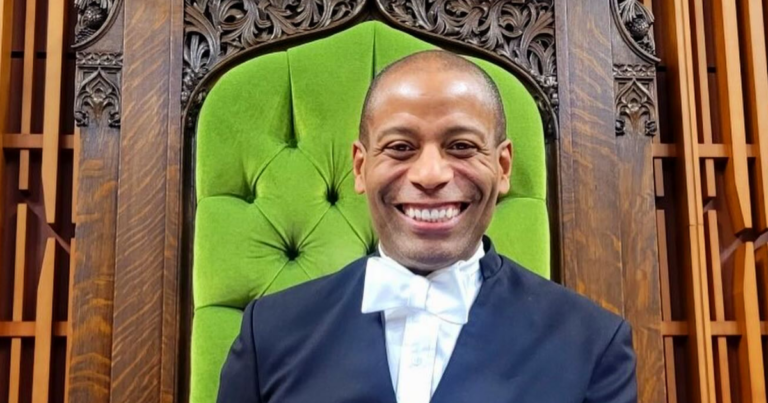
The Conservatives’ motion to remove House Speaker Greg Fergus from his role over partisan language used in an ad for one of his events was voted down on Tuesday, thanks to the NDP.
Critics called the use of Fergus’s language in a promotional ad for an event his local riding an inflammatory display of political bias.
“House of Commons Speaker Greg Fergus has once again shown his disregard for the neutrality required in his role,” said Conservative MP Chris Warkentin said in a statement last week.
Fergus was elected as a Liberal MP, representing the riding of Hull—Aylmer in Quebec and became Speaker of the House last October following Anthony Rota’s resignation.
An invitation for his event, called ‘A Summer Evening with the Honourable Greg Fergus,’ had partisan language.
“Pierre Poilievre and the Conservatives propose reckless policies that would risk our health, safety and pocketbooks,” it said.
Warkentin moved a motion for a vote to have Fergus removed on Monday afternoon.
The Conservatives, who already had support from the Bloc Quebecois, sought support from the NDP in the motion to remove Fergus. However, it was voted down by all NDP members who voted.
“This speaker has demonstrated countless times that he is unfit to be a non-partisan speaker,” said Warkentin. “He’s a very, very effective partisan Liberal and … we’ve lost trust in his ability to govern this place.”
The Liberal party apologized to Fergus in a letter last week, taking responsibility for the language used on the event page, claiming that it was auto-populated and standardized party language.
“The Liberal Party of Canada unequivocally apologizes to you for this mistake and we take full responsibility,” read the letter, written by national director Azam Ishmael and posted to X. The apology letter has since been removed.
This is not the first time that the Conservatives have accused Fergus of Liberal bias since becoming speaker, a role which requires him to moderate debate in the House of Commons in a non-partisan manner.
Fergus removed Conservative Leader Pierre Poilievre from the House of Commons last month after he refused to withdraw a claim that Prime Minister Justin Trudeau was a “wacko.”
Poilievre’s comments followed Trudeau accusing the opposition leader of associating with far-right extremists and pandering to white nationalists to acquire votes.
Trudeau also went on to say that Poilievre was not fit to be prime minister without reprimand from Fergus.
“This speaker has shown that he has no intention of remaining non-partisan,” reads Warkentin’s statement. “The speaker has spoken at a cocktail fundraising dinner for a neighbouring Liberal, addressed the Ontario Liberal Party leadership convention in full speaker garb, and jetted off to Washington to make a speech about his days as a member of the Young Liberals.”
More and more Canadians are only paying the minimum amount due on their monthly credit card bill in response to the increasing cost-of-living crisis, according to a new report.
A TransUnion report published on Tuesday revealed that many Canadians are facing ever-increasing interest rates as they can only afford to make their minimum monthly credit card payments.
The report found that the number of Canadians in that situation rose by eight basis points, to 1.3% in the first quarter, compared to that of last year.
“Inflationary pressures may lead consumers to turn to bank cards or personal loans to help make ends meet, and Millennials and Gen Z consumers are no exception,” said Matthew Fabian, director of financial services research and consulting at TransUnion Canada.
According to the report, outstanding credit card balances in the first quarter amongst the Gen Z cohort spiked by 30%, compared to the previous year.
However, millennials still hold the largest portion of the country’s debt, accounting for 38% of all debt.
This is likely due to their stage in life as many of them are buying houses and having children, as well as taking out auto loans.
“Given the higher payments that many consumers now face on their mortgages, some consumers are making lower payments on other non-mortgage obligations, including credit cards, where consumers can pay less than their full outstanding balance each month,” reads the study.
Outside of age-range, the cost-of-living crisis varies by province, with Alberta beating out all other provinces in the first quarter with the highest consumer-level delinquency increase at 2.21%.
A consumer delinquency is defined as a credit card debt that is 30 days or more past due.
Alberta was followed by New Brunswick at 2.16% and Manitoba at 2.11%.
Ontario’s consumer-delinquency rate was at 1.82%, although the province saw the highest overall increase in serious consumer delinquencies with an increase of 26 basis points.
“Despite these rising delinquency levels, Canada’s commodity-producing provinces remain best positioned to weather growth headwinds,” said Fabian.
“These regions generally experience more volatile economic conditions, given their additional dependency on commodity prices and seasonality. Cost of living increases are not uniform and impact regions differently across Canada. While we see delinquency rates rise faster in some areas, future economic growth and lower interest rates are expected to offset this in the long run.”
Canada’s total consumer debt was $2.38 trillion in the first quarter, up from $2.32 trillion over that same period in 2023 and down slightly from last year’s fourth quarter, where it hit a record 2.4 trillion.
“We have observed that when consumers are faced with mortgage payment shock, the impact on credit card delinquency is two to three times that of mortgage delinquency,” said Fabian.
“Non-mortgage debt held by homeowners is now well above 2019 levels, with at least 50% of outstanding mortgages yet to be repriced.”
In a note to all staff Tuesday – one that sounded hastily written and more like she was not leaving of her own accord – the controversial Toronto District school board education director announced her intention to retire this fall.
She earned $306,990 last year along with an $18,804 car allowance.
In her five-paragraph note, she called it a “privilege of a lifetime” to witness the “remarkable brilliance, achievements and impact of students, staff and educators.
“Without your efforts, it would not have been possible to close achievement gaps, improve graduation rates, invest in feelings of well-being and safety, engage families and community members, modernize services and educate young people against the scourge of hate and racism,” she told staff.
The letter from TDSB chair Rachel Chernos Lin said the director – who spent 30 years mostly with the North York Board of Education and the TDSB – was instrumental in the development of the Centre of Excellence for Black Student Achievement and modernization in the People and Culture department.
Chernos LIn said her leadership was also critical in the development of the board’s Multi-Year Strategic Plan, one that focuses more on DEI than the basics.
The board has been mired in controversy over the past nearly three years with Russell-Rawlins at the helm, an activist who critics claim only cares about black and Indigenous students.
Violence in Toronto schools is at an all-time high and since the atrocities of Oct. 7, antisemitic acts have been left unchecked.
Pro-Palestinian students have been permitted to sign themselves out to protest and a mother recently reported to True North that the board did nothing when her daughter was terrorized by protesters in her downtown schoolyard.
Just over a week ago, a young Israeli boy was escorted to class at North York’s Faywood Arts-Based Curriculum school by dozens of members of the Jewish community after he and a sibling had experienced repeated bullying and death threats.
Despite several complaints, mom Adi Cohen said the school failed to create a safe environment for Jewish students.
Similar complaints have been registered across the board by both students and Jewish teachers.
Last July, the much beloved principal Richard Bilkszto took his own life after suffering immense stress and anxiety after being humiliated in front of 200 of his peers and board administrators by DEI trainer, Kike Ojo-Thompson.
Ojo-Thompson, who was repeatedly hired by Russell-Rawlins on sole-sourced contracts with no oversight, was targeted by the KOJO Institute director as a “white supremacist.” Following those sessions, Bilkszto was ostracized and shut out of several part-time contracts by a series of activist superintendents operating under Russell-Rawlins’ leadership.
Russell-Rawlins announced a review of the tragedy last July by the King International Group, an outside consultant, but to date nothing has been completed and it appears to be all smoke and mirrors.
Last year, four TDSB principals, speaking to True North on the condition of anonymity, said they face a “culture of terror” under Russell-Rawlins and that they have often been left “frozen in fear” at the thought of being called out for some unsubstantiated act of racism or microaggression.
They described a board culture where staff are often treated to gaslighting, where incestuousness is rampant, hiring and promotions are based on skin colour and whether one is woke enough and where white principals are often left hung out to dry.
They talked of principals and vice-principals sent home under Russell-Rawlins’ leadership for “ridiculous accusations of racism” – often left without communication from the board for months or years.
One principal said they’ve never seen anything like what’s occurred under the embattled education director.
“Colleen Russell-Rawlins has made the system so divisive,” the principal said.
“They’re like Mean Girls,” the principal said of the racialized administrators who’ve been hired in the past three years and support Russell-Rawlins.
They told True North they do their best to help their kids despite the board’s toxic culture.