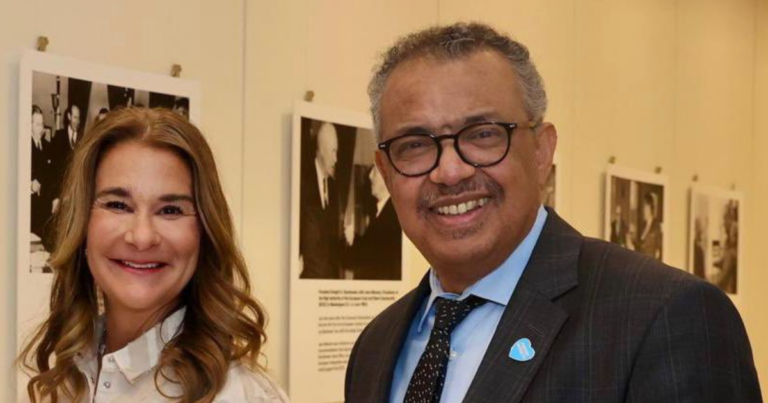
WHO fails to draft pandemic treaty by deadline

The World Health Organization failed to draft a treaty to drive the global response to a potential future pandemic,  but that doesn’t mean it won’t try again.

Critics say the “world’s first pandemic accord” would have given the WHO authority to direct the public health responses of its 194 member nations, including Canada. Still, all members could not agree on a draft of the agreement.

According to the WHO, the draft treaty operated on the basis that “nothing is agreed upon until everything is agreed upon.” After nine meetings spanning more than two years with various renditions of the accord, the participants in the intergovernmental negotiating body could not agree on every item presented in the treaty draft, effectively killing the agreement as countries convene for this year’s World Health Assembly in Geneva.

The WHO said the international pandemic agreement was to “prevent a repeat of the global health, economic and social impacts of the COVID-19 pandemic” and to ensure “future generations are safeguarded from the threat of inevitable future pandemics.

WHO Director-General Tedros Adhanom Ghebreyesus announced the defeat, which he was hesitant to call a failure. 

“We will try everything believing that anything is possible and make this happen because the world still needs a pandemic treaty and the world needs to be prepared because many of the challenges that caused serious impact during COVID-19 still exist,” Ghebreyesus said, addressing his organization. “Failure doesn’t stop us, and it should not stop us, but this is not failure. You have really done a lot, and you have progressed a lot. I don’t call it failure.”

Conservative MP Leslyn Lewis has fought against Canada’s involvement in the treaty since May of 2022.  She warned that if Canada ratified the treaty, it would be signing its sovereignty away to an international body that Canadians did not elect.

“Common sense Conservatives believe that only Canada’s elected governments should set policy and direction on what is best for Canada. We will continue to listen to Canadians’ concerns about the proposal,” Lewis said in an email to True North.

“Conservatives believe that no international agreement should undermine national sovereignty or be used to infringe upon the Charter-protected rights and freedoms of Canadians,” she said. “We will oppose any international bureaucracy that undermines the ability of the elected representatives of Canadians to make laws or to direct our own health care response.”

On Lewis’ website, she shared a longer list of her objections to the pandemic treaty.

“It also does not make sense for this government to sign onto a legally binding treaty governing future pandemic response when Canada still has not had a national inquiry into our pandemic policies and outcomes,” she said.“As proposed, a legally binding treaty would see power given to the WHO to direct the global health management of pandemics.”

She warned that the treaty would have defined and classified what would be considered a pandemic.

“Once a pandemic is declared, the WHO would require countries to adopt specific response measures,” Lewis said.One area on which the negotiating body failed to agree was the recognition of  “the sovereign right of States…to legislate and to implement legislation, within their jurisdiction.”

They all agreed that the signing nations “shall promote a One Health approach” for pandemic prevention, preparedness and response but could not agree that this would be voluntary.

They also disagreed on preventing nations from disrupting medical supply routes to affected countries and “encouraging” medical manufacturers to seek regulatory approval from the WHO for all products.

However, they all agreed to recognize the WHO as the directing and coordinating authority on international health work, including pandemic prevention, preparedness, and response. 

Ghebreyesus indicated that the WHO would try again, asserting a pandemic treaty as critical for the world’s response to future inevitable pandemics.

The Andrew Lawton Show | Can wokeness be defeated?

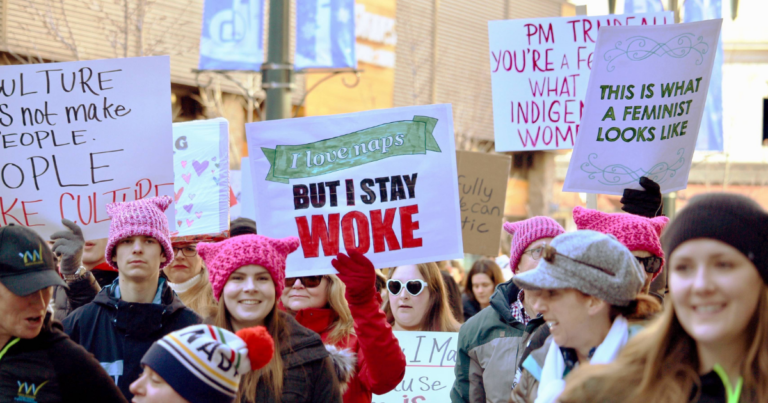
Wokeness – or cultural socialism, as Prof. Eric Kaufmann puts it – is destroying Western civilization. The ideology has taken hold of almost all Western institutions, instilling identity politics and DEI in the place of freedom and pluralism. The dire nature of the situation is explored in a new book by Kaufmann, “The Third Awokening: A 12-Point Plan for Rolling Back Progressive Extremism.” He joins True North’s Andrew Lawton in today’s edition of The Andrew Lawton Show for an in-depth look at where we are, how we got here, and, more importantly, how we fix it. 

SUBSCRIBE TO THE ANDREW LAWTON SHOW

The Daily Brief | BC Conservative candidate stands by anti-Pride comments

BC Conservative candidate Damon Scrase resigned from his bid to run for the party after the legacy media resurfaced past tweets denouncing some elements of Pride parades.

Plus, former MP Costas Menegakis snags the Conservative nomination in a hotly-contested GTA riding.

And more Ontario school boards are taking big tech giants to court over the effects of social media on students.

Tune into The Daily Brief with Cosmin Dzsurdzsa and Noah Jarvis!

SUBSCRIBE TO THE DAILY BRIEF

Two men arrested in “dangerous scheme” to smuggle people from B.C. across U.S. border

Two men have been charged in a human smuggling case that the U.S. Department of Justice has called a “dangerous scheme” to traffic people from British Columbia into the United States via freight trains. 

Jesus Ortiz-Plata, 45, of Oregon and 35-year-old Juan Pablo Cuellar Medina of Washington were arrested last week and face charges of human smuggling. Three other non-citizens were also arrested after allegedly being smuggled out of B.C. into the U.S.   

Washington State prosecutor Tessa Gorman called it “an extremely dangerous smuggling scheme,” according to the Vancouver Sun

The two are also suspected to have been involved in a case last August that saw 29 people rescued from a freight car filled with plastic pellets.

According to an affidavit filed by a U.S. Homeland Security officer, 28 of those rescued were Mexican nationals and one was Colombian. 

They were discovered after border officers noticed anomalies while conducting an X-ray scan of one of the freight cars. 

Charges were filed in Seattle on Friday and court documents reveal that Ortiz-Plata and Medina first came under investigation last July. 

Border patrol agents acquired a phone number associated with  “numerous human smuggling events” in Blaine, Wash. dating back to September 2022.

The two men were arrested after being tracked by law enforcement agents to an apartment complex in Everett, Wash., a location where the pair allegedly picked up non-citizens who unlawfully entered into the U.S.

After being detained, agents questioned the three unnamed men who were found travelling with Ortiz-Plata and Medina, the affidavit says.

Two of the other three men arrested with them were brothers from Honduras who had flown into Vancouver and had previously been working in Calgary for several months. 

One brother confessed to paying $2,000 each to the alleged smugglers, while another said they paid $4,000 to each “unknown smuggler” before being picked up by a “Hispanic male” and brought to a train station where they met a third man.

Agents ultimately discovered the third man was originally from India after interviewing him in Hindi and that he had flown into Toronto 15 days before the attempted border crossing. 

He told authorities that he became connected to the smugglers through someone in his home village in India. 

“The Hispanic male told them to climb on board the train and hide in the natural voids within the railcars of the freight train,” reads the affidavit.

After several hours on the train, the three men were picked up by another unknown suspect who would take them to an apartment. 

“Being locked in a freight train car is dangerous — there is no control over the heat, cold or ventilation, and people can be injured or killed by shifting freight,” said Gorman in a news release.

Both men are now facing up to 10 years in prison and a fine of nearly $350,000. 

Toronto school trustee introduces motion to ban political activism in classrooms

A Toronto District School Board trustee responded to public outcry by moving a motion to clarify further that teachers won’t be indoctrinating their children with political activism. 

Save Our Schools, an Ontarian not-for-profit organization focused on promoting student achievement and well-being, shared the motion in a post to X, which they said the Toronto District School Board “is desperately trying to bury.”

The corporation described the motion as “a no politics in school motion,” claiming that progressive trustees and staff “hate the idea of this becoming policy.”

The motion on political activism and professional boundaries was introduced by board trustee Weidong Pei.

The motion follows an email from a concerned parent, which was sent on Mar. 11 to each board trustee and several Ontario ministers. 

The email stated that parents expect their children to receive a comprehensive education in a safe and inclusive environment. 

“However, recent incidents have raised significant concerns about the direction of our schools and their impact on children’s mental health and preparedness for the future,” said the parent, whose name was redacted.

The parent expressed concerns about the lack of distinction between personal political views and academic instruction.

The concerned parent pointed towards some children being forced to hide their identities in order not to be bullied or harassed. A Jewish community recently had to rally around a young Jewish student who required protection as it was too unsafe for him to walk to school.

“Furthermore, there is a concerning trend of public speakers using the educational platform under the guise of free speech to promote hatred and political propaganda. This not only undermines the values of critical thinking and respect but also creates a toxic environment for learning,” wrote the parent.

The email requested that ministers and board members create policies prohibiting political activism from being incorporated into teaching practices. 

Following the email, the motion was introduced, which called on the director of the Toronto District School Board to present a report to the Governance and Policy Committee by Sept. 30, 2024. The current director announced her intention to retire on Tuesday.

The report should detail existing policies regarding staff not engaging in political activism, enforcement measures, and recommendations for further enhancements to prevent such activities.

The motion also called for increased transparency within what is taught to students.

“The Director shall create public and easily accessible lists of curricula and resources, and links to the full texts and content of all curriculum resources and tools developed by or in partnership with or provided to the TDSB,” reads the motion.

The motion also called for two things that the director would need to ensure. Firstly, that the definitions of hate, discrimination, and racism remain with no additional definitions added without amending the policy. And, secondly, proposed amendments to the equity and human rights policies are presented to the Board of Trustees for approval, so that the board can ensure the amendments align with the definitions established by the Province of Ontario.

The motion concluded by calling on the director to request that the Ontario College of Teachers issue a Professional Advisory reminding educators to remain professional, neutral, and apolitical in schools, without using their political viewpoints to advance their personal interests.

The TDSB has previously come under fire for the activism of its trustees.

Some TDSB high schools offer a Deconstructing Anti-Black Racism course. Two TDSB trustees previously pushed a motion to create a course that teaches critical race theory, and on how to protest.

CMHC report reveals warning signs of mortgage defaults to come

An increasing number of Canadians are struggling with their mortgages due to financial pressure and mortgage arrears are on the rise, according to a new report by the Canada Mortgage and Housing Corporation.

Financial reserves accumulated throughout the pandemic have since been exhausted, research from the CMHC’s latest Residential Mortgage Industry Report revealed. 

Additionally, mid to low-income households are now having to dip into their savings just to make ends meet. 

The report forecasts that mortgage arrears will reach pre-pandemic levels of 0.25% by the end of 2024. A mortgage arrear is a payment obligation that hasn’t been received by its due date.

Canada’s high cost of living, coupled with increased interest rates and a spike in unemployment have further stretched Canadians’ pocketbooks toward a dangerous breaking point. 

“These notable changes in financial behaviour, recent dissaving trends and low mortgage consumer sentiment all suggest more Canadians are living paycheck-to-paycheck and trying numerous creative ways to stay afloat,” reads the study.

“Additionally, close to half of borrowers have yet to renew their mortgage, this year and next, at a higher rate. This unprecedented context is making mortgage holders even more fragile to changing employment conditions or a major life event that would negatively impact their household income.”

The CMHC’s 2024 Mortgage Consumer Survey found that nearly 25% of respondents said they were worried about their ability to continue making their mortgage payments. 

The majority of household debt in Canada is tied up in mortgages and the country’s household debt levels are currently at an all-time high.

“Policymakers and the financial sector are closely monitoring the risks to the overall economy and financial system stability, given that an unexpected shock could tip a greater number of homeowners into default,” reads the report. 

Mortgage consumers will often sell off other assets to keep up with their mortgage payments. 

“If a household has missed its mortgage payment for over 3 months, chances are it has been experiencing periods of financial stress for a longer time. This is because Canadian homeowners often prioritize mortgage payments over other debt payments and non-essential expenses,” the report added. 

However, prolonged financial stress can lead homeowners to miss mortgage payments and mortgage arrears, making them vulnerable to default.

While mortgage arrears have been historically low in recent years, there has been a gradual increase in the first quarter of this year, with over 12,600 mortgages now having missed payments for at least 90 days. 

However, should interest rates come back down as many economists expect them to over the coming months, 2025 could see a boost in economic activity that would alleviate financial stress on monthly payments. 

The Alberta Roundup | Alberta charter schools are booming

Today on the Alberta Roundup with Rachel Emmanuel, Rachel interviews Caylan Ford, the founder of three classical academy charter schools in Alberta.

Ford explains how her charter schools operate differently from regular public schools by prioritizing lessons that have stood the test of time. She also speaks about the damage being done to children in some public schools, and explains how concerned parents can express their interest in opening a charter school.

Tune into the Alberta Roundup now!

SUBSCRIBE TO THE ALBERTA ROUNDUP

Alberta theatre cancels drag show featuring child performers

An Alberta theatre says its cancellation of a drag show that featured children had nothing to do with the content of the performance.

Dragging Youth, an organization that stages “family friendly all age drag shows,” claimed that a representative of Manluk Theatre in Wetaskiwin, Alta., accused the organization of “grooming” kids.

“The board of the Manluk Theatre decided to cancel the show after signing a contract promoting the show and selling tickets. This decision is based on an uneducated, short-minded, intolerant ideology that an all aged drag show with youth performances ‘grooms’ queer sexuality (their words) and lifestyle in kids and other youth,” said Dragging Youth in a Facebook post.

Manluk Theatre released a statement Wednesday saying it cancelled the show for technical reasons.

“Given the associated requirements of theatre production, including a dedicated team of volunteers and technical staff, the outlook for success was in question,” the venue said.

Following the decision to cancel, a theatre board member attended a Dragging Youth event and spoke positively of the experience, according to the statement.

As for the “grooming” accusation, the theatre said this was a misunderstanding.

Theatre staff became aware of a social media post where a community member said that drag shows are used for “sexual grooming of kids.”

In response, the venue contacted Dragging Youth and asked, “How would you respond to a person who says the drag shows are ‘sexual grooming of kids?’”

“These words from social media are being falsely ascribed to the (theatre), and do not represent the position of the board,” the statement said. “The Wetaskiwin Theatre Society remains committed to working with, educating, and respecting all sectors of our community.”

The group Dragging Youth pleaded with people to email, phone, and send letters to Manluk Theatre, “sharing your disgust at them.”

Dragging Youth provided the contact information of the theatre that they labelled as “homophobic.”

“What Dragging Youth does literally saves lives!” said the organization. 

A drag queen group held a story hour in Winnipeg last year for children. The same group, “The House of Hex,” posted pictures on their public social media accounts featuring bondage gear, horns, and frightening makeup. 

Protests across Canada have occurred in response to sexualized drag queen performances being offered to children.

Intelligence watchdog says Canada’s election interference safeguards are inadequate

The federal government needs to step up its game when it comes to warding off attempts to interfere in Canada’s democracy.

Canada’s National Security and Intelligence Review Agency has concluded that the country’s intelligence response was deeply flawed, particularly when handling foreign interference during the 2019 and 2021 federal elections.

Following the 2016 presidential election in the United States, which the report said saw “well-documented Russian foreign interference,” the Government of Canada implemented several measures to protect the integrity of federal elections, three of which were examined in the report.

The measures highlighted were the Critical Election Incident Public Protocol Panel, the Security and Intelligence Threats to Election Task Force, and the G7 Rapid Response Mechanism.

The National Security and Intelligence Review Agency report is a comprehensive review of foreign interference occurring in Canada. Though the report began on Mar. 9, 2023, it was only made public after it was tabled in parliament on Monday. 

The report includes ten findings and eight recommendations focused on the Canadian Security Intelligence Service’s intelligence collection and dissemination practices. It also evaluated the overall flow of intelligence regarding political interference by the People’s Republic of China between 2018 and 2023, identifying disagreements and flaws within the intelligence community.

The report exposed significant shortcomings in the CEIPP Panel’s handling of foreign interference during the 2019 and 2021 federal elections.

The review examined the roles of the SITE Task Force and the CEIPP Panel. NSIRA’s review highlighted significant disagreements between constituents in the intelligence community regarding whether, when, and how to share information about political foreign interference.

“NSIRA found that the SITE Task Force and the CEIPP Panel were not adequately designed to address traditional human-based foreign interference,” reads the report.

SITE, for example, focuses on threats during elections, but NSIRA said that interference also occurs between elections.

The CEIPP Panel’s high threshold suggests that public announcements are unlikely to be triggered by traditional foreign interference, which targets specific ridings.

The threshold for public announcements meant it did not inform Canadians about foreign interference observed in the 2019 and 2021 elections.

“The security and intelligence community is of the consensus view that political foreign interference is a significant threat to Canada, and that the People’s Republic of China is a major perpetrator of this threat at all levels of government,” reads the report.

The report showed that CSIS faced a dilemma, where the agency collected information but feared sharing it because doing so could have been interpreted as election interference in itself.

NSIRA found that CSIS’ dissemination of intelligence during the 2019 and 2021 elections was inconsistent, often impacted by concerns over influencing the democratic process.

NSIRA recommended that CSIS develop a comprehensive policy, in consultation with government stakeholders, to bring coherence to its actions against political foreign interference. The agency also recommended enhancing intelligence literacy within departments.

The report found significant gaps in accountability within CSIS and Public Safety, noting the absence of a system to track who received and read intelligence products. NSIRA recommended that both agencies rigorously track and document this information. 

Moreover, NSIRA discovered that intelligence recipients often did not understand the significance of the intelligence they received or how to integrate it into their decision-making processes. Disagreements between intelligence units and senior public servants about what constituted foreign interference versus legitimate diplomatic activity further complicated the issue.

Public Safety Minister Dominic LeBlanc has indicated the government is reviewing NSIRA’s recommendations but has not committed to specific changes. 

“We’re certainly happy to look at the report obviously in detail and ensure that the recommendations are enacted,” said Leblanc.NSIRA’s report follows a previous report following the 2021 election. The report analyzed the 2021 CEIPP Panel’s implementation and effectiveness following the 2021 federal election. It made sixteen recommendations of its own, revealing deep flaws within the panel.

BC Conservative candidate who resigned over Pride tweets stands by some of his comments

BC Conservative candidate Damon Scrase resigned from his bid to run for the party after the legacy media resurfaced past tweets denouncing some elements of Pride parades.

However, Scrase has since said he stands by his comments condemning fringe aspects of the Pride movement and public nudity at parades in an exclusive comment to True North.

“Stepping down was my decision. I stand by what I said against public nudity and fringe elements in the pride movement, this campaign to fix BC far is bigger than me and I think it was the right thing to do for the long term prospects of British Columbia,” said Scrace.

Scrase’s resignation was prompted by former BC Liberal MLA and radio host Jas Johal. Since early May, Johal has been covering BC Conservative candidates, most notably Scrase, for old tweets that he labelled “extreme.”

Scrase was initially attacked for tweets he had posted describing abortion as the killing of an unborn child, and that praise for “abortion rights” was bizarre. 

In mid-May, BC Conservative leader John Rustad had defended Scrase’s pro-life views at a BC legislature press conference, saying that “people are allowed to have their own views.”

The NDP accused Rustad of standing against women’s rights by defending Scrase.

“It’s disturbing to read this candidate’s views, and it’s even more troubling to see John Rustad condone them. It shows that Rustad is completely unwilling to stand up to his candidates who want to restrict the rights of women,” said NDP MLA Kelli Paddon.

The NDP has since continued their attack against Scrase, calling his positions “terrifying” and “hypocritical.”

In his thread on Scrase, Johal highlighted more of Scrase’s old tweets where he condemned “degenerates” who break public indecency laws, retweeted disturbing pictures from a Pride parade, and voiced opposition to segregation based on vaccine status. 

BC United jumped on the news of Scrase’s resignation, calling his views “homophobic, racist, and anti-women.”

In a post on X announcing his resignation, Damon Scrase announced that he would no longer stand as the BC Conservatives’ candidate for Courtney-Comox, deleting his old tweets in the process.

“I’m a blue-collar guy who never aspired to be a public figure, and certainly not a politician,” said Scrase.

“I do not want my old, unfortunate comments to distract from the important work currently being done to fix our incredible province. As a result, I have informed the Conservative Party of BC that, effective immediately, I will be stepping down as the candidate for Courtenay-Comox.” 

True North reached out to the BC Conservative Party for comment, though no comment has been given as of the time of publication.