Canada Post CEO tells government it wants out of gun buyback program

Canada Post’s CEO is making it clear to the government that the crown agency wants no part in collecting guns as part of the Liberals’ gun buyback program.

CEO Doug Ettinger told the House of Commons operations committee that he had significant concerns for its employees regarding their potential involvement in the program.

Canada Post employees have been tasked with the responsibility of receiving guns from owners that became outlawed under the Trudeau government’s sweeping gun ban in 2020. 

“It’s my clear responsibility to keep our employees safe — and the public safe, because post offices are public locations,” said Ettinger at the committee meeting on Wednesday.

“We did an internal safety assessment, and we are not comfortable with the process that was being proposed in ongoing discussions over the past few months. Our position is that with the elevated risk, we’re just not comfortable with it.”

Canada Post made its position clear in a letter to Ottawa last month, stating its concern for the safety of its employees regarding potential conflicts between staff and gun owners who are frustrated with the confiscation of something they purchased and owned legally. 

“We’re just not comfortable with that,” Ettinger stressed to committee members.

“Our buildings are not set up with security, with proper storage. Our buildings aren’t that secure overall, the way I would like them to be. This is not in our expertise — this should be best left to those who know how to handle guns, know how to dismantle them, and know how to manage them so no one gets hurt.”

However, the Trudeau government appears insistent on pushing Canada Post to do the leg work on confiscation, proposing regulations last week that would allow for the shipment of prohibited rifles and shotguns via the mail so long as it was for the purpose of their destruction.

The proposed regulations would reverse a 1998 amendment to the Firearms Act that made it illegal to ship prohibited rifles and shotguns through Canada Post. 

The Liberals’ 2020 ban via an order-in-council reclassified approximately 1,500 popular firearms as illegal overnight, however, collecting them has remained a major issue ever since. 

Gun owners were initially granted amnesty until April 2022 however, the Liberals extended it until Oct. 23, 2023 and then again until October 2025, when Canada will hold its next federal election.  

The project has so far cost taxpayers around $42 million as of March, with dozens of full-time employees, and a $2.27 million contract for IBM to develop and design it. 

Yet despite the millions of dollars thrown into the contentious program, it still hasn’t collected a single firearm. 

The Trudeau government has even faced blowback from the association it contracted to help with retrieving firearms from Canadian retailers.

The government tasked the Canadian Sporting Arms and Ammunition Association to help them procure the now-prohibited firearms back from retailers, who’ve been saddled with unsellable inventory for four years now.

However, the CSAAA found the Liberals’ knowledge of firearms limited in scope, adding further complexity to the already difficult task.

“We’re in a real catch 22,” CSAAA president Wes Winkel told True North’s Andrew Lawton in an interview last month. “These firearms are not saleable. They are very expensive to insure.”

Winkel said he’s opposed to the gun buyback but felt an obligation to help gun retailers make the best of a bad policy.

Trudeau ridiculed over “housing design catalogue” aimed at helping home shortage 

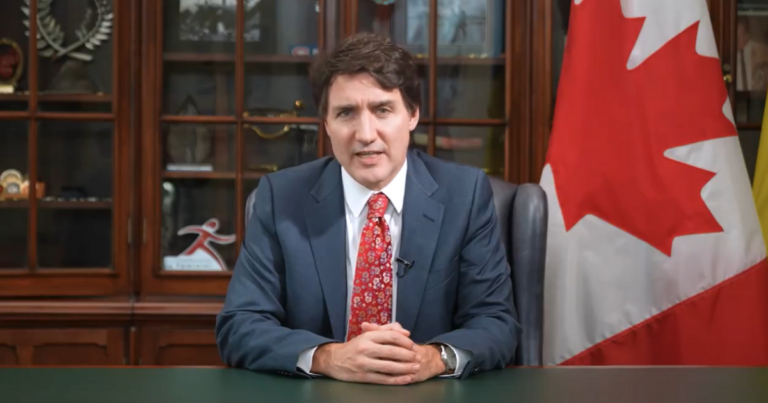
Prime Minister Justin Trudeau was mocked for his announcement of a “housing design catalogue” when asked what his government was doing to fix Canada’s housing crisis. 

While exchanging barbs with Conservative Leader Pierre Poilievre about broken promises regarding housing, Trudeau responded that among the things his government was doing to fix the shortage was launching a housing design catalogue. 

Poilievre made several attempts to get Trudeau to give a ‘yes’ or ‘no’ answer to whether he would keep his promise to build 550,000 homes by the end of 2024. Trudeau refused to give a straightforward answer, instead discussing previous housing crises, like after the Second World War.

Poilievre pressed on to get a one-word response, demanding a ‘yes’ or ‘no’ answer to whether or not the Trudeau government would uphold its promise of completing 550,000 homes by the end of the year.

“We have a broad range of initiatives that are delivering on housing, like topping up the housing accelerator fund with $400 million dollars, a new six billion dollar Canada housing infrastructure fund to help communities build, we’re leveraging transit funding to build more homes, we’re launching a housing design catalogue and incentivizing more skilled trade workers.”

Poilievre wasted no time addressing Trudeau’s announcement.

“He’s announcing a catalogue everybody, yay. Give him a round of applause everybody,” Poilievre said, prompting laughter, cheering, and a standing ovation from the Conservative benches.

“You can’t afford a home, you might end up in a tent, your rent has doubled but hey, you’ve got a brand new catalogue.”

The exchange quickly went viral online with many Canadians frustrated by the out of touch solution. 

According to Statistics Canada, between 2015 and 2023, Canadian housing starts were anywhere from 195,535 to 271,198 per year, averaging 225,104 houses built per year. However, they fell by over 21,000 units between 2022 and 2023.

To accomplish Trudeau’s housing promise, Canada would have to find a way to build over 65.84 houses per hour or 1.096 houses per minute until 2031.  

The Conservatives’ proposed Build Homes Not Bureaucracy Act was voted down by the Liberals and NDP earlier this week. The potential legislation would have rewarded Canadian municipalities that vastly exceed their housing targets by granting them money reallocated from the federal government’s Housing Accelerator Fund. 

Major cities, such as Toronto, Montreal, Vancouver and Ottawa, would see their housing targets increased annually by 15% and be funded by money set aside for federal infrastructure with specific amounts allocated based on each city’s targets. 

Municipalities could have also become eligible to receive money from a $100 million  pot if they “greatly exceed housing targets,” stated the bill.

“These are common sense solutions that will address the housing crisis Justin Trudeau has created in this country,” the party said in a statement on Thursday. “But the Liberal-NDP coalition are no longer listening to Canadians. Only a common sense Conservative Government will bring homes that Canadians can afford.”

Trudeau came under fire last summer for saying that housing wasn’t a primary responsibility of the federal government.

“Housing isn’t a primary federal responsibility,” said Trudeau in response to critics at the time, arguing that it was up to both provincial and municipal governments to fix the issue.

Vancouver synagogue attacked with “incendiary device”

The Jewish Federation of Greater Vancouver reported an incendiary device was thrown at the front doors of a synagogue in Vancouver, B.C., making it the third attack on a Jewish school or place of worship in the past week.

At approximately 9:30 p.m. Thursday, an incendiary device was thrown at the front doors of Schara Tzedeck synagogue on Oak Street.

“Thankfully, no one was injured, and damage to the building was minor,” the group reported in a community update Thursday.

It said the Vancouver Police Department and the fire inspector conducted a “thorough” search of the building and declared it safe to reopen.

Rich Robertson, the director of research and advocacy at the Jewish advocacy organization B’nai Brith Canada, told True North in an interview that the attack was “horrifying” for Jewish people living in the area.

“This occurred as evening services were letting out, and there were worshipers in the vicinity of the shul. To have to feel unsafe when you’re attending your synagogue…it’s just honestly, it’s heartbreaking,” Robertson said.

Aron Csaplaros, the B.C. regional manager at B’nai Brith Canada, was on the scene immediately following the attack, working with the Vancouver police on the scene.

“We’ve been working with and will continue to work with the Vancouver police to ensure that the response is as strong as is needed and that the community remains safe from further harm,” Robertson said.

The investigation is ongoing, and in response, the Vancouver police will increase patrols around local Jewish institutions.

The Jewish Federation also said its security advisory team will remain “on top” of the situation.

“We are reaching out to all Jewish community organizations and advising them to remain vigilant and to follow their established security protocols,” its community update said.

Earlier this week, a Jewish girl’s school in Toronto was shot at, and on Thursday, a Jewish school in Montreal was also fired on.

“This is part of an extremely troubling pattern of escalation that has now seen multiple Jewish institutions targeted with violence in the last week,” Robertson said.  “The lack of a strong response from our government and civic leaders has emboldened and incited those who harbour antisemitic views to feel that they can act out against the Jewish community in Canada without repercussion and with impunity.”

He called for legislation and Canada’s laws to be used to deter further aggression against the Jewish community in Canada.

“We need the federal government to expedite the report that will be released following the Justice Committee’s hearings on antisemitism,” he said. “We need leaders to continue to actively speak out against what is occurring as a form of deterrent. And we need the police to investigate these charges and be confident that when they do lay charges, in relation to hate crimes or hate-motivated occurrences, that they will have the support of the respective attorney general when seeking to have those matters prosecuted.”

True North contacted the Vancouver Police Department for comment but did not receive a response before publishing.

The Daily Brief | Legacy media falsely claimed 215 graves were found at Kamloops residential school

The World Health Organization failed to draft a treaty to drive the global response to a potential future pandemic, but that doesn’t mean it won’t try again.

A legacy media outlet quietly erased the fact that it falsely reported 215 graves were uncovered at the site of the former Kamloops Indian Residential School.

Two men have been charged in a human smuggling case that the U.S. Department of Justice has called a “dangerous scheme” to traffic people from British Columbia into the United States.

Tune into The Daily Brief with Cosmin Dzsurdzsa and William McBeath!

SUBSCRIBE TO THE DAILY BRIEF

Canadian MPs want ‘ecocide’ perpetrators prosecuted by International Criminal Court

Several Canadian MPs want to see ‘ecocide’ acknowledged by the International Criminal Court as a crime for international prosecution.

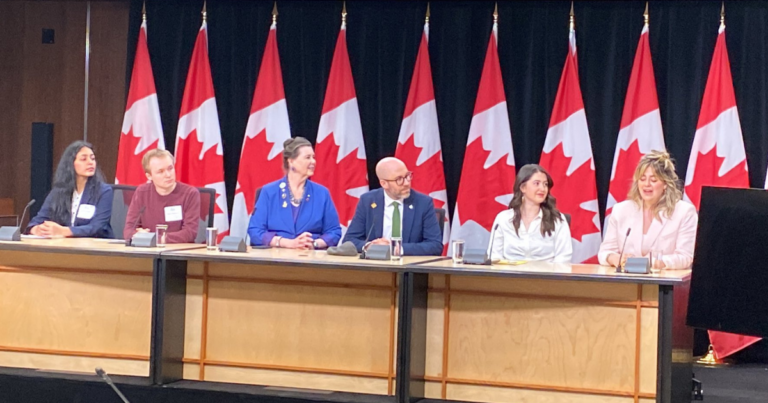
The panel held a press conference in Ottawa on Thursday to discuss their support for mass environmental destruction, referred to as ecocide, to be added to the list of crimes that the ICC can prosecute.

Green Party Leader Elizabeth May, Liberal MP Patrick Weiler, and NDP MP Alexandre Boulerice were among the MPs who sat on the panel along with Mia Feldman, Ecocide Toronto’s outreach director and two other organization members. 

“As we speak, Canada is burning,” said Feldman in her opening remarks. “We are only in May and climate exacerbated wildfires are already burning in several provinces.”

“It is clear that our current legislation is insufficient. It is clear that we need a law against ecocide.” she added. 

“A majority of mass environmental destruction is greenlit by a few powerful individuals. Criminalizing ecocide would change the decision-making calculus for these individuals by holding them criminally liable.”

The ICC is currently responsible for prosecuting four crimes: genocide, war crimes, crimes against humanity, and crimes of aggression. 

“Ecocide is matricide,” said Green Party Elizabeth May. “We really need to take some responsibility for ensuring that the earth, our home and human civilization have a future.” 

The organization launched a petition to have ecocide added to the Rome Statute of the ICC as the fifth amendment.

The crimes already covered in the Rome Statute primarily deal with issues that arise in times of conflict. 

The organization believes it’s necessary to be added as most environmental destruction takes place in times of peace. 

However, one reporter asked about how ecocide was being affected by Russia’s ongoing invasion of Ukraine.

“While we’re focused on this press conference on the threat of ecocide and recognizing it under the Rome Statute, we also recognize that protecting our environment globally requires health and functional democracies,” said May. 

“And the rise of right-wing populist governments all around the world and declines in democracy are also a direct threat to our survival on this planet,” she added.

Liberal MP Patrick Weiler agreed with May’s statement, following up by saying that it was important for the country to hold Putin’s regime accountable, “whether it’s the blowing up of the dam or attacking the nuclear energy facilities.”

“When you calculate not just the human cost and financial costs of rebuilding the infrastructure, the cost to the environment is immeasurable,” said Weiler. “By advocating for ecocide to be part of the Rome Statute in international criminal law, it’s one more way we can deter that type of behaivour.”

“Even in war, there are rules that need to be followed and deliberately causing environmental damage is not something that should be considered,” he added. 

May also added that she would like to see more domestic laws added to punish acts of ecocide in Canada.

However, while Canada accounts for roughly 1.5% of the world’s global emissions, China alone is responsible for 27%, surpassing the combined emissions of all developed nations in the world. 

Conservative home building bill defeated in House of Commons

Conservative Leader Pierre Poilievre’s housing bill was defeated in the House of Commons in a second-reading vote.

The Liberals, New Democrats and Bloc Québécois voted against the legislation 203 to 117 on Wednesday. 

Poilievre introduced the bill in September in response to the housing crisis. The Building Homes Not Bureaucracy Act aimed to speed up the construction of housing to alleviate the ever growing housing shortage.

The Conservatives blasted the “Liberal-NDP coalition” for blocking a bill they say “would’ve built the homes that Canadians desperately need.”

“These are common sense solutions that will address the housing crisis Justin Trudeau has created in this country,” the party said in a statement. “But the Liberal-NDP coalition are no longer listening to Canadians. Only a common sense Conservative Government will bring homes that Canadians can afford.”

The potential legislation would have rewarded Canadian municipalities that vastly exceed their housing targets by granting them money reallocated from the federal government’s Housing Accelerator Fund. 

Major cities, such as Toronto, Montreal, Vancouver and Ottawa, would see their housing targets increased annually by 15% and be funded by money set aside for federal infrastructure with specific amounts allocated based on each city’s targets. 

Municipalities could have also become eligible to receive money from a $100 million  pot if they “greatly exceed housing targets,” stated the bill.

Another stipulation for cities to receive funding under the bill would have been that they “not unduly restrict or delay the approval of building permits for housing.” If an “eligible person who has reasonable grounds” to suggest that building permits have been prolonged or prohibited, they would be able to submit a complaint to the federal government.

Executives who didn’t meet their housing targets or have applications for new housing construction treated within an average 60 day period, would have been liable to be punished by having their bonuses withdrawn. 

Housing affordability has been a staple among Poilievre’s promises if elected, and one that appears to be resonating with Canadians as the Conservatives hold a substantial lead over the Liberals in a number of opinion polls.

To meet the Trudeau government’s current housing targets, which include building almost four million new houses by 2031, Canada would have to build just over one house every minute up until that deadline.

The ambitious plan laid out in the Liberals’ 2024 budget said that the goal of 3.87 million new homes would include 2 million net new homes on top of the 1.87 million homes expected to be built by 2031.

Between 2015 and 2023, Canadian housing starts were anywhere from 195,535 to 271,198 per year, averaging 225,104 houses built per year, according to Statistics Canada.

Between 2022 and 2023, housing starts fell by over 21,000 units.

Based on the current average, the Liberals won’t even accomplish their goal of the 1.87 million homes expected to be built by 2031, let alone the 2 million new homes.

To accomplish his goal, Trudeau would have to find a way to build over 65.84 houses per hour and 1.096 houses per minute.

Ratio’d | Trudeau government to put 500,000 ILLEGALS on path to CITIZENSHIP?

Earlier this week a group of radical activists from the Migrant Rights Network urged the Trudeau government to grant amnesty to up to 500,000 illegal immigrants in Canada and put them on the path to citizenship. This follows reports from December that the government was planning to pursue a regularization plan for illegals. In 2021, a ministerial directive from Trudeau’s office to the Immigration minister directed that a similar plan be laid out.

Nobody wants this in Canada. There is no mandate for such an outrageous decision which would undermine Canada’s immigration system. But the truth is, Trudeau’s Liberal government doesn’t actually care what you think when it comes to immigration. They are ideologically committed to population growth by any means necessary.

Watch the latest episode of Ratio’d with Harrison Faulkner!

Detective facing discreditable conduct charge for probing COVID vaccines takes stand in defense

Little more than six weeks before Ottawa Police Service enforced its COVID vaccine mandate, high-ranking officers, including then-chief Peter Sloly heard vaccine injury stories from several officers, according to Det. Helen Grus’ testimony at her disciplinary hearing which resumed on Monday.

The 20-year OPS veteran and mother of three stands accused of discreditable conduct under the provincial police services act for probing a possible link between the COVID vaccines and an uptick in local sudden infant deaths.

As Grus has not spoken to journalists about the allegations, this week’s hearing has been the first opportunity for the public to hear her version of events.

“They spoke at this town hall and told their stories,” Grus said of a Dec. 16, 2021 meeting between rank-and-file members and police brass. “They wanted Chief Sloly and Deputy Chief (Trish) Ferguson to hear what was going on and their concerns, all of our concerns.”

Appearing as a witness in her own defence, the former sex assault and child abuse (SACA) detective testified that Sloly and then-Staff Service Sgt. Peter Danyluk were also the only senior members she got any feedback from regarding her “suspicion” COVID shots may have played a role in the deaths.

Grus’ testified that she presented what amounted to preliminary findings at a Jan. 13, 2022 town hall meeting showing a “two or three times” increase in sudden infant deaths since the vaccine rollout compared to a typical year.

Before Grus could continue her probe, she was put on a leave of absence for refusing to get the COVID vaccine. She was suspended with pay Feb. 4 while internal affairs began investigating her conduct.

Grus maintained investigating sudden deaths of children five-and-under was part of her job. According to her testimony, Sloly was aware of possible vaccine injuries among police members as far back as September 2021, when Grus sent a mass email to police members questioning the safety of the COVID vaccines and whether OPS would assume all liabilities for any negative health outcomes associated with mandating it across the force.

“Is OPS aware of the adverse effects their own membership has experienced upon receipt of the EUA vaccines against SARS-CoV-2?” asked Grus in her September electronic missive, the preamble of which praises Canada, its freedoms enshrined in the constitution, and how Christianity informs her values in life and policing.

Grus testified she knew of four colleagues who suffered heart issues following COVID vaccination. Neither the OPS nor the Ottawa Police Association union have responded to requests about the number of officers who’ve reported vaccine injuries.

Grus testified this week that she believed if the COVID vaccines were responsible for the infant deaths that criminal negligence could be at play as government agencies and their officials had consistently assured the public that the shots were safe and effective.

Grus’ SACA colleague, Det. Chris Botchar – one of seven police witnesses for the prosecution – described her letter during cross-examination last year as “a manifesto of the right-wing.”

And while Grus’ September email earned her a mention from the chief who thanked her in an email for her concerns, Grus was rebuked for posting it by her overarching supervisor Staff Sgt. Shelley Rosetti and immediate supervisor Sgt. Marc-Andre Guy; both ordered Grus to refrain from talking about COVID or the vaccines at work.

An element of her misconduct charge hinges on the allegation she engaged in an “unsanctioned special project” and interfered in a lead investigator’s file by calling the father of a deceased child to determine the vaccine status of the mother.

But during testimony in January, Staff Sgt. Maj. Danyluk told the tribunal that he spoke with Grus about her probe and as far as he was concerned, nothing seemed amiss.

“She wasn’t asking my permission, she was just bouncing ideas off me like ‘I’ve seen the statistical anomaly.’ I think she said it was double the amount of SIDS,” Danyluk told the tribunal.

“It’s so basic, it didn’t raise any red flags for me.”

Grus’ lead counsel Bath-Sheba van den Berg also asked her client about a 2023 performance review and the detective-constable read into the record another exemplary evaluation.  

Though suspended with pay Feb. 4, 2022 pending an investigation, then charged at the end of July, Grus said she was brought back into the OPS fold in late-October 2022 and assigned to the robbery unit where she continues to work while dealing with the ongoing misconduct charges.

Like previous, stellar performance reviews in 2020 and 2021 from her SACA superiors, Grus’ latest evaluation of her robbery unit work concluded she “meets or exceeds all expectations”. According to her 2023 detective stats, Grus converted 73 investigation files into 151 criminal charges.

“I was actually very relieved and grateful,” said Grus of her 2023, post-charge review. “I love policing. I’m happy to be in the robbery unit working with some of the best officers. And this just solidified that I can still do the job actively, even under pressure even under the pressure and the charges I’m facing.”  

As for the discreditable conduct charge, Grus denies she is guilty based on her adherence to Sir Robert Peel’s 1829 Principles of Policing, an unofficial credo about protecting the public by upholding the law without fear or favour.

“We are not there to public pander to public opinion…my duty as a police officer is to preserve life and property, preserve the peace. And if I see any one of those situations arising where I need to step in to preserve life, I will do something and that’s what I did in good faith as a police officer.”

Police prosecutor Vanessa Stewart and Jessica Barrow of Ottawa law firm Perley-Robertson, Hill & McDougall are expected to cross-examine Grus later this week.

CityNews walks back false claim that 215 residential school graves discovered

A legacy media outlet quietly erased the fact that it falsely reported 215 graves were uncovered at the site of the former residential school, following a post on the social media outlet X that was flagged as misinformation. 

CityNews Vancouver has since deleted a tweet and revised an article that inaccurately claimed “hundreds of unmarked graves” were discovered at the Kamloops Indian Residential School site. 

The post was flagged by X users as misleading, prompting the addition of a community note. CityNews edited the article to include the word “suspected” about the graves. Journalist Aastha Pandey-Kanaan’s name was removed from the piece. 

“May 27 marks a grim anniversary. Three years ago Monday, hundreds of unmarked graves were discovered at a residential school site in Kamloops,” the original post by CityNews Vancouver read.

The amended paragraph read differently.

“May 27 marks a grim anniversary. Three years ago Monday, the Tk’emlups te Secwépemc First Nation released the preliminary findings of its investigation, saying hundreds of suspected unmarked graves were discovered at a residential school site in Kamloops,” the article now says.

True North reached out to CityNews Vancouver for comment but did not receive a response.

The unverified announcement from 2021 captured global attention and resulted in the Liberal government lowering flags to half-mast for months. The international media storm also led to an official visit by Pope Francis to Canada. 

This news also led to a surge in church arson attacks, with more than 100 Canadian churches being damaged or destroyed since that summer.

Despite the initial reports, no graves have been confirmed at the Kamloops site in the three years following the announcement. The First Nation now describes the 215 findings as “anomalies” instead of confirmed graves. 

This change was evident in a recent Day of Reflection statement, which noted, “With the help of a ground-penetrating radar specialist, the stark truth of the preliminary findings came to light — the confirmation of 215 anomalies were detected.”

This contrasts sharply with the 2021 statement, which incorrectly asserted the discovery of “the remains of 215 children who were students” at the school. 

The original findings were based on ground-penetrating radar that detected 215 soil disturbances, potentially caused by various objects ranging from stones to wood. Sheldon Poitras, who led a similar investigation in Saskatchewan, told media last year that such anomalies can have many causes and do not definitively indicate graves.

In Saskatchewan, a radar search near the former Qu’Appelle Indian Residential School site turned up a piece of a jawbone belonging to a child. 

Analysis of the bone dated it to around 1900, a time of high student mortality related to illness at the school. However, the Kamloops findings have never been verified as graves or even bones.