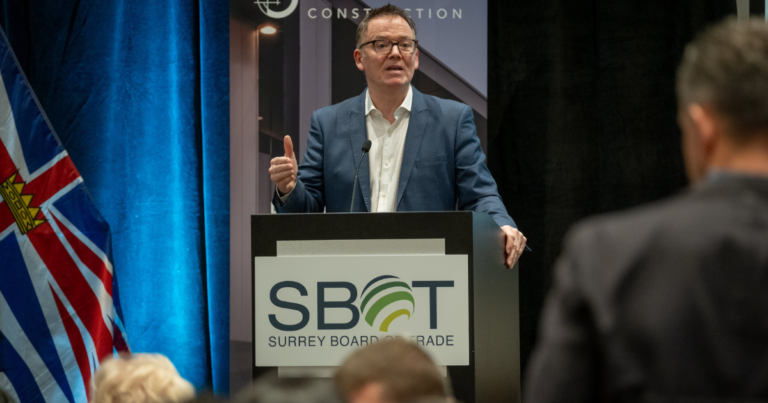
Veteran CBC journalist and author Terry Milewski joins Harrison Faulkner to unpack the Khalistan movement that has taken a major grip over Canadian politics recently. Milewski is the author of Blood for Blood: 50 years of the Global Khalistan movement and has been studying the Khalistan movement in Canada since the 1980s.
Milewski explains how Khalistani activists have managed to control aspects of Canadian politics and use political power to agitate and foment anti-India sentiment.
Alberta is warning hundreds of billions in revenue and thousands of jobs are at risk if the Liberal government moves ahead with its oil and gas emissions cap.
The province cited an S&P study that analyzed the economic impact of the controversial cap.
Alberta Premier Danielle Smith, Minister of Environment Rebecca Schulz, and Minister of Energy Brian Jean issued a joint statement urging the feds to ditch their proposed oil and gas emissions cap. If they don’t, Canadians will feel the consequences.
“Only an out-of-touch federal government would sacrifice Canadian livelihoods knowing its actions will end up increasing global emissions,” wrote the Albertan leaders.
Much of the statement cites S&P Global’s Economic Impact Assessment of Canadian Conventional Oil and Gas, which the Albertan leaders claim is “a reckless gamble that will devastate Canadian families and do nothing to reduce global emissions.”
The S&P report highlights three scenarios: the reference case (current policy), the stress case (40% emissions cap by 2030 and 55% by 2035), and the high case (increased investment in export and production infrastructure).
Walking the path of the stringent emissions cap would cost Canada 51,000 jobs and $247 billion in GDP contributions by 2035, showed the study. Compared to the reference case, a 40% cap applied by 2030 would result in one million fewer barrels of oil being produced daily. A mandated 55% emissions cap by 2035 would result in losing two million barrels of oil daily.
S&P Global estimates that conventional oil and gas production will be 17% lower by 2035 in the stress case compared to the reference case.
“Alberta will bear the brunt of this production cut, but the pain will be felt across every province and territory,” reads the joint statement.
If instead of punishing the oil and gas industry, Canada “debottlenecked” existing pipelines and LNG export capacity, an 8% growth in oil and gas production would support 36,000 additional jobs per year across the country, compared to the reference case, and more than $100 billion in additional GDP contributions by 2035.
This would result in $1.3 trillion in GDP contributions and support 383,000 Canadian jobs annually by 2035, compared to the 347,000 jobs of the reference case.
S&P’s report showed that oil and gas production can grow while simultaneously reducing emissions through decarbonization investments.
“Make no mistake: this isn’t about emissions… Even without this unconstitutional cap, S&P Global found that total emissions from the oil and gas sector are set to decline before 2035, thanks to new technologies already being put in place,” reads the joint statement.
“The sector’s (greenhouse gasses) emission intensity is expected to decline by at minimum 17% from its 2023 levels under all production scenarios, leading to lower absolute emissions vs. 2023,” reads S&P’s study.
The report was completed by S&P Global Commodity Insights for the Canadian Association of Petroleum Producers.
Following the report, CAPP President & CEO Lisa Baiton said that the emission cap is “unnecessary and should not proceed.”
She said that the industry is already growing production while lowering emissions under existing policy measures.
“Instead, Canada should give the policies in place time to work while collaborating with industry and provinces on pragmatic solutions to deliver emissions reductions in the short term while positioning Canada and our energy industry for long-term success,” said Baiton.
The Organization for Economic Cooperation and Development forecasts that Canada’s per capita GDP will perform the worst out of all its 38 member nations over the next four decades. A stifled oil and gas industry will worsen this.
“It’s time to scrap the cap. Ottawa’s reckless scheme threatens not only Alberta jobs but Canada’s economic future. Billions in investment will vanish, retirement savings will be threatened, and families will feel the pinch. We can reduce emissions and enjoy a thriving economy, but only if Ottawa abandons the proposed oil and gas emissions cap for good,” concluded the joint statement.
The report focused solely on conventional oil and gas production and did not include oil sands production.
The presidents of some of Canada’s largest universities had few answers for parliamentarians as to why antisemitic incidents haven’t been properly addressed on campuses.
Presidents from four major Canadian universities testified at a parliamentary justice committee hearing against antisemitism on Monday.
They spoke about the rise of anti-Jewish hate on their campuses as anti-Israel encampments remain entrenched on their campuses, along with legal experts, concerned students and police.
Presidents Graham Carr of Concordia University, Deep Saini from McGill University, Benoit-Antoine Bacon of the University of British Columbia and Meric Gertler, the president of the University of Toronto, all testified that antisemitism is on the rise at their schools but provided few solutions.
Monday marked the first day the trespass notice against the U of T campus encampment came into effect. The same day, Gertler filed for an injunction with the Ontario Superior Court of Justice to remove the protesters.
Conservative MP Melissa Lantsman grilled Gertler about his seeming lack of enforcement of school policy against antisemitic acts and symbols, such as the use of an upside-down red triangle.
The symbol has been used to support Hamas’ war against Israel because of its use to mark Israeli combatants in Hamas military videos.
“We have asked the student organizers of the encampment to remove signage and language that are offensive, and they have complied on occasion, but not in every instance,” Gertler said.
He said the school had reported hateful acts and speech to Toronto Police Services. He echoed the Toronto Police Chief’s statement that 38 incidents have been reported to the police since the end of last week, half a dozen of which he believes qualify as hate speech.
Gertler said they have suspended or expelled some students for antisemitic acts linked to the war in the Middle East. Though, none have been held accountable since the encampment emerged.
He said the school is in the process of pursuing academic repercussions in some instances but said it takes time to ensure that the conclusions and sanctions that are recommended have “proper purchase.”
Lantsman was concerned that the universities’ stated commitment to fight against antisemitism amounted to nothing more than tokenism.
“I find that today’s testimony saying ‘we’re working on it and everything is going to be fine,’ is frankly divorced from reality. And it’s the reality of students actually sitting behind you in this room who have come to this committee and testified about being afraid of going onto your campuses.”
When Liberal MP Anthony Housefather questioned the panel of presidents, they all agreed antisemitism was a problem on their campuses and that Jews were included in their Diversity Equity and Inclusion commitments.
They all opposed the Palestinian-led boycott, divestment, and sanctions movement, which advocates for the complete isolation of Israel and has been at the root of the encampment protests.
When asked if the administrators believed chants such as “Go back to Poland,” “We don’t want no Zionists Here,” “Intifada Revolution,” and “From the River to the Sea” are hateful and antisemitic they all agreed to varying disagrees.
Today I asked the Presidents of four major Canadian universities whether chants being heard on campus like From the River to the Sea were hateful and antisemitic. pic.twitter.com/Z4zMrGQnFc
— Anthony Housefather (@AHousefather) May 27, 2024
Housefather asked the presidents if they accepted the non-legally binding International Holocaust Remembrance Alliance’s definition of antisemitism, which the governments of Canada recognize. All but Gertler said they apply the definition to their school communities in some capacity.
“Our working group looked at this issue and concluded that the IHRA definition was problematic for application in a university,” Gertler said. “The individual Kenneth Stern, who authored the definition, was very clear in noting that it is inappropriate for use in a university environment.”
“It was never intended to be a campus hate speech code,” Stern wrote in an article published by the Guardian.
The former Minister of Public Safety, Marco Mendicino, raised concerns about foreign interference in post-secondary schools through funding by anti-Semitic foreign governments. Both Saini and Gertler committed to being more transparent about foreign funding in their universities.
An anonymous group claiming to represent disgruntled BC United party affiliates called ‘Resign Kevin’ called for the party’s leader Kevin Falcon to resign.
With a website and an account on X, the group urged Falcon to resign BC United’s party leadership for the benefit of the province and to defeat the NDP in the 2024 provincial election.
In an emailed statement to True North, the group claimed it represents several former party members, with a few former political staffers who were active in the days the party was called the BC Liberals.
‘Resign Kevin’s’ organizers choose to remain anonymous, expressing fear that they’ll receive backlash from Falcon and the party.
“This is not a big tent party anymore, and anything and anyone who dissents from the leader is blackballed within,” the group said.
“We are long-time supporters and do not want that kind of outcome, hence the anonymity of our group.”
The group advocates for a cooperation agreement with the BC Conservatives in a bid to unseat the governing NDP and form a free-enterprise alliance.
Last week, Falcon proposed an electoral alliance to BC Conservative leader John Rustad, however, Rustad rejected the agreement, calling the offer “unserious.”
‘Resign Kevin’ claims that a cooperation agreement between the two centre-right parties is unachievable under Falcon’s “flawed and backwards governance.”
“Our purpose is simple: to not only make an appeal to Kevin and his advisors, but more importantly, to start a real conversation amongst grassroots centre-right voters that to beat the BC NDP, we must work on a tangible cooperation agreement. That clearly is not going to happen within the delusions of Kevin Falcon,” the group’s spokesperson said.
In their “timeline of folly,” the group criticizes Falcon for failing to follow through on a promised party rebuild, for ejecting John Rustad from the party, for renaming the party, and for rejecting cooperation with Rustad’s BC Conservatives.
BC United disputed the claims in a comment to True North, saying that no stock can be placed in the anonymous website’s claims.
“This website is anonymous and has provided no evidence it is run by any former members of BC United, and therefore we do not put any stock into the claims made by the anonymous poster,” wrote a BC United spokesperson.
When asked how BC United plans on winning back disillusioned supporters of their party who no longer support them, the spokesperson said they’ll be introducing a bold policy agenda that will lead to forming a government.
“In the coming weeks and months ahead we will be attracting new voters from across British Columbia with our new bold and exciting policies, coupled with accomplished candidates who will be ready to hit the ground running on day one when we form government.”
However, the prospects of BC United forming government are not great, as a recent poll from Pallas Data shows that BC United would only win 13% of the vote in an election, compared to the BC Conservatives’ 38% and the NDP’s 37%.
On May 22nd, Falcon proposed an electoral alliance with the BC Conservatives that would have each party run in 47 and 46 constituencies respectively while protecting BC United’s incumbent MLAs from BC Conservative competition.
The deal would also see the two centre-right parties pledge to form a coalition government with each party being guaranteed seats in a potential cabinet.
In a statement publicly rejecting Falcon’s offer, Rustad said that the offer was “unserious” and “dishonest.”
“Time and time again, and in this ‘offer,’ Kevin Falcon has demonstrated that he will always put himself first and will do absolutely anything for power: before the BC United Party, before his own candidates, and ultimately before the province,” said Rustad.
“As I have previously promised, the Conservative Party of BC is committed to running candidates in all 93 provincial ridings and unlike Kevin Falcon, I intend to keep my promises.”
The next general election in British Columbia will be on October 19, 2024.
Several economists have forewarned that Canada’s poor economic growth is far from over, however, a new report is suggesting it may be here to stay for the next two decades.
Canadian financial firm Omnigence published a study that forecasts Canada is moving toward a “protracted bout of stagflation” that will drive the country into even higher inflation and continued low growth.
“It seems plausible that Canada will continue to experience stagnant real GDP/capita over the next two decades as the issues … are resolved before returning to the more historically typical growth trajectory,” said Omnigence director Stephen Johnston, who led the study.
Canada will likely see the lowest real growth of any country in the Organisation for Economic Co-operation and Development over the next three years, without factoring in the country’s population growth.
Johnston claims that Canada’s GDP per capita has already been experiencing “early onset” stagflation for nearly a decade, with the metric remaining stagnant since 2013 in relation to the U.S. dollar. A major precursor for economic growth is productivity, an area in which Canada has consistently fallen behind the U.S. over that same period.
Another problem is that Canada continues to lose capital, with more money leaving the country on an annual basis than coming in.
Canada is not only losing in areas of capital and productivity however, it’s also experiencing a housing shortage, currently short of three million houses needed, without a concrete resolution on the horizon.
Housing shortages naturally contribute to inflation, which diverts necessary capital away from more productive activities.
“Canadian investors need to seriously consider the potential effects of a protracted bout of stagflation on their investment holdings. On one hand, based on 1970s behaviour, the residential real estate market may be negatively impacted by stagflation – manifested via rising nominal interest rates – and perhaps even more so due to stretched valuations,” reads the study.
“On the other hand, Canada has a large and competitively priced universe of commodity and commodity-linked assets that can be expected to behave more positively in inflation/stagflation conditions, and which are also trading at conspicuously low valuations in relation to stocks and bonds.”
Canada has more investment in housing than any other country in the OECD, which makes it too reliant on real estate to boost its GDP growth.
“Simply put, Canadians spend far too much on housing, use excessive amounts of leverage to do so, at prices that are far beyond any reasonable interpretation of affordability,” said Johnston.
Canadians also have to face the challenges of the Trudeau government’s 2050 Net Zero targets, which demand enormous amounts of capital while increasing the cost of energy.
Transitioning to a greener economy is expected to generate some GDP growth, however, it will also increase inflation by 2% over the next decade.
The study suggests that investors put their money into lower-cost food chains, automotive maintenance and farmland, as these sectors will likely be the beneficiaries of long-term stagflation.
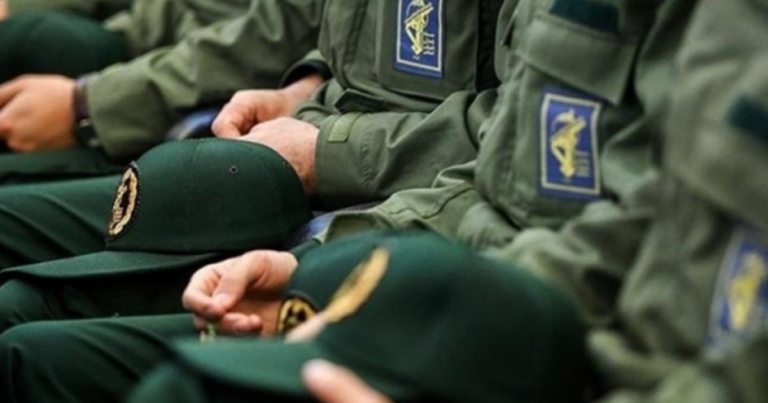
More than a week after the death of the Islamic Regime in Iran’s president Ebrahim Raisi, “The Butcher of Tehran,” calls for Canada to designate the Islamic Republic Guard Corps as a terror group are mounting.
An informal coalition of political and civic leaders who oppose the Islamic Republic in Iran held a press conference in Ottawa, Ont., to discuss Canada’s response to the death of Raisi, who was responsible for the executions of thousands of political prisoners, women, gays and apostates from Islam in Iran.
The meeting followed a May 9 vote by Canadian MPs asking the government to blacklist the IRGC for its crimes against its people and its role in terrorism in the Middle East.
Despite the vote, the Liberal government has yet to designate the IRGC as a terrorist entity.
The panel of speakers included MPs, some of whom have held roles in human rights committees for the region, and representatives of the Iranian diaspora community.
Two Iranian-Canadians held pictures of their loved ones who were executed at the command of Raisi and three other “judges of death” during the 1988 massacre of political prisoners.
Maryam Rajavi, the president-elect of the National Council of Resistance to Iran, an international democratic organization that opposes the Islamic regime, urged the government of Canada to ratify the MPs’ decision.
“Take the necessary action that has been delayed for years, officially listing the IRGC, the evil corps of darkness and crimes, as a terrorist organization,” Rajavi said. “This important step shows solidarity with the people of Iran, especially the young boys and girls who are standing up to the IRGC and refusing to give in to its cruelty.”
She said the IRGC is the regime’s primary military arm in the region, and is in control of a significant portion of Iran’s economy.
“(The IRGCs) revenues are entirely used for repression, terrorism and war,” Rajavi said. “Many companies that are involved in legitimate economic activities under different pretexts outside of Iran are sources of support for the regime’s nuclear, missile, and drone programs, as well as its foreign warmongering.”
Liberal MP Judy Sgro echoed the calls to ratify the vote and stand with the Iranian people’s desire to rid themselves of the “compulsory government and the compulsory hijab.” Struan Stevenson, a former member of the European parliament, said the aftermath of Raisi’s death was a critical moment for Canada to take a firm stance against the regime in Iran.
He said blacklisting the IRGC would play a significant role in curtailing the regime’s abuses and power in the region.
Last week, Ardeshir Zarezadeh, an Iranian-Canadian and executive director of the International Centre for Human Rights in Canada, told True North that officially declaring the IRGC as a terrorist entity would prevent them from operating in Canada and terrorizing the diaspora of former Iranian political prisoners and dissidents such as himself.
After several European countries announced their recognition of Palestine as a state, Liberal MP Salma Zahid now says she’s pushing Justin Trudeau’s Liberal government to do the same. True North’s Andrew Lawton explains why this isn’t the path to peace that activists think it is.
Also, Ontario Premier Doug Ford is pushing beer and wine sales into convenience stores ahead of schedule, challenging the Beer Store’s retail monopoly. Grant Dingwall of Free My Booze joins to discuss.
Plus, despite Trudeau’s promise that “Canada is back” on the world stage, American lawmakers have reprimanded Canada for falling short of its NATO-committed defense spending. Does this matter? Andrew chats about it with Macdonald-Laurier Institute senior fellow Richard Shimooka.
A taxpayers group is holding the CBC’s heels to the fire after the state broadcaster refused to release records of how much money its senior executives made in bonuses.
Plus, nearly a quarter of Ontario students over 12 have reported recreational opioid use.
And Canada is outpacing other Organization for Economic Co-operation and Development nations when it comes to taxpayers funding foreign aid.
Tune into The Daily Brief with Cosmin Dzsurdzsa and Noah Jarvis!
The Liberals want Canada to take in five times as many Palestinian refugees as originally promised.
Immigration Minister Marc Miller recently announced that applications for Canada’s “temporary resident visa” program for Palestinians would be increased from 1,000 to 5,000 on Monday.
“We remain deeply concerned about the humanitarian tragedy unfolding in Gaza. Many people are worried about their loved ones and have expressed significant interest in the temporary special measures we introduced for their extended family in Gaza,” said Miller in a statement.
“That is why, as part of our humanitarian response, we have increased the number of temporary resident visa applications that will be accepted into processing as part of these measures from 1,000 to 5,000. Over the past few weeks, we have been issuing more web codes so that clients can apply for a temporary resident visa.”
Under the program, Palestinians who live in Gaza and have relatives who are either Canadian citizens or permanent residents will be eligible to move to Canada and stay for up to three years.
Palestinians accepted will also be able to apply for a fee-exempt study permit or a fee-exempt open work permit after entering Canada.
“While movement out of Gaza is not currently possible, the situation may change at any time. With this cap increase, we will be ready to help more people as the situation evolves. Our focus remains on keeping families together,” he added.
According to Miller, the government has already relayed the names of people who have passed preliminary screening to local authorities, which will allow for their secure exit from Gaza.
“Israel and Egypt are both important partners in implementing these temporary, humanitarian measures and helping people reunite with their family in Canada,” said Miller.
“Canada is working—at every level—to facilitate the exit of extended family members and advocate for their safety. We will continue to advocate for people’s safety.”
Jesse Johnson, owner of Without Papers Pizza, is 100% certain his lawsuit over his pandemic business closures will win thanks to a “miracle.”
Johnson has launched a $3.6 million lawsuit against Alberta Health Services, the City of Calgary, and former Chief Medical Officer of Health Dr. Deena Hinshaw for shutting down his business during COVID-19.
The lawsuit also seeks a declaration from the defendants that they violated the freedom of speech and liberty rights of Johnson and his business partner, Angelo Contrada. The lawsuit alleges that the governments involved specifically violated sections 2(b) and 7 of the Charter.
The plaintiffs include Johnson, his business partner, and the corporation that owns Without Papers Pizza, Bravo Ltd.
In addition to the $3.6 million for Charter violations against the three plaintiffs, Johnson told True North he’s seeking the valuation of Without Papers Pizza, which grossed $2 million a year, plus accrued interest and legal costs.
“COVID mandates issued by former CMOH Deena Hinshaw were ruled Ultra Vires of the law (meaning they were never lawful), including the immoral and unscientific vaccine passport whose only effectiveness was (to) hate and divide,” Johnson told True North.
“We are suing the City of Calgary, the Province of Alberta, and former AHS CMOH Deena Hinshaw, and we are going to win. It is our hope that our case will set (a) precedent and that Albertans are never medically segregated again,” reads Without Papers Pizza’s website, which redirects visitors to Johnson’s donation page since the business closed.
Without Papers Pizza’s website has three options to donate. People can donate via GiveSendGo, PayPal, and eTransfer. While the latter two’s total sums raised are unknown, the GiveSendGo campaign has raised $21,176 of the $50,000 goal as of Monday morning. Johnson said that all funds raised will go towards legal counsel.
An anonymous donation came in as recently as a few hours ago. “From our small business in Ontario who also fought the tyranny. Just wish we could enjoy your pizza out here,” it reads.
Without Papers Pizza was permanently shut down on Oct. 9, 2021, for refusing to enforce the vaccine passport. The Alberta Court of Kings Bench deemed all mandates issued by Hinshaw illegal on July 31, 2023, including the restriction exemptions program used to justify closing the restaurant.
Johnson said that Naheed Nenshi, who’s now running to become leader of the Alberta NDP, has still not been held accountable for the medical segregation he supported.
“He’s still not been held accountable for the reprehensible crime of medical segregation, which I believe is a crime against humanity. He illegally segregated over 400,000 healthy Calgarians,” said Johnson when talking to Mocha Bezirgan.
Before the Ingram decision, Johnson said he saw a 0% chance of being compensated for crimes committed against him. However, now he sees it as certain.
“It was literally a miracle. It went from me having essentially a 0% chance of seeking retribution for the crimes that they’ve committed to, I believe, an 100% chance of me receiving the retribution. I view it literally as a miracle from God,” said Johnson.
The Ingram decision ruled that politicians had breached Alberta’s Public Health Act with the province’s pandemic restrictions.
Johnson said that his pizza shop had become a place for freedom lovers to visit.
“Hope is more contagious than the virus, and so is courage. I think what I did made a lot of people realize that it’s the people who are the power. And all we need to do is unite together and stand up in defiance of this tyrannical regime,” he said.
However, taking a stand against the regime cost Johnson almost everything he had.
“It cost me everything I loved. It cost me my restaurant. It cost me my other two restaurants that I had in Calgary. It cost me my marriage. It cost me my family. It cost me my houses. It cost me my wealth. It cost me a good portion of my sanity as well… I’ve learned that what they took from me is of no value whatsoever. They cannot take my eternal soul. They cannot take my creativity, and they cannot take my indomitable spirit. There’s nobody that can take that from me, except death itself,” said Johnson.
I did! It’s called POW Pizza in Windermere, BC. It’s good, really good. As with my previous restaurant we believe the vaccinated & unvaccinated are equal in their humanity & are to be afforded the same dignity & equity as such. We accept cash, silver, vodka & ammunition. pic.twitter.com/NyYsnjM19K
Without Papers Pizza can now be found in Windermere, British Columbia, under the rebranded POW Pizza. Johnson can be found under the handle @wopizza4, as his previous three accounts have been banned on X.
“I love this country. I love it very much. I think it’s the most beautiful, inspirational, magnificent place in the whole world. We only have a few problems with it, and all of them are sitting in government right now,” concluded Johnson.