New Brunswick premier bans “inappropriate” sex-ed group from presenting at high schools

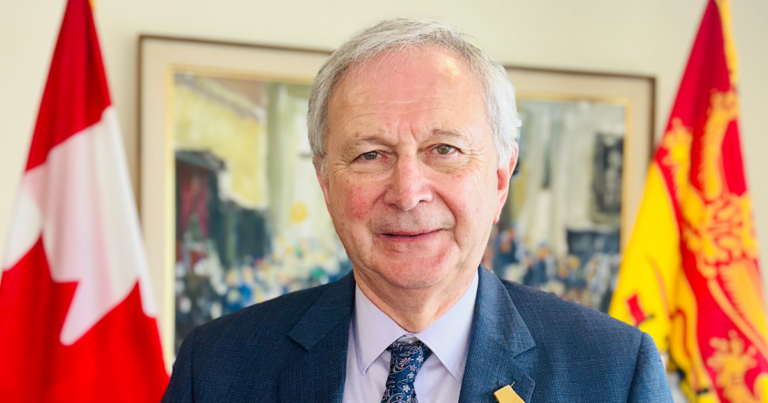
New Brunswick Premier Blaine Higgs said he had banned a sex education group from presenting at high schools in his province after concerned parents sent him photos of “clearly inappropriate material” being shown at the presentations.

Higgs posted a photo from the beginning of the presentation hosted by “Thirsty for the Talk” to X. In the post, he outlined his issues with the group, which he says presented to at least four N.B. high schools.

“This group will not be allowed to present again at New Brunswick schools, effective immediately,” Higgs said. “Children should be protected, and parents should be respected.”

The photo from the presentation, which according to Higgs was supposed to be a presentation on HPV, shows chat bubbles with questions such as “Is it good or bad to do anal?”, “Does it hurt when you do it the first time?” and “Do girls masturbate?”

“To say I am furious would be a gross understatement,” Higgs said. “This presentation was not part of the New Brunswick curriculum, and the content was not flagged for parents in advance.”

“Thirsty for the Talk” responded to True North’s initial request for comment but then did not respond to any of our questions before the deadline given.

One of the group’s presenters, Teresa Norris, spoke to Global News over the weekend. She said the entire presentation was submitted and approved by the school before it took place.

Norris also said the content that was highlighted was not meant to encourage the behaviour but to discuss the dangers of unsafe sex.

Though Higgs only shared one photo from the presentation, a look at the group’s website, which has no about page, sheds some light on what might have been in some of these presentations.

In the Q&A section of the group’s website called “No Filter Questions” the group helps answer questions teenagers might be asking, such as “What is furry porn” and “How does cum taste?”

The answers to all the questions direct students reach out to the group if they have any questions about “their situation.”

The website also shares videos explaining “the lovely effects of masturbation” and a section where teens can learn sexual terminology and about the positions that accompany them.

“The group shared materials that were well beyond the scope of an HPV presentation. The fact that this was shared shows either improper vetting was done, the group misrepresented the content they would share … or both.” Higgs said in the post. “Our government will have further discussions about whether additional rules about third-party presentations need to be updated.”

Chanel Pfahl, a former teacher, regularly exposes online what she believes is inappropriate content in schools across Canada.

“I’m pleased to see a premier who is unafraid to act when concerning material is brought to his attention,” she said in a text message to True North.

She said it’s refreshing to see a premier standing up against the sexualization of children, an issue she feels mostly “falls on our elected representatives’ deaf ears.”

Pfahl agrees with Higgs: the group should be banned.

“The unfortunate part, however, is that in the grand scheme of things, the banning of this one group will not accomplish a ton,” she said. “The gender, sexuality and race-related indoctrination in New Brunswick (and all other provinces) is a far bigger problem than I’ve seen any Premier acknowledge so far, but I hope that time is coming soon.”

She thinks that any premier who follows Higgs’ lead in taking decisive action to ensure the children of their province have an education “free from indoctrination” will earn the respect and support of parents at large.
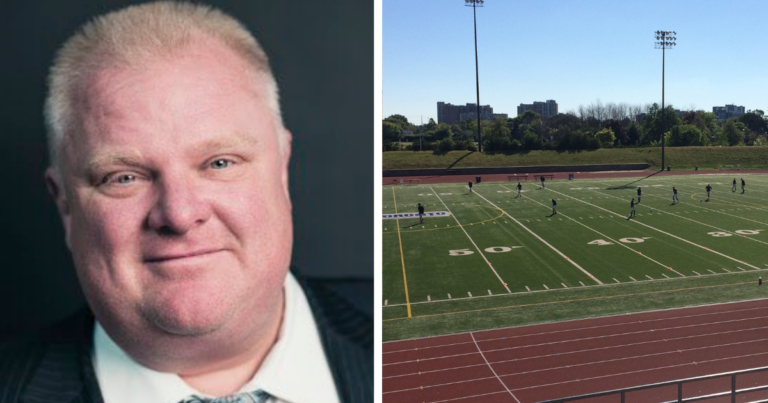
Rob Ford Stadium opening in Toronto this week

Rob Ford’s legacy is living on in Toronto.

As of Tuesday evening, Centennial Park’s football stadium will be known as Rob Ford Stadium in honour of the late former mayor.

Premier Doug Ford, the late mayor’s brother, invited anyone who is able to come and honour Rob’s legacy at an unveiling and barbecue Tuesday evening.

The decision to rename a football stadium in Etobicoke after former mayor Ford was made after a 17 to six Toronto city council vote in December. Mayor Olivia Chow supported the proposal.

A previous vote to name the stadium after the former mayor in 2017, who died of a rare cancer in 2016, didn’t pass despite support from then-mayor John Tory. Six councillors who voted against the name change in 2017 changed their minds and supported it in 2023.

One of the councillors who changed their mind was Paul Ainslie, who brought forward the motion.

“All of those who served with Rob Ford on council knew that he had two passions — representing his constituents not only across the city but in particular in his home community of Etobicoke, and football,” said Ainslie.

Councillors who initially voted against naming the stadium after Ford cited his controversies, such as racial slurs and skipping some Pride celebrations.

Despite these, the late Rob Ford earned Chow’s support.

“I do know the pain of losing a loved one. I understand that,” said Chow in December. “That is why I supported Councillor Ainslie’s motion to name a football stadium, because I understood what that meant for the Ford family. I certainly understood how painful it was for a young person to die prematurely. That’s why it’s in front of the agenda today.”

Chow was married to Jack Layton from 1988 until his death from prostate cancer in Aug. 2011. Chow had undergone cancer treatment herself. 

“My family and I are deeply moved by Toronto City Council’s decision to honour Rob’s service to his community by renaming Centennial Stadium after him,” wrote Doug Ford in a post to X.

Rob Ford dreamed of becoming a professional football player during his youth. He made the football team while studying political science at Carleton University but never played any games. He left Carleton after studying for a year and did not complete his degree.

He volunteered as a high school football coach and donated $20,000 to the Don Bosco Catholic Secondary School football team, which he once coached. Additionally, he established the Rob Ford Football Foundation to support underprivileged schools struggling to maintain football teams.

Rob Ford served as Toronto’s 64th mayor between 2010 and 2014. He will now be remembered whenever someone visits the formerly known Centennial Park football stadium.

Ratio’d | Canadians SPEAK OUT against Trudeau’s latest attack on John A. Macdonald

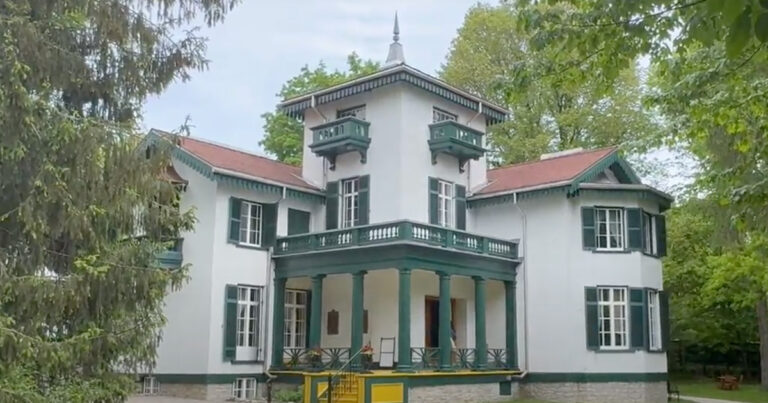
The Canadian government finally reopened the Bellevue House National Historic Site in Kingston, Ontario last week and Harrison Faulkner went to go check it out.

To nobody’s surprise, this monument to our nation’s founder is hardly a monument. Instead, it is full of anti-Macdonald and anti-Canadian propaganda. After being closed for six years, the Trudeau government reopened the museum to make sure it complies with Justin Trudeau’s approved version of Canadian history – that we must feel ashamed of ourselves and constantly apologize for historical wrongs.

Faulkner decided to hit the streets of Kingston and speak with locals about what they think of the constant attacks on John A. Macdonald’s legacy.

Watch what they have to say on the latest episode of Ratio’d with Harrison Faulkner.

LEVY: Hundreds turn out to support Jewish school targeted by shooting

Hundreds of members of the Toronto Jewish community and a gaggle of politicians turned up in the pouring rain to send a strong signal of support to the religious day school targeted by gunmen early last Saturday morning.

Conspicuous in her absence outside Bais Chaya elementary school Monday morning — its front window boarded up from the gunfire — was the Liberal MP for the riding, Ya’ara Saks, who is said to live near the Sheppard and Dufferin area girls school.

In fact, no federal MP turned up except for Independent MP Kevin Vuong, who has been dogged in his support for Toronto’s Jewish community.

Speaking while a group of young students from the school stood in front of him, Vuong said you don’t need to be Jewish to know that shooting at an elementary school is wrong.

”If we don’t stop this dangerous escalation of antisemitism today, tomorrow the hate and violence will spread to all schools,” he said.

Toronto mayor Olivia Chow, who along with the majority of Toronto councillors voted against “bubble zone” legislation that would provide statutory policing in front of synagogues, mosques and other places of worship, was openly jeered as she came up to speak. 

The vote came just days before two gunmen, all dressed in black, opened fire at the school at nearly 5 a.m. Saturday. According to video of the incident, after shooting five rounds, they fled the same way they came in a black SUV.

Chow was heckled so much one of the organizers had to step in and tell people to “stand together as one community with our elected officials.”

She said she’d come to let people know they “are not alone” and that the police chief is working “every minute of every day” to keep the Jewish community safe in Toronto.

”You and your families have a right to be safe … in Toronto there is no place for hate,”  she said. “The shooting was a despicable antisemitic act and we say to these cowards, ‘we will find you’.”

She likened anti-Semitism to a “cancer” which has “absolutely no place in Toronto.”

”Jewish people deserve to feel welcome and safe in this city,” she added, the crowd not buying her hollow words after seven months of inaction and last week’s defeat of a motion that would have helped keep Jews safe.

She added that while it “might be raining now” they know “there’s always blue skies behind.” 

Chow left quickly after her platitudes.

Coun. James Pasternak asked why people are “so consumed by hate” that they’d come to a girls school and open fire.

”We will not be intimidated… we live in this city, we helped build this city and we plan to stay,” he said.

”We are not going to be intimidated to stop our longstanding tradition of raising Israel’s flag at City Hall on Yom Ha’atzmaut,” Pasternak added, an obvious dig at Chow for recently refusing to attend the ceremony because she thought it “divisive” to do so.

”And coming up we will not be intimidated at the Walk for Israel.”

Ontario Education Minister Stephen Lecce appealed to non-Jews to stand up and speak up against the “vile rise” in antisemitism now being “normalized” in this country.

“We will not be intimidated by these acts,” he said. “There is no bullet that can shatter our resolve as a country to stand up against this pernicious hate.”

Taxpayer watchdog hounds CBC for withholding executive bonus records

A taxpayers group is holding the CBC’s heels to the fire after the state broadcaster refused to release records of how much money its senior executives made in bonuses. 

The Canadian Taxpayers Federation filed a formal complaint with the Office of the Information Commissioner in response to CBC’s continued stonewalling of bonus records.

The OIC is the governing body which investigates such complaints and is responsible for resolving disputes regarding federal access-to-information requests. 

“As a matter of principle, the CBC owes transparency to the taxpayers who pay their salaries,” said Franco Terrazzano, CTF Federal Director. “The CBC is also required to follow access to information law, but in this case, they’re blatantly breaking it.”

The OIC complaint could force the CBC to disclose how much was doled out in bonus pay to seven of the broadcaster’s senior executives last year. 

The CTF initially filed an access-to-information request in March, demanding the details of the bonuses and the CBC responded by issuing a 30-day extension notice on April 9. 

The extension protected the CBC from releasing records up until May 10, only days after its president Catherine Tait testified before a parliamentary heritage committee about that same issue. 

The committee meeting was ultimately shut down by Liberal MPs after Tait refused to disclose her taxpayer-funded performance bonus, sparking a heated exchange with Conservative MP Rachael Thomas.

“As of the end of March of 2024, what is the recommendation for your 2023 bonus?” asked Thomas. 

“As I’ve said previously, these conversations are subject to internal deliberations by the management team to the board of directors. We have not had that conversation with the board that is scheduled for June 12 and 13th,” responded Tait. 

“We will have that conversation, at which point, the final results will have been audited and reviewed by the auditor general, we don’t simply precipitously pre-announce results when we haven’t had the privilege of the auditor and our internal audit process.”

The CBC released records on May 10 that revealed its seven senior executives were collectively given $3,793,000 in bonuses, working out to an average bonus of over $540,000 per person, although the individual bonuses each executive received have yet to be revealed.

Additionally, 1,143 CBC staff members collectively received $15 million in bonuses from taxpayers last year. 

The bonuses were doled out by the broadcaster while it simultaneously laid off 10% of its workforce.

While CBC refuses to release detailed documents of how taxpayer money is being spent, other crown corporations like the Bank of Canada and the Canada Mortgage and Housing Corporation have provided such information in response to access-to-information requests. 

The CBC did respond to the CTF to confirm that its access-to-information request had been received, however, the broadcaster has continued to withhold the information. 

“Tait seems to think she’s above the law and shouldn’t have to show the same transparency her journalists demand from politicians,” Terrazzano said. “If Tait thinks she deserves her bonus, she should be honest with taxpayers about how much she took.

“Taxpayers have every right to know how much CBC senior executives took from them in bonuses last year. One way or another, the CTF will drag this information into the light.”

The Trudeau government announced that it would be giving the CBC an additional $42 million in funding in its latest federal budget released last month. 

The extra funding comes at a time of further declining subscriptions and ad revenues last year and more potential layoffs for the state broadcaster.

Nearly a quarter of Ontario students over 12 reported recreational opioid use

A frightening new statistic sheds light on how the deadly opioid crisis is impacting Canadian youth.

The recreational use of opioids among junior high and high school students during the past year in Ontario has surged from 12.7% in 2021 to 21.8% in 2023, an increase of 9.1%, according to the Ontario Student Drug Use and Health Survey.

The previous two-year increase was only 1.7% when the use of opioids within the past year among students increased from 11% to 12.7% between 2019 and 2021.

The Ontario Student Drug Use and Health Survey has been surveying students in grades 7 to 12 in Ontario since 1977. As the longest ongoing school survey in Canada and one of the longest in the world, its purpose is to analyze trends in drug use, mental health, physical health, bullying, gambling, and other risk behaviours among Ontario students.

While 21.8% of students between grades 7 and 12 reported nonmedical opioid use within the last year, 26.4% of the same cohort have tried opioids for a nonmedical purpose at least once in their lives. The only type of “drug” analyzed with a higher lifetime usage for students was alcohol at 52.5%, which 35.6% of students had used within the last year. 

Lifetime use of opioids was followed by vapes/electronic cigarettes at 25%, despite only 13.4% of students using a vape or electronic cigarette in the last year. Lifetime cannabis use was 20.7% among grade 7 to 12 Ontario students, while 17.6% of them had used it in the last year. 

While almost one in five students between grades 7 and 12 reported using an opioid pain reliever without a prescription in the last year, the numbers were much lower for other drugs. For example, only 2% of the same segment of students reported using amphetamines like Adderall recreationally without a prescription. Similarly, 2% of students reported using sedatives or tranquilizers without a prescription in the last year.

10.3% of Ontario students from grades 7 to 12 had used cough or cold medicine to get high in their lives, while 9.6% of them did so in the last year.

The percentage of students getting high with cough or cold medicine decreased with age. 13.4% of grade 7 students had done so in the past year, which plummeted to 6.8% of grade 12 students.

Six drugs have been tracked by the Ontario Student Drug Use and Health Survey since 1999. Mushrooms, LSD, methamphetamine, cocaine, ecstasy, and heroin have decreased from 22.8% being used in the last year by students between grades 9 and 12 in 1999 to only 5.6% in 2023.

The perceived availability of drugs was also something students were surveyed on. 

Despite opioids seeing the largest increase in use between 2021 and 2023, they remained the most difficult drug to obtain, according to students.

27% of Ontario students between grades 7 and 12 said that it would be “fairly easy” or “very easy” to obtain opioids. 45% said the same about cannabis, 48% about cigarettes, and 67% said it would be “fairly easy” or “very easy” to obtain vaped or e-cigarettes, mirrored by an equal 67% that said the same of alcohol. 

The Ontario Drug Use and Health Survey began tracking opioid usage for students between grades 7 and 12 in 2007 when 20.6% of students had used it at least once during the last year. This continually decreased and reached its lowest rate in 2015, at 10%. It then increased to 10.6% in 2017 and followed increases every year thereafter.

In 2016, London, Ontario became Canada’s first city to have an official safe supply facility

In 2015, 728 Ontarians died of opioid-related mortality. This number increased every year until 2021 when 2,858 Ontarians died of using opioids. In 2022, the number fell slightly to 2,531. However, death data for 2022, the most recent year provided by Public Health Ontario, is preliminary and subject to change.

42.2% of students between grades 7 to 12 in Ontario report using no drugs or alcohol at all during the past year. 

University of Toronto seeks injunction to clear out anti-Israel encampment

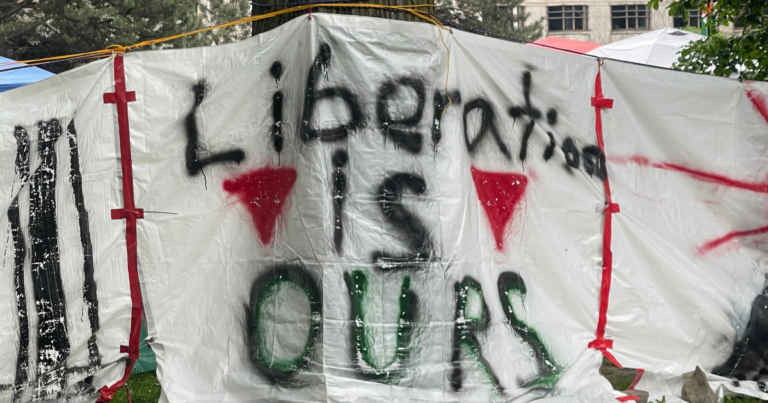
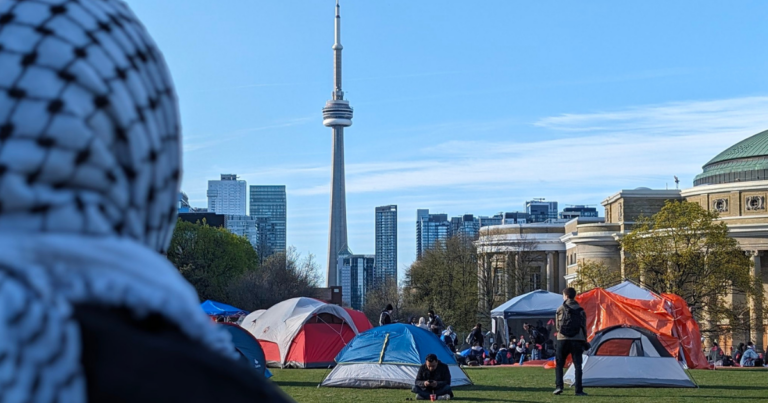
As anti-Israel protesters at the University of Toronto continue their encampment past the departure deadline given by the school, the university is seeking a court order to remove them.

The protesters stayed past the Monday morning deadline that they were given to strike a deal with the university administration and clear out.

When the encampment was first established on May 2, protesters were given a one-day trespass notice, though more than three weeks later, they are still very much embedded.

University of Toronto president Meric Gertler announced that the school has filed for an expedited case with the Ontario Superior Court of Justice for an injunction order.

In response, Ontario union leaders rallied at the encampment Monday morning and said they are seeking intervener status in the case to delay and stop the injunction.

Among the union leaders was CUPE Ontario president Fred Hahn.

Hahn justified Hamas’ deadly Oct. 7 attack on Israel a day after the massacre. He is also currently embroiled in legal troubles from Jewish CUPE members who filed a human rights complaint against the union.

One protester said at the rally, live-streamed by the protesters on Instagram, that the injunction hearing was delayed due to the union’s support.

Despite filing for an injunction, Gertler noted that the school intends to continue to engage in discussions with students.

University administration and student representatives of the protest met yesterday in what Gurtler said was a “long and productive meeting.”

He stated that there was another meeting scheduled for today.

“We remain hopeful that we can reach an agreement and bring the unauthorized encampment to an end,” he said.

The protesters posted a call for an emergency rally in case police were called on their social media page.

The university offered the protesters a deal on Friday. The school would establish committees to oversee recommendations for disclosure and divestment from Israel and invest in Palestinian studies at the school.

In return, protesters were to disband and refrain from re-establishing another encampment for a year until the university had time to fulfil its commitments. The deal was also conditional on the protesters refraining from disrupting the convocation ceremonies.

The encampment protesters refused the offer because their demands were not being met.

They demanded the school disclose all investments that help Israel, divest from those assets that benefit from Israel and cut ties with Israeli academic institutions.

The school has said it will not give in to all of the protesters’ demands as doing so would be “at odds” with its commitment to academic freedom.

The Andrew Lawton Show | Liberals might let illegal immigrants stay in Canada

The Liberal government is mulling a plan to be put forward by Immigration Minister Marc Miller to give legal status to people in Canada illegally. This comes after Prime Minister Justin Trudeau conceded that Canada’s immigration system has allowed in more people than the country has been able to “absorb” in recent years. True North’s Andrew Lawton weighs in.

Plus, the Canadian Taxpayers Federation is taking CBC to task over its unwillingness to disclose the details of executive bonuses. Kris Sims returns to give the low-down.

Also, law professor Bruce Pardy has written a thoughtful essay in C2C Journal about how the rule of law has given way to the managerial state in Canada and other liberal democracies. He joins the show to explain what this means for liberty. Read the essay for yourself here.

SUBSCRIBE TO THE ANDREW LAWTON SHOW

The Daily Brief | Canadians don’t want electric vehicles

Despite countless billion-dollar handouts from the government for the electric vehicle transition, sales continue to drop.

And a second Conservative nomination candidate is alleging irregularities in a GTA nomination race after the party disqualified her over a rule violation.

Plus, StatsCan reveals international students studying in Canada are likely to live in unsuitable housing.

Tune into The Daily Brief with Lindsay Shepherd and Isaac Lamoureux!

SUBSCRIBE TO THE DAILY BRIEF