The Liberals will extend Canadian citizenship to any child born to Canadian parents who have resided in Canada for at least three years.
Plus, Canadians are concerned that the capital gains tax hike announced in the last budget will negatively affect access to healthcare.
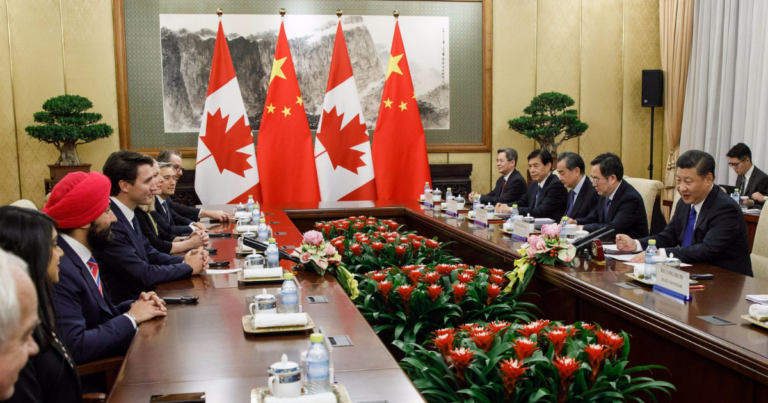
And MPs who have recently travelled to China will have some explaining to do now that they are being called to testify before a House of Commons committee.
Tune into The Daily Brief with Cosmin Dzsurdzsa and William McBeath!
A second Conservative nomination candidate is alleging irregularities in a GTA nomination race after the party disqualified her over a rule violation.
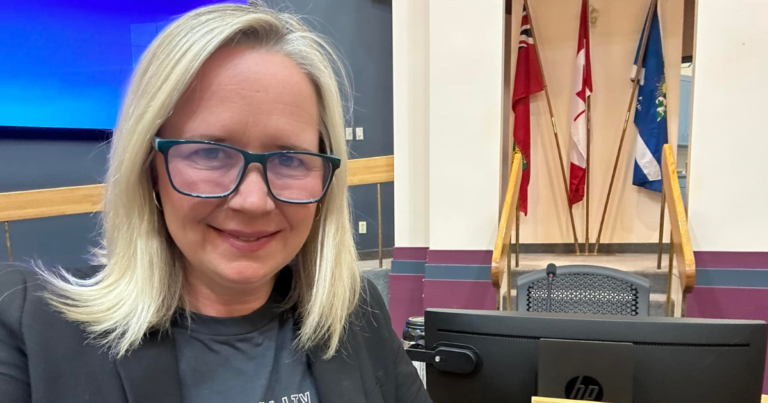
Aurora, Ont. councillor Rachel Gilliland had her application to seek the Conservative party’s nomination in Aurora—Oak Ridges—Richmond Hill shot down.
“Rachel Gilliland was in clear violation of rules outlined in the CPC ‘Rules and Procedures for Candidate Nominations,” a Conservative spokesperson told True North in an email.
“The local Candidate Nomination Committee (CNC) recommended disqualification and the National Candidate Selection Committee upheld the local CNC decision. After review, the National Council did not accept Ms. Gilliland’s appeal of this decision.”
As per its standard practice on nominations, the party did not disclose which rules had been broken.
Gilliland, however, alleged a “number of irregularities” and suspected some party nomination rules were broken by another campaign.
Earlier this month, Sabrina Maddeaux suspended her bid in the same nomination race, alleging a corrupt process.
Gilliland told True North that she had similar issues to Maddeaux regarding another nomination candidate knocking on the doors of constituents she signed up for before any updated list of party members was given to the race participants.
“One of the people who had texted me has never been able to disclose any of their party politics due to their employment,” Gilliland said. “They had joined specifically for me.”
She also accused the Electoral District Association president and other board members of door-knocking on behalf of another candidate in the race.
She said damaging character reference emails targeted three potential candidates in the race.
The messages said she and Maddeaux were “woke individuals” who had infiltrated the party.
Gilliland said she spoke with a regional director about the issue and was told to email the party.
She included a report of the incident in an email after negative character references were sent to new party members in April.
Gilliland said that after speaking with the board, she had no issues for some time before Maddeaux publicly ended her nomination race, raising awareness of those issues.
The Conservatives rejected Maddeux’s similar claims of wrongdoing in the race.
A Conservative source told True North that Gilliland’s promotion of her nomination campaign through a website connected to her work as a municipal councillor might have influenced her rejection. Gilliland denied she has done anything wrong.
“I have my own personal website…it highlights my council work and my track record that I do in the community. The website directs people to my federal nomination website, both I fund 100%,” Gilliland said. “I did not use any town website for people to buy memberships at.”
She said her website was mentioned in an interview with the party when she applied for nomination.
“I had no idea this was even an issue. And I said, ‘Oh, is that something you would like me to remove?’ And they said ‘No,’” she claimed.
Gilliland said she was never told why the party rejected her nomination bid. This is typical when nomination disqualifications take place, a Conservative official previously told True North.
Gilliland claimed she had sold 550 memberships using paper forms while knocking on doors and signed up 30 members through the federal party’s online membership portal.
An Alberta professor known for her outspoken views on Indigenous politics is returning to the scene of her cancellation – sort of.
Frances Widdowson is scheduled to give an off-campus talk, titled “Indigenization Destroys Academic Freedom,” at the Lethbridge Public Library’s Main Branch on Saturday.
This weekend’s talk is being co-organized by the University of Lethbridge professor emeritus Anthony Hall and the Rational Space Network, a faculty network promoting academic freedom.
The term “indigenization” typically means “the act of making something more Indigenous.”
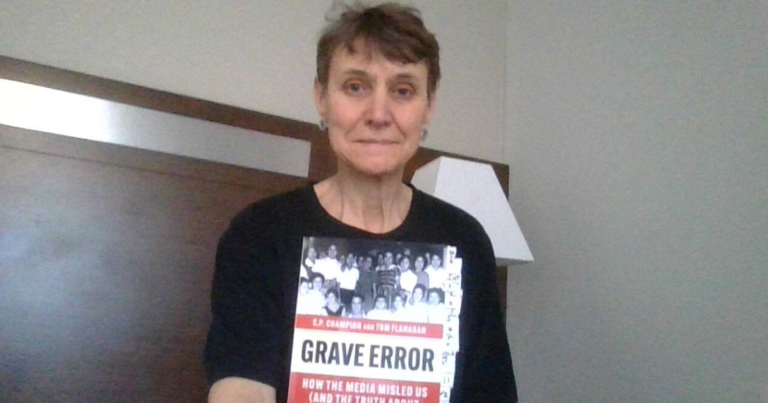
Widdowson, who contributed to the recently published book Grave Error: How The Media Misled Us, believes indigenization has turned into “a political development that prevents professors from pursuing the truth and developing knowledge about subjects like the residential schools.”
“It seems that the false claim that the ‘remains of 215 children’ were found at the Kamloops Indian Residential School has become dogma that must now be accepted throughout Canadian society,” she said in a news release promoting the event. “University indigenization is one of the major reasons why this disinformation has taken root.”
Widdowson made headlines back in 2021 when she was fired by Mount Royal University after her criticizing Indigenization initiatives and the Black Lives Matter movement.
She then made headlines again last year when a talk she was set to give at the University of Lethbridge about “how wokism threatens academic freedom” was shut down by left-wing activists.
The university initially approved the talk, but later backtracked following two petitions and several faculty members calling for its cancellation.
Widdowson opted to instead give that talk in the university atrium. However, on the day of the talk, she was met with a large group of left-wing protesters, who effectively blocked her from speaking. She tried to move to an adjacent area, but amid shouting, drumming, and chanting, she had to move the talk to Zoom.
She is currently suing the University of Lethbridge alongside the professor who had organized the talk and a student who was prevented from attending because of the censorship.
Widdowson was also recently in the news over a speech she gave at a city council meeting of Quesnel, B.C.
The city council meeting erupted in chaos as debates over the book Grave Error led to heated exchanges and calls for the mayor’s resignation.
During the meeting, some attendees jeered at speakers defending the book, including Widdowson, who was told by a councillor “ma’am, you are not welcome here.”
The Trudeau government is under scrutiny from Justice Marie-Josée Hogue for redacting records they provided to the public inquiry into election interference from China and other foreign entities while withholding others altogether.
The Liberals have cited cabinet confidentiality as the rationale behind the redactions.
Additionally, the federal government has decided to entirely withhold a cohort of undisclosed cabinet documents, according to the Privy Council Office.
Initially, the Commission into Foreign Interference was promised that it would have complete access to all secret documents and “all relevant cabinet documents” regardless of their sensitive nature by Safety Minister Dominic LeBlanc.
“Justice Hogue will have full access to all relevant cabinet documents, as well as all other information she deems relevant for the purposes of her inquiry,” said Leblanc last September at the time of the inquiry’s announcement.
However, the Liberals have since invoked cabinet confidence and many of the records deny access to untold pages of documents that involve foreign interference.
According to the PCO, almost 10% of cabinet documents provided to the inquiry were redacted and another undisclosed number of were withheld outright.
“As of May 17, 2024, approximately 9% of the 33,000 documents provided by the government contain one or more redactions. Other documents covered entirely by these exemptions have not been provided to the commission,” wrote the PCO’s media relations manager Pierre-Alain Bujold in an email to The Globe and Mail.
“Discussions about document collection, production and appropriate disclosure have been, and remain ongoing.”
Bujold defended the redactions as being subject to solicitor-client privilege.
“Cabinet confidentiality is a cornerstone of the Westminster system of government that is protected by convention, common law, and legislative provisions. It is critical to allowing cabinet to carry out its mandate effectively,” he added.
The Canada Evidence Act includes provisions for cabinet confidentiality under Section 39 as a means to protect the collective decisions made by ministers.
Public hearings are scheduled to resume this fall, at which point Hogue will submit a final report regarding her recommendations on how best to fight election interference in the future.
Hogue’s first report, published May 3, concluded that election interference by foreign entities had undermined the electoral process in Canada’s 2019 and 2021 federal elections.
In her report, she wrote that Canadian voters have the right to an electoral process “free from coercion or covert influence.”
Hogue’s report also suggested that foreign meddling may have affected the results in several ridings.
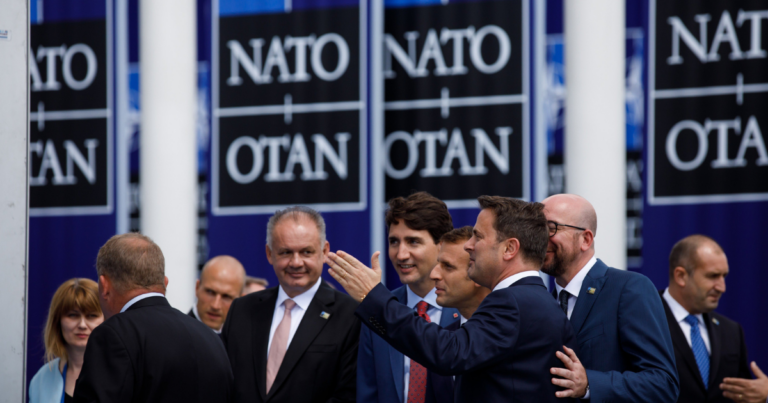
A bipartisan group of 23 U.S. senators addressed a letter to Prime Minister Justin Trudeau, urging him to uphold Canada’s NATO commitment to spend at least 2% of GDP on defence, a benchmark the Liberal government has yet to meet.
The letter, dated Thursday, arrives just two months before NATO’s annual summit in Washington, D.C., which will mark the alliance’s 75th anniversary. The senators, including Ted Cruz and Mitt Romney, called on all NATO allies, including Canada, to fulfil their defence spending obligations.
“As we approach the 2024 NATO Summit in Washington, D.C., we are concerned and profoundly disappointed that Canada’s most recent projection indicated that it will not reach its two percent commitment this decade,” reads the letter.
Canada’s recent defence plan, issued in April, prioritizes climate change while falling short of the NATO requirement to spend 2% of GDP on defence. Two-thirds of NATO allies have reached 2% of GDP spending towards defence, compared to just one-third in 2014.
Defence Minister Bill Blair said, “Canada will invest an additional $8.1 billion over the next five years and approximately $73 billion over the next 20 years.”
Despite this, the increased spending will still leave Canada short of the NATO target, reaching only 1.76% of GDP spent towards defence by 2030.
“At the 2023 NATO Summit in Vilnius, all Allies agreed that 2% defence spending levels should be the floor — not the ceiling — of contributions to the Alliance,” reads the letter.
Other areas of focus in Canada’s defence plan include disinformation, cyber attacks, foreign interference, and integrating gender equality and diversity into the military.
The letter from the senators calls on all NATO allies to meet NATO’s pledge of spending at least 20% of their defence budget on equipment to modernize capabilities. Canada’s defence plan indicates it will exceed this 20% mark.
The senators commended Poland in their letter, saying that the country has already exceeded 3% of its GDP for defence spending.
Canada was criticized in the same letter for creating a plan that will fail to bring them to the 2% threshold by 2029, five years after the agreed-upon deadline.
“The North American Aerospace Defence Command is also in dire need of modernization, a process that can only move forward with direct cooperation from your government,” reads the letter.
“Canada will fail to meet its obligations to the Alliance, to the detriment of all NATO Allies and the free world, without immediate and meaningful action to increase defence spending,” the senators added.
The senators said that the United States’ commitment to NATO is unwavering.
“Later this year, when the United States hosts the 2024 NATO Summit to lay out priorities for the upcoming year, we will expect your government and every NATO member that has not met the 2% defence spending threshold to have a plan to reach this benchmark as soon as possible,” the senators warned in their letter.
Each of the 23 U.S. senators individually signed the letter.
Canada committed to reach NATO’s 2% spending goal in 2014. The country has taken flack before for failing to meet its commitments to the organization.
The Liberals 2024 federal budget proposed $111.2 billion in new spending, a $40 billion deficit, and no plan to balance the budget.
True North reached out to Trudeau for comment but received no response.
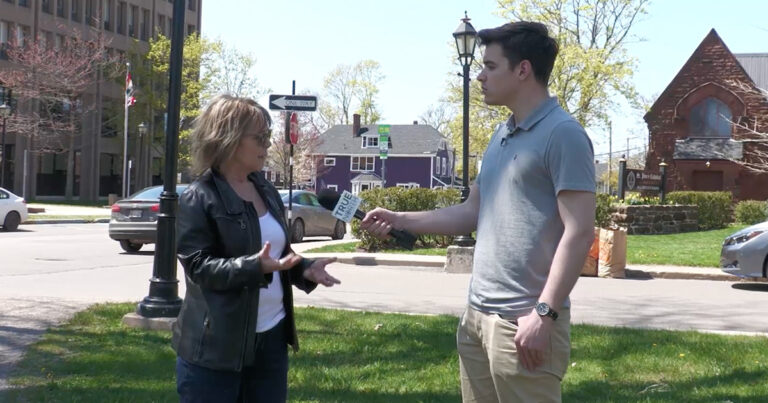
On this episode of Ratio’d, Harrison Faulkner speaks with residents of Prince Edward Island to share their perspectives on the rapid demographic shift on the island and how mass immigration has made life worse.
Islanders are most concerned about housing and available jobs for their families, however there is also concern about the changing culture in PEI as well.
New protesters who joined the protest also speak with Harrison about why they support the foreign student protest, who are demanding permanent residency.
Watch the latest episode of Ratio’d with Harrison Faulkner.
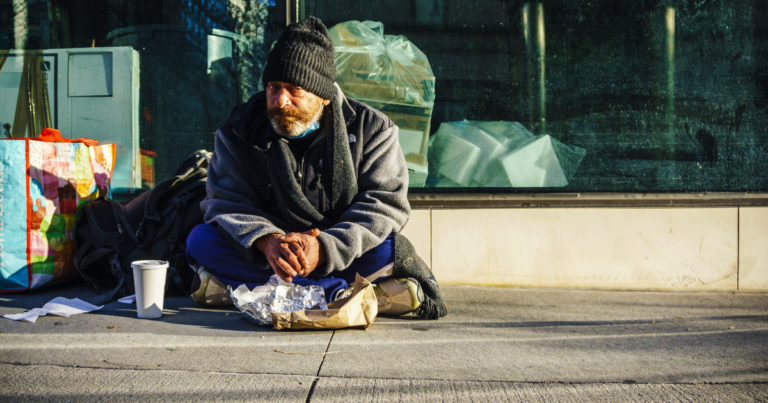
The Liberal government’s $561 million annual spending plan aimed at reducing homelessness has failed to curb the rising numbers, according to a recent report by the Parliamentary Budget Officer. Instead, homelessness in Canada has increased by 20% since 2018.
Infrastructure Canada has spent $561 million a year on homelessness programs. This is a 374% increase of $443 million annually compared to the ten previous years.
Almost all the funding to combat homelessness has been put towards the Reaching Home program. Between 2019-20 and 2022-23, the funding for this program helped place 17,849 people in more stable housing annually, funded emergency housing for 5,399 people a year, and provided core prevention services for 31,164 people annually.
“The best available evidence suggests that homelessness has increased in spite of Reaching Home and, as a result, the program is not on track to meet its targets with respect to reducing homelessness,” the PBO report stated.
The calculations in the study done by the Parliamentary Budget Officer used Point-in-Time counts to determine the number of homeless Canadians.
Point-in-Time counts offer a one-day snapshot of homelessness in a community, capturing the number of individuals in shelters, unsheltered locations, and transitional housing. These counts also consider those experiencing homelessness who are temporarily staying with others due to a lack of permanent residence.
Based on the latest Point-in-Time count published by Infrastructure Canada, the PBO highlighted that the number of homeless people has increased to 34,270, or by 20%, since 2018. The number of chronically homeless people has increased by 38% since 2018. The number of people living in unsheltered locations has increased by 88% since 2018.
“If it costs half a billion dollars for [Prime Minister Justin Trudeau] to drive up homelessness. How much would it cost to drive it down?” asked Conservative leader Pierre Poilievre.
Canada’s National Housing Strategy set a target of reducing chronic homelessness by 50% by 2027-28. The Liberals have more recently announced that they will end chronic homelessness by 2030. To accomplish this goal, the PBO said that the feds would have to spend an additional $3.5 billion annually, a 7-fold increase.
“The best available evidence suggests that Reaching Home has not implemented sufficient programming to achieve its target of reducing chronic homelessness by 50%,” said the PBO.
The baseline number for homeless Canadians on a given day was 25,216 in 2018, with 15,130 being chronically homeless. For the Liberals to reach their goals, homelessness would have to be reduced to 12,608 Canadians, with 7,565 being chronically homeless.
Instead, the data shows that homelessness is growing. Infrastructure Canada’s latest Point-in-Time count, which calculated the number of homeless Canadians on a given night between 2020 and 2022, shows that there are 34,270 homeless Canadians on a given day, with 24,301 being chronically homeless.
The 20% increase suggested by Infrastructure Canada and the Parliamentary Budget Officer is attributed to the 67 communities that took part in both the 2018 and 2020-2022 counts. 72 communities took part in the most recent Point-in-Time count, inflating the number slightly.
Ben Segel-Brown, a senior analyst with the Parliamentary Budget Office told True North that the 2018 baseline number was an undercount as it didn’t include as many communities.
The report noted that these increases could be attributed to service disruptions caused by the Covid-19 pandemic.
The Parliamentary Budget Officer said that federal spending represents a small share of total spending towards fighting homelessness in Canada. An evaluation conducted in 2015-16 showed that for every dollar spent by the federal government, provinces and municipalities spent $13.02, signifying that the federal government only covered 7.1% of the spending addressing homelessness.
When Reaching Home was announced, federal funding planned to cover 14% of total spending.While Point-in-Time calculations provide the amount of Canadians experiencing homelessness on a given day, an average of 235,000 Canadians experience homelessness in a given year.
A Leger report found that over two-thirds of Canadians feel that grocery prices are getting worse, and over a quarter blame grocery chains for rising prices over the last couple of years.
Out of the 1,529 Canadians surveyed, 64% felt grocery prices were still rising and a quarter of Canadians thought prices were about the same as a year ago.
When attributing blame for the problem 20% of Canadians blamed the federal government, 29% blamed grocery chains, and 26% felt the rising costs were due to global economic phenomena such as supply chain issues.
Economist Aaron Wudrick, the director of domestic policy at the Macdonald Laurier Institute, spoke to True North about the state of the grocery market and the causes of inflation.
He doesn’t think it’s accurate to blame grocery chains for the rise in food prices over the last few years.
“It’s a combination of many factors,” Wudrick said. “The overall cost of doing business generally impacts grocery stores.”
He said the carbon tax is the easiest to point to because it’s the most visible tax. However, anything that increases the cost of the inputs needed to sell a product such as rent, energy and transportation will raise the price.
“The government adds a layer of cost to all of those things,” Wudrick said.
He said they could cut taxes if the government wanted to reduce customer costs.
He said global factors such as supply chain issues also play a role.
Statistics Canada reported that food prices rose 1.4% compared to 12 months ago. However, food inflation in Canada decreased for the fourth consecutive month in April, falling from 3% in March to 2.3% in April.
“We’re so used to seeing prices rise and still suffering from a bit of sticker shock that, even though the data says (inflation rates) subsiding, many Canadians are still convinced that they are rising pretty rapidly,” Wudrick said.
He doesn’t think corporate greed plays into the equation, however.
“If it was really just about grocery greed. Why did they only start doing it now?” he said. “When prices are stable or dropping, nobody suggests it’s because grocers are being less greedy.”
He also pointed to a price variation between stores and products to indicate that corporate greed isn’t the issue.
“There’s a dramatic difference in prices for the same products between a store such as Sobeys, Walmart, or Costco. Corporate greed can’t explain that,” Wudrick said. “It’s very tempting and easy to believe that, especially when these companies are making a lot of money and are not particularly sympathetic groups.”
The Leger study also asked Canadians what they thought about a grocery store boycott that targeted only Loblaws to reduce prices.
Most Canadians, 58%, supported the boycott of the grocery chain with the highest profits on the market, and 23% opposed it.
Despite being supported by a majority of Canadians Only 18% said they were partaking in the boycott themselves, and the same amount believed the boycott would help lower prices.
Though many support the boycott, 65% of Canadians felt like it would not affect food prices.
Wurdrick said Loblaw’s profits are much higher than those of other chains because it sells more than groceries.
“People need to remember, that as much as prices have gone up, the margins on groceries are quite slim,” he said. “When you look at a company like Loblaws, they are turning a profit. But they also own entities like Shoppers Drug Mart. They sell things like makeup. Makeup has a pretty large margin.”
He said it’s misleading to suggest they charge more for groceries because of greed when their drug store division, which sells more than just food, makes a large portion of their profits.
“Groceries are just not a very appealing sector to get into. And I think the evidence of that is we don’t have a lot of, companies that want to enter the marketplace,” Wudrick said. “If there was so much money to be made in groceries. You’d see other foreign companies coming here to get a piece of that.”
He said it’s interesting that shopping at a lower-priced location has become a boycott when it seems to him just to be “smart shopping behaviour.”
Many Canadians are worried about how the capital gains tax will affect their access to healthcare, particularly in acquiring or retaining family physicians, according to a new survey.
The recent survey from Abacus Data asked Canadians how the capital gains tax would affect the healthcare system.
Of the 1,500 surveyed between April 30 to May 1, around 58% were aware of the proposed capital gains tax announced in the federal government’s latest budget and only a quarter of those surveyed thought it was a good idea.
According to the survey, respondents had a “widespread belief that the capital gains tax changes would negatively impact the healthcare system, including increasing wait times for family physicians and possibly leading to fewer family physicians in practice.”
Once respondents were made aware of the capital gains tax proposal, 24% were in favour of it, while another 24% said it was an “okay” idea, while 35% said they were opposed. The remaining 18% responded that they were unsure.
Another concern outside of losing access to family physicians amongst respondents was increased wait times, with 29% saying these changes will increase their likelihood.
The respondents’ views were in line with the Canadian Medical Association, which warned the federal government that raising the capital gains tax would jeopardize physician recruitment and retention in Canada last month.
The association supports the healthcare investments announced in the federal budget but says that the proposed changes to the capital gains inclusion rates will negatively affect physicians, most of whom operate their practice as small businesses.
“These changes could jeopardize ongoing efforts across Canada to recruit and retain a high-quality health workforce,” said Dr. Kathleen Ross, president of the Canadian Medical Association.
True North previously reported that the budget raises the inclusion rate for capital gains tax from 50% to 66% for individuals on amounts exceeding $250,000. The amendments to the Income Tax Act come into effect on June 25, 2024.
The Liberals estimate an extra $19.4 billion over the next five years from raising the capital gains tax.
Ross said that many physicians have incorporated their practices. They have relied on their professional corporations to save for retirement instead of employer retirement or pension plans.
“The risk of already over-stretched physicians leaving the profession or reducing their hours in response to heightened taxation is real,” added Ross.
Children born to a Canadian parent outside the country will automatically get Canadian citizenship, so long as the parent has spent three years in Canada.
Immigration Minister Marc Miller announced proposed changes to Bill C-71 to amend the Citizenship Act that would introduce automatic citizenship by descent past the first generation, even if both the parent and child were born outside of Canada.
“The current rules generally restrict citizenship by descent to the first generation, excluding some people who have a genuine connection to Canada. This has unacceptable consequences for families and impacts life choices, such as where individuals may choose to live, work, study, or even where to have children and raise a family,” said Miller during a speech in Ottawa on Thursday.
Miller said that under the new legislation children born “abroad to a Canadian citizen who was also born outside of Canada will be a Canadian citizen from birth” as long as the parent can prove that they have a “substantial connection to Canada.”
Immigration Minister Marc Miller introduced a bill granting automatic Canadian citizenship to descendants of Canadians born abroad, even if the parent spent as little as three years living in Canada. pic.twitter.com/dwEKn7VrMr
“As long as a Canadian parent who was born outside of Canada has accumulated three years of time spent in Canada before the birth of the child, they will be able to pass down their citizenship to their child,” said Miller.
“These changes aim to be inclusive and protect the value of Canadian citizenship, as we are committed to making the citizenship process as fair and transparent as possible.”
Legislative changes made to the Citizenship Act in 2009 by the previous Conservative government added a first-generation limit to citizenship by descent, meaning a Canadian parent could pass on citizenship to a child born outside of the country as long as they were either born in Canada or became a naturalized citizen prior to their child being born.
“It’s quite simple. It’s sort of a convention. I think it is a reasonable limit to what is a substantial connection to Canada.”
Immigration Minister Marc Miller is asked how the three-year threshold limit was determined for automatically granting Canadian citizenship to… pic.twitter.com/DpTZ1VOUOn
However, the newly proposed legislation would allow for citizenship to be extended by descent beyond the first generation.
The Ontario Superior Court of Justice declared that the first-generation cap was unconstitutional last December, a decision that was not appealed by the federal government because it agreed with the ruling.
The new legislation also aims to address the issue of what the Liberals call “Lost Canadians,” people who either lost their citizenship or were never given it due to outdated legislation.
“These changes will address most, if not all, of the Lost Canadians and their descendants, seeking to regain their citizenship. The changes also address the status of Canadian descendants who were subject to the first generation limit,” Miller said.