Andrew is away this week, so Canadian Taxpayers’ Federation Alberta Director, Kris Sims, will be hosting the show!
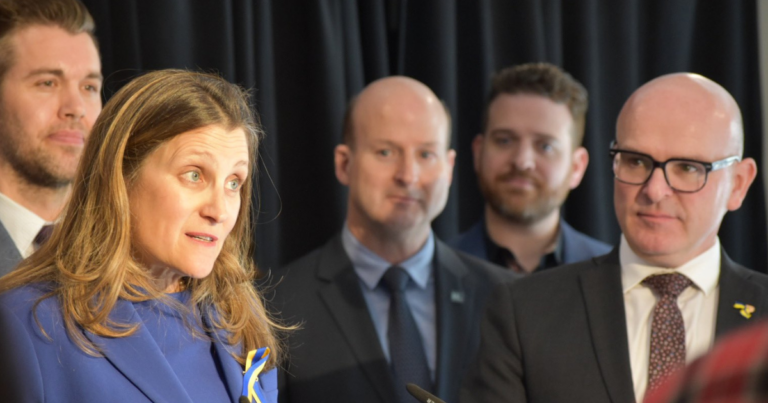
A new survey reveals 58% of Canadians are aware of the proposed capital gains tax changes, but only 24% view them favourably, with 35% opposed. Kris explains why Canadians are concerned about these proposed changes.
Also, if current trends persist, by 2030 nearly all legacy newsroom salaries will be funded by the government. Former CRTC vice chair Peter Menzies joins the show to discuss.
Plus, while Canadians are feeling the strain of increased government spending, how are our British counterparts faring? Kris Sims takes a look across the pond with Elliot Keck of the U.K. Taxpayer’s Alliance.
And finally, Parks Canada is spending $12 million on a program to eradicate European fallow deer on Sidney Island, B.C., employing foreign sharpshooters rather than local hunters. Carson Binda of the Canadian Taxpayers Federation joins to explain.
Meta may have won out in its battle against the Trudeau government’s Online News Act, according to a new study by the Media Ecosystem Observatory.
Plus, convicted terrorist Omar Khadr’s appeal to drop war crime convictions and reverse a guilty plea for crimes he committed when he was 15 years old was shot down by the U.S. Supreme Court.
And instances of antisemitism stemming from anti-Israel protests across Canada have prompted a petition aiming to outlaw popular slogans heard at anti-Israel rallies as hate speech.
Tune into The Daily Brief with Cosmin Dzsurdzsa and Noah Jarvis!
Montreal-based Jewish advocate Ysabella Hazan spoke out after being removed from the McGill anti-Israel encampment by police last week while attempting to have a peaceful dialogue with protesters.
The 24-year-old activist and University of Ottawa law graduate believes that Montreal police’s claim that she was removed to ensure safety amid “tensions” is an admission that the encampment was being violent.
As previously reported by True North, Hazan and Jewish-Israeli rights activist Rudy Rochman went to the McGill encampment Friday, bringing with them two signs: one that read “We witnessed October 7, ask us anything,” and a second that read “There is no future without Israelis and Palestinians, let’s talk”.
However, the anti-Israel protesters made it clear they did not want to have dialogue, as they began “harassing and shouting violently” at Hazan and Rochman, who were subsequently asked by police to leave the premises.
Two Jews creating dialogue ended up with two Jewish being escorted out by police as the pro-Hamas encampment cheered on the police.
When the police and the far left are on the same page you know that the Jews are involved.
— Elisheva Ysabella Hazan (@ysabellahazan) May 17, 2024
Hazan and Rochman were evicted despite having cooperated with security and police beforehand and there being no grounds for arrest.
Hazan spoke to True North about her experience.
“We got in to have conversations… we came in with what should be a neutral opening conversation starter,” she said. “My goal was to reduce the polarization.”
Hazan says that as soon as they arrived at the encampment, protesters immediately began their militant chants. The protesters “were just shouting at us as we were standing there” and subsequently “police made it abundantly clear that we had to leave.”
“They were telling us, ‘you need to leave now,’” she said. “And they escorted me out.”
The SPVM defended the removal of Hazan and Rochman in an interview with CBC News, claiming that they were asked to leave because “there was some tension between the two parties” and officers wanted “to avoid anything happening.”
Hazan sees the claims of wanting to ensure safety as an admission from police that the encampment protesters are violent.
“They said apparently that they were doing it for our safety,” she said. “So they acknowledged that the other side was being extreme, the pro-Hamas encampment was being violent.”
“They prioritized the hate speech of the encampments over the peaceful minority of two,” she added. “They protected the violent majority instead of the peaceful minority.”
Hazan said she found the ordeal very disappointing and asked whether the police were “the encampment’s private security guards.”
While Hazan and Rochman were unable to have a dialogue about the conflict in the Middle East with protesters, she says they did manage to have a few conversations with individuals on the street where the gates to McGill’s campus are located.
“We actually did have some impactful dialogue outside the encampment,” she said. “We had a table there, we sat down and we discussed. We did have some good conversations.”
However, that attempt at dialogue was also not trouble-free. Hazan says pro-Palestinian agitators attempted to disrupt their initiative.
“Unfortunately, a lot of people were discouraging people to come and talk to us. Some of the (encampment) organizers would approach (the people talking to us) and say, ‘why are you speaking with Zionists?’”
She also said a man threw a metal can at her and Rochman.
“We got like a metal can thrown at us. And the guy just (ran) away.”
Hazan believes conversations about the Israel–Palestine conflict are critical right now. Those conversations are however not happening enough, amidst weaponized media that has created echo chambers.
“We’re looking at the result of people who are products of their echo chamber,” she said.
“If you want to hear about what a Zionist is, you should hear it from a Zionist,” she noted. “We don’t hear about feminist rights from misogynists, we don’t learn about environmental rights from plastic lobbyists, so we should learn about who Zionists are from Zionists.”
“This is a war, it’s not a genocide,” she added. “People are suffering on both sides, and to blame the consequences of war only on Israel is not only inaccurate and imbalanced, it also feeds the conflict.”
Despite her fierce criticism of the encampment, Hazan abstained from calling for it to be removed by police. She does, however, want police to conduct themselves differently around the encampment.
“They should, at minimum, protect the rights of those who want to have peaceful dialogue and not prioritize a hateful majority,” she said. “You shouldn’t be shouted at when you’re holding a sign saying, ‘We witnessed October 7th, I witnessed the butchering of my people.’”
Poverty rates are climbing and provinces aren’t catching up in tackling the growing affordability crisis.
When it comes to avoiding poverty, Canada’s provinces are nearing the lowest grade possible almost across the board, according to Food Banks Canada’s 2024 Poverty Report Card.
The only provinces not to receive D-’s or D+’s are Quebec and Prince Edward Island, though they’re still scraping by with a C+ and C-, respectively.
The Poverty Report Card accounts for four measures: experience of poverty, poverty measures, material deprivation, and legislative process. Each measure accounts for various indicators, which receive their own rating and grade, affecting the overall rating. When analyzing the tables, the most common grade among indicators is an F.
Between 2020 and 2022, poverty rates in Canada have increased by 55%, from 6.4% to nearly 10% of people in Canada living below the poverty line. Almost a quarter of all Canadians experience food insecurity.
The reasons for the alarming increase noted by Food Banks Canada are rapid population growth without the necessary social infrastructure, interest rate hikes that were required due to inflation rates not seen in decades, lack of affordable housing, the end of CERB, and a rise in unemployment.
Canada’s most recent data on population growth shows that it has surged annually at a level not seen since 1957. True North previously reported that Canada welcomes approximately 2.2 million immigrants per year.
Canada’s interest rate fell to 2.7% last month, hinting that the Bank of Canada may cut interest rates in June for the first time in almost a year.
Housing affordability in Canada reached an all-time low in April.
Unemployment reached 6.1% in April, as the number of immigrants joining the workforce far exceeded the number of jobs being created, which saw a loss.
“We should expect that poverty rates will continue to rise as new data becomes available. This means more struggling seniors, more children experiencing food insecurity, and more people across Canada worrying about making ends meet,” said Food Banks Canada.
Food banks saw a 30% increase in demand last year. Specific jurisdictions saw differing changes, with British Columbia seeing an increase of almost 60%, which increased to over 100% in rural communities with populations of less than 10,000.
Dan Huang-Taylor, Executive Director of Food Banks BC, told True North that the cost of living crisis “has resulted in more people turning to food banks than we’ve ever seen in the 40-year history that we’ve operated in B.C.”
For the individual food insecurity rates of each province, every single province except Quebec received an F. While Nunavut’s grade was listed as inconclusive, food insecurity in the territory is 49.5%.
True North previously reported that food banks across the nation were facing unprecedented demand and were reaching a breaking point.
“The system was not designed to support this volume of demand. We are close to a breaking point,” said Stephane Sirois, Executive Director of Food Depot Alimentaire in New Brunswick.
In 2023, the province with the worst rating on the Poverty Report Card was Nova Scotia, which received an F in total, with all metrics resulting in an F except the experience of poverty, which received a D.
In 2024, Nova Scotia improved to a D-, resulting in a seven-way tie for last place, with six other provinces accompanying them with D-‘s.
Canada as a whole was also given a grade. The nation received a D- in 2024. Poverty measures received an F, experience of poverty a D-, material deprivation a D+, and legislative process a C.
In 2023, Canada got a D+ on the Poverty Report Card. Poverty measures received a C-, experience of poverty a D+, material deprivation a D, and legislative process a D.
Canada’s overall food insecurity rate was 22.9% in 2024, with a poverty rate of 9.9%. 44.4% of Canadians felt worse off in 2024 than they did last year. 21% of Canadians have trouble accessing healthcare.
“People from all across Canada are facing increasing poverty and unprecedented rates of food insecurity,” reads the report.
Canadians are leaving the country’s most expensive cities for affordable homes in cheaper regions, according to data released by Statistics Canada on Wednesday.
Vancouver saw its highest net loss to interprovincial migration in over two decades, losing almost 5,000 people after gaining nearly 11,000 the prior year.
Statistics Canada’s data showcased Canada’s 41 census metropolitan areas and their populations as of July 1, 2023. Nearly 75% of Canadians live in a census metropolitan area.
Between July 1, 2022, and July 1, 2023, Alberta recorded the biggest gains from interprovincial migration, surpassing British Columbia, which Canadians have historically migrated to for its pleasant weather, short winters, mountains, and overall natural beauty.
All four of Alberta’s census metropolitan areas saw net gains from interprovincial migration. Calgary, Edmonton, and Lethbridge saw their biggest net gains since 2001/2002, at 26,662, 16,082, and 1,651 respectively. Red Deer saw its highest net interprovincial gain since 2005/2006, at 1,277.
On the flip side of the coin, every single census metropolitan area in Ontario saw a net loss from interprovincial migration between July 1, 2022, and 2023. This is the second consecutive year that every CMA in Ontario saw net losses. Twelve out of fifteen of Ontario’s CMA’s saw their biggest net losses since 2001/2002.
In 2022, a net 22,921 Ontarians left the province for Alberta, followed by 10,464 net Ontarians moving to Nova Scotia.
Toronto, Montreal, and Vancouver lost 93,024, 20,624, and 18,399 residents who migrated to other cities within their respective provinces.
While Toronto, Montreal, and Vancouver saw outflows driven by people under 40 years old, Edmonton and Calgary saw inflows of those in that age group.
Vancouver was among the worst cities, where households had to spend 106.3% of their income to cover home ownership costs. Households in Toronto had to spend 84.8% of their incomes to cover homeownership costs. Meanwhile, Montreal reached a record-high income requirement for housing costs, at 53.3%.
While homeownership costs in Alberta have risen, only 36.8% of income is required to cover homeownership costs in Edmonton. Calgary is notably higher, at 48.3%. In Regina, homeowners need only 30.4% of their income to cover homeownership costs, bested by only St. John’s at 28.7%.
The recent data from Statistics Canada pointed towards the Canada Mortgage and Housing Corporation’s 2024 Housing Market Outlook.
“This report indicates that more affordable home prices and a stronger economic outlook in the Prairies make them particularly attractive to homebuyers and job seekers at the expense of Ontario and British Columbia,” reads the Statistics Canada report.
While some large cities saw losses to interprovincial migration from people moving West or even to other cities within the same province, they still experienced net gains from immigrants.
Toronto, Montréal, and Vancouver’s populations increased by 221,588, 129,264, and 119,650 between July 1, 2022, and July 1, 2023, respectively.
“For the first time since at least 2001/2002, the population growth resulting from the net increase in the number of non-permanent residents (NPRs) was higher than that from immigrants in most CMAS (31 of 41) from July 1, 2022, to July 1, 2023,” reads the report.
In April, Canada’s population saw its most rapid growth in over six decades, largely driven by temporary immigration.
All CMAs in British Columbia, except for one, saw fewer immigrants than the previous year. The CMAs that experienced the largest immigration increases were St. John’s (+81.2%), Saskatoon (+69.4%), and Regina (+68.6%).
MPs who have recently travelled to China will have some explaining to do now that they are being called to testify before a House of Commons committee.
The Special House Committee on the Canada-China Relationship invited certain MPs to appear before them next month to “reflect on their recent visit.”
Environment Minister Steven Guilbeault and foreign affairs deputy minister David Morrison and Independent Senator Paul Massicotte are among those who’ve already been selected to appear in person before the Committee before June 21.
Ottawa’s relationship with Beijing became strained in recent years due to the detainment of the Two Michaels affair and more recently allegations of election interference by China in the 2019 and 2021 federal elections.
Additionally, Canada has expressed concerns regarding Beijing’s treatment of the Uyghurs in Xinjiang and its record of human rights violations.
“You never go wrong from getting intelligence from the street level,” said Liberal MP Ken Hardie, who chairs the special House committee.
“We just wanted to get a sense of the lay of the land in China right now,” he added. “We’re nowhere near normalizing relationships with them—there’ve been a lot of pressure points over the last number of years—and we wanted to basically find out from people who had been in China meeting with officials there what the mood was.”
Guilbeault travelled to China last August to participate in the China Council for International Cooperation on Environment and Development, marking a Canadian cabinet member’s first visit to China since 2019.
According to the Hill Times, Hardie said Guilbeault will provide a “very unique take on the relationship” because of the environment minister’s shared climate change goals with Beijing, which Hardie said was “a very positive thing that we should do our best to sustain.”
Hardie said that he is open to inviting other MPs to speak before the committee as well in the future.
“Anybody who is prepared to come in and have a discussion with us about their experiences there—who they met with, what was the tone of the conversations, what was the tone generally of the hospitality—all of those things that really give us a good fix as to where the relationship, which has become mainly transactional, where it might be able to go,” he said.
According to Hardie, MPs sitting on the committee will be able to raise questions and issues they may have with why invited parliamentarians decided to visit China at a time of diplomatic unrest.
Maya Wang, director of Human Rights Watch for China told the committee that she was uncertain whether any country could have a “normalized relationship” with China without “essentially falling into China’s trap of language” given the country’s current political system.
“Essentially having a normalized or stabilized relationship with China is often code for playing by the Chinese government’s rules,” she said.
Prime Minister Justin Trudeau downplayed re-engagement with Beijing last fall, telling Bloomberg in an interview that “China has made decisions over the past years that have made it more difficult—not just for Canada, but for other countries—to engage.”
However, Foreign Affairs Minister Melanie Joly said it was important for Canada to maintain “pragmatic diplomacy” with China.
Canada needs to “engage countries of different perspectives,” said Joly last October.
She added that while Canada should “defend our values” it “cannot afford to close ourselves off from those with whom we do not agree. For engagement does not mean that we support or condone the policies and actions of others.”
Today on the Alberta Roundup with Rachel Emmanuel, Rachel interviews True North host and author Andrew Lawton about his upcoming political biography, “Pierre Poilievre: A Political Life.” Lawton says there’s something in the book for everyone, and even reveals that the now Conservative leader had a knack for practical jokes.
Lawton also explains what kind of access he had to Poilievre during the writing process.
Some mothers whose sons died of drug overdoses demanded an apology from Deputy Prime Minister Chrystia Freeland after she mocked Conservative leader Pierre Poilievre’s appearance instead of answering a question about the overdose crisis.
During Question Period in the House of Commons, Poilievre criticized the Liberal government’s inflationary economic policies and their approach to the drug overdose crisis.
“They think that you can get down debt by borrowing more, that you stop inflation by printing money and that you fight the drug overdose crisis by legalizing hard drugs. So at least they’re consistent in their irrationality,” Poilievre said. “Now, they’ve been forced to backtrack right before the election on their legalization of hard drugs. Because Canadians are revolting against the policy.” The Liberal government approved the decriminalization of hard drugs in B.C. but had to reverse course due to an influx of overdose deaths.
Poilievre asked if the government would support a Conservative motion to “permanently” ban hard drugs across Canada. He claimed that if the Liberals did not support the motion it indicated that the government would “legalize” drugs after the election.
Rather than addressing the question about the government’s response to the overdose crisis, Freeland took shots at Poilievre’s appearance.
“The Conservative leader is wearing more makeup than I am today,” Freeland said.
“Now I think that’s wonderful,” she added before being interrupted by an outraged Conservative caucus.
The speaker asked Freeland to withdraw her comments, as MPs are not allowed to comment on the appearance of others, and she agreed to withdraw them.
She used her remaining time to criticize Poilievre further.
“The Conservative leader is phony all the way through. He is phony when it comes to his concern about the economy, all he can do is talk our country down. And he is phony when he talks about his concern about the opioid crisis he tries to score cheap partisan points. It’s just not right,” Freeland said.
Pierre Poilievre asks if the Trudeau government plans to legalize hard drugs post-election.
Deputy Prime Minister Chrystia Freeland responds accusing Poilievre of wearing more makeup than she does. pic.twitter.com/UjxB5hytpa
Sheri Erickson’s son died of a drug overdose when he was 22 years old in 2017.
Erickson told True North that Freeland’s mockery of Poilievre, after asking an important and serious question, was a mockery of the thousands of families who have suffered through addiction and drug overdoses.
“These were real people who died. These families are real people who are left behind to try and pick up the pieces and educate others so they don’t travel the same road,” Erickson said. “Freeland’s response is that he’s wearing more makeup than she is. What the f*ck is going on in that House of Commons? While people are dying in the streets, she’s talking about makeup!”
She said Freeland’s lack of seriousness towards the issue was a “slap in the face” to all those “left behind” by the drug overdose crisis.
“She needs to make a public apology. There are thousands of families who go through this every single year…she basically made a mockery of them,” Erickson said. “For whatever reason, these people are using drugs, and for her to make a mockery of them and their families. It’s disgusting.”
“It’s a bloody clown show in there,” she said. “Canada is not a serious country.”
Erickson is an advocate for having treatment available to those who want help escaping addiction. However, she thinks the government policies which provide drugs to users are not helping the drug crisis.
“I demand an apology from Chrystia Freeland on behalf of myself & every other Canadian mother who has lost a child to drug overdose,” Monette said on X.
Mioara Whytock also lost her child to drugs. Whytock also demanded an apology on the platform.
“Freeland’s answer to Poilievre (during Question Period) today regarding the opioid crisis is unacceptable and extremely disgraceful,” she said. “Everyone who lost a loved one due to the opioid crisis deserves an apology from Freeland.”
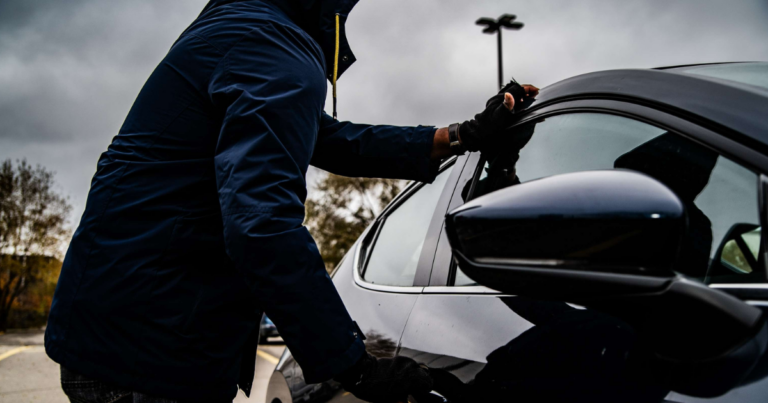
Canada’s auto theft crisis has accelerated beyond control as insurance claims reach record levels.
Claims increased 254% nationally between 2018 and 2023, reaching an unprecedented $1.5 billion in 2023, according to new data released by the Insurance Bureau of Canada.
This increase marks the second consecutive year where auto theft claims have topped $1 billion. Between 2018 and 2021, annual auto theft claims averaged almost half that amount, at $556 million a year.
“These numbers indicate that the auto theft crisis persists, disrupting the lives of Canadians and causing them concern and trauma. It places a heavy burden on law enforcement and courtroom personnel who work tirelessly to address these crimes,” said Liam McGuinty, vice president of strategy at the Insurance Bureau of Canada.
He added that auto thefts are not a victimless crime but lead to higher insurance premiums for all drivers as more claims are made.
Insurance premiums on commonly stolen car models have increased by 25% to 50% since 2022, according to data from Rates.ca. Owners of “high-risk vehicles” are subject to a $500 high-theft vehicle surcharge.
While claims increased 254% between 2018 and 2023 across Canada, the crisis is most severe in Ontario, where auto theft claims increased 524% between 2018 and 2023, surpassing $1 billion in the nation’s most populated province alone.
While the data released on May 16 did not include specific metrics for provinces, the Insurance Bureau of Canada will release province-specific data within a few weeks.
The bureau said that high-end luxury vehicles are often targets for culprits because they are more desirable in illegal international markets.
“In many cases, stolen vehicles are exported to these markets by domestic and international crime organizations. The proceeds are then used to finance drug trafficking, arms dealing, and international terrorism,” said the bureau.
The Insurance Bureau of Canada called for more action from the government to make vehicles more difficult to steal, transport, and export.
“IBC commends the federal government on the release of its National Action Plan on Combatting Auto Theft… We thank the government and law enforcement agencies that contributed to its content,” said the bureau in a release issued after the plan was released.
The plan included several new offences to be added to the Criminal Code aimed at targeting auto thieves.
While the IBC applauded the Liberals’ plan to combat auto theft, the plan did not please the federal Conservatives.
“Justin Trudeau’s Liberal ministers will hold another one of their photo ops to talk about the out of control auto theft crisis they’ve caused,” said a spokesperson for Conservative leader Pierre Poilievre.
“Here’s the sobering truth about the situation after nine years of Justin Trudeau — a car is stolen every six minutes in this country and car theft is up 34%,” said the Conservatives.In February, Poilievre announced his party’s plan to combat auto thefts if elected, pledging to incarcerate repeat offenders, extend sentences while eliminating the option of house arrest, and provide additional funding to the Canadian Border Services Agency to hire more agents and purchase x-ray equipment.
Torontonians danced in the street to celebrate a helicopter crash that killed the Islamic Republic of Iran’s leadership including its appointed president Ebrahim Raisi. Still, some Iranian Canadians demand justice for the death and torture “the butcher of Tehran” is responsible for.
Salman Sima a former political prisoner and survivor of torture at the hands of the Islamic Republic in Iran helped organize the celebration at Mel Lastman Square in Toronto, Ont., on Monday.
“Any member of the regime that goes to hell is, good news for us to celebrate,” Sima told True North. “Iranians are happy, Iranian, Israeli, Jewish brothers and sisters from many different backgrounds, Canadians.”
Videos shared online of the celebration, show revellers waving Israeli, pre-revolution Iranian, and Canadian flags.
We danced and celebrated the better world without Ebrahim Raisi, the buture of Tehran. Nothing is more heart-warming than Iranians, Israelis, & Canadians dancing together for peace. Thank you jewish brothers and sisters for joining Iranians in our happiness over the death of this… pic.twitter.com/KXx7UHYwCL
“We danced together and celebrated peace,” Sima said. “The world without Ebrahim Raisi is a safer place”
زنده؛ جشن و پایکوبی ایرانیان تورنتو پس از تایید خبر مرگ ابراهیم رئیسی! با تشکر از همه دوستان که برگزار کردند یا دوستانی که شرکت داشتند. pic.twitter.com/bXjWR0iJJr
Ardeshir Zarezadeh is the executive director of the International Centre for Human Rights in Canada. Though the death of Raisi was cause to celebrate for him, Zarezadeh and his organization continue to call for an investigation into Raisi and those connected to him for their crimes against the Iranian people and beyond.
“President Raisi was responsible for the executions and murder of thousands of political prisoners. And recently during a Woman, Life, Freedom movement. he ordered the killing of so many girls in the streets of Tehran, and they shot them, directly during the protests,” Zarezadeh told True North in an interview.
“His appointment wasn’t an election we (ICHR) call it selection. it’s an undemocratic and unfair process to appoint someone as president with the (appearance of) election.”
Zarezadeh told True North that he was a political prisoner in several secret detention centres across Iran. He spent two years in solitary confinement and was a prisoner at Evin Prison, which has been accused of many “serious human rights abuses” by the U.S.
Raisi kickstarted his career in the regime as a judge on a panel at Evin Prison. He became known as “the hanging judge” over the amount of executions he ordered against the political rivals of the regime.
The ICHR advocates for the prosecution of the regime including the recently deceased Raisi through international and criminal courts to “hold him accountable for his crimes and crimes against humanity.”
The non-profit group wants to collect all the evidence it can about Raisi’s human rights abuses as both a prison judge and president.
“Putting him on trial is not just about Raisi. It’s also about his colleagues, the top clerics of the Islamic Republic and also about the supreme leader’s crimes,” he said. “They are all connected. You expose one. You’re exposing every single one of them, who have important roles in killing political prisoners, innocent people and those innocent passengers of PS752.”
In 2021 The Ontario Superior Court of Justice ruled that Ukraine International Airlines Flight 752 was shot down in an act of terrorism by the Islamic Revolutionary Guard Corps in Tehran on Jan 8, 2020.
The families of the victims of the flight had their legal fees funded by ICHR.
Zarezaeh said he was one of three people over the last 15 years to consistently organize mass protests in Canada against the Islamic regime in Iran.
His organization also “heavily lobbies” against Iranian policies in Canada, the US and less frequently in European countries.
Because of his work against the regime, he believes he is a target of the IRGC while living in Canada.
He wants the Canadian government to list the IRGC as a terrorist group so former political prisoners such as himself can feel safe by getting rid of the alleged agents of the regime who operate freely in Canada.
“I don’t feel safe in Canada because they still operate here. They still live here. And this is a huge threat to our security. Not only for us as former political prisoners, activists, and leaders of the movement but also for Canada’s safety and security, it’s a threat,” he said.
He said agents of the regime in Iran threaten political and human rights activists including himself in Canada.
“I received messages from them during the movement. I heard from my friends that they were contacted by the IRGC intelligence people, looking for my address, information, and whereabouts” he said.
Zarezadeh said one agent went to his office. Concerned for his life, Zarezadeh contacted the RCMP and FBI, who confirmed that the man was an agent.
“They can come to Canada, Interfere easily, they operate here and do whatever they want,” he said. “They’re trying to, intimidate, threaten, harass and contact our families in Iran to stop us fighting or possibly eliminate us.”