Canadian news most impacted by war with Meta: study

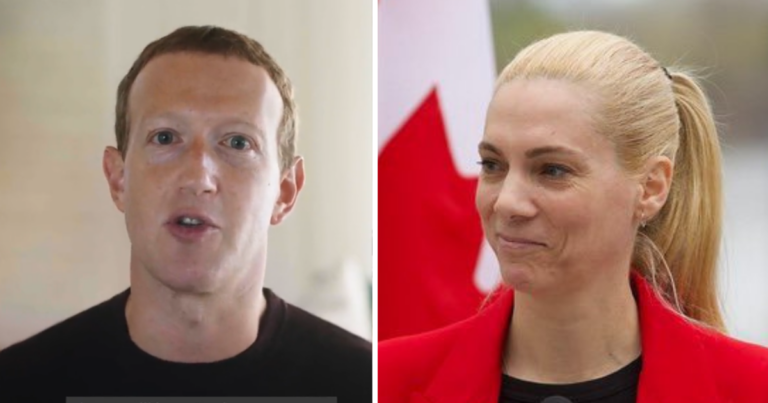
Meta may have won out in its battle against the Trudeau government’s Online News Act, according to a new study by the Media Ecosystem Observatory.

After opting to remove Canadian news content from their platforms, instead of being forced to compensate the outlets nearly a year ago, Meta has seen no loss in usership. 

The Media Ecosystem Observatory, a collaboration between the University of Toronto and McGill University, released a study about the initial effects the Meta news ban has had on media outlets. The evidence revealed it’s hurting the local Canadian outlets the most. 

“We find little evidence that Facebook usage has been impacted by the ban. After the ban took effect, the collapse of Canadian news content production and engagement on Facebook did not appear to substantially affect users themselves,” reads the study.

While the study found that the ban didn’t affect user engagement, it did negatively impact local news outlets, the very group that the legislation purported to be protecting. 

“However, the ban undoubtedly had a major impact on Canadian news. Local news outlets have been particularly affected by the ban: while large, national news outlets were less reliant on Facebook for visibility and able to recoup some of their Facebook engagement regardless, hundreds of local news outlets have left the platform entirely, effectively gutting the visibility of local news content,” read the study.

The study analyzed the 987 Facebook pages of Canadian news outlets, 183 personal pages of politicians, commentators and advocacy groups, as well as 589 political and local community groups.

“The Facebook Pages of Canadian political influencers experienced neither an uptick nor a downturn in engagement. Facebook Groups dedicated to discussing Canadian politics did not experience an exodus of members, nor a decline in frequency of posting,” it said.

Canadians quickly adapted to the new measures by simply taking screenshots of new articles to continue sharing the content. 

“And while news link sharing became impossible, users quickly adapted by posting screenshots of news articles. Meta’s ban on news sharing in Canada does not appear to have had an adverse effect on the number and attentiveness of active Facebook users in Canada.”

While the cat and mouse game unfolds between the government and Canadians still wishing to view and share online news content via Facebook and Instagram, Canada’s national outlets have made off better than the small ones.

National news outlets lost about 64% of the engagement they previously had via Facebook users, while local news outlets lost about 85% of their Facebook engagement.

According to the study, about half of all local news outlets completely quit posting on Facebook within four months of the ban. 

“In fact, the loss of local news on Facebook has already had profound consequences for Canadians,” reads the study. “Soon after the ban, wildfires began raging in northern Canada. In previous years, local news organizations had relied on Facebook to share essential information about the spread of forest fires and safety orders; in 2023, they found themselves blocked.”

Media Ecosystem Observatory director Aengus Bridgman said that the Online News Act has not changed Canadians’ overall interactions with Meta’s platforms. 

“One of the remarkable things we saw was the overall behaviour on the platform didn’t decrease,”  said Bridgman. “We didn’t see Canadians saying, ‘Oh, I no longer use Facebook, I no longer use Instagram.’ It doesn’t seem there’s been sort of an exodus from the platform in any meaningful way.”

Some outlets were able to maintain engagement on their Facebook pages from users located outside of Canada.
The Andrew Lawton Show | Conservatives push to remove House Speaker Greg Fergus

Andrew is away this week, so Canadian Taxpayers’ Federation Alberta Director, Kris Sims, will be hosting the show!

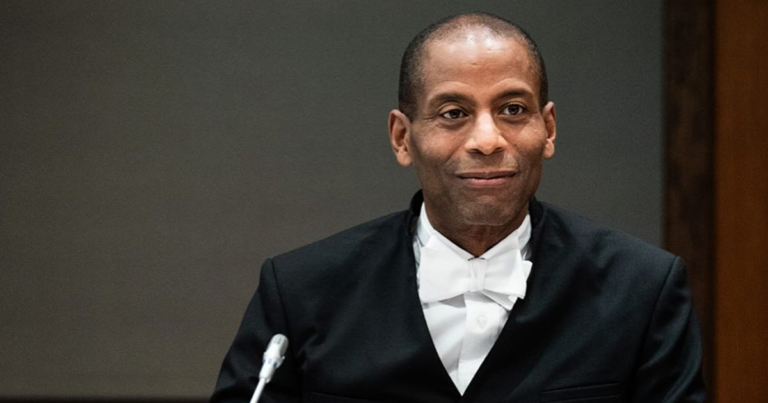
On this special edition of The Andrew Lawton Show, Kris looks at the Conservatives latest push to remove House Speaker Greg Fergus, after he reportedly included a partisan attack in an advertisement promoting an upcoming event. Will the Liberals continue to defend him, or will they finally give in?

Plus, a daunting report from Food Banks Canada reveals that Canada is at “a critical turning point,” as 1/4 of people aged 18 to 24 are using food banks and visits to the food banks are up 50%.

Also, the federal government is planning to launch its mandatory buyback program for “military-style” firearms in 2025, turning it into an election issue. Tracey Wilson of the Canadian Coalition for Firearm Rights joins to discuss.

Plus, the Trudeau government’s plan to ban new gas and diesel vehicles by 2035 may overwhelm Canada’s power grid. Former Liberal MP Dan McTeague returns to explain.

SUBSCRIBE TO THE ANDREW LAWTON SHOW

The Daily Brief | Taxpayers on hook for $30 million on DEI initiatives

A True North exclusive reveals Canadian taxpayers have been billed over $30 million to enrich diversity, equity and inclusion consultants across all federal departments since 2019.

Plus, the Conservatives hope to rally the NDP to remove House Speaker Greg Fergus and trigger a non-confidence vote in the House of Commons.

And hospitals are struggling as homeless people stay twice as long and cost more than double to support.

Tune into The Daily Brief with Cosmin Dzsurdzsa and Lindsay Shepherd!

SUBSCRIBE TO THE DAILY BRIEF

Conservatives say mishandled federal debt costing Canadians billions

A sizeable chunk of Canada’s debt will be refinanced this year with increased interest rates, something that the Conservatives argue could have been avoided if the Trudeau government had invested more into long-term bonds when rates were lower.

Canada’s current debt is a little over $1.4 trillion, now more than double what it was when the Liberal government first took power in 2015.

The majority of the money borrowed under the Trudeau government was done so using bonds that ranged between two and 30 years, with the bulk of the borrowing done during the COVID-19 pandemic using shorter-term bonds.

The Bank of Canada’s central rate dropped to 0.25% during the pandemic but now sits at 5%.

Among the national debt owed, about one-third or $414 billion will be refinanced this year. 

Conservative MP Adam Chambers argued that the Liberals could have done more to ensure its borrowing didn’t get too reckless by issuing bonds for longer terms at cheaper rates years ago.

Chambers contrasted Canada’s borrowing habits with those of Mexico during a House of Commons finance committee meeting earlier this month, which has relied on longer-term bonds for its national debt.   

“The government of Mexico’s average yield to maturity of their debt is around 18 years; 59% of Mexico’s debt is in 10-year bonds or longer,” said Chambers. “60% of the debt we issued during COVID was three years or under. That’s all renewed now. At 4% or 5% interest rates instead of being locked in at, say, 1% for 10 years.”

Ottawa intends to borrow an additional $70 billion in 2024 in new debt and the current interest on Canada’s debt-servicing costs sits at $54 billion this year, which is projected to rise to $64.3 billion by 2030. 

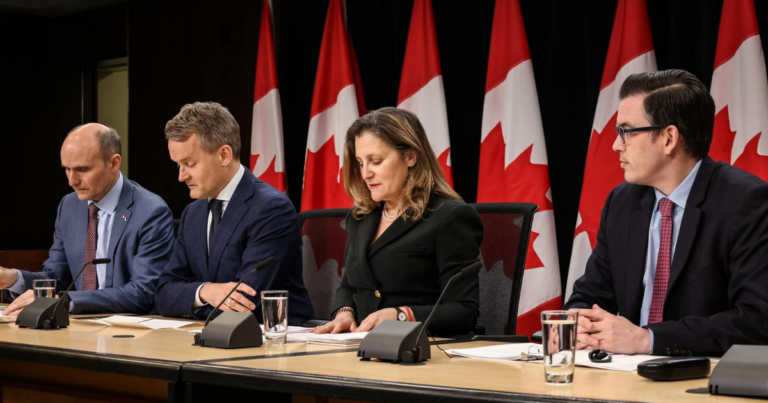
Finance Minister Chrystia Freeland defended the government’s approach at the committee, claiming that Mexico’s balance sheet is much poorer than Canada’s.

“It’s an interesting choice to contrast Canada’s fiscal position, our credit rating, our debt management with that of Mexico,” said Freeland. “I haven’t talked to every single person in Mexico, but I talked to their government a lot. They would cheerfully trade their position for ours, given our triple-A credit rating.”

The average number of years to maturity on Canadian government debt is 6.9, giving the country a AAA credit rating. 

Ontario’s provincial government recently extended the long-term financing of its debt, issuing about a third of its debt in 30-year bonds, the equivalent of about $137 billion.  

However, only a fraction of the federal government’s debt is in terms of such length. 

About 36% of Canada’s federal debt was in longer-term bonds in 2022-23, which is anything over 10 years, whereas 45% of it was longer-term for the previous fiscal year. 

The federal government projects having about 33% in longer-term bonds in 2025, with the majority of Canada’s debt currently in bonds that are less than five years. 

According to Chambers, the government had a chance to lock in its debts at lower rates which could have saved taxpayers anywhere from $7 billion to $10 billion per year. 

“The truth is, the decision of the government during COVID to issue short term debt was absolutely negligent,” Chambers told the committee.

Anonymous officials within the Finance Department told the National Post that the government had attempted to borrow on longer-terms but that there was little opportunity to do so during the pandemic. 

Petition urges feds to criminalize antisemitic chants and convene antisemitism summit

Instances of antisemitism stemming from anti-Israel protests across Canada have prompted a petition aiming to outlaw popular slogans heard at anti-Israel rallies as hate speech. 

The e-petition, which closes for signatures at the end of this week, calls on the federal government to provide clarity on whether rallying cries such as “From the River to the Sea, Palestine Will Be Free,” “Globalize the Intifada,” and “Long Live Oct. 7” contravene sections of the Criminal Code concerning the willful promotion of hatred.

The e-petition claims that the slogan “From the river to the sea, Palestine will be free” violates section 319(2) of the Criminal Code of Canada.

“Everyone who, by communicating statements, other than in private conversation, wilfully promotes hatred against any identifiable group is guilty of (a) an indictable offence and is liable to imprisonment for a term not exceeding two years; or (b) an offence punishable on summary conviction,” reads the Criminal Code of Canada.

Petition e-4960 opened for signatures on Apr. 25, 2024, and was sponsored by Independent MP Kevin Vuong. The e-petition closes on Saturday.

“Students across Canada are being attacked. In what world is that okay?” asked Vuong. 

While the e-petition seeks to clarify the legality of hateful slogans, it also calls on the Government of Canada to convene a national summit on antisemitism in Canada before June 21, 2024.

Despite the e-petition not focusing specifically on university campuses, Vuong shared a post to X on May 15, featuring stories of students who had been subject to antisemitism on their campuses and in their everyday lives, calling on people to sign the e-petition.

He posted again to X on Tuesday, where one of the students, Laura Barkel, told her story for almost five minutes about the antisemitism she’s faced, which has skyrocketed since Hamas attacked Israel on Oct. 7.

Barkel gave numerous examples of antisemitism that she’d encountered.

“It’s too bad Hitler didn’t finish what he started, or you and your family would be dead,” one person said to her while attending an anti-Israel protest on her campus. She said three security guards from her school sat idly by and watched it happen, doing nothing.

“I am scared to just walk around myself in the city now,” said Barkel.

Other students shared their stories in the first video of their harrowing experiences of antisemitism on campus and around their local cities.

One student, Jaime, said that students played with gas in the science room, telling her that was how her ancestors died and how she would die.

Samantha, another student, said that there were death threats with her name on them spanning six flights of stairs and threats of sexual assault against her mother.

“That’s the whole reason why people are saying ‘Never again is now,’” said another student, Daniel Brown.

“What you’ve heard these students talk about are things that no rational, decent, normal person would say or do. If someone hates someone for being Jewish, they’re going to hate me for being Chinese, and they’re going to hate someone else,” said Vuong.

“We can’t allow this normalization of hate that we’re seeing on our campuses, on the streets of our cities, and across the country. We need to draw a line in the sand,” added Vuong.

The e-petition notes that the U.S. House of Representatives voted 377 to 44 in favour of deeming the slogan antisemitic and condemning it. The e-petition added that the slogan has been banned in Germany.

Canadian Women Against Antisemitism, a grassroots movement seeking a world where violence and hate for Jews is not accepted, were vouching to get the e-petition to 10,000 signatures.

As of Tuesday afternoon, the e-petition has 11,447 signatures. It will remain open for four days, until Saturday.

Omar Khadr denied war crimes, terrorism appeal by U.S. Supreme Court 

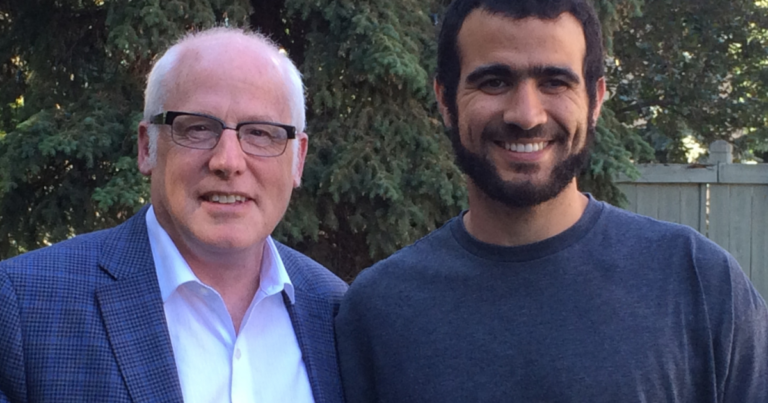
Convicted terrorist Omar Khadr’s appeal to drop war crime convictions and reverse a guilty plea for crimes he committed when he was 15 years old was shot down by the U.S. Supreme Court.

The court’s decision was divided, but ultimately, a three-judge panel rejected his appeal on Monday.

The judges decided that Khadr gave up his right to judicial review when he pleaded guilty in 2007 to five war crimes, including throwing a grenade that killed U.S. Sgt. Christopher Speer on July 27, 2002, in Afghanistan.

Khadr also pled guilty to attempted murder in violation of the law of war and providing military support to terrorism when he was 24.

He has since challenged his previous convictions despite the guilty plea.

The bargain he struck in 2012 allowed him to be extradited to serve eight years in a Canadian prison instead of 40 years in U.S. custody.

Khadr was sentenced to eight years in Canadian prison in addition to the nearly ten years he spent as a prisoner at Guantanamo Bay in Cuba.

The U.S. argued that Khadr hasn’t disputed any of the factors that led to his guilty plea, and his material support to a terrorist entity charge, in particular, has not been disputed either.

Khadr’s team argued that in a decision by the United States Court of Appeals involving another Guantanamo Bay inmate, Salim Ahmed Hamdan, in 2012, charges for material support of terrorism were dismissed because it was not a crime until 2006.

Khadr was captured on the scene of the battle in 2002.

His team argued that his plea bargain was based on the assumption that providing material support to al-Queda was a crime. They claimed that Khadr should be granted a judicial review on those grounds.

Khadr was 15 years old when he committed the crime, he was brought to Afghanistan by his father Ahmed, an al-Queda financier with connections to Osama bin Laden.

While Khadr was at a suspected al-Queda weapons supply site, a firefight between the international terrorist group and U.S. military forces broke out. During the clash, Khadr threw a grenade killing Speer.

After being captured by the U.S. forces, Khadr became the youngest detainee to be held on terror charges at Guantanamo Bay.

Justin Trudeau’s Liberal government granted $10.5 million of taxpayers’ funds to Khadr in July 2017, citing human rights violations at the US-run detention centre. However, allegations of human rights abuses have not been proven in court.

Khadr said his guilty plea was brought out as a result of the torture he faced at the hands of the U.S. government at Guantanamo Bay.

After Speers family sought a $134 million settlement from Khadr in a wrongful death ruling from a Utah court in 2020, an Ontario court ordered Khadr to answer precisely what parts of his testimony were false.

The family’s lawyers want Khadr to go “fact by fact” through his confessions to give the family of the victim the truth about what happened.

Klaus Schwab steps down as head of WEF 

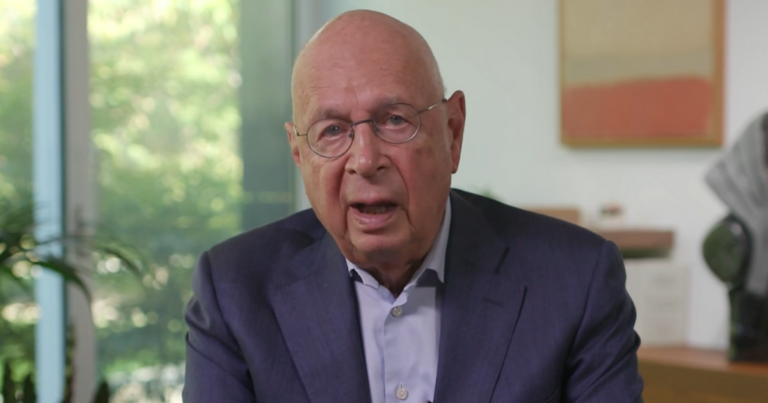
Founder and executive chairman of the World Economic Forum, Klaus Schwab, will be stepping down from leading the organization. 

Schwab announced his decision in an email to his staff on Tuesday, according to Semafor. 

The emails alleged that Schwab will step down from his executive role and transition to a non-executive chairman position by January 2025. This move, pending Swiss government approval, comes after Schwab’s more than five-decade reign over the organization.

The 86-year-old Schwab shared his decision in an email to staff on Tuesday, which was subsequently leaked to Semafor. 

Schwab became notorious during the pandemic after his book COVID-19: The Great Reset caught the attention of the public.

“You’ll own nothing and be happy” is a quote often attributed to Schwab. However, it originated from a World Economic Forum video in 2016, which summarized an essay by Danish politician Ida Auken.

Observers continue to speculate who will succeed Schwab. 

Despite the lack of a named successor, potential candidates include Schwab’s children and Børge Brende, a former Norwegian conservative leader and current president of the WEF who has been leading the executive board over the past year. 

The WEF remains an organization with ties and influence over governments worldwide. Schwab previously boasted about how much sway his organization has over world governments.

In 2017, Schwab confirmed that he had “penetrated the cabinet” of Canada’s government, including Prime Minister Justin Trudeau.

“But what we are very proud of now is the young generation like Prime Minister Trudeau, half of his cabinet, are actually Young Global Leaders of the World Economic Forum… We penetrate the cabinets,” said Schwab.

Many prominent politicians are connected to the WEF. Canada’s Finance Minister Chrystia Freeland serves on the World Economic Forum’s board of trustees.

Freeland also attended the 2024 summit in Davos and advocated for decarbonization, claiming it would lead to more jobs and manufacturing growth in Canada. 

The annual Davos meetings have also been marked by the extravagant lifestyles of attendees. VIPs enjoy luxurious accommodations, including 24/7 butler service and gold coat hangers, while residents struggled with skyrocketing housing prices and evictions.

The WEF has substantial financial resources. The organization reported nearly $500 million in revenue for the fiscal year ending March 2023 and had 200 million Swiss francs in cash reserves, according to Semafor.

The WEF’s annual summit in Davos has focused recently on fear-mongering around climate change and misinformation.

For example, the United Nations Secretary-General Antonio Guterres delivered a speech in 2023 attributing greenhouse gas emissions to a “death sentence.” Despite this, 1,040 private jets flew in and out of the Swiss town’s luxury ski resort for the conference.

In 2024, misinformation and disinformation surpassed climate change as the WEF’s top concern. 

“In response to mis- and disinformation, governments could be increasingly empowered to control information based on what they determine to be ‘true.’ Freedoms relating to the internet, press and access to wider sources of information that are already in decline risk descending into broader repression of information flows across a wider set of countries,” reads the WEF Global Risks Report 2024, the 19th iteration of the organization’s annual threat rankings.

Despite its mission to tackle global challenges, the WEF has faced backlash for its elitist image and the perceived disconnect between its lofty goals and the luxurious lifestyles of its participants. While the WEF champions decarbonization and climate action, its members’ reliance on private jets and lavish accommodations tells a different story.

True North reached out to the World Economic Forum for comment but received no reply.

CAMPUS WATCH: Police evict Jewish advocates from McGill encampment 

The Montreal police were criticized for removing peaceful Jewish advocates from the McGill University anti-Israel encampment.

The Service de Police de la Ville de Montréal was accused of double standards due to its handling of the situation. 

Jewish-Israeli rights activist Rudy Rochman and Canadian Jewish activist Ysabella Hazan visited the McGill encampment Friday with the hope of having conversations about Israel and the Oct. 7 attack.

They brought with them two signs, one that read “We witnessed October 7, ask us anything” and a second sign that read “There is no future without Israelis and Palestinians let’s talk”.

“The goal of creating dialogue was to shed light on the Jewish perspective on the conflict by Jews who are proud and connected to their identity, as well as reduce tensions in these polarized times where many Jews don’t feel safe around the encampment,” said Hazan on social media. 

However, the anti-Israel protesters did not seem to be interested in conversations. Hazan says encampment protesters began “harassing and shouting violently” at her and Rochman, simply for the fact they were holding their signs and walking peacefully. 

Hazan says they were then asked to leave by police, despite them having cooperated with security and police beforehand and there being no grounds for arrest.

“Friday effectively demonstrated that the free speech of the hostile encampment is protected whereas that of the peaceful minority of 2 people is not, ” said Hazan. “Two Jews creating dialogue ended up being escorted out by police as the pro-Hamas encampment cheered on the police.”

“When the police and the far left are on the same page, you know that the Jews are involved,” she added.

In a statement to True North, the SPVM said “the role of police officers is to ensure peace, good order and the safety of all those involved, while respecting their rights and freedoms.”

The SPVM had also told CBC News that Hazan and Rochman were asked to leave as “there was some tension between the two parties” and officers wanted “to avoid anything happening.”

McGill University did not respond to a request for comment.

The university is, however, continuing to try and get the encampment removed from its campus.

Last week, a judge rejected a request for a provisional injunction from McGill to dismantle an encampment, Another injunction sought by students had also been rejected.

In a news release, McGill said it will “move forward with the next steps in the process to seek an interlocutory injunction following the decision by the Superior Court of Quebec regarding McGill’s application for a provisional injunction.” 

If approved, the interlocutory injunction would seek to ban the encampment permanently by barring protesters from “camping or occupying in any manner whatsoever” or protesting in a way that violates university policy.

“We maintain our belief that McGill as a private property owner does have the right to authorize usage of its grounds as well as its buildings,” said the university. “McGill’s request for a provisional injunction did not seek to stop protests on its campus; it sought to stop an indefinite occupation of its property.”

The Faulkner Show | ‘Temporary workers suppress wages’: Harrison Faulkner DEBATES Dan Kelly

Harrison Faulkner is joined by the CEO of the Canadian Federation of Independent Business Owners Dan Kelly for a debate on Canada’s international student program and temporary foreign worker program.

Kelly argues that Canada shouldn’t ‘turn the dial down too quickly’ when it comes to immigration as businesses across the country still heavily rely on skilled foreign workers.

Meanwhile, Harrison argues that the government has bungled the immigration file so badly, the system needs a complete overhaul.

What do you think?

Watch the latest episode of the Faulkner Show with Harrison Faulkner.

DEI INC. EXPOSED: Liberals spent $30 million enriching diversity consultants

Canadian taxpayers have been billed over $30 million to enrich diversity, equity and inclusion consultants across all federal departments since 2019.

True North analyzed a 400-page Inquiry of Ministry released to Conservative MP Kerry-Lynne Findlay detailing diversity, equity and inclusion contracts across dozens of federal ministries going back to Jan. 1, 2019.

Government contracts reveal a cabal of consultants trafficking in the dark arts of gender ideology, systemic racism theory and other ideological demagoguery. 

Egregious spending by Ottawa ranges from contracts for sex change seminars at the Veterans Review and Appeal Board, pipe ceremonies at Correction Service Canada, Indigenous cooking and beadworking lessons and a batch of transgender pride flags.

The largest recipient of DEI spending was the Department of National Defence with the Liberal government dumping  $9,326,278.67 to reform the Canadian military into an institution rooted in DEI ideology.

Broken down departmentally, Employment and Social Development Canada followed National Defence with $6,964,882.69, Parole Board of Canada with $2,268,488.46, Innovation, Science and Economic Development Canada with $2,136,725.44, and Canadian Heritage with $1,720,081.33.

The largest DEI contract worth $7.23 million was awarded to IBM Canada Limited for “professional support to aid in recruitment modernization” with a focus on diversity. Other hefty bills include $189,400 for Calian Ltd. to build “institutional gender-based analysis.” 

Some of the most well-known names in the DEI industry were also employed by DND. Diversity and equity contracts signed by National Defence included a $22,600 guest speaker payout for Saint Mary’s University Social Justice professor Dr. Rachel Zellars in the form of a Black History Month celebration. The contract was signed off on Jan. 16, 2024.

The month before the contract was signed, Zellar gave a town hall event with DND executives where she told military leaders that the Canadian military was “completely infected” with white supremacy.  

“White supremacy is a global problem that has completely infected our nation,” said Zellars. “It comes in all shapes and sizes, and cleans up real good.”

Another notorious anti-hate researcher feeding at the public trough was Ontario Tech University Director of the Centre on Hate, Bias and Extremism Dr Barbara Perry. Perry received a total of $1,100.98 from DND to travel to an academic conference on hate in the Canadian Armed Forces and to meet with the Chief of the Defence Staff between 2019 and 2020.

Perry is known for controversially claiming that there were 300 hate groups active in Canada. To this day, Perry continues to refuse to publicly release her list. 

Other spending includes bills amounting to $165.68 for “transgender pride flags” and $79.10 for “two gender-neutral signs.” 

Military-adjacent departments like Veterans Affairs Canada and the Veterans Review and Appeal Board were also in the sights of Liberal DEI programming. 

Veterans Affairs Canada signed off on a contract to Egale Canada worth $18,500 between 2020 and 2021 for “lesbian, gay bisexual, transgender queer (or sometimes questioning) intersexual, asexual and two-spirited cultural competency webinars.” 

Meanwhile, the appeal board contracted DEI consultants for gender-inclusive non-binary writing workshops in French and English as well as $2,500 for an Indigenous beaded lanyard workshop by Experience Lennox Island on Aug. 11, 2023.

Even the Canadian Space Agency splurged $648,492 on DEI consultants.

Another top-spending ministry, ISED, paid out a hefty $18,645 contract to “energy expert and soul practitioner” Julie Richer for virtual “safe space discussions” involving 890 employees with the Spectrum and Telecommunications Sector. 

“The Sector held several Safe Space discussions for its’ employees, with an objective to create space and provide resources for constructive and safe dialogue on structural racism, systemic racism and systemic discrimination,” the contract reads. 

As for Correctional Service Canada, the department approved 181 different contracts related to DEI measures like webinars, training sessions, speakers and other services. 

Sessions for correctional staff included traditional Indigenous dance workshops, a black history month performance from the Stalite Steelband, black history walks with Jacqueline L. Scott, grandmother traditional teachings from the “White Elk Medicine Woman” Rosie Trakostanec and pipe ceremony teachings.

CSC also paid for Kwanzaa lessons, “Afrocentric workshops”, a $6,000 session on “gender considerations” from Egale Canada and $3,390 for a workshop on “mental health black fatigue.” 

Meanwhile, the Parole Board of Canada dished out a stunning $2,054,315.45 on Indigenous and black advisors as part of its culturally responsive hearing program which allows offenders to have an “elder or cultural advisor” at hand for their parole hearings. 

As for the Public Prosecution Service, the department reported items like an “immersive seminar on Innuit Quajimajatuqangit awareness” as well as microaggression training seminars. 

Performances were commonly billed items across multiple departments. For example, Public Safety Canada paid $2,000 for a Black History Month ceremony performance from the reggae group Raggaediction and a spoken word performance from Up From the Roots, Dwayne Morgan on Feb. 29, 2024.

Unlikely departments like Library Archives Canada and Agriculture Agri-Food Canada were also reporting DEI spending back to 2019. The department in charge of archives paid Dokis First Nation member John Henri Commanda $13,148 between 2023 and 2024 for Indigenous blanket exercises. As for the department in charge of Canada’s agriculture policies, AARC dished out hundreds on Indigenous network circle artwork events. 

Surprisingly, departments that already focused on equity received the least DEI funding. For example, Indigenous Services Canada and Indian Oil and Gas only reported $4,030 in contracts. As for Accessibility Standards Canada, the final DEI bill was $5,748.75.