RCMP warns they can’t meet gov’s goal for all-electric fleet by 2030

Despite the federal government’s plan to replace the entire RCMP fleet with zero-emission vehicles by 2035, the national police force warns that it won’t be possible to “Green the fleet” with the currently available technology.

According to the Liberal’s “Greening Government Strategy,”  they plan to replace half of the RCMP’s national safety and security light-duty fleet with ZEVs by 2030 and 100% of the vehicles by 2035.

Two ZEV vehicles have been tested by the RCMP since January this year: one in British Columbia’s West Shore detachment and one in Ontario’s Rideau Hall Response Unit.

Despite their reported popularity, the RCMP is concerned about the vehicles dying on a call to service. They don’t know for sure what effect driving the EVs at high speeds for sustained periods will have.


In a report on the RCMP website, Constable Mark Hall at the B.C. location said battery charge has not been an issue in the city.

“Charging has been easy; we drive in and plug it in,” says Constable Mark Hall. “The lowest an officer got the battery to was about 56%. It’s nice not to worry about refuelling on the road.”

Many of the areas that the RCMP operates in are rural and remote, especially those without policing districts.

Issues EVs may arise in rural and remote areas where the RCMP operates. They warned that vehicles may be inoperable in regions with limited charging infrastructure and strained power grids.

If a vehicle can’t sustain charge in one of these areas, it could spell disaster for those communities.


“The team is still exploring charging systems to ensure proper infrastructure is in place to support detachments and collecting data on vehicles operating in northern and remote locations to evaluate the challenges those areas encounter and ensure ZEV suitability,” the report said.

In it, Andres Casimiri, the manager of the RCMP’s National Fleet Program, said one challenge is that retailers are not making the vehicles operational for police use.

“We had to buy retail vehicles and contract the upfitting to a vendor,” he said.

According to the report, the two Teslas being tested in Ottawa and B.C. were fitted with policing equipment, such as radios and sirens. This involved gutting the inside and adding the equipment internally.

The fitting process took nine months before the vehicles were operational for duty.

One officer told the CBC in an interview that they can’t replace all of their vehicles with EVs as of now, because the technology will not be able to keep up with what is demanded of the police force.


International students say it’s not fair that they have to pay extra for tuition

An Indian man who came to Canada as an international student said in the Prince Edward Island legislature Thursday that it was unfair that he had to pay three times as much as a Canadian citizen for his education.

Because of the “extra” money Rupinderpal Singh spent on his education in Ontario and his taxes during his stay in Canada, he said he should have “equal rights” as a Canadian.

“Altogether, I paid around $30,000 for my tuition. For the same schooling fee, a person born and raised in Canada paid around $10,000,” Singh said. “An extra $20,000 for the same thing, and still suffering. How unfair is that?” 


A look at universities in India, such as the Indian Institutes of Technology, shows that international students have to pay more than double what domestic students pay on average in India.

The Canadian government also subsidizes post-secondary education to keep tuition for domestic students low.

“If paying equal taxes, then why not equal rights?” Singh said.


He said it’s unfair that international students “invest” so much money into Canada via tuition and other spending only to be told to leave the country.

Singh and Jaspreet Singh, were testifying before the committee to lobby the provincial government not to deport them after their temporary work visas expire.

An agreement with the province that, by its nature, does not guarantee anything past the visa’s expiry.

Singh represents a group protesting the P.E.I. government’s decision to reduce the number of permanent residency nominees through their Provincial Nominee Program by 25% to address the housing crisis.

The decision may result in many immigrants not having their work visas renewed, meaning they would have to go back to their countries of origin.

Singh said the housing and affordability crisis on the island is not the fault of the temporary residents but of the provincial government for not paying attention to how much they could accommodate.

They believe anyone who lived in the province before the decision to cap the PNP should be grandfathered in and allowed to stay long enough to become a permanent resident.


The province said it would only extend work visas for the construction and healthcare industries, as those are the most in-demand jobs on the island.

Singh said this is also unfair as not everyone can work in those jobs that are in demand such as construction. He argued more women would be affected as well, as they are less likely to work in the industry.

The speakers argued that the province’s low-skilled service industry would be devastated if the temporary foreign workers were deported, and the move would also shrink GDP.

As of April 24, 2024, P.E.I. unemployment was 6.80%. However, non-permanent residents make up 6.32% of the total population of PEI or about 9.43% of the working-age population.

For non-permanent residents looking to make Canada their permanent home, the prospect of deportation in a couple of months is causing them to be “emotionally, financially and mentally unstable,” according to Singh.

Singh said that if their visas expired, they would be kicked out of Canada, not just the province.

Will race & gender-based hiring in universities continue after quotas are met?

Universities are continuing to push race- and gender-based hiring practices for jobs associated with a federal government program despite “diversity, equity and inclusion” targets already being met.

The federal government also suggested discriminatory race- and gender-based hiring practices could continue regardless of targets. 

The program in question is the Canada Research Chairs (CRC), a federal initiative to recruit and retain scholars at academic institutions. 

It has since transformed into a program that promotes DEI ideology through the allure of federal funding.

Institutions have been setting diversity targets for the program since January 2009. The latest diversity targets unveiled in 2021 seek to have the makeup of chair holders be “based on Canada’s population.” 

The aim is to have chairs be 50.9% women, 22% visible minorities, 7.5% persons with disabilities, and 4.9% Indigenous by December 2029.

Thanks to a wave of university job postings limited to members of certain groups, these targets are well ahead of schedule.

The target of 22% visible minorities has been surpassed, with 28.6% of chairholders now being racialized. The target of 50.9% women is close to being fulfilled, with women making up 47% of chairholder positions. Meanwhile, 7.0% of chairholders currently have a disability, just 0.5% away from the 7.5% target; and 4.1% of chairholders are Indigenous, 0.8% away from the 4.9% target. 

True North previously reported on a CRC job posting at Quebec City’s Laval University that was closed to able-bodied white men, as well as the University of Waterloo looking exclusively for professors who identify as “gender-fluid”, or as women, sexual minorities or visible minorities to fill CRC positions.

Other examples include a University of British Columbia CRC posting for a professor of electrical and computer engineering stating that able-bodied white men are ineligible, and a UBC medicine position open exclusively to people with disabilities. 

The University of Alberta put up four CRC postings for professors in its faculties of engineering and medicine, with those being restricted to women and “gender minorities.” A posting for a CRC scientist to study virus pathogens at the University of Saskatchewan also excludes able-bodied white men.

York University issued a posting for a CRC professor of artificial intelligence for robotics, and noted that the position was “open only to qualified researchers who indicate (…) that they identify as women or gender non-conforming (e.g. genderfluid, nonbinary, Two-Spirit, trans man, trans woman).”

A Queens University CRC professor of nuclear materials and materials degradation position also excluded able-bodied white men, while the University of Toronto barred white people from a CRC education position.

The DEI requirements for the prestigious Canada Research Chair positions do not only apply to professor jobs, but also positions in university hospitals.

For example, Holland Bloorview Kids Rehabilitation Hospital, which is associated with the University of Toronto, had a posting for a CRC scientist that was only open to “women, members of visible minorities, persons with disabilities, and Indigenous peoples.”

And while the government believes “achieving a more equitable, diverse and inclusive Canadian research enterprise is essential to creating the excellent, innovative and impactful research necessary to seize opportunities and for responding to global challenges,” some in academia see issues with the program’s approach to DEI. 

Among them is Saint Mary’s University professor and former Society for Academic Freedom and Scholarship president Mark Mercer.

“My view is that if a government is going to give money to universities independently of the provincial allocations… it has to do so neutrally,” Mercer told True North.

“It can’t put government priorities into that money. They ought not be requiring anything from universities.”

Mercer also believes that DEI as an ideology is divisive and runs counter to the academic mission.

“It puts scholars into categories. It puts scholars into groups,” he noted. “It’s sort of like putting them in silos so that others can admire their work, but are not to criticize their work because (they) don’t come from the group that’s within that silo.”

Despite the targets being met, Sciences and Humanities Research Council president Ted Hewitt suggested earlier this month at a House of Commons committee that restrictive hiring could continue well into the future.

“I think we want to get to the targets first and then have the conversation about whether we would need them,” Hewitt said in response to a question from Conservative MP Michelle Rempel Garner.

The representatives in charge of the Canada Research Chairs program did not respond to True North’s request for comment.

The program was established by the Canadian government in 2000 to empower academic researchers in engineering and the natural sciences, health sciences, humanities, and social sciences.  It spends $311 million annually.

Unsuitable housing common among Canada’s international students: Statistics Canada

International students studying in Canada are more likely to live in unsuitable housing than their Canadian counterparts, with Indian students living in unsuitable housing more than any other source country, according to Statistics Canada.

The findings from the 2021 Census of Population compare the housing conditions of international students to those of Canadian-born students across various municipalities.

In Canada’s ten municipalities with the most international students, the number of international students living in unsuitable housing ranged from 25% to 63%, which is 13% to 45% higher than Canadian-born students aged 18 to 24.

“Students from India were more likely to live in unsuitable housing compared with those from other countries. In Brampton and Surrey, the municipalities with the largest shares of Indian students, the proportions of international students in unsuitable housing were the highest,” reads the report.

Suitable housing is determined by the National Occupancy Standard, which specifies criteria such as a maximum of two people per bedroom and that non-couple household members aged 18 or over should have separate bedrooms. Other criteria are based on age, sex, and relationships among household members.

International students living in Toronto have told horror stories about waiting in line to use the bathroom or cook their food, and having to use shared amenities, with three students living in each room. The students still considered themselves lucky, for just having a house to live in among Canada’s rental supply shortage. Canada’s rental vacancy hit a record low of 1.5% in 2023.

Canada’s three largest municipalities—Toronto, Montreal, and Vancouver—had the highest numbers of international students in 2021. Approximately 31% of international students in the country were concentrated in these cities, with 44,670 in Toronto, 43,430 in Montreal, and 17,030 in Vancouver.

The remainder of the top ten most populated municipalities accounted for 25% of the country’s international students, while the remaining 44% were scattered across the rest of the country.

Among Canada’s top ten most populated municipalities, Brampton and Surrey had the largest share of students living in unsuitable housing, at 63% and 61%, respectively. In comparison, only 20.8% of Canadian-born students in Brampton and 16.6% in Surrey lived in unsuitable housing.

Vancouver and Calgary had the lowest rates of international students living in unsuitable housing among the top ten populated municipalities, at 29% and 25%, respectively. In Vancouver, 15.4% of Canadian-born students aged 18 to 24 lived in unsuitable housing; in Calgary, the rate was 9.1%.

India and China were the top two source countries for international students in Canada.

In Montreal, 77% of international students from India lived in unsuitable housing, followed by 66.1% in Toronto and 53.3% in Vancouver. In contrast, Chinese international students faced significantly lower rates of unsuitable housing: 19.5% in Montreal, 16.1% in Toronto, and 15.1% in Vancouver. For international students from other countries, the rates were 20.6% in Montreal, 31.3% in Toronto, and 27% in Vancouver.

While the data was collected from the 2021 Census of Population, the report suggests that the numbers could have worsened since then, as the number of international students in Canada has grown substantially. 

The Liberals imposed a two-year cap on international students, set to reduce the number by 35%, following rampant fraud dating back to 2017.

The rate of international students seeking asylum in Canada previously doubled since 2018.

Half of Ottawa’s homeless shelters are occupied by asylum seekers and immigrants.

Competition Bureau probing Loblaws, Sobeys over anticompetition allegations 

Two grocery giants are under investigation for allegations of anti-competitive conduct.

The parent companies of Loblaws and Sobeys are being probed by Canada’s Competition Bureau, according to Federal Court documents. 

The inquiry, which the owner of Sobeys is calling ‘unlawful,’ was launched Mar. 1 after the Commission of Competition said there was no reason to believe that the firm’s use of property controls limited retail competition. 

According to the commissioner, these property controls were baked into the lease agreements by the companies and designed to restrict other potential tenants from activities that could strengthen competition in the grocery market. 

The Competition Bureau began investigating the use of property controls in the grocery sector several months ago.

Deputy commissioner Anthony Durocher told a House of Commons committee that they are used as a barrier to entry for both foreign companies looking to enter the Canadian market and independent grocers who want to expand their retail outlets. 

The federal government announced it was looking to lure international grocery companies into Canada to help create more competition among domestic food retailers last month.

Industry Minister François-Philippe Champagne said he aimed to bring in retailers from the U.S., Germany, Turkey and Portugal to increase competition.

“A lack of competition in Canada’s grocery sector means Canadians are paying higher prices,” read a section of the federal government’s latest budget.

However, Catherine Thomas, a spokesperson for Loblaws’ parent company George Weston Ltd., claimed that these property controls are commonplace across many industries. 

“Restrictive covenants are very common in many industries, including retail. They help support property development investments, encouraging opening of new stores and capital risk-taking,” said Thomas, according to Global News.

An application filed in the Federal Court by the commissioner forced both George Weston Ltd. and Sobeys’ parent company, Empire, to hand over all records regarding their real estate holdings, lease agreements, and customer data, among other records.  

The records revealed that both companies have holdings in real estate investment trusts, with their own grocery stores being significant tenants of these properties. 

Empire holds a 41.5% interest in Crombie Real Estate Investment Trust, making it a majority tenant of Crombie’s properties. Similarly, George Weston has controlling ownership of 61.7% of Choice Properties Real Estate Investment Trust, with Loblaws accounting for over half of its properties. 

According to the court documents, the two have a strategic alliance under which the REIT has agreed to “significant restrictions” that limit “its ability to enter into leases with supermarket tenants other than” Loblaws or Sobeys. 

The commissioner said these agreements “limit or restrict” how a piece of land can be used even after ownership changes hands and can even “leave restrictions or exclusions on competitors that extend beyond ownership of the land, sometimes for decades.”

“According to market participants, property controls are widespread in the retail grocery sector, impacting where and how businesses can compete in the retail sale of food products,” the commissioner claims.

The commissioner argues that these property controls allow companies “the ability to exclude actual or potential competitors from selling food products within certain geographic areas or to dictate the terms upon which they carry on business.”

Empire claims that the grocery sector has been subjected to an “inordinate” amount of attention from politicians and that the inquiry was launched for an “improper purpose,” suggesting “at least the appearance of a lack of independence of the Commissioner.”

Canada’s major grocers have been the subject of political and public scrutiny over the past several years as food prices have skyrocketed.

A survey conducted last fall found that 45.5% of Canadians were more concerned with the cost of their groceries than with the importance of their food’s nutritional value in terms of what they purchased. 

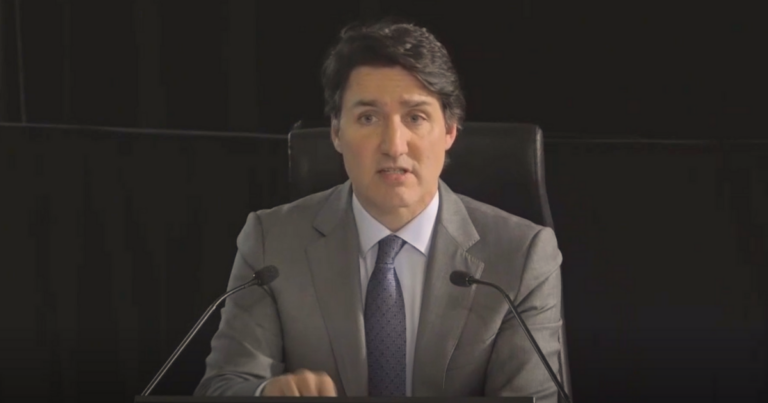
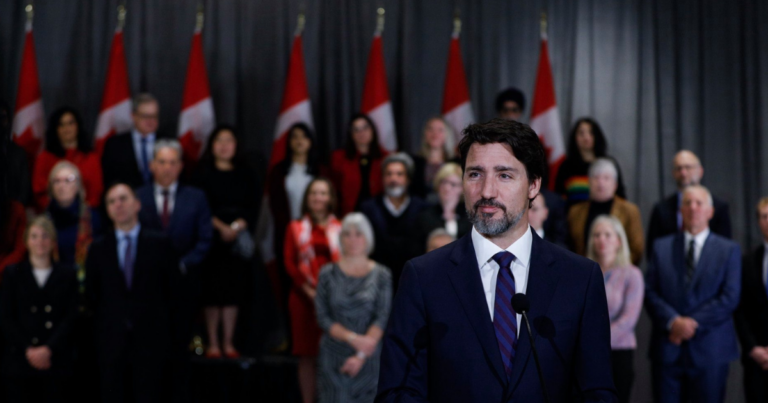
US Representatives blast Trudeau for freezing Freedom Convoy bank accounts

A trio of US lawmakers condemned Prime Minister Justin Trudeau’s handling of the 2022 Freedom Convoy protests in a recent debate on central bank digital currencies. 

The criticism emerged during a debate on a bill addressing the potential risks associated with central bank digital currencies on Thursday.

Several Republican representatives drew parallels between the Canadian government’s actions and those of authoritarian regimes. They highlighted the use of the Emergencies Act to freeze the financial assets of truckers protesting against COVID-19 vaccine mandates. 

Representative Tom Emmer (R-MN) compared the situation to China’s use of CBDCs for citizen surveillance. 

“In China, the Communist Party employs a CBDC that can be used to monitor citizens’ spending habits,” Emmer said. “Closer to home in the Western Hemisphere, the Canadian Government demonstrated the power of federal financial surveillance and control when it froze the bank accounts of hundreds of truckers protesting the Covid vaccine mandate in 2022.”

Rep. French Hill (R-AR) underscored the potential for government overreach inherent in financial surveillance. 

“This legislation is necessary because we live in a world where government can abuse the tools that they have,” Hill asserted. “As noted by the whip, Canadian Prime Minister Justin Trudeau was freezing bank accounts of people protesting COVID-19 restrictions in his country.”

Rep. Scott Perry (R-PA) echoed these sentiments and warned against complacency regarding government powers. 

“We should learn the lessons from the oppressed citizens everywhere from Canada to the communist Chinese before it is too late,” Perry declared.

The debate on Thursday was not the first time Trudeau’s policies have been criticized in the U.S. Congress. 

In June 2022, Rep. Bob Good (R-VA) labelled the Trudeau administration as “oppressive,” drawing comparisons to authoritarian regimes. 

“The guarantee provided by our Founders to ensure we remain free from foreign invasion and, yes, from an oppressive government like we see in Canada, Australia, and the Democrats’ beloved Communist China is the constitutional right of law-abiding citizens to be armed as they choose,” Good remarked.

The controversy stems from Trudeau’s decision in February 2022 to invoke the Emergencies Act, an unprecedented move that allowed financial institutions to freeze the accounts of those involved with the Freedom Convoy. 

Under the direction of law enforcement, Canadian banks froze nearly $8 million held in 206 accounts. The freezes were enacted under laws targeting terrorist and money laundering activities.

However, subsequent testimony from the Financial Transactions and Reports Analysis Centre of Canada and the Royal Canadian Mounted Police indicated there was no evidence of criminal or extremist group financing in the protests.

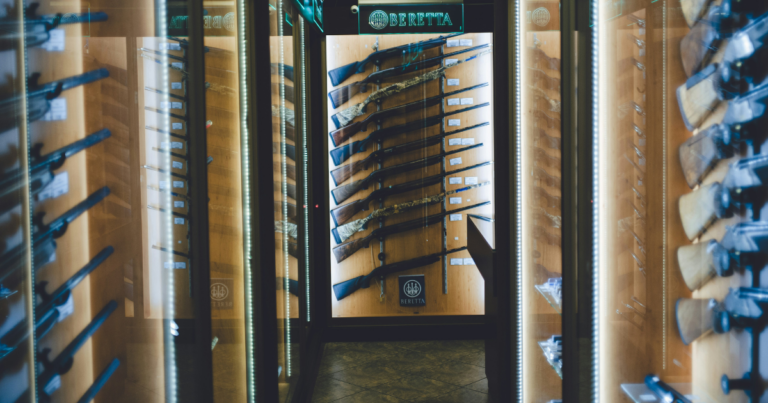
Liberals enable businesses to surrender banned firearms by mail

The Liberals gun buyback program will allow retailers to surrender illegal firearms as part of the federal gun buyback program using courier and postal services starting this fall. 

Public Safety Minister Dominic LeBlanc unveiled the new regulations on Wednesday.

“These proposed regulations will make the affected firearms and devices mailable matter and will temporarily permit businesses taking part in the program to ship firearms or devices via post,” said Leblanc.

The buyback program, initially announced in 2020 following a mass shooting in Nova Scotia, banned over 1,500 makes and models of “assault-style” firearms. 500 additional firearm variants have since been added.

Tracey Wilson, Vice President of Public Relations for the Canadian Coalition for Firearms Rights, criticized the program on the Andrew Lawton Show, stating that the Liberals have and plan to use this as a political wedge.

The original compliance deadline was April 2022, but the amnesty period has since been extended until just after the next federal election.

“The Liberals have done a really good job at marketing this as getting assault weapons off the street, which is completely inaccurate,” said Wilson. “These are regular sporting and hunting rifles, semi-automatic, limited to five rounds. No different than the stuff I take deer hunting right now.”

Anyone who currently owns recently touted illegal guns is expected to keep them stored, as they always have been. Illegal firearms can be surrendered to police, but there are no processes in place to receive compensation.

The buyback program’s first phase will allow businesses to use carriers they already work with to surrender firearms, which is expected to start this fall.

The second phase will allow private gun owners to sell their guns back to the government and is expected to begin sometime in 2025. The federal government expects to collect between 144,000 and 518,000 weapons, with costs estimated between hundreds of millions and over $1 billion.

Canada Post refused to participate in the gun buyback program, citing safety concerns for its employees.

Some provinces have pushed back, too, with the Alberta government calling the Liberals’ plan “reckless” and a risk to jeopardize the safe handling of weapons.

Leblanc said that Canada continues to offer “cost-effective delivery of the Assault-Style Firearms Compensation Program.”

Despite spending $42 million taxpayer dollars in March on the program, the Liberals have still not purchased a single gun from Canadians. 

“What a mess and what an absolute devastation to taxpayers, because that money would be better spent focusing on reducing illicit guns,” said Wilson. 

True North previously reported that legal firearm owners are seldom involved in gun homicides. While many homicides involve illegally obtained firearms, the majority of homicides also include assailants who do not possess a gun license.

“Of course, this had the exact effect we thought it would and has had zero impact on the crime and violence we’re seeing across the country,” said Wilson.

Ontario to begin selling alcohol in convenience stores and gas stations by end of summer

Ontarians will soon be able to buy a cold one from their nearest convenience store or gas station as the province relaxes its alcohol rules.

The sale of beer, wine and ready-to-drink cocktails will be allowed by summer, according to an announcement made by the provincial government on Friday. 

Premier Doug Ford and Finance Minister Peter Bethlenfalvy held a press conference in Etobicoke Friday morning, announcing that Ontario is going forward with alcohol sales in convenience stores, way ahead of schedule.

“We are delivering on our commitment to give consumers in Ontario the choice and convenience every other Canadian enjoys, and we’re doing so even sooner than we had originally promised,” said Ford.

“In the coming weeks and months, people in Ontario, like many Canadians across the country, will have the option to responsibly and conveniently purchase a case of beer or a bottle of wine on their way up to the cottage or to a summer barbecue, all while having even more opportunity to support local Ontario breweries and wineries.”

The Ford government initially announced plans to begin selling alcohol in all supermarkets, convenience stores and gas stations in 2026, however, sales will now begin as early as August of this year. 

Ready-to-drink cocktails and coolers will begin being sold at grocery stores already licenced to sell beer in August and by October, at fully licenced convenience and gas stations stores as well.  

Up to 450 grocery stores across Ontario that are currently licensed to sell beer, cider or wine will be able to add ready-to-drink beverages to their shelves as well as 30-packs of beer.

In September, all eligible convenience stores will be permitted to sell beer, cider, wine and ready-to-mix drinks. Big box stores will be able to do so as well as of Oct. 31, 2024. 

Retailers interested in acquiring a licence will be able to apply for one in the coming weeks. 

Additionally, the provincial government announced that $225 million in public funds will be paid out to The Beer Store to keep locations open to help facilitate recycling and bottle return.

Further tax dollars will be given to the private brewer-owned entity as the province transitions to its new model of selling alcohol. These funds will also secure jobs from being lost throughout Ontario. 

The LCBO will continue its operations in wholesale and retail and remain a public asset. Hard alcohol like gin, whisky and vodka will continue to be sold exclusively at the LCBO.

Off the Record | Liberals resort to abortion scare tactics

It’s Friday! Kick back, grab a drink and enjoy the latest episode of Off the Record with Rachel Emmanuel, Noah Jarvis and William McBeath!

Conservatives are up in the polls and everybody knows what that means – abortion scare tactics! This week, Liberal MPs hosted a press conference and accused Pierre Poilievre of infringing on women’s bodily autonomy. Usually the legacy media would eat up these desperate attacks but this time, even Trudeau-friendly reporters called out the Liberals for crying wolf once too often. Sad!

Plus, a new study reveals that the Online News Act, which forces big tech companies to pay legacy media outlets, is a complete failure. Despite Meta’s continuing ban on news content, Canadians are still using Meta platforms like Facebook and Instagram and the law has negatively impacted local news outlets.

And a Calgary judge has ruled that a northwest Calgary home can continue hosting group sex parties, but the organizers aren’t allowed to call it a club. …So that’s interesting.

These stories and more on Off the Record! Tune in now!

SUBSCRIBE TO OFF THE RECORD

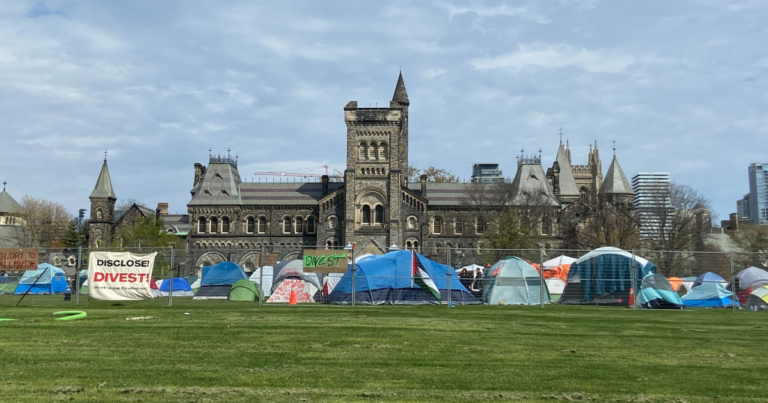
University of Toronto encampment protesters reject school’s final request to disband

Anti-Israel protesters encamped at the University of Toronto have rejected the school’s final agreement offer.

The university’s president gave protesters until 4 p.m. Friday to accept a deal that would create committees to facilitate potential disclosures and divestments of their assets connected to Israel and begin dismantling the encampment.

The offer was conditional on protesters clearing and not resuming encampments on the university’s campuses. Participants were also told not to disrupt the upcoming convocation ceremonies for school graduates.

The university stated that if protesters did not accept the offer, it would take further action to remove them. They’ve been issued a trespass notice that comes into effect Monday morning at 8 a.m. Protesters will be meeting with school administrators Sunday afternoon.

At a Friday morning press conference, demonstrators said they viewed the university’s proposal as an opening to negotiations rather than a final offer.

They rejected the deadline and raised grievances about the time they had been given to agree to the demands.

The protesters indicated that they are still committed to their goals of having the school cut ties with academic institutions in Israel, and for the school to disclose and divest from all investments linked to the Jewish state.

“We are not interested in committees. We are interested in commitment,” one protest representative said. “This is the administration’s idea of a good faith negotiation. We have asked the administration for this document for several days.”

The university clarified that some of the protesters’ demands were entirely off the table.

“The university will not terminate any partnerships with Israeli universities or attempt to curtail scholars’ academic freedom in any way,” the statement said. “These actions would be at odds with our commitment to academic freedom, the unfettered global circulation of people and ideas.”

The press conference speaker, who did not provide her name, said protesters are counting on the school continuing negotiations rather than sending in police to clear the encampment.

Multiple reporters asked the protesters if they would refuse to leave after the deadline, but they refused to give a clear answer.

The offer, which could still be accepted before then, would allow protesters to attend the next Business Board of Governing Council meeting on June 19 to present their disclosure and divestment demands.

The university also promised to review the divestment request and expedite the process where possible. The school affirmed that this would be done in accordance with the school’s policy on social and political issues regarding divestment, which maintains the school “will not consider any proposals for restrictions on its investments that require the institution to take sides in matters that are properly the subject of ongoing academic inquiry and debate.”

The rules also state that the school will remain neutral when asked to take a position on a social or political issue that isn’t “directly pertinent to higher education and academic research.”

“The fundamental principle of inclusion – one that extends to physical spaces on our campuses – has been violated,” the university said in its deal announcement. “Discrimination and harassment have been experienced on campus by members of our community since the encampment began, with incidents being reported to Toronto Police Service in some cases, and the University addressing concerns directly with student organizers in others.”

Like a deal struck by Ontario Tech University in Oshawa, Ont., earlier this week, the school would establish an advisory committee to the president to review the divestment process and briefing that will facilitate any potential divestment from Israel.

The Executive Committee of the Governing Council would choose the students, staff, and faculty who would sit on the committee but the school would take recommendations from protesters.

The committee would issue its report and recommendations to the president of the school.

An “expert working group” would also be formed to consider disclosure and transparency of the school’s investments.

Student representatives at the encampment could also suggest qualified individuals for membership in the working group.