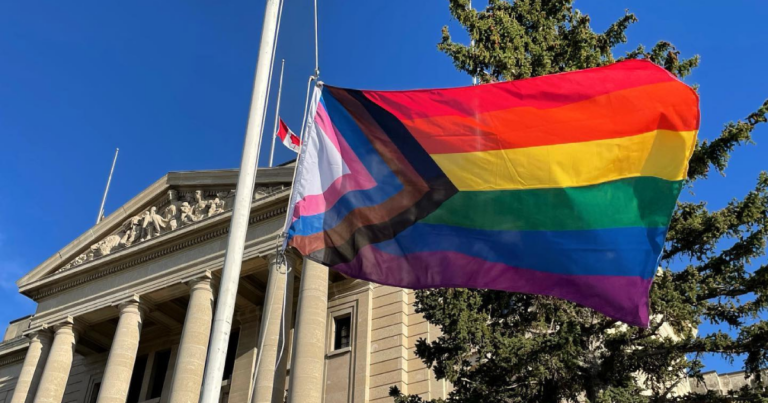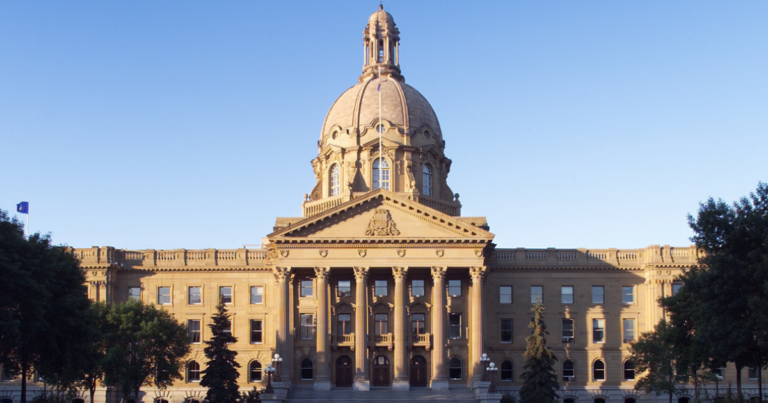
Alberta joins chorus calling for Liberals to cancel capital gains tax hike

Alberta is the latest voice in the growing opposition against the federal government’s proposed capital gains tax increase, urging the Liberals to reconsider the policy change.

Alberta Finance Minister Nate Horner sent a letter to his federal counterpart, Chrystia Freeland, warning her that the budget proposal would harm Canadians’ future standard of living. 

“Your proposed tax increase is also damaging and unfair to the many small business owners who planned for retirement and are relying on the assets they built up and held in their small businesses,” said Horner.

He urged Freeland to reconsider the fairness of such a tax increase on families’ savings, as they do not have a taxpayer-supported pension plan like the Liberal minister and her colleagues.

Canada’s largest business groups, along with Canadian CEOs and tech leaders, have pleaded with the feds to scrap their “ill-advised inclusion rate increase” that would cause “irreparable harm to the Canadian innovation economy,” to no avail. 

Finance Minister Chrystia Freeland announced plans alongside the 2024 federal budget to tax Canadian companies and individuals on two-thirds of their capital gains, increasing from 50%. Prime Minister Justin Trudeau subsequently defended the increase, saying it would generate $20 billion in funding for social programs.

Horner said that Alberta shares a sentiment felt by other provinces — frustration that they were not included in the decision-making process, despite the change affecting the shared federal-provincial tax base.

“Measures like these are forced upon provinces and undermine our pro-growth economic policies that seek to propel our whole country forward,” said Horner.

Alberta’s finance minister said the tax increase will amplify Canada’s failing productivity.

The Bank of Canada warned that low productivity would lead to further inflation before the tax increase. Canada’s productivity is already plummeting, falling from producing 88% of the value generated by the United States per hour in 1984 to 71% in 2022.

“(The tax increase) builds on the piling of federal policies harmful to investment. These policies are weakening our standing in the world and the standard of living of our people,” said Horner.

Not only has Canada’s standard of living decreased at an unprecedented rate compared to other countries in the post-war era, but the anger that Canadians feel towards government, economy, and policies reached an all-time high in May.

“As has been noted by the Canadian, Ontario, and Alberta Medical Associations, your tax increase also comes at a time when the Canadian healthcare system is under extreme pressure and our ability to attract and retain physicians is a serious challenge,” said Horner.

Healthcare leaders warned the federal government that this tax increase would drive doctors out of Canada. Canada already ranks last among wealthy nations for access to primary healthcare; additional outflow would further cement Canada at the bottom of the list.

Doctors are among the many professionals who incorporate their practices and use corporations to save for retirement instead of employer retirement or pension plans. These same doctors’ retirement plans contain assets subject to capital gains tax. 

“Raising taxes on these professionals will only exacerbate the crisis and put more financial strain on provincial governments,” said Horner.

Aaron Wudrick, director of the Macdonald-Laurier Institute’s domestic policy program, said that this tax increase punishes people who save instead of spending their money because if you spend your money now, you won’t get hit with the capital gains tax from it being invested and growing. 

“If you have apple seeds, the government is entitled to tax you on your seeds. They can take their share of the seeds. But, when you plant the seeds, and they grow into other things, they’re coming back for more. They’re coming back for another round of tax based on the same assets that you built up,” he said.

“On behalf of the government of Alberta, I am calling on you to cancel your proposed tax increase on capital gains. Canada needs policies that promote investment, innovation, and risk-taking, not new taxes that hinder productivity,” concluded Horner.
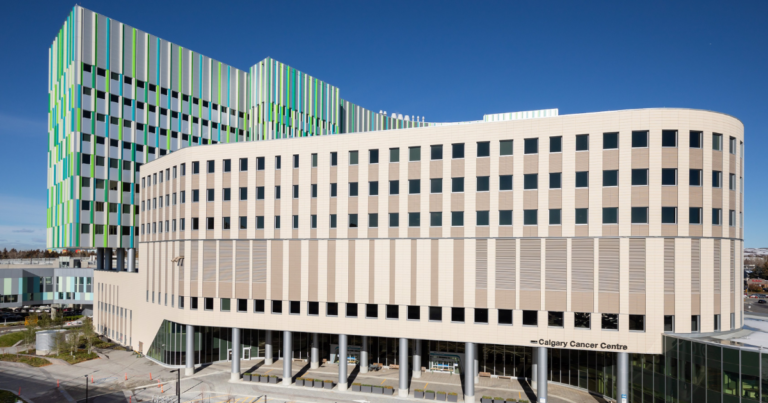
Alberta plan to overhaul provincial healthcare includes new cabinet roles

The Alberta government is paving the way for a complete overhaul of the province’s healthcare system and its plan includes new ministerial positions for specific healthcare branches. The province has proposed legislation to implement the healthcare system changes promised in November

The Health Statutes Amendment Act, Bill 22, intends to ensure that Albertans can find a primary care provider, receive urgent care without long waits, have access to continuing care options, and obtain mental health and addiction treatments.

If passed, the Health Statutes Amendment Act will transition Alberta Health Services to four sector-based provincial health agencies, including primary care, acute care, continuing care, and mental health and addiction. The changes aim to improve patient care and better support front-line healthcare workers, who will work in organizations focused on their specific areas of expertise. 

“The agencies will be responsible for delivering integrated health services, ensuring Albertans receive timely access to care, regardless of where they live,” said the Alberta government in a press release.

Social Services Minister Jason Nixon said increased oversight and collaboration will set a “strong foundation for a healthcare system that is better equipped to address the diverse needs of each of our communities.

Bill includes amendments to the Regional Health Authorities Act and the Health Information Act, neither of which have been updated since the 1990’s. The amendments involve renaming the Regional Health Authorities Act to the Provincial Health Agencies Act and eliminating outdated references to facilitate the transition from a single regional health authority to a unified, sector-specific provincial health system.

The act is intended to transition Alberta’s healthcare system from one regional health authority to an integrated system of sector-based provincial health agencies.

To support the amendments, 43 other acts are being amended; some amendments include replacing references of “regional health authority” with “provincial health agency” where applicable. 

The Health Statutes Amendment Act will establish roles for an oversight minister and sector ministers. The Minister of Health will become the oversight minister, responsible for implementing the strategic direction of the overall health system. While sector ministers will be responsible for establishing the strategic direction for the individual health services under their purview, they will need to align their duties with the strategic direction set by the oversight minister.

The sector minister for Recovery Alberta will be the Minister of Mental Health and Addiction. 

The oversight minister may establish additional health service sectors and designate responsible ministers for the new sectors.

The act includes provisions for setting up advisory councils, including new regional advisory councils and an Indigenous Advisory Council, to provide input and advice.

Also introduced in the Act are Health Services Delivery Organizations, which can be designated by sector ministers to deliver health services. This includes entities such as continuing care homes, surgical centres, and recovery centres.

Despite concerns raised in the past, the Alberta government assured that healthcare would remain publicly funded, ruling out any move towards privatization. 

Dan Williams, Minister of Mental Health and Addiction, emphasized the importance of prioritizing mental health and addiction services within the new framework. 

“Mental health and addiction have been growing issues within our society and need to be prioritized within our health care system,” said Williams. “Amid an addiction crisis, a refocused health system will allow for mental health and addiction services to get the attention, oversight, and focus they need.”

Staff transitioning from Alberta Health Services into new organizations are not expected to face job losses, and interruptions to employment or patient care are not anticipated. Unionized employees transferring to the new provincial health agencies will retain their existing collective agreements and bargaining processes. 

The bill will take effect in June if passed. If the Health Statutes Amendment Act is passed, Recovery Alberta, the mental health and addiction provincial agency, will begin operating in the summer of 2024. The primary care, acute care, and continuing care provincial health agencies will be established in the fall.

Alberta Health Services will continue to operate as a regional health authority during the transition period before focusing on acute care services in fall 2024.

The Faulkner Show | The truth about “safe supply” – Interview with Dr. Sharon Koivu

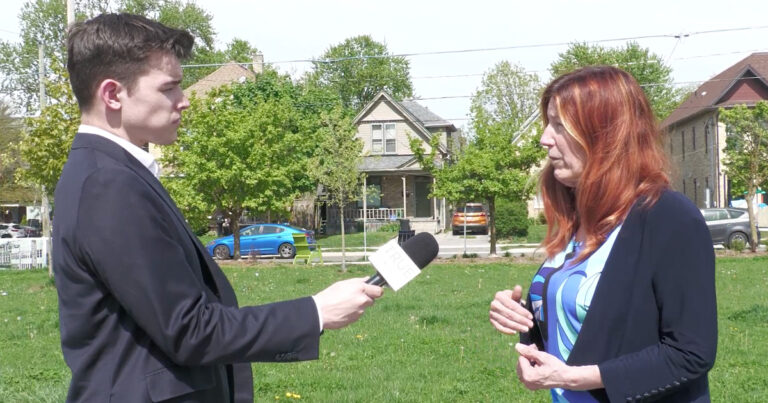
London based addictions doctor Sharon Koivu speaks with Harrison Faulkner in London, Ontario about the real life harms and dangers of the federal government’s so-called “safe supply” approach to the drug crisis. This policy involves prescribing free heroin-alternative opioids known as hydromorphone. As Koivu explains, this free drug is being diverted on the street and sold in exchange for fentanyl as well as triggering infections in users who aren’t taking the drugs properly.

Tune in to the latest episode of The Faulkner Show with Harrison Faulkner!

To watch the full episode of Ratio’d from London, Ontario: https://www.youtube.com/watch?v=tzlvuQ90Z_A

Olivia Chow refuses to attend Israeli flag-raising ceremony calling it “divisive”

Toronto Mayor Olivia Chow won’t support Israel by refusing to attend the City Hall flag-raising ceremony marking the nation’s anniversary of independence.

A representative of the City of Toronto told True North in an email that the Israeli flag has been raised at City Hall for over a decade.

In an email to a constituent, a representative from Chow’s office clarified that the mayor has no power to decide whether or not the flag was raised.

“The mayor did not decide to fly the flag and does not have the authority to approve or deny flag-raising requests,” the representative said. “The mayor will not attend the flag raising. She believes raising it is divisive at this time and understands the deep pain and anguish felt by many in the community.”

The city has a flag-raising program where non-profits can request that a flag be raised on the “courtesy flag pole” on the City Hall roof. Toronto approved one such request from the Consulate General of Israel to raise the Israeli flag, as part of its observance of Israel’s Independence Day.

May 14 is the day Israeli-Canadians celebrate Yom Ha’atzmaut, marking the anniversary of Israel’s declaration of independence in 1948.

Independent MP Kevin Vuong attended the flag-raising ceremony and criticized the mayor’s absence.

“While Mayor Olivia Chow hides from the mob, let me be clear: Toronto stands with Israel and the Jews who call our city home,” he said on X. “As two democracies, Canada and Israel must stand together.”

On Saturday night, days before the mayor’s refusal, the logo of a militant branch of Hamas, the Al Qassam Brigades, was projected onto the University of Toronto’s medical sciences building from the encampment while protesters whistled in approval.

Salman Sima, a survivor of torture at the hands of the Iranian state,  and a frequent pro-Israel protester, was appalled at the mayor’s decision at a time when he felt Jewish Torontonians needed support.

“This sent a message to the jihadist and anti-semitic mob that if you intimidate us, we are afraid, and we cave,” Sima told True North in an interview. “This was a cowardly message, and by not participating in the raising-the-flag ceremony…it’s going to encourage the jihadist crowd to break the law more and more, unfortunately.”

At a New Year’s skating event at Nathan Philips Square in January, Chow told protesters she was on their side as they disrupted her speech with calls for a ceasefire.

Prior to that, she called for a ceasefire between Israel and Hamas along with the release of all the hostages taken by Hamas a month in Hamas’ Oct. 7 attack on Israel.

This was Israel’s first independence day since the attack.

“It was at the beginning of the conflict. (Chow) called for a ceasefire,” Sima said. “A ceasefire in the Middle East is an international issue, and it’s not the mayor of Toronto’s job. (Calling for) ceasefire is a pro-Hamas position which means that we give more time and more opportunity to Hamas terrorists to rebuild themselves.”

Conversely, Sima thinks that it is the job of the mayor to be at an event which affirms Israel’s right to exist to show support to the Jewish community in Toronto.

“Raising the flag of Israel is special for the Jewish community. And it’s important for standing with the Jewish community against antisemitism,” he said. “Antisemitism is a hate crime, and the Toronto Mayor failed to stand against hate…by not participating in this traditional ceremony.”

In August last year, Chow stated on X that the Pride flag was an “important symbol of hope and community.” Recognizing how that flag could make those identifying with it feel safe, welcome and accepted.

Taxpayers paid $224 per day to accommodate illegal border crossers

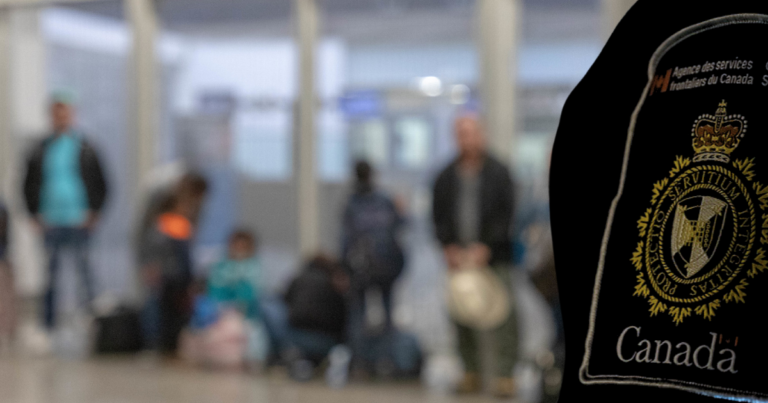
New documents reveal that asylum claimants who are crossing illegally into Canada are cashing in on hefty daily stipends at the expense of taxpayers. 

In a query raised by Conservative MP Lianne Rood, the Liberal government admitted that taxpayers were paying $224 per day for the sustenance and accommodation of certain individuals seeking asylum who have unlawfully entered Canada.

Rood published the government response on social media detailing the funds Ottawa has set aside for “goods and services” for asylum seekers who are still awaiting immigration review. 

The figures indicate that the average daily cost for accommodation is $140 per room, with an additional $84 set aside for food per person, leading to a total daily expenditure of $224 per person.

“The NDP-Liberal government is giving ten times the benefits to illegal border jumpers than it is giving to help Canadian seniors! Disgraceful!” Rood commented on X. 

This information has come to light during a period of increased refugee claims in Canada, with Immigration, Refugees, and Citizenship Canada reporting 156,032 cases being processed. 

Not all claimants are housed within IRCC-managed facilities, but the significant numbers highlight the issues brought about by the influx of asylum seekers.

In response to the rising need for temporary housing, the Liberals launched the Interim Housing Assistance Program, which provides shelter to the growing number of asylum seekers. 

As of November, Ottawa funded temporary accommodation for 7,000 people across Canada, using 3,800 rooms costing taxpayers $557 million per year.

Rood’s query was specifically aimed at a group of asylum seekers whom the governments call “irregular border crossers,” which refers to those who illegally crossed the border into Canada to claim asylum.

According to IRCC data, the number of pending cases by illegal border crossers reached 42,387 by the end of last year, with a significant increase of 2,145 claims by year-end.

Despite the shutdown of Roxham Road, a frequently used illegal border crossing point into Quebec, in March 2023, the influx of asylum seekers has continued, raising questions about the ability of immigration authorities to process claims efficiently. 

Over the years, IRCC data shows that while 39,643 illegal border crossers have received official refugee status, 22,611 claims were denied, withdrawn, or abandoned.

YouTuber who interviewed Trudeau pushes back after PM’s capital gains tax hike defence

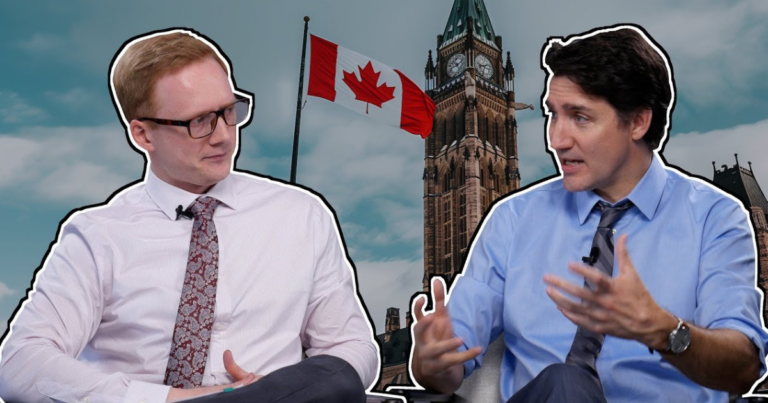
Days after Justin Trudeau promoted an interview of himself with finance YouTuber “The Plain Bagel,” the host felt compelled to correct the Prime Minister’s explainer video of his capital gains tax hike.

Trudeau said Monday in a video posted to X that his tax increase would only affect the wealthiest in Canadian society.

“The very richest people are going to profit a little less off their assets,” Trudeau said. “Only 0.13% of Canadians, to be exact. These are people who have an average income of $1.4 million a year, and they’re mostly in their 60s or older.”

Instead of taxing people who make $250,000 or more in capital gains for half of their income, he will make them “pay their fair share” by taking two-thirds.However, Richard Coffin, a self-proclaimed “finance nerd” who runs The Plain Bagel, pointed out a discrepancy in Trudeau’s explanation. The YouTuber noted that even the Liberals’ budget states the tax will not solely target the top 0.13% of Canadian earners.

“Yes, this does primarily target wealthier individuals with the $250,000 threshold, but there are cracks where the middle class can fall through,” Coffin said. “For one, the 0.13% (according to the budget) is how many people are affected per year, not how many people will ever see an impact. Estate transfers are one area someone outside the 1% could see an impact.”
Coffin also pointed out that Trudeau’s figure doesn’t include beneficiaries of trusts and corporations who are also captured by the tax increase without the $250,000 threshold.

“Self-employed individuals who have used corporations for retirement savings will likewise be impacted. That includes doctors, but also electricians, plumbers, and other individuals who may need to incorporate to do their job,” he said.

According to the 2024 federal budget, 307,000 corporations – 12.6% of all corporations in Canada – would be taxed 66.7% on their capital gains.

“That’s going to impact the people who own those corporations in addition to that 0.13%, and that amount is only who’s impacted in any given year. Not who will see an impact at some point over their lifetime, which would obviously be much higher,” Coffin said in a video explaining the capital gains tax.

He raised concerns over the inclusion of trusts in the tax hike.

“This really seems to punish using the trust structure, and there are going to be unintended consequences of that, such as with qualified disability trusts,” he said. “They’re naturally intended for beneficiaries with a disability, so if there’s no carve out or change for these special types of trusts. These people who aren’t inherently high-income earners could see a negative impact from this higher tax inclusion rate.”

Trudeau appears shocked in his video at all the press attention his tax has attracted.

“The conversation always seems to be dominated by the richest people in society. This is a tax policy change that impacts less than 1% of people. But look at how much attention it’s getting,” Trudeau said, with a backdrop of media headlines highlighting the flaws in the tax.

Franco Terrazzano, the federal director of the Canadian Taxpayers Federation, told True North in an email that the tax will impact more than those it directly takes from.

“The capital gains tax hike will encourage businesses to leave Canada and take jobs and tax revenues with them. It will make it harder for Canada to retain talent. It could also make homes more expensive by making people decide not to sell their properties and making developers decide not to invest their capital in Canada,” Terrazzano said.

He warned that with $535 billion of spending in the federal budget, the federal government will “blow through the extra cash in less than a week.”

“Trudeau’s tax hike won’t make life better for Canadians, it won’t make life more affordable, and it won’t fix the government’s finances,” he said. “The additional tax revenue will encourage Trudeau to blow more taxpayer cash. The government doesn’t need more money from Canadians. It needs to stop wasting so much and cut taxes.”
The capital gains tax hike will take effect June 25.

Ontario to permanently strip repeat car thieves of driver’s licences

Proposed changes to Ontario’s Highway Traffic Act will see repeat auto thieves having their licences revoked for life, in an attempt to quash the auto theft crisis. 

Ontario Transportation Minister Prabmeet Sarkaria and Solicitor General Michael Kerzner made the announcement during a press conference at an Ontario Provincial Police detachment in Toronto on Tuesday. 

The Ontario government is seeking a 10-year driver’s licence suspension as penalty for a first conviction of auto theft if it involved violence, force, use of a weapon or for the purpose of financial gain. 

A second offence could lead to a 15-year suspension and a third could result in the convicted having their licence revoked for life. 

“Car theft is a cowardly and often violent crime that can traumatize victims and communities who experience it,” said Sarkaria in a government release. “Under the leadership of Premier Ford, our government is sending a clear message to those who commit these crimes and using every tool in our toolbox to keep them off our streets.”

The legislation is to be tabled on Thursday, and will also include provisions for harsher penalties for those caught street racing. 

A first street racing conviction could come with an automatic licence suspension of at least one year. 

Similarly to the auto theft model, a third conviction could result in a driver losing their licence indefinitely.

“In the simplest of terms, speed kills. All too often we see drivers disobey the speed limits across the province and this is unacceptable, especially for the diligent drivers that follow the law,” said Kerzner at the conference.

According to the provincial government, a vehicle is stolen every 14 minutes in Ontario. In Toronto, it was every 40 minutes last year. 

Toronto carjackings have increased this year. 

According to Toronto Police Chief Myron Demkiw, carjackings in the first few months of this year doubled what they were over the same period in 2023. 

Additionally, the number of carjackings that involved the thief breaking into the owner’s  home to steal their car has already surpassed the entirety of those incidents from last year. 

A constable with Toronto Police Services caused a stir over comments made during a community meeting in March, telling residents to leave their keys accessible to auto thieves as a means to prevent them from being harmed in a home invasion.

The police force released a statement later to clarify that while Ricciardi’s comments were well meaning and in the name of public safety, there were better alternatives to protect one’s self from a home invasion. 

The auto theft crisis is not limited to Ontario, with a vehicle being stolen every five minutes in Canada. 

An ongoing multi-jurisdictional investigation into Canada’s auto theft crisis launched in December announced the recovery of 598 stolen vehicles last month.

Auto theft claims have skyrocketed since 2020, up 319% nationally, which prompted the OPP’s Auto Theft and Towing team to partner up with the Canada Border Service Agency to recover vehicles and intercept them before they’re illegally exported out of the country. 

The ongoing investigation called “Project Vector,” is being carried out in collaboration with the Sûreté du Quèbec, Montreal Police, and the Équité Association.

The Daily Brief | Should Jagmeet Singh’s brother be investigated?

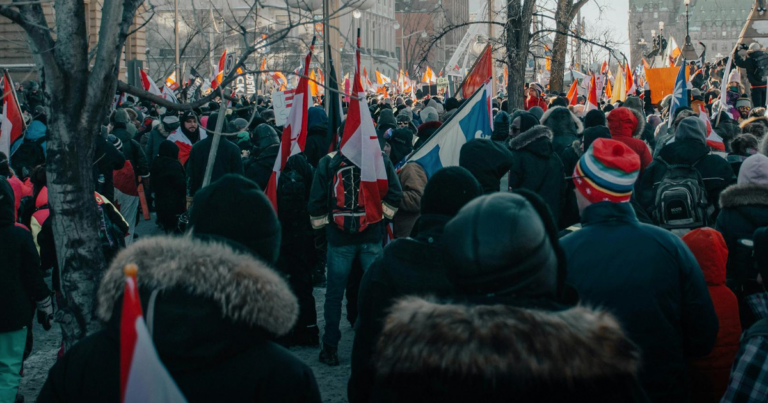
An RCMP review of the federal police response to the 2022 Freedom Convoy reveals that officers were uncomfortable with the unprecedented invocation of the Emergencies Act and felt immense pressure from government officials.

Plus, Pierre Poilievre is calling for an investigation into Jagmeet Singh’s brother, Gurratan Singh, for connection to a firm lobbying for Metro.

And Edmonton police dismantle an anti-Israel encampment at the University of Alberta.

Tune into The Daily Brief with Cosmin Dzsurdzsa and Noah Jarvis!

SUBSCRIBE TO THE DAILY BRIEF

The Andrew Lawton Show | Liberals misrepresented police intel to justify Emergencies Act

The RCMP’s long-awaited review of its response to the Freedom Convoy is out, showing that officers were concerned they had been politicized by the federal government’s handling of the protest. Crucially, the RCMP has called out the government for “misrepresenting” police information, or claiming information came from the police when it didn’t. True North’s Andrew Lawton weighs in.

Also, the Ontario government is cracking down on cell phone use in classrooms, but education advocates say the ban doesn’t go far enough. Fraser Institute researcher Paige MacPherson joins to discuss.

Plus, young Canadians are less likely to couple up and the ones that do are having fewer and fewer children. Dr. Tim Sargent of the Centre for the Study of Living Standards joins to unpack Canada’s fertility crisis.

SUBSCRIBE TO THE ANDREW LAWTON SHOW

LGBTQ group bans members of Saskatchewan gov from pride events

Queen City Pride has cancelled Saskatchewan’s annual pride flag-raising ceremony at the provincial legislature and has said members of the Saskatchewan Party were not welcome at pride month events. 

“We do not believe the current Saskatchewan government is our ally, and we do not believe it would be appropriate to allow them to take part in such an important event for our community,” said the organization in a news release on Monday.

Additionally, the LGBTQ group banned Saskatchewan Party members from participating in all pride month celebrations as a punishment for the government’s implementation of Bill 137, a pronoun consent law which came into effect last October.

The law requires parents to be notified if children under the age of 16 choose to go by a different pronoun while at school. 

The provincial government also invoked the notwithstanding clause after LGBTQ advocacy groups challenged the law in court on Charter grounds. 

According to Minister of Crown Investments Corporation Dustin Duncan, the bill is ultimately about giving parents more say over their children’s education. 

“It is the government’s belief that parents are partners in their children’s education,” said Duncan. 

However, Queen City Pride called the bill “incredibly dangerous.”

“We want to ensure all members of our community, especially our youth that have been targeted recently, feel safe, comfortable, and supported while at any of our festival activities,” the release said.

According to the release, Saskatchewan Party members will be prohibited from attending the pride month proclamation as well as parade entry,  

“We will not allow them to masquerade as allies and supporters, then put our community in danger for the other eleven months of the year,” the release continued. “We choose to be safe and show that love is love.”

Some Saskatchewan Party members have previously taken part in the Queen City Pride Festival and the party applied to participate in pride events in Regina and Saskatoon this year.

Premier Scott Moe attended the Saskatoon pride parade four years ago. 

The University of Regina Pride Centre for Sexuality and Gender Diversity filed an action against the Government of Saskatchewan last August over its initial policy on the issue, formerly known as, “Use of Preferred First Name and Pronouns by Students.” 

UR Pride argued that Saskatchewan’s policy infringed on sections 7 and 15 of the Canadian Charter of Rights and Freedoms, leading to Justice Michael Megaw of the Court of King’s Bench stopping the policy’s implementation until a final judgment on the constitutional debate was reached.

Moe’s government responded by invoking the notwithstanding clause, altering the original policy UR Pride was challenging. 

UR Pride sought to update its legal challenge to reflect these changes and introduce a claim under section 12 of the Charter. Despite the government’s argument that the court lacked jurisdiction and that the case was moot because of the new law and the notwithstanding clause, Megaw decided on February 16 that the court still had the authority to hear the case. 

The Ministers of Justice and Attorneys General of Saskatchewan and Alberta have since joined forces to protect parental consent when it comes to pronoun use by children at schools. 

The pair of ministers issued a joint statement on Tuesday, indicating Alberta’s intent to intervene in the Parents’ Bill of Rights case before the Saskatchewan Court of Appeal.

“Saskatchewan and Alberta agree that the key figures in children’s lives are their parents, and our provinces are both committed to supporting families and children so that they can work through unique needs together,” said the Minister of Justice and Attorney General for Alberta, Mickey Amery, and his counterpart in Saskatchewan, Bronwyn Eyre in their statement.

“Notifying parents and requiring their consent before a child’s name or pronouns can be changed in schools, and before classroom discussions about gender identity and other sensitive subjects occur, ensures that the parent-child relationship is respected and paramount,” added the joint statement.