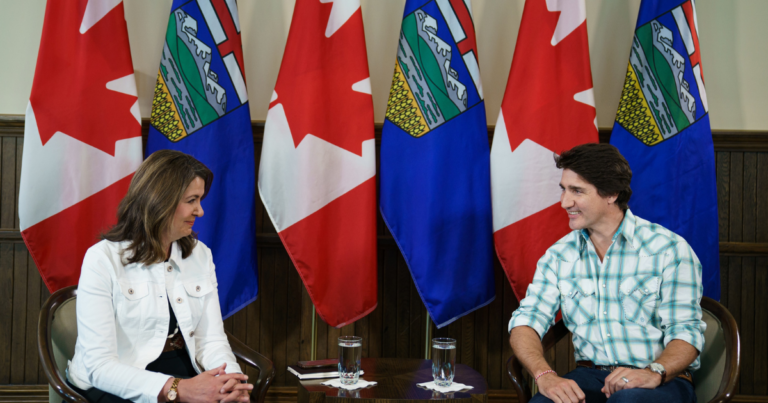
Today on the Alberta Roundup with Rachel Emmanuel, Rachel interviews Alberta Mental Health and Addictions Minister Dan Williams about how Alberta will be impacted by BC’s recent bid to recriminalize drugs in public spaces.
Rachel also asks the minister about demand for Alberta’s recovery oriented system of care, and how the COVID-19 pandemic contributed to the current addictions crisis.
The minister also says the province’s plan to move mental health and addictions services from Alberta Health Services to Recovery Alberta is set to take effect in July and explains why it’s a good thing for the province.
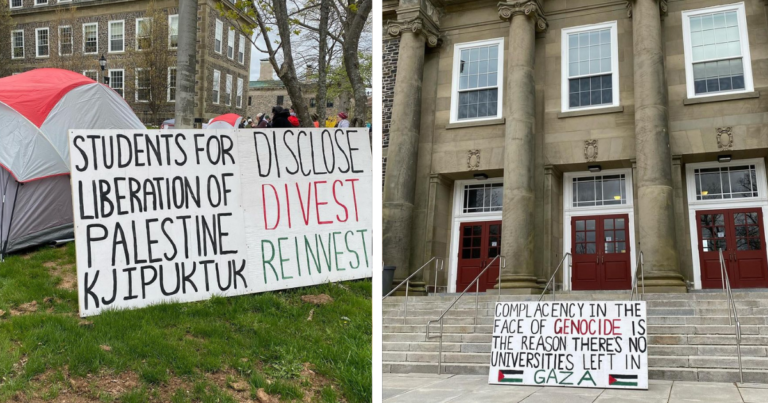
Anti-Israel student protesters in Nova Scotia are demanding free tuition and housing, DEI training on “queerness, Indigeneity, and anticolonialism” and a Palestinian-majority council to review Judaism courses.
These are just some of the demands made by student groups from four of the maritime province’s universities.
Anti-Israel students at the Nova Scotia College of Art and Design (NSCAD) have issued a list of 12 demands to their institution. Some of the demands are related to the conflict in the Middle East, such as calls for disclosure of investments and divestment from Israel, while other demands are not.
Student activists also want to see the creation of a Palestinian art history course, free tuition and housing, “anti-oppression training” focused on “queerness, Indigeneity, and anticolonialism,” the resignation of the university president and a student takeover of the board of governors.
Student organizers did not respond to a request from True North on what free tuition and housing have to do with the conflict in the Middle East.
Anti-Israel students at Saint Mary’s University are also making several demands that are outside the scope of the current conflict.
In addition to divestment from Israel, students want to see a boycott of “western imperialism” and a council controlled by Palestinians to review courses, including those on Judaism. They also want the resignation of their president and the resignation of those with “ties to the Israeli project” from the school’s board of governors.
“It is our obligation as students to stand in solidarity with the global student intifada for a free Palestine and for all people globally to be liberated from settler colonialism and western imperialism,” activists said.
Saint Mary’s student activists also did not respond to a request for comment
Meanwhile, at the University of King’s College, students there have also made demands to their school, which include never flying the Canadian flag again on campus while allowing the Palestinian flag to be flown.
As for Dalhousie University, students there, joined by peers from the three other universities, have set up an anti-Israel encampment. The Coast reports that activists have named their encampment site “Al Zeitoun University,” which means “olive” in Arabic.
In a statement posted to social media, student activists called on the four universities “to immediately disclose and divest from any investments that sustain settler-colonial projects, including the Zionist state known as Israel.”
Organizers also said that many of them are “settlers on Mi’kma’ki, the unceded and ancestral territory of the Mi’kmaq people.”
“We have a responsibility to this land, its people, and the treaties,” the students added. “We must forge a relationship that actively fights against the colonial project. We refuse to accept the structural conditions imposed by the system of settler-colonialism in effect to this day.”
In a statement, Dalhousie University called the encampment “peaceful” and said it is “committed to the safety and well-being of our entire community and, in alignment with our mission as a learning institution, to maintaining open lines of communication through respectful, non-violent dialogue and debate — even, and especially, when those conversations are hard.”
Dalhousie added that they “are monitoring the peaceful protest and engaging with its organizers and participants with those principles in mind.”
An Israeli family is outraged after a girl was savagely attacked in what they are calling an incident of antisemitic hate.
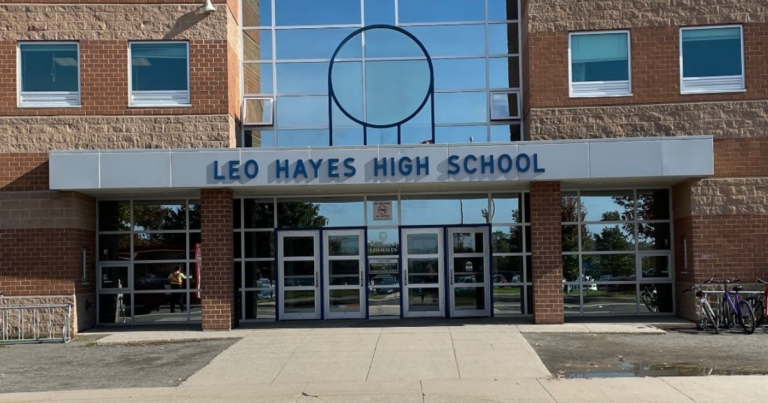
A 14-year-old Israeli student named Shaked Tsurkan was brutally attacked near her Fredericton school, Leo Hayes High School, on Apr. 30, 2024. Her father deemed the attack as “not just a simple fight” but an “antisemitic attack.”
The attack, which took place during the lunch hour, was captured on video by other classmates who gathered to watch.
The video shows Tsurkan being jumped from behind by a fellow student, thrown to the ground, and repeatedly punched. The attacker, identified by Tsurkan as an older female Muslim student, was wearing a pink hoodie that Tsurkan said allegedly hid her hijab.
During the attack, the person recording the video, likely a student, said, “This can’t be within the religion guidelines.”
“We are here in Canada. It doesn’t matter what’s going on there, like, we’re here. We are teenagers. We should just have fun. It’s not our fault, what’s going on,” Tsurkan told interviewer Ellin Bessner.
The 14-year-old moved to New Brunswick a year and a half ago from Israel. The attack occurred after months of being targeted for being Israeli after she started grade nine at Leo Hayes High School in Sep. 2023, just weeks before Hamas’ attack on Israel on Oct. 7.
Tsurkan’s attack left her with two black eyes, multiple cuts, scratches, and bruises, and possibly a concussion.
During the Canadian Jewish News interview, Tsurkan’s mother, Michal, spoke about the strength it took for her daughter to recount the event.
“It requires a lot of strength because of the blows that she suffered. I’ve never seen anything like it in my life. It was like boxing blows when I took her to the clinic a few days later because her eyes were swollen. Now the bruises around her eyes are all different colours,” her mother said.
The 14-year-old said she was given safety instructions to follow when she returned to school. She was told to use the teacher’s washroom, never to walk alone, and never to leave the building during the day. She said that the attacker was suspended for five days.
“We came because we wanted a better life for our children — to learn English, to see the world, and to live without safe rooms. It was a big dream,” said Michal.
Tsurkan said she only knows one other Jewish student in her school. She feels safe much of the time, thanks to her best friend being Muslim, dissuading others from doing anything when they are together.
The 14-year-old student was headed to the gas station with her boyfriend, not her best friend, to get a drink when the other student attacked her. Tsurkan tried to de-escalate and disengage. The student who attacked Tsurkan was allegedly yelling things at her, “I’ll find you in the washroom. I will do this and this to you. I will kill you,” she allegedly said.
While the other student was yelling at Tsurkan, one of the attacker’s friends allegedly tried to run Tsurkan over with his car. She jumped to the side, and the attack began shortly afterwards.
“I want the school to understand that it’s not okay because they are saying it was my fault that I went outside, and I should not have gone outside. They are blaming me about what happened,” said Tsurkan.
“It’s not my fault what’s happening right now in Gaza,” she added.
Tsurkan said that this isn’t a personal “beef” but that she thinks the other student is blaming her for the Israel-Palestine conflict as she knows that she is from Israel.
“I feel like she took it as revenge for what’s going on. She’s really pro-Palestinian. And I never said anything about what’s going on,” said Tsurkan.
The child’s mother said that the school is making this out to have nothing to do with antisemitism, claiming it to be a “run-of-the-mill high school dispute.”
“The school doesn’t want problems. They want everything to be kept quiet. Maybe they’re afraid of the larger Arab population who would cause problems. They don’t want us to talk about it. They want us to drop it. But we won’t stay quiet. We can’t. We don’t accept it,” said Michal.
Tsurkan’s father, Eli, said he’s not seeking punishment but a solution.
“It’s not a simple fight. This is some problem about racism. And, in general, it’s (an) antisemitic attack, not just a simple fight between students. If it was, I wouldn’t be so worried,” he said.
During the video of the attack, an adult stood idly by watching it occur. After nearly a minute of Tsurkan being pummelled on the ground, he finally stepped in and said, “That’s enough.”
He turned to the victim—Tsurkan—and asked, “Were you assaulting her?” He asked this despite Tsurkan spending most of the time on her back in a primarily defensive position.
“The reaction by the teacher at the end of this video is revolting. I can’t vouch for any other claims made here but an adult reacting like that is shameful,” said Brian Lilley of the Toronto Sun.
This is disgusting to see and a full investigation into the possibility of an #antisemitic hate crime must happen. Additionally, the adult who stood watching and then tried to falsely frame it needs to be dealt with as an accomplice @CityFredPolice@LawfareProjecthttps://t.co/qB4V2Td6ZN
Ellin Bessner, host of the CJN podcast, said that Fredericton’s Jewish community is saying the incident should be deemed an antisemitic hate crime by the school and the police.
The Fredericton Police said their Major Crime Unit is investigating the matter, working closely with all parties involved. The police are unable to discuss anything further, given the active investigation.
The investigation is ongoing and no charges have been pressed as of Wednesday.
True North reached out to Leo Hayes High School but received no reply.
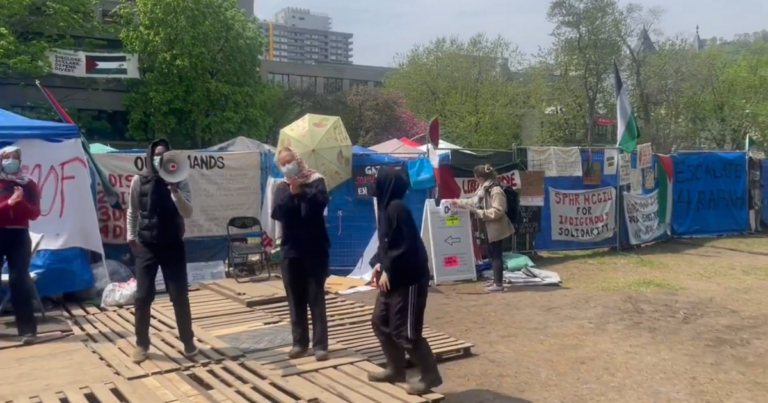
McGill University’s request for an injunction to dismantle an encampment of anti-Israel activists from its campus was rejected by a Quebec Superior Court judge.
Justice Marc St-Pierre issued the decision Wednesday, ruling that the university failed to justify the urgent need to remove the camp.
The injunction request was filed by McGill University on Monday, asking St-Pierre to authorize the dismantling of the camp.
McGill’s lawyers argued that the encampment was unsafe and posed a risk of escalating tensions on school grounds, which prevented the university from holding its convocation ceremonies at its regular outdoor location.
St-Pierre dismissed the arguments however, ruling that no serious or violent incident had occurred at the encampment since its onset and even confrontation with counter-protesters have remained peaceful.
Additionally, he said that McGill had already relocated its convocation ceremony from its longstanding location where the encampment is.
Negotiations between university authorities and the protesters have been stagnant thus far, as the activists demand McGill divest from any companies with ties to Israel and cut ties with all Israeli academic institutions.
There are currently dozens of similar encampments on university campuses across North America protesting on behalf of Gaza.
According to CBC News, St-Pierre questioned Jacques Darche, one of the university’s lawyers, about its claim that there was an “urgent” need to remove the encampment on Monday during the injunction request.
St-Pierre argued that the university’s claim that convocation plans were “urgent” paled in comparison to the rights of the protestors who so far had been demonstrating peacefully.
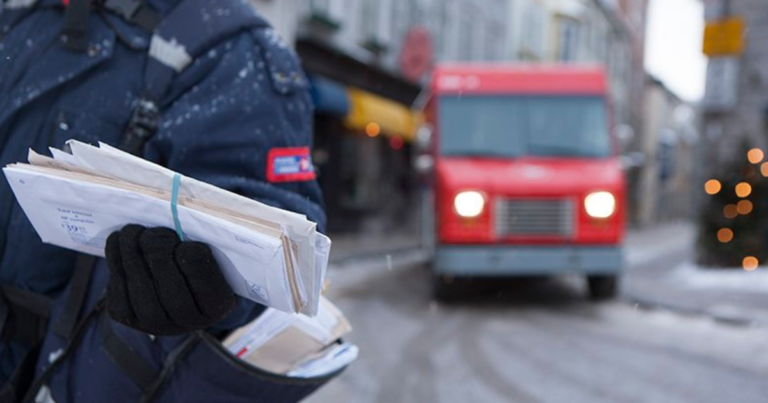
Canada Post remote employees who were suspended without pay for refusing to get the corporation’s mandatory COVID-19 vaccine received good news this week, as a labour arbitrator ruled that the mandate was unreasonable.
The case was brought by the Union of Postal Communications Employees.
“Canada Post has not established a compelling workplace health and safety interest in mandating vaccines for employees who worked exclusively remotely, where there was no reasonable prospect that in-person work would be required of them,” arbitrator Michelle Flaherty wrote in her ruling.
Flaherty’s decision could set a precedent for future outcomes amongst the extensive grievances filed in 2021 by the Public Service Alliance of Canada against the Trudeau government’s mandatory vaccine policy, as the majority of its members worked remotely.
The postal union wants the government to be forced to compensate all unvaccinated members suspended without pay for what it argues was an “unreasonable” use of the vaccine mandate for public servants.
Canada Post’s vaccine mandate took effect in October 2021, around the same time as the rest of the federal public service, which required proof of vaccination from all employees that they had received two doses of the MRNA vaccine or be punished with unpaid leave.
According to the ruling, the policy’s purpose was to limit the risk of COVID-19 transmission in the workplace, but Flaherty said that remote employees had no reasonable chance of seeing their workplace colleagues because they worked from home.
“These employees had no reasonable prospect of coming into physical contact with the workplace and I cannot conclude that the primary purpose of the (mandatory vaccination practice) was advanced by requiring their vaccination,” she added.
Flaherty also rejected Canada Post’s argument that it had an interest in providing employees’ with a safe and healthy workplace, primarily by getting them to take two COVID-19 vaccine doses.
“In essence, the Employer’s position is that it can prescribe activities, including medical procedures like vaccination, simply because this could increase the likelihood an employee will be available to work,” she wrote.
“To the extent that any such interest exists, this is outweighed by the important interests at stake for the employees in question, including their privacy and their financial and economic interest in ongoing paid employment.”
Union of Postal Communications Employees did not argue against the efficacy of the COVID-19 vaccine to stop transmission, nor did it argue against applying the mandate to those of its 1,500 Canada Post employees that it represents who were present in the workplace.
Upon the mandate coming into effect, 37 UPCE members were suspended without pay for refusing to confirm whether or not they had received two doses of the vaccine, reported the National Post.
The union also argued that it was not reasonable for Canada Post to suspend certain employees who could have alternatively worked from home that refused to get vaccinated. However, Flaherty dismissed that argument on the basis that management had the right to decide where employees do their jobs, whether it be in-office or remote.
“The Employer is not required to accommodate unvaccinated employees so they can work remotely. There is no requirement to adjust an unvaccinated employee’s tasks or to assign parts of their work to other employees. It was not reasonable to expect the Employer to do so,” she wrote.
However, she also dismissed Canada Post’s argument that it was unable to determine which unvaccinated employees were exclusively working remotely to allow for exemptions.
The ruling, among the first to uphold a federal public service union’s grievance against the government’s vaccine mandate, leaves it up to the parties involved to negotiate how Flaherty’s decision will be implemented regarding compensation for those whom the arbitrator found to be unreasonably suspended.
Prime Minister Justin Trudeau tried to deflect a feisty question from a reporter wondering why he’s still there when he and his party are so dismally unpopular in the polls despite throwing everything at the wall to turn things around. He insists he is delivering for Canadians and isn’t the problem. True North’s Andrew Lawton weighs in.
With auto thefts at an all-time high, Ontario is moving to revoke driver’s licences from repeat car thieves. Criminal lawyer Ari Goldkind joins to discuss.
Plus, Alberta under Premier Danielle Smith has put its own sovereignty and jurisdiction front and centre in a way the province hasn’t in recent memory. Professor Barry Cooper, one of the architects of the province’s sovereignty act, joins to discuss Alberta’s present and future place in Confederation, which he expands on in a new essay for C2C Journal.
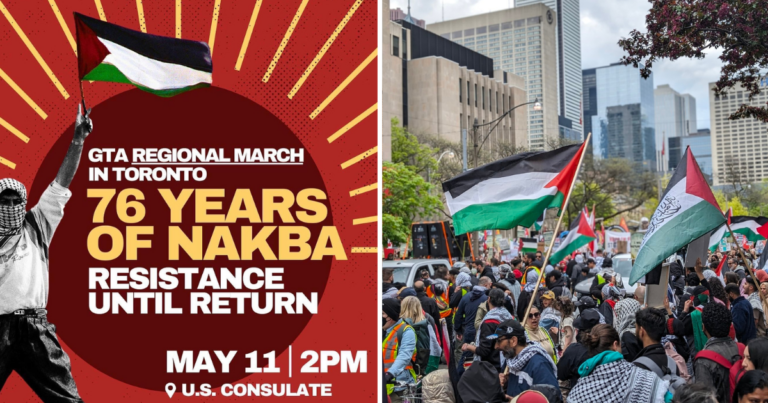
Thousands of Hamas sycophants gathered in Toronto this past weekend (and tens of thousands more in other cities around the world) to whine about the ‘Nakba.’
Nakba Day is officially May 15, but that doesn’t stop this yarn from being spun at every opportunity.
Frankly, this entire Nakba narrative is old. So let’s debunk it, again, shall we?
Palestinian activists describe the Nakba as the mass displacement and dispossession of Palestinian people during the Arab-Israeli War, which was immediately waged by Arab countries after Israel declared independence.
The Nakba was not the catastrophe of ethnic cleansing and violence against Palestinians the pro-Hamas mob purport it to be. The Nakba was the Arabs losing a war they started — in the most humiliating way.
Since this important history is not part of most any school’s curriculum, here’s some much-needed education — with the simplest explanation:
On May 14, 1948, Israel declared independence. Immediately following that declaration, Egypt, Iraq, Jordan, Lebanon, Syria, and Saudi Arabia waged a genocidal war against the new Jewish state.
Their plan: the complete and utter annihilation of Israel and the Jewish people. Israel had no army and few weapons. Adversaries ambushed them from all directions. While the United States and United Kingdom prevented Israel from getting arms, the Brits trained and armed the Arabs.
Against all odds, the tiny and unprepared Israel defeated six trained and well-armed armies.
It stands as one of the greatest military humiliations in history.
And the Arabs and Palestinians repeated similar self-inflicted humiliations, most notably in 1967 and again in 1973.
If you want to talk about a real Nakba, then talk about the one million Jews ethnically cleansed from Arab countries. Those Jews were forced to flee, after murders, rapes, and pogroms. Generations of their wealth, history, and places of worship left behind.
No refugee status. No United Nations cheque every month for seven generations. No “right of return.”
Oh, and why is 20 per cent of Israel’s population Arab-Israeli?
Well, as part of that 1948 war, Arab leaders orderedArabs on Israeli land to leave their homes. They promised them they could return home after they exterminated the Jews.
Israelis pleaded with the Arabs not to listen.
“We are peace-loving people,” the Israelis published widely, inviting the Arabs to stay. “There is no cause for fear which others try to instill in you.”
The ones who fled went to various refugee camps throughout the Arab states. Their living conditions were poor and the Arab states did not grant them any rights.
Israel offered to take the refugees back. But nope! They refused to live amongst the Jews.
The 200,000 Arabs who did not leave remain today as part of the Arab-Israeli population that has flourished to two million. Their rights are equal to those of Jewish-Israelis.
The Nakba was never a catastrophe dealt by Israel to Arabs; it was always a self-inflicted embarrassment.
This is not taught to Arab or Palestinian children in schools because it’s humiliating to their people.
But why isn’t this important piece of history taught in schools everywhere else around the world? Too many schools in Canada, for instance, allow this propaganda to be a part of their classroom studies.
And from a marketing perspective, this propaganda is well-positioned to be accepted by people who don’t know any better because they never received this education in any history class.
The word “Nakba” is also cleverly wielded.
A non-English word, it acts as a mysterious, yet symbolic placeholder for whatever trauma your mind can conjure. The ambiguity gives it power. The unfamiliarity of its language and culture gives it a sense of empathetic authenticity.
You want it to be real, so you can demonstrate your empathy for its cause.
Now, if you happen to encounter someone who doesn’t absorb facts, let’s break this down again — in the absolute simplest way possible:
The Nakba was the Arabs’ effort to colonize another country, genocide its people, lose a brutal war they started, and then whine about it to the world, forevermore.
Essentially, Nakba is also the biggest scam in the history of humankind. Now, in 2024, history repeats itself — yet again.
Which also means Israel will emerge victorious again.
Dahlia Kurtz is a writer, speaker and radio talk show host in Canada. Her latest book, Dear Zionist, You are not alone: 18 Letters of Hope and Light, is available at DahliaKurtz.com and on Amazon.
New documents reveal that asylum claimants who are crossing illegally into Canada are cashing in on hefty daily stipends at the expense of taxpayers.
Plus, proposed changes to Ontario’s Highway Traffic Act will see repeat auto thieves having their licences revoked for life, in an attempt to quash the auto theft crisis.
And at a free speech event hosted by Rebel News in Toronto, journalist Glenn Greenwald challenged a Canadian audience to defend the free speech of those whose views they most oppose.
Tune into The Daily Brief with Cosmin Dzsurdzsa and Lindsay Shepherd!
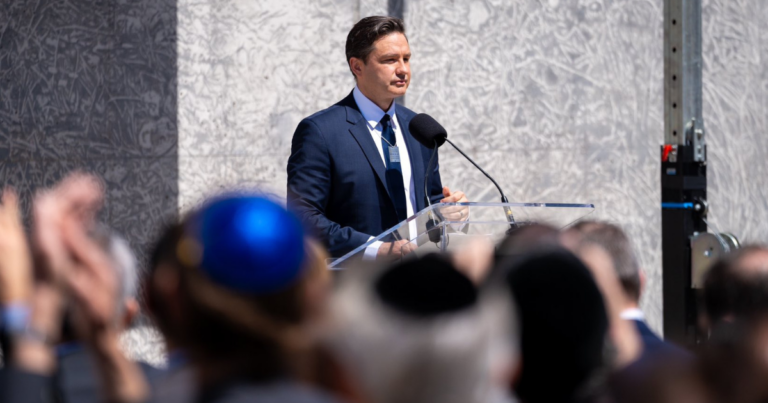
Rampant drug use has made hospitals unsafe for Canadians. This was the message Conservative leader Pierre Poilievre bore when announced his party’s plan to pass the Safe Hospitals Act to protect staff and patients from harm caused by illicit drug use inside of hospitals.
The proposed bill aims to protect doctors, nurses and patients from violence and abuse. For example in British Columbia, the province’s nursing union reported open drug use and weapons within hospitals.
The act would create an aggravating factor for sentencing anyone who brings an illegal and unauthorized weapon into a hospital.
“Imagine you’ve just given birth to a newborn,” said Poilievre in his opening remarks to reporters in B.C. on Tuesday. “And instead of enjoying this precious once in a lifetime moment, you smell hard drugs in the air. Crack or meth being smoked just a few hospital rooms over.”
“Imagine you’ve been in a car accident. You’re fighting for your life and someone in the bed next to you lights up a crack pipe. You look down and see that that person has a large machete in their bag. You tell the nurse or the doctor and they say, ‘Sorry, it’s allowed now and we’ve been forbidden from touching or taking away these weapons and drugs. So you’re just going to have to hope this person doesn’t harm you.’”
Polievre was referencing incidents in B.C. hospitals reported by the province’s nursing union.
Members of the union have even reported being unable to breastfeed their kids after having inhaled crack smoke, which they feared may harm their child through toxins in their breastmilk.
The Safe Hospitals Act would take away the federal health minister’s discretion under the Controlled Substances and Health Act to decriminalize illicit drugs like meth, fentanyl and crack from being brought into hospitals.
This would prevent future exemptions from being granted to cities like Toronto or Montreal to decriminalize these as B.C. was given last year.
“At least hospitals will be protected,” said Poilievre.
B.C. recently had to walk back its exemption after too many dangerous incidents, a little over a year into the province’s pilot project. The provincial government requested the federal government recriminalize the use of illicit drugs in public spaces last week.
Under the pilot project, crack, fentanyl and heroin were permitted to be used in parks, hospitals and on public transit, as well as permitting people to carry weapons inside hospitals.
“They continue to give out tax-funded opioids, provided by the same companies that caused the crisis in the first place, who continue to profit off the misery and the results are in,” said Poilievre. “There is an increase of 380% in drug overdose deaths under these NDP-Liberal policies.”
“This radical, ideological approach is killing our people.”
Community spaces in B.C. have been devastated by the rippling effects of public use of illicit drugs, including the Abbotsford Soccer Association, which now has to comb through its field before games to ensure no dirty needles are embedded in the grass.
Numerous pets of British Columbians have also had overdoses from sniffing dangerous drug remnants left on park grounds.
Despite this, the Trudeau government is currently considering granting the same illicit drug exemption that B.C. just asked to be reversed to the City of Toronto.
“Enough is enough,” said Poilevre. “Common sense Conservatives will not allow this devastation and experiment to play out in other Canadian communities. Canadians deserve a government that will keep hard drugs out of hospitals and will protect staff and patients.”
Poilievre also announced his desire to pass Conservative MP Todd Doherty’s Bill C-321 which would add an aggravating factor to assaults committed against healthcare workers and first responders.
“In other words, if you attack a nurse, a paramedic or a doctor, you will go to jail for longer,” said Poilievre.
While fielding questions, a reporter asked how Poilievre would deal with pushback from provinces, should they feel the act violated their provincial jurisdiction.
“They might, the NDP and Trudeau are equally radical on these questions but I’d leave it up to British Columbians,” responded Poilievre. “Do British Columbians believe that someone should be allowed to smoke crack, meth and bring machetes into hospitals right next to patients who are trying to recover from cancer or a heart attack.”
“Or do they believe in my common sense approach that would ban the drugs, stop giving out tax-funded opioids and invest in treatment and recovery to bring our loved ones home, drug-free.”
The Safe Hospitals Act would not criminalize any drug prescribed by a medical professional.
The Alberta government is putting pressure on Prime Minister Justin Trudeau to stave off a potential strike by railway and port workers, which may take effect next week if an agreement isn’t reached.
Over 9,000 Canadian rail workers threatened to go on strike if their union’s latest demands are not met by their companies. Two of Canada’s major railways, Canadian National and Canadian Pacific Kansas City may be shut down as of May 22.
These railways are responsible for transporting the bulk of Canada’s grain, potash and coal. Management and unions at the Port of Vancouver have also hit an impasse in their negotiations, which may result in a strike as well.
“Any work stoppage affecting our railways and ports would be crippling for our national economy and North American supply chains,” said Alberta Premier Danielle Smith in a letter to Trudeau.
Smith urged the Trudeau government to do everything it could to mediate the disputes so that these parties can settle.
“In the event of a work stoppage, your government must be prepared to use all the tools at its disposal to terminate it rapidly, including, if necessary, back-to-work legislation,” said Smith.
Trudeau’s government could introduce a draft law that would force striking workers back to work, however, it’s unlikely that his administration would take that approach based on similar situations in the past.
The negotiations are primarily about employee rest provisions.
CN said that the union will not comply with a “more modern agreement” predicated on an hourly schedule. The company said that this will help to “protect the Canadian supply chain, North American economy” and provide workers with a fair deal.
The parties are currently far from reaching an agreement, according to CPKC, who said their demands are in line with Canadian regulations and that their proposals for rest are not in conflict with work safety.
However, the TCRC claims that modifications to their rest provisions will create workplace safety issues.
“The accumulative effect of sleep disruptions, inadequate sleep facilities and varying duty periods can lead to significant safety risks. Claims that the companies are proposing predictable work schedules are inaccurate,” said TCRC President Paul Boucher during a press conference last week.
Now the union and rail companies are in the 21-day cooling off period that is legally required before any further actions or agreements can take place.
“I have to admit, we’re extremely worried right now,” Grain Growers of Canada president Andre Harpe told Global News.
“We rely on the rail to bring a lot of the fertilizers that we use closer to the farm. So this could have a devastating effect on our bottom line. It gets back to at the end of the day, we have to get our seed in the ground with the right nutrients to get a crop. So, this sets up the year for us. So, we were extremely worried.”
Canada’s agricultural community is heavily dependent on rail to transport the majority of its products, from receiving fertilizers to their crops being exported for market.
“Close to 95% of our grain is exported. To me, we are the breadbasket of the world. And it gets back to a lot of these countries that are dependent on timely flows of grain,” said Harpe.
The Port of Vancouver strike last year saw 52 grain ships stuck at the port for some time over labour disputes.
Federal Labour Minister Seamus O’Regan asked the Canada Industrial Relations Board to review what safety implications a rail stroke may have last week, however, he maintained that the Liberals’ overall position was in favour of collective bargaining.
“Our government believes in collective bargaining,” said O’Regan, when asked about the looming potential strike at the Port of Vancouver.