Darren Dutchyshen, beloved longtime TSN broadcaster, dead at 57

Canadians bid farewell to a familiar face on Thursday as revered broadcaster Darren  Dutchyshen died, announced TSN.

Dutchyshen, a long-time host and personality on TSN and known for his sense of humour, is dead at the age of 57 after a protracted battle with prostate cancer. The iconic Canadian sports broadcaster’s death occurred on Wednesday.

“Darren Dutchyshen was a legend of Canadian sports broadcasting, a great teammate, and an essential part of TSN for the last three decades,” said Stewart Johnston, Senior Vice President of Sales and Sports at Bell Media.

Dutchyshen, born in Regina and raised in Porcupine Plain, Saskatchewan, began his sportscasting career with STV in Saskatoon and later worked with IMTV in Dauphin, Manitoba. His first big break came in 1988 when he started hosting Edmonton’s ITV Sports Night, a role that tripled the station’s ratings.

“Darren was very different from the really staid, suit and tie types,” said Ann Stark, his boss at ITV, in a 1990 Edmonton Journal feature. 

“We opted for his sort of vibrant personality just to get everybody’s attention,” she added.

In 1995, Dutchyshen took an even bigger role when he joined TSN, hosting weekend editions of SportsDesk and CFL Live. He became a beloved figure on TSN’s flagship program, SportsCentre, co-anchoring late-night editions first with Rod Smith and later with Jennifer Hedger.

“A larger-than-life personality, Darren’s incredible sense of humour and magnetic energy made him a natural broadcaster who connected easily with viewers,” said Johnston. 

“His enthusiasm reminded us every day of why we love sports. Most significantly, Darren was a friend to all of us at TSN, and we will miss him dearly,” he added.

Dutchyshen’s career at TSN included hosting the Kraft Celebration Tour and the boxing show In This Corner with Canadian trainer, cutman, and TV personality Russ Anber. Dutchyshen hosted Olympic Prime Time during the Vancouver 2010 Winter Games and the London 2012 Summer Games.

Dutchyshen’s battle with prostate cancer became public when he revealed his ongoing battle on Sept. 9, 2021, forcing him to take a break from SportsCentre for a year to receive treatment. 

He returned to the air in 2022, even though the cancer had metastasized throughout his body.

“The place that I feel best is right here,” Dutchyshen said upon his return.

Dutchyshen’s presence and passion for sports broadcasting left a significant impact on his colleagues and viewers. 

Rod Smith, who worked with Dutchyshen for several years, described him as “tough, yet friendly, funny, engaging, and kind; truly, one of a kind.”

The beloved broadcaster’s family confirmed that he died “surrounded by his closest loved ones.”

“His sharp wit remained until his final moments, classically delivering plenty of jokes — most of them pretty good and all of them inappropriate,” said Dutchyshen’s family. 

In honour of Dutchyshen, TSN plans to air special tributes over the coming days, inviting friends and co-workers to share their memories of the broadcaster.

“RIP Dutchy” is the number one trend on X as of Thursday afternoon. 
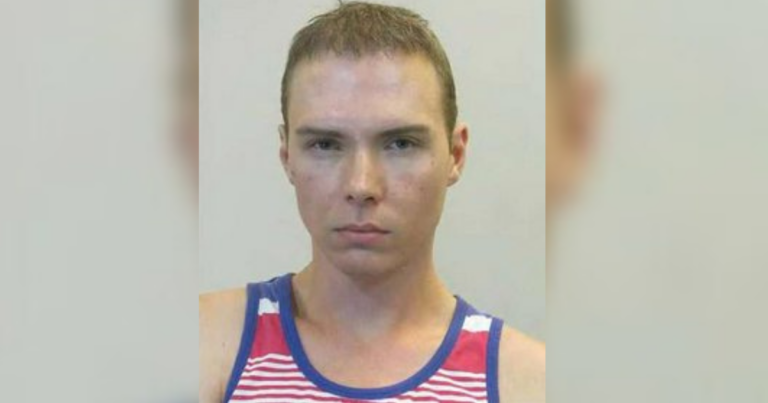
Feds told correctional staff to cover up Magnotta’s prison transfer

In the days leading up to murderer Luka Magnotta’s transfer to a medium-security prison, Correctional Services Canada told staff not to notify the public of the move.

Despite Magnotta being one of Canada’s most notorious murderers, newly released documents reveal that three days before his transfer from a maximum security prison to a medium one, CSC instructed staff to keep the decision private on the basis that it wasn’t of public interest. 

Internal communications cited the Privacy Act for withholding the decision to transfer Magnotta from the public, which occurred in the summer of 2022. However, the act allows exceptions for high-profile offenders of public interest. 

Magnotta was found guilty of murdering and dismembering international student Jun Lin and then mailing his body parts to political parties on Dec. 23, 2014. 

He was transferred from maximum security prison Port-Cartier to La Macaza, a medium-security prison on Aug. 11, 2022, where he continues to serve an indeterminate life sentence. 

Internal emails, obtained via access to information laws reveal that CSC informed staff to keep quiet about the transfer in the days leading up to it. 

“We do not announce transfers, as we don’t disclose the location of offenders. If asked, we would advise media that the Privacy Act doesn’t allow us to speak about specific offenders’ cases. We can; however, provide information about security classification and transfers,” reads an email sent by a member of the CSC communications team dated Aug. 8, 2022.

A separate email sent three months earlier addressed a bilateral meeting between the CSC and then-public safety minister Marco Mendicino’s office which discussed the potential for the transfer to be an issue of public concern.

The transfer remained quiet until March of this year after the Toronto Sun obtained Magnotta’s transfer warrant. 

Controversy over the transfer comes nine months after Paul Bernardo, arguably Canada’s highest-profile serial killer and rapist was also transferred from a maximum security prison to La Macaza.  

Government officials cited privacy laws for withholding information from the public in both cases. 

However, the Office of the Privacy Commissioner of Canada confirmed that exceptions are made for high-profile offenders on Monday. 

“The Privacy Act allows federal government institutions to disclose some personal information in the public interest,” OPC spokesperson Vito Pilieci told Global News.

U.S. inmates’ records and locations are publicly accessible to be searched from a database but in Canada correctional service documents are defaulted to secrecy.

“The OPC was not contacted about the transfer,” said Pilieci.

While “incarcerated persons have privacy rights … decisions related to the disclosure of personal information in the public interest must be made by heads of institutions on a case-by-case basis,” he added.

The CSC said that Mendicino’s office was provided with advanced notice of Magnotta’s transfer but Mendicino would later claim he was not made aware of the transfer until after it occurred. 

“The Privacy Act and other legislation currently puts significant limits on what can be discussed publicly, including information surrounding specific inmate transfers,” Mendicino said in a statement at the time.

The CSC said, “our correctional system is fundamentally based on the rehabilitation of offenders, even if some remain incarcerated for the rest of their lives.”

A CSC spokesperson described the security of La Macaza as having a “well-defined perimeter with high fences,” that “is strictly guarded 24/7 and is monitored at all times by armed control posts.”

Ontario Tech University gave into anti-Israel demands and now protesters want more 

Anti-Israel protestors at Ontario Tech University are further entrenching their encampment after administrators agreed to a key demand made by protesters.

After accommodating the demands of illegal protest campers at Ontario Tech University, the university was told the protesters weren’t going anywhere, as they introduced new demands.

According to a university statement, the key demands of the anti-Israel encampment, which sprung up May 6 at OTU’s north Oshawa campus, centred on the disclosure and divestment of their alleged aerospace investments to Israel.

After meeting with representatives of the encampment, the university said it agreed to the key demand that it disclose its aerospace investments, even adding a commitment to “expand access to education for Palestinian and other displaced students.”

The university refused to share information concerning aerospace investments with True North.

The OntarioTech4Palestine Instagram page linked to the protest lists their public demands.

Among the demands were calls for the university to protect all students from the legal or academic repercussions which could arise from their illegal protest and for the university to take a clear stance against Israel.

“OTU must call for an immediate and permanent ceasefire and an end to Israel’s blockade, apartheid and occupation against the Palestinian people.”

They also demanded that the university disallow Israeli international students from attending the school.

“OTU must immediately end all student exchanges and study abroad programs with organizations and universities in Israel.”.

They also were outraged that the university shut off its power, leaving protesters in the dark at night.

Originally, the protesters were given until Thursday, May 9, to dismantle the encampment due to “the associated health and safety risks” and disruption of other planned events. After meeting with the protesters, the university gave them until Sunday, May 12, at 9 a.m. to vacate.

The protesters said there were no health and safety concerns, and the notice for them to leave was not given “in good faith.” The protesters were also offended by the language used in the university’s response to their demands.

When the university officially told them to leave at 4:21 pm on Friday, it gave the encampment until 6 p.m. to respond.

“The occupants requested multiple extensions to prepare for their response, which the university granted in good faith,” the university said in the statement.

The encampment provided their written response over 24 hours past the original date given.

“The occupants responded that they would not remove the encampment and made additional demands that not only escalated what was initially requested but also shifted in tone,” OTU said.

They said the demands were expanded to include information on all the university’s donors, with “an apparent motive to identify individuals based on their Israeli heritage.”

“Their new demands not only contravene legal, contractual, and ethical standards but also undermine the university’s commitment to equity and inclusion for all community members, irrespective of their faith or ethnic background,” the school said. “Additionally, their response included inaccuracies and misleading statements as well as a clear injection of third-party interests by individuals who are not members of the university community.”

Protesters have denied any involvement with third parties.

“This is and always will be false,” the protesters said on Instagram. “This is a way for the admin to undermine our work as students.”

When True North asked the university who the third-party interests and individuals were and how the school came to that conclusion, a representative from the school refused to comment.

“There are no updates at this time. Updates will be posted on the timeline website when available.”

Despite the escalation, the university told the protesters they were still willing to continue to engage in “genuine and constructive dialogue” based on what they had previously spoken about.

The occupiers responded to the university by stating they would not leave until they received a written agreement to satisfy their new demands.

The protesters have stated they are committed to “going back to the negotiation table to reach an agreement that satisfies both parties.”

Ontario wants no part of “failed decriminalization experiment”

Ontario’s health minister is warning Toronto to rescind its request from the federal government to decriminalize drug possession.

On the heels of British Columbia walking away from its decriminalization pilot project, Ontario Health Minister Sylvia Jones issued a letter of warning to Eileen de Villa, Toronto’s chief medical officer, telling her to drop her request for decriminalization. 

“While our government has already been perfectly clear on multiple occasions, please consider this as formal as possible: Ontario is 100% opposed to your proposal,” the letter reads.

“Under no circumstances will our government ever support your request, which would only add to crime and public drug use while doing nothing to support people struggling with addiction. We will also be making our opposition clear to the federal government.”

Jones began reviewing existing drug consumption sites following a fatal shooting outside of one facility in Toronto’s Leslieville neighbourhood and now plans to introduce “enhanced accountability measures” to “ensure that the safety and wellbeing of the public is protected.”

In the letter, also signed by provincial Solicitor-General Micheal Kerzner, Jones told de Villa that if she doesn’t rescind the application, the Ontario government will “be forced to explore all options available to us.”

Kerzner said that the letter was a response to Toronto Public Health claiming that it had received no “formal” notice of opposition to Toronto’s “misguided request to decriminalize dangerous illegal drugs.” 

Toronto’s initial proposal was submitted to Health Canada two years ago and was updated in March of this year. 

Premier Doug Ford and Michael Tibollo, his associate minister for mental health and addictions, have voiced strong opposition to it recently, in the wake of B.C. requesting Ottawa reverse its exemption.

The federal government agreed to walk back the exemption allowing drug use in public spaces, just one year into the pilot project’s planned three-year run.

“We are frankly surprised that, in the aftermath of British Columbia’s decision to walk back its decriminalization experiment, Toronto Public Health has not already rescinded its request,” the Ontario ministers’ letter reads.

“The recent disastrous examples of British Columbia and other jurisdictions that have attempted this experiment are just the latest examples that show decriminalization does not work. Instead, it encourages dangerous behaviour in public spaces, victimizes innocent people and undermines law enforcement’s ability to protect our communities.”

Ottawa agreed to B.C.’s request to roll back parts of its decriminalization project last week, only 15 months into the three-year pilot project, following opposition from mayors and hospital personnel.  

Conservative Leader Pierre Poilievre announced his party’s plan to pass the Safe Hospitals Act on Wednesday to protect staff and patients from harm caused by illicit drug use inside hospitals.

The proposed bill aims to protect doctors, nurses and patients from violence and abuse. For example in British Columbia, the province’s nursing union reported open drug use and weapons within hospitals.

The act would create an aggravating factor for sentencing anyone who brings an illegal and unauthorized weapon into a hospital. 

“Enough is enough,” said Poilevre, speaking to reporters in B.C. “Common sense Conservatives will not allow this devastation and experiment to play out in other Canadian communities. Canadians deserve a government that will keep hard drugs out of hospitals and will protect staff and patients.”

The Andrew Lawton Show | Online streaming regulations kicked back to after election

The CRTC has delayed implementation of its Online Streaming Act – the law that allows the government to control what you see on platforms such as YouTube, Netflix, and podcast databases – until “late 2025,” a postponement that more than likely kicks it to after the next federal election. True North’s Andrew Lawton says this might be a bit of a reprieve for Canadians who want the governments hands off their content.

Also, while healthcare is in the provincial domain, it’s federal gatekeepers who are preventing Canadians (except those living in Quebec) from accessing healthcare choice. SecondStreet.org president Colin Craig says this is an opportunity for federal Conservative Leader Pierre Poilievre. He joins the show to discuss.

Plus, Saskatchewan’s court of appeal has upheld the government’s former restriction on outdoor gatherings. This comes the same week as British Columbia’s Supreme Court upheld B.C.’s vaccine mandate for healthcare workers. Charter Advocates Canada litigation director Marty Moore returns to weigh in.

SUBSCRIBE TO THE ANDREW LAWTON SHOW

The Daily Brief | Anti-Israel students now want free tuition

Alberta joins large chorus of critics calling for the federal Liberals to cancel its proposed capital gains tax hike.

Plus, anti-Israel students in Nova Scotia are escalating their demands, now requesting free tuition, housing and a review of Judaism courses.

And Pierre Poilievre proposes a bill to protect staff and patients from harm caused by illicit drug use inside of hospitals.

Tune into The Daily Brief with Cosmin Dzsurdzsa and Noah Jarvis!

SUBSCRIBE TO THE DAILY BRIEF

Ongoing contact but no plan for a merger with BC United, say BC Conservatives

The BC Conservatives have downplayed media speculation that there could be a merger with BC United after the latter’s leader hinted at working together to defeat the ruling NDP.

BC United leader Kevin Falcon said this week there have been private talks about working with the BC Conservative party, though the Conservatives had a different tone, saying no official option has been presented.

“I tried to come to the table months ago when (BC United) and the Conservatives were evenly matched in the polls, so we would have the best chance of defeating the NDP,” John Rustad, leader of the BC Conservatives, said on X. “The answer we got was ‘F–k Off.’”

Falcon kicked Rustad out of the BC United party in August 2022 for posts questioning climate science.

A representative for the BC Conservatives told True North in an email that the party has had individuals from the business community contact BC United on their behalf, but no official talks have taken place.

“As always, our door is open to all who want to buy a membership and join our Conservative Party of BC,” the spokesperson said.

When asked about the issue, Rustad affirmed that his party would be running 93 candidates in the next election no matter what. The party currently has 62 nominated candidates.

“We built this party with hard work piece by piece — now, people want to jump into the drivers seat and kick out our grassroots,” Rustad said in response to hearing the mayor of Port Coquitlam, Brad West is ‘considering’ leading a newly merged BC United-Conservative Party.

“Not going to happen,” he said. “I’ve promised thousands of British Columbians and our thousands of grassroots members — who took the initiative to sign themselves up — to lead this party through the next election. I intend to keep my word.”

West himself threw water on rumours in a post on X Wednesday night.

“Never a dull moment in BC politics eh?” he wrote. “I appreciate the interest in my future, but my plan is to be the best Dad I can be to my two sons, the best husband I can be to my wife & the best Mayor I can be to the people of Port Coquitlam. If that ever changes, you’ll hear from me!”

But Falcon feels it might be time for the two right-of-centre parties to find common ground.

“We have to put aside our own egos, our own party issues, everything else and just figure out whether there’s common ground that can keep in mind what the most important goal is, and that is making sure we don’t end up with another NDP government,” he said at a recent press conference.

Recent polls show Rustad’s Conservatives in a tight race against the BC NDP – the first time that the party has been competitive since the 1950s.

According to a May 6, 2024 research report by Yorkville Strategies, the BC Conservatives would win with 37% of the vote, with the BC NDP trailing close behind at 35%.

“Kevin Falcon’s BC United is in a precarious position that could result in the demise of the BC United party,” said the same report.

According to a Mainstreet Research projection at the end of April, the BC Conservatives led with 38.9% support, with the BC NDP in second place at 36.2%.

Other polls show Rustad trailing the NDP by more than 11%, but what they all have in common is that BC United is projected to be a distant third place, a far cry from when the party, formerly known as the BC Liberals, formed government under Christy Clark in 2011.

At a press conference on Friday, Falcon warned people not to get caught up in the polls, as his party had pulled off a surprise victory in 2013. 

Taxpayers give $1.7 million to pasta company creating ten jobs

An Ontario pasta maker is getting an extra helping of taxpayer money.

The federal Liberal government announced it is giving $1.7 million in corporate welfare to Italpasta, a pasta manufacturer in Brampton, Ont.

The handout is supposed to meet a “growing product demand.”

The company makes an estimated $25 to 100 million annually, according to the business insight website Owler.

Taxpayers will pay to replace old equipment with a “state-of-the-art production line.”

It said the new equipment will triple the company’s production capacity, reduce production times, increase supply chain spending and create ten skilled jobs.”

The government said the tax-funded handout will assist the pasta company in addressing the “evolving needs” of both domestic and global markets while reducing energy consumption.

According to the announcement, the Federal Economic Development Agency for Southern Ontario, the branch responsible for the handouts, the Liberal government has given over $40 million to more than 100 projects in Brampton since 2015.

FedDev Ontario also gave $75 million to more than 80 food manufacturing businesses since Trudeau was first elected in 2015.

This isn’t the first time the Canadian government has handed out tax funds to the Canadian pasta manufacturer. In 2015, Stephen Harper’s government spent $3.4 million to assist the company in producing macaroni and cheese products.

The last subsidy in 2015 created eight new jobs at Italpasta.

The Harper handout was done through the AgriInnovate program. According to the government website, the objective is to provide “repayable contributions” to incentivize commercial innovations.

Jake Fuss, the director of fiscal studies at the Fraser Institute, warns that business subsidies like these will likely have the opposite effect on the economy than intended.

“There’s little to no empirical evidence that corporate welfare creates jobs on the net or produces widespread economic benefits. What happens instead is that governments are simply picking winners and losers,” he told True North in an interview. “They’re shifting jobs and investment away from other firms and industries and circumventing the preferences of consumers and investors.”

He said corporate welfare is just one example of governments believing they know the market better than investors and entrepreneurs.

“They’re using taxpayer money to allocate scarce resources to their favoured projects and industries, which actually hinders economic growth, something we desperately need in Canada,” Fuss said.

Fuss believes that when governments interfere in the market, they distort private decisions and misallocate resources, making the economy “far less efficient” than if left in the hands of private individuals.

“This can have consequences for economic growth, living standards for Canadians, and job creation,” he said. “The better option to generate widespread economic benefits is to let Canadians make their own decisions about where to spend their money and subsequently determine what businesses will actually succeed in the market.”

Fuss said government subsidies could disadvantage companies that don’t receive handouts. These companies otherwise would have created jobs as demand and capital investments grew for their industry and business.

“(Government) might not be creating as many jobs by doing these measures than if (it) chose not to interfere in the market,” he said.

Investors might fund a less efficient company to chase government funds rather than more productive industries and companies.

He warned that corporate welfare could create a toxic environment that incentivizes spending on lobbyists to obtain government funding rather than on production.

“When (government) is giving out corporate welfare, (competitors or other industries) also want those same benefits, subsidies or other agreements with governments,” he said. “That creates bad incentives in a system where everybody’s asking the government for money to essentially subsidize jobs or other things as well, for the companies and industries.”

The federal government spent $52 billion on corporate welfare in 2022, though Canada’s unemployment rate has increased.

“This isn’t proving successful for Canada right now,” he said. “We also have challenges with job creation, especially in the private sector, so we’re kind of just doubling down on this strategy right now in Canada. It’s not working. It’s not proving to be effective over time.”

B.C. Supreme Court upholds vaccine mandate for healthcare workers

Unvaccinated healthcare workers terminated for refusing to obey government pandemic orders won’t be returning to work anytime soon in British Columbia.

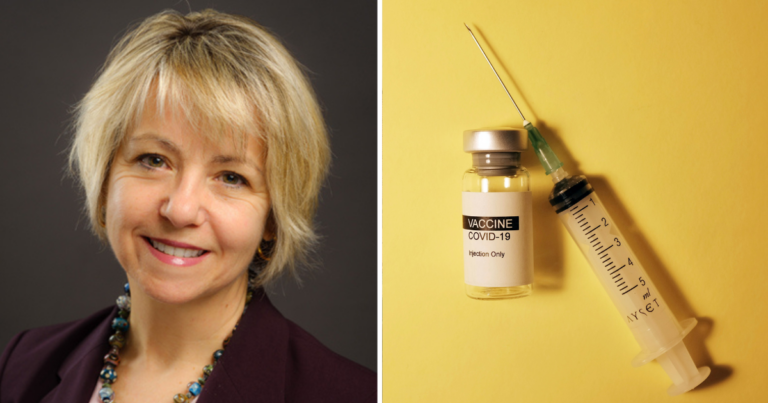
British Columbia’s Supreme Court has upheld provincial health officer Dr. Bonnie Henry’s mandate requiring COVID vaccinations for healthcare workers, a mandate she extended last fall. 

Fifteen healthcare workers filed an appeal to have the public health orders dismissed on constitutional and other legal grounds.

This group, including a nurse practitioner and two doctors, argued against the mandatory vaccination policy, contending that it caused undue hardship to the workers and the healthcare system in their absence. They argued that unvaccinated healthcare workers posed no greater risk to patients than their vaccinated counterparts.

The petitioners also included those who worked remotely or held administrative roles, asserting that their inclusion in the mandate was unreasonable.

“Approximately 1,800 healthcare workers had lost their jobs due to being unvaccinated contrary to these mandates,” read the decision.

Justice Simon R. Coval, in his detailed judgment issued last Friday, sided with Henry and upheld the vaccination requirement. He emphasized the continued necessity of the mandate, given the risks posed by COVID to both public health and the healthcare system.

Coval found the public health orders reasonable, given the information available to Henry as of Oct. 5, 2023, when she extended the vaccine requirement initially put in place two years earlier. 

He supported the government’s conclusions that transmission of the virus posed a significant health risk and justified the ongoing use of the emergency powers, and that an unvaccinated healthcare worker constituted a “health hazard,” as defined by the Public Health Act.

However, the court did find merit in the argument regarding healthcare workers who perform their roles remotely or in non-patient-facing capacities. Coval directed Henry to reconsider the mandate’s application to these workers. 

“There was a lack of justification in the record or Orders to support as reasonable the decision not to consider requests for reconsideration of the vaccination requirement from healthcare workers able to perform their roles remotely or in-person but without contact with patients, residents, clients, or the frontline healthcare workers who care for them,” wrote Coval.

The court also addressed the Charter challenges raised by the petitioners. While the court acknowledged that the mandate infringed on the religious freedoms of some petitioners, Coval deemed this infringement “reasonable in the circumstances because… it did not exceed what was necessary to achieve the essential public health objectives of protecting vulnerable patients, residents, and clients from serious illness and death.”

The court found that the orders did not infringe on the Charter rights of those who refused vaccination based on personal convictions, rather than religion.  

“These personal perspectives did not rise to the level of constitutionally-protected matters of conscience,” said Coval.

The ruling also stated that the public health orders did not infringe on petitioners’ section 7 Charter rights.

Section 7 states, “Everyone has the right to life, liberty, and security of the person and the right not to be deprived thereof except in accordance with the principles of fundamental justice.”

“The Orders did not compel them to accept unwanted medical treatment, and so did not interfere with their bodily integrity or medical self-determination. Further, under the case law, s.7 protects neither the right to work in any specific employment or particular profession, nor the right to avoid the stress and hardship of being denied employment in a profession due to non-compliance with its governing rules and regulations,” wrote Coval.

The judge dismissed the petitions, with the exception of asking Henry to reconsider the vaccination requirement for healthcare workers able to perform their roles remotely or in-person without coming into contact with patients, residents, clients, or frontline healthcare workers.

CRTC pushes Online Streaming Act implementation to late 2025

The Trudeau government’s controversial Online Streaming Act will be put on hold until late 2025, according to a new regulatory plan released by the Canadian Radio-television and Telecommunications Commission. 

The delay may even outlast the next federal election, slated for Oct. 20, 2025.

The law would force platforms like Netflix, Amazon Prime and Spotify to promote Canadian content as well as contribute financially to the Canadian government.

According to the CRTC, the new regulatory framework will take effect late next year after the agency finalizes how much online streaming services and traditional broadcasters will be required to pay to support the creation of Canadian and Indigenous content.

Being responsible for drafting the regulatory framework of the act, the CRTC is carrying out a series of consultations and public hearings on the details of the bill, which will require an updated definition of what is considered Canadian film, TV and music. 

Defining Canadian content has been a grey area for some time and a point of contention between content creators and regulatory bodies. 

The CRTC will continue consultations on how best to manage diversity, equity and inclusion via the act after its implementation, from December 2025 to March 2026. 

Following those consultations, the CRTC will present rules and governing proceedings to make it easier for platforms and content creators to understand.  

Despite the Online Streaming Act receiving stark criticism from YouTube and numerous Canadian digital creators, the bill gained royal assent last April.

Many of Canada’s broadcasters were in favour of the bill, however, complaining that tech giants have held a monopoly over them for years due to having fewer regulations.

“The Online Streaming Act and the Policy Direction are both complex and multi-faceted, and we have announced an ambitious set of public hearings and proceedings to address all of the elements they contain,” CRTC spokesperson Leigh Cameron told the Globe and Mail

“The CRTC anticipates that by 2026 it will have both had the opportunity to consult widely with Canadians and to have put in place the key elements of the new broadcasting framework.”

The CRTC said it plans to have an updated definition of what Canadian content is by next spring for television and online programming, which will be imperative for deciding what constitutes Canadian music and film for promotion and financial support. 

However, online music streaming platform Spotify has urged the CRTC to make this more of a priority, saying it already promotes Canadian music to listeners in Canada and abroad, despite the changing definition.  

According to Spotify’s director of global music policy Xenia Manning, defining Canadian content should be considered much earlier on the CRTC’s agenda as confusion remains as to what defines Canadian content. 

“With the revised timeline on the implementation of the Act, there is a renewed opportunity for the CRTC to proceed in the right order and prioritize updating the definition of Canadian Content to include all Canadian and Indigenous music, as it was directed by the Trudeau government,” said Manning.

Under the act, podcasts which earn $10 million or more will also be required to register with the CRTC as broadcasters, being subjected to the same regulations as the CBC and other mainstream networks.