Bank of Canada warns mortgage payments due for renewal will skyrocket over 60% by 2026

Mortgage renewal rates in the coming years will result in price increases that many Canadians may struggle to stomach, according to the Bank of Canada’s most recent report.

The Bank of Canada’s 2024 Financial Stability Report highlights the average percentage increase in mortgage payments at the time of renewal compared with the price issued at the mortgage’s origination. 

“The financial pressure will increase most for households that took out a mortgage in 2021 and early 2022 when house prices were close to their peak and mortgage rates were very low,” reads the report.

Homeowners who borrowed during that time took on large mortgages relative to their income, have seen little increase or even decreases in their home equity, and will see larger increases in payments at renewal, according to the Bank of Canada.

By 2026, Canadians who renew their mortgages that previously had variable-rate mortgages with fixed payments will see the largest increase compared to their previous mortgage’s origination, expected to rise 61.85%.

Payments are expected to increase by 31.88% among all types of mortgages by 2026. Those who will be hit with the softest increase are Canadians who previously held fixed-rate mortgages with a term of less than five years, who will see an increase of 19.26% by 2026.

Those who will be hit the hardest are homeowners who took out a mortgage between Apr. 1, 2020, and Mar. 1, 2022, when Canada’s prime interest rate was 2.45%. It is currently at 7.2%.

Increasing interest rates is a double-edged sword. For example, variable rate holders could have seen interest rates increase so much that they pay down only interest on their mortgage while making no payments on principal. Therefore, when they renew their 25-year mortgage at the 20-year mark, they have to make up for lost time when they made no payments to bring down the principal cost of the mortgage.

Making up for the lost time on principal payments and a new higher interest rate on their renewed mortgage could skyrocket homeowners’ housing costs.  

“The share of income dedicated to mortgage payments — also called the mortgage debt service ratio — has been much larger for households that took on a mortgage after interest rates started rising in 2022 relative to households that took on a mortgage in prior years,” reads the study.

By the end of 2023, more than one-third of recently issued mortgages had a debt-to-income servicing ratio exceeding 25%. This figure has doubled compared to 2019. This increase has unfolded even as households have chosen smaller mortgage amounts in relation to their income and opted for extended repayment terms.

Canada’s debt-to-income ratio is the largest in the G7 despite households being second wealthiest.

Housing affordability reached an all-time low in April, according to an RBC report.

The average household in Vancouver has to spend 106.3% of its income to cover homeownership costs.

The Bank of Canada said that higher inflation and interest rates have increased financial pressure on household finances. 

“Signs of increased financial stress appear mainly concentrated among renters,” reads the report.

Canadians without a mortgage who have fallen behind on credit card and auto loan payments have risen, returning to normal levels and even surpassing them.

The share of Canadians with arrears on credit cards for those without a mortgage was 2.22% in Mar. 2024, compared to only 1.05% for mortgage holders. 1.31% of Canadians without a mortgage had arrears on credit cards for auto loans, compared to only 0.2% of Canadian mortgage holders.

Households without a mortgage have increased their reliance on credit cards. As of Mar. 2024, 45.68% of Canadians without a mortgage carry an outstanding credit card balance. 23.03% of Canadians without a mortgage carry a credit card balance exceeding 80% of their borrowing limit.
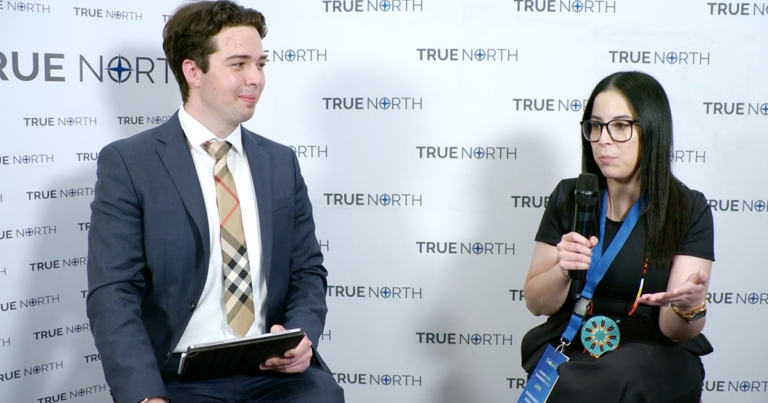
CANTIN-NANTEL: Indigenous conservatism, reconciliation & racist white liberals

When Prime Minister Justin Trudeau was elected in 2015, many in the political and media sphere said it was the beginning of a new era for Indigenous reconciliation.

However, eight years into Trudeau’s mandate, critics are questioning whether his Indigenous agenda, which has included increasing bureaucracy related to the file, is benefiting Indigenous peoples.

True North’s Elie Cantin-Nantel sat down with Indigenous political strategist, commentator and social media personality, Jennifer “Elle” Laewetz, to discuss.

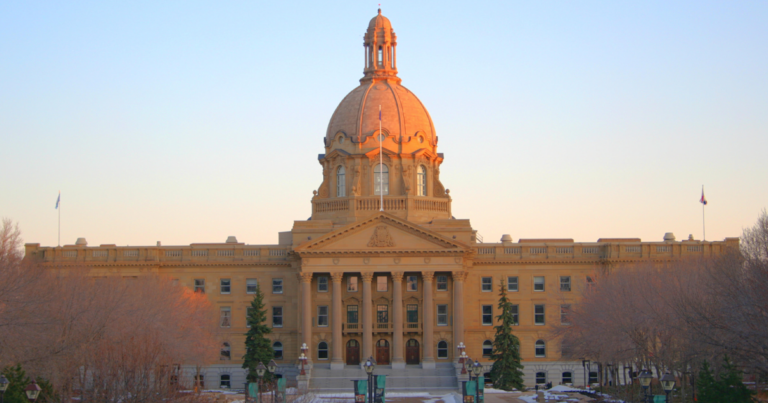
The Alberta Roundup | Does Alberta’s local election reform law go too far?

Today on the Alberta Roundup with Rachel Emmanuel, Rachel explains why proposed Bill 20 goes too far. Rachel also shows anti-Israel protesters being removed from the University of Calgary campus and has another crazy video that resulted from your tax dollars being spent on “art.”

Finally, Rachel takes a look at why the Alberta government wants to change the election date.

Tune into The Alberta Roundup now!

SUBSCRIBE TO THE ALBERTA ROUNDUP

Antisemitism, far-left extremism common at Canadian protest encampments 

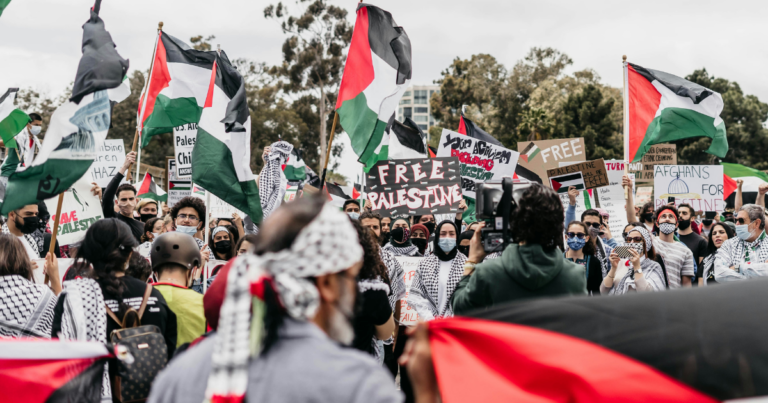
The anti-Israel encampments occupying Canadian university campuses have seen disturbing amounts of antisemitism, hate and far-left extremism.

The hateful behaviour seen on campuses puts into question the claims that the encampments are peaceful “anti-war” protests that simply seek to have universities divest from Israel. Furthermore, it is believed that many protesters involved in these encampments are not even students.

True North has compiled a list of concerning incidents that have taken place in the Canadian campus encampments.

Members of the Jewish community targeted at U of T:

There have been numerous cases of Jewish community members being targeted by protesters at the University of Toronto encampment. 

A 24-year-old Ukrainian-Israeli immigrant named Moshe Zelig says he was attacked by a group of pro-Palestinian activists for wearing an Israeli flag. Protesters attempted to steal the flag, claiming it was a “terrorist flag”

In an exclusive interview with True North, Zelig said that leading up to the attack, he was called anti-Jewish slurs, called a “dirty Jew” in both Arabic and English, and told to “go back to Poland.”

Protesters also tried to stop several Jewish professors from entering the encampment. A video captured by Rebel News shows a Jewish professor wearing a kippah at the encampment gates being called a “f**king retard.” In another video, a Jewish professor who was being denied entry was called antisemitic slurs.

The National Post reported that those seeking to enter the encampment must declare that they agree with pro-Palestinian positions, including supporting a Palestinian right to “resistance.” 

Iraqi Jew told to “go back to Europe” at McGill: 

Michael Eshayek, an Israeli student whose family originates from Iraq, was confronted by protesters at the McGill encampment and told to “go back to Europe.” 

When he informed them that his family was from Iraq, they told him “go back to Iraq then.” According to the Times of Israel, there were less than five Jews left in Iraq in 2021.

Protesters then began to say that all those who believe in the existence of a Jewish state in the Middle East are racist terrorists. 

Hamas logos at uOttawa, U of T

A protester at  the University of Ottawa was seen proudly wearing the logo of Hamas, the terrorist organization that committed the Oct. 7 attack against Israel and that is using the people of Gaza as human shields.

The Hamas red triangle was also seen multiple times at the University of Toronto encampment, including on a sign that called for violence.

The Middle East Media Research Institute notes that the red triangle is used by Hamas’s military wing, the Izz Al-Din Al-Qassam Brigades, in videos where they target Israeli forces.

“The red triangle has come to symbolize Hamas’ war against Israel, and has become a popular anti-Israel symbol expressing open support for Hamas and its terrorist activities,” notes the institute. 

Calls for violence at multiple universities:

Multiple encampments have also seen disturbing calls for violent uprisings, both in the Middle East and globally. Chants have come from protesters, but also from a controversial Canadian politician.

As previously reported by True North, Far-left Ontario MPP Sarah Jama called to “globalize the intifada” at an encampment on McMaster University’s campus. NDP MP Matthew Green stood by Jama as she made her call for a global intifada. 

The term intifada refers to “an armed uprising of Palestinians”, and has resulted in periods of violent unrest in Israel. The last intifada, known as the “Second Intifada,” saw suicide bombings, stone-throwing, and rocket attacks in civilian areas in Israel from 2000-2005.

Calls for intifada were also seen in other encampments, including at the University of Toronto and McGill.

The National Post also reported that the University of Toronto encampment had signs saying “glory to all martyrs” and “behind every violent act is a vital cause.”

Calls for the destruction of Israel at multiple universities:

There were also calls for the destruction of Israel at multiple Canadian universities.

Chants, signs and drawings calling for the destruction of Israel were seen at the University of Ottawa, the University of Toronto and at UBC, among others. At UBC, a sign read “Long live Palestinian resistance. From the River to the Sea, Palestine will be free.” 

Far-left extremism at the encampments :

In addition to disturbing antisemitic acts, the anti-Israel encampments have been a hotbed of far-left extremism.

Protesters have been claiming that Canada, like Israel, is an illegitimate “settler-colonial” state. One woman at the University of Toronto was even heard saying “Canada doesn’t exist,” while encampment organizers claimed that the university had no right to cite private property amid it being on “stolen” Indigenous land.

One of the signs seen at the University of Victoria encampment read “from the river to the Salish sea,” suggesting that protesters want to see the destruction of Canada, in addition to the destruction of Israel.

Many communist activists are also taking part in the encampment protests and subsequently bragging about it on social media. The communist activists have also been sharing calls for Intifada. 

At the University of Ottawa encampment, communist activists flew flags with the face of communist Che Guevara, who was a mass murderer.

In an interview with True North,  B’nai Brith Canada’s Manager of Research Richard Robertson said the encampments are “directly contributing to the caustic situation on campus, which is leading Jewish students to feel unwelcome and unsafe on their own campuses.” 

He believes it is time for universities to have police remove the encampments.

“B’nai B’rith supports the rights and freedoms of all Canadians, including the right to protest and the right to freedom of expression. But there are limits on these rights,” he said. “Those limits do not protect the right to intimidate and the right to incite.”

Calgary police dismantle university encampment amid nationwide anti-Israel protests

The Calgary police didn’t hold back when they forcibly removed protestors encamped at the University of Calgary campus.

Around 11:00 pm on Thursday, police equipped with guns containing rubber bullets used riot shields, bicycles, and flashbangs to disperse the encampments.

The anti-Israel protestors were assured that no one would be arrested if they left peacefully, but some decided to resist the order.

The police force confirmed that the University of Calgary notified them on Thursday morning that protestors had sent up tents on the lawn of MacEwan Hall. 

“The protestors were asked to leave and, when they refused, were trespassed by University of Calgary staff. Despite being trespassed, the protestors refused to leave, and police were called in for assistance,” confirmed the Calgary police in a press release.

As the clock approached midnight, the police warned the remaining protestors it was time to go.

“We are asking you to move off the campus property safely, or there will be arrests. It is time to leave,” one officer told protestors with a megaphone.

Protestors were seen locking arms and chanting, “Hold the line!”

After the five-minute warning, police began chanting “Move!” as they slowly inched forward, pushing protestors back with riot shields. 

Some more aggressive protestors were pinned to the ground and arrested. Certain protestors threw projectiles at police officers and tried to deter them by shining flashlights in their eyes to no effect.

“Leave the University of Calgary property as you are trespassing, as we have asked you numerous times,” police warned.

Eventually, the protestors were pushed back outside their encampment, marked by pallets acting as a fence. The police kicked the pallets down, laying waste to the encampment.

However, the outside of the official encampment was still on university grounds. Police used flashbangs and pepper spray to deter protestors further. It took about ten minutes for the protestors to be forced off campus property. 

“Projectiles and assaultive behaviour by the remaining protestors triggered the use of non-lethal munitions by officers. No injuries have been reported. The number of arrests, tickets and charges will be made publicly available tomorrow,” said the Calgary Police.

Throughout the removal, some protestors raised concerns with officers that their rights were being infringed upon. The Calgary police encouraged protestors to review their rights and responsibilities when protesting.

According to Rebel News, which recorded most of the interaction, protestors have been told they can return the following Friday, as long as there are no encampments, barricades, or obstructions. 

Similar protests and encampments have been erected across Canada.

Some of the country’s largest encampments are ongoing at McGill University in Montreal and the University of Toronto.

Both province’s governments have publicly opposed encampments at universities.

“There are all sorts of ways that are very legal to demonstrate now. To make an encampment on the grounds of a university that doesn’t want that encampment there, it’s illegal. But there are other ways of expressing your opinion that will be tolerated,” said Quebec’s Premier François Legault in French.

Ontario Premier Doug Ford echoed his neighbouring premier’s concerns.

“I’m not in favour of these encampments on the universities. They need to move. The university has to move these people along,” said Ford.

Encampments have been set up in half of the provinces across Canada.

Half of Canadians are opposed to anti-Israel encampments at Canadian universities.

At Alberta’s other largest city, Edmonton, anti-Israel protestors set up an encampment on Thursday, demanding that the school disclose its investments and cut all ties with Israel. 

“I’ll watch and see if the University of Alberta learned from what they observed in Calgary. We’re on standby to provide any assistance should they ask,” said Alberta’s Premier Danielle Smith on Friday.

More businesses identifying as Indigenous to get Ottawa contracts 

Canadian businesses now eligible for federal contracts awarded to Indigenous employers have skyrocketed to the tune of a 40% increase since the Trudeau government introduced the program.

Over 800 new businesses registered for enrollment in the Indigenous Business Directory over the past year, a database which lets eligible companies participate in the federal government’s procurement strategy to bolster the Indigenous economy.  

The spike in enrollment has some community leaders fearing that the government’s overly broad criteria has left the door wide open for exploitation.

The database which held only 1,900 businesses last year, now stands at 2,700 as of last month. 

The Trudeau government promised to have at least 5% of the total value of federal contracts awarded to Indigenou businesses in 2024. 

Called the Procurement Strategy for Indigenous Business, the program’s total value has increased to $862-million in the 2022-23 fiscal year, more than four times its worth five years ago, at $170 million.

According to the Globe and Mail, Karine Vetvutanapibul, a spokesperson for Indigenous Services Canada, the spike in new registrants is partially because of the federal government’s efforts in promoting the program’s benefits to Indigenous communities.

The Trudeau government confirmed that they would review the program, which has been utilized by some of the same contractors who previously worked on the ArriveCan app, now the subject of a major scandal for Trudeau’s administration. 

Dalian Enterprises, a previous contractor involved in the Arrivecan App, also identifies as “aboriginally owned” and has frequently made use of the program. 

President of the Inuit Tapiriit Kanatami Natan Obed said he would like to see Ottawa impose stricter criteria when it comes to business eligibility for the program, arguing that it should be limited to groups that are rights holders solely under the Constitution. 

Obed calls the program’s current eligibility standards, “far too inclusive.”

“We are now living in an era where there are tremendous opportunities to be had for qualifying as a First Nations, Inuit and Métis business,” Obed told the Globe and Mail in an interview. “There are many actors in this country who want to take advantage of that.”

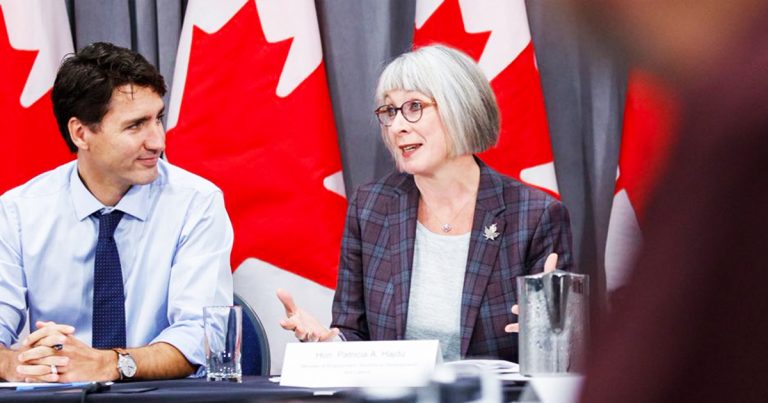
Indigenous Services Minister Patty Hajdu called the process of defining an Indigenous person as Indigenous “really complicated” earlier this year. 

According to Hadju, the government is considering transferring the power of the directory to an Indigenous organization, which would be controlled at arm’s length.

Chief executive officer of the National Aboriginal Capital Corporations Association Shannin Metatawabin is certain that the government’s current directory includes people who are not Indigenous.

“There’s organizations in Canada that accept self-identification as a mechanism of building membership, and in turn the government of Canada accepts those organizations on their business registry,” he said. “Right now, the whole system is flawed.”

LAWTON: Does family have a place in politics?

As Canada’s birthrate continues to decline, questions arise about the government’s role in familial affairs, and whether legislative intervention is warranted. Crestview Strategy partner Ginny Roth joined True North’s Andrew Lawton at the Canada Strong and Free Networking Conference in Ottawa to discuss what steps, if any, governments should take in addressing issues related to families.

Air Canada struggles in customer satisfaction as Delta excels: J.D. Power study

Air Canada lags behind its competitors in customer satisfaction, according to the J.D. Power 2024 North America Airline Satisfaction Study

Conversely, Delta Air Lines has excelled, clinching the top spot for both first/business class and premium economy passenger satisfaction.

The study highlighted various airlines’ overall customer satisfaction in first class/business, premium economy, and economy/basic economy.

Air Canada ranks dead last in overall customer satisfaction in first class/business and premium economy. It is flanked only by Spirit Airlines and Frontier Airlines in customer satisfaction for economy/basic economy. The two airlines that ranked below Air Canada in this category were not present in the other two groups because they are budget airlines without first-class or premium seating.

Air Canada had an overall customer satisfaction index rating of 629 out of a 1,000-point scale in first/business class. The industry average was 701, with Delta Air Lines leading the pack at 743.

Air Canada has an overall customer satisfaction index rating of 628 in premium economy, compared to the industry average of 675. Delta Air Lines once again led the pack at 716.

J.D. Power said domestic air passenger volume is up 9.4% year-over-year, resulting in crowded gates, stuffed overhead bins, and expensive fares.

“Airlines have their hands full trying to maintain customer satisfaction,” read the study.

“Big investments by airlines in staff training and efforts to improve the overall flight experience with friendly, attentive service are helping some airlines deliver great customer experiences — despite the crowds,” the study added.

The study’s key findings highlighted that passengers value ease of travel and trust. While the study noted that the price paid was important, it was more important for passengers to have a seamless flight. The study also found that media coverage influenced trust scores greatly.

Air Canada had various stories in the media in 2023 that could have resulted in an increased negative public perception.

“Overall satisfaction scores for trust are 400 points lower (on a 1,000-point scale) among passengers who saw negative news coverage of an airline’s performance in the past year,” read the study.

The third key finding was that investments in the customer service side of airline businesses are vital, paying off with significantly higher scores in areas where interpersonal interactions can have an effect.

The study measured seven dimensions on a poor-to-perfect 6-point scale. Dimensions measured were airline staff, digital tools, ease of travel, level of trust, onboard experience, pre/post-flight experience, and value for price paid.

9,582 passengers who have flown on a major North American airline within the past month of taking the survey responded to the survey between March 2023 and 2024.

Two airlines that performed at the top of the list, Southwest Airlines and Delta Air Lines, have significantly invested in the people side of their businesses, according to the study.

Delta Air Lines ranked highest in customer satisfaction in first/business class and premium economy. They ranked second in economy/basic economy, surpassed only by Southwest Airlines — who, like Spirit and Frontier, don’t have first-class or premium seating and were not featured in those categories.

Delta issued a press release, saying that they also received first place in premium economy class last year. 

“This is a wonderful reflection of our elevated customer experience, fuelled by the unparalleled service of our 100,000 Delta people worldwide,” said Delta Air Lines CEO Ed Bastian.

True North reached out to Air Canada for comment but received no response.

SHEPHERD: Haida Gwaii, ethnostate?

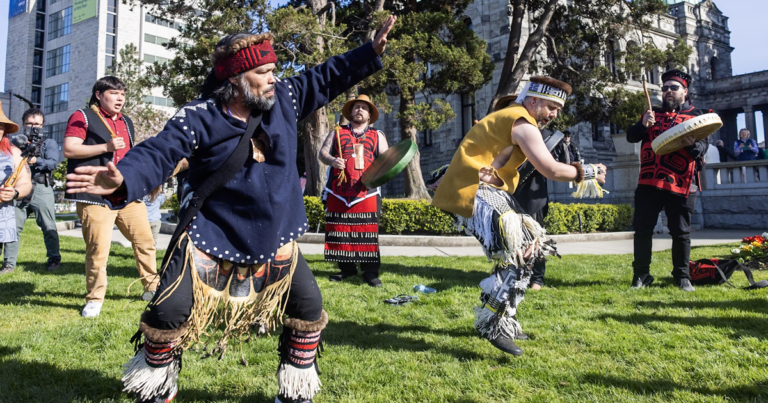
Haida Gwaii is a misty, mossy, forested archipelago off the north coast of British Columbia, home to 4,500 people. Of the population, half belong to the Haida First Nation.

According to the 2021 census, the Haida language is the mother tongue of 45 people, and the language spoken most at home for 10 people.

On April 14, 2024, the B.C. NDP government signed an agreement (outside of the courts or treaty process) with the Council of the Haida Nation recognizing Haida Aboriginal title. 

Provincial Crown land on Haida Gwaii is now Haida Aboriginal title lands, governed by the Haida Nation.

The agreement affirms that the Haida have an inherent right to the islands based on the fact that they were living there before European explorers and settlers arrived.

Until 2010, the archipelago was known as the Queen Charlotte Islands.

Louise Mandell, a lawyer who helped draft the agreement, said that over the next two years the Crown will gradually vacate “jurisdictional space” and Haida laws will govern Haida Gwaii.

But what exactly is “Haida law”?

One document to peruse is the Constitution of the Haida Nation, current as of October 2023.

“The governing power of the Haida Nation shall be vested in the Council of the Haida Nation,” the Constitution reads

“The Council of the Haida Nation shall regulate access to resources by citizens of the Haida Nation and other users of Haida Gwaii.”

The Secretariat of the Haida Nation is empowered to “lay and collect taxes, duties, imports and excises” at the Council’s will.

Obviously, the Council of the Haida Nation is what we would call “the government.”

So who, on Haida Gwaii, can participate in governmental and democratic affairs by running for office or voting?

Only those with Haida ancestry, or other residents of Haida Gwaii who are vetted and approved by those with Haida ancestry.

“The Council of the Haida Nation representatives shall be elected by the voting citizens of the Haida Nation,” the Constitution states, noting that the voting age is 16.

“Elected Council of the Haida Nation representatives must be Haida citizens.”

However, a Haida citizen is not merely someone who lives on the islands.

“All people of Haida ancestry are citizens of the Haida Nation… The Haida Nation reserves the exclusive right to determine additional Haida citizenship,” the Constitution reads, also noting that the Haida Nation is a matrilineal society.

“‘Citizen of Haida Gwaii’ is an honorary designation, which may be conferred to a person who is not of Haida ancestry. Such bestowal shall not be construed as granting of Haida citizenship or Haida hereditary or aboriginal rights.”

Haida Gwaii has a population of outsiders and immigrants who move for jobs in medicine, social services, education, tourism, and resource development. There are also established pockets of non-Haida residents, such as artists and American draft dodgers.

The non-Haida residents either have to accept their second-class status, no matter how much they contribute to the islands, or they must ensure they stay on the good side of the Haida government in order to maybe get democratic rights.

At a special assembly held on April 6, 95% of Haida citizens voted in favour of the title agreement. Only those with Haida blood or approval would have been able to vote. 

“Over the next two years, the Haida’s leaders and laws will replace British Columbia’s. This will mean roughly half the population, who are not Haida members, will be governed by rulers who they do not elect,” lawyer Tim Thielmann wrote on X

“Nor is it clear to what extent the Charter rights of these British Columbians will be enforceable against the laws and other actions taken by their new government.”

Thielmann also commented that the agreement “will call into question the validity of every tenure ever granted without Haida consent.”

Aboriginal law expert Thomas Isaac of Cassels law firm also has major concerns.

“The Agreement introduces significant uncertainty for those with fee simple lands on Haida Gwaii and for those who rely on the stability and long-term nature of Crown land use authorizations for their business operations,” he wrote.

It’s not only lawyers who are worried about what the agreement will look like in reality.

“It’s an unreasonable decision, and it’s grossly unfair to the general public,” realtor Glenn Warren told True North.

“Many people come to Haida to fish, hike, hunt, and explore the beautiful islands. This will almost be impossible to do once it’s all private land.”

True North reached out to the Haida Nation to inquire about potential recreational restrictions on Haida Gwaii, but did not receive a response.

If the Haida limited recreational access of their land to the non-Haida, they wouldn’t be the first to do so.

B.C. is closing their most popular Instagram-famous park, Joffre Lakes, to locals and tourists for three periods this year, so that nearby Indigenous tribes can have exclusive access to hunt and pick berries. 

“As part of BC’s commitment to the UN Declaration on the Rights of Indigenous Peoples… Joffre Lakes Park is closed from April 30 to May 15,” an advisory states, posted to the park website. 

The park will also be unavailable to general BC residents or tourists from June 15–June 23 and September 3–October 3.

“These periods will allow the park to rest and will establish Reconnection Celebration time periods to provide exclusive space for the Líl̓wat Nation and N’Quatqua to connect with the land.”

If Haida Gwaii wanted to separate and be their own completely sovereign territory, that would be one thing.

But their highways, airports, ferry terminals, health care, schools, public infrastructure, fire and emergency services, and programs will continue to be serviced by the province. 

Apparently, to these First Nations, limiting others’ access to certain opportunities – such as the ability to enjoy natural spaces – is a part of “reconciliation.”

B.C. Premier David Eby said the Haida title agreement is just a “template,” as he plans to give away more B.C. Crown land in the future. 

Off the Record | Cities clash with province over Alberta’s election reform bills

True North’s Alberta team has taken over! Kick back and enjoy the latest episode of Off the Record with Rachel Emmanuel, Isaac Lamoureux and William McBeath!

This week, Alberta’s proposed local election reform bills continued to be a contentious issue in the province, as mayors and critics blasted Bill 20. The bill would grant the provincial government the ability to remove councillors and repeal local bylaws. Is this an affront to democracy?

Plus, mandatory breath tests are becoming the norm for policing on Canada’s roads, but are they legally sound?

These stories and more on Off the Record! Tune in now!

TUNE INTO OFF THE RECORD