Trudeau government to give $1.7 million in funding for LGBTQ groups abroad

The Trudeau government announced it will pledge $1.7 million to international groups that support LGBTQ people in the wake of criticism that it has not combatted anti-gay legislation in other countries.  

Liberal MP Anita Vandenbeld made the announcement at a conference hosted by the Dignity Network, a coalition of Canadian groups that support LGBTQ people internationally.

The conference was attended by activists around the globe, who have called upon the Trudeau government to do more to protect sexual minorities abroad. 

According to Global Affairs Canada, the delay in funding for these groups is the result of the COVID-19 lockdown as well as a lengthy consultation process, however, the department claimed it was now ready to ramp up spending. 

Additionally, activists are urging Ottawa to disavow homophobic legislation in Uganda and Ghana, claiming it has a responsibility to prevent the erosion of human rights globally. 

Of the new funding, $1 million will go to a research project led by the U.S. aid department on how groups in different countries can reduce stigma and also act in times of crises. 

The remainder of the funding will go to Rainbow Railroad, a Toronto-based organization which examines the forced displacement of sexual minorities around the world by cooperating with local governments. 

The new funding follows a trend in the Trudeau government’s commitment to spending money on LGBTQ causes internationally.

Canada’s foreign service spent thousands of dollars staging performances where seniors shared their sexual encounters on stage in Austria, Taiwan and elsewhere last year. 

According to a press release by the Canadian Taxpayers Federation (CTF), the stage show by the Toronto theatre troupe Mammalian Diving Reflex was titled “All the Sex I’ve Ever Had’ and received $12,520 from Canadian taxpayers. 

Global Affairs Canada paid for the trips to Austria, Taiwan and Australia via the Mission Cultural Fund.

The group spent five weeks in Taipei City in 2019 to select and train a group of elderly people who shared their sexual experiences with live audiences. The show, which cost $4,000, was supposed to promote the Canadian values of free speech and tolerance.

Global Affairs has also been involved in other controversial projects via the MCF fund.

In 2019, the MCF paid Canadian artist Peaches $8,813.70 for a sex toy art exhibit in Hamburg, Germany called “Whose Jizz Is This?”

Alberta gov changes election date, enhances emergency response legislation

Alberta’s next election, initially scheduled for May, will now move to October.

This change comes with Bill 21, the Emergency Statutes Amendment Act, introduced in the legislature on Thursday. Other changes in Bill 21 are set to improve how the provincial government responds to emergencies, such as floods, droughts, and wildfires. 

“In Alberta, the likelihood of floods and wildfires is highest between May and July,” said Alberta Premier Danielle Smith.

She cited numerous examples, such as the Slave Lake fire in May 2011, the “devastating floods” in June 2013, the Fort McMurray wildfire in May 2016, and last year’s record wildfire season in Alberta, which began in early May. 

“We need to be able to assure that no matter which region of the province is affected by an emergency, we are able to have an all-hands-on-deck approach,” said Smith.

Alberta’s last election was held on May 29, 2023, but the election period began on May 1. Five days later, severe wildfires forced Smith to activate the Emergency Management Cabinet Committee and declare a state of emergency.

Over 45,000 Albertans, including electoral candidates — who had to pause their campaigns, were displaced from their homes.

Thanks to an election occurring during an emergency crisis, ministers were restricted in what they could do during this procedure due to election protocols. For example, Smith, Minister of Public Safety and Emergency Services Mike Ellis, and Minister of Forestry and Parks Todd Loewen were subject to daily fines of $5,000 because they were forced to use government resources during a campaign period to battle the wildfire crisis.

Smith said they decided to pay the fines as collaborating effectively with municipal, provincial, and federal governments took precedence. 

“Emergencies will happen in the future. Facing them again is a virtual certainty, but we can be better prepared for when they come,” said Smith.

The majority of Canadian provincial jurisdictions hold their elections in October. 

Additional amendments will be required to the Elections Finances and Contributions Disclosure Act and the Alberta Senate Election Act to align with the proposed election date.

Despite a reporter trying to get Smith to attribute the increased fires to climate change at the press conference, she would not.

“Of all the fires so far this year, and we’ve had about the same as last year, all but one were human-caused,” Smith confirmed.

Before Bill 21, the Alberta government had no immediate authority to intervene when fires crossed jurisdictional lines.

While many jurisdictions, such as Calgary and Edmonton, have sophisticated fire-response infrastructure, smaller jurisdictions, such as towns and hamlets, don’t have the appropriate resources to handle fires that can quickly spread out of control.  

“I can’t foresee that there’s going to be very many municipalities who are going to oppose this move. In fact, we’ve been hearing the opposite. When we’ve had these major catastrophes in the past, whenever the post-mortem is done, it’s always: ‘Why didn’t the province step in earlier? Why wasn’t the province proactive?’” said Smith.

The province has more tools at its disposal than any municipality. For example, Alberta is the only jurisdiction in Canada with night vision helicopters actively fighting fires, according to Loewen. 

“That’s the envy of North America right now,” he said.

Alberta also has drone technology that monitors fires throughout the night with thermal imaging.

Bill 21 not only amends the Election Act but also modifies the Emergency Management Act, the Forest and Prairie Protection Act, and the Water Act.

These amendments will clarify and extend the provincial government’s powers to manage emergency responses more effectively across all provincial lands and prioritize water usage for public health, safety, livestock welfare, critical infrastructure, and environmental protection.

Canada’s largest business groups press Liberals to reverse capital gains tax hike

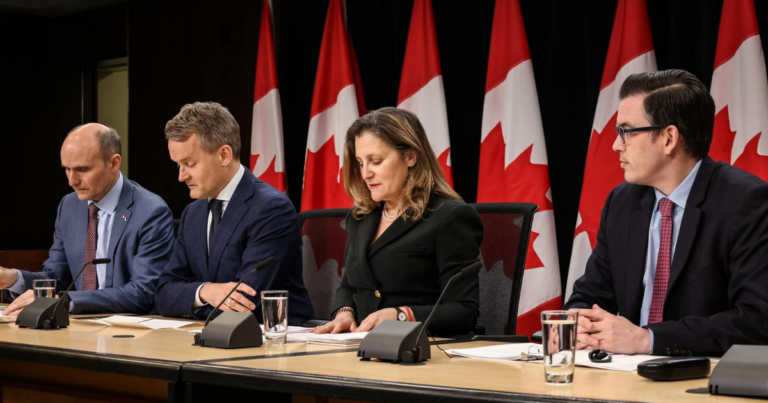
A number of Canada’s largest business groups are pressing Prime Minister Justin Trudeau to walk back his government’s plan to increase the tax inclusion rate on capital gains. 

The Canadian Chamber of Commerce and the Canadian Venture Capital and Private Equity Association are among two of the six major industry associations to write a joint letter to Finance Minister Chrystia Freeland on Thursday. 

“We are calling on the government to heed the advice of many of Canada’s most respected leaders and commit to scrapping the ill-advised inclusion rate increase,” reads the letter.

The group’s letter had initially contained a misleading figure, citing that one in five Canadians would be affected by the tax increase based on a study by Simon Fraser University’s Jonathan Kesselman. 

However, the Canadian Press caught the error and the Chamber of Commerce then updated the letter to claim that the hike would affect one in five businesses and not a fifth of the entire population.

Freeland announced plans to tax Canadian companies and individuals on two-thirds of their realized capital gains, an increase from the previous 50%, as part of the Liberals’ latest federal budget. 

The changes will take effect on June 25, which according to  Bloomberg, will impact 0.13% of Canadians and 12.6% of businesses but could have ramifications for the rest of the economy when it comes to attracting investment.

Only gains over $250,000 will be taxed for individuals under the newly increased rate.

Although not one of the letter’s signatures, the Canadian Medical Association also expressed their opposition to the increase, arguing that doctors who incorporate their practices will now be subjected to higher taxes.

According to a report by real estate firm Royal Lepage, over 10% of Canadians own an investment property, meaning they will have to pay more if they sell for a large gain. 

Primary residences are exempt from capital gains taxes in Canada however.

“If enacted, this change will have significant knock-on impacts, including making it harder for Canadians to access medical practitioners, limiting employment opportunities and making the prospect of starting, growing or succession planning a business more difficult, especially for multigenerational businesses such as farms, fisheries and small businesses,” reads the letter.

The Trudeau government estimates the tax increase will generate $19.4 billion in revenue over the next five years which could alleviate deficits, however, the government also announced billions in new spending with their budget. 

The tax change is not included within the budget itself, as Freeland intends to introduce separate legislation for it. 

“Our country must end its reliance on tax-and-spend politics, which is undermining innovation and growth to the detriment of both today’s Canadians and future generations,” the groups wrote.

The remaining industry associations involved in the joint letter are the Canadian Manufacturers and Exporters, the Canadian Federation of Independent Business, the Canadian Franchise Association and the Canadian Canola Growers Association.

“Put simply, this measure will limit opportunities for all generations and make Canada a less competitive, and less innovative nation. At a time when we are already urgently struggling to reignite our nation’s lagging productivity, increasing taxes on productive investments and throttling Canadian potential will have profound, long-lasting and potentially irreversible repercussions,” it continued.

Canadian-Israeli man murdered in Egypt by militant group 

A Canadian citizen of Israeli descent was murdered in Alexandria, Egypt on Tuesday, with a militant group taking responsibility for the killing, claiming it was in response to the war in Gaza. 

Initially, an Egyptian security source told Reuters that the man was killed “with the motive of robbery” and no connection was made between the murder and the victim’s ethnicity. 

However, a message posted on Telegram by a group called “Vanguards of Liberation,” previously unknown to authorities, claimed responsibility for the murder. 

The message said the killing was a reaction to Israel’s military campaign in Gaza and its recent decision to seize control of Rafah, wherein the IDF crossed Egypt’s border with the enclave.

The group named the victim as Ziv Kipper and accused him of being affiliated with Israeli intelligence.

According to a statement from SITE Intelligence, the group said the unit responsible for the murder was named after Mohamed Salah Ibrahim, an Egyptian policeman who killed three Israeli soldiers before being killed himself near the border between Egypt and Israel in June 2023.

The group’s post included a photo that appeared to be Kipper being shot in his car.

Egyptian security sources cannot confirm with certainty that the group is responsible for the incident, saying that they had not  previously been aware of their existence. 

The shooting occurred late Tuesday evening while Israeli forces seized the main border crossing between Gaza and Egypt in Rafah.

Some of the hostages kidnapped by Hamas during the Oct. 7 attack on Israel were also Canadian. 

The Daily Brief | The legendary Rex Murphy passes away

Elon Musk called the Liberal government’s online harms bill, Bill C-63, an affront to the rights of Canadians.

Plus, the annual March for Life saw hundreds of Canadians descend on Ottawa to demand an end to abortion Canada.

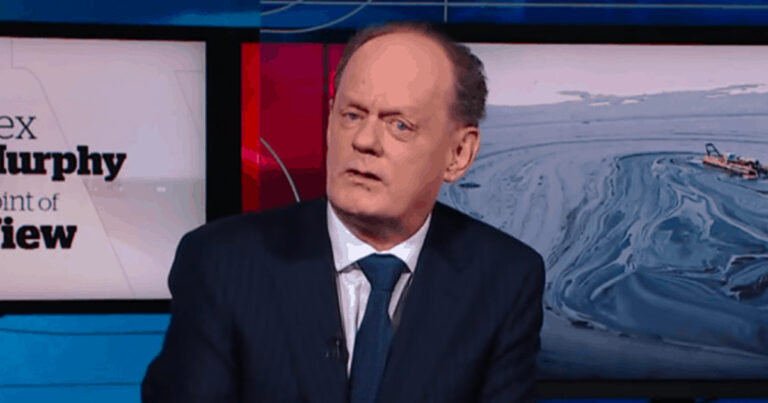
And Rex Murphy, a man whose career spanned decades and whose influence touched the hearts of many, has passed away at the age of 77 after a valiant battle with cancer.

These stories and more on The Daily Brief with Cosmin Dzsurdzsa and William McBeath!

SUBSCRIBE TO THE DAILY BRIEF

Court drops no-contact restriction on Convoy organizers Tamara Lich and Chris Barber

Two prominent Freedom Convoy organizers will now be able to communicate and meet again without lawyers present. 

A court dropped a no-contact order on Wednesday on Freedom Convoy organizer Tamara Lich, which prohibited her from meeting with or contacting fellow organizer Chris Barber.

Yet Lich’s legal challenges are far from over. She faces a series of charges, including mischief, obstructing police, counselling others to commit mischief and intimidation.

But Lich said she is taking victories where she can find them.

“It’s a step in the right direction, and I am grateful for the win,” she said on X.

With the order dropped, Lich and Barber can see each other and communicate without fear of arrest, though her other conditions and no-contact orders are still in place.

There is still an order restricting her communications with other protest organizers.

Lich was initially arrested in Ottawa, on Feb. 17, 2022, for her role in the Freedom Convoy. Though she had similar charges to Barber, she was denied bail while Barber was released.

She was held in jail for 18 days before being granted bail. When she was released, the court prohibited her from talking to any of the protest organizers, using social media, or speaking with some of the protest participants.

In June of 2022, Lich was arrested for a second time after allegedly breaching her prior bail conditions and contacting fellow protest organizer Tom Marazzo, but those charges were dropped.

Her bail conditions were eased in December last year, which allowed her to log onto her X account for the first time in 22 months after being barred from accessing the platform, which at the time she was banned, was called Twitter.

Barber and Lich celebrated the win together immediately.

“We decided a beer was more deserved than coffee, So grateful,” Barber posted on Facebook to celebrate their win though there was a different message for the audience on X.

According to The Democracy Fund, Lich’s legal representatives, March 15, 2024, marked the 38th day of the trial that began nine months ago.

TDF is a Canadian charity which finds legal representation for Canadians, especially in civil rights-related issues.

The trial has been adjourned until Aug. 13, 2024. Additional Aug. 14-15 and 19-23 dates have been proposed.

According to Rebel News, Lich’s legal fees have been quoted at around $300,000 for expert representation.

For those wishing to donate to Lich’s legal fund, TDF is accepting donations on their website, which also provides updates on the trial.

B.C. United leader says “some of these idiots” at anti-Israel encampments should not be tolerated

The leader of British Columbia’s official opposition had some harsh words for protesters who have set up camp at several university campuses in the province.

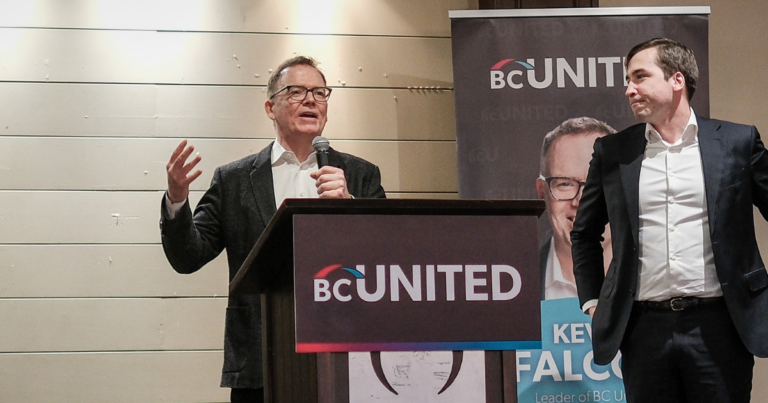
Kevin Falcon, the leader of the B.C. United party said the government should “come down hard” on any anti-Israel protesters on university campuses who are using inciting and hateful language at a weekly press conference today.

This comes after a Leger survey found that 44% of British Columbians felt that the pro-Palestine encampments on campuses should be shut down over safety concerns, and 33% believed they should be removed if protesters voice antisemitic views or propagate any form of hate speech.

“We all recognize that people have the right to protest in this province, and nobody wants to take away that right,” Falcon said in response to a question from True North. 

“But when the protest starts to morph into blocking students from getting their education, or the language that’s being utilized is creating the kind of hateful language that can result in communities being attacked or threatened, that’s when my tolerance level comes down to zero. I don’t tolerate any of that nonsense.”

He said when there’s hate speech explicitly directed at an ethnic community the government has to come down hard.

“There cannot be the kind of hateful talk that we’ve seen some of these, frankly, idiots out there saying,” said Falcon.

In a photo posted on X, a banner at the UBC campus shows the protesters’ support for violent attacks against Israel.

“Long live Palestinian resistance. From the River to the Sea, Palestine will be free.”

Though not at a campus, in a viral video, a woman with ties to the Popular Front for the Liberation of Palestine, a Marxist-Leninist terrorist organization, who was identified as Charlotte Kates, chanted, “Long live Oct. 7” at an anti-Israel rally in Vancouver. She was arrested by the Vancouver police on May 1.

“I commend the Vancouver police for arresting and charging that individual that was making hateful comments,” Falcon said. “We have to come down hard and say that is unacceptable in British Columbia. And when we do that, we’ll start to see a lot of these hateful comments coming to an end, I believe.”

Falcon said he thinks those who are making hateful comments, trying to incite violence against any identifiable group, should be held accountable for their behaviour.

However, he did not answer True North’s question about whether encampments should be removed from campuses.

B.C. United, formerly the B.C Liberal Party, has significantly lost support to the resurging Conservative Party of British Columbia.

According to polling expert Dimitri Pantazopoulos B.C. United might face its “demise” in the election this fall.

The party received 34% of the vote in the last election, winning them the official opposition seat. However, according to Yorkville Strategies, Falcon’s party will only get 13% of the vote if polls remain the same.

Falcon warned about trusting the polls and said he “would feel it” if they were true.

“This is not new to us. We’ve dealt with this before. The polls reflect what we saw in the polls of 2011 and 2012. Right up to 2013, we were 22 points down in the polls and won a majority government,” Falcon said.

Pantazopoulos was one of the only pollsters to predict Falcon’s victory in 2013.

But Falcon remains unshaken and optimistic, saying, “The sands are shifting.”

“When I go do town hall meetings, they’re packed town hall meetings,” Falcon said. “Our fundraising has never been stronger. We’re attracting amazing candidates, including doctors and lawyers and entrepreneurs and unionized train operators, etc. so, I would be very careful because what I’m feeling on the ground is very, very different than these so-called polls.”

He said his party is knocking on thousands of doors and is not seeing a “big wave” to John Rustad’s B.C. Conservatives, as the polls suggest.

CSIS briefing warns that China exploiting renewable energy to gain advantage over Canada

Canada’s top intelligence agency has issued a stark warning about China’s intentions to exploit the renewable energy sector, leveraging its control over critical minerals used in battery and computer chip production. 

The Canadian Security Intelligence Service briefing, obtained through an access to information request, sheds light on China’s strategic maneuvers in the global energy landscape and underscores the challenges posed to Canadian and allied interests.

CSIS highlighted the People’s Republic of China’s dual approach to energy, heavily reliant on fossil fuels yet poised to exploit renewables for strategic advantage. 

“The People’s Republic of China heavily relies on fossil fuels and is likely to exploit renewables for strategic purposes,” wrote CSIS. 

“While the PRC leads the renewable energy sector, from rare earth reserves to manufacturing solar cells and batteries, most renewables are produced using polluting energy sources and are exported to foreign markets.”

Of particular concern is China’s control over supply chains, with the PRC’s dominance in renewable energy posing a potential threat to other countries, including Canada. 

The briefing emphasizes China’s history of weaponizing supply chains, a tactic that could jeopardize Canada’s dependence on PRC’s renewable energy technology.

“The PRC is the world’s largest energy consumer, primarily relying on coal, making it the largest emitter of carbon dioxide. Beijing aims to peak PRC carbon emissions by 2030 and achieve net zero emissions by 2060,” wrote CSIS. 

“However, challenges in emissions reduction are greater for China due to its lower income level, necessitating an expedited transition compared to developed countries.”

The briefing also highlights China’s portrayal of itself as a climate leader while engaging in actions more aligned with those of a spoiler, prioritizing carbon energy despite climate commitments. This behaviour poses a global disruption, particularly concerning for Canadian and allied energy transition efforts.

In tandem with these revelations, recent statements from the Chinese Ambassador to Canada, Cong Peiwu, affirm China’s steadfast pursuit of majority stakes in Canadian critical mineral companies. 

“Politicizing normal commercial cooperation and using national security as a pretext for political interference is wrong. China has expressed firm opposition to this. We will continue to do business on the basis of mutual respect and mutual benefit,” said Cong.

CSIS warned further China’s focus on dominating the critical mineral market, including lithium, graphite, copper, and rare earth elements abundant in Canada, aligns with its broader economic strategy to gain a competitive advantage in digital technology manufacturing.

In response to China’s aggressive stance, Prime Minister Trudeau has signalled support for a critical mineral divestment strategy to counter China’s push for access to the Canadian market. 

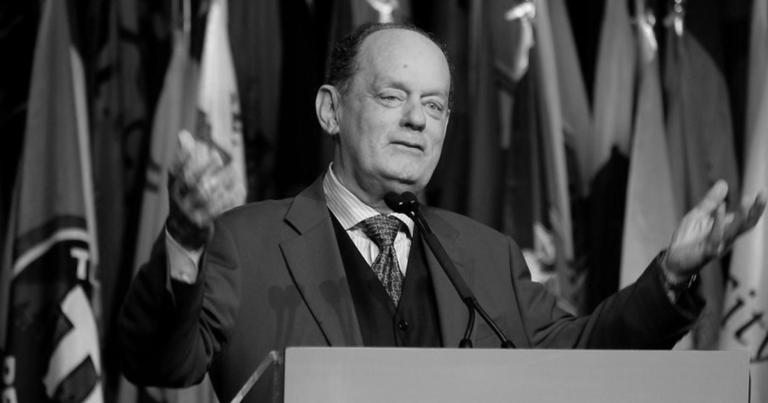
Canada mourns the loss of veteran journalist Rex Murphy

Canada has lost one of its most distinctive voices in journalism and public commentary. 

Rex Murphy, a man whose career spanned decades and whose influence touched the hearts of many, has passed away at the age of 77 after a valiant battle with cancer.

Murphy, known for his eloquent and often incisive commentary, was a stalwart of Canadian media, lending his voice to the nation’s discourse with a blend of wit and wisdom. 

His passing leaves a void in the national conversation, one that will be felt by colleagues, readers, and listeners alike.

Born in the small town of Carbonear, Newfoundland, before it joined Confederation, Murphy’s journey was as remarkable as his personality. 

A Rhodes scholar, he was a man of letters who chose to dedicate his life to the pursuit of knowledge and the dissemination of ideas. His academic pursuits took him to Oxford, but his heart remained firmly rooted in the Canadian soil where he returned to begin his long and storied media career.

Since his passing, prominent voices have paid their respects to Murphy online, including Alberta Premier Danielle Smith.

“Canada will never have a voice like his again- as a proud Newfoundlander he championed what he believed to be right for our country and was always a good and true friend to Alberta,” wrote Smith.

Conservative leader Pierre Poilievre also published a video tribute to Murphy on his personal X account.

“Canada has lost an icon, a pioneer of independent, eloquent, and fearless thought, and always a captivating orator who never lost his touch,” wrote Poilievre.

Murphy’s career was as varied as it was illustrious. From his early days on CBC’s ‘Here and Now’ to his 21-year tenure as the host of ‘Cross Country Checkup’, his voice became a familiar comfort to Canadians from coast to coast. 

His move to the National Post in 2010 marked a new chapter, where his columns continued to spark debate and reflection for many years thereafter.

Despite his achievements, Murphy remained a man of the people. His Newfoundland accent never waned, and his love for the everyday Canadian experience shone through in his work. 

He was once a political candidate, a critic, and a commentator who never shied away from speaking his mind, even when it meant challenging the institutions he once called home.

In his final days, Murphy’s dedication to his craft never faltered. According to the National Post he continued to write and engage with the issues of the day, a testament to his unwavering commitment to the public discourse.

Ratio’d | Is this the MOST DEPRESSING city in Canada? Exploring London, Ontario

Harrison Faulkner went to London, Ontario to investigate ground zero of Canada’s “safe supply” drug experiment.

In 2016, London became the first city to have an official safe supply facility. And now, the situation is horrible —  boarded up buildings, encampments throughout the city and open drug use.

Are these programs really “saving lives” as we are told by the activists who believe in these programs or is the opposite happening? How bad of a problem is the diversion of these “safe supply” opioids?

Harrison investigates these questions by speaking to local politicians, doctors and residents to find out more.

Watch the latest episode of Ratio’d with Harrison Faulkner.