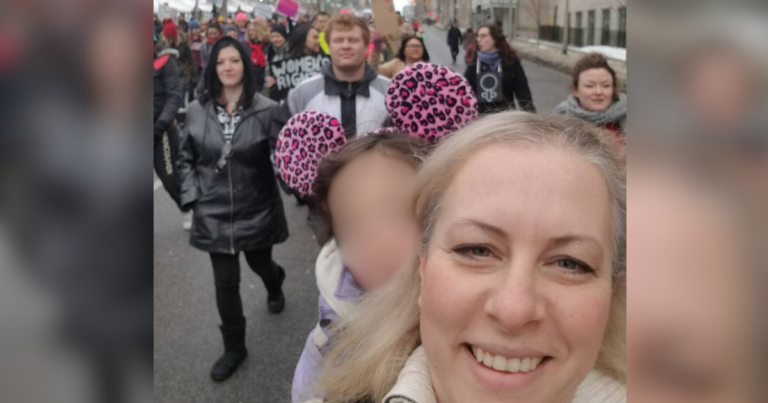
An activist who has become a recognizable face at some of Canada’s most heated protests was among several arrested on hate-motivated and other charges related to an anti-Israel protest.
Deana Sherif, 47, faces eight charges and was denied bail after allegedly assaulting a police officer and two others and harassing people as they left a religious service in what police have called a hate-motivated incident.
When asked if the Jewish community was targeted and if the religious service was at a synagogue, a spokesperson from the Ottawa Police Service told True North they “will not identify the victims so as not to further victimize.”
Sherif was arrested after a series of protest-related incidents on Apr. 15, in the wake of Iran’s attack on Israel.
She is charged with assaulting a police officer with the intent to prevent an arrest, obstructing a peace officer in the execution of their duty, two counts of assault with a weapon, possession of a weapon dangerous to the public, two counts of hate-motivated harassment, and threatening behaviour and intimidation.
According to Ottawa police, Sherif allegedly assaulted a police officer while impeding an arrest.
“While police were attempting to effect a lawful arrest, the individual inserted herself into the situation, and in doing so physically assaulted one of the officers,” police said in a news release.
Police said while Sherif was taking part in “another pop-up demonstration” the same day, she allegedly assaulted another man.
“The victim attempted to walk near the group of demonstrators to get to their destination, an argument ensued with the individual during which she assaulted the victim with a handheld sound amplifier. The individual then continued to verbally assault and impede the victim while they were attempting to walk away,” Ottawa police said.
Police say Sherif allegedly followed another individual from a “religious event” where she was accused of shouting “hateful messages” and assaulting him with a “handheld sound amplifier.”
Sherif has been seen escalating tensions at protests since the Freedom Convoy in Ottawa in February 2022.
She has been known to attend protests and counter-protests at school board meetings, anti-carbon tax rallies, pro-life events, and Pride-related protests.
In a 2022 Global News video, Sherif can be seen striking a Freedom Convoy protester with her megaphone.
🧵
Deana Sherif made national news for smacking people in the face with her megaphone during the first Freedom Convoy anniversary in Ottawa.
She did not face consequences for this violence, or for her many escalations since.
— Caryma Sa'd – Lawyer + Political Satirist (@CarymaRules) April 28, 2024
On X spaces, Sherif joked with like-minded individuals about using an electronic sound device, that her co-host Joe Morin gifted her, as a weapon.
In an email to True North the Ottawa Police Service said it will investigate all public complaints related to hate-motivated incidents. However, the force said it could not comment further as the matter is before the courts.
There is a publication ban on her court proceedings.. Her next court date is May 1.
Harrison Faulkner was at the Make Europe Great Again conference in Bucharest, Romania over the weekend to speak with conservative politicians about the issues facing the continent in the lead up to the EU elections in June. Unsurprisingly, the issue that received the most attention at the conference was mass immigration, the Islamization of Europe and the EU migration pact.
Harrison Faulkner spoke with a wide variety of conference attendees and European politicians at the conference, including US conservative activist Jack Posobiec and producer of Sound of Freedom Eduardo Verástegui.
Watch the latest episode of Ratio’d with Harrison Faulkner.
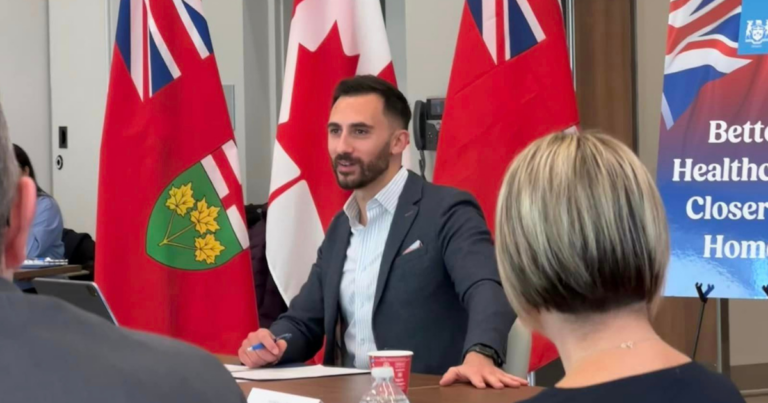
Less than a year after Ontario’s education minister called on school boards to return to back to basics learning, the Toronto District School Board has released a new four-year plan that places wokeness, anti-black racism and Truth and Reconciliation at the forefront.
In fact, the tone-deaf Multi-Year Strategic Plan (MYSP) doesn’t just emphasize that “equity” is the foundation of all of the board’s work: it states flat out in a TDSB policy paper embedded in the plan that the board’s version of equity ensures equality of “opportunities and outcomes” for all students.
“Equity ensures equality of opportunities and outcomes for all by responding fair (sic) and proportionality (sic) to the needs of individuals,” the equity policy states.
“Equity is not the same as equal treatment because it recognizes a social-cultural Power Imbalance that unfair Privilege (sic) some while oppressing others and therefore focuses on redressing Disparity.”
The definition of equity includes the idea of acknowledging “historical and present System Discrimination against identified groups and removing Barriers.”
(Perhaps the educators who created the equity policy need some literacy training too. The spelling and grammar errors in this one passage alone are unbelievable.)
The plan was released early last week — days before Lecce decided to throw more money — another $745M — at school boards to increase math and literacy supports, among other things.
Trouble is, once these earth-shattering announcements are made, there never seems to be much in the way of follow-up or monitoring by Lecce’s ministry.
All we have to use as proof is Lecce’s promise nearly a year ago to review the circumstances at the TDSB — and the alleged intimidation by a DEI activist — leading up to the tragic suicide of much loved principal Richard Bilkszto.
That review is in Nowheresville.
Toronto school board education director Colleen Russell-Rawlins and her woke anti-black racism-and-equity-obsessed executive team have tried to make the MYSP more palatable by incorporating the ministry’s indicators of progress into it — such items as the standardized tests, graduation rates, individual attendance rate greater than 90% and numbers of students who’ve been suspended at least once.
We know, however, that social promotion is rampant in the TDSB and other Ontario school boards and teacher sources tell me the TDSB is “unwilling” to supply attendance data.
As for suspensions, they don’t exist in the TDSB and the administrators sweep violent incidents under the rug.
I witnessed that when I attended a TDSB meeting late last summer and saw trustee Weidong Pei quickly shot down for daring to ask about the current number of violent incidents in the board (this before Oct. 7).
In other words, those indicators of progress are just smoke and mirrors.
DEI ideology is still alive and well at the TDSB, despite Lecce’s edicts.
While the Education Act mentions “equity” just once, the MYSP uses the terms “equity” and “equitable” more than a dozen times.
Inclusion and intersecting identities come a close second.
For example, under the section called “Equity as a Guiding Principle,” the board claims it intends to remove and prevent systemic and attitudinal barriers that stand in the way of equity of access and “create disproportionate outcomes” for underserved students.
In other words, anti-black racism initiatives and preferential treatment to the 1% of students who “identify” as First Nations, Metis and Inuit continue to be top priorities.
That makes official a policy that has been edging dangerously towards dumbing down the curriculum.
One needs to look no further than such policy changes as removing merit-based entry to get into specialized arts and sports programs.— entry requirements replaced with quotas and random selection.
Also hidden in plain sight in the MYSP is the 43-page board’s equity policy featuring 18 pages of woke definitions.
These include anti-black racism (one of the “many results of white supremacy”); Dominant group (a group considered the “most powerful and Privileged of groups”); and oppression (prolonged, systemic, abuse of Power or control by the Dominant group.)
What also makes it abundantly clear that the TDSB executive team is still obsessed with white supremacy, and not learning the basics, was the hiring of Turner Consulting to lead a consultation about the MYSP.
According to documents provided by the TDSB, president Tana Turner was picked out of two bids for the 18-month $149,600 contract because of her consultancy’s extensive experience working with “diverse communities” and her analysis done from an “anti-racist, anti-oppressive approach.”
According to Turner’s website, she has delivered human rights and “unconscious bias” training and has worked on such projects as “Dismantling Anti-Black Racism” at the York Region District School Board and “Fighting an Uphill Battle” (consultations into the well-being of black youth in Peel Region).
The MYSP says Turner held meetings in underserved communities and with staff who work with underserved communities (such as the Centre of Excellence for Black Student Achievement and the Urban Indigenous Education Centre).
Besides the seemingly conscious bias of this consultation effort, this anti-black racism advocate was doing her work at the exact time that the numerous allegations about another race advocate, Kike Ojo-Thomson had come to light.
Those allegations pertained to the harassment and intimidation of Bilkszto, labelled a white supremacist by Ojo-Thomson.
It is shameful that Russell-Rawlins and her cabal of equally oppression-obsessed administrators continued on with this ridiculous consultation just weeks after Bilkszto’s story was revealed.
But this is what happens when a school board has an executive team that feels it can act against the interest of most pupils with impunity and an education minister who does nothing about it.
You’ll forgive me for saying so but back-to-basics will forever take a back seat to DEI at Canada’s largest school board — unless there is a complete overhaul of personnel.
As talent, hard work and initiative increasingly take a back seat to wokeness and social promotion, one can only wonder what kind of “leaders” these administrators will graduate.
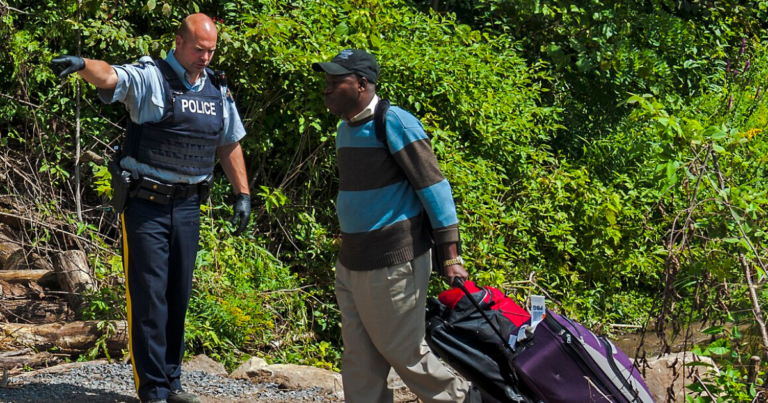
The cost of sheltering asylum seekers in London, Ont. has reached a staggering $1 million within a year but the federal government is alleging that the southwestern Ontario city hasn’t been upfront about requesting aid to handle the evolving situation.
London has disputed this, alleging it has been vocal about the need for federal government assistance.
According to the London Free Press, London Liberal MP Peter Fragiskatos and federal authorities allege they have not received any communication from London city hall regarding reimbursement for asylum seekers.
Asylum seekers have commandeered 11.9% of overnight shelter stays, a staff report slated for discussion during Monday’s city council meeting says.
These figures, spanning 11 months from May 2023 to March 2024 offer a glimpse into the strain faced by London’s shelter system due to overwhelming refugee and asylum seeker intake.
City staff tracked the numbers: 123 asylum claimants found refuge within the city’s 306 shelter beds, accounting for a total of 11,073 overnight stays.
Taxpayers are billed $96.99 daily per bed, totalling a jaw-dropping $1.07 million. And that’s merely the tip of the iceberg—additional funds, approximately $31,000, were dished out on hotel rooms for migrants.
Yet, the scope of the crisis may be even more troubling. City officials suspect that the actual number of refugees seeking shelter could surpass the recorded figures.
Staff reported some migrants may be fearful of repercussions and as a result, have hesitated to disclose their presence officially.
London city council commissioned an internal study in November to size up the scale of the issue.
In a bid to alleviate the mounting pressures, Ottawa recently pledged $212 million to cities nationwide.
Ottawa promised the funding would offset the costs associated with housing newcomers. However, the path to accessing these funds isn’t very clear as other municipalities struggle to get the federal Liberals to fulfill its pledge.
As recently reported by True North, the City of Ottawa has requested an additional $32 million from the Liberal government to accommodate the increasing influx of asylum seekers, as new data reveals that half of the capital’s homeless shelters are currently occupied by new immigrants and refugee claimants.
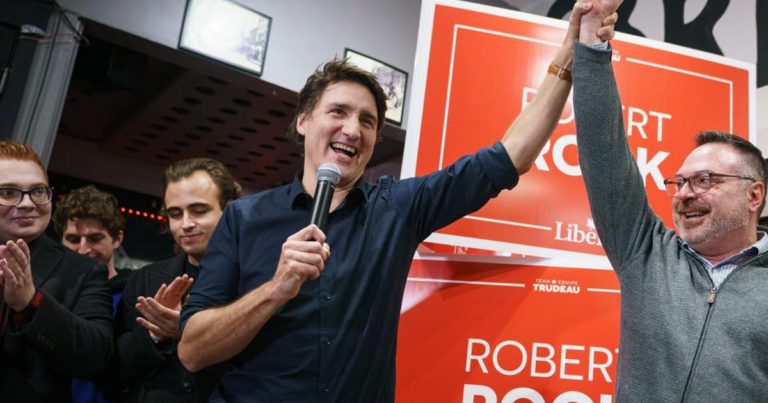
Even if Prime Minister Justin Trudeau finds himself taking a walk in the snow by Canada’s next federal election, he said that he will remain a social activist focused on causes he’s championed while in office.
Stephen Dubner interviewed Trudeau on Apr. 19, discussing many of his policies and legacy. The podcast was posted to Freakonomics’ website last Wednesday.
Trudeau said that he would still be a teacher if he had not entered politics. When he leaves politics, he plans to return to teaching in some form.
“I’m ultimately a social activist who’s going to look to how I can have a positive impact on the world. I did it as a teacher. I’m doing it now as a politician. Whatever I do next, I will continue to try and have an impact on the world. But for now, I’m very much happy and focused on the job I have and not thinking about the future too much, except the future for young Canadians that we’re trying to build,” said Trudeau.
The future appears bleak for young Canadians. A recent survey reveals that they have experienced the second-largest drop in life satisfaction among their peers, ranking them as the least happy demographic under 30 in the G7 nations.
Trudeau said that young Canadians no longer feel the country’s economy works for them, as it did for their grandparents and parents, who could come out of school, get a good job, rent a place, and save for a down payment. Accessibility to the middle class has fallen, he admitted.
Economic inequality in Canada has reached the biggest gap between the richest and poorest households since Trudeau took office in 2015.
Trudeau said his recent budget increases the capital gains tax to 67% to allegedly help young people by taxing the wealthiest 0.1%.
Leaders in healthcare and entrepreneurship have warned Trudeau’s government that the hike will affect far more than the top 0.1%, encouraging doctors and tech workers to leave Canada in search of more competitive income and taxes. Additionally, it could drive investment away from Canada.
Trudeau said that bringing 500,000 people annually to Canada is “totally sustainable” despite facing growing scrutiny over his government’s record-level targets.
True North previously reported that about 2.2 million newcomers immigrate to Canada annually when temporary immigration programs were accounted for.
“One of our competitive advantages is that Canadians remain positive to immigration,” said Trudeau.
Recent polls show that even immigrants who relocated to Canada within the last decade feel that too many immigrants are coming to Canada.
“We’re going to need more immigration, in terms of healthcare workers, construction workers, and skilled trades responding to the housing challenges we’re facing by building more supply,” said Trudeau.
The Prime Minister blamed many of the country’s issues on populism, which he said is taking place South of the border and within the current Conservative Party.
“We have the same kind of anxieties and populism and frustration and amplification of fears by certain political parties instead of trying to solve problems,” he said.
Oxford Dictionary defines populism as “a political approach that strives to appeal to ordinary people who feel that their concerns are disregarded by established elite groups.”
According to a Hill Times report, Justin Trudeau has told Liberal members of Parliament not to worry, because despite the Conservatives’ large lead over the Liberals, this will all get sorted out next year. True North’s Andrew Lawton says any Liberal MPs serious about their political futures should be showing Trudeau the door right about now.
Also, anti-Israel protesters at McGill University in Montreal have established an encampment to demand the university divest endowment funds from Israel and cut ties with Israeli academic institutions. Columnist and Montrealer Barbara Kay joins the show to discuss.
Plus, new data show that carbon emissions in British Columbia have continued to rise despite the province’s long-running carbon tax. Why should Canadians keep going along with this? Kris Sims from the Canadian Taxpayers Federation weighs in.
Despite British Columbia Premier David Eby previously defending the province’s drug decriminalization pilot project, he has decided to extinguish the flame.
Plus, a True North exclusive debunks claims made by legacy media outlets that protesters at the Nova Scotia and New Brunswick border were connected to podcaster Jeremy Mackenzie’s fictitious meme country Diagolon.
And a new poll reveals only 21% of Canadians support the Trudeau government’s latest budget.
Tune into The Daily Brief with Lindsay Shepherd and Isaac Lamoureux!
But if you haven’t checked the news since the 1970s or so, you might still have the idea that Canada’s health care is all about equitable access: no matter who you are, you can and will get the care you need.
That’s the point of a universal system, right?
Unfortunately, this vision of Canadian health care simply doesn’t line up with reality. With the government’s bans on private care, most Canadians simply don’t have much of a choice. It’s either wait for the government to get around to fixing your chronic health problem, or travel somewhere else.
However, there is another way to finally get that knee replacement you’ve been waiting years for: tell your story to the media.
Governments don’t want to look bad. Sure, all the stats about the failures of the health care system aren’t great for government popularity, but it’s another thing to put a face to the numbers. When the headlines show a real person suffering due to the government’s incompetence in its health care monopoly, things can start to become really difficult for politicians who want to get re-elected.
With that in mind, should it be shocking that many patients share their story with the media, and then, shortly afterwards, are surprised to get a phone call with a scheduled date for their surgery?
Here are just a few examples of this.
Bill Bagyan from Kingston, Ont., waited for surgery for over a year and a half with an agonizingly painful urological condition. That entire time, he had to have a catheter in. Any man who’s had to use a catheter for even a day or two during a hospital stay knows how painful it is. Imagine coping with that for 18 months. Bill eventually got fed up and told his story to CBC. A mere five days later, he finally received his surgery.
Devin Gallant, a teenager from Fort St. John, B.C., suffers from spinal muscular dystrophy, a disease that causes his muscles to waste away. Corrective surgery was cancelled four times before his family had enough and spoke to Global News. Just over a week later, Global reported that Devin had suddenly received surgery.
Dean Baker from Welland, Ont. wasn’t sure he would make it through the year. He had been diagnosed with a brain tumour and desperately needed surgery. The hospital couldn’t tell him when he’d be able to get it removed. So, he spoke to the St. Catharines Standard, the local paper. One day later, he got a call with good news: he’d be in for surgery within the month.
These are just a few examples. It’s important to stress that these patients did nothing wrong. When you’re suffering from chronic pain and unable to walk, or there’s a serious chance that you might die, it’s perfectly understandable that you would do everything you can to get health care.
But should patients really need to have to share their story with the media in order to receive timely care? Of course not. Canada should be allowing patients more choice – use the public system or private options – to reduce wait times. We should be copying other reforms that have been used in better-performing universal health care systems around the world.
But in the meantime, you may want to think about your media strategy in the event of a major health problem. It might just help you get the care you need.
Dom Lucyk is the Communications Director for SecondStreet.org, a Canadian think tank.
Young Canadians reported the second-largest decline in life satisfaction according to a new survey, making Canadians under 30-years-old the least happy cohort of their peers among other G7 nations.
Canadians’ life satisfaction has remained in a steady decline since 2013, with happiness making a sharp downward trend since 2017, according to a recent survey conducted by the Oxford Wellbeing Research Centre and the UN Sustainable Development Solutions Network.
They released their annual World Happiness Report last month, which evaluates the happiness of residents in 143 countries.
Participants are asked to report their happiness on a scale of zero to 10.
Accounting for all age groups worldwide, Canada ranked as the 15th happiest country globally and first in the G7 for 2023.
However, if the oldest cohort of Canadians is excluded, the country falls to second last in the G7 and globally, it trails behind countries like Mexico and Saudi Arabia.
Canada’s average happiness score was 6.9 0ver the last two years, making it the 15th happiest country among those surveyed, beating out the U.S. and the U.K. as well as
Finland, Denmark and Iceland self-reported being the three happiest countries, respectively, over that same period.
While the World Happiness Report examines many facets of life satisfaction, it’s the different age cohorts in Canada which reveal the widest disparities amongst Canadians.
Canadians aged 45 to 60 years old and those over the age of 60 ranked the highest among G7 countries, with both age groups reporting higher-than-average levels of life satisfaction.
However, Canadians aged 30-years-old and under scored third unhappiest amongst their G7 peers between 2021 and 2023, with an average happiness score of 6.44.
If one isolated just that cohort of Canadians, the country would be ranked 58th happiest, worldwide.
Canada’s age distribution responses also marked the inverse of most other countries interestingly enough, as the majority of countries in the World Happiness Report revealed their younger cohort to be happier when compared to their old.
This is likely due to young Canadians feeling anxious about their debt and their inability to own a home in the future.
An Equifax Canada survey from last year revealed that 52% of adults in the age group of 18 to 34-years-old are anxious about their personal debt.
Moreover, 36% of young Canadians reported that they missed a bill payment in 2023, when compared to 23% of all respondents.
A Toronto Metropolitan University student is suing the university for failing to apply their policies which prohibit antisemitism. The lawsuit alleges the university’s inaction has created a “poisoned antisemitic learning and working environment” in the wake of Hamas’ massacre of Jews in Israel on Oct. 7.
For the plaintiff Nicole Szweras, Israel is a fundamental part of her Jewish identity. Her mother was born in Israel, she has Israeli citizenship, and many of her friends and family live in Israel, including some who were called to serve in the Israeli Defence Force following the massacre.
Szweras is in the media production program at TMU and was also employed by the university at its Equipment Distribution Centre.
She alleges the university is well aware of continuous acts of antisemitism conducted by other students at the university and has failed to adequately apply its diversity-centred policies to protect Jewish students.
There are several policies at the school which could prevent racism, discrimination and harassment and the school’s procedures continually affirm their commitment to ensuring a safe environment for all students.
In an email to True North, TMU stated that they could not comment on the case but reaffirmed the university’s pride in its “diverse and intentionally inclusive community.”
“The university works hard to promote an equitable and inclusive university community, free from discrimination and harassment. All TMU community members have a shared responsibility for ensuring a culture of respect and inclusion,” TMU said.
David Rosenfeld, Szweras’ lawyer, works with the Centre for Israel and Jewish Affairs’ Legal Task Force and B’nai Brith Canada’s Matas Law Society in defending Jewish people facing antisemitism.
Rosenfeld spoke to True North to tell us what drove Szweras to sue the university.
“This Jewish student at TMU and others on campus are facing quite a difficult environment at TMU. They face continual chants, posters and graffiti on campus calling for and celebrating violence against Israel and Jews,” Rosenfeld said.
Rosenfeld said Szweras and other Jewish students are being threatened and intimidated by several incidents, words and actions including rallies where students are calling for Zionists to be removed from the school.
He said some chants which cheer on or call for violence against Jewish people have become commonplace not just at TMU but on many Canadian streets and university campuses are heard regularly but little to no action is being done to prevent the conduct at the university.
“From the river to the sea, Palestine will be free” is commonly understood by many Jewish people to be a call to destroy the State of Israel.
Calls for Intifada, to “globalize the Intifada,” or saying an Intifada revolution is the only solution are alleged in the lawsuit as well.
The “Second Intifada” was a period of terror for many Israelis and was characterized by dozens of suicide bombings and other attacks, largely by Hamas, on Israelis in public places frequented by civilians, such as hotels, night clubs, movie theatres and buses.
An open letter written by students in support of Hamas and other incidents involving statements made by people accredited by the university were also noted in the lawsuit filed to the Ontario Superior Court of Justice.
Szweras alleges these actions all fit the International Holocaust Remembrance Alliance’s (IHRA) definition of antisemitism, which has been adopted by the governments of both Canada and Ontario.
Using the IHRA’s definition of antisemitism, Rosenfeld argues the state of Israel is a “central, critical, and inextricable element of Jewish identity” and that anti-Zionism is inherently antisemitic, especially when it denies the right of Israel to exist and defend itself, or equates the actions of Israel to National Socialist Germany.
“Frankly, no one, let alone the students, paying for the privilege of attending an institute of higher learning, should have to face the environment Nikki and other Jewish students at TMU have experienced,” he said.
TMU has policies that prohibit the kinds of intimidating, offensive, demeaning, threatening, and unwanted conduct that Szweras alleged.
“From Nikki’s perspective, not applying those policies, not seeing sanctions being applied, not seeing statements from TMU about specific particular conduct or specific statements, just sort of stokes the flames of this kind of conduct at school,” Rosenfeld said. “(For her) it seems like those policies are just token statements, but not actually applied to conduct involving the Jewish students.”