Former Alberta chief medical officer Hinshaw now working as BC deputy

Former Alberta Chief Medical Health Officer Deena Hinshaw has been hired on a six-month contract as British Columbia’s deputy provincial health officer. 

During the United Conservative Party leadership race last summer, Alberta Premier Danielle Smith campaigned on firing Hinshaw, who was responsible for the province’s Covid-19 response, and made good on that promise shortly after becoming premier. 

The BC government said Hinshaw will “support the work of the office of the Provincial Health Officer, Dr. Bonnie Henry, while filling in for another deputy provincial health officer who is on assignment.”

“I feel very fortunate to work alongside such talented and dedicated public health experts and I know their expertise will be a great assistance as we emerge from the pandemic and continue to address the many public health challenges facing the province,” Henry wrote in a news release.

In her first press conference as premier on Oct. 11, Smith said she would no longer take advice from Hinshaw.

“I will get new advice on public health,” Smith said. “I appreciate the work that Dr. Deena Hinshaw has done, but I think that we’re in a new phase where we are now talking about treating coronavirus (as) influenza.”

In November, the province announced that Dr. Mark Joffe, the vice-president and medical director for Cancer Care Alberta, would take her place. Hinshaw had served as Alberta’s top doctor since Jan. 28, 2019.

Under Hinshaw’s leadership, the Kenney government implemented vaccine mandates and closed schools and churches. Alberta Health Services officers visited churches to ensure Covid protocols were being met, and those that did not comply were fined or shut down. 

Some of those charges are now being dropped. In November, Alberta Pastor Tim Stephens was acquitted on charges of violating the province’s public health orders which required physical distancing during the Covid-19 pandemic. Stephens spent a total of 21 days in jail in regards to the charges. 

Hinshaw also faced backlash across the province after it was revealed she received a nearly $228,000 Covid bonus in 2021, on top of her $363,633.92 salary. That marked the largest cash benefit payout of any provincial civil servant.

CAMPUS WATCH: A look inside SFU’s “climate change anxiety” seminars

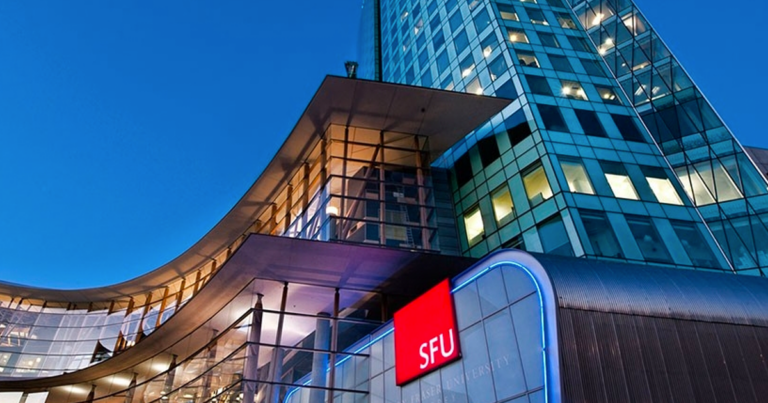
“Climate change anxiety and grief” seminars held at British Columbia’s Simon Fraser University (SFU) recommend that students reduce caffeinated drinks and practice self-care to help deal with distress caused by changes in the weather and climate.

The seminars are led by clinical counsellor and psychologist Dr. Shona Adams, and are part of a research study “on understanding different interventions that people with different levels of climate change distress find helpful,” as previously reported by True North.

True North acquired the PowerPoint presentation used for Adams’ seminar. 

Adams’ presentation, which offers advice and strategies to deal with anxiety and grief caused by climate change, is split into twelve sections. The sections are titled; “you are not alone!”, “purpose of emotions”, “window of tolerance”, “climate grief”, “climate courage/radical hope!”, “climate action”, “healing with nature”, “social connection”, “reimagining community futures”, “building resilience”, “balancing perspectives” and “mental health supports”.

The presentation begins with an Indigenous land acknowledgement, which mentions “climate justice” and reminds people of “other peoples disproportionately affected by climate change.” The slide also states that the seminar is being given from a “W.E.I.R.D.” (Western, Educated, Industrialized, Rich, Democratic) perspective.

Adam’s presentation calls on students to build resilience by embracing healthy thoughts, as well as practicing self-care by eating well, exercising, getting good sleep, spending time outdoors and not using drugs and alcohol to deal with pain. 

The presentation also tells students they should reduce their caffeine intake, take breaks, join groups, make “practical preparations for impacts of climate change” and use “creative expression” such as art, dance and music.

Another slide provides “emergency strategies” to stop climate anxiety before it happens, which includes: spelling and counting backwards, controlled breathing, squeezing fingers, high intensity exercise, and grounding strategies.

The presentation also tells students they should have “climate courage”, which includes the courage to “face the reality of climate change”, “assess and acknowledge our contribution to climate change”, “feel the emotions”, and “take action.”

Additionally, Adams recommends that students look at balanced perspectives on climate change and says limiting certain social media sites can be helpful.

Adams told True North that the purpose of her seminars are “to help people understand symptoms of climate change anxiety and grief.” She added that they are “also to teach some coping strategies and direct people who are impacted by this with potential ways forward, and to help build resilience.”

She said her seminars came to be after she was initially “approached by a professor who was concerned about the mental well-being of some of their students in their class who are studying in this field.”

“I explicitly state that I am not an expert on climate change, as there are many at the university who study this in depth,” she added. “My expertise is in mental health and I am involved with a research group in this area, as it is an emerging area. I also explicitly state that there are many perspectives on this topic and that people are in different places in their experiences, and for all to be respectful of others.” 

“Climate anxiety” is defined by an Harvard Medical School article as “distress related to worries about the effects of climate change.”

A 2021 Lancet survey conducted among 10 000 people aged 16 to 25 in ten countries saw 59% of respondents say they “very or extremely worried” about climate change, while 45% said climate concerns are affecting their daily lives. The survey also found that 40% are hesitant about having children because of climate change.

Adams held her first seminar on Jan. 24 at SFU’s Burnaby campus, and plans to hold a second one SFU’s Surrey campus on Mar. 3

– with files from True North’s Cosmin Dzurdzsa.

Peel school board adopts racial preferences into specialty program acceptance criteria

0

In an effort to address “historic disproportionalities,” the Peel District School Board (PDSB) in Ontario will give students preferential treatment in the admission process into specialty programs based on their skin colour and ethnic background. 

As part of the PDSB’s WeRiseTogether initiative, Regional Learning Choice Programs – specialty programs that allow students to develop skills in a particular area of interest – will allow self-identifying African, Afro-Caribbean, Black, First Nations, Inuit and Métis students to bypass the program’s random selection process and by automatically accepted. 

This bypass process would apply to speciality programs like International Business and Technology (IBT), International Baccalaureate (IB), and Arts.

Traditionally, PDSB students transitioning from an elementary school to a middle school, or a middle school to a high school, are expected to submit an application for their desired program. If the student meets the necessary academic criteria, the student is entered into a random selection process.

On the PDSB’s website explaining the new admission process, the board cites the need for “equity and inclusion for all.” 

“Admission to regional programs will reflect the need to address historically and statistically significant disproportionalities in enrollment as per student census data, ensuring equitable representation of African, Black, Afro-Caribbean, First Nations, Inuit and Métis students,” it reads.

True North reached out to the PDSB for comment but did not receive a response prior to publication.

Random Toronto assault claims life of veteran CBC producer

Canada is mourning the death of documentary filmmaker and retired CBC producer Michael Finlay after he was randomly attacked by a stranger while shopping in Toronto. 

Finlay’s death comes at a time when major cities struggle to contain acts of violence by strangers. 

Finlay died on Tuesday from medical complications while he was in the hospital because of the attack. 

According to the Toronto Police Service, on Jan. 24, an unidentified stranger assaulted Finlay as he was walking down Danforth Avenue – a popular shopping and dining destination. 

The suspect is being described as a man in his 20s, around six feet tall with a slim build. He was wearing a red paper mask with flames and a black sweater and black pants around the time of the attack. 

“Michael will be remembered as an exceptional story-teller, documentary-maker and editor,” said CBC spokesperson Chuck Thompson. 

“He travelled the world producing radio documentaries for several programs but most notably for Sunday Morning. If you worked on a documentary with Michael, you were experiencing the pinnacle of the craft.”

A few days before the attack on Finlay an 89-year-old woman died after being shoved by a stranger in downtown Toronto. 

“The information we have is that she was pushed to the ground and she sustained serious injuries to her face and head area,” said Acting. Insp. Craig Young. 

37-year-old Ryan Cunneen was arrested and charged with manslaughter as a result of the incident. 

Police and transit workers in the city have called on all levels of government to immediately clamp down on the growing violence faced by workers and pedestrians. 

Last week the national president of the Amalgamated Transit Union demanded a national action plan to deal with the situation. 

“Today, we heard from the prime minister who made a commitment to have these discussions about how we can tackle violence on transit systems. I hope and anticipate that it’s not just talk and that our office gets a phone call,” said president John Di Nino. 

The Daily Brief | Trudeau’s fertilizer emissions scheme unfairly targets the west

In part 2 of True North’s Fertilizer Files, documents revealed the feds were aware that fertilizer emission reduction targets introduced in 2020 would unfairly target western Canada by harming farm yields, but went ahead with the policy anyway.

Plus, former defence advisor and military historian David J. Bercuson said Canada donated four Leopard-2 tanks to Ukraine because of tremendous political pressure, rather than a desire to support the country.

And small quantities of hard drugs are now “not criminal” to possess in British Columbia.

These stories and more on The Daily Brief with Anthony Furey and Cosmin Dzsurdzsa!

SUBSCRIBE TO THE DAILY BRIEF

MP tries to get House of Commons to condemn Tucker Carlson

On Tuesday, a Member of Parliament tried to get the House of Commons to condemn Fox News host Tucker Carlson, but it wasn’t successful.

NDP MP Matthew Green asked for unanimous consent from MPs on the matter, saying leaders needed to set an example to stop what he claimed was a rise of far-right extremism and violence.

The motion did not pass.

Media personality Tucker Carlson made comments about liberating Canada last week on his popular Fox News program.

“Why don’t we liberate [Canada]?” he said. “We’re spending all this money to liberate Ukraine from the Russians, why are we not sending an armed force to liberate Canada from Trudeau?”

Carlson said Trudeau’s authoritative government is making Canada similar to the communist country Cuba.

LEVY: Ontario school bans Valentine’s Day for inclusion reasons

At least one elementary school in one of the wokest school boards in Ontario has decided to engage in some tough love this Valentine’s Day.

According to a social media post from early this week, provided to True North, Kitchener’s Jean Steckle Public School has informed parents that their kids will not be permitted to hand out Valentines on Feb. 14.

The post – on a private Facebook page – expressed parent Stephanie Robinson’s disappointment with the decision:

“I have to say I’m pretty disappointed with the decision for not allowing the kids to hand out valentine cards. I know these topics are like walking on eggshells and I mean no disrespect to anyone. But I received an email from the admin at the school that I thought I would share in case anyone else wanted to express their disappointment.” 

Tamara Schmelzle, the school’s vice-principal, has made it pretty clear she’s a fan of radical Waterloo Region District School Board (WRDSB) education director Jeewan Chanicka.

Chanicka and the board’s woke trustees have repeatedly come under fire for asking students as young as nine years old their sexual orientation and gender in surveys and for their defence of the highly sexualized books contained in elementary school libraries.

While the memo was not made available to True North, the comments accompanying the posting alluded to concerns about inclusivity – that some kids would be left out because their families can’t afford Valentines. 

Parents were told their kids would be permitted to give out their Valentines before or after school.

Forget about being creative and suggesting that they either make them at home or in class.

The Facebook posting had received 101 comments as of Tuesday evening, most expressing disgust that yet another fun activity was being cancelled by woke school officials.

Two parents suggested they send Schmelzle Valentine’s Day cards. Others said they’d send Valentines anyways.

Another parent said the board has taken away the Lord’s prayer, concerts, Christmas, bringing in treats on their kids’ birthdays and on Hallowe’en and “now no Valentine’s Day?” 

One other parent felt it quite sad to cancel Valentine’s Day – that the world is a crazy place to live in right now and kids should be permitted to have some fun for one day.

“Our kids are only young for such a short period of time.… Valentine cards are cute and it’s a special day to tell your friends and classmates you care and appreciate them,” said the poster. “I remember doing it as a child and still have the cards.”

Schmelzle did not respond to a request for comment.

Trustee Cindy Watson said she only knows of one school so far that has taken this approach.

She also expressed regret with the idea.

She said she grew up in the system and always saw Valentine’s Day as an opportunity to share how much classmates cared for each other. Besides, Watson said, many children enjoy exchanging Valentines.

“I’ve heard numerous concerns from parents and from teachers who shared that all the fun traditions – Valentines, Easter, Christmas are being eliminated from the classroom,” she said.

Yet in the board, under Chanicka’s watch, elementary children are repeatedly being fed woke nonsense about gender ideology and sexual orientation. 

They are asked whether they are trans or queer before they even understand sexuality. They are told they can change their pronouns and their parents don’t have to find out.

But something as innocent as passing out Valentines is considered a threat to inclusivity.

What a crazy world we are living in. These poor students are the guinea pigs for the woke mob.

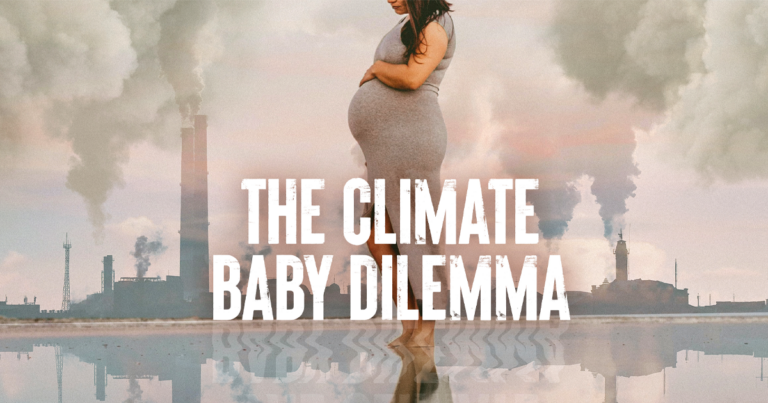
Women pledging not to have children due to climate change is subject of CBC doc

The Canadian Broadcasting Corporation has released a documentary that features young women who have pledged not to have children due to anxieties surrounding climate change. This comes at the same time as a new think-tank study reveals nearly half of Canadian women anticipate having fewer children than they were originally planning.

“The Climate Baby Dilemma” follows Dr. Britt Wray, a postdoctoral fellow at the Stanford Center for Innovation in Global Health, as she interviews women in their early to late 20s about the mental health impacts of climate change.

The documentary features Emma Lim, the founder of the #NoFutureNoChildren pledge in 2019. The pledge quickly collected more than 10,000 signatures from women who declared they would not have children until governments enacted significant climate policies.

“Even though I want to have children more than almost anything,” writes Lim. “I am pledging not to until the government takes the climate crisis seriously.” 

The documentary featured quotes from young women that appeared on screen.

“I feel incapable of welcoming an innocent human being into this world knowing the facts.” writes Allie Rougeot, 20.

“I am taking the pledge because I deserve to live on a planet that is taken care of,” writes Afet, 18.

“Young people like me don’t have the option of having safe and happy families,” writes Payton Mitchell, a climate activist at Concordia University. “Irresponsible governments kneeling to the fossil fuel industry took that away from us.” 

While the NoFuturePledge originally went viral in 2019, the documentary was only released in November 2022. 

Dr. Wray also interviews Meghan Kallman, co-founder of Conceivable Future, a network that aims to bring awareness to climate and reproductivity. Kallman organizes “Climate cafes” where groups meet to discuss how the climate is shaping their reproductive lives.

“There’s already so much life,” says one man in the group. “Is it possible just to share that life that’s already here?”

“I will change my life to show how serious this is,” he says. “The house is on fire.” 

According to a study co-authored by Dr. Wray, nearly 40% of 16-25-year-olds reported feeling hesitant about having children.

These concerns from young people come amidst something of a fertility crisis in Canada. The country’s fertility rate now sits at 1.4, the lowest rate since records began in 1950. 

A recent study published by Cardus, a Canadian think-tank, found that nearly half of women will end their reproductive years with fewer children than they would like. When asked what decreases the likelihood of having children, women reported significant concerns relating to climate change and global overpopulation on top of personal factors such as needing to focus on their careers or saving money. 

According to Statistics Canada, 1 in 4 Canadians changed plans on starting a family because of the pandemic. A fifth of Canadians decided they wanted fewer children and 14% said they will wait longer than they had originally planned. Only 4% wanted more children or planned to have them sooner than originally planned.

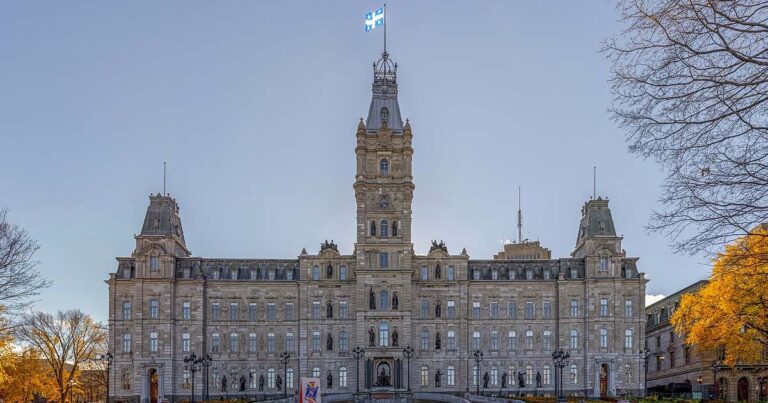
Quebec legislature calls for dismissal of Trudeau’s new anti-Islamophobia rep

The Quebec legislature is calling for the removal of the Trudeau Liberal government’s new anti-Islamophobia representative over her controversial past remarks.

The Quebec National Assembly passed a motion on Tuesday, saying Amira Elghawaby – the newly appointed Special Representative on Combatting Islamophobia – is not appropriate for public office.

“I think Justin Trudeau made the wrong decision,” said assembly member Jean-Francois Roberge.

The assembly pointed to an op-ed written by Elghawaby, in which she said the majority of Quebecers are swayed by anti-Muslim sentiment.

Quebec Premier Francois Legault previously said he could not believe that Prime Minister Justin Trudeau was still supporting her.

Former federal NDP leader Tom Mulcair wrote in a Postmedia op-ed that Elghawaby can’t stay in the post. “When your job is fighting prejudice and you’ve made statements in the past that sound like a reflection of your own prejudice, you withdraw them and, ideally apologize,” Mulcair wrote. “You don’t dig in, or try to explain them away.”

Elghawaby was previously a Toronto Star columnist, worked for the National Council of Canadian Muslims and was a founding member of the Canadian Anti-Hate Network.

Canada has never had an anti-Islamophobia representative – but the job has clear priorities, according to Elghawaby.

Last week, she told Politico she will advocate for strong laws around online content that harms people.

“If we don’t get a handle on the hate, the misinformation that’s fueling a lot of extremist views […] then it’s almost two steps forward, three steps back,” Elghawaby said of the need for more laws governing the Internet.

EXCLUSIVE: Feds knew fertilizer targets would harm Canadian farm crop production

This is part 2 of the Fertilizer Files, a 3-part series on what internal government documents show about the Trudeau Liberals’ push to reduce fertilizer emissions. Read part 1 here.

The federal government was aware that fertilizer emission targets introduced by Prime Minister Justin Trudeau in 2020 would unfairly target western Canada by harming farm yields, but went ahead with the policy anyway. 

Considering the fact that western provinces account for over 90% of Canada’s canola, spring wheat and barley crops, any slight reduction could upend exports and food supply at a national level. 

Documents acquired by True North through an access to information request show how a web of unachievable expectations are being placed upon the backs of Albertan and Prairie farmers.

As part of the Liberal government’s 2020 climate plan, Ottawa has asked willing farmers to reach a 30% reduction below 2020 levels on emissions from fertilizer use by 2030. During consultations farmers have argued that their existing sustainability practices are being ignored and that there’s little leeway to cut more emissions without impacting their ability to grow food.

In an interview with True North, Robert Saik, founder and CEO of the independent consulting group AGvisorPRO, said that Ottawa’s refusal to listen is a major concern for the industry and, compared to other parts of the world, Canada’s farmers bear a golden standard. 

“(What) really leads us to be concerned is that we’re not getting any signal that the federal government has taken into account what farmers are doing already with respect to variable rates, nitrogen application, etc. These things are very important and they’re not taken into account,” says Saik. 

“We’re actually very effective when it comes to nitrogen utilization, among the highest in the world are places like India or China where their environment leads to a lot of nitrogen degradation.” 

While the program was still being worked out in 2020, Agriculture and Agri-Food Canada raised the issue of how the 30% below 2020 level target was likely unachievable for western Canadian farmers without “impacting yields” in a federal analysis on emission reductions.

“It will be more challenging in Western Canada to reduce both direct and indirect fertilizer emissions, due to a combination of lower nitrogen application rates, as well as dried conditions, hence it is less likely that rates can be reduced in Western Canada without impacting yields,” claimed a Preliminary Science-Based Assessment

“Reduction in nitrogen means that western Canadian production will be going down exactly when the world needs us to increase production and we need to do it with the same land footprint and we need to do it by applying technology.”

The notes were undated but the documents released by the department covered the period between Aug. 2020 and Dec. 2021. 

“So this is the thing. Absolute reduction means that invariably there’ll be an absolute reduction in the yield,” explained Saik. 

“Reduction in nitrogen means that western Canadian production will be going down exactly when the world needs us to increase production and we need to do it with the same land footprint and we need to do it by applying technology.”

Although the federal government insists that the voluntary target won’t require a blanket reduction of fertilizer use, the government’s own data shows that from 2005 to 2019 fertilizer use has increased across the country by 71%. On top of that, the government has set goals for the industry to become one of the top five competitors in the global agri-food sector by 2025. 

A variety of region-specific factors like dry conditions, semi-arid topography and lower Nitrogen application rates make it more difficult for western regions to further reduce emissions. On this front, federal officials anticipated resistance from Alberta.

“We should note expected criticism from Alberta regarding (the) fertilizer emissions reduction target,” wrote Agriculture and Agri-Food Canada deputy director Michelle Morrow in an Oct. 26, 2021 email . 

Except the minutes from a meeting with provincial counterparts show that this critical information was omitted. Instead, Ottawa told western provinces that they wanted the agriculture sector to increase its productivity and painted the 30% below 2020 levels target as lenient. 

May. 21, 2021 meeting minutes show how an unnamed representative from Saskatchewan raised concerns about Agriculture Canada opting for an absolute emission reduction instead of an emission intensity reduction. 

“When we are looking at the production and growth targets, there is going to be production increases and when we look at production increases there will be an increase in fertilizer use. Can you help us understand what was the basis to pick an absolute emissions reduction versus intensity?” asked the Saskatchewan government rep. 

Agriculture and Agri-Food Canada director Alexandre Lefebvre responded: “The only thing I would add is that the fact that the baseline for that target is 2020 and not 2005. Which is in part to encompass into account that production has significantly increased since 2005. It’s not the same baseline that is normally considered for a Paris accord. This is a comment we hear often. Of course, we want productivity to increase which makes the challenge even more challenging.” 

According to a 2021 economic study commissioned by Fertilizer Canada titled Implications of a Total Emissions Reduction Target on Fertilizer, Saskatchewan could see a 54% reduction in farmer cash receipts or an estimated cumulative loss of $21.2 billion between 2023 to 2030. Likewise, Albertan farmers could lose out on $13.7 billion over the same time period. 

As True North reported in part 1 of the Fertilizer Files, documents reveal that government officials have considered making the fertilizer emission reduction targets mandatory.

Part 3 of the Fertilizer Files reveals how Ottawa considered copying laws enacted in Europe, ones that were so severe they caused farmers to protest and even riot. Watch for it on Wednesday, February 1.