From Bill C-11 to the redefinition of “hate speech” to a plan to ban online “harmful content,” the Liberals are firing on all cylinders to regulate and restrict internet freedom. Elon Musk tweeted this morning that it sounds like Justin Trudeau is trying to “muzzle” Canadians. True North’s Andrew Lawton says Canadians need to pay attention, as C-11 is just the tip of the iceberg.
OpenMedia.org campaigns director Matt Hatfield joins the show to share his thoughts.
The national governing body of figure skating has gutted “man” and “woman” from its official vocabulary and will instead opt for terms more in line with gender ideology.
Upon consultation with Skate Canada’s Equity, Diversity and Accessibility Operating Committee, the organization will now require the definition of a “team” to mean “(consisting) of two skaters.”
According to Skate Canada, the terms “man” and “woman” were discriminatory and not in-line with the association’s values.
“This change is about removing barriers to participation in skating, and we believe it will have a significant impact in ensuring all gender identities are recognised and accepted equally and without prejudice,” said Skate Canada President Karen Butcher.
“This change has been collectively endorsed by Skate Canada and will allow for new and exciting partnerships in the pair and ice dance disciplines to compete at the national level. Skate Canada is privileged to continue the advancement of skating in Canada by making rule and policy change that allows everyone to experience the joy of skating.”
A disclaimer by the organization notes that the changes only apply to domestic competitions and not those overseen by the International Skating Union, which still maintains the traditional sex-based definition.
Canadian Olympic pair skating gold medalist Jamie Sale commented on Twitter about the change of definition.
Prior to the language change, same sex pairs were already allowed to compete in skating competitions in Canada since 2018 under Skate Canada’s inclusion policy.
“The trans inclusion policy provides opportunity for trans persons to participate in skating as the gender they identify as and not necessarily their sex assigned at birth,” a Skate Canada FAQ explains.
“Trans persons are not required to prove their gender identity in any way and are not required to disclose that they are trans if they choose not to.”
The new changes will mean that official rulebooks will be re-written to abide by the new policy.
Earlier this month, Paris Institute of Political Studies (Sciences Po) dance teacher Valerie Plazenet was cited for discrimination over a similar policy introduced by the university requiring teachers to refer to students as “leaders” and “followers” instead of “men” and “women.”
Gender ideology is ruining sports.
A dance teacher at @sciencespo was cancelled because of a similar policy
She dared to refer to "men" & "women" instead of "leaders" & "followers" and so a student made it their mission to ruin her reputation
The Trudeau Liberals, faced with yet another ethics scandal involving a cabinet minister, continue to do what they do best when caught.
Naturally, the offending politician, being a new-era Liberal, doesn’t apologize and resign. That would be too ethical.
No, instead there is just the apology. Shouldn’t have done it. Please forgive me. Blah, blah, blah.
The Canadian voting public, however, seems almost too eager to forgive and forget.
International Trade Minister Mary Ng had been accused, in significant detail, of siphoning off $23,000 in taxpayers’ dollars to sign contracts — not one but two — for media training with public relations agency Pomp & Circumstance, co-founded and run by Ng’s pal, frequent Liberal political panelist Amanda Alvaro.
And what happens between accusation and conviction? Well, the Liberals of Prime Minister Justin Trudeau, himself a two-time ethics violator, get rewarded with a byelection victory in the riding of Mississauga-Lakeshore.
What’s worst (almost) is that Mississauga-Lakeshore elected Charles Sousa, a former provincial finance minister under Liberal Premier Kathleen Wynne with whom a billion dollars was squandered to kill a gas power-generating plant in order to save Sousa from losing his seat.
This is like salt in the wound.
Michael Barrett, Conservative Shadow Minister for Ethics and Accountable Government, and Jacques Gourde, Associate Shadow Minister for Ethics and Accountable Government, released a statement calling for the resignation of Liberal Minister Mary Ng.
As usual, it was ignored.
The Conservatives, however, were wise enough not to let the moment pass and rhymed off the government’s list of ethics violations—beginning with the PM for accepting a free vacation on the private island of the Aga Khan way back in Christmas of 2015, and then for interfering in the SNC-Lavalin prosecution to the point of firing his attorney general for her refusal to play along.
Trudeau’s Finance Minister Bill Morneau was found guilty after the Liberals awarded a massive contract to WE Charity, whose family members were found to have close ties to the organization.
Dominic Leblanc was found guilty for giving fishing contracts to family members when he was fisheries Minister.
A former Liberal MP was given $237 million to make medical equipment despite having no experience doing it.
The press release accuses them of a pattern of corruption and says it’s a scandal of Liberals helping Liberals line their pockets with taxpayer dollars.
“While people in this country are struggling to afford to live and provide for their family because of the crushing costs of Justinflation and higher taxes, the Liberals are helping their friends get rich on the backs of hardworking Canadians,” read the Conservatives’ statement.
“Minister Ng can no longer represent Canada’s economic future on the world stage. She must do the right thing and resign.”
The Globe and Mail’s Campbell Clark wrote that the Ng affair didn’t ring any differently than the Art Eggleton scenario in 2002, when as a federal Liberal cabinet minister he gave a $36,500 communications contract to a former girlfriend.
Eggleton, though, did the ethical thing. He resigned.
“There is nothing mysterious (here),” wrote Clark. “Ms. Ng and Ms. Alvaro were old friends and former associates from Liberal provincial politics in Ontario. Ms. Alvaro acted as spokesperson for Ms. Ng’s first campaign in 2017 and had worked in political communications for years. It’s not surprising that Ms. Ng would want to get her communications advice from a pro she knows.
“It’s just that it’s against the rules to steer a government contract to a friend.”
When Conservative leader Pierre Poilievre questioned the prime minister in the Commons, Trudeau totally avoided an answer.
Instead, he poured salt on the wound—reminding Poilievre who won and who lost the Mississauga-Lakeshore byelection.
Canadians are getting ready to ring in the new year, along with a new payroll tax increase — courtesy of the Liberal government. The tax hike will take effect on January 1, and will see Canadians lose up to $300 in take-home pay. Canadian Federation of Independent Business president Dan Kelly joined True North’s Andrew Lawton to discuss the impact this increase will have on small-business owners, individual consumers, and the Canadian economy.
A Canadian company that helps thousands of YouTubers around the world expand their reach is worried that Bill C-11 will meddle with social media algorithms and drive creators away from Canada.
AIR Creators Ecosystem works with creators globally, including the popular Canadian children’s channel HZHtube Kids Fun.
The company estimates that there are 28,400 YouTubers participating in Canada’s creator economy this year – a 9% growth from 2021.
“Today, Canada’s creative economy supports more than 34K jobs on YouTube alone. The creator is already becoming a profession of the future, especially among Gen-Z. And like in any other industry, there are plenty of opportunities and challenges to consider,” company spokesperson Nina Peleshenko told True North.
Those jobs could be put into jeopardy should Bill C-11 go into effect.
“The main challenge is obviously the potential interference in social media algorithms proposed by the current Bill C-11,” explained Peleshenko.
Bill C-11, which updates Canada’s Broadcasting Act, will subject digital content creators to regulation by the Canadian Radio-television Telecommunications Commission (CRTC). Under the law, social media giants like YouTube or TikTok will be required to promote loosely-defined “Canadian content” to users.
“Another challenge we see is the outflow of talents to other countries caused by the small market and fierce competition in crowded niches.”
Some Canadian YouTubers and other influencers have already pledged to leave Canada should Bill C-11 come into effect.
“My life and the life of other Canadian YouTubers just got turned upside down. Our government just passed Bill C-11 which gives them control over what Canadian citizens see on the internet,” said YouTuber and Twitch streamer Rick Kackis in June.
“Where do we go from here? No one knows, it’s simply terrifying. People in the states. Got any good deals on housing? Because apparently, I’ve got to move.”
Last year AIR held an event on how the internet regulation regime will impact Canadian creators.
“What essentially would happen is the government would tell YouTube that they have to prioritize “CanCon” over private individual channels or other businesses for that matter so they would have to give them preferential treatments in the algorithm based on what the CRTC decides the viewer wants,” explained panelist and CEO of Buffer Festival Scott Benzie.
In a recent testimony before the Senate Committee on Transport and Communications, Canadian Heritage Minister Pablo Rodrigeuz confirmed that the government could issue orders to manipulate social media algorithms.
“The CRTC can’t mandate user specific algorithms. What we want is outcomes. It’s up to the platform to decide how they do that. They may decide they’ll touch their algorithms but that would be their own decision. They could have playlists, they could have filters,” claimed Rodriguez.
Both major companies like Google and even the United States government have recently entered the fight against C-11.
Google has launched a new advocacy campaign on YouTube to warn users about the harms of Bill C-11.
“In its current form, Bill C-11 would require YouTube to manipulate these systems, and surface content according to the CRTC’s priorities, rather than the interests of Canadian users,” wrote the company in an Oct. blog post.
“Put into practice, this means that when viewers come to the YouTube homepage, they’re served content that a Canadian Government regulator has prioritized, rather than content they are interested in.”
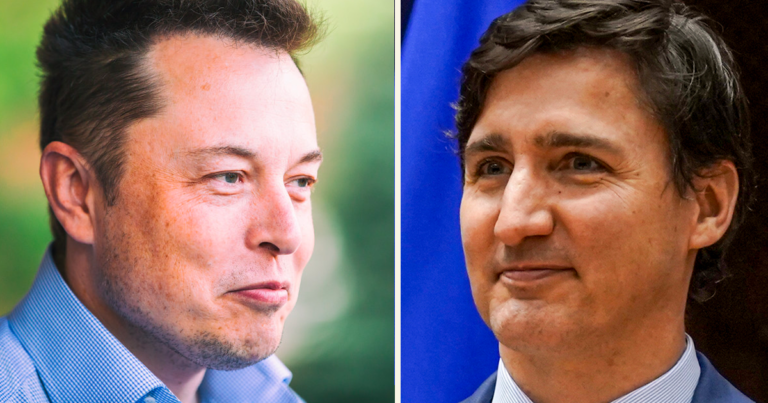
Responding to a social media post by True North’s Andrew Lawton, Twitter owner Elon Musk waded into the discussion over Prime Minister Justin Trudeau’s plans to further regulate online conduct and speech, calling it an attempt to “muzzle” Canadians.
Plus, yet another Liberal MP is caught red handed as the federal ethics commissioner concluded on Tuesday that International Trade Minister Mary Ng broke the Conflict of Interest Act by awarding a contract to a friend.
And more tax hikes are coming for Canadian small businesses despite the dire economic situation and imminent recession.
Tune into The Daily Brief with Anthony Furey and Cosmin Dzsurdzsa!
Elon Musk has waded into the discussion over Prime Minister Justin Trudeau’s plans to further regulate online conduct and speech, calling it an attempt to “muzzle” Canadians.
The owner of Twitter was responding to a social media post by True North’s Andrew Lawton concerning the bills.
“Canada’s Liberal government wants to regulate internet content and deputize social media companies to enforce ‘hate speech’ bans (with a low and murky threshold for what ‘hate speech’ is). I hope [Elon Musk] takes a stand against this,” Lawton posted, late Tuesday evening.
“Sounds like an attempt to muzzle the voice of the people of Canada,” Musk wrote to Lawton on Wednesday morning. The post – like many of Musk’s – was quickly liked tens of thousands of times.
Sounds like an attempt to muzzle the voice of the people of Canada
Musk isn’t the only leading tech figure to have concerns with Liberal online legislation. YouTube is currently campaigning against Bill C-11, which could see online platforms forced to tweak their algorithm to promote content favoured by the federal government.
“Your YouTube feed is uniquely yours. Bill C-11 could change that,” reads billboards purchased by YouTube that are placed throughout downtown Toronto. The ad encourages viewers to sign a petition against C-11.
Bill C-11, which has been dubbed Trudeau’s “online censorship” legislation, isn’t the only piece of legislation targeting the online realm. Bill C-18 has likewise created controversy among online giants, as it attempts to get online platforms to pay Canadian news organizations for the posting of their story links.
A previous hate speech law – Bill C-36 – died on the order paper in advance of the 2021 election, but the Liberals have pledged to bring it back. They’ve previously discussed the need to make laws against vaguely defined “online harms” as well as create a Digital Safety Commissioner who is empowered to police Canadians’ online comments.
The Alberta government has launched a public task force in the province’s capital to respond to issues of addiction, homelessness and public safety.
The province says the Edmonton Public Safety and Community Response Task Force will be funded by a $187-million commitment as a response to a city that’s been hit “especially hard.”
Mental Health and Addiction Minister Nicholas Milliken said addiction has become one of the most urgent social issues facing the province — and one of the most complex.
“This task force will bring community partners together to implement a series of recovery-oriented initiatives, enhancing public safety and improving addiction and mental health care in Edmonton,” he said in a statement.
The task force has been charged with increasing addiction treatment capacity in Edmonton, providing addiction and mental health treatment programs in correctional centres and creating a hybrid health and police hub. It’s also tasked with expanding medical detox services, build harm reduction and recovery outreach teams, and expand access to emergency shelter space.
In Edmonton, $63 million of the funding will increase access to addiction services and supports over the next two years. Another $19 million has been allocated to combat homelessness.
The province already spends more than $1 billion annually on addiction and mental health care and supports, focusing efforts on prevention, intervention, treatment and recovery.
Edmonton Police Services chief of police Dale McFee said provincial services requested the integrated approach.
“It is essential leadership if we are going to unpack the multi-layered issues impacting those dealing with addiction, mental health and homelessness, and I am pleased to see the province move forward with this urgent work,” he said.
Public Safety and Emergency Services Minister Mike Ellis says addiction impacts a person’s well-being and drives them to do things that put themselves and others at risk.
“I saw this first hand during my time with the Calgary police,” said Ellis, a former Calgary Police Service sergeant.
“By bringing all the key community members together, we can build trust within the community that will result in better public safety.”
The task force includes Milliken, Ellis, and McFee, as well as other relevant cabinet ministers, City of Edmonton representatives and necessary department representatives.
The Edmonton Public Safety and Community Response Task Force will meet for the first time on Dec. 13.
The House of Commons Public Safety committee is considering adding at least eight more meetings to hear from witnesses on a controversial Liberal amendment to ban hundreds more new models of semi automatic rifles and shotguns.
The amendment to proposed legislation Bill C-21 has garnered national attention as it targets some firearms primarily used by hunters, sport shooters, and farmers.
The committee met Tuesday to discuss a motion from Bloc Québécois MP Kristina Michaud to add two meetings to hear from more witnesses on the amendment.
Conservative Public Safety critic Raquel Dancho proposed to amend the motion to add 20 meetings. She also wants the committee to travel to rural, northern and Indigenous communities across Canada to hear from witnesses on how they would be impacted.
Dancho said the federal government “didn’t do their homework” on Bill C-21 and now it wants just two more meetings to discuss “the largest hunting rifle ban in Canadian history.”
“If we’re going to even adequately represent the Indigenous communities, we would need more than two meetings,” Dancho said.
“I do feel that it’s offensive to the people that are going to be impacted by this. It does not give them the dignity of having a seat at the table.”
WATCH: Conservative Public Safety Critic Raquel Dancho said the feds "didn’t do their homework" & now want just two more meetings to discuss "the largest hunting rifle ban in Canadian history."
"I do feel that it's offensive to the people that are going to be impacted by this." pic.twitter.com/wY02tIK00H
Dancho agreed to a proposal from NDP MP Alistair MacGregor to have “at least eight more meetings.” His amendment passed with Conservatives, NDP and the Bloc voting in favour of it. All five Liberals MPs on the committee voted against it.
MacGregor also said there’s been outcry over the Liberal’s amendment to ban hundreds more more models or firearms, and said it’s the government’s responsibility to fix it.
“My Liberal colleagues have to wear that and take responsibility for that,” he said.
WATCH: NDP MP Alistair MacGregor says the Opposition is being asked to do a "tremendous amount of extra work" on the feds' proposed Bill C-21 — work that should have been done by the gov.
"The way this amendment landed has frankly been a complete and total abuse of process." pic.twitter.com/hPnodGg1MK
The committee clerk informed members that they likely wouldn’t be able to travel until April if they moved forward with Dancho’s proposal to travel to Canadians.
Liberal MP Taleeb Noormohamed wondered what the committee would do until then, saying the answer would impact his vote on Dancho’s amendment.
Members were discussing whether it would be appropriate for the committee to extend consideration of Bill 21 for travel time when the hearing reached its two-hour mark and was suspended.
Vern White worked in policing for more than 30 years, including as an Assistant Commissioner with the RCMP and as Ottawa Police Chief, and served as a Senator for 10 years.
With the community’s mental health worsening over time, Canada has inadvertently tasked its police with a job they should not be asked to do.
We have seen dramatic changes in policing over the past two decades. But unlike past periods of transformation, this has not come from changes in legislation or court decisions that affect the scope or management of policing. This time, it is expectation from the public for better policing that has demanded change.
It has certainly had an effect on the way policing is provided, and without intervention, some would argue could or has set up policing to fail. There is growing pressure being placed on police to focus not on traditional police work, like investigating organized crime and protecting order in the community. Instead, police are increasingly called upon to perform what are essentially mental health care interventions.
More than a law enforcement agency, policing has become responsible for addressing widespread societal challenges that law enforcement agencies are not readily equipped to handle. For decades now, the mental health system has been unable to meet this growing demand for care. Our country’s collective response has failed to build enough capacity or capability to manage risks and deal with this demand.
Brought about by a shift in mental health care from institutionalization to community-based models, people experiencing mental illness now encounter police much more regularly. When this happens, things don’t always go well. The fact that Canada continues to identify these encounters as caused by the execution of the police response, rather than by a deeper division of labour problems, is causing massive issues.
As overall mental ill-health proliferates, police providing first responses to mental health crises will proliferate too. Reporting on the issue has seen growth with specific age groups, particularly younger people, but as well in our Indigenous communities. We know and have seen that police are responding to large numbers of mental health calls, and that officers most often don’t have the time or training to manage this in a way that is respectful of the caller and the problem.
For those who argue that police forces simply need to better train the police to manage this challenge, the stark reality is that this is a poor use of police resources. An officer should not be expected to be a policing and security professional and a mental health professional at the same time.
Trained mental health experts with strong knowledge and experience should be the ones on the front line. Not that more training wouldn’t be helpful – it is always helpful – but having mental health professionals dedicated to mental illness is the right response to the problem.
A recent book published in Canada, The Wicked Problems of Police Reform in Canada, looks at this specifically, and argues that a use of police resources to meet a problem that is health-related, rather than crime-related, is negatively impacting both patients and law enforcement. It goes on to say that managing mental illness at the community level has become one of the wicked problems facing policing.
So, I would argue, this problem is not only being handled by the wrong professionals, but it further distracts from policing’s core work of public safety. This is because police feel the need to protect their status in the community and deal with the negativity directed toward them for the way these situations are often handled.
In essence having the police become the primary or one of the primary respondents to mental illness is not only unhelpful for those afflicted but as well for the service agency, policing.
While some mental health crises would fall into the category of endangering public safety, the vast majority would not. Because we have failed to explicitly ask what police should actually do, we have inadvertently tasked them with a large responsibility for one of the most difficult tasks in health care, mental health crisis response.
The truly wicked problem emerges when police are blamed for the job they do when handling these situations, but then nothing is done to address the root causes of the issue. Police have called for increased mental health resources to deal with this, and they must be listened to.
If we want to see an effective response to the growing issue of mental health, the most important thing isn’t to ‘better train’ police. While this is an admirable goal in general and may provide some benefits, policymakers need to address the systemic problem beneath police response issues. They need to invest in training many more frontline mental health professionals and increase the capacity and capability of those currently in the health system.
Continuing to approach this problem in the same way into the future will only ever address its symptoms, leaving the disease that causes them untreated.
Of course, reform would not totally remove the police from mental health crisis response – and nor should it, as police are often required to support and protect professionals engaged in this work.
Police reform that puts officers firmly in this supporting role, rather than asking them to lead the response to a huge range of complex mental health challenges, will ultimately make our country safer and a healthier place.
Vern White worked in policing for more than 30 years, including as an Assistant Commissioner with the RCMP and as Ottawa Police Chief, and served as a Senator for 10 years.