One in five Canadians are skipping meals to save money due to skyrocketing prices at the grocery store.
The data was reported in a new survey produced by the Canadian Hub for Applied and Social Research (CHASR) at the University of Saskatchewan.
Researchers found that a majority of people were resorting to coupon-hunting and other methods to cut down on the cost of food.
Another 20% said they were even skipping meals and cutting down on portions to save money. Cutting down on meals was reportedly the most frequent habit among Canadians living in the Prairies with 27.8% reporting that they engaged in the practice.
“I looked into what might be causing this, and there wasn’t a clear answer. What was clear is that it’s not just a finding in this survey but it’s also in other surveys pretty consistently, that Alberta and Saskatchewan have among the highest food bank use rates,” said CHASR’s survey research manager Jessice McCutcheon.
“Some people might not admit it, but people having to go to such extremes paints a stark picture.”
The poll follows a concerning report released by Food Banks Canada that found visits by Canadians were at an all time high.
A total of 1.5 million people visited food banks in March of this year.
“There has likely never been a more difficult time for food banks in Canada,” read the Food Banks Canada annual report.
“Across the country, more people are turning to food banks than ever before in our history. Many people are visiting for the first time, making the difficult choice to ask for help because their money simply isn’t stretching far enough to cover their expenses.”
On Oct. 30, Conservative leader Pierre Poilievre blasted the Liberal government over the latest economic statement.
“Paycheques don’t go as far as they used to. Canadians are cutting their diets. We recently learned that Canadians visited food banks 1.5 million times in a single month,” wrote Poilievre in a news release where he called for an end to tax hikes and spending by Ottawa.
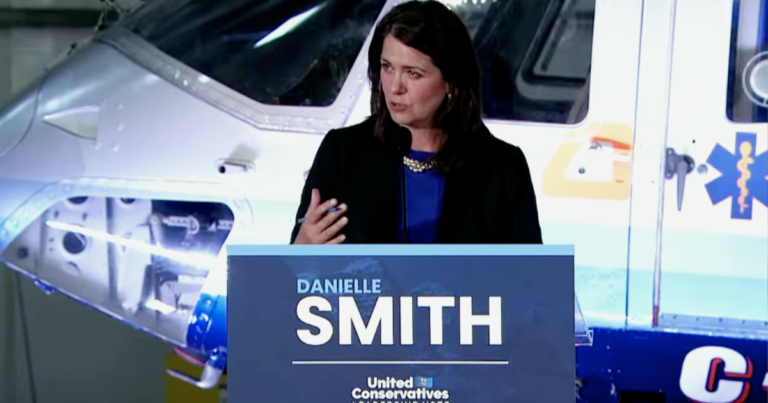
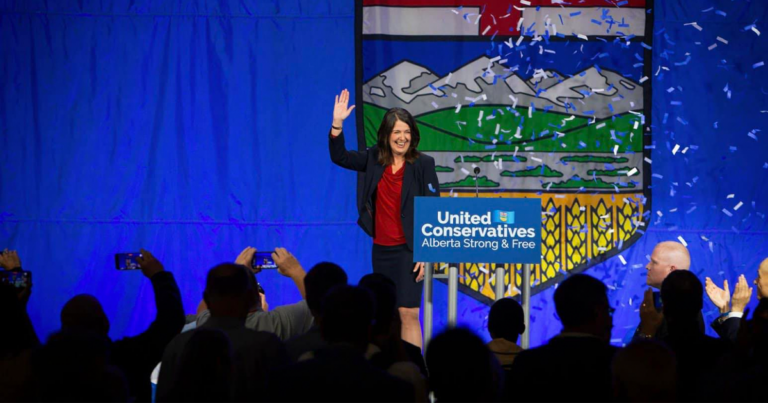
Alberta Premier Danielle Smith says members of her cabinet will not have a free vote on the Alberta Sovereignty Act, unlike the rest of her caucus.
She made the comments in Sunday’s episode of The Andrew Lawton Show.
“The question will be for people that are not supportive of the (Sovereignty Act), is it going to be a whip vote or a free vote?” Lawton asked.
Smith said she will have the support of cabinet to move forward with the proposed legislation.
“All of the votes are going to be free votes,” she said, before continuing, “I think that in the Westminster parliamentary tradition we know that that cabinet has different, a higher standard of (needing) to be with the government agenda.”
The new premier said she’s spoken with her cabinet and they’re aware the Sovereignty Act is coming forward.
“I have no doubt that I’m going to get the support of my Cabinet and if there are still some lingering concerns within our caucus, I want to be able to address those,” she told Lawton.
Smith’s proposed Sovereignty Act was a hallmark of her leadership campaign, pitched as a way to assert Alberta’s autonomy in the face of a hostile legislative agenda from Ottawa.
During the leadership race, Smith said the Sovereignty Act would give MLAs the opportunity for a free vote on a special motion about whether a federal law or policy violates Alberta’s jurisdictional rights under the Canadian Constitution or Albertans’ Charter rights.
All Smith’s United Conservative Party (UCP) leadership opponents except Todd Loewen came out against the Sovereignty Act during the leadership contest. Runner-up Travis Toews, now Smith’s finance minister, said it would create economic uncertainty and chase away investment.
Now, all the former candidates are in Smith’s cabinet except Leela Aheer, who’s since announced she won’t run for the party in the spring general election.
Smith told Lawton it’s her job as leader to address caucus concerns about the Sovereignty Act before it’s tabled in the legislature.
“We will be working very hard over the coming weeks to make sure that we can address all of those concerns and I would hope that everybody will come on board with the approach that I intend to take,” she said.
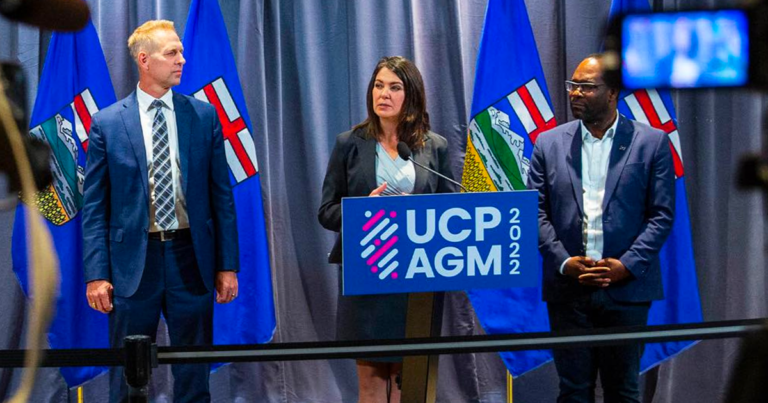
At the UCP annual general meeting on Oct. 22, the premier said she’s asked for the Sovereignty Act to be ready when she takes her seat in the legislature.
“When Ottawa announces policies and laws that attack our economy or violate the rights of our people or when Ottawa seeks to take control of our sovereign areas of provincial jurisdiction, our UCP government will not enforce those laws and policies in this province, period,” Smith told party members.
Smith is running in the Brooks-Medicine Hat byelection and could have her seat as early as November 29, if successful. Watch the full episode of The Andrew Lawton Show here.
A British parliamentarian slammed Prime Minister Justin Trudeau’s government for violating the civil liberties of Canadians during the Covid-19 pandemic.
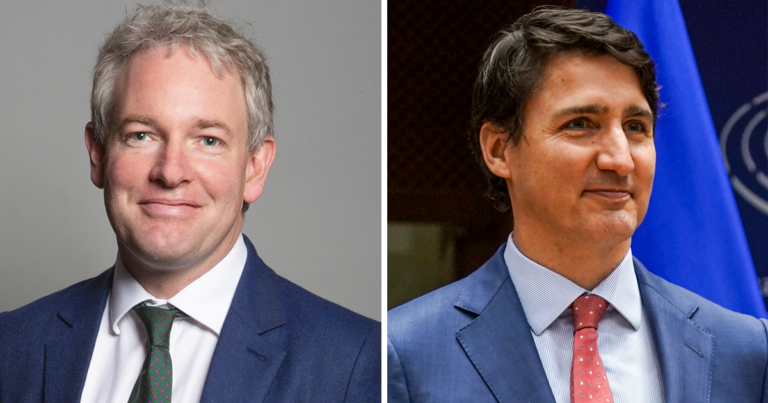
Tory MP Danny Kruger made the comments during a debate in Westminster Hall on Covid-19 vaccine safety on Oct. 24.
Kruger described Canada as being among “the worst offenders” alongside communist China when it came to violating rights.
PM @JustinTrudeau doesn't want you to know how he is viewed abroad.
British Tory MP @danny__kruger told the UK parliament last week that the Liberal government was among the "worst offenders" alongside China when it came to depriving civil liberties during Covid-19. #cdnpolipic.twitter.com/ri8SY3FGJt
“Although many questions about our covid response need to be answered, the UK is by no means the worst offender,” said Kruger
“We are not Canada, New Zealand or China—places where Governments think they can exterminate covid by depriving their population of the most basic civil liberties.”
As exclusively reported by True North at the height of the pandemic, data released by the University of Oxford’s COVID-19 Government Response Tracker showed that Canada had some of the most stringent lockdown policies.
Covid-19 measures implemented in Canada earned the country a stringency score of 75.46, only slightly behind China which had a score of 78.24. Scores took into account a range of variables including school closures, gathering limits and more.
This is not the first time that the Liberal government has received criticism for heavy-handed crackdowns on civil liberties by a UK politician.
When Trudeau decided to resort to using the Emergencies Act for the first time ever to crackdown on peaceful Freedom Convoy protestors, UK MP Marcus Fysh accused him of resorting to “authoritarian measures.”
“I am writing today to the Foreign Secretary to ask her what the UK is doing to discourage Canada from arbitrary & authoritarian measures against Canadian residents & their rights. We should do what we can to help our good friends there find a better way,” tweeted Fysh in February.
While on a diplomatic visit to the UK in March, the prime minister was also met by freedom protestors outside of 10 Downing Street demonstrating against his presence.
Another view of anti-Trudeau protestors outside of 10 Downing Street as @JustinTrudeau arrives to discuss the Ukraine crisis.
In a discussion between key aides in Prime Minister Justin Trudeau’s and Public Safety Minister Marco Mendicino’s offices, Mendicino’s director of communications warned against statements that might compel Freedom Convoy organizers to “push out the crazies.”
The damning text messages were released Monday morning by the Public Order Emergency Commission. In them, Prime Minister’s Office issues and policy advisor Mary-Liz Power and Alexander Cohen of Mendicino’s office discuss ways to best exploit the “narrative” being peddled by many media outlets about “extreme” elements in the convoy.
In this text conversation, Mary-Liz Power of Justin Trudeau's office says there might be an opportunity for Marco Mendicino to "get in on this growing narrative" of the convoy truckers being "extreme." pic.twitter.com/AvIyBiLdV6
“I think there could be an opportunity to get in on this growing narrative of the truckers,” Power wrote of the “more extreme comments (IE calling for a Jan 6 style insurrection)…getting more coverage in media.”
“I had an initial chat with my boss and he’s supportive, but wants to wait a day or two,” Cohen replied. “There’s a danger that if we come down too hard, they might push out the crazies.”
Power said it was a “fair” comment, and offered that “[G]lobal & others are working on stories, maybe we see how those land.”
Power also said that the Liberal Research Bureau, a taxpayer-funded office that supports the Liberal caucus, was researching the convoy’s “backers.”
Alexander Cohen of Marco Mendicino's office says Mendicino is supportive but doesn't want to "come down too hard" or the Freedom Convoy might "push out the crazies."
In other words, the federal government WANTED "extreme" voices in the protest to keep criticizing them. pic.twitter.com/kZWdQMXxqe
The text exchange included several proposed talking points around which the government could craft its messaging. Included in the list was that the government “will always support the right to peaceful protest” and that “our democracy is something we need to nurture and protect every day.”
Power also included a talking point that organizers are making “concerning” comments, but added she “would need something to back this up.”
Text messages between Public Safety Minister Marco Mendicino and Prime Minister Justin Trudeau's offices reveal a plan to "get in on the growing narrative" that convoy truckers were "extreme." #POECpic.twitter.com/dpfS9pA9yE
The text exchange was raised by convoy lawyer Brendan Miller in his cross-examination of former Ottawa police chief Peter Sloly.
Miller asked Sloly if this would constitute “misinformation,” which Sloly earlier testified was a persistent issue throughout the convoy protests.
“I’m sorry. I can’t really comment. There’s no context to know who these people are, what they represent, what information or influence they have,” Sloly said.
This is Day 13 of the Public Order Emergency Commission’s hearings into Trudeau’s invocation of the Emergencies Act. Convoy organizers – including Chris Barber, Tamara Lich, and Benjamin Dichter – are expected to appear as witnesses throughout the rest of the week.
Peter Wallace has “no regrets at all” that he didn’t win his campaign for trustee on the Trillium Lakeland’s District School Board.
He told True North a few days after the election he made a lot of connections “of like-minded people” both during his campaign and through blueprintforcanada.ca — the insightful and thought provoking website he created to help other candidates and parents understand what could be done to better public education in Canada.
He’s very humble about the website — calling it a “nice little project for the summer.” But it’s clear it was indeed a labour of love. He created a blueprint with common sense policies that reject the influence of the radical left and extreme right and which adopts a “centrist” approach to education.
His common sense ideas include more instruction in personal finance, computer skills and the sciences, a call for school boards to reverse the ban on police officers in schools and the need to address the concerns of parents in a non-judgemental manner.
In the area of gender ideology, his blueprint proposes that students be given a better awareness of the potential “catastrophic” physical and mental side effects of gender affirming medical care and procedures, particularly that given before puberty.
The blueprint does not mince any words when it says actively promoting gender affirming ideology to children is “abusive” and that Critical Race Theory generates “animosity, divsion and hate” and actively promotes anti-Semitism, anti-Asian and anti-Caucasian sentiment.
The trouble was that as soon as the activists and NDP-backed teachers unions started catching wind of the blueprint and the anti-woke trustee candidates supporting what should be common sense ideas, the hit pieces started coming.
Part of it, in my view, was that these dangerous ideologies were finally being exposed to parents who perhaps should have paid more attention to what was occurring in the school system long ago.
The legacy media chimed in with stories claiming —absurdly — that the anti-woke trustee candidates were “transphobic” and “racist” and a danger to the future of education.
Wallace said he wasn’t surprised to see hit pieces from the Canadian Anti-Hate network, which has received funds from the federal Liberals and is run by self-described human rights activist and leftist Bernie Farber, as well as Press Progress.
But other legacy media picked up the story, many decidedly avoiding mention of the blueprint website.
Wallace feels if more parents had reviewed it, they would have agreed with its policies.
Wallace said all of the teachers unions supported the “woke” trustees (even by rights they are supposed to be apolitical) as they are ideologically aligned with the NDP.
None of the anti-woke slate got elected — except for Dr. Weidong Pei who beat out Toronto District School Board (TDSB) chairman Alex Brown in Toronto’s Willowdale ward.
“I suppose the results were predictable in hindsight,” says Wallace, adding that the senior demographic that voted were probably the “least likely” to know what is going on in K-12 classrooms.
Chanel Pfahl, who ran for school trustee in Ottawa, was the subject of a concerted campaign on social media and in the press.
The accredited teacher was labelled “transphobic” many times even though she is a lesbian and not the least bit anti-trans.
She is still under review by the Ontario College of Teachers for a post she made on a private Facebook feed more than a year ago stating that kids should not be indoctrinated with CRT.
She told me she’s “really scared for society” considering that people just repeated erroneous information about her without doing their own research.
“There are no critical thinking skills,” she said over coffee. “It’s like a broken telephone game on steroids.”
Running for trustee was a great challenge and she likes to look at the results of her race as “hopeful” — even though the board composition is more “woke” than ever.
She says despite the fact that she was slandered in the media for months and she lives in a very Liberal area of Ottawa, some 2,200 people voted for her.
“I think in four years the tables are going to turn,” she said. “They’re waking up in the States.”
She asked Musk if he could unsuspend her father, to which he responded, “anyone suspended for minor & dubious reasons will be freed from Twitter jail.”
Jordan Peterson was suspended by Twitter in late June after the platform claimed he violated their “hateful content” policy when he referred to transgender actor Elliott Page by their pre-transition name (Ellen Page) and suggested their breasts were removed by “a criminal physician.”
Jordan Peterson was told by the platform he needed to delete his tweet to regain full access to his account – something he has refused to do. He has been inactive on the platform ever since.
Peterson is not the only one to face repercussions from Twitter over comments related to transgender issues.
Twitter suspended satire site The Babylon Bee in March after it named transgender Biden administration official Rachel Levine “man of the year.”
I just received this notice that we’ve been locked out of our account for “hateful conduct.” pic.twitter.com/udMriKcDr6
Musk, who also heads Tesla and SpaceX, took control of Twitter last week, after he purchased the social media platform for $44 billion USD.
His move to buy Twitter has been popular among conservatives, given his strong support of free speech, a principle Twitter has been accused of not respecting. It has however spurred strong negative reactions from progressives and many in the media.
Musk has announced that Twitter will form a “content moderation council” consisting of individuals who hold various points of view.
“No major content decisions or account reinstatements will happen before that council convenes,” said Musk.
It is incredibly rare in Canada to see a politician that is authentic and consistent.
That’s why it is so refreshing to see new Alberta Premier Danielle Smith break the status quo.
During the UCP leadership race, Smith was unrelenting in her opposition to Covid lockdowns and mandates. Now, after winning the leadership and becoming premier, Smith has followed through and continued her message in support of freedom.
True North’s Anthony Furey says Smith is a breath of fresh air.
Danielle Smith has been premier of Alberta for less than three weeks but has already made headlines around the world for her apology to unvaccinated Albertans and her Alberta-first approach to governing. In this interview with True North’s Andrew Lawton, Premier Smith discusses the process of unifying the United Conservative Party caucus, priorities for the fall legislative session, moving beyond vaccine discrimination, and more.
A healthy skepticism is a positive thing. It’s built into our Parliamentary system: taxpayers pay Her Majesty’s Loyal Opposition to watch what the government is doing and hold them accountable.
Most police officers now wear bodycams, so that taxpayers can clearly see what goes on while they do their jobs, and prevent endless he said/she said court cases.
As part of our elections process, scrutineers and elections observers have traditionally been able to see, with their eyes, how votes are processed and counted.
The presence of scrutineers doesn’t mean Canadians don’t trust each other: as in Parliament, or on a police stop, we think it’s a good idea to be able to see what’s happening.
“Trust but verify” are important words.
Unfortunately, in recent years and particularly since the 2020 elections in the United States, the idea that interested parties want to exercise their right to “trust and verify” election results is regarded as some kind of Trumpian conspiracy theory.
In Clarington, Ontario, we just finished our first “phone and internet” voting election, where there were no paper ballots. Voting started October 18th and was a full week long, yet voter turnout was still an abysmal 28%.
This isn’t a surprise, given the number of residents who did not receive their PIN (personal identification number), or who turned up at the local library to vote using its internet service and found the doors locked.
One friend blithely noted, “I never received a PIN in the mail, so I voted using my boyfriend’s PIN.” She’s a sweet lady without a nefarious bone in her body; however, she clearly demonstrated how easy it is to use any PIN to vote.
Perhaps people with actual nefarious motives are the reason many residents never received their PIN. I don’t know. I do know, asking this question means I risk being labeled a “conspiracy theorist.”
On June 2nd, I scrutineered the Ontario election, where I saw no ballots but was asked to sign off on the numbers printed from a machine I saw for the first time on election night. I declined.
In October, I discussed the lack of scrutineer-able ballots with a Clarington candidate who told me, “I see it as a huge problem. The sitting Council rammed phone and internet voting through in the middle of COVID. No one has any idea how we will know if it is accurate.”
“Why don’t you say that publicly?” I asked. He was aghast.
“I can’t! I’ll be called a ‘conspiracy theorist.’ People will turn against me!!” he exclaimed.
I volunteered to scrutineer for two Clarington candidates, one a sitting Councillor. Both were happy to provide me a signed form to act as their scrutineer; however, neither of them had the remotest clue as to how to access the information a scrutineer would usually see.
“The website says your scrutineer is allowed to access the ‘Candidates’ Portal’ to view the voting in real time, but the Town Clerk says only you have the PIN and I need to get it from you,” I explained.
Neither of them had attended the training session, knew their PIN, or was able to provide it to me. I was not able to access the Candidates’ Portal; I have no idea how the vote count was tallied. Neither do these two candidates.
Paper ballots and independent observers work, not only to ensure accuracy but more importantly, to build confidence in our electoral system.
Because if ever people who do have nefarious intentions ever get a hold of the voting machines or access to the elections website, we will never even know. Canada will be over.
This week on The Alberta Roundup, Rachel Emmanuel discusses Premier Danielle Smith’s plans to push Ottawa back. Namely, the premier announced her government will pull out of new federal programs or avoid federal consultations that aren’t in Alberta’s best interests.
Smith also said her United Conservative Party government will not enforce federal laws or policies that attack Alberta’s economy and people and she denounced the World Economic Forum.
Also on the show, Rachel discusses former UCP leadership candidate Leela Aheer, who placed last in the leadership contest. Aheer announced she won’t run for the party in the spring 2023 general election.
To wrap up the show, Rachel discusses the latest update in the Trudeau Liberals’ gun grab scheme.
Tune in to The Alberta Roundup with Rachel Emmanuel.