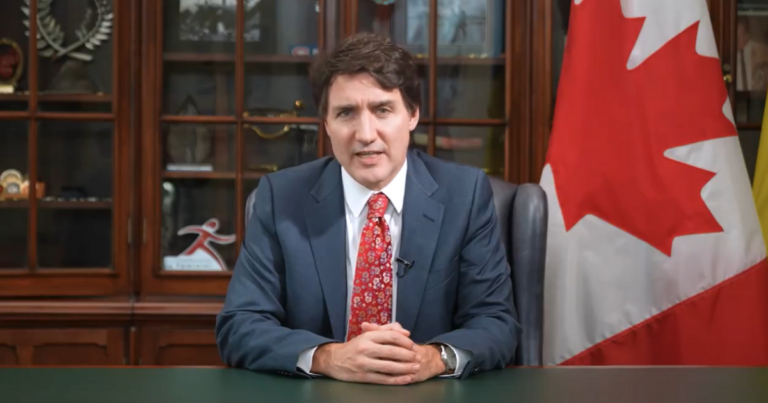
Nearly half of new immigrants dissatisfied with their Canadian experience

Almost half of recent immigrants find it hard to make ends meet financially and are unsatisfied with the amount of free time they have since coming to Canada.

A new survey from Statistics Canada found that 43% of “recent immigrants,” which the agency defined as someone who emigrated in 2005 or after, are dissatisfied with their quality of life. 

The survey, called Social Cohesion and Experiences with Discrimination conducted in April found that more established immigrants and non-immigrants were less likely to be struggling financially, both coming in at 29%, respectively.

Reports of financial difficulty within the last 12 months were lowest among those who came from the United States (24%) and Europe (34%). Immigrants from Europe and the United States tended to fare better financially overall, compared to those who came from Asia.

Asian immigrants reported having the highest level of financial difficulty at 46%. 

Statistics Canada noted that it did not factor immigrants’ category of admission into the survey while collecting data. 

Canada’s struggling economy has also contributed to many immigrants having a poor work-life balance.

“In April 2024, more recent immigrants to Canada reported having lower satisfaction with their amount of free time than immigrants who had arrived earlier and non-immigrants,” reads the survey, which found that newcomers from Asia reported the highest financial difficulty and lowest satisfaction with free time. 

“In contrast, despite being the least likely to report experiencing financial difficulty, recent immigrants from Europe were among the least likely to report having a high level of satisfaction with their free time, at 20%.”

The survey also found that 32% of recent immigrants from the U.S. were as likely to report having high satisfaction with their amount of free time as non-immigrants.

However, the differences in responses to satisfaction regarding their free time may be the result of  other cultural factors, like “family structure, supports, and personal outlook,” acknowledged StatsCan.

These figures may help explain why onward migration is on the rise in Canada. 

A study from the Institute for Canadian Citizenship and the Conference Board of Canada last fall found that immigrants to Canada were increasingly choosing to emigrate elsewhere, in search of better opportunities. 

The trend of ‘onward migration,’ where immigrants arrive in Canada and then subsequently leave, has been steadily climbing since the 1980s. 

The number of permanent residents who pursued citizenship within 10 years of their arrival dropped by 40% between 2001 and 2021.

Immigrant retention has worsened in recent years and more and more newcomers “may not be seeing the benefits to Canada,” said the institute. 

Even among those born in Canada, more than ever, are leaving the country in search of better opportunities and countries that offer a more manageable cost of living. 

A separate study from Statistics Canada estimated that roughly 4 million Canadian citizens were living abroad in 2016, which would amount to around 11% of the population or one Canadian citizen out of nine.  

The study found that the average age of Canadians living abroad is 46.2, which is a little higher than the national average. The largest cohort of those living abroad are between 45 and 54 years old. The number of Canadians leaving to go live in foreign countries rose by 3% in the last quarter of 2023. In the last 73 years of data collection, only three other years have seen larger quarterly emigration numbers – 2016, 1967 and 1965.


“Anti-hate” activist who Elon Musk blames for $100M loss asked Canada to regulate social media giants

Canadian legislators entertained the leader of an international “anti-hate” activist organization that X CEO Elon Musk blamed for a $100 million loss in advertising revenue after he took over the platform in 2022. 

The CEO and founder of the Center for Countering Digital Hate, Imran Ahmed, appeared before the House of Commons justice committee this month advocating for increased regulation of social media platforms. 

Ahmed’s call to action comes amid ongoing tensions with Musk, who had faced significant scrutiny after acquiring X, formerly known as Twitter.

Ahmed proudly recounted a study by his organization that, according to Musk, led to a substantial financial impact on the company.

“We did a study when Elon Musk took over X, that went on the front page of the New York Times, which led him to lose $100 million—he claims—of advertising. I know this because Mr. Musk and the X Corporation then sued us at the Center for Countering Digital Hate for having done the research—for having had the temerity to do the research,” said Ahmed. 

Despite Ahmed’s claims, Musk has continued to champion his vision for X, pushing back against what he perceives as unfair attacks on his company. Musk has repeatedly questioned the validity of Ahmed’s study and has maintained that his stewardship has not led to increased hate speech on the platform.

According to Musk, Ahmed’s research counted the number of hate-related tweets on the platform but did not take into account the number of impressions. Data released by Musk showed that the number of views hate speech tweets received was on the decline despite user growth. 

While testifying, Ahmed said he wanted more power for governments to be able to punish companies over the content hosted on social media platforms. Ahmed suggested requiring social media companies to open up their algorithms and making them responsible for hate attacks by users. He urged the introduction of legislation similar to what’s in place in Europe, allowing takedown orders for offending content.  

“At a systemic level, Canada should have the ability to tell them to clean up their act or it will impose costs on them for their failure to act,” said Ahmed. 

“With social media, we have a crisis of inaction by those companies. They feel no pressure. It’s time to ratchet up the pressure.”

X announced its intention to appeal a U.S. court decision dismissing its lawsuit against Ahmed’s organization. The lawsuit, filed last July, accused the organization of conducting a smear campaign that unlawfully accessed data to damage X’s relationship with advertisers, resulting in significant revenue losses.

The California court, however, found that the lawsuit appeared to be an attempt to “punish” the nonprofit.

Alberta bans cellphones & social media in K-12 classrooms starting Fall 2024

Alberta has banned students from using cellphones and social media in K-12 classrooms across the province but has left school boards with significant autonomy over implementing the policy. 

The decision comes after a survey conducted by the Alberta government polling over 68,000 respondents who were primarily teachers and parents. 

The social media and cellphone bans in Alberta schools will come into effect at the start of next school year on Sept. 1. The rules will be in place for all of Alberta’s K-12 public, separate, francophone, public charter, independent school authorities, and early childhood service operators.

Minister of Education Demetrios Nicolaides said at a press conference announcing the changes that this was the most responded to survey in the province’s history. 

He said that 90% of respondents were concerned with school cellphone use. 85% believe cellphones hurt student achievement. 81% believe cellphones increase instances of bullying, and 60% of parents believe that cellphones negatively impact their child’s mental health.

“Of course, (cellphones) enrich our lives in a variety of different ways. However, they, of course, can also be a distraction and can limit a student from reaching their full potential,” said Nicolaides.

Paige MacPherson, Associate Director of Education Policy at the Fraser Institute told the Andrew Lawton Show that research on cellphone use in classrooms is very clear. 

“In terms of academic outcomes, but also mental health or cyberbullying that goes on through the day at schools, it’s extremely distracting for kids. It impacts their ability to socialize face to face. It impacts their ability to not be distracted, to actually focus in class and academic achievement,” said MacPherson.

Alberta’s ban on cellphones in the classroom follows similar bans implemented in Ontario, Quebec, and British Columbia.

55% of Canadians across the country believe that banning cellphone use in classrooms is necessary, while 35% believe that they shouldn’t be used in classrooms without a teacher’s permission.

The education minister cited various research aside from the province’s survey results. A 2023 study published in the Journal of Applied Cognitive Psychology showed that students permitted to use cellphones in class reported being more distracted and scored a worse test performance than those barred from using their phones in class.

He cited a 2017 study that linked social media use in school on smartphones with depression and increased risks of suicide. Another study found that eighth graders who were frequent users of social media had a 27% increased risk of depression.

“The risks to student mental well-being and academic success are real, and we must take steps to combat these effects,” said Nicolaides.

Dr. Michael Boyes, a developmental psychologist at the University of Calgary said that research clearly shows smartphone use in classrooms negatively affects students and their ability to focus. 

“The distractions that are built into smartphones, when available in education settings, are widening the gap between low- and high-functioning students,” he said. 

Vicki Leong, an Aurora Academic Charter Secondary School teacher, spoke about the positive effects of a cellphone ban in schools. A no-cellphone policy has always been enforced at Aurora. 

“I have spoken with new students to our schools, who actually expressed relief that they have to keep their phones in their lockers during class time. Many have said that they feel a sense of relief and that they can focus on learning and take a break from the constant barrage of posts, notifications, and the demands of social media,” she said.

Students will still be allowed to use their phones at school but are not permitted to use them during class time. How or where the students are required to store their phones is up to the school boards’ discretion. Students will also not be allowed to use smartwatches, headphones, or other personal electronic devices during class time.

Exceptions will be made for students using cellphones for health and medical needs, specialized learning needs, and educational purposes.

School internet networks will have limited access to social media websites.

The province implemented minimum standards; however, school boards can implement tighter restrictions at their discretion. School boards also determine enforcement around non-compliance. School boards are also required to notify parents if their child violates the new policy.

MacPherson said that leaving it up to schools or school boards to decide created some issues in Ontario, where enforcement was inconsistent or students would still bring their phones into classrooms and have them on silent, but the buzzing noise of notifications would still cause a distraction for themselves and others.

“I think the best kind of policy is something that is as blanket as possible, right across the board with phones locked away for the school day,” she said.

Trudeau claims Canadians are undecided about his record despite rock-bottom polls

Prime Minister Justin Trudeau would like you to believe that Canadians are undecided about his re-election, despite plummeting approval from the public.

During an interview with CBC host David Cohrane, Trudeau was asked about the “angry” state of the country, as more and more Canadians grow frustrated with inflation and the high cost of living. 

“The country is still angry, you can see it in the mood,” said Cochrane. “Increasingly prime minister, a lot of them are mad at you. I know you say you want to beat Pierre Poilievre,  you keep coming back to that but what if you are the reason the Liberals can’t beat the Conservatives in the next election? Where do you factor that in?”

First of all,” replied Trudeau. “Canadians are not in a decision mode right now. What you tell a pollster, if they ever manage to reach you, is very different from the choice Canadians end up making in an election campaign.”

He then went on to say that “everywhere, people are struggling” with a myriad of issues like interest rates, child care, housing and others but that “we are doing better than most countries.”

Trudeau then accused the Conservatives of being the real reason Canadians were so angry, even though the party hasn’t been in power for the past nine years. 

“I truly believe that as we step up on solving those challenges, to contrast with a political vision that so far, consists from the Conservatives, of making Canadians more angry and saying ‘everything’s broken.’”   

For the past year, the Conservatives have held a commanding lead in the polls over the Liberals, with a recent Abacus survey giving them a 20-point lead over the governing party. 

Trudeau personally has a poor approval rating, with the same poll finding that 58% of Canadians surveyed held a negative opinion of him.

“If an election were held today, 44% of committed voters would vote Conservatives with the Liberals at 24%, the NDP at 17%,” reads the survey from April. “This 20-point lead is the largest we have ever measured for the Conservatives and the first time the Conservative vote share has hit 44% nationally.”

While the next federal election won’t be until October 2025, the riding of Toronto–St. Paul’s is slated for a byelection next week. 

It’s been a Liberal stronghold since the 1990s, however, for the first time in nearly 30 years the Liberals are at risk of losing a key political battleground.  

“It feels like a must-win for your party though, is it fair to describe it as that?” asked Cochrane.

“I think every electoral contest is a must-win for any political party,” responded Trudeau.According to the latest 338Canada poll, the Liberals are projected to win the riding, but they are only ahead of the Conservatives by a small margin, who have steadily been gaining favourability in Toronto – St. Paul’s since 2019. 

The Andrew Lawton Show | Trudeau says bad polls are because Canadians aren’t in “decision mode”

The latest poll shows the Conservatives with a twenty per cent lead over the Liberals, but Prime Minister Justin Trudeau says not to worry, it’s just because Canadians aren’t in “decision mode” right now. He says the way people vote is different from how they answer pollsters’ questions. Do you agree, or is Trudeau in the most severe case of denial Canada has ever seen?

Plus, anti-Israel activists at McGill University are under fire for running a “revolutionary” youth summer camp, promoted with images of young people wearing keffiyahs and holding a rifle. National Post columnist Barbara Kay has wondered where all of the university Jewish studies programs have been with antisemitism on campus so rampant. She joins the show to discuss.

Plus, a new study finds there is no link between a company’s ESG (environmental, social governance) score and its financial returns, so why are shareholders being told there is? Andrew digs in with Fraser Institute senior fellow Steven Globerman.

SUBSCRIBE TO THE ANDREW LAWTON SHOW

Feds install 34 charging stations across territories – for seven EVs

The Trudeau government spent millions subsidizing the installation of 34 electric vehicle charging stations across Canada’s three territories, which will service the seven electric vehicles in the region. 

“There are currently 34 public electric vehicle chargers in the territories to service the seven electric vehicles representing a ratio of less than one electric vehicle to charger,” wrote the Department of Natural Resources to the Senate national finance committee.

The federal government says the charging infrastructure will make it easier for people to transition to electric cars.

“This indicates the number of public chargers available have capacity to support electric vehicle adaptation for local travel,” the department wrote. “Furthermore chargers are found in the same areas as the battery electric vehicles except for Nunavut, where all the cars are plug-in hybrid cars.”

The Zero Emission Vehicle Infrastructure Program funded the initiative to deploy electric vehicle chargers and hydrogen refuelling stations across Canada.

The Department of Environment tallied up a bill of $680 million spent in government subsidies to introduce charging stations nationally in its 2023 Regulatory Impact Analysis Statement. 

The cost of Canada’s electric vehicle program overall has now totaled at least $99 billion, excluding direct subsidies to manufacturers, according to Blacklock’s Reporter

The department did not specify where the charging stations are located within the three territories, which account for 3.9 million square kilometres of land. What is known however, is that despite the installation of new chargers in the arctic, one of the major pitfalls of EVs is having poor performances in colder climates.

The federal government committed $280 million to the Zero Emissions Vehicle Infrastructure Program in its 2019 and 2020 Fall Economic Statement over five years to install 33,500 public EV chargers and 10 hydrogen refuelling stations.

The government topped up its funding to the program with an additional $400 million in 2022 before extending the program to March, 2027. Canada’s Infrastructure Bank also spent $500 million to support large-scale zero-emission vehicle charging and refuelling infrastructure. 

The current zero-emission vehicle infrastructure targets are slated to install 84,500 chargers and 45 hydrogen stations by 2029.

Despite the billions in subsidies to aid the transition of making EVs the dominant mode of transportation, sales continue to drop.

The Trudeau government’s mandate to require all new passenger vehicles and light trucks sold in Canada to be zero-emission by 2035 struggles as consumer interest has been steadily in decline this year. 

While EVs sold relatively well last year, so far in 2024, they’re now selling at half the rate of 2023, lagging behind gas-powered vehicles. 

According to Fraser Institute’s director of natural resource studies Elmira Aliakbari and policy analyst Julio Mejia, this should be cause for concern.

“The sluggish demand for EVs and the response from automakers should raise red flags for both the Trudeau government and Biden administration, given the massive subsidies (a.k.a. corporate welfare) injected into the EV and battery production industry,” they wrote in a recent op-ed. 

“The EV transition faces major obstacles, and the recent scaling back or delays in EV production by automakers should serve as a warning to governments about the feasibility of their forced transition policies, which clearly put Canadian taxpayers at risk.”

UCP town hall speakers take aim at officials, politicians for pushing COVID vaccine

Doctors speaking at a United Conservative Party event purporting to expose COVID-19 vaccine harms say top health officials and politicians are now trying to pretend they never touted the safety of the jab. 

A host of experts from the fields of children’s medicine, vaccinology, and emergency medicine criticised the global response to the pandemic at the UCP Calgary-Lougheed constituency association’s Injection of Truth town hall Monday night. 

Many of the doctors have had their licences revoked for speaking out about the harms of the COVID jabs, but continue to criticise public health authorities for pushing the vaccines. 

“Recently, they’re trying to pretend they never said these things,” paediatric neurologist Eric Payne said at the event. “The lies are coming down from the very top.” 

Payne said he doesn’t know of a single healthy child that died from COVID-19 during the pandemic, despite government messaging warning kids that they would harm their grandparents if they didn’t get the shot. 

He also took aim at Liberal MP Anthony Housefather for saying no vaccine safety data was missing as the federal government pushed the COVID jabs when testing had only been done for two months. 

“To call these things vaccines, it’s just not the truth,” Payne said, referring to them as an experimental drug.

Payne was one of four Alberta doctors who launched a lawsuit against Alberta Health Services’ mandatory workplace COVID-19 vaccination policy in October 2021.

Academic viral immunologist Byram Bridle said his concerns about COVID-19 have repeatedly been proven correct. He said he’s been blamed for vaccine hesitancy, when in fact, public health, government officials, and legacy media are responsible because they pushed the vaccine. 

“COVID is less dangerous than the flu for children,” he said. 

Emergency doctor Mark Trozzi said the pandemic would have been over in a few months if people at risk for serious impacts from the coronavirus voluntarily isolated and everyone else went about their lives. He said kids needed to be exposed to the virus so their bodies would develop natural immunity.

Trozzi said mortality rates for kids were already rising in 2020, before the vaccines were rolled out, because isolation damaged kids’ immune systems. 

A College of Physicians and Surgeons of Ontario discipline tribunal stripped Trozzi of his medical licence in January as he continued to speak about what he said were the dangers of the COVID vaccines.

Ontario doctor Chris Shoemaker shared the story of Dan Hartman, whose son died after being vaccinated against COVID-19, which he did to continue playing hockey.

“He was perfectly healthy. There was nothing wrong with him,” Hartman said in a video that played at the town hall. “And I want someone to tell the damn truth of why my son isn’t alive anymore.” 

Shoemaker said stories like Hartman are in the “legions.”

“The people denying it are the deniers,” he said. “The people who are lying about it are the liars. They’ve been the liars from the beginning.”

The Daily Brief | Is Canada naive about global threats?

A group of activists assembled in Victoria, B.C. called for city council to cancel an upcoming freedom-focused conference.

Plus, Canada’s top general says Canadians should stop being “naive” about global threats.

And Alberta plans to challenge yet another federal government initiative.

Tune into The Daily Brief with Cosmin Dszurdzsa and Noah Jarvis!

SUBSCRIBE TO THE DAILY BRIEF

RCMP surprised hate groups are “increasingly racially diverse”

The RCMP is surprised that hate groups in Canada are recruiting racialized people and becoming increasingly ethnically diverse

In a report on hate crimes and incidents released this year, the RCMP noted about a notable shift in the racial diversity of individuals joining what it calls “hate groups.” 

The RCMP defines a “hate group” as any organization or collection of individuals “whose goals and activities attack or vilify an entire group of people on the basis of colour, race, religion, national or ethnic origin, age, sex, sexual orientation, gender identity or expression, or mental or physical disability.”

In its report, the RCMP blames the “rise of populist politics and the normalization of racist and incendiary political rhetoric” on the rise of said groups without pointing to specific examples.

The RCMP notes that while hate groups are still “overwhelmingly white and male” there’s been a recent shift in the demographic. 

True North reached out to the RCMP for comment but did not receive a response. 

“People who join hate groups come from all socioeconomic backgrounds, professions, and, perhaps surprisingly, they appear to be increasingly racially/ethnically diverse,” the report reads. 

“In recent years, some hate groups in the United States and Canada have actively recruited members from racialized groups in an attempt to soften their public image and bolster recruitment.”

The RCMP report links to a VOA News article titled “Why Some Nonwhite Americans Espouse Right-Wing Extremism.” 

“Spurred by shared resentments and hatreds, American Latinos, Blacks and other nonwhites are swelling the ranks of some of America’s right-wing groups in rising numbers,” wrote journalist Masood Farivar. 

When estimating the number of hate groups in Canada, the RCMP report cites a controversial estimate by Prof. Barbara Perry who alleges that 300 hate groups are operating in Canada. 

Perry has never published her list of hate groups and her employer Ontario Tech University has refused to release the full research.

Canadians feel increasingly powerless amid worsening economic turmoil and inequality

The feeling of powerlessness is rising dramatically among Canadians thanks to economic struggles amid a worsening cost of living crisis. 

This is according to new research published by a professor and student from the University of Toronto.

Researchers began an annual survey tracking the quality of work and economic life in 2019. 

In September 2019, 45% of workers agreed that they sometimes felt like they were being pushed around in life. While the percentage only changed by less than two percentage points every year between 2019 and 2022, it spiked to 58% in 2024.

“It’s rare to detect so much movement on a social-psychological measure in such a brief period — that is, unless something dramatic happens,” said the researchers.

Another survey question asked Canadians how their experience with the cost of living has changed over the last several years. 

In 2019, 66% of Canadians said that the cost of living had become somewhat or much worse, with 27% saying the latter. By 2022, 82% said that the cost of living had become somewhat or much worse, with 34% reporting it had become much worse. The number rose to 84% in 2023 and was held in the most recent May 2024 survey. 

“When economic gloom rises so severely, a spike in powerlessness isn’t surprising,” said the researchers, who published some of their data with the Conversation, an independent source of news and views from the academic and research community.

The vast majority of new immigrants to Canada are shocked by the cost of living.

True North previously reported that housing affordability reached an all-time low in April. The Liberals continue to bring in more immigrants than jobs are added, with most new jobs being in the public sector.

In 2019, 55% of respondents who said the cost of living had become much worse felt pushed around, compared to 43% of those who said it had become somewhat worse. Only 35% of those who said the cost of living was unchanged felt pushed around.

Now, more Canadians feel like they’re being pushed around.

By 2024, 66% of Canadians who felt the cost of living had become much worse felt pushed around, followed by 51% who said the cost of living had become somewhat worse, and flanked by 46% of Canadians feeling pushed around despite feeling the cost of living had stayed the same.

Canadians also feel that society has become more unequal. The research offered five types of diagrams to describe Canadian society.

Type A says that there is a small elite at the top, very few people in the middle, and a large mass of people at the bottom.

In 2019, 19% of Canadians believed that society resembled type A. In 2024, the number of Canadians associating society most closely with Type A doubled to 38%.

Type D describes a society with most people in the middle. The number of Canadians feeling society resembled type D fell from 26% to 15% between 2019 and 2024.

The feeling of inequality isn’t just a feeling. Income inequality reached the highest levels between the richest and poorest households since 2015 in April.

The level of inequality measurement also showed a dramatic rise in feelings of powerlessness among Canadians. 

In 2019, 50% of Type A participants felt pushed around in life. In 2024, this increased to 68%. 

“The extreme swing in perceived inequality in just a five-year period is striking — and so is its intensifying link to powerlessness,” said the researchers. 

Canadians feeling powerless and pushed around has resulted in anger towards the government, economy, and policies reaching a record high. 

“The risking sense of powerlessness among Canadians is a concerning trend that reflects deeper economic and social cleavages. It’s crucial to confront these challenges to improve the overall well-being and mental health of Canadians. Our collective quality of life is at stake,” concluded the researchers.