fbpx
Thursday, September 25, 2025

Two Alberta ministers won’t seek reelection

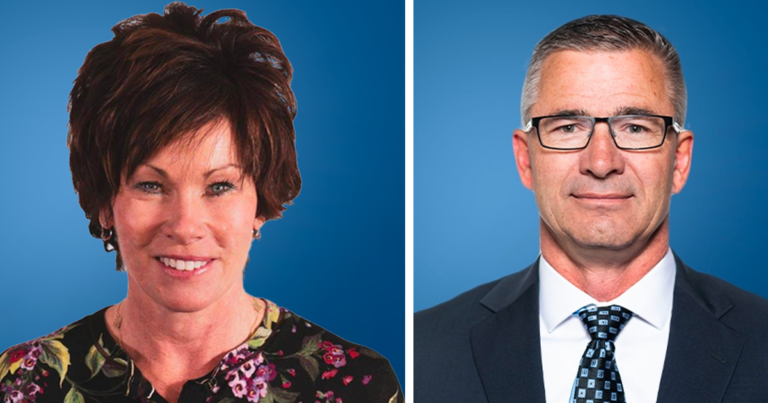
Alberta Finance Minister Travis Toews and Environment Minister Sonya Savage have announced they won’t seek reelection just two months ahead of the province’s spring general election. Toews, who placed second in a leadership contest just months ago, said he remains deeply committed to the conservative movement.

“It has been an honour to serve,” he said in a statement. 

Hours later, Savage announced she won’t seek reelection in Calgary-North West.

“I have been committed to Conservative politics since I was in my teens, and I look forward to continuing to be part of the party for years to come,” she said in a statement. “I wish the Premier and my UCP colleagues success in the upcoming election and will be there to support the Premier.” 

One senior Alberta conservative strategist said the resignations mark an “orchestrated effort” by former premier Jason Kenney’s loyalist faction to assist the NDP with the narrative that the UCP is in “chaos and disarray” prior to the May election.

“The question I would ask readers: what support for Toews’ political career changed within his family between October and March,” he told True North. “Nothing changed, except for maybe a phone call from Jason Kenney.” 

The source suggested three or four more resignations from Kenney loyalists could be coming in the weeks ahead. 

During the United Conservative Party leadership race last summer, Toews appealed to voters hoping to unite under common principles of responsible fiscal management, individual freedom, and limited government. He was the caucus favourite with as many as 25 MLAs endorsing him throughout the race, though some later pulled their endorsements as Danielle Smith pulled ahead in the polls. 

Toews placed second in the leadership contest won narrowly by Smith on the sixth and final ballot. Smith garnered 53.8% of the vote; Toews had 46.23%.

Both he and Smith raised over $1 million to support their leadership bids. 

The Grande Prairie-Wapiti MLA entered politics in 2019. He was named Finance minister under Jason Kenney, a role Smith promptly re-appointed him to. 

In response to his announcement, NDP MLA Shannon Phillips said she doesn’t admire Toews’ record, but that he “conducts himself with decency and is mostly grounded in reality, unlike the new crop of Smith candidates.” 

“Toews was one of the last members of the reality-based community on Danielle Smith’s team,” Phillips wrote on Twitter. “His exit means UCP candidates are only more extreme, less competent, and less able to navigate Alberta’s challenges and opportunities in to the future.”

Leadership contender Leela Aheer, who placed last in the contest, also announced she won’t seek reelection. Rajan Sawhney, who placed second last, has said she won’t seek reelection in her riding of Calgary-North East. 

Sources say Sawhney wants the premier to appoint her in Savage’s riding of Calgary-North West. 
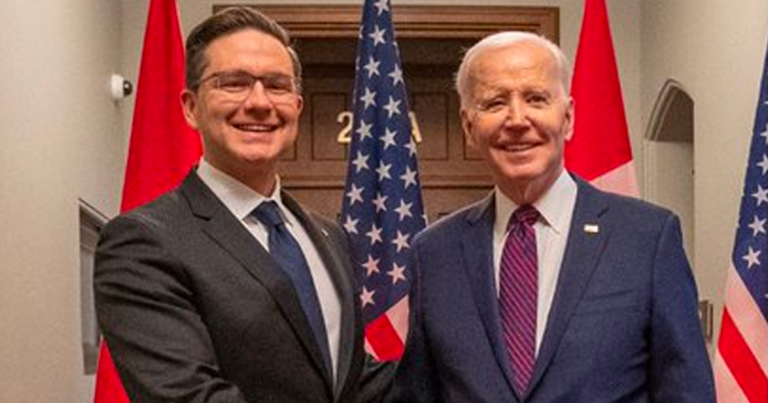
Poilievre discussed Chinese interference and vaccine mandate with Biden

Conservative leader Pierre Poilievre spoke with US President Joe Biden during his official visit to Canada about Chinese election interference and the ongoing border vaccine mandate. 

In a statement released by Poilievre’s office, the Conservative leader outlined his meeting with the US President. 

“Poilievre discussed foreign interference in Canadian elections, committed to supporting common national defence interests, and to invest in the North American Aerospace Defense Command (NORAD) to keep our people safe,” said Poilievre. 

“(He) also expressed his desire to end softwood lumber tariffs that hurt both the Canadian and American economies, exempt Canada from “Buy America” rules that drive up costs and drive down wages, and to lift COVID vaccine requirements for Canadians visiting the United States.” 

Canadians are still prohibited from travelling to the US via land or air due to an ongoing border vaccine mandate. 

In January, pilot and head of the unvaccinated travel advocate group Free to Fly Canada, Greg Hill, told True North that the US was in the same league as Pakistan when it came to border vaccine mandates. 

“They’re not in good company… Angola, Pakistan, there’s other West African countries so these are their compatriots as far as edicts keeping the unvaccinated out,” said Hill.

Biden and his White House entourage arrived in Canada on Thursday for a two-day state trip to Canada – the first of his presidency. 

Poilievre also be attending a state dinner later in the evening with other opposition leaders and Prime Minister Justin Trudeau. 

Roxham Road migrants will be denied asylum seeker status

Source: Wikipedia

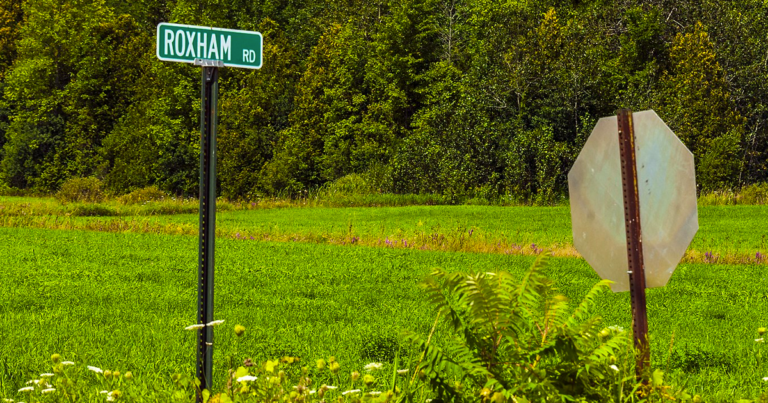
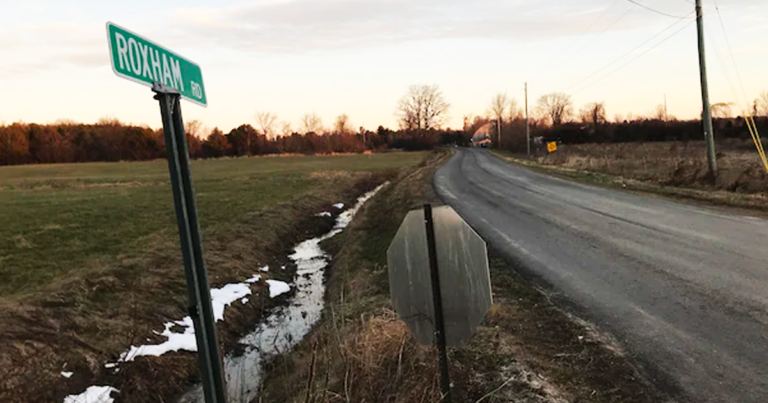
Prime Minister Justin Trudeau confirmed a plan to stop illegal migration at border crossings such as Roxham Road.

During a press conference Friday, the prime minister confirmed Canadian law enforcement will soon reject migrants at illegal crossings, including the road intersecting Quebec and New York State, which led 40,000 migrants into Canada last year.

The deal between Canada and the US becomes active Saturday.

“At midnight tonight, police and border officers will enforce the agreement and return irregular border crossers to the closest port of entry with the United States,” said Trudeau.

While the Trudeau government promised to clamp down on illegal migration moving forward, it agreed to take-in 15,000 additional migrants that apply through legal channels.

The announcement comes after a month of pressure on the Liberal party, including from Quebec Premier Francois Legault, and federal Conservative leader Pierre Poilievre.

In February, Legault publicly requested that Trudeau shut the crossing down, saying Quebec did not have resources to accept any more migrants. Poilievre, roughly a week later, called on Trudeau to shut the crossing within 30 days.

Trudeau’s announcement came 31 days later.

Watch out for these two major tax hikes on April 1

Canadians can expect things to get even more expensive as two major federal tax hikes will go into effect on April 1.

A scheduled hike on the carbon tax will bring the federal levy up to 14 cents per litre which means households should expect to pay up to $847 more in taxes this year even after rebates are distributed. 

On top of that, the carbon tax will lead to a spike in the price of gasoline and could impact the cost of transporting basic goods. 

The other major tax hike is the alcohol escalator tax which will go up to 6.3% – the largest alcohol tax increase in over thirty years. 

Despite having to pay some of the highest alcohol taxes in the world, taxes will take up an even larger portion for the price of a drink. 

On Thursday, the Canadian Taxpayers Federation (CTF) called on Prime Minister Justin Trudeau to follow the wishes of parliament and scrap the alcohol tax hike. 

“The only time members of Parliament got to vote on this tax hike, they overwhelmingly voted against it,” said CTF federal director Franco Terrazzano. 

“MPs clearly want to see the alcohol tax hike scrapped in next Tuesday’s budget.”

This week MPs voted 170 to 149 in favour of scrapping the alcohol tax hike while Canadians struggle with inflation and the rising cost of living. 

“Trudeau must listen to Canadians and MPs and cancel this undemocratic tax hike that will increase the cost of living when Canadians are struggling to stretch our paycheques,” said Terrazzano. 

The Daily Brief | House votes for public inquiry

In this special edition of The Daily Brief, the True North team covers the Canada Strong and Free Network Conference in Ottawa where appearances have been made by former Prime Minister Stephen Harper, Conservative leader Pierre Poilievre and Alberta Premier Danielle Smith.

Plus, the House of Commons votes in favour of calling a public inquiry into foreign election interference as allegations against the Liberal Party continue to pile up.

Next, as US President Joe Biden arrives in Ottawa to meet with the prime minister, sources revealed that the Trudeau government has finally reached a deal with the United States that will allow Canada to close the illegal border crossing at Roxham Road.

Tune into this special edition of The Daily Brief with Anthony Furey and Andrew Lawton!

SUBSCRIBE TO THE DAILY BRIEF

Trudeau to close Roxham Road after U.S. deal, sources say

The Trudeau government struck a deal to close the illegal Roxham Road border crossing, sources told CBC News.

After more than a month of pressure from Quebec Premier Francois Legault, the federal Liberals struck a deal with United States counterparts to close the illegal border crossing between New York State and Quebec.

The deal will terminate a legal loophole, enabling Canadian law enforcement to begin rejecting migrants that seek entry from the U.S. In exchange, the Trudeau government agreed to welcome 15,000 extra migrants through separate, legal channels, CBC reported.

The Trudeau government is expected to release details about the deal Friday.

The news comes more than a month after Legault publicized a firm stance against the border crossing. Legault in February called on Trudeau to announce the crossing was closed, and said Quebec could not receive any more migrants.

The New York Post earlier that month reported New York City was bussing migrants near to Canada’s border crossing, apparently to allow the migrants to channel up into Canada.

As Legault said Quebec was full-capacity, the Trudeau government worked to distribute Roxham Road crossers to other parts of Canada. This month, a charity director told True North that migrants were coming in thousands to Niagara Falls – and that the region was dealing with a housing crisis.

BONOKOSKI: Believe it or not, Trudeau Liberals surviving in the polls

​Despite the Trudeau Liberals having been given a rough ride the past few months, their fortunes have risen to be within two points of the Conservatives.

​Believe it or not, the latest poll by Abacus Data has the two parties in a virtual dead heat, which proves only one thing to this observer.

​The public is not paying attention.

​The public often needs an election call to trigger its interest and, until then, politics is often a distant whirr in the background.

​Filibusters mean nothing. Prime Minister Justin Trudeau jumping through hoops to avoid a public inquiry into the allegations that Communist China has interfered with the 2019 and 2021 federal elections is inconsequential.

​An Ontario MPP accused in the media of being a bagman for China resigning from the Progressive Conservative caucus to sit as an independent barely draws notice. The fact that he has not filed libel notices against Global News and the Globe and Mail raises only eyebrows.

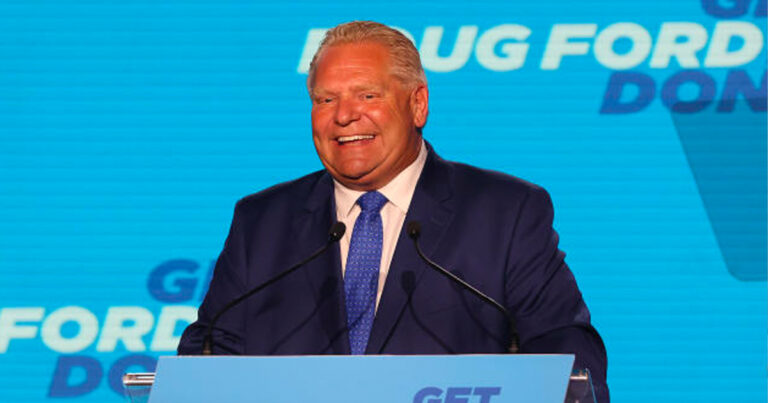
​People seem more interested in Premier Doug Ford’s new haircut.

​This latest poll by Abacus reveals that the federal Conservatives and Liberals are now statistically tied, with the Conservatives at 33% in favourability and the Liberals at 31%. The NDP comes in third at 18%, followed by the Bloc Quebecois, People’s Party, and the Greens.

​“Despite an unfavorable opinion environment for the Liberals, the Conservatives have not managed to consolidate the ‘change vote,’” writes Abacus chair and CEO David Coletto. “The Conservative lead has dropped from eight points in February 2023 to a marginal two-point lead now.

“Interestingly,” he said, “past Conservative voters’ loyalty has decreased, with the Liberals benefiting the most from this vote churn.”

Is the Tory eight-point drop because Conservative leader Pierre Poilievre has become too loud, and that his continued verbal slander of the Liberals is beginning to wear thin?

After all, Poilievre took the party leadership in a walk, with enough delegate support to lock it up in the first ballot,

It would appear, however, that he has fallen out of favour.

“The overall mood of the public and federal government approval ratings have remained negative but they are steady, and there have been no significant shifts in perceptions of the main party leaders,” said Coletto. “However, some past Conservative voters may be churning because of the party’s actions or messaging.”

So that’s it then. Poilievre no longer inspires, and his threats are getting tiresome.

Hard to believe. Trudeau had at one time everything but knives in his back.

Polls, however, are just snapshots.

As of the first full day of spring, Angus Reid showed Trudeau’s approval ratings had inexplicably risen by five points over the last three months.

Pierre Poilievre appears to be struggling with 53% of the voters holding an unfavorable view of him. This is similar to how Trudeau is viewed but Poilievre, said Ipsos, is far worse than other opposition leaders in the past.

As expected, nearly 35% percent of men view Trudeau favorably compared to 50% of women. Poilievre’s favourability is nearly twice as high among men (44%) as women (23%).

Not surprisingly, the Ipsos poll had 49% of Canadians hoping for a federal election, while in reality, around 43% of people seem to think of it as a possibility in 2023.

​Some 54% of respondents said Trudeau should step down as the leader of the Liberal Party in 2023, while around 27% said they believe he’ll do so. This is in line with voters who think poorly of Trudeau.

Trudeau’s approval rating as PM remains at 45% among the Canadians who were polled — ahead of Conservative Leader Pierre Poilievre, who received a 41% approval rating.

Other perspectives have seen Trudeau’s favourability rise among 18- to 34-year-olds in 2022. Two in five (39%) men of that age bracket, and around 50% of women, view him favorably. However, strong disapproval remains a challenge for Trudeau. 

Half of the constituents view NDP leader Jagmeet Singh (46%) and Bloc Québécois leader Yves-François Blanchet (47%, Quebec only) favorably.

More than half of Alberta (53%) and Saskatchewan (57%) view Poilievre favorably, the only two provinces where that’s the case. Quebecers hold the most unfavorable views, with two-thirds (64%) saying they have negative impressions of Poilievre.

And that’s the lay of the political land.

For one snapshot in time.

Ontario’s $205 billion budget spends big on infrastructure, healthcare and schools

Ontario revealed its $205 billion budget on Thursday which projects a $1.3 billion deficit in the next fiscal year. 

The Progressive Conservative government hopes to have that deficit turn into a $200 million surplus by the end of 2025, followed by a $4.4 billion surplus in the next year. 

According to Finance Minister Peter Bethlenfalvy, the budget shows that it’s possible to spend on services while also balancing the budget. 

“We are showing it is possible to balance a budget while investing more in housing, more in highways, more in transit, more in the skilled trades, more in new manufacturing, more in health care, more in education, more in the north,” said Bethlenfalvy when presenting his plan. 

Ontario is expecting to end the year with $200 billion in revenue due to economic recovery from the Covid-19 pandemic. 

Particulars include a $20 billion infrastructure plan to build hospitals, highways and other projects. 

Ontario also plans to put $200 million to address a shortage of health care workers in the form of training positions for 6,000 students and accreditation for over 3,000 international nurses. $80 million will also go to universities and colleges to educate approximately 8,000 nurses by 2028. 

The provincial government has also pledged to fund mental health and addiction services to the tune of $425 million spread over the next three years. $202 million of the funding will be spent on preventing homelessness and providing housing to those in need. 

For seniors, the Ontario government announced it would add 100,000 more spots to the Guaranteed Annual Income System for those in a low-income category beginning in July 2024. 

Another $22 billion was pledged to build more schools and child care facilities. 

Ontario also announced it would be boosting spending on residential school site searches. Over $25 million will be put towards identification and investigations of suspected residential school burial sites. 

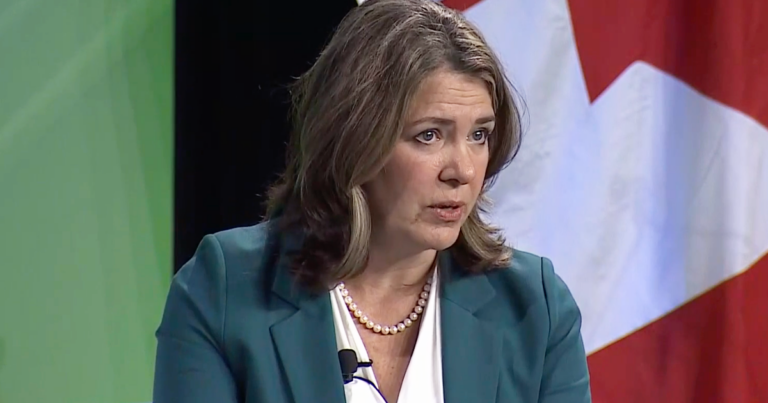
Smith says Conservatives need to offer vision on public service delivery

Alberta Premier Danielle Smith said Conservatives need to learn how to win in big cities. And, that she’s finally back in politics after being exiled for years following her floor-crossing days. 

The premier was speaking to hundreds of attendees at the Canada Strong and Free Networking conference, formerly dubbed the Manning Centre, on Thursday afternoon.

Smith said the United Conservative Party’s values resonate in rural Alberta but there’s a bigger challenge talking to and unifying urban audiences in Calgary and Edmonton.

“I think what we really need to do is to develop a vision for how we apply our conservative values to the delivery of public services,” she said. 

For example, the new premier said the work her government has done on healthcare reform is her greatest political accomplishment.

Upon her election in October, Smith said the left was screaming that the healthcare system was going to collapse following two years of the Covid-19 pandemic. Following a couple months of reform, Smith said the surgical backlog of 35,000 Alberta patients should be cleared within 12 months.

“I think I’ll be the first province to be able to do that,” she said. “We run away from healthcare and we should run towards it.” 

About one month after being elected leader of the United Conservative Party, Smith fired Deena Hinshaw, Alberta’s chief medical health officer who oversaw the province’s Covid-19 pandemic. She instead appointed Dr. Mark Joffe, the vice-president and medical director for Cancer Care Alberta.

Asked about a big challenge she’s overcome in her life, Smith said she was a “social pariah” in Alberta after crossing the floor as leader of the Wildrose party to join then-premier Jim Prentice’s Progressive Conservatives. 

The following year, Smith lost her nomination and the PCs lost government to the Alberta NDP. 

“When I got kicked out of public life, I decided not to leave it and went on to talk radio, and I can tell you that the blue streak people texted me on probably my first three months there was a little unpleasant,” she said. 

Smith said it took her about three years to make amends for that mistake and show her face at Conservative conferences again. 

“Conservatives can be very forgiving,” she said. “I think we’re doing some great things together in Alberta.” 

Ratio’d | Trudeau’s Liberals are in BIG trouble

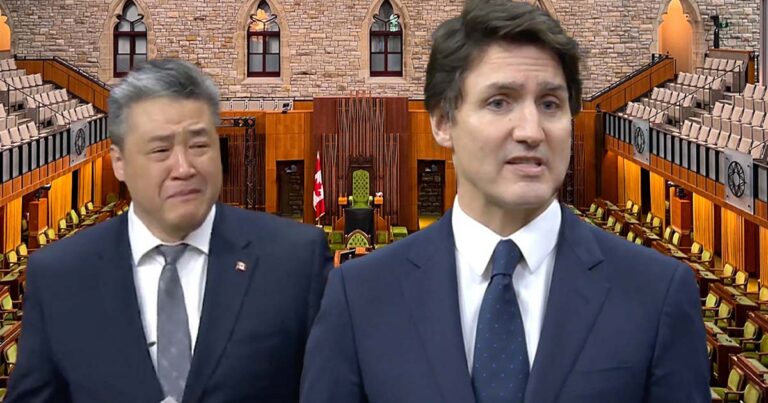
The latest CSIS leak published by Global News is the most explosive and damaging scandal to Trudeau’s Liberals yet. MP Han Dong allegedly advised two Chinese consulate staff to withhold the release the Two Michaels because it would benefit the Conservative Party.

Immediately upon the release of the bombshell allegations, Han Dong resigned from Liberal caucus. Last month, Justin Trudeau told us that questioning the loyalty of Han Dong is stoking “anti-Asian racism.” Is it still racist to question Dong’s loyalty?

Tune in to the latest episode of Ratio’d with Harrison Faulkner!

Related stories