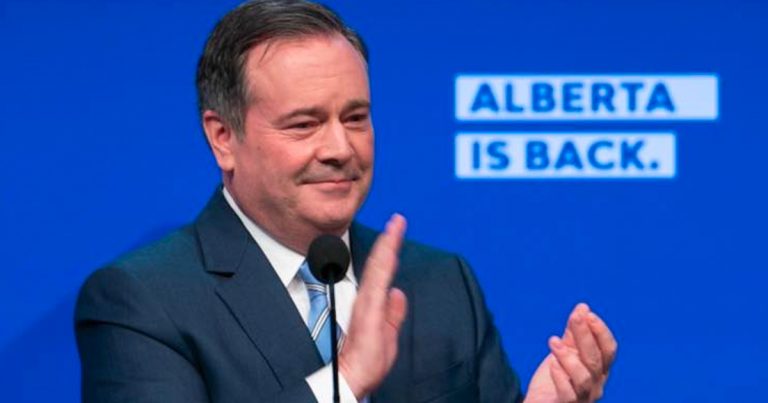
TENNANT: The UCP is more united than a lot of pundits believe

Since Jason Kenney came back to Alberta to unite conservatives, there has been a constant drumbeat from his most hardened pundits and skeptics — he is about to lose. 

This was the case for the PC Leadership and the 88 local delegate races that happened. Albertans constantly heard from those “in the know” that Jason couldn’t win, the obstacles were too great. Some suggested he was too bombastic, his vision too far removed from mainstream conservatives. Nevertheless, he came through with victory after victory. 

It didn’t stop there. Albertans heard that he couldn’t win under the PC Leadership rules that gave votes to hundreds of legacy members and youth, a move that seemed to tilt the playing field against Kenney. It didn’t matter, when push came to shove, Kenney delivered. PC conventions became unity conventions under his leadership, and the group that predicted his imminent defeat became increasingly embittered and moved on to predicting that doom was still just a few months away.

Many thought Kenney may lose his leadership prior to the election and there was no shortage of hot takes during the election that Kenney was on his way to defeat, that the election proved he was not a good campaigner and that the NDP could be moving on to a second term. 

It turned out they were wrong again. Kenney won a commanding majority government with 55%of the popular vote – larger than Ralph Klein or Peter Lougheed’s original victory. 

The premier now faces the biggest political challenge in his career.

COVID-19 and the slump in energy prices have disoriented the government’s agenda and unity within the party. This has been an international crisis that has hurt leaders everywhere, and Alberta’s leader has been no exception. Albertans rightly demand high performance of their government and are not quiet about making their views known. 

Still, the pundits and activists who claim Kenney’s defeat is imminent haven’t been able to muster any actual victory together. It’s always been a loud and cantankerous minority.

For months we’ve heard that Kenney’s time in politics was soon at a close. From rumours of a big caucus showdown to a broad grassroots revolt, and most recently it was expected that the UCP AGM would be a gong show — with a lack of support for the Premier from the party’s members. 

As we say in Alberta, the anti-Kenney forces have been all hat and no cattle.

There was no revolt. There were no walkouts. 

At the party’s AGM, people were friendly and reconnected with many friends that they haven’t seen in some time. The Premier then gave a rousing speech, which many expected to be poorly received, which instead received 12 standing ovations from the vast majority of the room.

They also proved to be in the minority in the board election votes.

Those leading charge to force a leadership review and have called for a change in leadership all lost their bids to sit on the party board. Members took a long look at what they had to offer and said no thanks. It’s an encouraging sign for Kenney, as the leadership review in April becomes his next big political hurdle. 

At some point, those that continue to predict the imminent end to Kenney are going to have to have something to show for it. 

Until then members have been clear. They want more unity and less drama in the United Conservative Party.

At the end of the AGM, I heard journalists complaining that there was nothing to write about. But maybe that’s because these journalists don’t want to admit that Kenney scored an important early win in his bid to mount his comeback. 

This could be the theme from here on out. 

The UCP AGM shows that United Conservatives are more united than a lot of pundits believe and that we may see Jason Kenney lead a resurging Alberta economy in the years to come. 
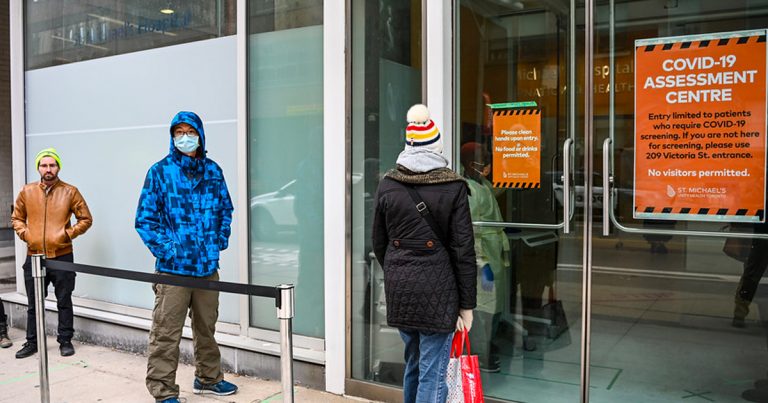
Let’s keep things in perspective when dealing with COVID-19

The media and some politicians are once again focussing on case numbers when dealing with COVID-19, despite the fact that public health officials believe hospitalizations and ICU capacity is more important to focus on.

If the focus is on case numbers again, it’s important to keep things in perspective.

Anthony Furey discusses.

LEVY: “Anti-black racism” activists take over Peel school board

A Peel parents group told attendees at a Zoom workshop Wednesday evening that one key way to tackle “anti-black racism” in their schools is to remove all negative comments from their kids’  student records.

Directors of the Parents of Black Children, an activist group that formed to fight what they characterize as the “anti-oppressive” practices of the Peel District School Board (PDSB) said they (black parents) “have control” and no one knows more about their children than them.

PofBC board member Charline Grant advised the 140 or so attendees to go into their kids’ schools at the end of the year, ask to look at their child’s Ontario Student Record (OSR) and then take out all the negative things in there.

Grant said that way, a new teacher in the next school year “only sees good things.”

“You are entitled to remove anything that is detrimental to your child’s success,” she insisted.

The OSR is the official and confidential record that follows public school students in the province until they turn 18.

A board source, who spoke under a condition of anonymity, said the PofBC group is misleading their followers if they think they can make any changes to the OSR.

The ministry of education states on its website that parents can access a copy of the OSR through a freedom of information request but only “under specific and limited conditions.”

The discussion centred around the contents of PofBC’s new 53-page booklet called “Navigating the Education System” — a highly political and inflammatory term that assumes the school system is racist and that teachers target black students.

I signed into the workshop, which was advertised online because I suspected it would be rife with outrageous allegations and evidence of how far “anti-black racism” groups are prepared to go to weaponize our school system.

If the purpose of the workshop and the booklet were to counsel parents to be involved in their kids’ education in a positive way, that would have been terrific. However, this was all about painting parents and their kids the victims and creating a state of divisiveness at the PDSB.

In fact, halfway through the booklet on page 23, the authors claim schools overreport problems with black students to the Children’s Aid Society. They provide no proof, however. They say many teachers “do not understand the culture of African Canadian students” 

They also contend that black children who are the target of teacher bias are being abused. This bias can take the form of ignoring black students, public shaming, over-policing or giving black students too many suspensions. They also note that black children may not feel safe in schools because they are being taught by teachers who aren’t black.

A black teacher who spoke at the workshop insisted that assessments of whether a student has learned a particular set of concepts should not all be based on tests or written assignments.

She suggested that a student who is not strong at writing could be encouraged to “talk through” questions to assess learning, or evaluated through observations of how they “interact with others.”

A parent, who claimed her child’s teacher had been documented engaging in “anti-black racism” a year ago, asked if anything the female teacher said about her child could be removed from the child’s school record.

“You should file a complaint at the Ontario College of Teachers,” Grant said. “They have moved a racist to another school … would they have done this if this was a sex offender?”

Grant also cautioned parents to insist they be present anytime their children are questioned by the school administration because of the degree of “anti-black racism” in schools.

That kind of attitude and the refusal to accept any consequences for bad behaviour is a recipe not just for divisiveness but for trouble and increased violence within Peel schools.

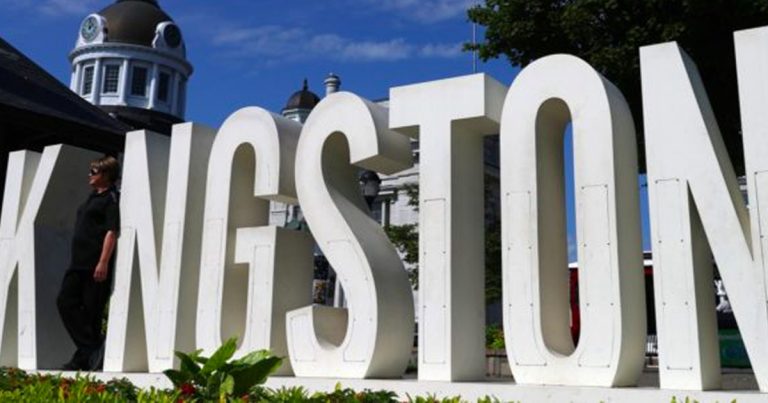
Indoor social gatherings in residences restricted in Kingston, Ont.

Restrictions will be implemented on indoor social gatherings in residences within Kingston, Frontenac and Lennox & Addington (KFL&A) region effective Saturday, according to a press release issued by KFL&A Public Health on Friday. 

The region’s order mandates that no person can attend or host an indoor social gathering in a residence with more than 10 people.

KFL&A Public Health is instructing people who plan to host social gatherings to maintain a list of names and contact information for guests. Hosts are required to provide KFL&A Public Health with this information within 24 hours upon it being requested for contact tracing. 

Failure to comply with this order can lead to fines of up to $5,000 for every day an offence occurs or continues. 

KFL&A Medical Officer of Health Dr. Piotr Oglaza said in the press release that he is issuing this order to protect the community. 

“COVID-19 cases in the KFL&A region are rising and we know that nearly half of our cases are acquired in the household setting,” said Oglaza. “Reducing indoor gathering limits in private dwellings is prudent and necessary to prevent illness and the spread of COVID-19.” 

In comparison, indoor social gatherings in residences across Ontario are permitted up to 25 people. 

The Ontario government paused the lifting of capacity limits in certain high-risk settings on Nov. 15 as the province monitors public health trends. 

These high-risk settings include food or drink establishments with dance floors such as nightclubs and event spaces, strip clubs, and sex clubs and bathhouses. 

Ontario will continue to monitor the data for the next 28 days to determine when it is safe to lift capacity limits in these settings. 

The Premier’s Office could not be reached for comment in time for publication. 

Woman who travelled to join ISIS could face terrorism peace bond

A woman who travelled to Syria to join ISIS from Canada could face a terrorism peace bond as a Calgary court mulls her fate now that she has arrived back into the country.

The woman, who is only known as S.A. in court documents due to an ongoing publication ban, travelled to Syria in 2014 where she eventually partnered with ISIS.

S.A. was able to secure her release from a prison camp for former ISIS militants and their associates this week and landed in Alberta where she was summarily arrested by RCMP officials. 

Prosecutors have not yet laid criminal charges against S.A. but are seeking to have a terrorism peace bond applied, which acknowledges that there are reasonable grounds that she may commit a terror offence. The bond would also make her abide by certain conditions agreed upon in court.

“Certainly charges could be brought against someone who travelled to participate in ISIS in Syria,” University of Calgary law professor Michael Nesbitt told CBC News. 

“The flip side if you have someone who is rehabilitated, who is repentant, who doesn’t appear to be a risk other than the fact that they’ve shown a proclivity in the past toward this, then jail time and a prosecution particularly where the outcome is uncertain … it seems like a compromise for everyone involved.”

Prior to being freed, S.A. lived in a northeast Syria camp for two years with her daughter. Earlier this year S.A.’s daughter was freed from the camp and allowed to come to Canada. 

S.A. has claimed that she was “manipulated” to travel to join the terror group and that while there, she was a housewife and did not partake in militant activities. 

According to Public Safety Canada, there are an estimated 250 Canadian Extremist Travellers (CETs) who have went abroad to participate in terrorist activites, 190 of them still remain outside of Canada. 

“Given the risk of death or capture by other armed groups and possible lack of valid travel documents and funds with which to travel, only a limited number of CETs from this conflict zone have successfully returned to Canada,” claimed Public Safety Canada. 

“Despite significant challenges CETs face in the conflict zone, many—both male and female—remain committed to extremist ideologies and may desire to leave the region if circumstances on the ground permit.”

FUREY: Stop the alarmist approach to COVID-19

Omicron variant? Fifth wave?

Politicians and the media are once again fear-mongering about COVID-19 and calling for more restrictions. But as we’ve seen time and time again in the past 2 years, their alarmist approach to COVID-19 is often incorrect.

Anthony Furey discusses.

Is self-government the answer to the Canada-Indigenous relationship?

From a lack of clean drinking water in some Indigenous communities or lingering anger about residential schools, Canada’s relationship with its Indigenous citizens needs to be fixed. Symbols like lowering the Canadian flag or declaring a national holiday may score political points, but they don’t address any of Indigenous Canadians’ core concerns. One proposed solution is to remove Ottawa from the equation and let Indigenous communities govern themselves. Another is to open the doors to economic development – both resource and otherwise.

In this edition of The Andrew Lawton Show, we discuss the economic and political climate surrounding Canada’s First Nations. Joining the discussion are public policy expert Melissa Mbarki, an Indigenous veteran of the oil and gas industry, and researcher Dr. Heather Exner-Pirot, both of the Macdonald-Laurier Institute.

SUBSCRIBE TO THE ANDREW LAWTON SHOW

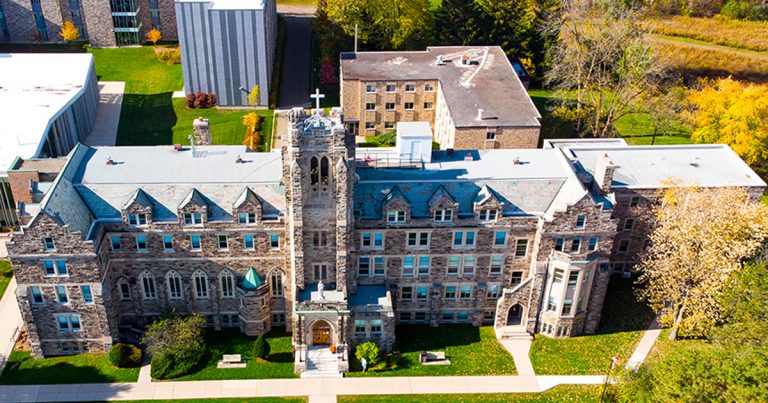
King’s and Brescia colleges adopt “critical race theory” recommendations

Two colleges associated with Western University have adopted a series of recommendations based on critical race theory and other far-left “anti-racism” ideologies. 

The guide, titled “A report on Campus Racial Climate at King’s and Brescia,” was written by King’s and Brescia Anti-Racism Working Group and others. 

“Analysis and discussion are framed by Critical Race Theory, Indigenous scholarship, among other anti-oppressive theoretical frameworks, and by scholarly literature on academic racial climate,” report authors write. 

“Critical Race theorists describe the enduring effects of historical injustices on Black people in America, and the equally lasting economic, social, legal, and cultural benefits that accrued to white Americans from centuries of anti-Black racism.” 

“In Canada too, Black history is a painful chronicle of enslavement, segregation, forced relocation, denial of opportunity, and ongoing violence and criminalization.”

Among the recommendations cited by the report include measures such as using a racial “bias interrupter” during job interviews. A bias interruptor is defined as “a person whose role it is to point out when bias is being displayed” during the hiring process. 

With regards to hiring, the working group calls on the colleges to “reward anti-racism initiatives” when considering promotion. 

Critical race theory is an interpretive lens that originated in the legal profession which holds the view that racism is embedded in US laws and institutions to maintain inequalities between white people and minorities. To date, the lens has spread to a wide array of other fields including education, healthcare and politics. 

The report also laments how common teaching practices like group assignments “can impact students of colour” and calls for teachers to “educate students in navigating those practices without committing racial harm.” 

A major recommendation put forward by the working group calls for the colleges to “decolonize curricula” and teaching materials which include expanding the “idea of what counts as academic content” by allowing students to pursue oral histories and stories. 

It is also recommended by the report that the colleges hire a number of “anti-racism” bureaucrats and to fund an equity, diversity and inclusion office. 

“Foster an understanding of how everyday racism or racist microaggressions affect racialized people,” the report suggests.

The working group also suggested that all students and administrators undergo “anti-bias” discussions and training. 

“Combat ignorance about racism by engaging the campus community—students, all employees including senior administrators, and Board members—in anti-bias discussions and ‘training.’,” the report authors recommend. 

“Proactively put antiracism into Human Resources practices and hiring policies, acknowledging that power and social networks have been historically white.”

The adoption of the recommendations by King’s and Brescia is part of a growing trend of critical race theory being implemented across the public education system. As exclusively reported by True North, other universities have been recently hiring critical race theory specialists. 

Who cares about an MPs medical history?

If you listened to the legacy media, you would think the most pressing issue in the country is…medical exemptions and the vaccination status of Conservative MPs. 

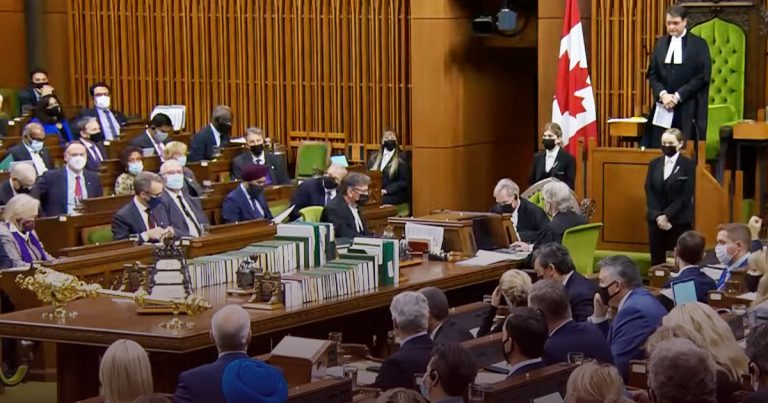
As the House of Commons finally reconvened this week and MPs came back to Ottawa, the legacy media were obsessively preoccupied with pestering CPC MPs about their vaccine status and the validity of medical exemptions. 

Legacy media journalists repeated – verbatim – the partisan talking points of Liberal MPs. 

So rather than asking substantive questions of the Liberals about an economic recovery, out-of-control spending, rapid inflation or the sky-rocketing cost of living, all we heard about was the invented “scandal” of CPC vaccination status.

It’s Fake News Friday on The Candice Malcolm Show!

SUBSCRIBE TO THE CANDICE MALCOLM SHOW

Alberta physicians college raids doctor’s office, accesses lawyer’s file

The College of Physicians and Surgeons of Alberta (CPSA) raided the office of a Calgary doctor who granted COVID-19 exemptions to patients. 

According to the Western Standard, CPSA officials accessed Dr. Dan Botha’s office and took files pertaining to his lawyer Jeffrey Rath. Rath has filed a lawsuit with the college over vaccine mandates. 

Additionally, files pertaining to a two-year-old’s family were also allegedly breached.

“They walked in this morning just after 8 a.m. and asked to do an inspection and review of my patient records for the last 180 days,” Botha told the Western Standard. 

According to Botha, two CPSA members handed him a letter requesting the files “under section 53.1 of the Health Professions Act.”

“You are expected to cooperate with the inspectors and provide them access to your office records,” the letter claimed. 

Botha told the Alberta media outlet that the CPSA asked him whether he had written mask or vaccine exemption letters or prescribed anti-parasitic drug Ivermectin. 

“They wanted to know if I had written any exemption letters for the vaccine or masks or had been prescribing Ivermectin to my patients,” said Botha.

“I told them I had written two — one for a cancer patient of mine and another for a child who has Rett syndrome.”

According to Botha he had prescribed Ivermectin successfully to over 20 patients but claims to have stopped using the drug when it was banned in treating COVID-19. 

“We never speak against the vaccine here and always refer patients to the government website and encourage them to contact the government as well if they have any questions or concerns,” said Botha.

“I’ve been a physician for over 38 years and I’m not against any government policy, but this is starting to feel like harassment.”

Botha claims that the CPSA administrators accessed 28 patients’ files, including Rath’s file. 

“CPSA just raided my doctor’s office and illegally accessed my own personal medical file without my consent,” said Rath.