True North’s Andrew Lawton has arrived in Davos, Switzerland for the World Economic Forum Annual Meeting and unlike previous years, True North has been accredited by the WEF to report from inside of the conference. True North will be on the ground to ask the tough questions and give you an inside look at what’s happening all week.
Plus, less than three months after saying she wanted to seek pardons for those who violated Covid-19 restrictions, Alberta Premier Danielle Smith said last week that she’s asking Justice Minister Tyler Shandro and his deputy minister to consider “on a regular basis” whether charges made for breaching Covid-19 restrictions are in the public interest.
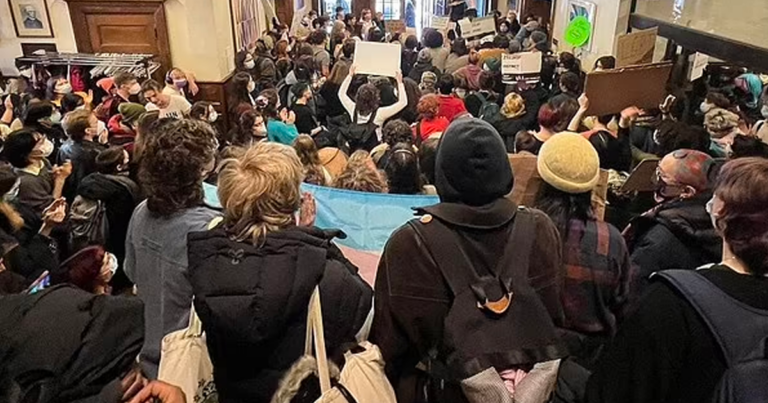
And after trans activists shut down his seminar at McGill University last week, King’s College London human rights law professor Robert Wintemute says that he is worried about the future of debate in academia amid a disregard for free speech by left-wing students and universities.
Tune into The Daily Brief with Anthony Furey and Rachel Emmanuel!
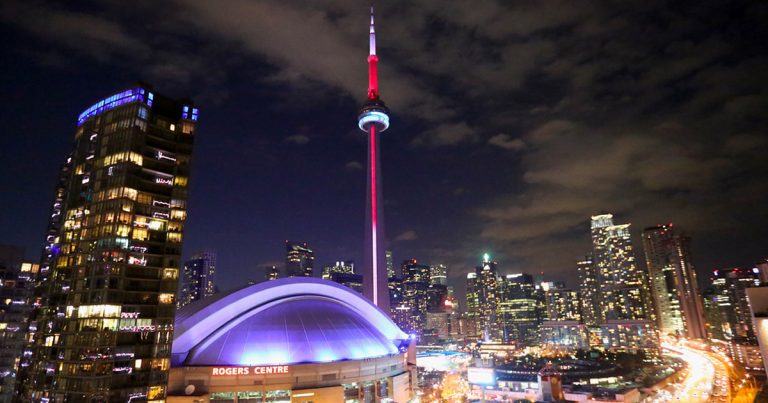
It has become obvious to those who’ve watched the chaos and crime unfold that the Toronto Transit Commission is a train wreck.
In early December 31-year-old Vanessa Kurpiewska was murdered with a pickaxe while waiting for a subway train at High Park station – an innocent victim in the wrong place at the wrong time.
Back in June, 28-year-old Nyima Dolma was set on fire while on a bus at the Kipling Station. She succumbed to her injuries a few weeks later – another innocent victim.
Just before Christmas, a group of eight to 10 teen girls attacked several people at a variety of subway stations. Some of those girls are said to be linked to the killing of a 59-year-old homeless man near Toronto’s Union Station.
This list is by no means exhaustive and certainly does not include the homeless people pictured regularly using the subway system as their sleeping, eating and drug-taking quarters.
The criminal acts have become so rampant that once regular riders are saying publicly they’re now afraid to use the TTC. It used to be that they never thought twice about riding to downtown sports games and theatre performances.
The decline of Toronto’s once well-respected Red Rocket has followed in lockstep with a similar decay of the city it serves.
Like many cities across the country, this decline has been exacerbated and enabled by politicians who listen far too much to the activists, who have rendered law enforcement on the system and on the streets impotent and who have buried their heads in the sand, refusing to acknowledge they have a real crime or service delivery problem.
Take our weak federal transportation minister’s mishandling of the many airline and train cock-ups over Christmas. Omar Alghabra failed to deal with Sunwing, which cancelled flights and left passengers stranded.
It is indeed a trend no matter the politician or level of government.
Stuart Green, TTC spokesman who runs interference for transit CEO Rick Leary, contends that safety is the TTC’s top priority.
“The safety of our customers and employees is paramount to all we do,” he told True North.
That’s extremely hard to believe considering what inside sources have contended about the lack of law enforcement throughout the system.
In a series of e-mails to True North, TTC insiders said fare evasion is rampant and fare inspectors have been told “to walk away” if customers refuse to pay. A loiterer or panhandler won’t even be approached, they say.
That’s 100 fare inspectors making $85,000 a year told not to write tickets or do any enforcement, they say.
Fare evasion has been a problem for years. In 2018 a scathing audit revealed that the TTC had lost $64 million to the lack of enforcement. When the TTC was still dragging its heels in September of 2019, one commissioner noted, astutely, that fare evasion had become “institutionalized” in the system.
Then Covid hit, which has been used as an excuse for everything.
The insiders claim crime has escalated because Leary has sent the message that law enforcement is not needed on the system, ever since former CEO Andy Byford departed in late 2017.
The real chill came in February of 2020 following an altercation involving two transit enforcement officers on the 501 Streetcar.
The incident involved 34-year-old Steven Thackerberry, who was charged with two counts of assaulting peace officers. He pled guilty to the two charges a year later.
But in an expensive witchhunt, Leary hired a downtown law firm to investigate the officers. Even though Thackaberry pled guilty to assault, Leary demanded the officers be fired.
The firing was in part I believe to allow the mayor and four councillors to save face for tweeting about the officers’ guilt as soon as the incident occurred.
In December of 2020, the head of the Special Constable service, a Leary hire, issued a memo essentially telling special constables not to arrest a passenger unless serious crimes were taking place on the TTC.
“SCs must always seek to utilize opportunities through communication, de-escalation tactics, patience and other strategies to build rapport … and to use as much time needed to build trust in hopes of reaching a resolution,” the memo says, one that suggests SCs must act as social workers and put themselves in danger.
There’s little reason to doubt that in the wake of this, special constables and fare inspectors feared for their jobs if they actually did their jobs.
Green would not provide the report’s cost, advising me to ask for the price through a Freedom of Information request.
When asked about the claims by the insiders, he responded: “I’m not going to dignify anonymous allegations against the CEO…”
That notwithstanding the insiders say there’s no point increasing the SC contingent to 150 if they’re not permitted and even fired for doing their jobs.
They say they have told the TTC chairmen (before the 2022 election it was Jaye Robinson and now it’s Jon Burnside) and the mayor, but they’ve done nothing.
Instead Leary was given a raise in 2021 from $361,000 to $438,495.
“The situation is directly related to Leary policies and it has cost taxpayers millions of dollars in lost revenue,” the insiders say. “But what is worse (it) has cost people their lives while the TTC pays people to be silent.”
Do you have information about urban decay on Canada’s public transit systems? E-mail Sue-Ann Levy.
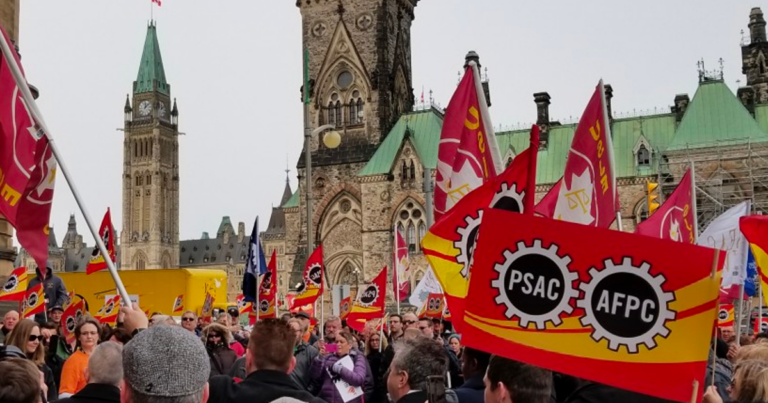
With the Government of Canada now filing a failure to bargain in good faith complaint against the Public Service Alliance of Canada (PSAC), a strike in the taxman’s offices looks more and more inevitable.
The union’s persistent demand to continue with the pandemic need for remote work has since devolved into a reason to go on strike.
And the bad faith complaint, of course, fell on Friday the 13th, a bad-luck day of all days.
“From the start of negotiations in June 2021, the PSAC has flooded the bargaining tables with costly proposals—over 500 across its five bargaining units,” a Treasury Board spokesperson said Friday.
“At the same time, they have refused to prioritize their requests, refused to move on their initial proposals, and did not respond to the employer’s comprehensive offers.”
Earlier in the week, PSAC and the Union of Taxation Employees (UTE) launched a nationwide strike vote for more than 35,000 workers at Canada Revenue Agency (CRA) after talks broke down over wages and remote work.
Strike votes will be conducted from January 31 to April 7, 2023. Workers at CRA have been without a contract for more than a year, and the union declared an impasse in September.
“Workers’ wages have stalled while the cost of living has continued to rise, and everyone is feeling the strain,” said Chris Aylward, PSAC national president. “We’ve been clear negotiating wages that keep up with inflation and a sensible remote work policy are critical to reach a deal, but the Agency has refused to respond to our wage offer and still has major concessions on the table. Workers can’t wait any longer.”
The government, naturally, sees things differently. Hence, Friday’s complaint.
“PSAC’s actions,” said the government, “do not respect their obligation to bargain in good faith. The (government) is therefore filing a complaint with the intent of directing PSAC to return to the bargaining table and engage in meaningful, good faith negotiations.
“We remain confident that if both parties come together with a genuine intent to negotiate, renewed collective agreements can be reached for employees.”
The union’s response was not so positive.
“Throughout bargaining, the conciliation process and Public Interest Commission hearings, the government has made their position clear,” said PSAC’s Jeffrey Vallis. “They expect workers to take a real pay cut by accepting a wage offer far below inflation. They refuse to negotiate remote work and better work-life balance at the table. They have also rejected our calls for mandatory anti-oppression training for all workers and managers.
“Rather than filing frivolous complaints to delay the process, the government should focus on coming back to the table with a reasonable mandate to reach an agreement. More delays to the bargaining process means members will continue to fall further behind. All workers are asking for is fair wages in the face of soaring inflation and better working conditions,” said Vallis.
“There’s no doubt the best way to reach a fair contract is at the negotiating table – but it’s becoming clearer every day: the way to reach an agreement with this government that supports workers is a strong strike mandate from our members.
“That’s why we’ve already announced strike votes for our 35,000 Canada Revenue Agency workers, and why we’re moving towards potential job action for federal public service workers at Treasury Board, who make up another 120,000 of our members,” said Vallis.
“While the government stalls on making things right, we all pay the price. Our bills can’t wait. Inclusive workplaces can’t wait. Good, secure jobs can’t wait. Workers can’t wait.”
True North has arrived in Davos for the World Economic Forum Annual Meeting – but unlike previous years, True North has been accredited by the WEF to cover the meeting, which means we’ll have more access to the international organization.
While there are legacy media outlets attending the WEF meeting, it doesn’t seem like they want to ask the tough questions. For example, how will policies promoted at the WEF affect Canadians? That’s why it’s so important for True North to be there.
Andrew Lawton sets the scene from Davos – tune into www.tnc.news all of next week to get the latest from the WEF annual meeting.
Five years ago, when Prime Minister Justin Trudeau told Canadians he wanted to “phase out the oil sands” a lot of people, Liberals included, said he made a gaffe. But it’s clear today he didn’t misspeak and is instead trying to make good on his promise.
The Trudeau government’s incoming “Just Transition” bill has a lot of Canadians talking. While the government claims they plan on helping oil and gas workers transition to greener jobs, some politicians, such as Alberta Premier Danielle Smith, believe this type of legislation will lead to the end of Alberta’s oil and gas sector.
Instead of letting Canadians adjust to new and greener technologies on their own, time and time again the Trudeau government has shown that they would rather force and bully Canadians into being more green.
If you’ve been to a grocery store lately, you know just how difficult it’s getting to afford everything you need to put on the table. Whether it’s bread, meat, vegetables or anything else, inflation is making life less affordable.
However, while the price of everything is going up thanks to many different factors (tax increases, supply chain issues, government printing more money, etc.), there are a few products that you’re paying too much for – with no good reason.
In Canada, the government sets prices for dairy products, turkey and some types of chickens and eggs. At the same time it keeps supply artificially low by approving how much each farmer can produce while imposing large tariffs on imports. The government has essentially removed competitive forces, resulting in higher prices for consumers as a result.
This whole cartel-like system is known as ‘supply management.’
And who, exactly, does it benefit? A small group of wealthy farmers in the dairy and poultry industries. According to Statistics Canada, the average net worth of a dairy farmer in 2019 was almost $4.5 million. For poultry farmers, it was about $6.2 million. These producers are being prioritized by the government, while consumers suffer for their benefit.
Why does it have to be this way? The supply management regime doesn’t apply to farmers who grow things like grain, wheat, potatoes and other staple foods, nor does it apply to cattle ranchers.
Farmers and ranchers are hard-working, industrious people. They’ll work 15-hour days during harvest to make sure they can get their crop off of the field. And yet, they don’t need the government to come in and punish consumers on their behalf. They’re able to feed the country and much of the world thanks to the quality and yield of their product.
So, if grain farmers and cattle ranchers can do it, why can’t dairy farmers?
In 2019, SecondStreet.org calculated that milk prices in Canada were about 29 cents more per litre in Canada than across the border in the United States. That might not sound like a lot, but it makes a significant difference for a family with two or more kids, who can go through gallons of milk in a given week.
A report from 2015 shows that supply management costs the average Canadian family $585 every year. It’s likely that figure has risen in the years since.
Canada’s supply management regime has held a tight grip on consumers since 1972. We’ve been getting bilked out of our cash for far too long, and, what’s worse, it seems that there’s little to no political will to make a change. All three major federal political parties have committed to preserving this policy.
It’s unlikely that any party would ever come in and immediately abolish supply management. However, what would be politically doable would be to gradually transition it out in a way that helps consumers and keeps dairy and poultry farmers happy.
For example, Australia began to dismantle its similar cartel-like system in 2000. That country implemented a temporary tax of 11 cents per litre of milk, the proceeds of which went to dairy farmers.
Despite this extra tax, allowing competition led to a net drop in prices for consumers while preparing dairy farmers for the coming deregulation. In 2008, the temporary tax stopped, and prices dropped again. Dairy Australia noted that they now “operate in a completely deregulated industry environment.”
If Australia can do it, so can Canada.
Whose side should governments take on this? Multi-millionaire dairy farmers hoping to preserve their monopoly on the market? Or families struggling to get by?
I think the answer’s pretty clear.
Dom Lucyk is the Communications Director for SecondStreet.org, a Canadian think tank.
A new survey has found that a whopping 83% of Canadians believe that the country is currently experiencing a recession.
According to pollsters Pollara, the economic sentiments are among the worst since the 2008 financial crash.
Economic Outlook 2023 reveals most people have bleak expectations when it comes to the economy. When asked to identify an emotion used to describe their feelings about the economy, two thirds chose “worried.”
Additionally, 56% of Canadians expect the economy to worsen over the next year with only 14% expecting it to get better.
When it comes to personal finances, 38% of Canadians feel like they’re losing ground – 13% more than those surveyed last year.
Food prices are the top stressor for 46%, while 34% say housing expenses are the most stressful with 30% blaming the cost of gas.
“The public’s one ray of hope for 2023 is Canada’s job market, which ended the year with low unemployment levels. Only two-in-ten (20%) Canadians feel it is likely they or a family member will lose their job this year, the lowest level recorded since 2008,” wrote analysts in a press release.
Although job numbers have rebounded according to Statistics Canada’s latest update, Canada was faced with a surprise $41 million trade deficit in November.
Although it’s too soon in the year for economists to confidently declare a recession, most agree that Canada will experience one in early 2023.
Bank of Canada Governor Tiff Macklem recently said that he hopes that employment will temper some of the damage a recession would cause to the economy.
“Because the labour market is so hot and we have an exceptionally high number of vacant jobs, there is scope to cool the labour market without causing the kind of large surge in unemployment that we have typically experienced in recessions,” said Macklem in November.
Canada’s most populous city is becoming a less attractive place as it continues to worsen in terms of housing, traffic commutes and crime.
Toronto is the seventh worst city in the world and top worst in Canada for traffic and metro commute times, according to a report by INRIX, a traffic analysis company. Greater Toronto Area commuters lost an average of 118 hours in 2022, a 59% increase since 2021.
Montreal followed behind at 72 hours lost, with Vancouverites losing 59 hours in 2022.
During peak hours, Toronto drivers averaged speeds of only 32 km/h compared to almost 50 km/h in 2019. Montreal drivers fared slightly better with average speeds of 35 km/h and Vancouver drivers at 38 km/h.
Toronto’s ranking skyrocketed to third in North America after being rated 22nd in 2021.
According to transit app Moovit, Toronto had the third worst public transit times in North America with commutes averaging 56 minutes. Toronto placed closely after New York City at 58 minutes and Chicago at 57 minutes.
Toronto is also seeing a significant exodus due to the housing crisis.
According to Bloomberg, nearly 100,000 people left the city in 2022, with 78% choosing to live in other parts of Ontario. Montreal saw roughly 35,000 people leave while Vancouver saw 14,000 depart.
However, using data from Statistics Canada, Bloomberg calculates that Toronto gained over 216,000 people due to immigration, with newcomers favouring urban centres over rural areas and suburbs.
The average price for a home in Toronto is just over $1 million as of November 2022 according to the Toronto Regional Real Estate Board.
According to Toronto Police Service Tdata, crime in Toronto is also getting worse.
In 2022 the city experienced an 18% spike in overall major crime. The data indicate that Torontonians reported 10.5% more assaults, over 45% more auto thefts, 6.6% more break-ins, 27% more robberies and 13.5% more sexual violations than in 2021.
The only category to drop in crime was homicide, falling 17.6%.
As part of the ever-accelerating agenda to cancel all things deemed offensive, Sir John A. Macdonald’s name and likeness is rapidly disappearing from the public square. Even though he was Canada’s first prime minister and key architect of Confederation, his statues are being taken down and his name removed from buildings, particularly schools.
Macdonald’s critics argue that his role in establishing Indigenous residential schools and his racist views disqualify him from any place of honour in Canada today.
But here’s the problem. If you cancel Macdonald, why stop with him? If we judge 19th century people by 21st century standards, many historical Canadians held unacceptable views. Which is why a whole lot of other buildings will soon need new names.
For example, trustees for the Thames Valley District School Board in London, Ontario, recently voted to rename 12 schools named after historical figures with ties to racism or colonialism including Sir Wilfrid Laurier, Queen Victoria, Lord Elgin, Lord Nelson, Louis-Joseph de Montcalm and others.
Sadly, it isn’t surprising to see Wilfrid Laurier on this list. While he’s considered one of Canada’s greatest prime ministers, he also held racist views evidenced by the fact that his government expanded Indigenous residential schools and enacted discriminatory immigration policies. If Macdonald deserves cancellation, so does Laurier.
And there’s no reason to stop with former prime ministers. Several major Canadian cities (Victoria, Regina, Prince Albert) are named after Queen Victoria or one of her immediate relatives, yet the woke trustees at Thames Valley apparently believe students will be traumatized by attending Victoria Public School.
Why? Because Queen Victoria and other British officials such as Lord Elgin and Lord Nelson represent British colonialism. But one wonders how long it will take Thames Valley trustees to realize in what fair city their school board resides. Hopefully, this discovery won’t be too traumatic for them.
Perhaps the most surprising name on the list is Louis-Joseph de Montcalm, the French general who tried to defend Quebec City from British attack during the famous Battle of the Plains of Abraham in 1759. One could argue that naming a school in London, Ontario, after a major French general is an honourable gesture. Of course, since Montcalm lived during the 18th century, his personal views were likely even more unacceptable than those held by people living in the 19th century.
Today, Thames Valley’s renaming project will not be cheap. The board plans to hold a series of community engagement sessions with an estimated cost of $47,000. Of course, this doesn’t include the cost of new signage for each building nor the opportunity cost of trustees spending time renaming things rather than, say, improving academic achievement.
More importantly, schools are supposed to educate students about our history, not erase it. By naming schools after major historical figures, we ensure that these individuals are not forgotten. By erasing their names, the Thames Valley trustees apparently want students to remain ignorant about our past.
Fortunately, there’s a better option.
Instead of renaming schools, we should educate students about the legacy behind their current names and make sure students know about both the good and the bad things these people did, along with an understanding of historical context. In other words, use these names as teaching opportunities, now and in the future.
By keeping the names of historical Canadians on schools, we don’t endorse racism or colonialism. But rather we recognize that Canada’s history is sometimes messy and that our past prime ministers, monarchs, generals and governors general were real people with strengths and weaknesses. They were, as we are now, people of their times.
Students must learn more about Canadian history, not less. Let’s not rename buildings or tear down statues to satisfy ill-conceived notions of social justice in contemporary times.
Michael Zwaagstra is a public high school teacher and a senior fellow with the Fraser Institute.
King’s College London human rights law professor Robert Wintemute says the shutting down of his seminar at Montreal’s McGill University last Tuesday by trans activists was “horribly anti-democratic.”
The scholar also told True North that he is worried about the future of debate in academia amid a disregard for free speech by left-wing students and universities.
Wintemute was set to give a talk at McGill titled The Sex vs. Gender (Identity) Debate In the United Kingdom and the Divorce of LGB from T last Tuesday. The event was hosted by McGill’s Centre for Human Rights and Legal Pluralism.
Source: McGill Centre for Human Rights and Legal Pluralism’s website. (Facebook)
Prior to the event taking place, trans activists penned an open letter condemning it. They claimed Wintemute, who is gay, is “anti-trans” and that McGill was “actively contributing to the genocide of trans people across the world” by hosting him.
On the day of the seminar, protestors stormed into the room, unplugged a projector and threw flour at Wintemute, who was escorted out of the room and sought refuge in the dean’s office.
Here’s footage of the trans activists who shut down a talk on Sex vs Gender & LGB without the T by Prof. Robert Wintemute at McGill Tuesday. They shouted “Get out” “F*** off” & one protestor said “You’re erasing my existence”. (footage provided to @TrueNorthCentre by Wintemute) pic.twitter.com/ZWjTz7YD2I
Wintemute says activists were shouting “f*** your system! f*** your hate! Trans rights are not up for debate!” Footage provided to True North by Wintemute shows protestors shouting “get out,” “f*** off,” “the people united will never be defeated” and a person saying “you’re erasing my existence”
Trans activists (many of whom are masked) shouted “the people, united, will never be defeated" on Tuesday as they shut down a McGill talk on Sex vs Gender & LGB without the T by Prof. Robert Wintemute. (footage provided to @TrueNorthCentre by Wintemute) pic.twitter.com/U79jsqPiOT
“They were trying to drown me out in the seminar room and then eventually they started pushing on the door, and they burst in, and they shut down the seminar,” Wintemute said in an interview with True North. “It was horribly anti-democratic.”
The professor added that the storming of his seminar “felt like a small version” of the events of January 6, 2021 at the U.S. Capitol Building in Washington D.C.
King's College London human rights law professor Robert Wintemute says the shutting down of his seminar on “The Sex vs. Gender (Identity) Debate In the United Kingdom and the Divorce of LGB from T” at McGill last Tuesday by trans activists was “horribly anti-democratic”. pic.twitter.com/t2GZpAqQri
“If you try to make the slightest comment or criticism about their demands, they shout ‘genocide’,” says of trans activists. “They’re not willing to discuss anything.”
Wintemute believes what spurs the extreme reaction and protests is that “at the root of it is some insecurity about their demands”. He says that activists may know they don’t always have the arguments to back up what they advocate for.“They get very angry when someone challenges them.”
Wintemute told True North his gay rights activism began after he came out to his boss while working as a lawyer in 1985. He later became a scholar and published a doctoral thesis in 1997 titled Sexual Orientation and Human Rights.
In 2021, Wintemute joined the LGB Alliance, a U.K. group which, according to its website, “exists to provide support, advice, information and community to men and women who are same-sex attracted.” The LGB Alliance has been accused of transphobia and hate due to its criticism of the transgender activist agenda.
One of our trustees Rob Wintemute was prevented from speaking at McGill University in Montreal by a baying mob.
It's disgraceful that an eminent gay professor of human rights law was unable to discuss gay rights. Gay people still have rights, don't we?https://t.co/N2N1z31Ogd
Wintemute refuted leftist claims made about the LGB Alliance, noting that the organization supports transgender rights, just not extreme demands from activists. He says that it’s trans activists who have been hateful towards the LGB alliance.
“We agree on most issues, but we disagree on some. And that’s considered treasonous,” Wintemute says. “The transgender rights movement seeks to severely punish the LGB Alliance by falsely labeling the organization as an anti-trans hate group.”
The professor told True North he believes that “the LGBT coalition was a mistake from day one”, and came to be due to sympathy from the lesbian, gay and bisexual community. He says the acronym makes as much sense as LGBW, with W being for people in wheelchairs.
Wintemute also shared his concerns regarding issues facing biological women, saying he has sympathy for women amid them losing female-only spaces like competitive sports and prisons. He believes that it’s unfair that women are accused of transphobia when they speak out about these concerns.
Wintemute’s seminar being shut down is just the latest case of censorship on campuses, and the professor believes there is good reason to worry about the future of debate in academia. He noted that “pressure on freedom of expression tends to come from the left-wing students and from the universities trying to take the easiest path of least resistance”.
King's College London human rights law professor Robert Wintemute says there is good reason to worry about the future of debate in academia. He tells his students “you have a right to protest but you do not have a right to disrupt or shut down another group’s event.” pic.twitter.com/c40kze2ZVR
“Universities have become corporations,” he says, arguing they are more concerned about their corporate brand and reputation than they are about principles like freedom of expression.
Wintemute says he’s received support from women across Canada following the storming and shutting down of his seminar.
“I try to speak up because I know many women are afraid to speak. And you saw the reaction on Tuesday.”