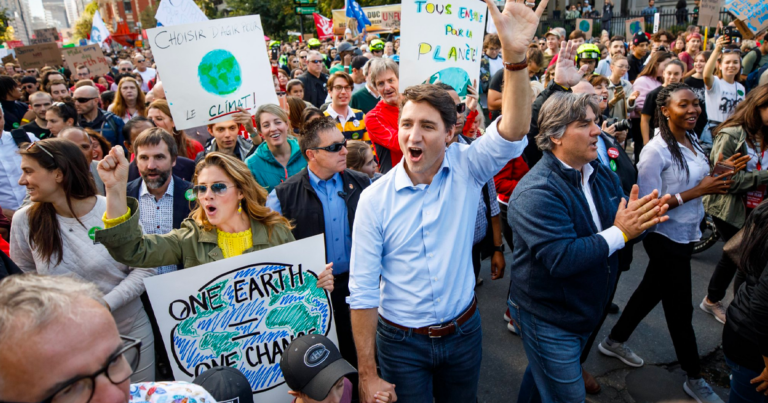
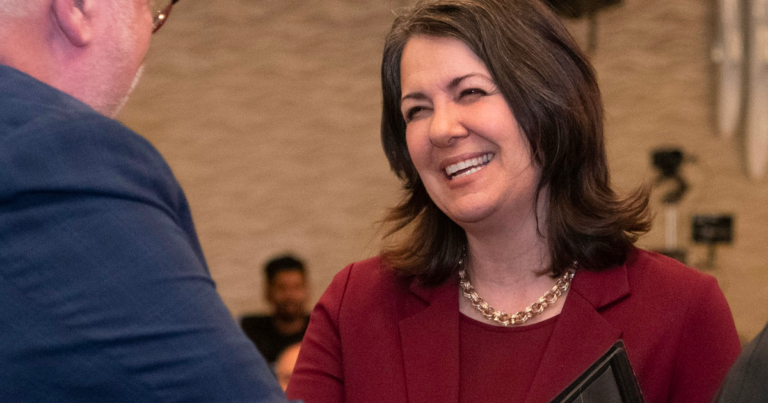
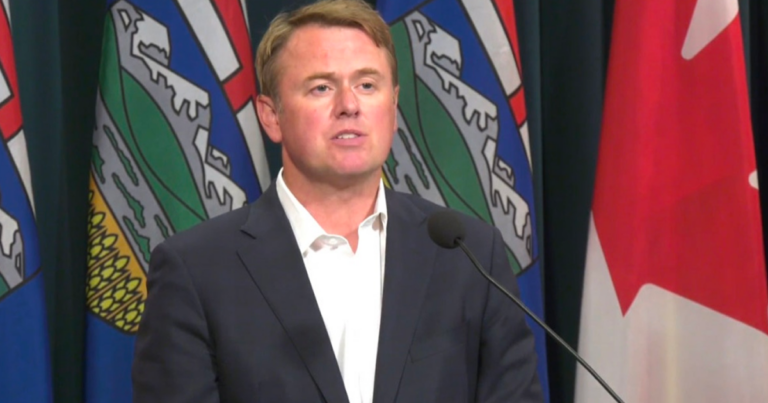
This week on the Alberta Roundup with Rachel Emmanuel, Alberta Premier Danielle Smith says Prime Minister Justin Trudeau is seeking to appeal to an “extreme base” with the government’s “just transition” proposal.
Also on the show, Rachel discusses the Federal Court’s move to grant Alberta intervenor status in six ongoing lawsuits against the Liberal government’s firearms ban.
And an unvaccinated woman who was removed from the top of the organ transplant list is asking the Supreme Court to hear her case.
A British Columbia library saw dueling protests on Saturday morning over a drag queen story hour for children.
Coquitlam Public Library regularly hosts storytimes for children but on January 14, 2023 it will be holding an “all ages” drag queen event where kids will be able to make their own drag queen dolls.
BC NDP Minister of Post Secondary Education was present to support the event alongside LGBT activists.
NDP Minister of Post Secondary Education to attend a counter-demonstration at the Drag Queen Story Hour in Coquitlam, BC after reports that anti-gender ideology protestors plan to protest the event over concerns that it sexualizes children. https://t.co/uwbISNRp1v
“Join us for a very special family story time with the unstoppable Conni Smudge! A North Shore icon, Mz. Smudge will lead us in stories, songs, and crafts. You will get the opportunity to make your own drag queen doll!” the library event page advertises.
“For families with children of all ages. No registration, just drop-in.”
Both the Library and RCMP expect protesters at the event. The library held a similar event last year which faced small but uneventful counter-demonstrations.
In a statement by the library, officials said that the event hopes to “model inclusiveness” for the LGBT community and interested members of the public.
“The goal of a Drag Story Time, as held in many libraries across Canada, is to model inclusiveness, kindness and acceptance, as well as to promote a love of reading. It is a voluntary event for people who may identify as LGBTQ2IA+, people in same-sex caregiver(s) families, their allies, and interested members of the public,” wrote Coquitlam Public Library.
Counter-protestors in support of Coquitlam Public Library's all-ages "drag queen story hour" chant "there is no harm." #bcpolipic.twitter.com/AZp3YAROMj
Coquitlam Public Library has since protected their Twitter account.
According to advocate and opponent of child gender transitioning, Chris Elston, events such as these serve as an “initiation ritual” into the idea that gender has nothing to do with biological sex. Elston is more popularly known as “Billboard Chris” for traveling around Canada warning about the dangers of gender ideology.
“Drag queen story hour is an initiation ritual into queer theory for small children. It sets in motion this idea that we can be whatever sex we choose, and normalizes the hyper-sexualization of women,” Elston told True North.
“Why do these men want to read stories to children? It’s not done for the kids. It’s to gain acceptance for their cultish belief system.”
Opponents of drag queen story time for children have argued that the events are inappropriate and an attempt to indoctrinate kids into the precepts of gender ideology.
Drag performer Conni Smudge has denied claims that the drag events for kids sexualized children.
“Sexualizing children is not what we’re about. We’re about creating an all-inclusive space where everyone can be themselves,” Conni told CityNews yesterday.
“Some people have never experienced what we actually do. They’re making judgments without having any information.”
Activists with the left-wing group Cyclists over Convoys have indicated that they will be there to counter demonstrators opposed to the event. In November, a drag queen story hour in Vancouver featuring performer “Satanix” for 3-10 year olds also saw dueling protests.
Recent data released by Statistics Canada on Thursday paints a grim reality of Canadians dying from alcohol and drug abuse during the course of the Covid-19 pandemic.
A record number of people died from alcohol-induced deaths over the past few years. In 2020 there were 3,790 reports of alcohol-related deaths and by 2021 that number had grown to 3,875.
“Alcohol-induced mortality also increased significantly throughout the pandemic,” wrote analysts.
“The 18% increase from 2019 to 2020 was the largest year-over-year change in alcohol-induced deaths seen in at least the last 20 years.”
Those under the age of 65 were the hardest hit by alcohol abuse, as deaths increased by 27% from 2019 to 2020.
Alcohol-induced mortality statistics include death by liver disease, accidental poisoning, intentional self-poisoning, pancreatitis, gastritis and other related conditions.
Deaths via unintentional poisonings by noxious substances like illegal drugs or prescription medicines have also spiked over the course of the pandemic.
A total of 4,605 people died from accidental poisonings in 2020 and the following year the number grew to 6,310.
Recent statistics out of British Columbia related to deaths by overdoses due to illicit drugs paint a harrowing picture of the province’s struggles with opioid addiction.
Over 1,600 people died from illicit drug use in the first nine months of 2022 according to BC’s Public Safety and Solicitor General.
“British Columbians are continuing to suffer the tragic effects of a toxic and volatile drug supply, with almost six members of our communities dying each day,” said the province’s chief coroner Lisa Lapointe.
The presence of fentanyl and the even more lethal carfentanil in the drug supply are the biggest culprits when it comes to accidental overdoses.
Journalists at the Toronto Star completely misrepresented a doctor who pushed back against lockdowns and vaccine mandates. The leftist outlet misquoted Dr. Matt Strauss and painted him in a completely negative light. It’s no wonder people are skeptical of the legacy media.
Next, we can always rely on the CBC to publish something we can laugh at. An RCMP officer is being investigated for daring to criticize the prime minister on his satirical website “Church of Trudeau.”
Lastly on the show, the state broadcaster puts out one of its most confusing opinion pieces ever. In this one, the author writes about her Christmas tree and how she’s releasing it– and herself– from the bondage of colonization… What?
Tune into Fake News Friday on True North with Andrew Lawton and Harrison Faulkner!
As a business coach, I often kicked off the New Year with January workshops on goal setting and stress reduction. Both workshops focused on helping people use their time and energy to get the best results possible. Both were predicated upon the principle that all accomplishment begins with thinking: “Our life is what our thoughts make it.”
This year, I am horrified to realize that some Canadians are now wondering whether they should include suicide in their plans.
Listening to Justin Trudeau, you could get the idea that Medical Assistance in Dying (MAiD) is mainly around the idea of “choice.” Some Canadians are being given the opportunity to choose whether they want to live or to die.
Canada won’t tell them which to choose; the choice is theirs. When you position it that way, it seems so helpful, respectful and dignified.
MAiD puts the official stamp of approval on the idea that choosing death is equal to choosing life. Whichever you choose, Canada will respect it.
But the very thought of “assistance in dying” flies in the face of humankind’s most vigorous, visceral instinct: survival. It opposes the simplest, most enduring wisdom we have: choose life.
I suggest that choosing death is not equal to choosing life. Both thoughts create a momentum that carries the thinker in a specific direction: one toward apathy, ending, and diminishing experience; the other toward growth, expansion, improvement and development.
The task of pondering whether to diminish and end or to expand and grow won’t be limited to the affected person. It will impact everyone around them, their families, their communities, and our whole society. After all, if people enduring poverty, disability or mental illness are going to choose death through MAiD, government agencies won’t need to look so hard for solutions to help them live.
By expanding MAiD to include non-terminal and solely mental illnesses, Canada is naively positioning the choice between life and death as a kind of consumer decision, like picking out a new iPhone case or buying a Tesla instead of Toyota.
This dangerous message won’t be picked up only by terminally ill patients in their last painful days; it will be received and considered as an option by every depressed teenager, every financially devastated business owner, every sad person suffering a setback. Almost anyone enduring one of life’s inevitable bleak periods could be tempted to believe they might be better off dead.
In the past, the choice between life and death was not one most people thought they would need to make. This was decided by God, or fate. Now, it’s our problem to think about; it’s our “choice.”
MAiD has let that genie out of the bottle: suddenly, everyone whose existence is difficult and expensive is pressured to ask whether the world and their loved ones would be better off without them.
Energy that should go to planning “How can I improve my current situation?” will get siphoned away by recurrent thoughts of “Should I even bother to try?” Ruminating overwhether to choose life or death will consume enormous amounts of intellectual and psychological energy few people can spare.
MAiD offers the idea that “dignity and respect” means allowing those who need help to decide whether to live or die. Actually, “dignity and respect” should mean focusing resources on helping everyone build the best life possible.
Canada was once famous for “Medical Assistance in Living.” Let’s get back to thinking about that.
Rita Smith is the publisher of Road Warrior News / Taxi News.
The average Canadian family can expect to pay up to $847 on carbon taxes even after rebates are dished out, according to the Canadian Taxpayers Federation (CTF).
They say the federal government isn’t telling the full story when it comes to the cost of the levy.
“The Parliamentary Budget Officer (PBO) shows politicians are using magic math to sell their carbon tax,” said CTF federal director Franco Terrazzano.
“The PBO is clear: the carbon tax costs families hundreds of dollars more than the rebates they get back.”
PBO estimates show that most Canadians will have to pay between $402 and $847 on carbon taxes post-rebate.
Despite the PBO’s findings, Prime Minister Justin Trudeau’s government has insisted that the federal carbon levy was a net financial benefit for Canadians.
The Conservatives have called on the federal government to repeal the carbon tax, citing the rising cost of living and an impending recession.
While visiting northern Ontario yesterday, Conservative leader Pierre Poilievre reaffirmed his government would scrap the carbon tax and cap government spending to deal with the economy.
“Trudeau’s Costly Coalition with the NDP is attacking the people of Northern Ontario by tripling the carbon tax and banning hunting rifles. I will keep hunting rifles legal and axe the carbon tax,” tweeted Poilievre.
Hardworking people in Timmins worry about the Trudeau-NDP Costly Coalition attacks on their paycheques & property.
My message: -Cancel tripling of carbon tax to lower food & gas prices -Keep hunting rifles legal -Green-light resource projects
On top of the direct cost to taxpayer’s pocketbooks, the CTF pointed to the $116 million spent by the federal government to run the carbon levy collection program.
The carbon tax is expected to spike by 14 cents per litre in April of this year and 12 cents per cubic metre for natural gas.
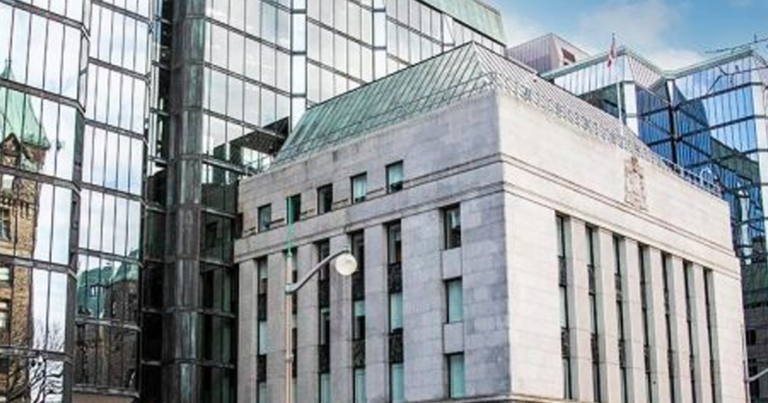
Before heading off to Davos to rub shoulders with the various oligarchs she once criticized as a journalist, Finance Minister Chrystia Freeland appointed three individuals to fill up the board of directors at the Bank of Canada.
The timing, alas, could have been better.
On the very day Freeland appointed Ernie Daniels, David Dominy and Shelley Williams to the board, the C.D. Howe Institute think-tank predicted the Bank of Canada will lose from $3.6 billion to $8.8 billion in the next three years because of high interest rates.
“A lot of what determines the size of the losses really comes down to what interest rates are going to be over the next two to three years,” said Trevor Tombe, an economics professor at the University of Calgary and co-author of the report.
The board is not involved with setting interest rates or other aspects of monetary policy. That’s handled by the bank’s five-person governing council.
But the board does provide high-level oversight on issues such as accounting, strategic planning and risk management.
And therein lies the rub.
In the fall, the Bank of Canada posted its first loss in its 87-year history, losing $522 million in its third quarter,
The central bank said in its financial report that revenue from interest on its assets did not keep pace with interest charges on deposits at the bank, which have grown amid rising interest rates.
That problem is expected to persist as interest rates remain elevated.
New appointee Daniels is the president and CEO of the First Nations Finance Authority. “To the best of our knowledge, Mr. Daniels is the first First Nations member of the bank’s board,” central bank spokesperson Sean Gordon said in an e-mail to the CBC.
Dominy was CEO of currency-exchange and payments business Firma Foreign Exchange Corp. until last year, and a director of the Canada Deposit Insurance Corp. from 2018 to 2022.
Williams was previously vice-president and treasurer of industrial equipment dealer Finning International Inc. and is on the board of the Boston Pizza Royalties Income Fund.
“I want to thank them for accepting these positions, which play an important role in supporting the resiliency and stability of Canada’s financial system,” Freeland said in a statement.
The appointments come as the Bank of Canada faces unprecedented public scrutiny over its handling of runaway inflation and its aggressive campaign to increase interest rates.
Another factor influencing the size of the losses is how large financial institutions’ deposits at the central bank are, Tombe said.
While the losses don’t affect the Bank of Canada’s ability to conduct monetary policy, Tombe said they pose a communications challenge for the central bank.
“Many will look at that and say, ‘Well, doesn’t that mean, the bank is insolvent?”‘ he said.
Historically, the Bank of Canada has always turned a profit, which it remits to the federal government. According to the report, those profits over the bank’s entire history total to about $160 billion.
However, the central bank’s policy decisions during the pandemic have led to the current predicament.
In response to the economic crisis brought on by COVID-19, the Bank of Canada dramatically expanded its assets as part of a government bond purchasing program.
As the Globe and Mail reported, after massively expanding its balance sheet during the pandemic, then rapidly raising interest rates, the bank is now paying more interest on its liabilities than it’s earning on its assets.
Its reported $522 million third-quarter loss indicates the bank does not expect to return to profitability for several years.
These losses won’t affect the bank’s ability to conduct monetary policy. But they do create reputational and accounting challenges for both the bank and the government.
The bank is not allowed to retain its earnings, and it does not have a rainy-day reserve fund, says the Globe.
That means the Department of Finance needs to decide whether to cover the bank’s losses directly, or come up with some other method that would allow the bank to make up for the losses once it returns to profitability.
That may require a change to the Bank of Canada Act.
And that’s where it gets even more complicated for all board members — the old and the recently new.
Alberta Premier Danielle Smith says she’s asking Justice Minister Tyler Shandro and his deputy minister to consider “on a regular basis” whether charges made for breaching Covid-19 restrictions are in the public interest.
The premier made the comments on Thursday, less than three months after saying she wanted to seek pardons for those who violated Covid-19 restrictions.
Smith said crown prosecutors and the Department of Justice are independent bodies and she wants to ensure the process remains independent.
“I have asked them to consider all charges under the lens of: is it in the public interest to pursue and is there a reasonable likelihood of conviction? As we continue to see some of these cases go through, some of them get dropped, some of them fail, they have to consistently recalibrate,” she said.
“But I asked them on a regular basis as new cases come out, is it in the public interest to pursue and is there a reasonable likelihood of conviction.”
At the United Conservative Party’s annual general meeting last year, Smith said she was seeking legal advice on granting amnesty to individuals and businesses fined for violating Alberta’s Covid restrictions. Smith said most charges were administrative fines from Alberta Health Services due to a political decision to “throw out the Charter of Rights and Freedoms.”
“I think it can be a political decision to make amends and apologize for them and eliminate them,” Smith said on October 22.
Premier Smith says she’s getting legal advice about rolling back AHS fines related to COVID restrictions. It was a “political decision” to “throw out the Charter” and administer those fines and it can be a “political decision” to apologize and roll them back, she says. #abpolipic.twitter.com/5iaT8JQJvu
Smith won the United Conservative Party leadership last summer after promising never to introduce Covid restrictions again and to resist federal pressure to do so.
Under former premier Jason Kenney, Alberta implemented serve lockdown restrictions, like other Canadian provinces. Albertans were fined for breaching quarantine orders, masking rules, and for gathering in greater numbers than the province allowed.
In November, Alberta Pastor Tim Stephens was acquitted on charges of violating the province’s public health orders requiring physical distancing during the Covid-19 pandemic. Stephens spent a total of 21 days in jail in regards to the charges.
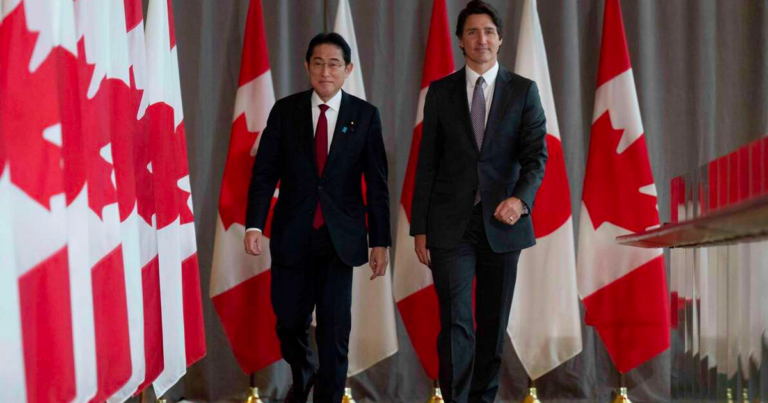
Japanese Prime Minister Fumio Kishida visited Ottawa on Thursday to ask Canada to export its liquefied natural gas to assist Japan’s energy transition – does Prime Minister Justin Trudeau think this is a “worthwhile business case?”
Plus, the Federal Court of Canada has granted Alberta intervenor status in six ongoing lawsuits against the Liberal government’s firearms ban.
And according to South Dakota Governor Kristi Noem, an unnamed Canadian family-owned company wants to relocate to her state because of Canada’s strict pandemic response.
Tune into The Daily Brief with Anthony Furey and Cosmin Dzsurdzsa!
The Federal Court of Canada has granted Alberta intervenor status in six ongoing lawsuits against the Liberal government’s firearms ban.
In September, Justice Minister and Attorney General Tyler Shandro announced that Alberta would seek to intervene in ongoing challenges of Ottawa’s gun ban.
The Canadian Coalition for Firearm Rights (CCFR), the lead case of all challenges, said Alberta has been leading the fight to ensure Ottawa respects property rights.
“The CCFR welcomes Alberta to our court challenge against the (order in council) gun ban,” spokesperson Tracey Wilson told True North.
“The Attorney General of Alberta has been steadfast in (his) support of licensed sport shooters and hunters… we welcome them to the national arena on this issue.”
In May 2020, Prime Minister Justin Trudeau announced he was banning more than 1,500 models of firearms, including AR-15s, through an order in council. He said owners of these guns would have a two-year amnesty period to come into compliance with the prohibition.
The buyback program requires firearms owners to sell their guns to the government or have them rendered inoperable at federal expense.
Under new amendments to Bill C-21, proposed legislation to codify the order in council, the prohibition now applies to over 1,800 firearms — including those primarily used by hunters, farmers and sport shooters.
Shandro made a motion to intervene on “questions of general importance and significant public interest.” Those questions include the lawful ownership of firearms in Canada, the proper interpretation of the Criminal Code, and the scope of the regulatory making powers granted to the Governor in Council.
The CCFR is focusing on seven areas of law in one challenge, including administrative and Charter law. Wilson also said the suit includes multiple applicants to represent different parts of their challenge, like Indigenous stakeholders, retailers and competition shooters, to name a few.
Neither the applicants nor Canada’s Attorney General opposed Alberta’s motion for leave to intervene on non-constitutional questions in all six files.
“It is in the interests of justice to permit Alberta to intervene to address questions of general importance that affect the interests of the provincial government or population in a general way, or when the proceedings have raised serious questions of general importance,” the court found.