The world’s elites are heading to Davos, Switzerland for the World Economic Forum (WEF) meeting – including Canada’s Deputy Prime Minister Chrystia Freeland and International Trade Minister Mary Ng.
On this episode of The Rupa Subramanya Show, Rupa discusses how the WEF promotes leftist policies and influences world governments – including Canada. In addition, Rupa explains how Freeland was once the WEF’s biggest critic but now is a cozy insider of the international organization.
True North will be on the ground in Davos starting this weekend to report on the proceedings.Tune into The Rupa Subramanya Show!
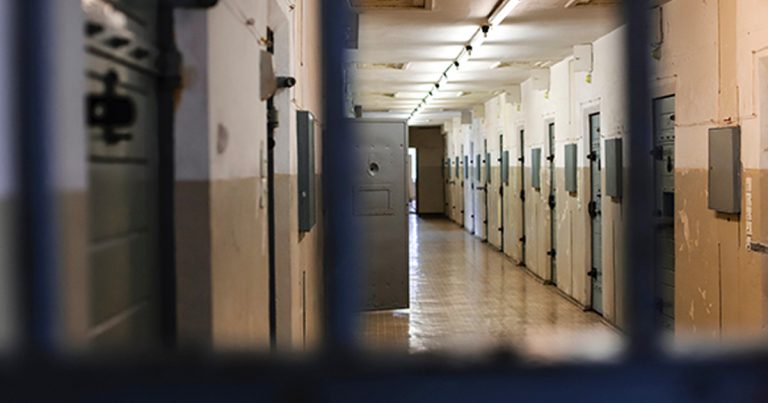
A federal government research brief has found that “gender diverse persons” have been the victims and/or instigators of sexually coercive and violent incidents in Canadian prisons.
According to the Correctional Service Canada’s (CSC) research brief, victims and instigators of sexual coercion and violence within Canadian prisons are usually men, while women and gender-diverse persons were also involved in such incidents.
The report makes clear that incidents of sexual coercion and violence within Canadian prisons are chronically underreported and not reflective of the actual presence of sex crimes. Particularly, inmates in women’s institutions often wish to avoid involving the police for fear of backlash or retaliation for being an informer.
In November 2021, the federal government reported that there were 93 people in federal prison who have gender considerations and needs, most of whom reside in male facilities.
True North reached out to CSC for the specific number of gender-diverse persons involved in incidents of sexual coercion and violence as a victim or instigators, but CSC would not release the numbers citing privacy concerns.
In January 2017, Prime Minister Justin Trudeau promised that he would allow transgender inmates in Canadian prisons to serve their sentence in a prison facility that aligns with their gender identity, calling the sex-based placement system “torture.” This is despite a 2017 policy from CSC that attempted to ensure trans inmates weren’t treated differently from other inmates.
“Pre-operative male to female offenders with gender dysphoria will be held in men’s institutions, and pre-operative female to male offenders with gender dysphoria will be held in women’s institutions,” read the old CSC policy directive on trans inmates.
Esme Vee, a founding member of Canadian Women’s Sex-Based Rights, told True North that she objects to the federal government policy allowing inmates to be assigned to correctional facilities based on their gender identity.
“The Canadian government has a duty of care to all prisoners held in federal institutions,” said Vee.
“It is unconscionable that females are being locked in with male violent offenders. What’s worse is that if the women object to such inhumane treatment, they are told their parole will be at stake. This is an egregious abuse of power in the service of a questionable ideology.”
Professor Mark Mercer, President of the Society for Academic Freedom and Scholarship (SAFS), wants to see more pushback against “Equity, Diversity and Inclusion” (EDI) initiatives at colleges and universities. The Saint Mary’s University philosophy professor says they’re anti-academic.
Mercer’s statements, made during an interview with True North, come amid post-secondary institutions embracing controversial practices to promote EDI.
“EDI initiatives and EDI ideology are fundamentally anti-academic. They don’t embody academic values and they don’t serve academic goals,” Mercer told True North.
Mercer added that academic values include individual scholarship. “The scholar sees him or herself as someone who’s actively trying to understand something.” Mercer believes that “understanding doesn’t track race or sex or ethnicity or any of these other categories.”
Society for Academic Freedom and Scholarship (@SocietyforAcad1) President & Philosophy Professor Mark Mercer says “Equity, Diversity and Inclusion” initiatives & ideologies are anti-academic because “they don't embody academic values and they don't serve academic goals.” pic.twitter.com/R7iWbcb7a0
True North’s Campus Watch reporting has highlighted recent instances of EDI unfolding on campuses, including an increase in race-based hiring.
The SAFS has previously taken issue with several specific Canadian university EDI practices. This includes the University of Calgary’s Haskayne School of Business posting a professor job listing that was “only open to qualified Black scholars.” The organization wrote a letter to the university condemning restrictive hiring, calling it a “violation of the merit principle.”
Mercer told True North that the SAFS had two complaints regarding U of C’s job posting, with the first being that it “was not asking for the candidate who combined teaching and research abilities to the highest degree,” which he says is anti-academic.
“What we want as professors are the people who combine teaching and research to the highest degree. So by bringing in something irrelevant, such as ethnicity or race, the university is cutting itself off from potentially the best scholars.”
He added that while the best scholar may be a member of the university’s preferred category, it is also possible that the person could be part of another group. He also said that serious universities should seek to only hire based on academic grounds.
Society for Academic Freedom and Scholarship President Mark Mercer explains the two complaints that his organization had regarding a U of C job posting that was only open to blacks applicants. pic.twitter.com/Tp8DmMzY1V
Mercer said the SAFS’s second complaint was that “hiring people by race or sex or other non-academic criteria perpetuates stereotypes with regard to them”. He added that it also “potentially creates silos and differences among professors.”
He argues that professors “who are hired partly because of their race or their ethnicity, are hired as representatives of something rather than as individual scholars,” and that this may cause them “to be shunted into particular ways or particular areas rather than have the freedom to go wherever they want.”
Other EDI practices by Canadian universities called out by SAFS include the restricting of a tenure-stream appointment to black people at Dalhousie University, and preferential hiring at Simon Fraser University and Toronto Metropolitan University (formerly known as Ryerson).
Supporters of EDI hiring note that certain demographics are under-represented in some sectors and hence their presence should be increased. They say this would benefit students from that particular group in an academic setting.
Mercer says that while he has a bit of sympathy towards that argument, he believes that merit is better.
SAFS president Mark Mercer says he only sees the argument of EDI hiring being needed to address underrepresentation as perhaps valid if & only if there are 2 equally good candidates, bc non-academic factors then become relevant. “It might be something like a tie breaker”. pic.twitter.com/NhNnbjysqH
“It’s sad, but perhaps it is a reality that some students because of their racial or sexual, heritage or ethnicity or whatever would be more comfortable with professors who are of that heritage,” said Mercer.
He added that the only time he sees that argument possibly working is if there are two equally good candidates up for a position, and one happens to be from an underrepresented group. “If academic criteria run out, and they don’t determine a choice, then you have to choose on non-academic criteria. And perhaps, race or ethnicity becomes relevant then, but only then.”
When asked if governments should ban post-secondary institutions from engaging in EDI hiring practices, Mercer said that he is no fan of government intervention in university matters, but he is in favour of general employment legislation prohibiting identity-based hiring for all sectors.
The SAFS was founded in 1992 and describes itself as a non-profit organization with two main goals; “maintaining freedom in teaching, research and scholarship” and “maintaining standards of excellence in academic decisions about students and faculty.”
Mercer told True North that he joined the SAFS after they stood up for Saint Mary’s professor Peter March, who got in hot water in 2006 after he posted cartoons of the Prophet Muhammad on his office door. Mercer was elected president of the organization in 2015.
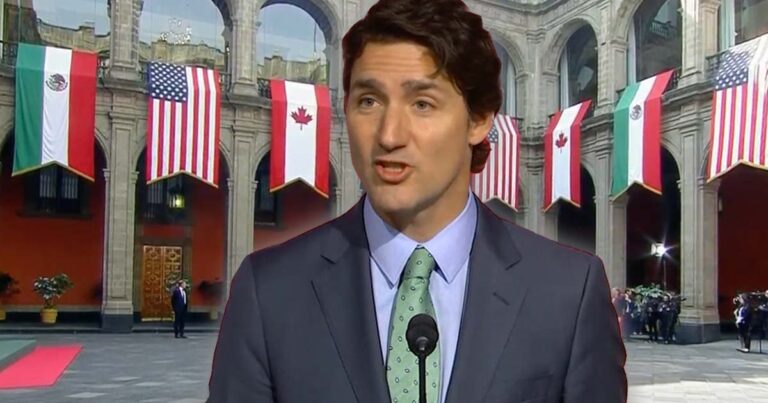
Instead of focusing on issues that matter to Canadians, Prime Minister Justin Trudeau and members of his cabinet jetted off to Mexico to catch some sun and focus on such important issues as advancing diversity and breaking down systemic racism.
Trudeau’s foreign affairs minister Melanie Joly even went as far as to sign the “Declaration for Racial Equity and Inclusion” with the United States and Mexico.
Tune in to the latest episode of Ratio’d with Harrison Faulkner!
As the Justin Trudeau Liberals continue to crusade their eco-radicalism, Albertans are met with perhaps the biggest slap in the face yet.
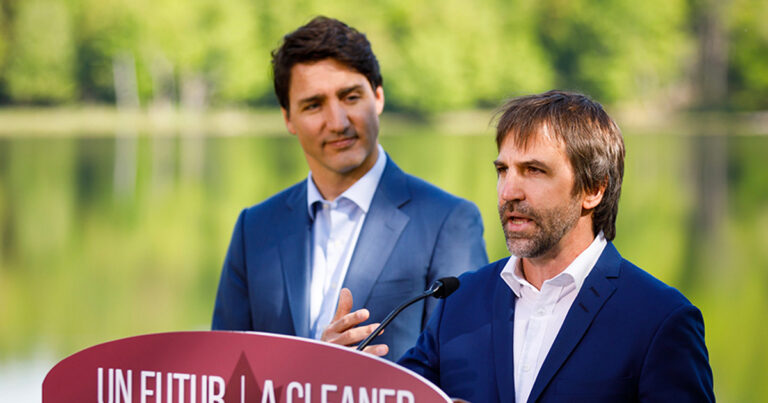
Just last week, Natural Resources Minister Jonathan Wilkinson announced the federal government’s intentions to roll out “Just Transition” legislation over the coming weeks. The plan is to replace high-paying jobs in the energy sector with “green jobs” such as solar panel installation techs.
Stemming from the 2015 Paris Agreement on climate change, it’s being touted by Trudeau and his team as a “sustainable” and “forward-thinking” plan where “any losses will be compensated.” While the early buzzwords are unsurprisingly vague, it is clear this plan is certainly not “just” and is most definitely another attack on the West.
These buzzwords and catch-phrases coming down the pipe are almost as ominous as their sources: the eco-radical Liberals who prove time and again that they have an agenda to demonize our best-in-the-world Canadian energy, our Alberta energy, and everyone who benefits from it.
No wonder Alberta Premier Danielle Smith is biting back. And hard. Not since Trudeau senior’s National Energy Program (NEP) in 1980 have we seen such an outright attack on Alberta. But this time it’s far worse. While the NEP created a rift between Alberta and Ottawa that some feel is forever beyond repair, at least it was trying to build up our oilsands in order to take our wealth.
Fast forward four decades, Just Transition is a plan to entirely shut down our oilsands, and every single Albertan must be aware of how dangerous this legislation really is.
Smith is holding nothing back and all of us at Alberta Proud applaud her for having the tenacity to stand up to Trudeau’s latest arrogance, which would end the Alberta Advantage once and for all.
That’s the whole point of her hotly contested Alberta Sovereignty Act – which gives us the legal framework to fight back against federal chess moves that interfere with our provincial constitutional rights. And if the feds trouncing on our provincial jurisdiction over our own resources isn’t interference, I don’t know what is.
Rightly so, Smith is standing her ground – Alberta has long been in the race toward low emissions through oil well remediation, hydrogen development and carbon capture or ‘carbon tech,’ where we have already been blazing the trail for a decade.
But fossil ideas require fossil solutions. The eco-radicals resort to “banning, blocking and barricading” and that is exactly what the early insights into Just Transition have revealed: a blatant desire of the Trudeau elites to keep our best-in-the-world Alberta energy in the ground.
Don’t forget this approach has been the signature style for Environment Minister “Uneven” Steven Guilbeault, the former head of eco-radical group Equiterre, who illegally scaled then-premier Ralph Klein’s house to install solar panels as part of a bizarre anti-oil stunt.
While Alberta Environment Minister Sonya Savage is calling on Trudeau to drop the name “Just Transition,” we say, keep it! Don’t let Trudeau hide behind semantics from what this plan really is: a plan to destroy our oilsands and stick it to Alberta. It’s another attack on the West, like trying to stick surgeon general-style warning labels on our Alberta beef, or decimating our farming industry with planned fertilizer reductions that will starve out the nation.
An Alberta-based company is hoping to step in where the federal government has failed by acquiring a European oil and gas producer to reduce dependence on Russian energy.
On Thursday, Horizon Petroleum Ltd. announced its intention to acquire a private European company with the intention of tapping into significant undeveloped onshore energy reserves on the continent – beginning in south-western Poland.
In particular, Horizon hopes to tap into developing the Lachowice natural gas field.
Should the $35 million deal be approved by the TSX Venture Exchange and regulators, the acquired company would move its head offices to Calgary.
“The current energy crisis in Europe has underscored the importance of natural gas in the energy matrix. Natural gas has been recognised by the European Union as a key source of energy during the transition to cleaner sources of energy,” wrote Horizon Petroleum in a press release.
“(Horizon) sees significant opportunity in Eastern and Central Europe to develop previously discovered natural gas and oil accumulations thereby increasing domestic production and reducing dependence on imports of Russian hydrocarbons and the use of coal in power generation.”
Both parties hope to complete the deal by February 2023.
Prime Minister Justin Trudeau has received recent flack for passing over a deal to supply Germany with Canadian gas during a diplomatic visit by Chancellor Olaf Scholz.
Last week, Germany received its first shipment of US gas as part of a prior LNG deal. Conservative MP and foreign affairs critic Michael Chong called it a “missed opportunity” for Canada. Germany has also signed a fifteen-year gas deal with Qatar.
“Germany’s newly constructed LNG terminal received its first full cargo from the U.S. today – not Canada,” tweeted Chong.
“That’s partly because Trudeau believes there’s ‘never been a strong business case’ for exporting East Coast LNG. What a missed opportunity.”
In Aug. 2022, Trudeau told the press that supplying Germany with gas lacked a “worthwhile business case.”
“There are a number of potential projects, including one in Saint John, and some others that are on the books for which there has never been a strong business case because of the distance from the gas fields,” said Trudeau.
By March of last year, Ottawa billed taxpayers $759 million on electric vehicle rebates — 153% more than originally budgeted, a new Department of Transport audit shows.
As first reported by Blacklock’s Reporter, federal authorities tapped into funding on several occasions because of an unprecedented number of people claiming the rebates.
“The uptake of the program was higher than expected and funding was an ongoing concern,” wrote analysts in the Audit Of Incentives For Zero Emission Vehicles Program.
“The program’s main risk is not having sufficient funding to meet the demand.”
First introduced in 2019, the Liberal government policy allowed those who purchased new electric vehicles below the price of $45,000 to claim a rebate of up to $5,000. Eventually, the federal government raised the eligible purchase price of up to $70,000.
When introducing the program, the Liberals claimed it would cost $300 million over three years.
“The program exhausted its original funding of $300 million and received two subsequent funding top-ups of $287 million and $172 million to continue the program until March 31, 2022 as planned,” the audit reads.
Then in April, the Liberals extended the budget for the program by an additional $1.6 billion until March 31, 2025.
In total, 136,940 buyers have opted into the program.
Late last year, environment minister Steven Guilbeault announced a plan to mandate that all electric vehicles sold in Canada by the year 2035 must be electric or hybrid.
A recent impact analysis found that the program could cost Canadians $100 billion to achieve. The estimates do not include installation costs for charging stations.
When it comes to meeting its own standards with regard to electric vehicles, the federal government has fallen short on converting its fleet to low-emission vehicles.
Federal data shows that of the 2,899 vehicles purchased by Ottawa since 2020 only 137 were electric and 782 were hybrid.
Alberta Premier Danielle Smith has announced that 250,000 bottles of children’s medication are arriving in the province this weekend for use by Alberta Health Services.
The province was hoping the bottles would be on the shelves earlier, but the process was delayed by Health Canada as it ensured the five million units of children’s pain and fever medication was consistent with national standards.
“The good news is that our Alberta Health Services hospitals will have the first shipment by this weekend,” Smith said in a press conference on Tuesday.
Amid national shortages of children’s Tylenol and Advil last year, Smith and Health Minister Jason Copping announced in December they secured five million units of acetaminophen and ibuprofen from a manufacturer in Turkey. The government said there was no exact timeline for when the medicine would arrive, but that it would be in a matter of weeks.
The federal regulatory body slowed the process, as it examined the manufacturer, Alberta’s import facilities, and ensured the formula was the same as existing Canadian products. It also had to approve French and English packaging before signing off on approval.
Smith said the remaining 4.75 million bottles will be for retail use at a later date. Those shipments are subject to additional delays because the bottles require a childproof cap.
“We are working on making sure that that approval process is taking place,” she said.
The premier also announced that her government plans to put $600 million into Alberta’s health care system per year in 2024 and 2025, whether or not the federal government makes changes to funding transfers.
“I can’t stop doing reform because the federal government doesn’t want to partner with us,” she said.
In late November, one million units of children’s acetaminophen and ibuprofen arrived in Canada. That shipment was followed by an additional 500,000 units of children’s pain and fever medications as a surge in viral illness caused nationwide shortages.
At the time, federal Health Minister Jean-Yves Duclos said a significant rise in demand was to blame for the shortages. He said the normal demand for children’s pain and fever medications is about 300,000 to 400,000 units per year.
In November alone, the company that manufactures children’s Advil in Canada, Haleon, produced 1.1 million units of the product for the Canadian market.
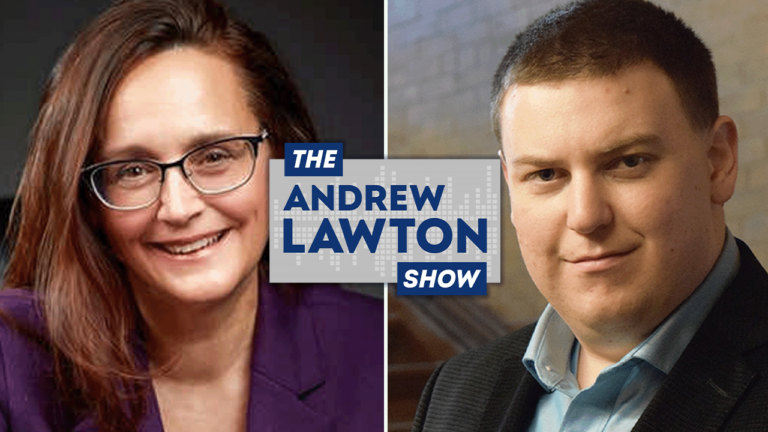
In March, the Liberal government’s updated euthanasia law will come into effect—expanding its access to those suffering solely from mental health issues. The legislation has received mixed reviews, with some physicians whole-heartedly embracing the controversial practice. Canadian Physicians for Life executive director Nicole Scheidl joined True North’s Andrew Lawton to discuss her concerns with Canada’s assisted dying laws, where she thinks they may be headed, and why physicians are speaking up.
Just over a hundred protesters showed up outside of the Ontario College of Psychologists on Wednesday to protest potential disciplinary action against Jordan Peterson.
Plus, as the world’s elites make their way to Davos for the World Economic Forum, Conservative leader Pierre Poilievre’s office has confirmed that no MP from the party will be attending the upcoming conference.
And Annette Lewis, an unvaccinated woman who was removed from the top of the organ transplant list due to her vaccine status, is hoping Canada’s top court will save her life.
Tune into The Daily Brief with Anthony Furey and Rachel Emmanuel!