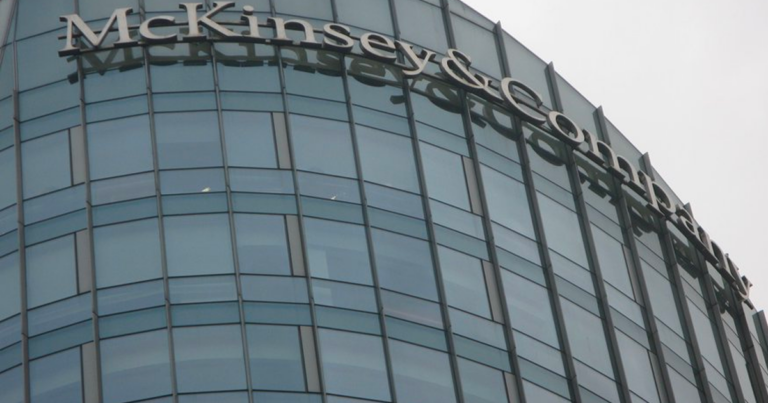
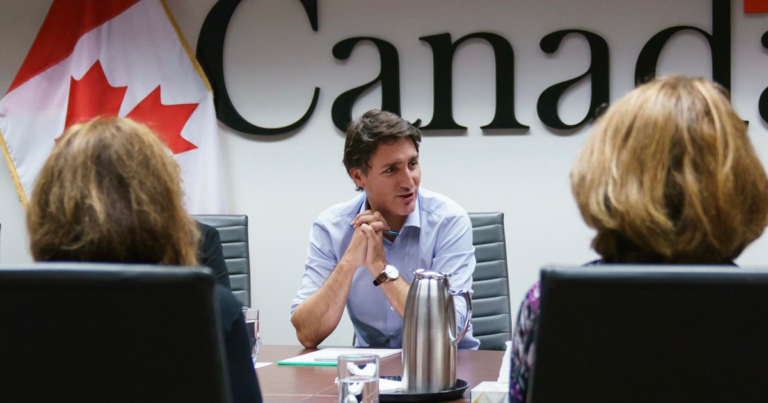
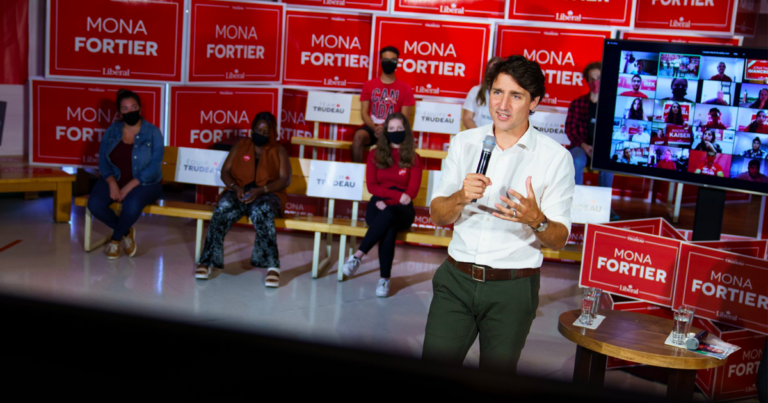
The controversial management consulting firm McKinsey and Company saw a thirty-fold increase in funding from Prime Minister Justin Trudeau’s government when compared to his predecessor, Stephen Harper.
Data from Public Services and Procurement Canada shows that McKinsey received $66,159,866 from the Liberals between 2015 and 2022.
On the other hand, the Harper government gave the company a total of $2,236,015 while in office from 2006 to 2015.
McKinsey has received flack in recent years over their involvement in consulting on Covid-19 pandemic policies, as well as financing China’s expansion in the South China Sea via the construction of artificial islands.
A large portion of McKinsey’s work was billed by two departments, Immigration, Refugees and Citizenship Canada and the Canadian Border Services Agency – making up 44% or $24.5 million of all contracts.
Contracts being given to McKinsey have grown steadily over the years without a sign of slowing down. In 2016, $1.7 million worth of funding was awarded to the firm, by 2022 that number had grown to $32.5 million.
According to Radio-Canada, the company refused to answer questions about the kind of work it conducted for the Canadian government. Contract titles included work to “develop and implement transformation strategies.”
The scale of McKinsey’s influence is only being unveiled now after the federal government announced its ambitious plan to let in 500,000 new immigrants into Canada by 2025.
Professor at the National School of Public Service Isabelle Fortier told Radio-Canada that the company essentially serves as a “shadow government.”
“It is a shadow government, but which acts everywhere, without any legitimacy and without any critical perspective, without any transparency,” said Fortier.
On Twitter, leader of the Conservative Party of Qeebec Eric Duhaime called for an immediate investigation into McKinsey’s influence.
Ça va définitivement prendre une enquête publique et indépendante sur le rôle de la firme McKinsey.
Ils reçoivent des dizaines de millions $ en contrats sans appel d’offre, autant du gouvernement Legault que celui de Trudeau.https://t.co/QAKOy2gpcv
“It will definitely take a public and independent investigation into the role of the McKinsey firm. They receive tens of millions of dollars in untendered contracts, both from the Legault and Trudeau governments,” said Duhaime in French.
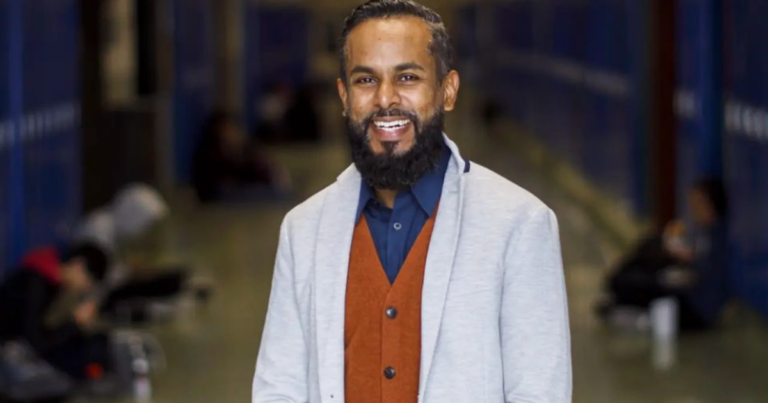
The controversial education director of the Waterloo Region District School Board began the new year with a series of tweets inviting all who follow him to join what I’d describe as the quickly evolving Oppression Cult.
Jeewan Chanicka – a long-time activist who appears to have turned the WRDSB into a social justice experiment – suggests in New Year’s Instagram posts (and protected Tweets) a series of ways social justice warriors like him “can pull people in” for what he calls #crossracialsolidarity.
He also asks that people come with ESP, which I take to mean extrasensory perception.
When Chanicka discovered that certain journalists were reading his New Year’s tweets, he protected them and turned to Instagram to publicly preach his dogma.
The tweets are still on his webpage where he tells his followers that because of the “trolls” and his current settings (protected) they won’t be able to retweet his thoughts.
He invites people to screenshot and share them. I have taken his advice.
He offers nine separate pearls of wisdom to “unlearn” colonization and to help with the healing of oppressed black, racialized and Indigenous people.
“Rediscover your authentic self,” he says in his first post, noting that sometimes even Indigenous, Black and Racialized (IBR) folx – he spells it this way – uphold forms of oppression within their own “affinity spaces” (areas where people of the same interests gather).
His next piece of advice tells people to “commit to ongoing learning” of the #BurdenoftheOppressed.
“Stop asking us to do all the labour to teach you,” he writes. Chanicka says people should “commit to action” and not stop when it gets hard.
“You have to work to build your #resiliency,” he writes, his musings chock full of hashtags and woke jargon.
He also advises aspiring cult members to commit to affinity spaces where his followers can learn and heal and to commit to centering #Indigenous #Black #racialized voices in “other forms of oppression.”
“We are routinely used to people taking our work and the credit for our work…,” he insists.
Chanicka advises people to “show up” when “#IBR” people need them instead of just sending them private messages like “we support you.”
He also asks his (presumably white) followers to commit to their own healing because colonization has hurt them – not just IBR folx.
“You need to have affinity spaces where you work to do your own healing,” he writes, adding that this helps with cross-racial solidarity.
Under the final section in which he asks those reading his crazy posts to commit to “collective transformation,” he claims we (the collective we) are at a “critical crossroads” in history.
“We have a chance to be good ancestors right now,” he writes. “BE a good ancestor – NOW.”
Both his Twitter and Instagram feeds are under his name – he does not have a separate WRDSB account – and he appears to blur the lines between his day job, his activism and a slew of at times unprofessional pictures of himself.
A few days ago, he posted an Instagram selfie of him dancing in an elevator after a gym workout.
Like the board’s leftist trustees, he is quick to block anyone who challenges his point of view. He has cried at board meetings insisting that those who don’t understand oppression or trans ideology are hateful and last year hosted a menstrual health day video in which he declared that men can menstruate.
After reading and re-reading this latest self-serving nonsense, I was left with several thoughts.
This is Critical Race Theory at its finest for those who insist it’s not being taught in Ontario schools.
As I’ve said before, it has absolutely nothing to do with teaching kids basic literacy, math and science skills to give them a chance at success in life.
I find his narcissistic and preachy commentary a load of bunk – laughable even.
But for those who are easily indoctrinated by the woke mob, Chanicka borders on dangerous.
We don’t need to commit to unlearning or the ongoing learning of the #BurdenoftheOppressed.
That very hashtag makes my hair stand on end because it encourages those Chanicka thinks are oppressed to remain perennial victims and not take responsibility for their own lives.
His job as education director is to provide a quality education experience, not to gaslight his students into feeling guilty if they don’t fall into his targeted oppression groups.
The trouble is, these activist directors have taken over some of Ontario’s largest school boards and are spreading their harmful dogma.
Most parents don’t have time to comb Chanicka’s social media feeds to see what crazy tweets or Instagram comments he’s posted. And they don’t pay enough attention to school board meetings.
But they need to and sooner rather than later. Their childrens’ futures may depend on it.
Canadians had to withstand record inflation throughout 2022. Instead of offering a reprieve, the Liberal government hiked carbon taxes, kept printing money, and more importantly kept spending money. Canadian Taxpayers Federation federal director Franco Terrazzano joined True North’s the Andrew Lawton Show for a wide-ranging chat about the last year and the year ahead through the lens of government accountability and respect for the taxpayers.
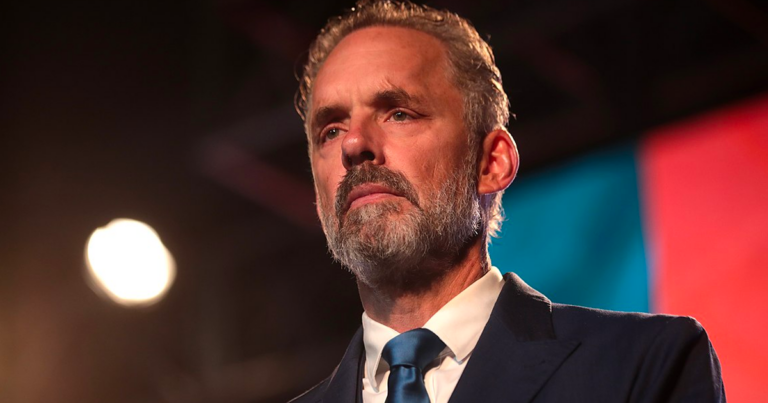
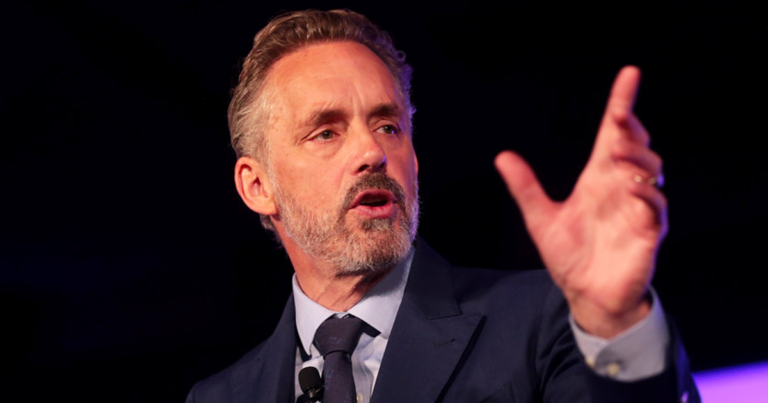
Renowned author and psychologist Jordan Peterson says he’s been informed by the College of Psychologists of Ontario that he will have to undergo “social media communication retraining” due to his tweets criticizing the Trudeau government.
Plus, new estimates show the Trudeau government’s electric vehicle mandate will cost Canadian taxpayers nearly $100 billion to achieve.
And it turns out there was a “worthwhile business case” for countries to export energy to Germany to help the European nation offset its dependency on Russian energy.
Tune into The Daily Brief with Anthony Furey and Cosmin Dzsurdzsa!
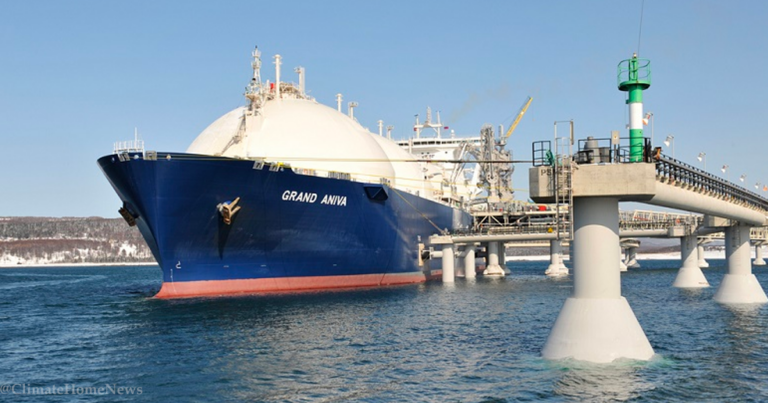
As a US ship arrived in Germany’s newly built liquified natural gas (LNG) terminal with a fresh shipment of gas, critics of Prime Minister Justin Trudeau blasted him for turning down an opportunity to sell Canadian gas to the European nation.
Conservative MP and foreign affairs critic Michael Chong called the deal a “missed opportunity” for Canada as Germany seeks for ways to offset its dependency on Russian energy.
“Germany’s newly constructed LNG terminal received its first full cargo from the U.S. today – not Canada,” tweeted Chong.
“That’s partly because Trudeau believes there’s ‘never been a strong business case’ for exporting East Coast LNG. What a missed opportunity.”
Germany’s newly constructed LNG terminal received its first full cargo from the U.S. today – not Canada.
That’s partly because Trudeau believes there’s “never been a strong business case” for exporting East Coast LNG.
Others, including renowned author Jordan Peterson, also slammed the prime minister blaming him for Canada’s status as a “second-rate economic and international player.”
"there is no business case" for Canada to supply LNG to Germany said @JustinTrudeau ensuring that Canada remains a second-rate economic and international player and ceding the ground to the Americans. https://t.co/Y2Xfdd9Cpv
During German Chancellor Olaf Scholz’s trip to Canada last year, Trudeau doubted there was a “worthwhile business case” to export gas to Germany from Canada’s east coast.
“There are a number of potential projects, including one in Saint John, and some others that are on the books for which there has never been a strong business case because of the distance from the gas fields,” claimed Trudeau.
“We are looking right now — and companies are looking — at whether or not, in the new context, it makes it a worthwhile business case, to make those investments. … It needs to make sense for Germany to be receiving LNG directly from the east coast.”
In December, Germany also signed an LNG deal with Qatar which would see the European state receiving two million tonnes of gas for 15 years beginning in 2026.
During an end of year interview, Conservative leader Pierre Poilievre said that if elected he would tap into Canada’s energy potential and develop more LNG projects to supply the world with clean energy.
Canada has the most environmentally friendly liquefied natural gas on earth.
But Trudeau's anti-energy laws have left our energy stuck in the ground.
Let's make more Canadian energy, build more LNG projects, and replace dollars for dictators with paycheques for our people. pic.twitter.com/0Iykbe3BGn
“Canada has the most environmentally friendly liquefied natural gas on earth. But Trudeau’s anti-energy laws have left our energy stuck in the ground. Let’s make more Canadian energy, build more LNG projects, and replace dollars for dictators with paycheques for our people,” tweeted Poilievre.
Renowned author and psychologist Jordan Peterson says he is being subjected to mandatory “social media communication retraining” by the College of Psychologists of Ontario (CPO) due to his political comments on Twitter that include criticizing Prime Minister Justin Trudeau.
“The Ontario College of Psychologists has demanded that I submit myself to mandatory social-media communication retraining with their experts for, among other crimes, retweeting Pierre Poilievre and criticizing Justin Trudeau and his political allies,” wrote Peterson in a Twitter thread Tuesday.
BREAKING: the Ontario College of Psychologists @CPOntario has demanded that I submit myself to mandatory social-media communication retraining with their experts for, among other crimes, retweeting @PierrePoilievre and criticizing @JustinTrudeau and his political allies.
“I have been accused of harming people,” he continued. “None of the complainants involved in the current action were clients of mine, past or present, or were even acquainted with any of my clients.”
According to Peterson, he will need to complete a course with reports documenting his progress. If he does not comply, he would face an in-person tribunal and may even have his license to practice clinical psychology suspended.
Peterson holds that the College had investigated complaints by people claiming to have been clients of Peterson, even though the complaints could have been dismissed as merely bothersome.
“We are now in a situation in Canada under Justin Trudeau where practicing professionals can have their livelihoods and public reputations threatened in a very serious manner for agreeing with the Official Opposition and criticizing major government figures,” said Peterson.
“If I comply, the terms of my re-education and my punishment will be announced publicly,” he said.
According to the Daily Wire, the complaints against Peterson include criticizing Former Principal Secretary to the Prime Minister Gerald Butts and for voicing his opposition to plans made by Ottawa Police during the Freedom Convoy.
The Daily Wire spoke to the College’s Executive Director Rick Morris who said he had reviewed the tweets and decided they justified an investigation.
True North reached out to the CPO for additional comment but was told they were unauthorized to comment under Section 36 of the Regulated Health Professions Act, 1991.
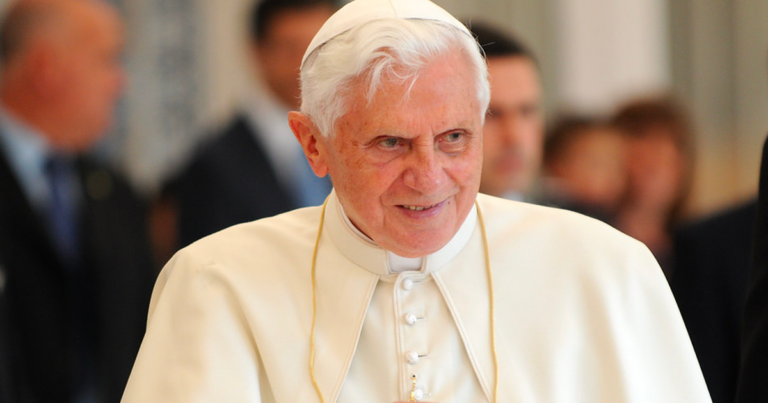
Canadian Catholics around the country are mourning the loss of Pope Emeritus Benedict XVI following his passing on Dec. 31.
The former prelate, born Joseph Aloisius Ratzinger, died a natural death in the Vatican’s Mater Ecclesiae Monastery. Since then, his body– vested in traditional red liturgical garments– has been transported to St. Peter’s basilica so that the faithful can pay their final respects to the great “theologian-pope” of the 21st century.
An estimated 35, 000 pilgrims per day have made their way to the Vatican where Benedict’s remains are to lie in repose until his funeral mass on Jan. 5, which will be presided over by his successor Pope Francis. Rome authorities said they are expecting 60,000 people to attend Benedict’s Requiem Mass in St. Peter’s Square.
Elected Rome’s 265th pope in 2005, Benedict XVI made history in 2013 when he became the first pontiff to resign in 600 years, citing that his declining strength and age made him physically unfit to continue with his parochial duties.
The 95-year-old former pontiff was especially revered for his intellect and contemplation. In a statement, Archbishop of Toronto Cardinal Thomas Collins remembered Benedict as a “great theologian” with “astonishing intellect.”
Collins added that as a pope, Benedict “led the universal church with wisdom and holiness, providing a clear and loving message of how our faith can inspire us and guide us through the storms of life’s journey.”
To honour Pope Benedict, Collins has asked all 225 Toronto parishes to add a special prayer of the faithful at all Masses for “the repose of the soul of Pope Emeritus Benedict XVI” and to lower their papal flags until his funeral mass later this Thursday.
Bishop Raymond Poisson, President of the Canadian Conference of Catholic Bishops–which oversees clerical work throughout Canada– said in a statement that Benedict “leaves behind a great legacy of teaching that will continue to inspire us.”
Poisson also noted that the former prelate made special efforts to “heal the wounds of our past,” citing Benedict XVI’s meeting with a Canadian delegation, made up of representatives of Indigenous communities, to discuss their experience of residential schools back in 2009 and 2012.
“During this meeting, the Pope listened to their stories and expressed his regret and sadness for the sorrow suffered by many Indigenous people in the residential school system,” said Poisson, Bishop of Saint-Jérôme and Mont-Laurier in Quebec. “A few years later, he canonised North America’s first Indigenous saint, St. Kateri Tekakwitha, also known as the ‘Lily of the Mohawks.’”
On Twitter, Prime Minister Justin Trudeau lauded the Pope Emeritus as an “accomplished theologian and scholar” and an “inspiration to millions.”
Conservative Leader Pierre Poilievre expressed sadness on Twitter, stating that “the world mourns the loss of a great spiritual leader.”
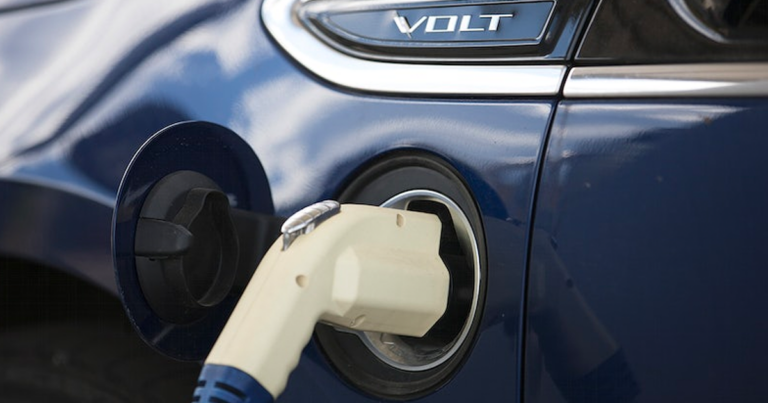
The Trudeau government’s electric vehicle mandate will cost Canadian taxpayers nearly $100 billion to achieve, new federal estimates show.
As first reported by Blacklock’s Reporter, the Regulatory Impact Analysis Statement found that a bulk of the spending will be for increased electricity usage and could lead to lower consumer choice.
“The proposed amendments are expected to lead to a loss of consumer choice as the non-zero emission vehicles which are preferred by some will eventually be phased out of the light duty vehicle market,” wrote Environment Canada.
“Furthermore zero emission vehicles are expected to generally cost more than non-zero emission vehicles and this vehicle price increase could lead to a reduction in the quantity of vehicles purchased.”
Electricity usage alone will cost $55.5 billion, while $24.5 billion could be spent by consumers on purchasing electric vehicles and charging stations. Meanwhile the federal government would have to dish out $16 billion in subsidies to manufacturers and another $1.7 billion in subsidies for buyers.
Last month, Environment Minister Steven Guilbeault unveiled his government’s plan to require all vehicles sold in Canada by the year 2035 to be electric or hybrid.
The policy analysis statement also outlined another $680 million in spending on electric charging stations will be required, as well as $500 million worth of Canada Infrastructure Bank financing. The total estimate of $99.4 billion in costs does not include maintenance and other costs like insurance.
“Installation costs have not been accounted for in this analysis and may be underestimated,” wrote analysts.
With regard to electric vehicle use, the federal government has fallen short of targets it has set out for its own fleets.
According to an Inquiry of Ministry from 2022, less than 5% of government owned vehicles met low-emission standards set out federally.
Of the 2,899 vehicles purchased by Ottawa since 2020, only 137 of the cars were fully electric and another 782 were hybrid.
It’s the beginning of a new year, so True North’s Anthony Furey and Andrew Lawton team up to talk about what’s happening in politics and media in the coming year. Will Jagmeet Singh pull his support of the Liberal-NDP coalition? Will there be a federal election? Will the legacy media acknowledge why Canadians don’t trust them? Plus, a preview on what’s on True North’s radar in 2023.
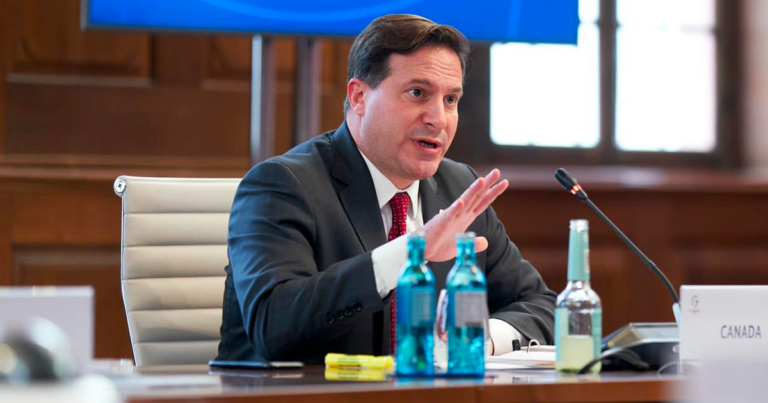
After four provinces said they would not aid Ottawa in confiscating legally-acquired firearms, federal Public Safety Minister Marco Mendicino now says Ottawa is working with “potential” third parties to implement its gun buyback scheme.
In September, Alberta was the first province to oppose Mendicino’s request to aid the federal government’s confiscation program. It was followed promptly by Saskatchewan, Manitoba and New Brunswick.
Mendicino says Ottawa is looking at a “variety of options” to deliver the buyback program.
“We’re taking the time that is necessary to get it right,” he told The Canadian Press.
“It’s going to involve a number of critical stakeholders and partners, including law enforcement. But we’re also working with other levels of government. We’re working with industry leaders, we’re working with potential third parties. So we are exploring all of these options.”
In May 2020, Prime Minister Justin Trudeau announced he was banning more than 1,500 models of firearms, including guns explicitly used for sport shooting and hunting. The Parliamentary Budget Officer said the program will cost $750 million. Those costs could balloon to $1 billion once administrative fees are taken into account.
The buyback program would require firearms owners to sell their guns to the government or have them rendered inoperable at federal expense.
In October, police witnesses told the House of Commons Public Safety Committee that police services in Canada are operating at minimal levels already. The committee is studying Bill C-21, proposed legislation through which Trudeau’s order in council would become law.
Brian Sauvé, President of the National Police Federation, said policing services are having challenges retaining and attracting to the law enforcement profession.
“So every time that we increase the mandate of police officers on the street, there has to be something that gives,” Sauvé said.
Evan Bray, co-chair of the Special Purpose Committee on Firearms for the Canadian Association of Chiefs of Police, said the early part of the buyback program is an administrative process, not a policing issue.
“As a result, such a program could be managed by entities other than police services thereby allowing police resources to be focused on those who refuse to follow new law, and more importantly, on addressing border integrity smuggling and trafficking.”
In October, Mendicino said he was still focused on getting provinces’ help to enforce the gun grab program, saying that was part of his “plan A.”
“Advancing a fair buyback program that will compensate law-abiding gun owners for the assault-style rifles that they originally purchased lawfully is consistent with keeping our community safe, and we will always be collaborative with our provincial and territorial partners,” he said.
“My door will always be open to working with them in a wide variety of priorities to achieve that goal.”